This page shows some of the many models that have been through the Rhos Helyg Locomotive Works. It is a large page and can take some time to load. Please see the Finished Models page for recent updates.
The page is sorted alphabetically by model manufacturer.
Click on an initial letter for quicker navigation.
[A]
[B]
[C]
[D]
[E]
[F]
[G]
[H]
[I]
[J]
[K]
[L]
[M]
[N]
[O]
[P]
[Q]
[R]
[S]
[T]
[U]
[V]
[W]
[X]
[Y]
[Z]
[Miscellaneous]
You may click on the pictures to see enlarged views, and you may click here to read
comments made by Rhos Helyg Locomotive Works' valued customers.
|
Peacock Island Workshop Toucan 0-4-0+0-4-0 Garratt
This Garratt runs on 45mm gauge track and uses two Accucraft Dora chassis as power units. It
came to me initially for repainting and lining but, as usual, it turned in to a bigger
project.
|
|
|
Pearse Locomotives Beyer-Peacock 0-6-0T Welshpool & Llanfair COUNTESS
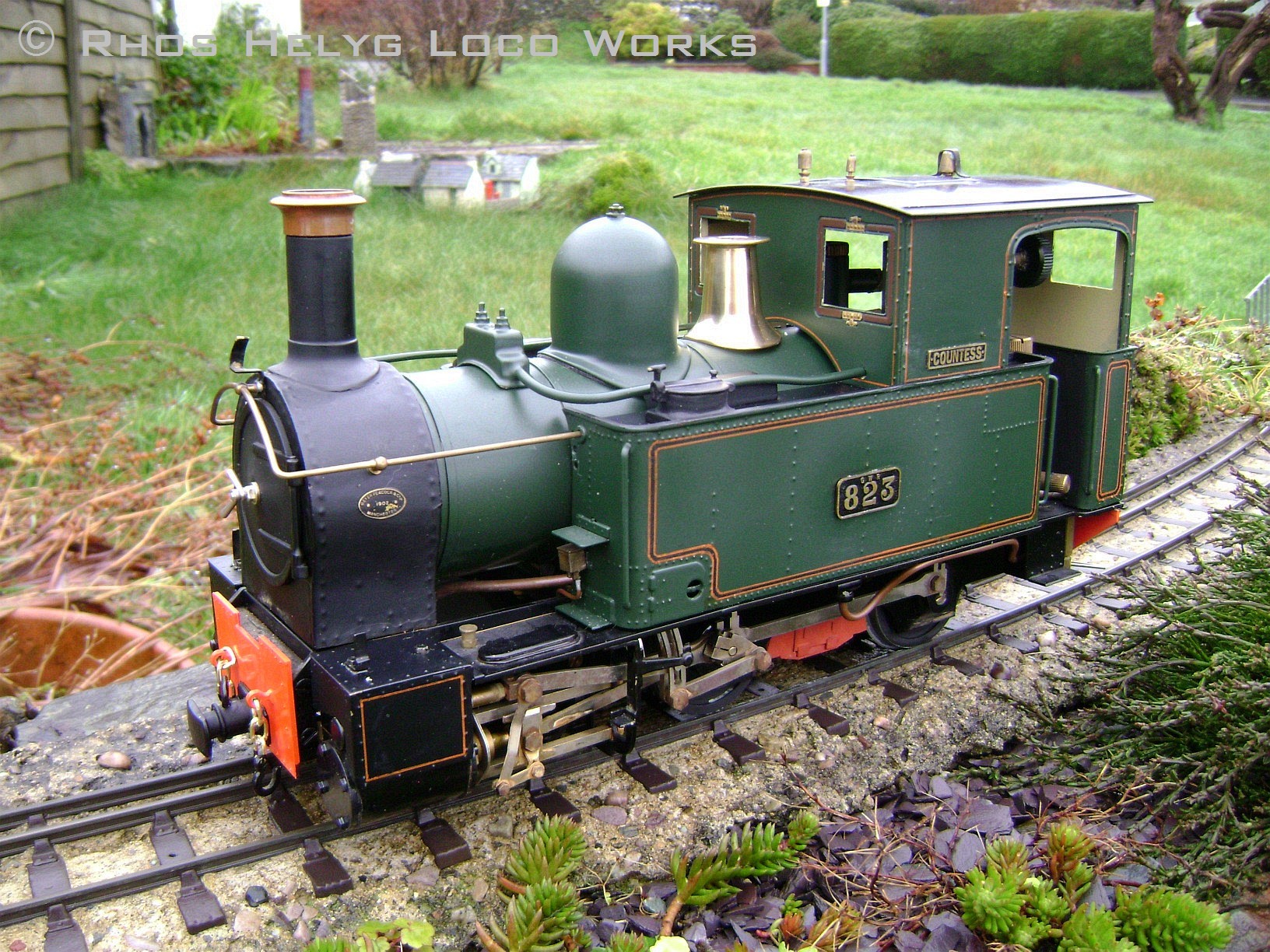
This Pearse Countess was in plain scruffy green when purchased by its present owner. It came to me for lining and a general tidying of the paintwork. It had also suffered from a common model steam loco disease: crooked name and number plates held in place by copious amounts of glue oozing out from behind them. These were carefully removed and the consequential paint damage was repaired. It now carries a lining scheme based on that carried by Earl in the late 1960s until the mid-1980s but never, my research suggests, by Countess. |
|
|
Pearse Locomotives Genesis 0-6-0T HICKLING BROAD
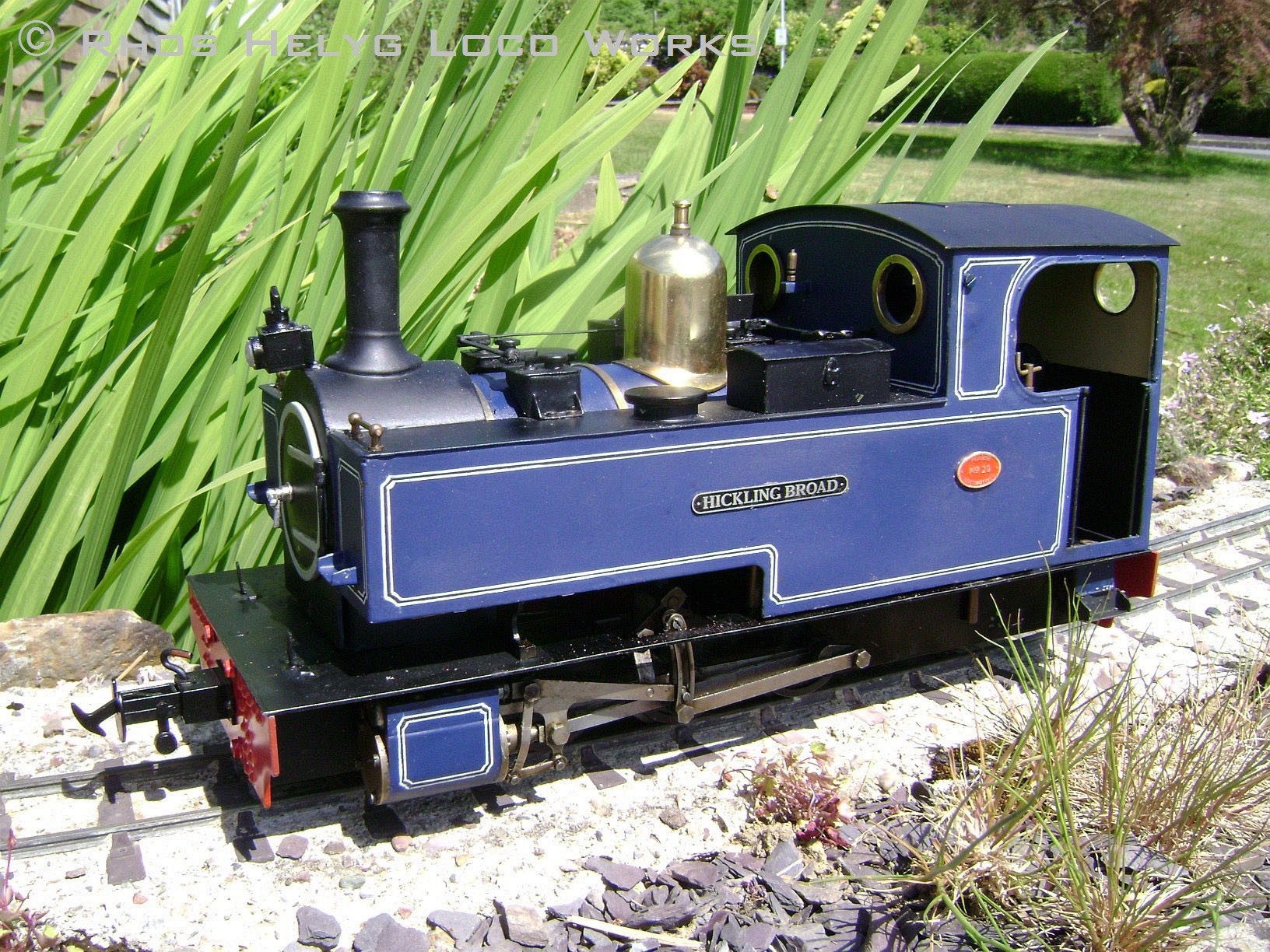
This Pearse Genesis 0-6-0T came to me for some repairs, enhancements, a radio control upgrade and a complete repaint from black to the blue scheme seen here. |
|
|
Pearse Locomotives Hunslet 2-6-2T Leeds No. 1
A very sought after machine, this model of Leeds No. 1 came here for a service and some minor repairs. Unfortunately the owner wanted it back... |
|
|
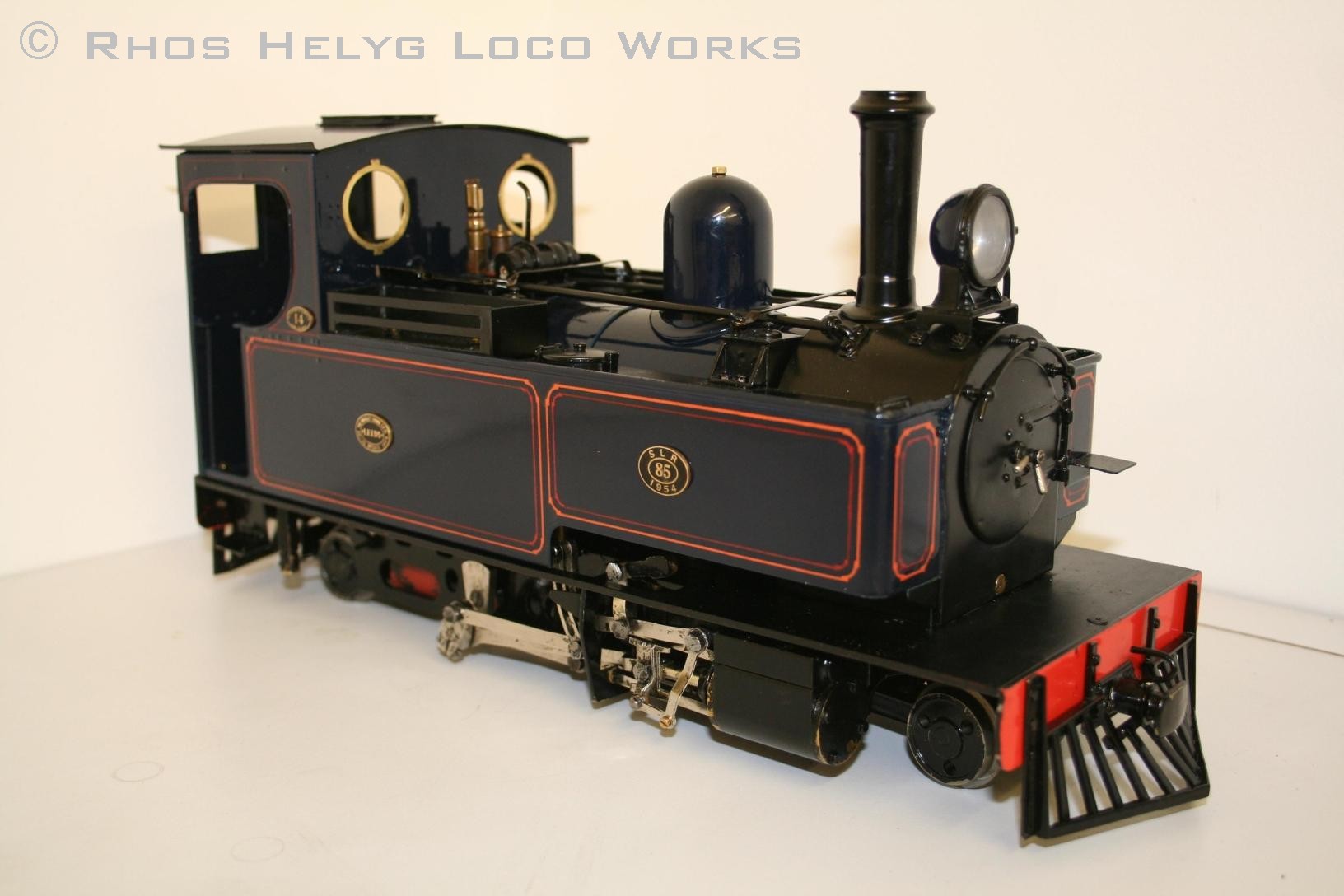
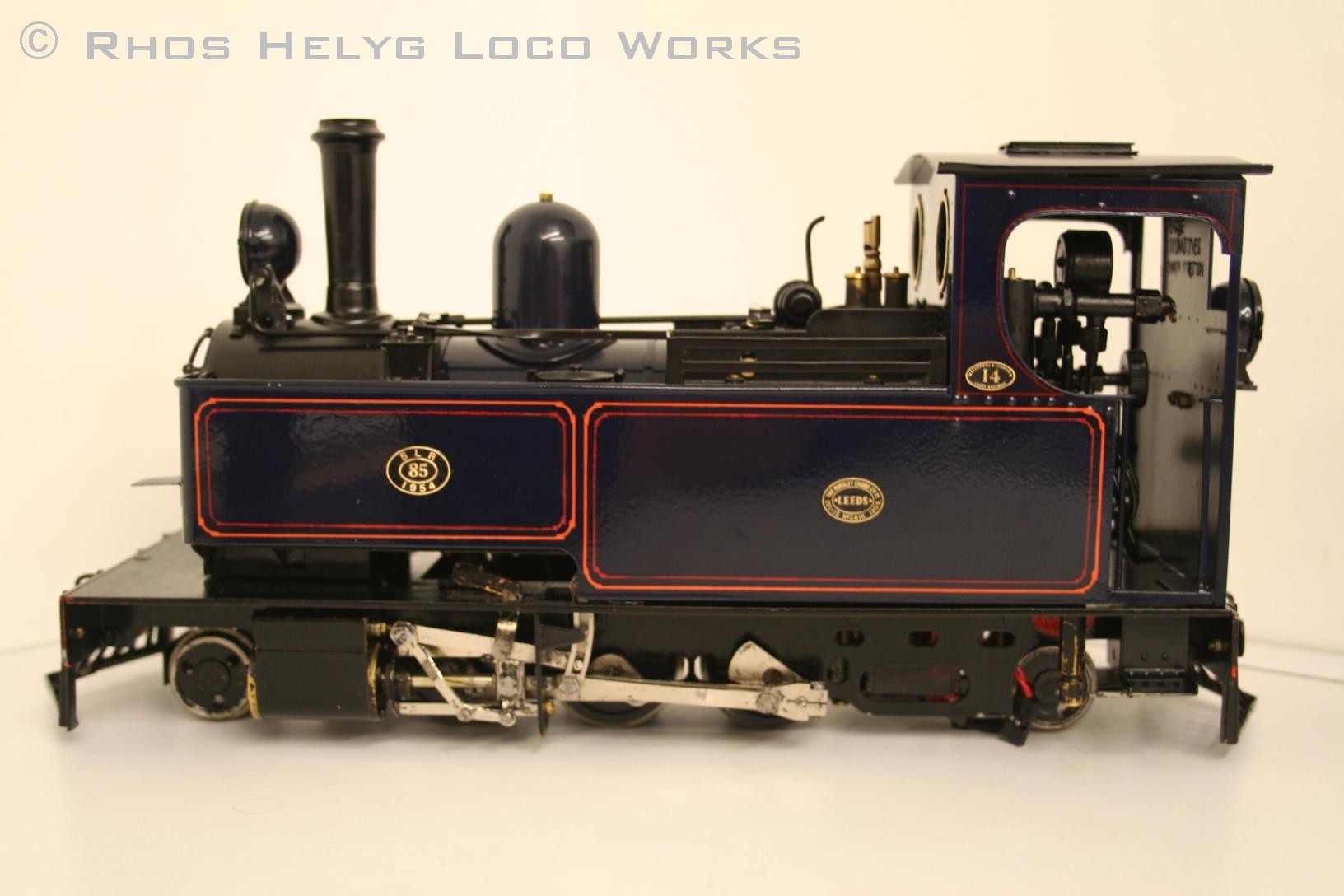
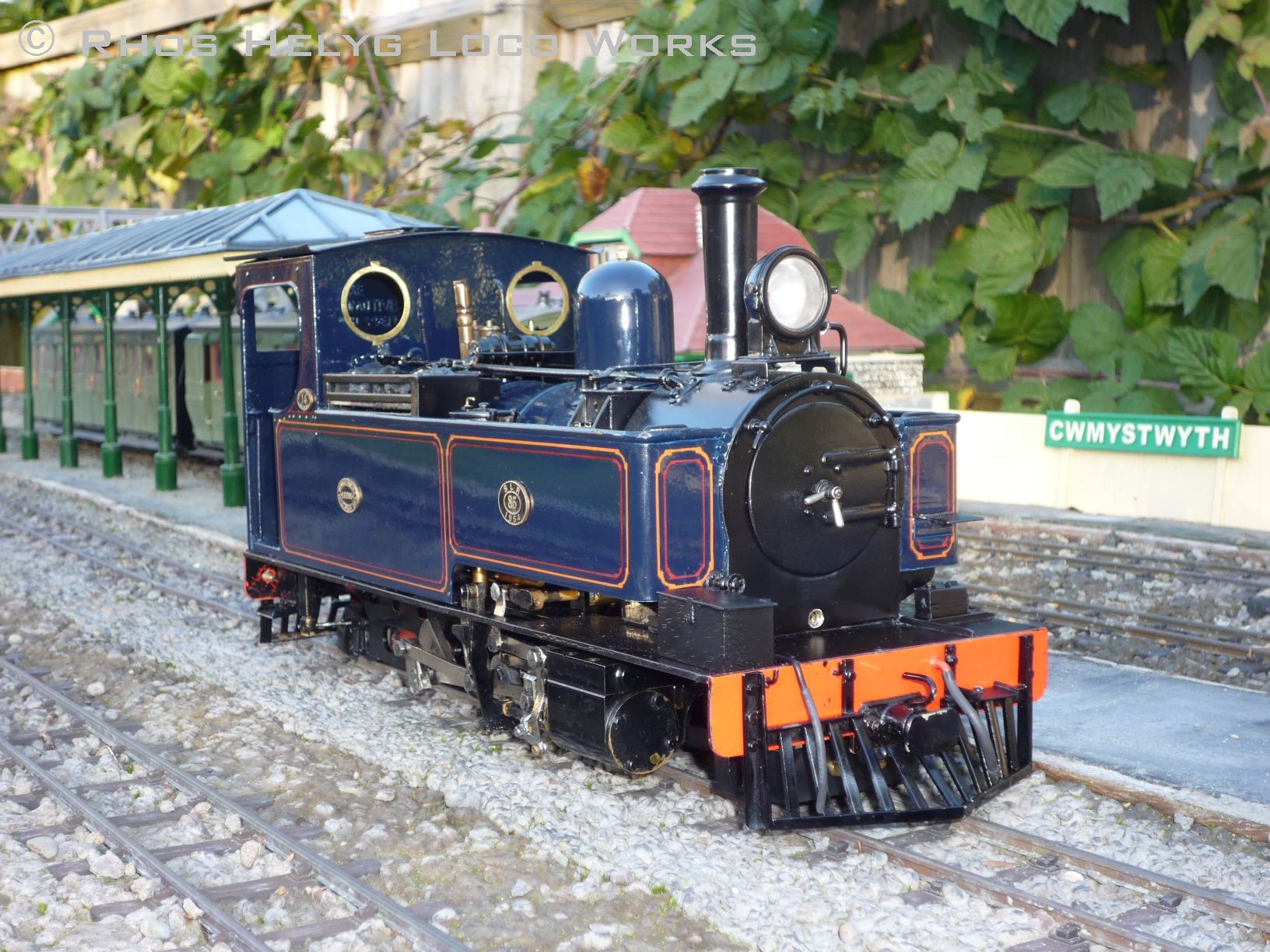
Pearse Locomotives Hunslet 2-6-2T Welshpool & Llanfair No. 14
The bodywork and boiler from this Pearse Welshpool & Llanfair Railway No. 14 came here for repainting and lining. The parts were finished in the blue scheme with orange and red lining and carried by No. 14 a few years ago. (Photos by Simon Whenmouth and Rob Griffiths) |
|
|
PPS Steam Models De Winton 0-4-0
This one is a few years old and came with a litany of faults, including a broken gauge glass joint, blocked boiler gauge glass, detached main steam pipe, missing cosmetic details and a non-functioning safety valve. While testing the latter I turned the fire off when it reached 80+ psi. Dismantling revealed a completely corroded internal spring, so the valve was functioning as a plug and nothing more. |
|
|
John Prescott Robin 0-4-0T
About 30 years ago, on a Friday evening during the summer you would invariably find me playing trains at my good friend Edward Hodson's line in Staffordshire. On occasions we would also be joined by the late John Prescott, and John would usually bring his latest creation for a run. I remember when he brought early builds of his Robin 0-4-0 side tanks and saddle tanks along, which I admired greatly, and especially the way he had managed to cram clunky 1980s radio control in to such a small loco. Sadly, a Robin of either kind has never come my way but it was still nice to have one here for a short period for some work. This one came here for conversion from radio to manual control and a full repaint. Absolutely delightful! |
|
|
John Prescott Robin 0-4-0STT
It is always nice to work on something a bit special, a bit unusual, and John Prescott's locos definitely meet that criteria. This Robin came here for conversion to manual control, a repaint, lining and addition of a scratch-built tender. |
|
|
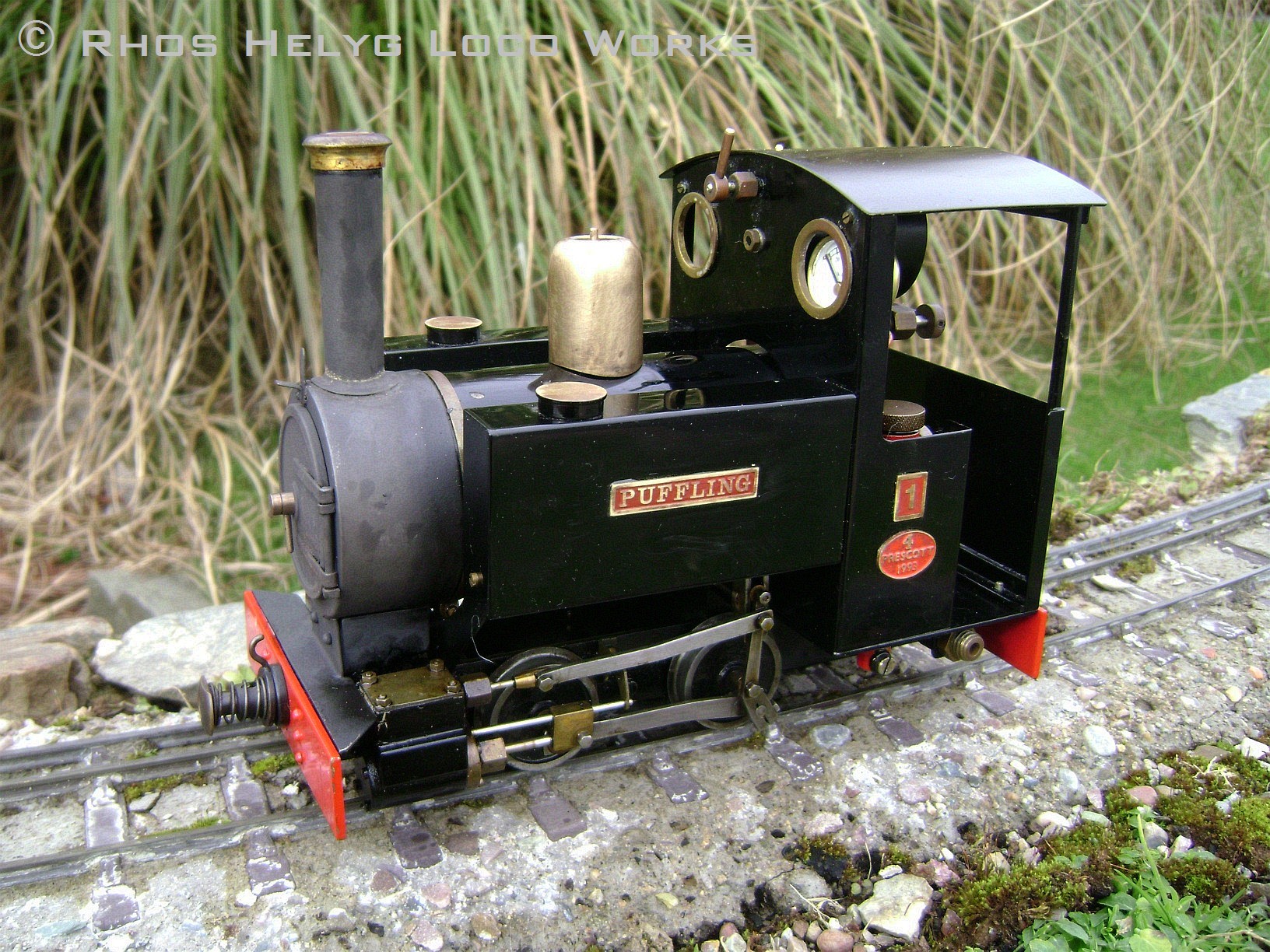
John Prescott Robin 0-4-0T PUFFLING
PUFFLING was built by the late John Prescott in 1993 and is a fine example of his Robin type. John made several model loco types but this one (also available with a saddle tank instead of side tanks) and Wagtail (with a small tender) are perhaps the most common of some not very common models. PUFFLING came here for a general check over which included attention to its safety valve to stop it blowing "light", unblocking of the pressure gauge syphon pipe and a boiler descale. As is usual for John's locos it ran like the proverbial sewing machine. Absolutely gorgeous, but unfortunately the owner asked for it to be returned to him... |
|
|
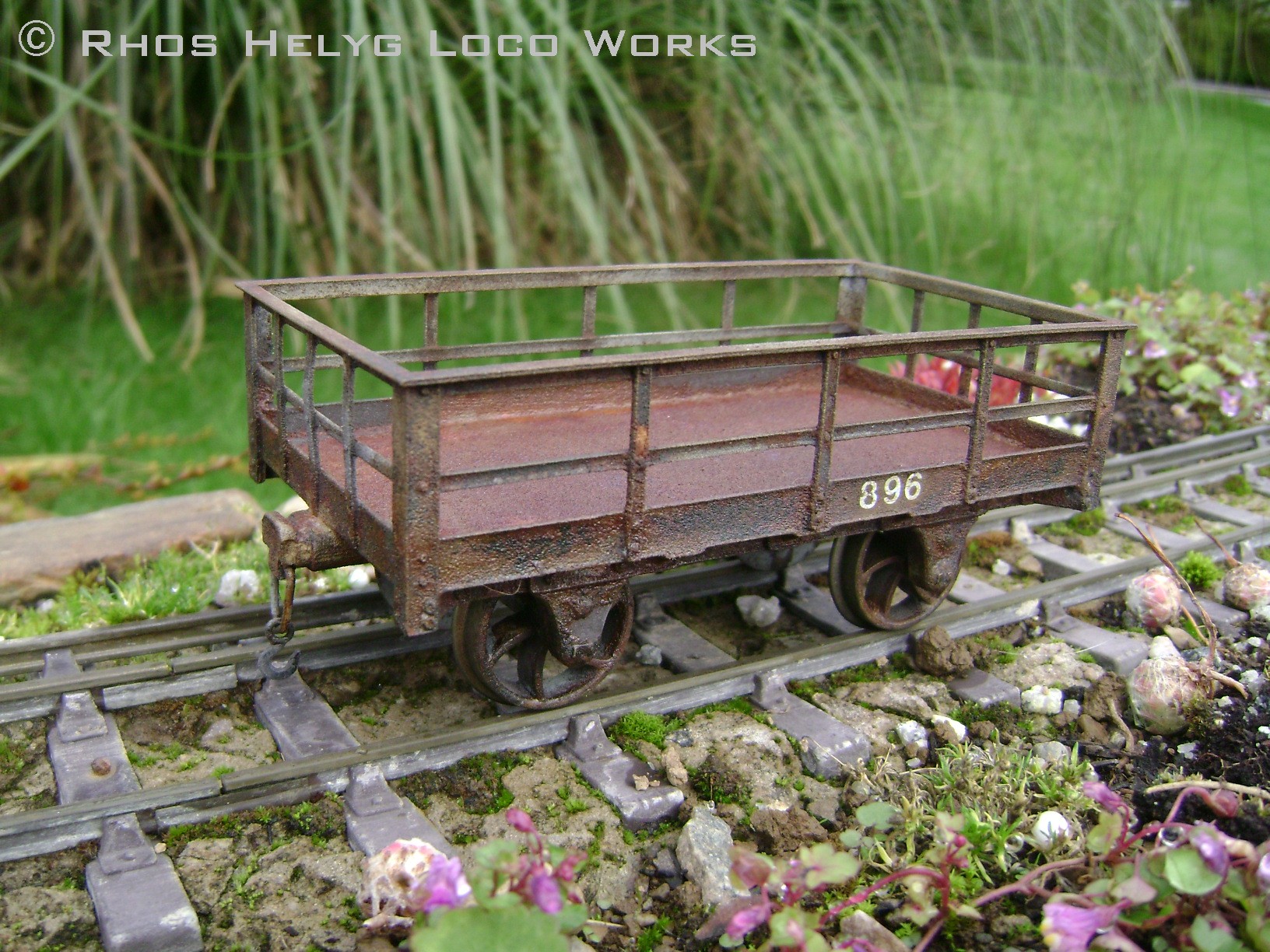
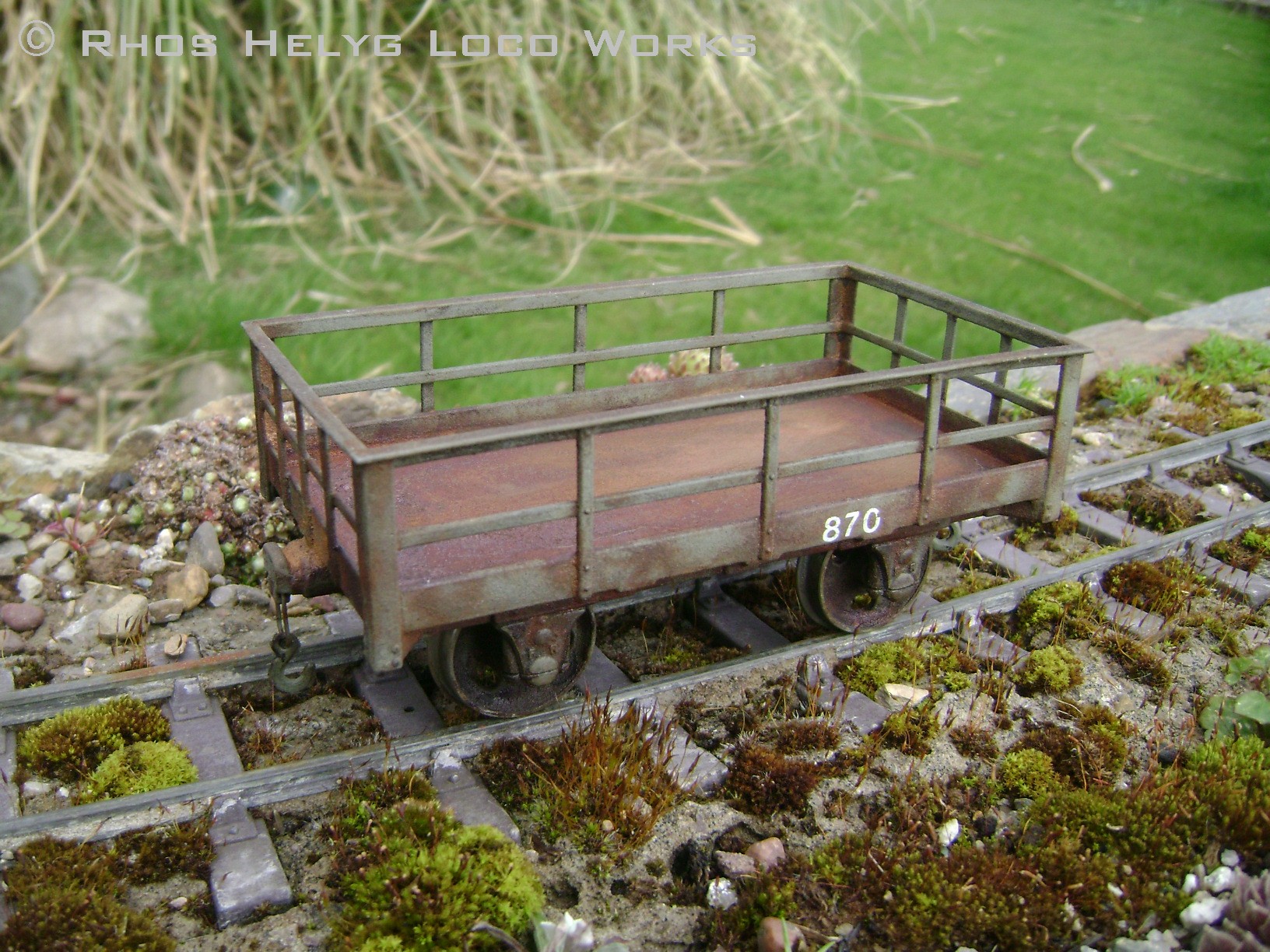
PVMR Engineering Ltd Festiniog Railway 3-ton slate waggons
Festiniog Railway 3-ton slate waggons using a 3D-printed body from PVMR Engineering and Slater's axle boxes and wheels. |
|
|
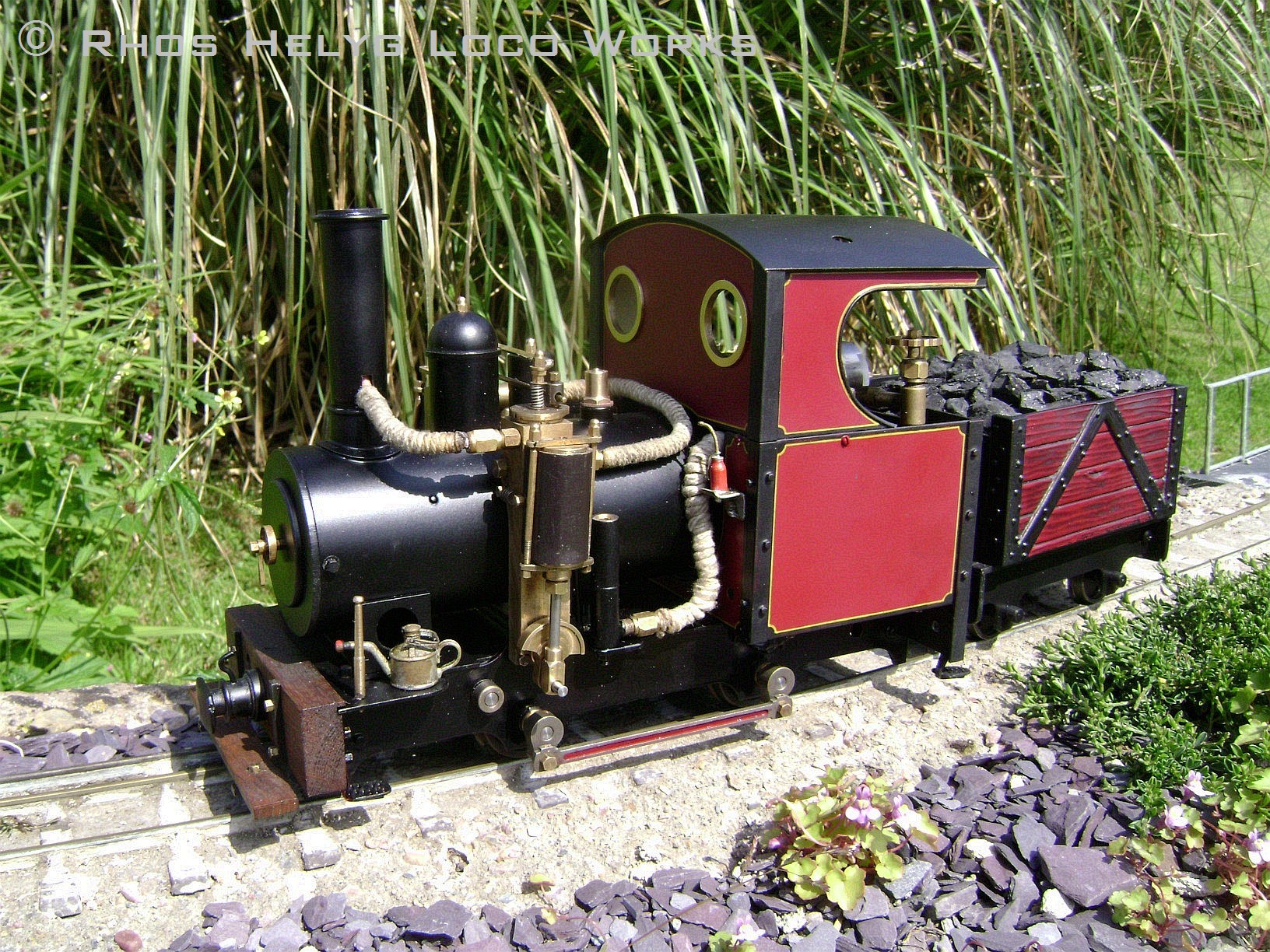
Regner Konrad 0-4-0
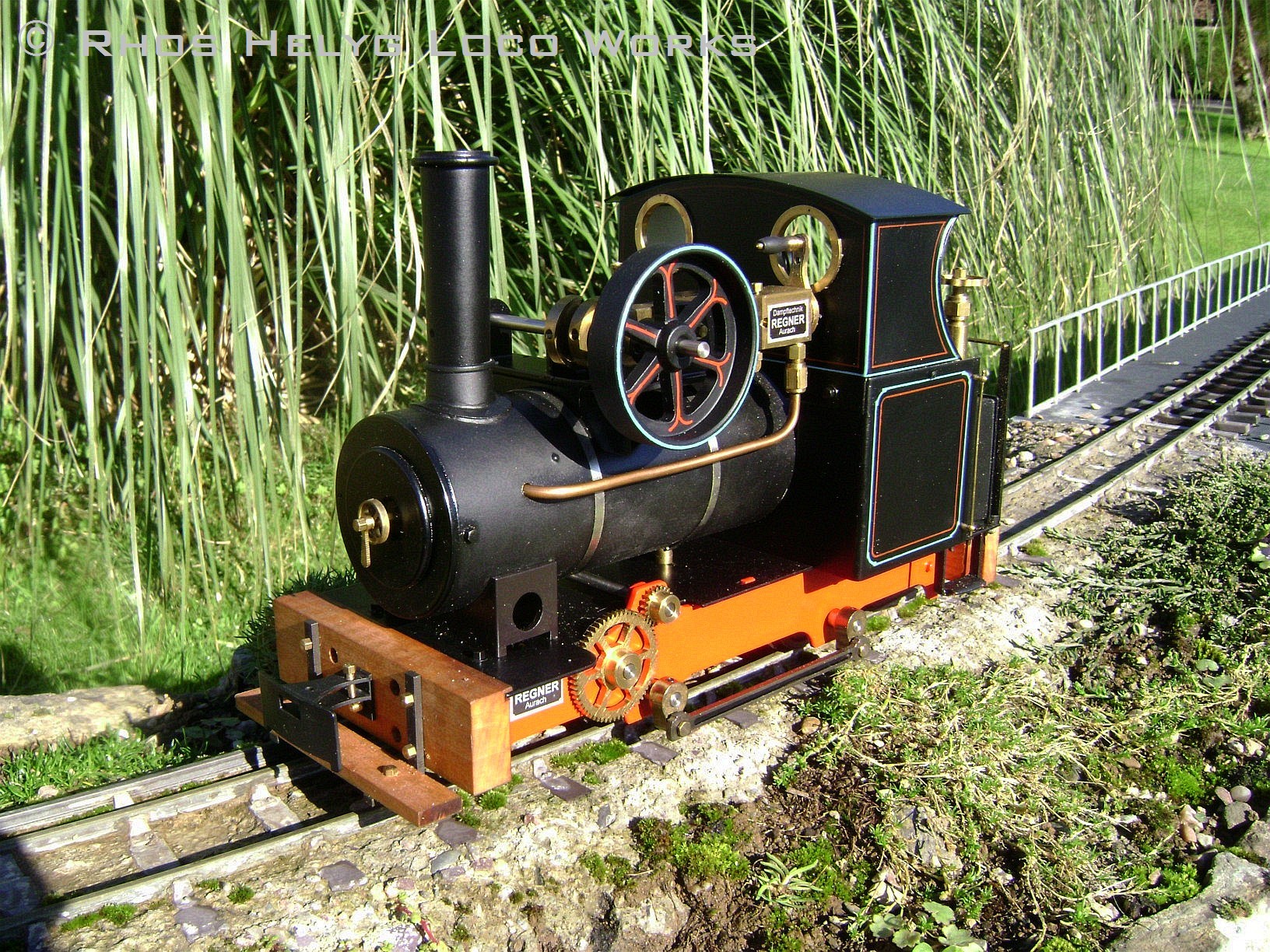
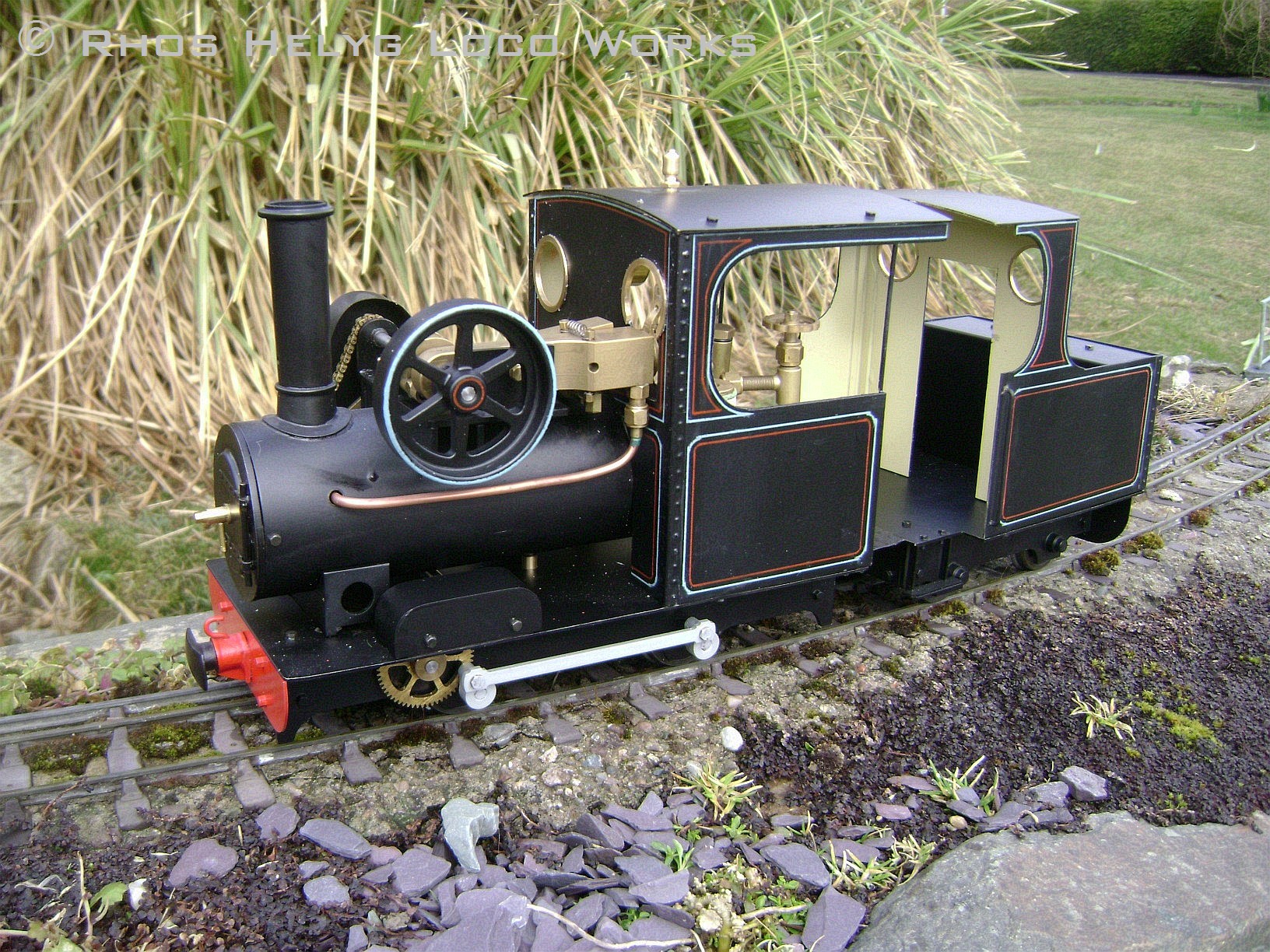
A much-modified Regner Konrad: A previous owner removed the flywheel and replaced it with a second cylinder. My task was to build a new cab for it, followed by a full strip and repaint in to maroon lined in yellow and black. The current owner had thought that the rather nice tender was no longer needed but I persuaded him to keep it with the loco. However, it has been coupled in such a way that the loco can be used with or without it. |
|
|
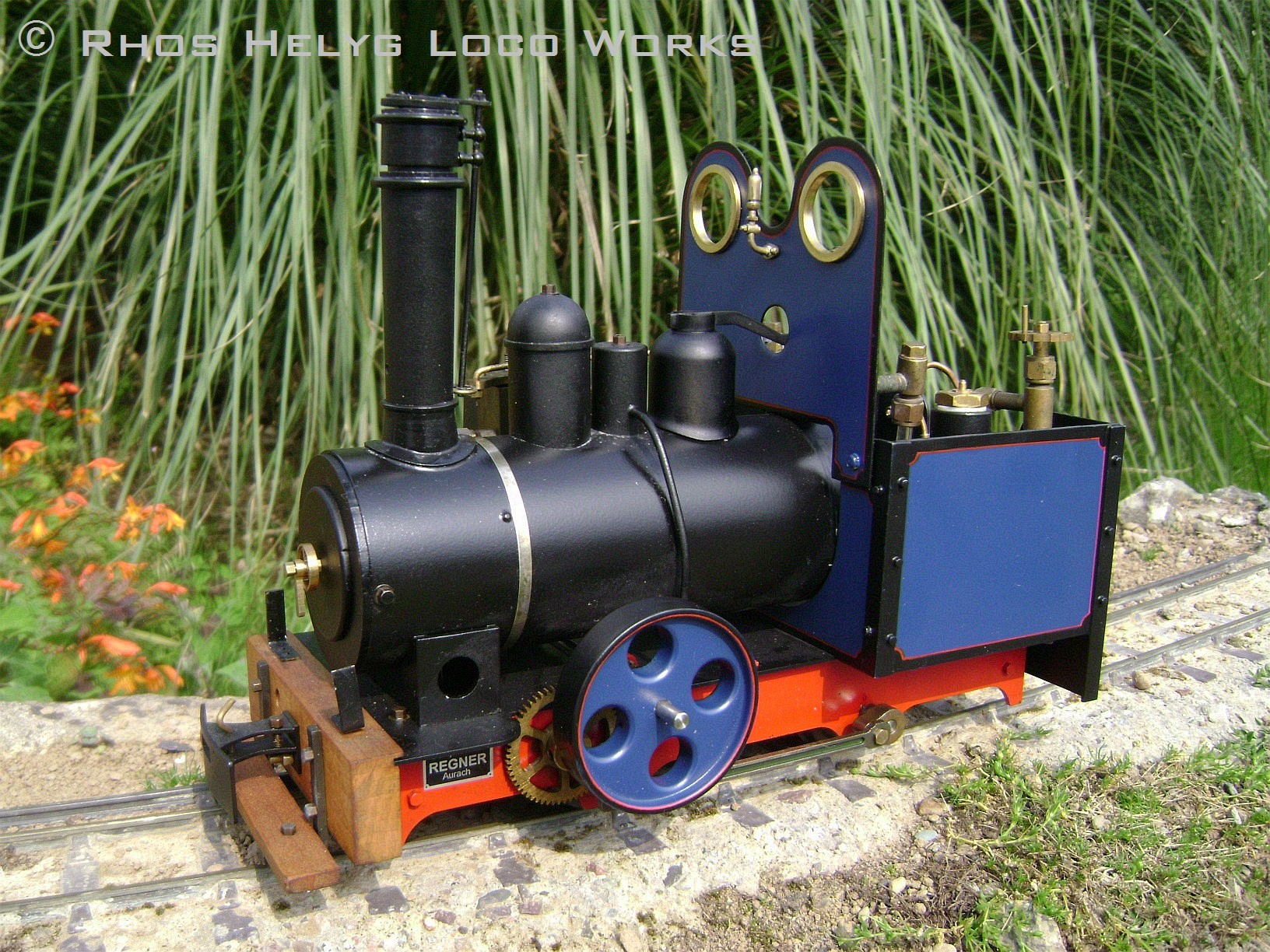
Regner ⅞ths-scale Konrad 0-4-0
This Regner Konrad was modified for 7/8ths-scale by Harvey Watkins. It had its bodywork stripped and repainted in to blue with red and black lining. |
|
|
Regner Lumber Jack 0-4-0
The owner of this Regner Willi had had problems with keeping the gas burner alight. It worked fine when first lit but soon started to splutter and would eventually go out. He also reported seeing water leaking from around the burner housing once the loco got warm. After examination here it turned out these two events were not unconnected. The boiler used on Willi is a remarkably complicated fabrication, bearing in mind the simplicity of the loco it powers. It has seven bushes, four vertical tubes and a burner flue that is blocked at one end. The latter is soldered to the inside of the boiler barrel at its blocked end. Removal of the boiler from the loco allowed me to do a pressure test and that soon revealed that all was not well with that flue joint, allowing water in to the flue which extinguished the burner. A call to John at Shawe Steam Services confirmed what I thought already: The boiler was not repairable. Options for a new boiler were explored and fortunately Regner dealers Garden Railways Limited in Bishops Stortford had one available for immediate purchase at a very reasonable price. Immediate purchase followed, and it arrived here the next day. It was then a case of swapping the wooden boiler cladding and all the fittings from the old boiler to the new to return the loco to full working order. |
|
|
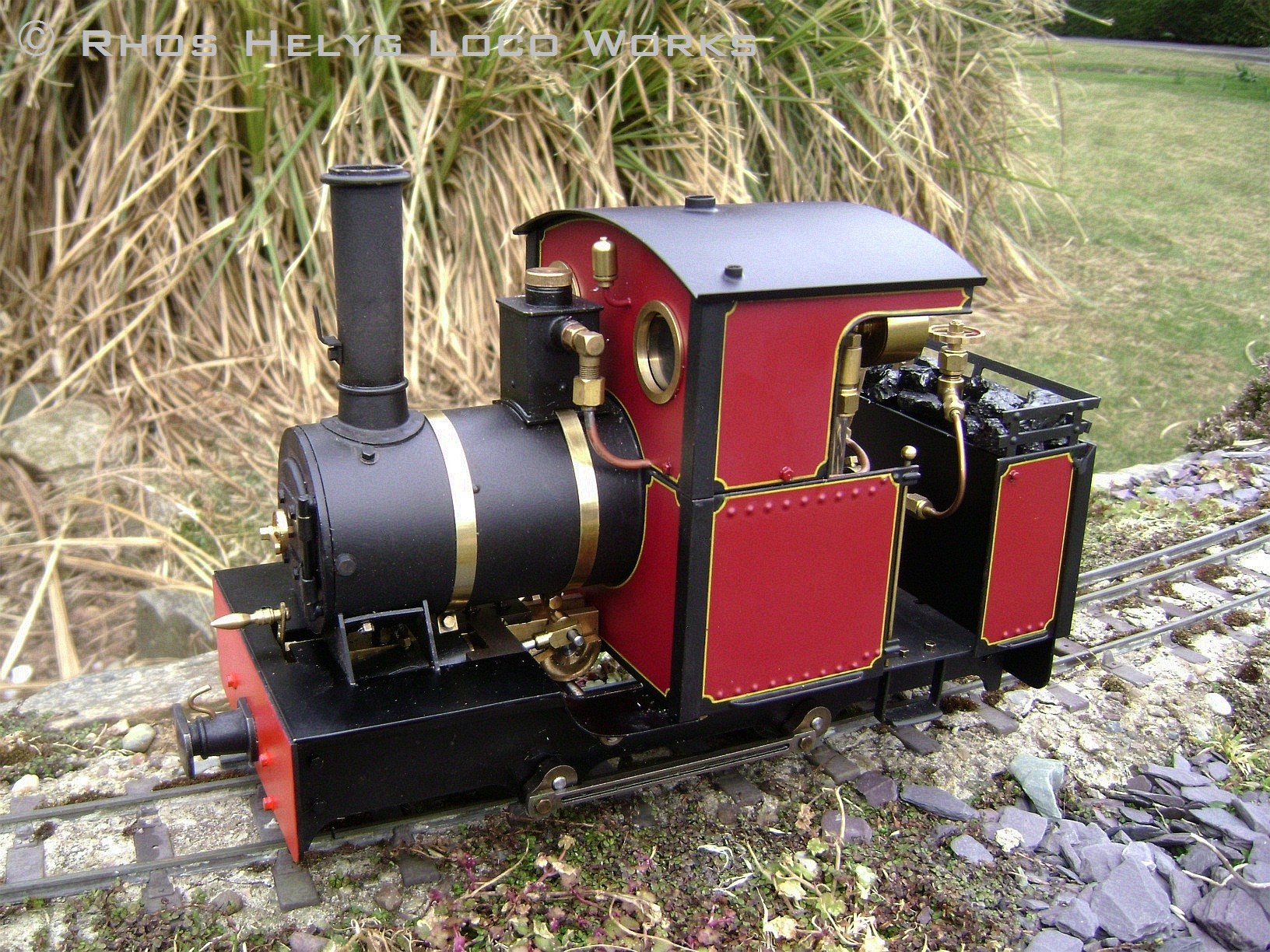
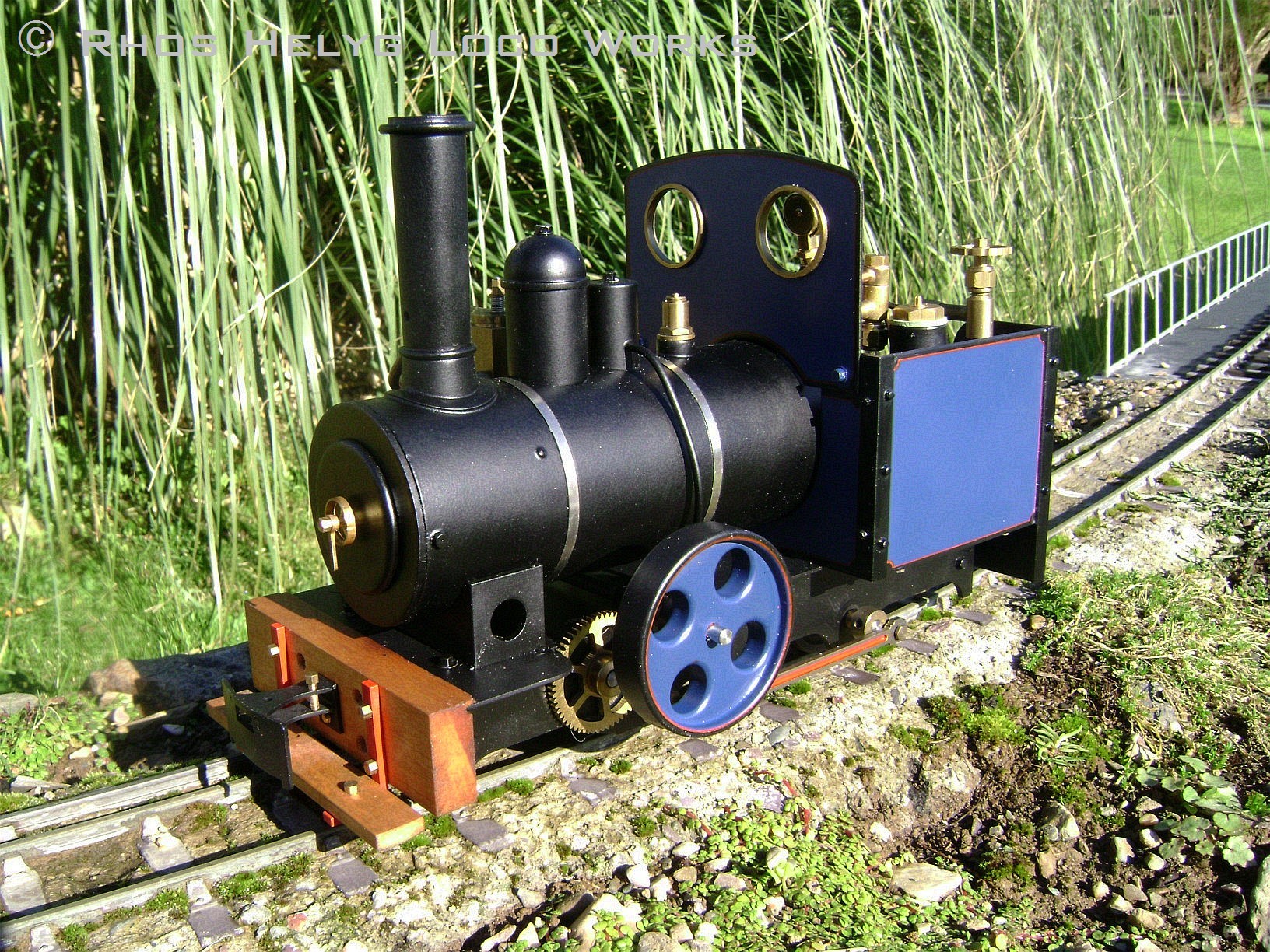
Regner Niklas 0-4-0
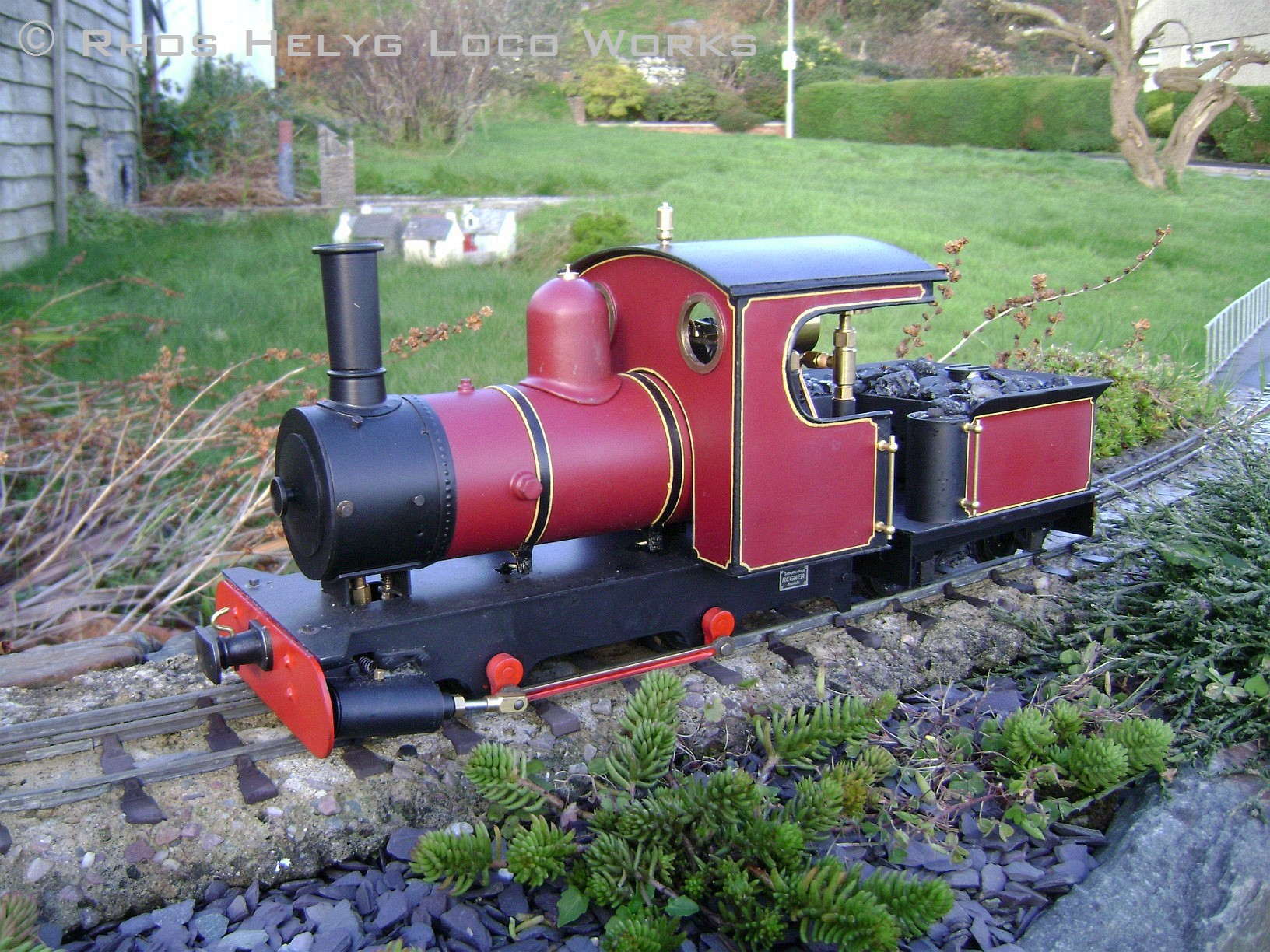
This Regner Niklas came to me with one simple instruction: Make it look more British. There is no doubt that, as supplied, it is based on American practice, with its balloon stack, headlight, bell and wooden buffer beams. They all came off, with the chimney being replaced before it arrived here and the front buffer beam replaced with something more Linda/Blanche Hunslet-like. Fortunately, removal of the other three wooden buffer beams revealed suitable alternatives, with no significant work needed. There was not much I could do with the cab structure, so that was replaced with new. The cab roof was re-used with some modification. The dome cover was also replaced with something more appropriate. To make it less of a black blob, my work was finished off with a repaint in to maroon with yellow lining and a coal load in the tender. |
|
|
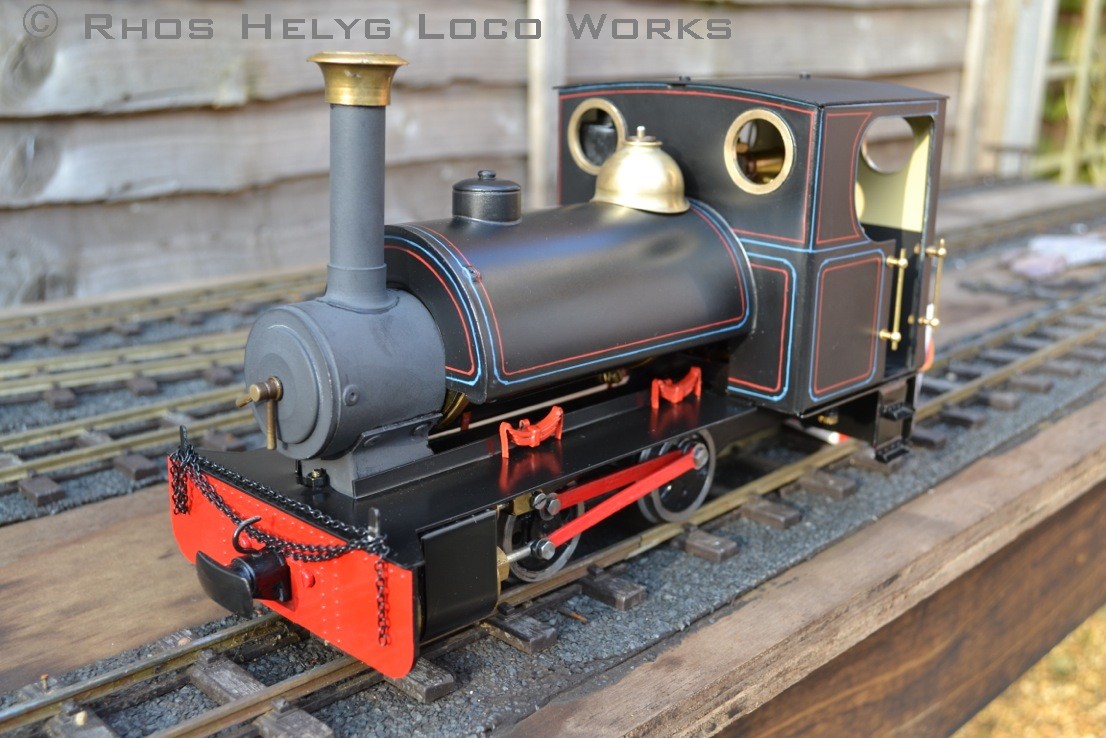
Regner Vincent 0-4-0
This Regner Vincent had a Hunslet-inspired cab fitted and was repainted in Penrhyn-style black with blue and red lining. |
|
|
Regner Vincent 0-4-0
This Regner Vincent was rebuilt and painted by Dampfatelier in Switzerland before coming here for lining in a Penrhyn-style scheme. |
|
|
Regner Vincent 0-4-0 No. 2 RIVER ALDE
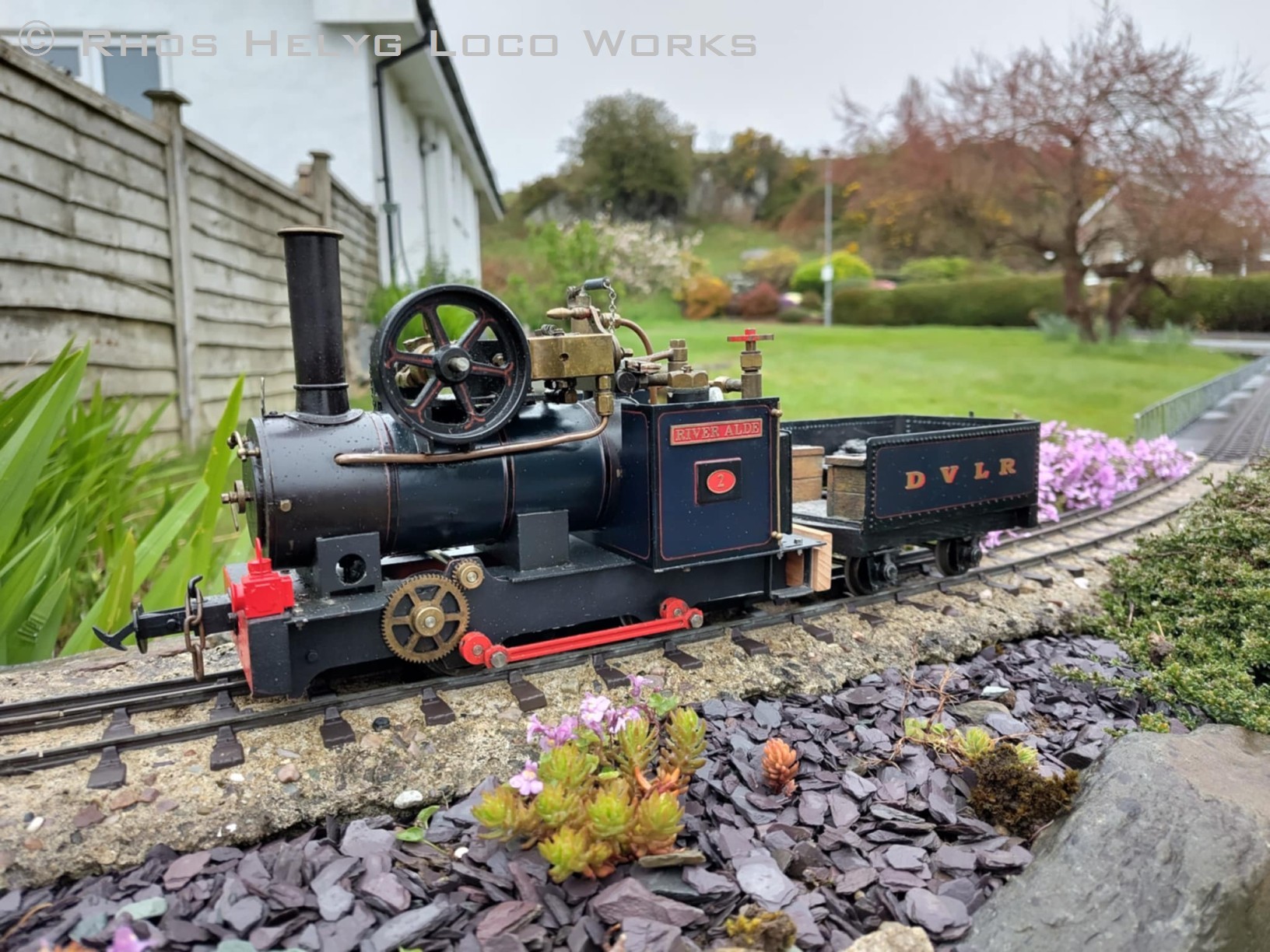
This Regner Vincent was repainted in an scheme inspired by that used by the Great Eastern Railway. |
|
|
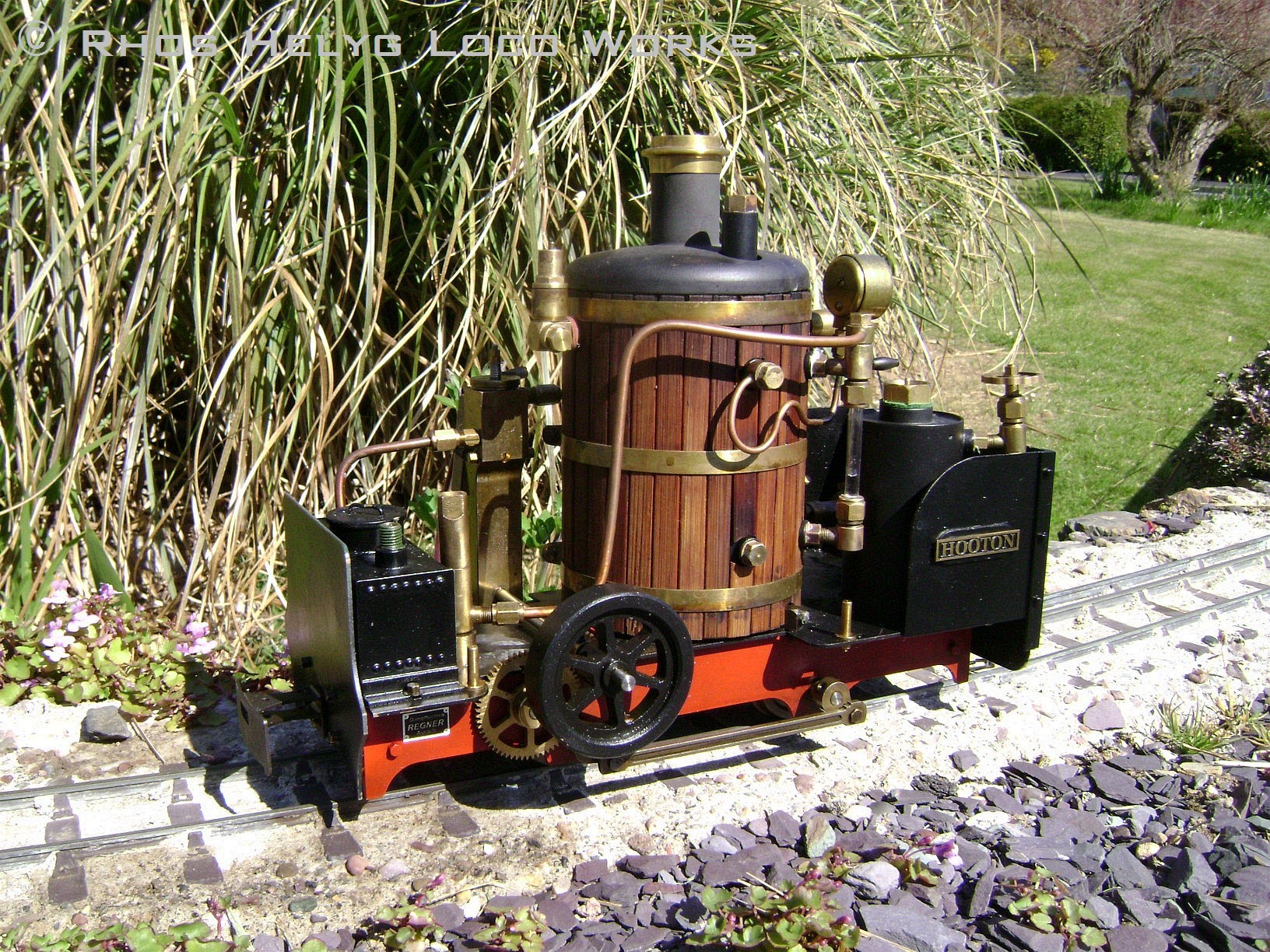
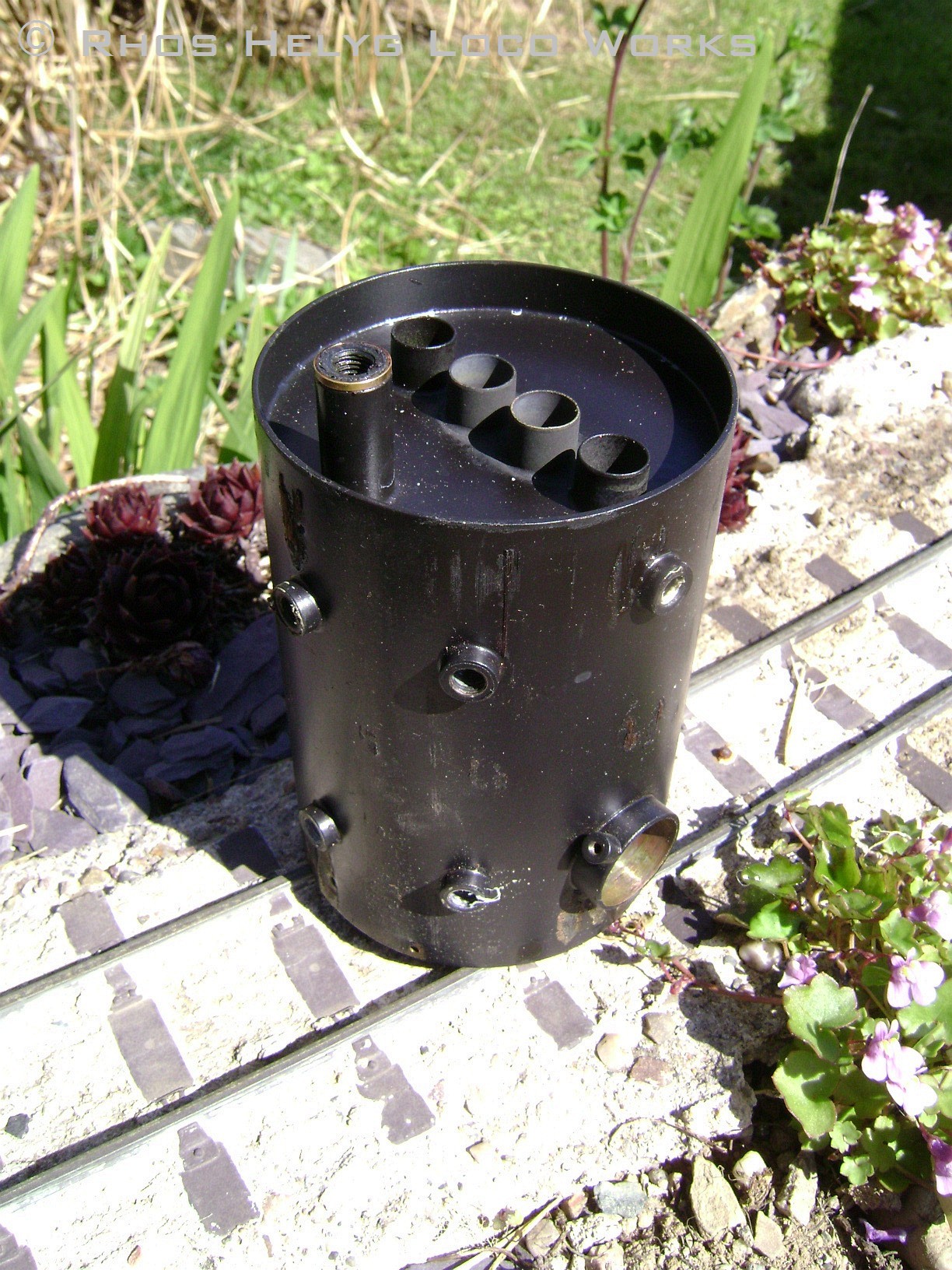
Regner Willi 0-4-0 HOOTON
The owner of this Regner Willi had had problems with keeping the gas burner alight. It worked fine when first lit but soon started to splutter and would eventually go out. He also reported seeing water leaking from around the burner housing once the loco got warm. After examination here it turned out these two events were not unconnected. The boiler used on Willi is a remarkably complicated fabrication, bearing in mind the simplicity of the loco it powers. It has seven bushes, four vertical tubes and a burner flue that is blocked at one end. The latter is soldered to the inside of the boiler barrel at its blocked end. Removal of the boiler from the loco allowed me to do a pressure test and that soon revealed that all was not well with that flue joint, allowing water in to the flue which extinguished the burner. A call to John at Shawe Steam Services confirmed what I thought already: The boiler was not repairable. Options for a new boiler were explored and fortunately Regner dealers Garden Railways Limited in Bishops Stortford had one available for immediate purchase at a very reasonable price. Immediate purchase followed, and it arrived here the next day. It was then a case of swapping the wooden boiler cladding and all the fittings from the old boiler to the new to return the loco to full working order. |
|
|
Regner Wilma 0-4-0
This Regner Wilma came here in red with a brown boiler. It was repainted in blue lined in red to match other locos in the owner's collection. |
|
|
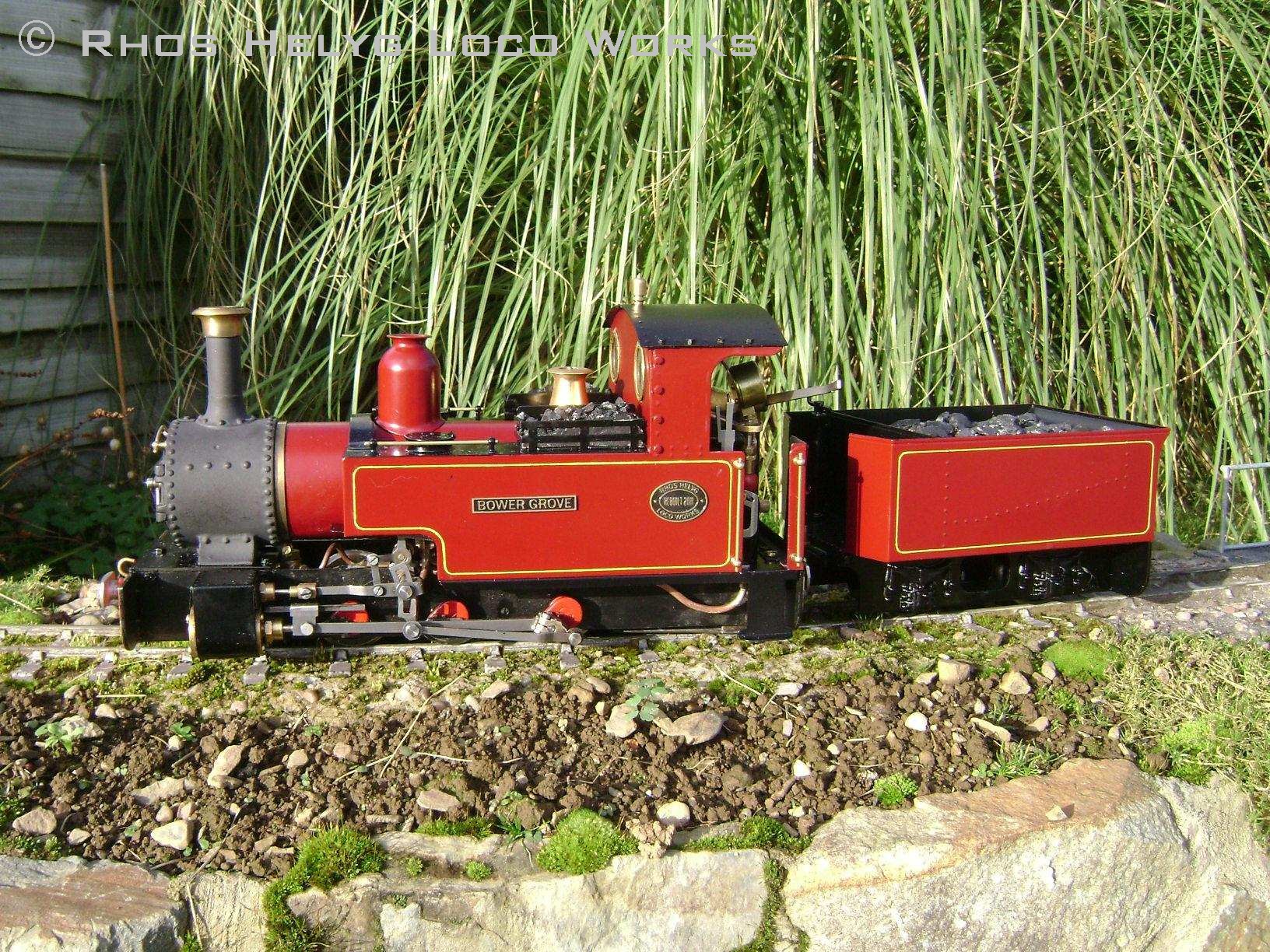
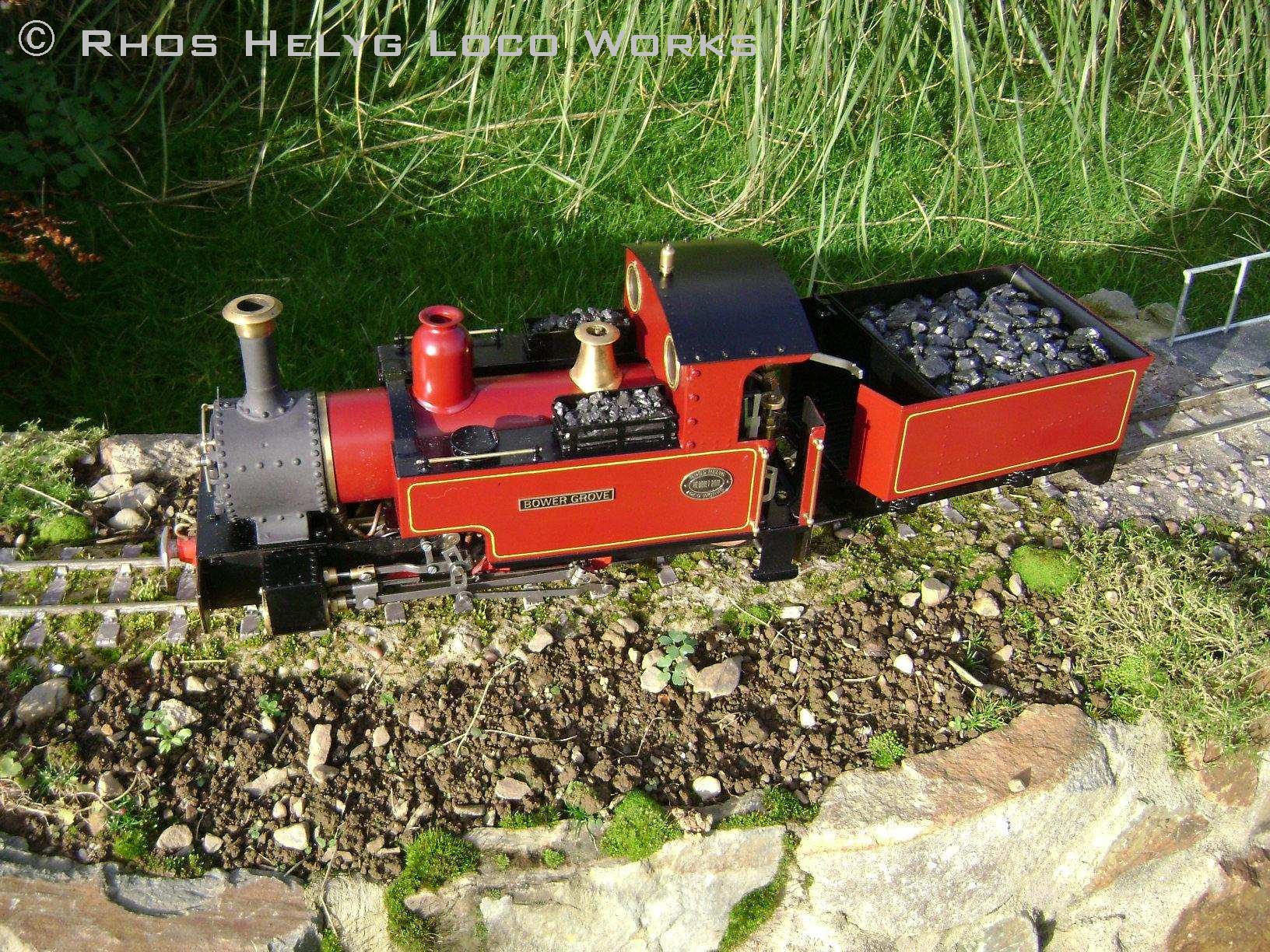
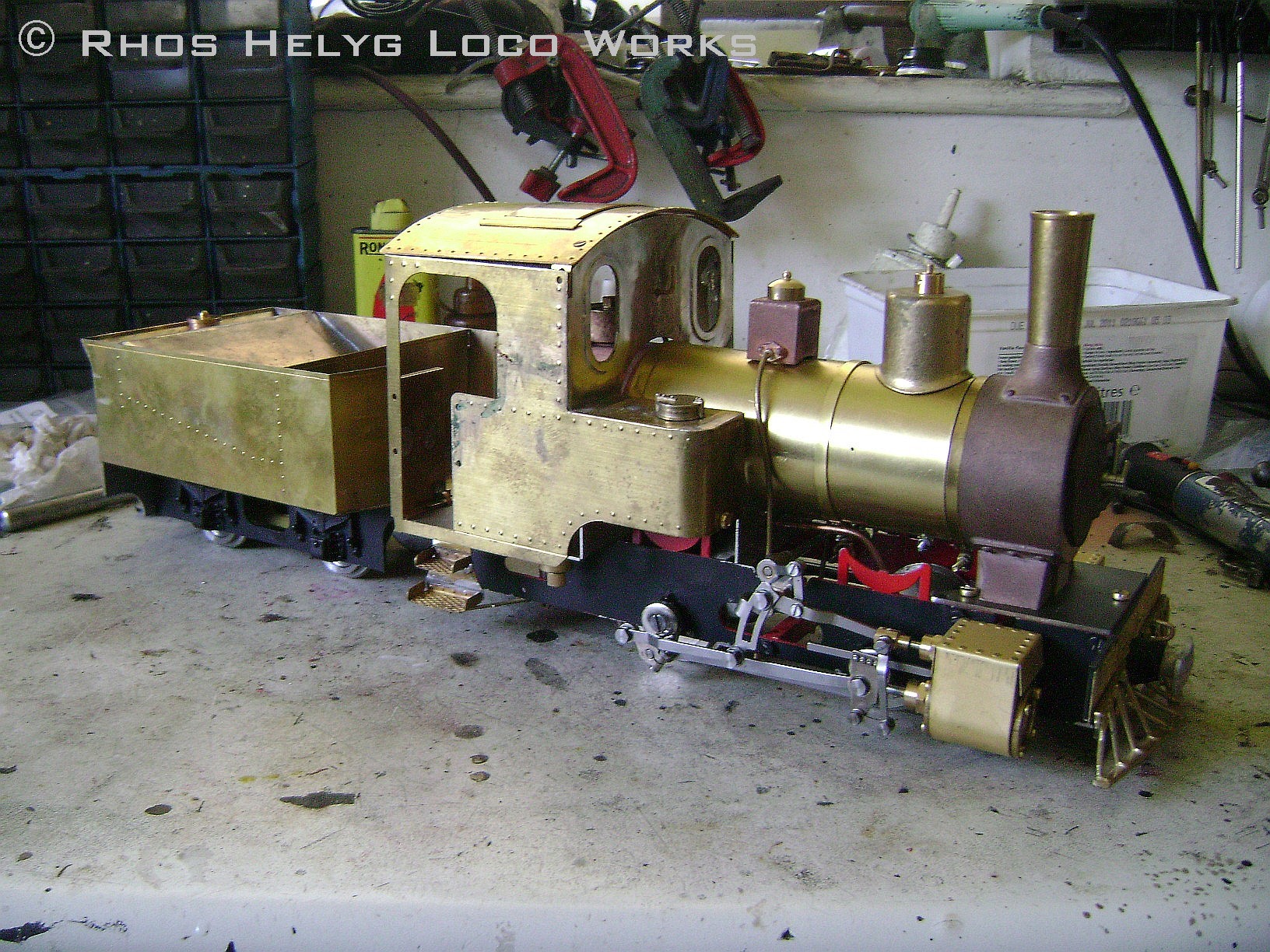
Rhos Helyg Loco Works coal-fired 0-6-0TT BOWER GROVE
This loco started life as a Sabre Steam UK coal-fired Annette, based on the successful
Roundhouse Lady Anne chassis and bodywork. It was sent brand-new and direct from Sabre Steam
for lining and a few other cosmetic jobs. A photo of it in its finished condition
can be found elsewhere in this section.
|
|
|
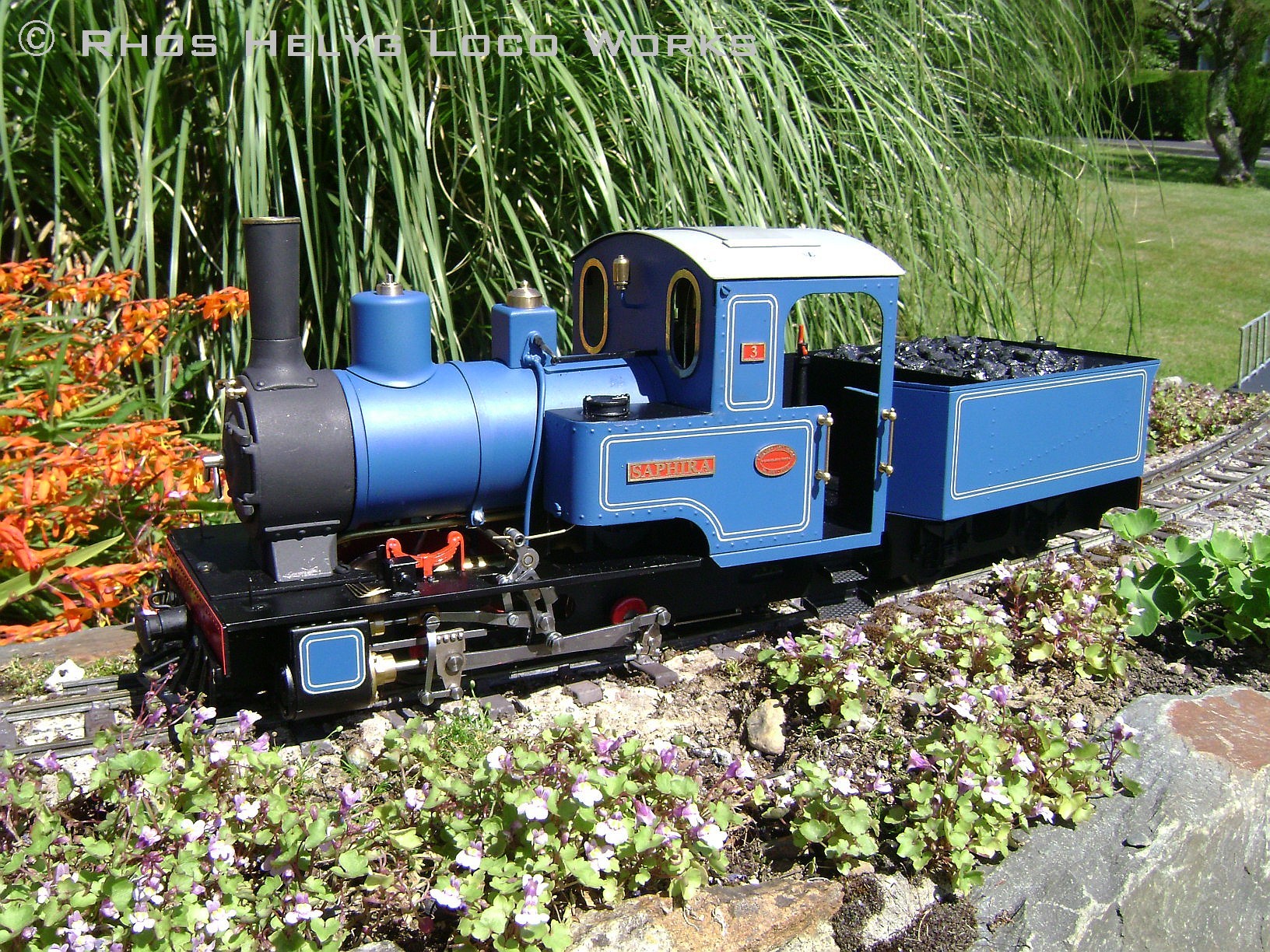
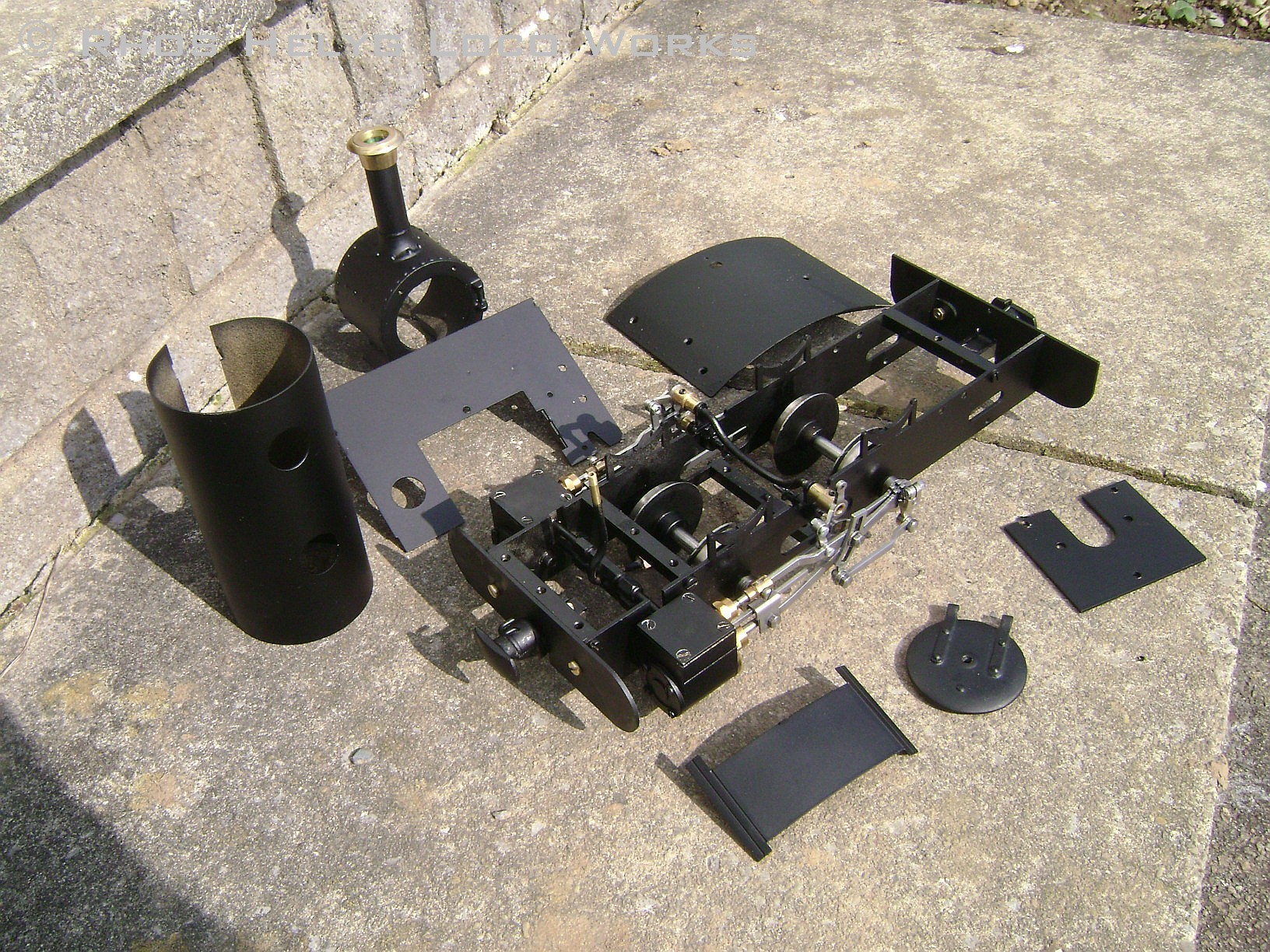
Riverdale Locomotives Elke 0-4-0TT SAPHIRA
This is an example of Riverdale's coal-fired Elke model, which is based on the Roundhouse Billy, and combined with a Roundhouse George tender. The owner was struggling to get it finished due to lack of time and other issues so the unfinished kit was sent to me for assembly, painting and testing. Included in this work was the assembly of the cylinders and mechanical parts, fitting of three-channel radio control, a whistle, uprated safety valve from Shawe Steam Services, a tender fall plate and Locoworks footplate sections. It was painted in satin finish Darjeeling blue with cream lining and grey roof, and the only gloss paint used on the whole loco was the red on the axle cranks! Name, number and works plates were provided by MDC. |
|
|
Riverdale Locomotives Irene 0-4-0ST
The chassis and a few other components from a Riverdale coal-fired Irene came to me as a box of bits, so the chassis (a Roundhouse Katie chassis with a few modifications) was assembled and tested and the boiler wrapper was reduced in length and had an additional hole cut to suit the Riverdale boiler. These and the other bits were then etch-primed and painted. |
|
|
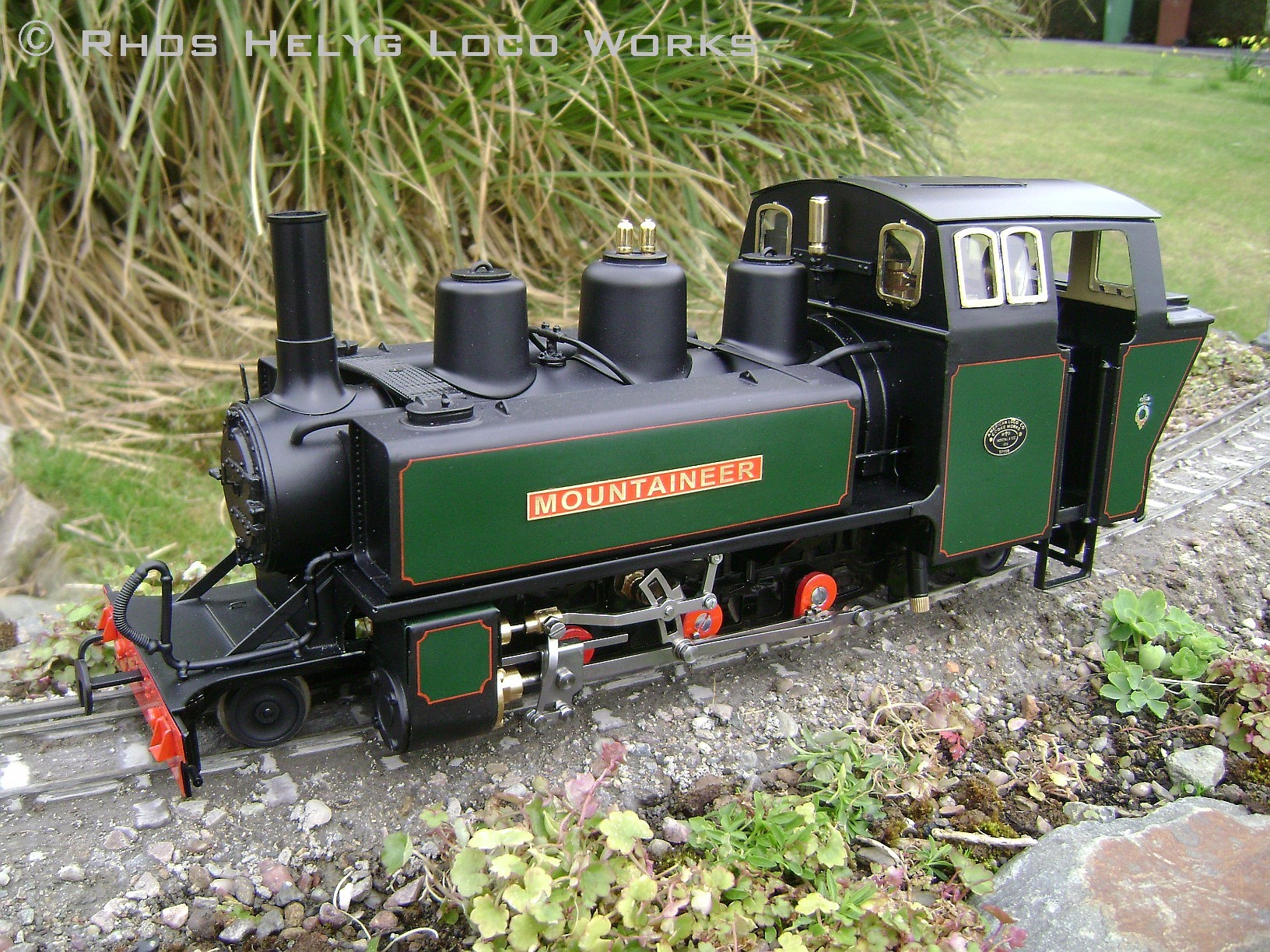
Roundhouse Engineering Alco 2-6-2T MOUNTAINEER
MOUNTAINEER has long been a favourite loco at the Festiniog Railway, and it was certainly
one of my favourites to
drive when I worked there. Its appearance has changed significantly
over the years, particularly with regards to the cab. From the late 1960s until 1983 it
carried a cab with sloping upper sides but there were some issues with this design so the
upper cab was replaced with one having a narrower profile and based loosely on those used
on the Double Fairlies.
|
|
|
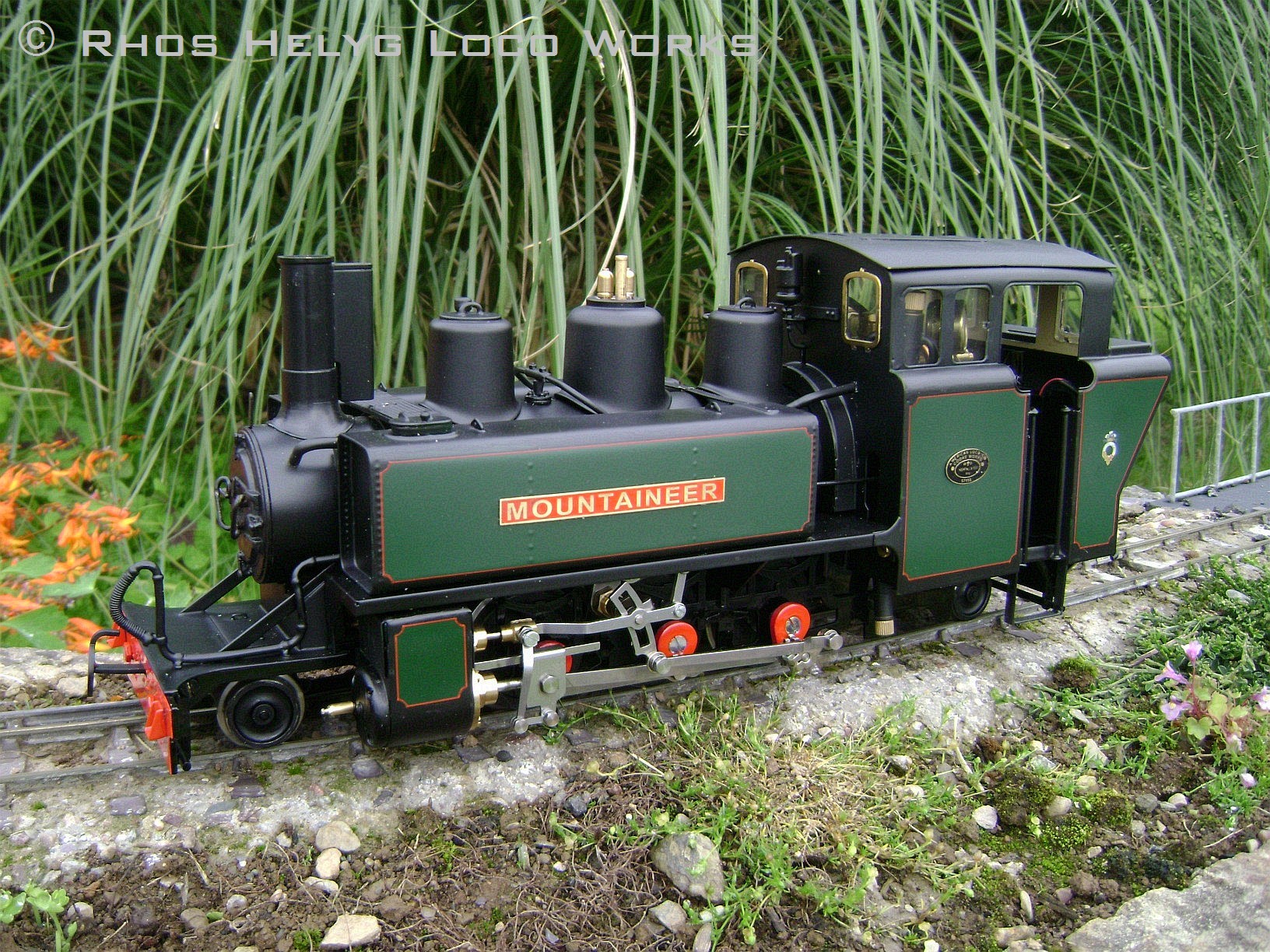
Roundhouse Engineering Alco 2-6-2T MOUNTAINEER
It can, and sometimes is, argued that green Festiniog Railway locomotives are not green at all: they are black with green panels edged in red. This Roundhouse Mountaineer is owned by a former FR footplate colleague and so both he and I know the full-size Mountaineer very well. I certainly have many happy memories of this fine loco ... 8 well-loaded carriages, off the spiral, round Dragon Curve, give it some regulator, and oh, the wondrous racket it made! Before it came to me for paintwork attention the owner of the model added some nice extra details, such as correct pattern front cylinder covers with pressure relief valves, a beautifully made reproduction of the chime whistle on front of the cab, correct layout of lids and handrails on the sand domes, and with more to come in due course. The loco came to me in basic factory-finish green (with a black boiler) but, and referring to my opening comment, there was just too much green. To produce a model based on Mountaineer's condition in the early-1990s required application of black paint to the upper cab and cab front, tank tops and backs and side footplates. A bit of additional green was also needed as the cylinder covers were supplied black. Lining in red and an all-over satin clear coat followed, finished off by a cream and black cab interior, red cranks and, of course, black wheels. Beast... |
|
|
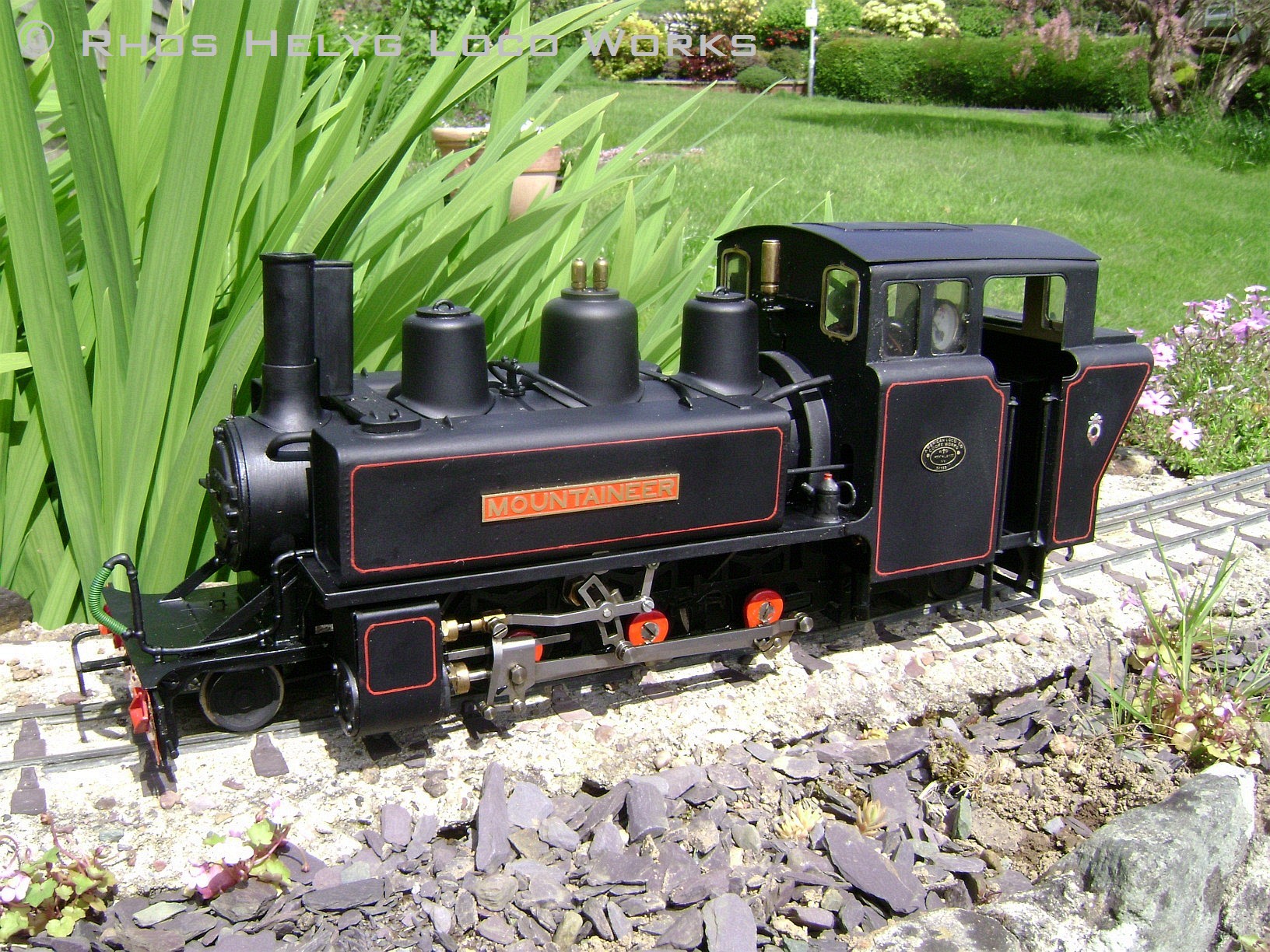
Roundhouse Engineering Alco 2-6-2T MOUNTAINEER
Sent here direct from the Roundhouse Engineering factory, this model of MOUNTAINEER arrived in plain gloss black livery. The simple red lining scheme that the full-size locomotive received in 1998 was applied together with Festiniog Railway crests. The wheels were painted black and the cranks were painted red to complete the cosmetic make-over, and a Summerlands chuffer pipe was fitted before sending on to its owner. |
|
|
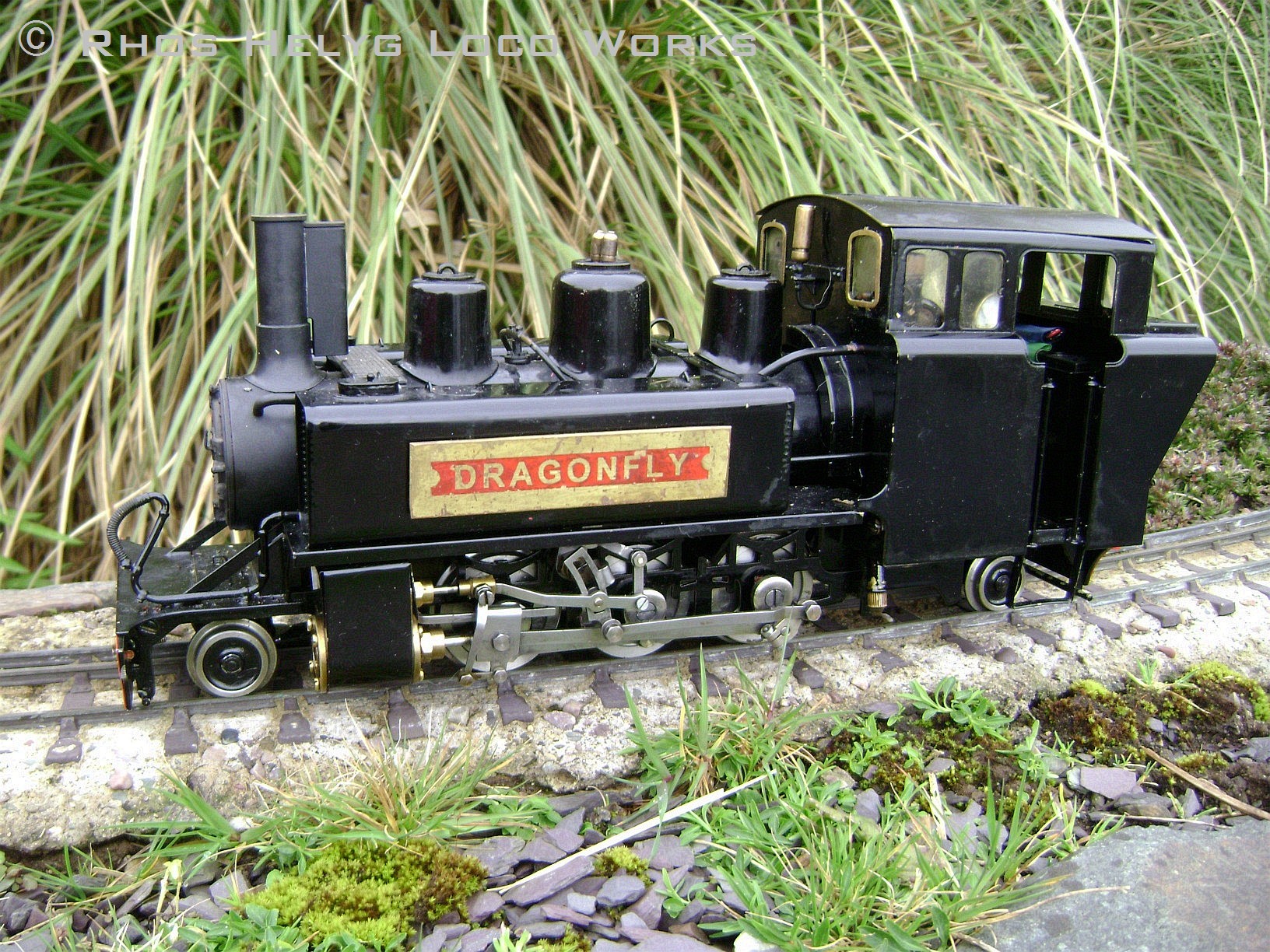
Roundhouse Engineering Alco 2-6-2T DRAGONFLY
Always nice to help out when I can...
|
|
|
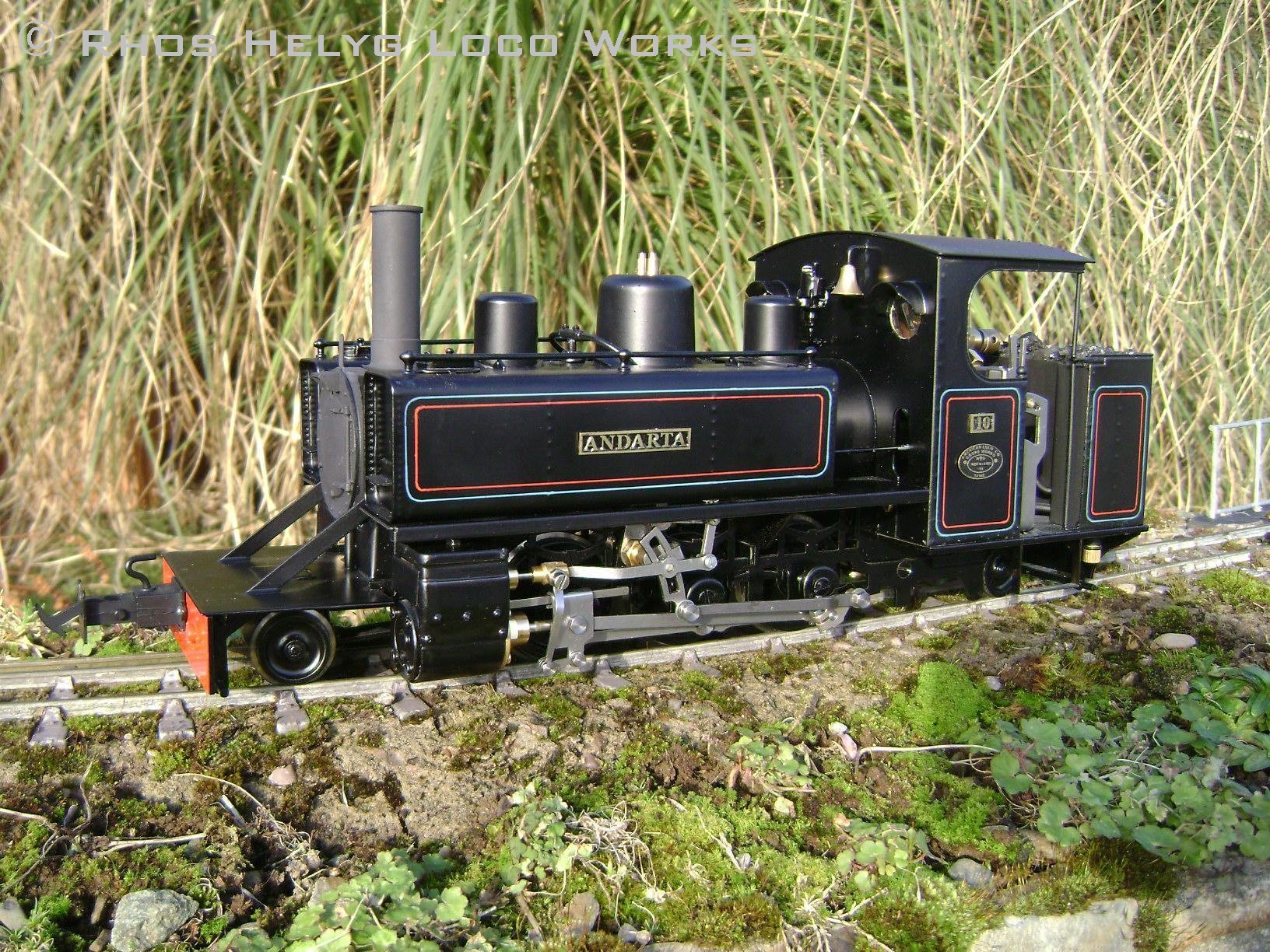
Roundhouse Engineering Alco 2-6-2T No. 10 ANDARTA
This brand-new Roundhouse Alco will be going in to the same fleet as AURORA, LUCIUS and CHATSWORTH and so is painted in the same and very smart house style of satin black with blue and red lining and a matt black smokebox. Painting the wheels and cranks in black and adding a real coal load to the bunker completed the job. |
|
|
Roundhouse Engineering Argyll 0-6-2T
For nearly 40 years I have been involved with and supported railway preservation projects,
and so it was a pleasure to be able to assist in this particular, if rather unfortunate,
task. The Roundhouse Engineering Argyll shown in the pictures is owned by the
Donegal Railway Heritage Centre in Donegal, Republic of Ireland. It
forms a significant part of their public displays that help to keep the history of the
County Donegal Railways system alive in what is now an area of the country devoid of
railways.
|
|
|
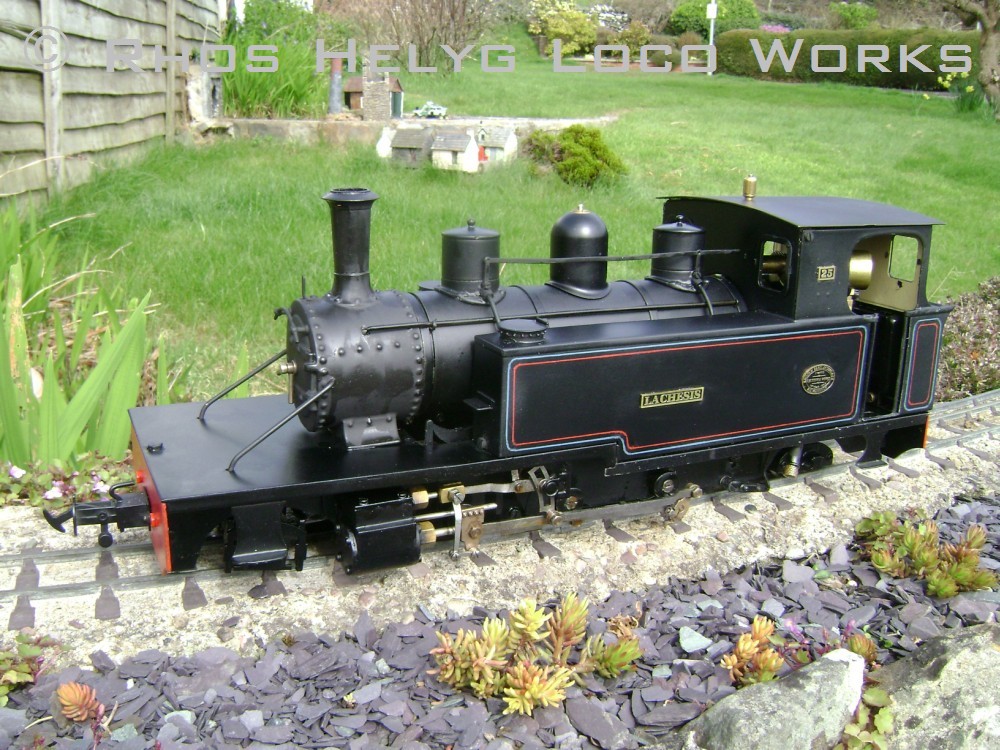
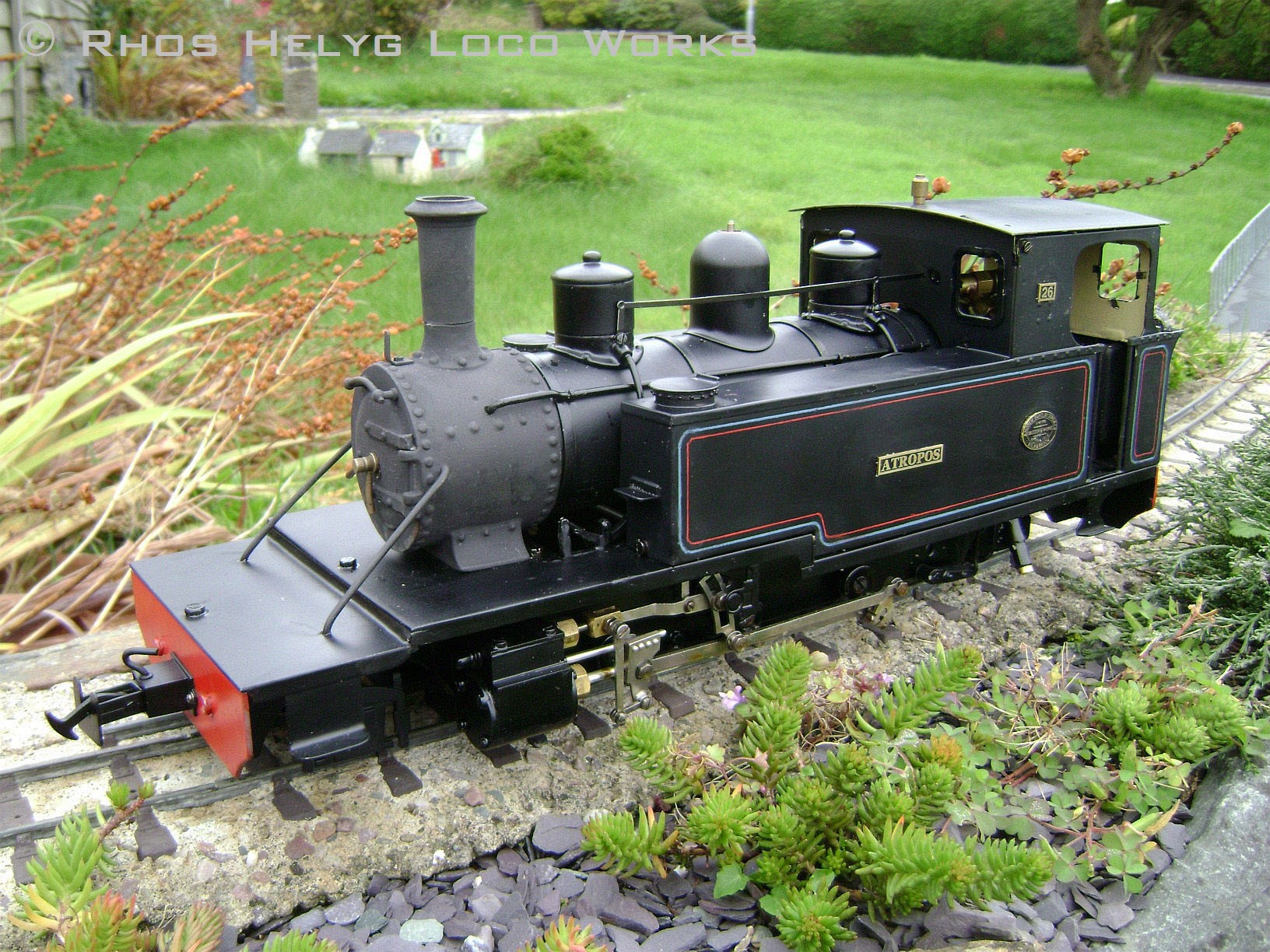
Roundhouse Engineering Argyll 2-6-2T No. 25 LACHESIS and No. 26 ATROPOS
A customer was looking for a loco that captured the essence of the 2-6-2T locos used on Irish
narrow gauge lines, particularly the long footplate section that these locos had in front of
the smokebox. He decided that a Roundhouse Argyll could form the basis for one and so an
Argyll was presented to me along with a comprehensive job list. Argyll looked a bit "leggy"
with its big wheels so the first task was to replace the supplied 42mm wheels with 33mm
replacements. Dropping the loco by about 5mm then, of course, affected the rear pony truck
and the coupling heights, which all had to be adjusted. Then it was time to attack the front
of the frames, with the front end chopped off and replaced with an extension that would
incorporate a front pony truck. This took some thinking about! Then on to the cosmetics,
with the biggest change being relocation of the dummy tank fillers to the front of the tanks
- because that is where the fireman would stand to fill them. A repaint in to the owner's
standard livery finished it off nicely. The owner assures me that he will fill the front
footplate with tool boxes, jacks, chains and other assorted tat.
|
|
|
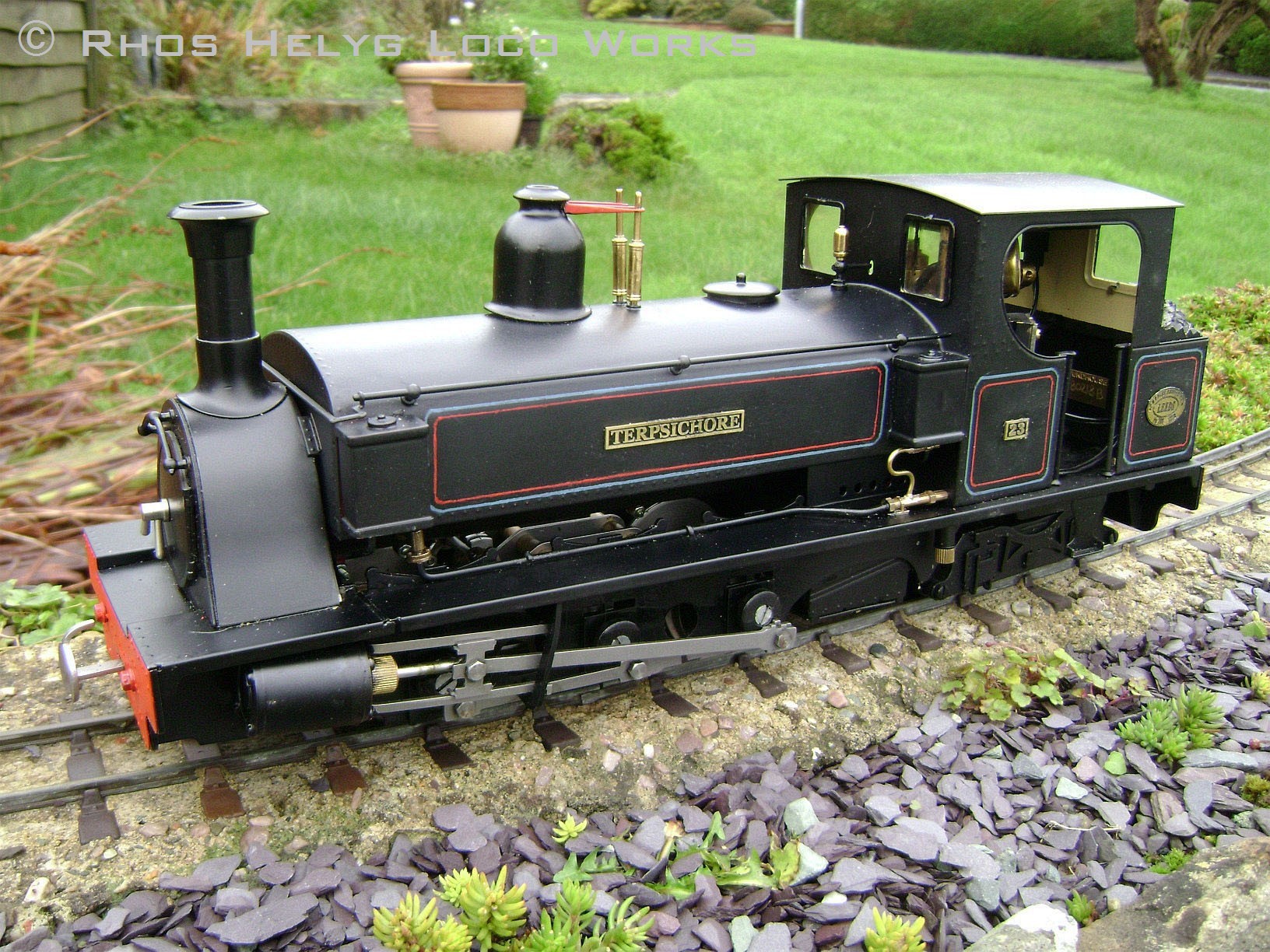
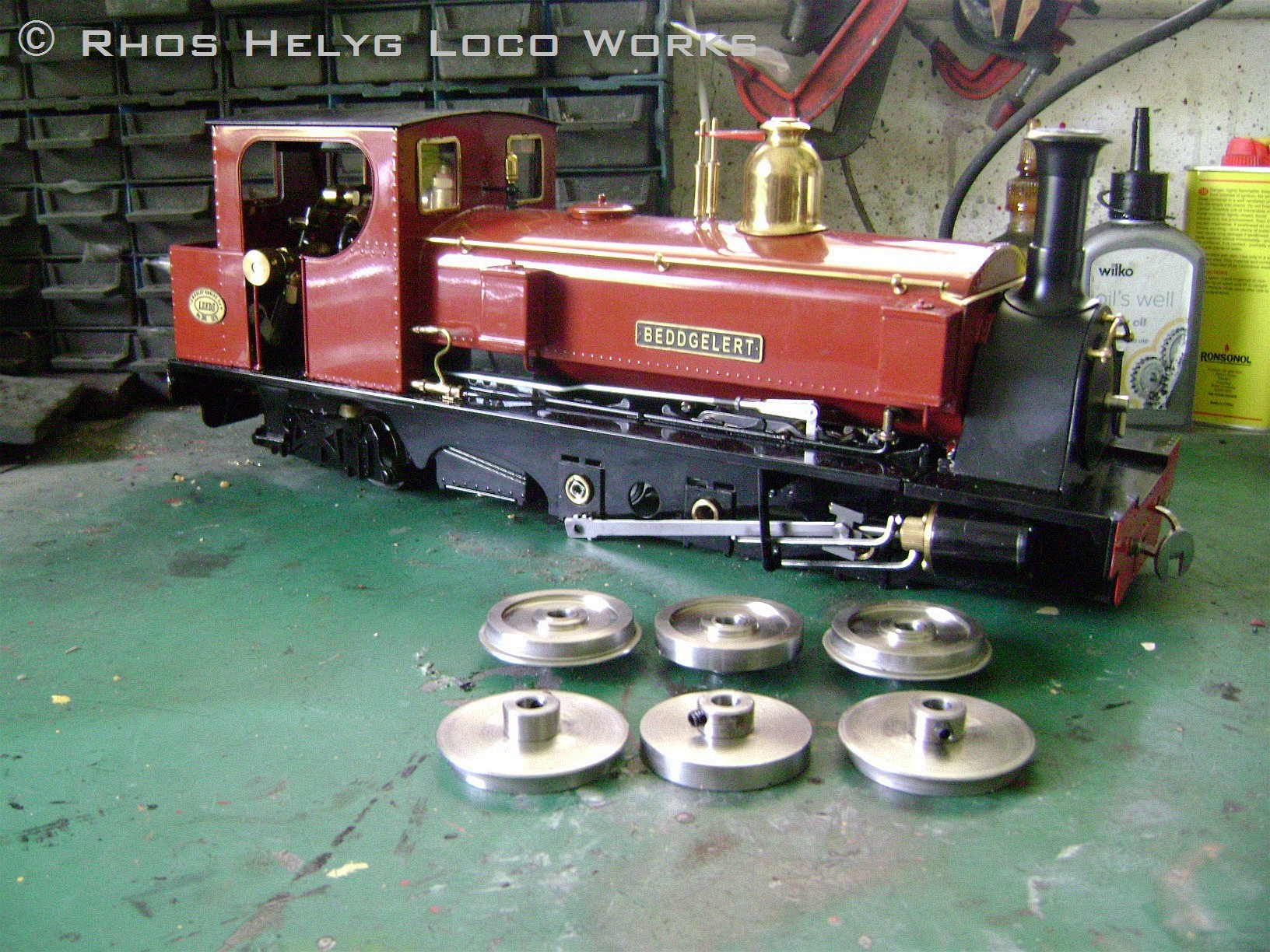
Roundhouse Engineering Beddgelert 0-6-4T No. 23 TERPSICHORE
The Roundhouse model of Hunslet Beddgelert uses the larger 42mm diameter wheels (most of
their other models use 33mm) and these are not available in un-insulated form, so they have
a plastic boss that provides their fixing to the axle. With no track power on the owner's
railway there was no need for any insulation and so the opportunity was taken to replace the
plastic bosses with steel. The main reason for doing this is to eliminate the "wobble" caused
by the impossible-to-fit-accurately plastic bosses. My grateful thanks go to Jack at Shawe
Engineering for his fine work.
|
|
|
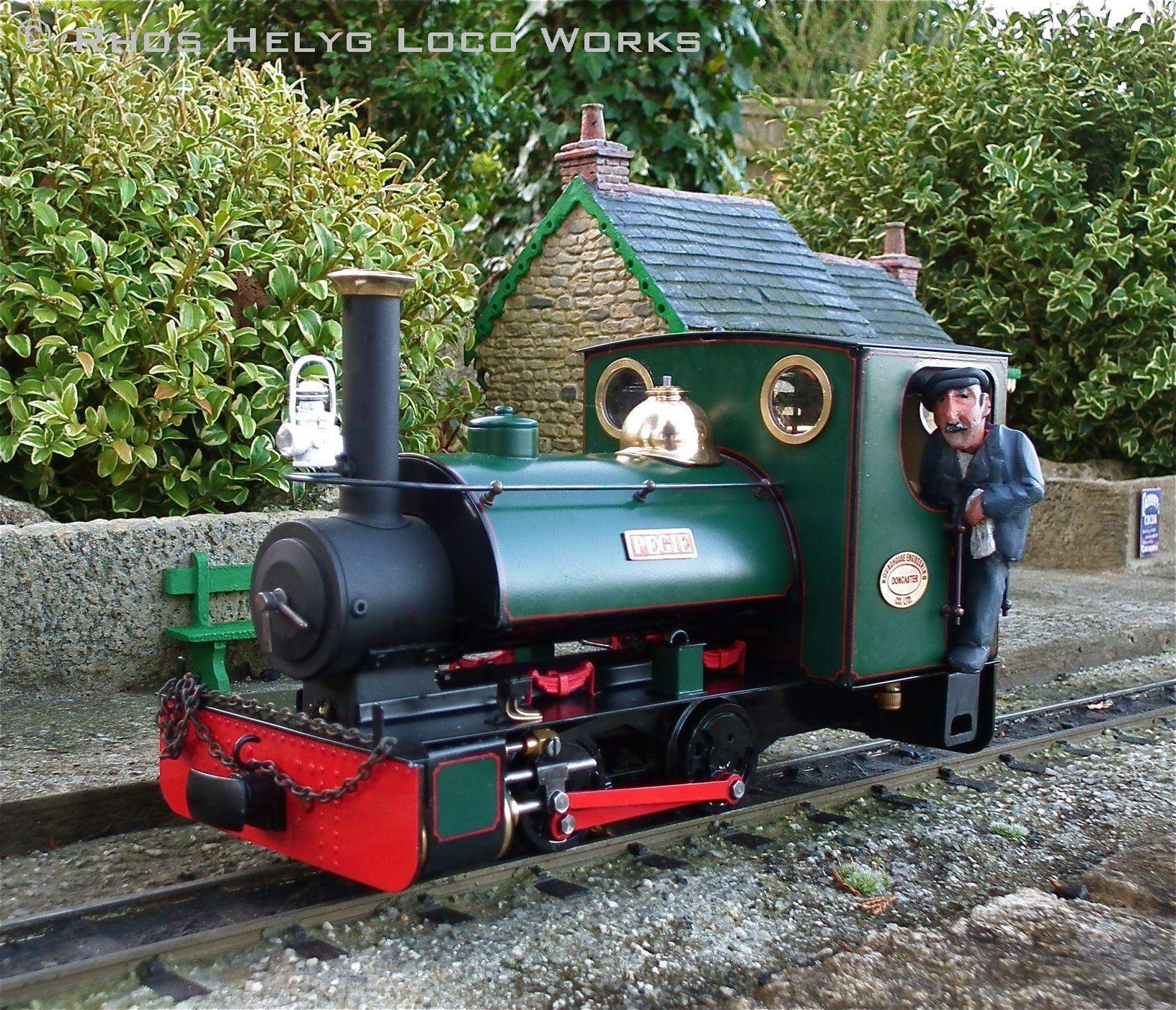
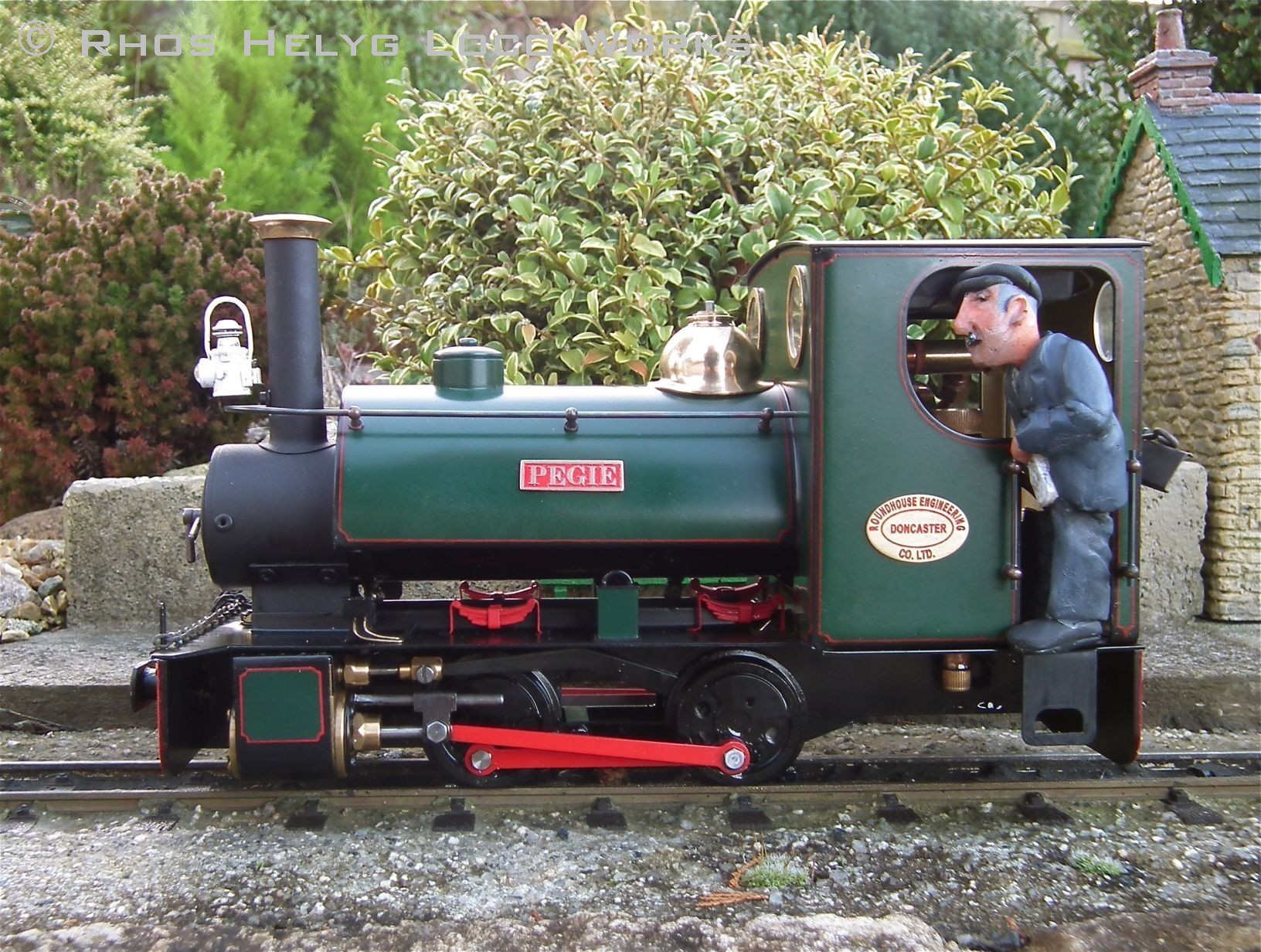
Roundhouse Engineering Bertie 0-4-0ST PEGIE
A quick lining job on one of these popular locomotives. There seemed little point in sending the whole loco to me, so owner Chris Bird only sent the body for attention. The original factory paint was retained and enhanced with red lining and black edging, followed by a satin clear coat. Chris has written a complete step-by-step guide to the many modifications he has made to this loco to produce the superb result shown. His guide can be found here. (Photos by Chris Bird) |
|
|
Roundhouse Engineering Bertie 0-4-0ST
The main components of this Roundhouse Bertie had been stripped of paint by the owner and sent to me for repainting in satin black with Penrhyn Quarry Railway lining. The parts were then returned to the owner for reassembly and the finished loco is seen here. (Photo by Luke Petch) |
|
|
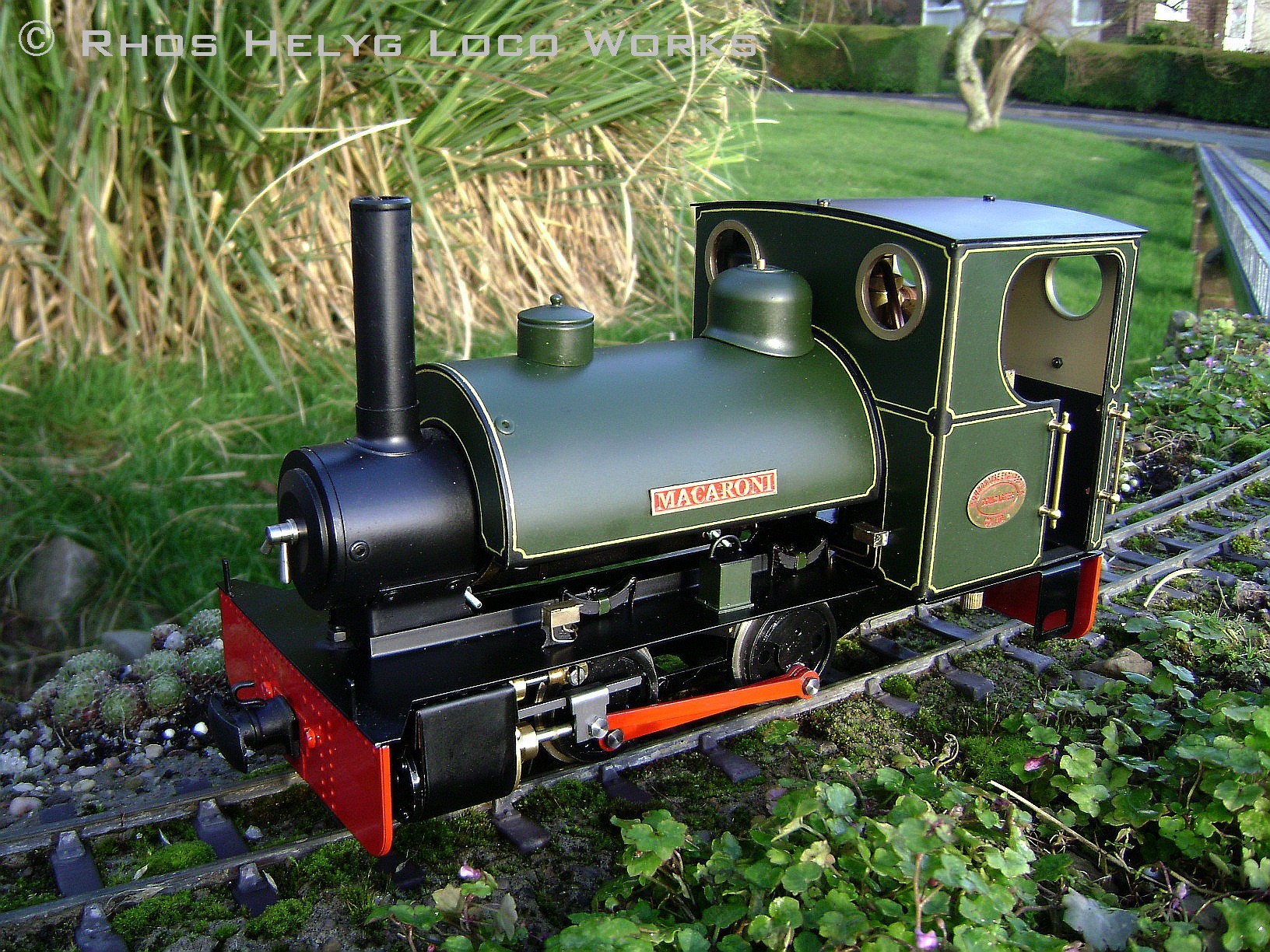
Roundhouse Engineering Bertie 0-4-0ST MACARONI
MACARONI came here direct from Roundhouse in Bronze Green and had a Tallylyn-inspired lining scheme applied with the green toned down from gloss to satin finish. Various upgrades from Roundhouse (pressure gauge, water filler, crossheads, gauge glass) and Locoworks (lubricators, sand boxes, rear lamp bracket, springs, firing irons and brackets) were fitted together with some additional paintwork (wheels, rods, cab interior). |
|
|
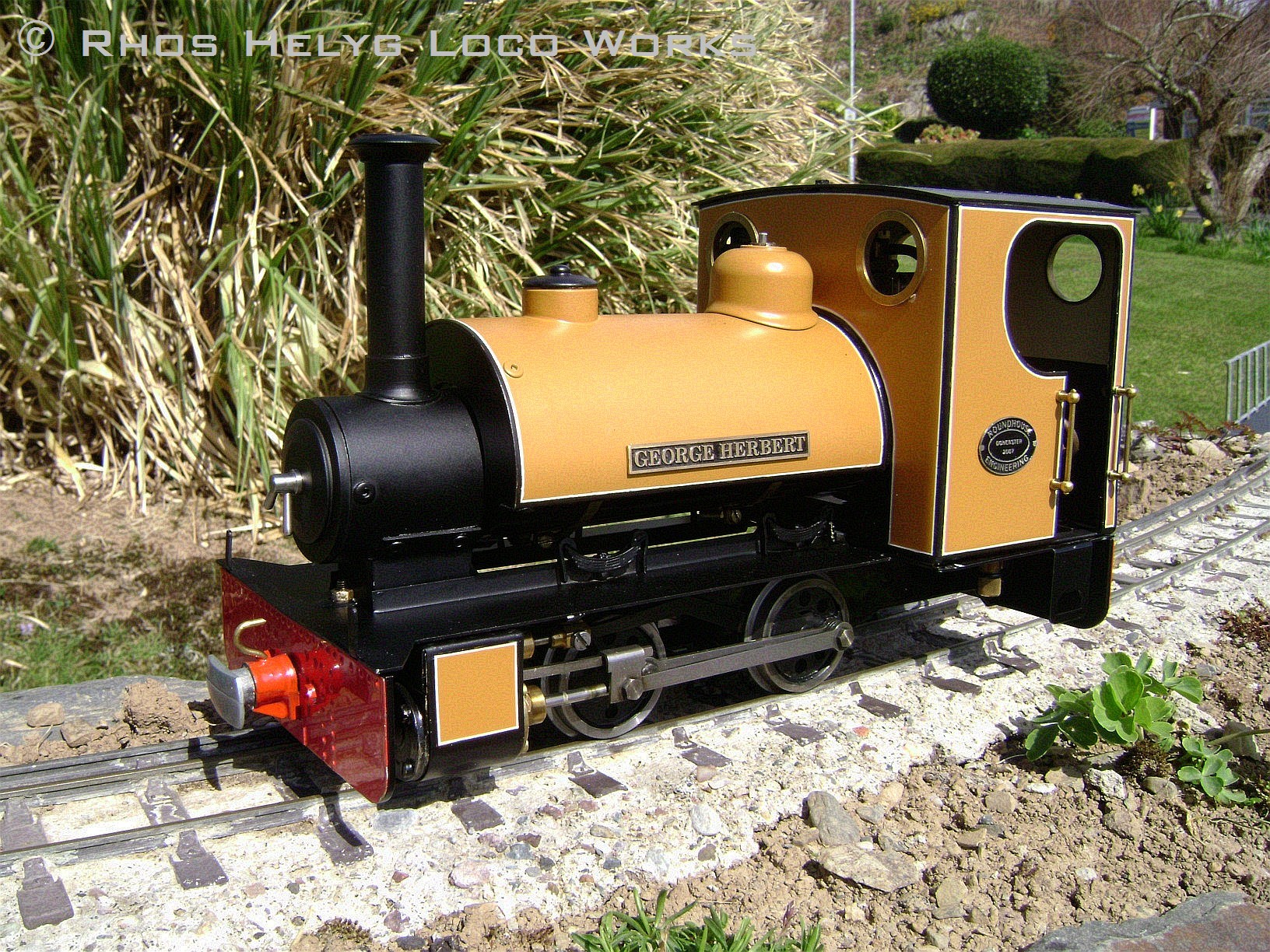
Roundhouse Engineering Bertie 0-4-0ST GEORGE HERBERT
Roundhouse Engineering change their paint colour range from time to time, and a colour that used to be available was RAL8001 Tan. This Bertie is the first loco in this colour that has been here for attention. It came here for a repair to the body fixing screw, fitting of Locoworks dummy axlebox springs, a Locoworks cab rear door and a Train Department regulator valve spindle. The original intention had been to apply white lining with black edging to the original factory paint, but this proved impossible due to damage caused by fitting and subsequent removal of name and works plates held in place with epoxy and SuperGlue. The easiest way to repair the paint damage was to strip and repaint the loco, and this also guaranteed that the rear cab door's colour matched the rest of the body perfectly. Black wheels and valve rods completed the job. |
|
|
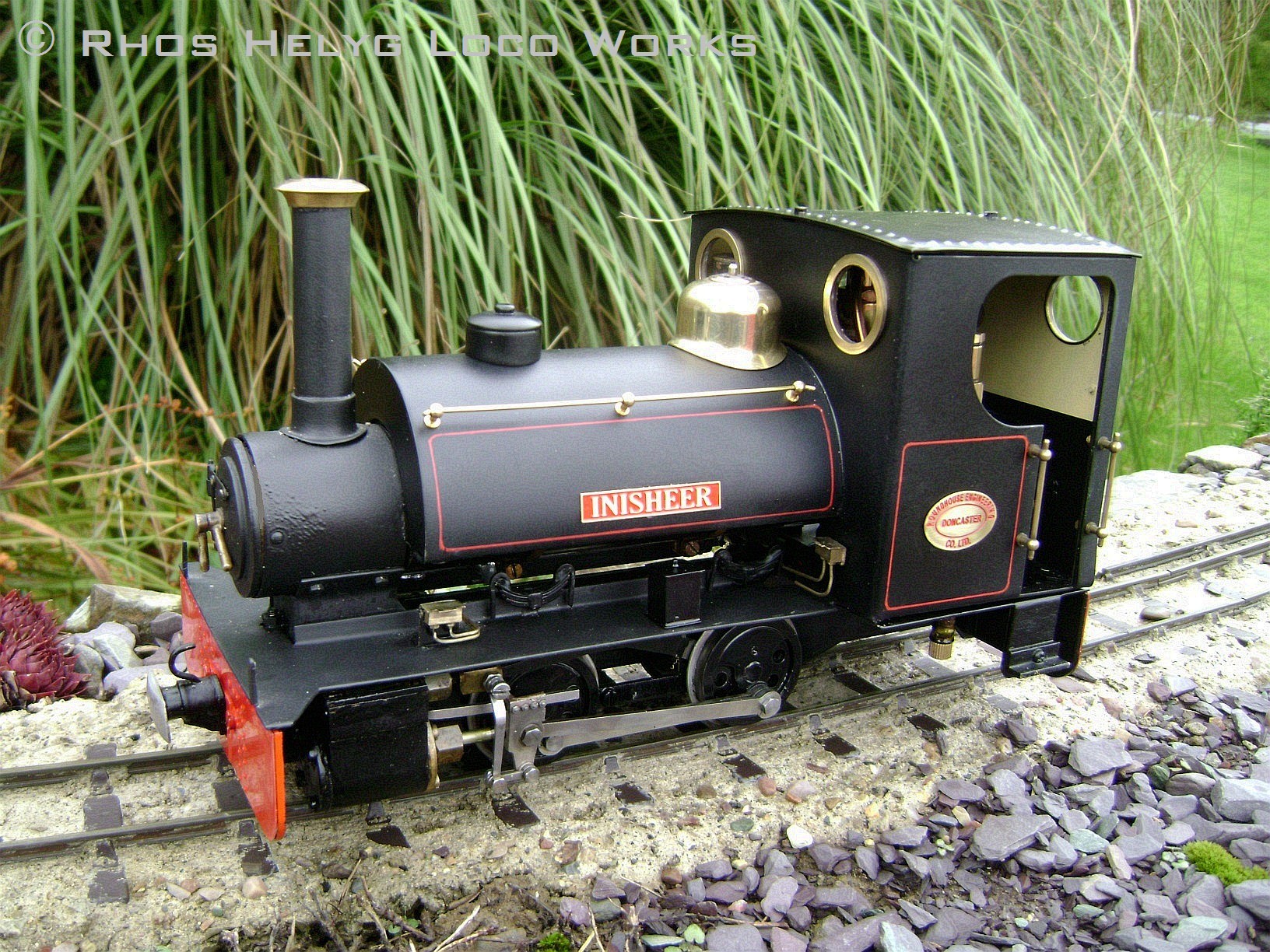
Roundhouse Engineering Bertie 0-4-0ST INISHEER
This Roundhouse Bertie came here for fitting of a number of Roundhouse (crossheads, water top-up system, pressure gauge, buffer beam overlays) and Locoworks (lubricators, sand boxes, rear cab door) detail upgrades, followed by stripping of its horrible "rattle can" paintwork and repainting in to satin black with red lining. |
|
|
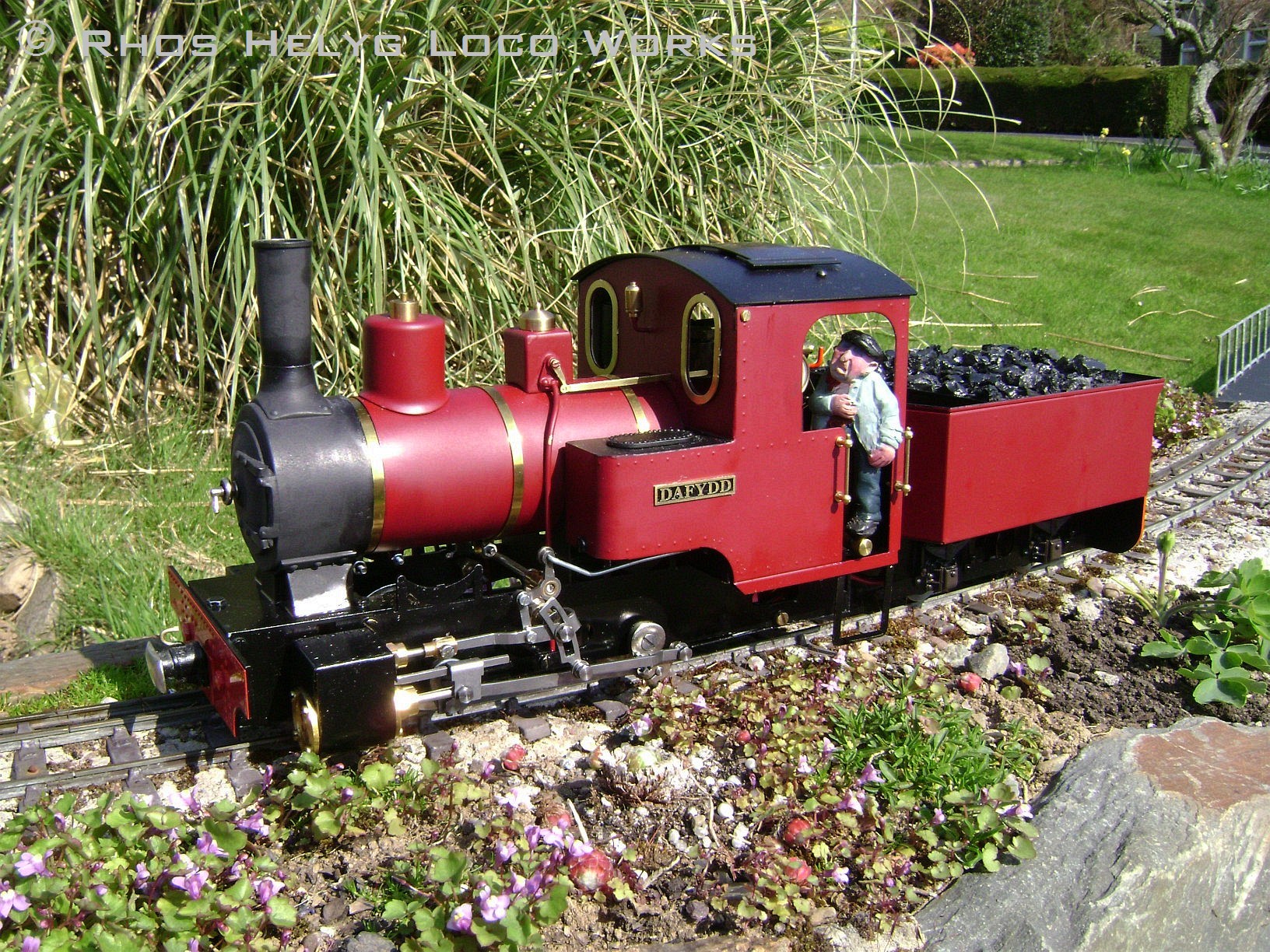
Roundhouse Engineering Billy 0-4-0TT DAFYDD
The bodywork parts from this kit-built Roundhouse Billy and its tender came here for painting in satin finish maroon and black. The owner then completed the assembly of his loco, and the finished model is shown here. |
|
|
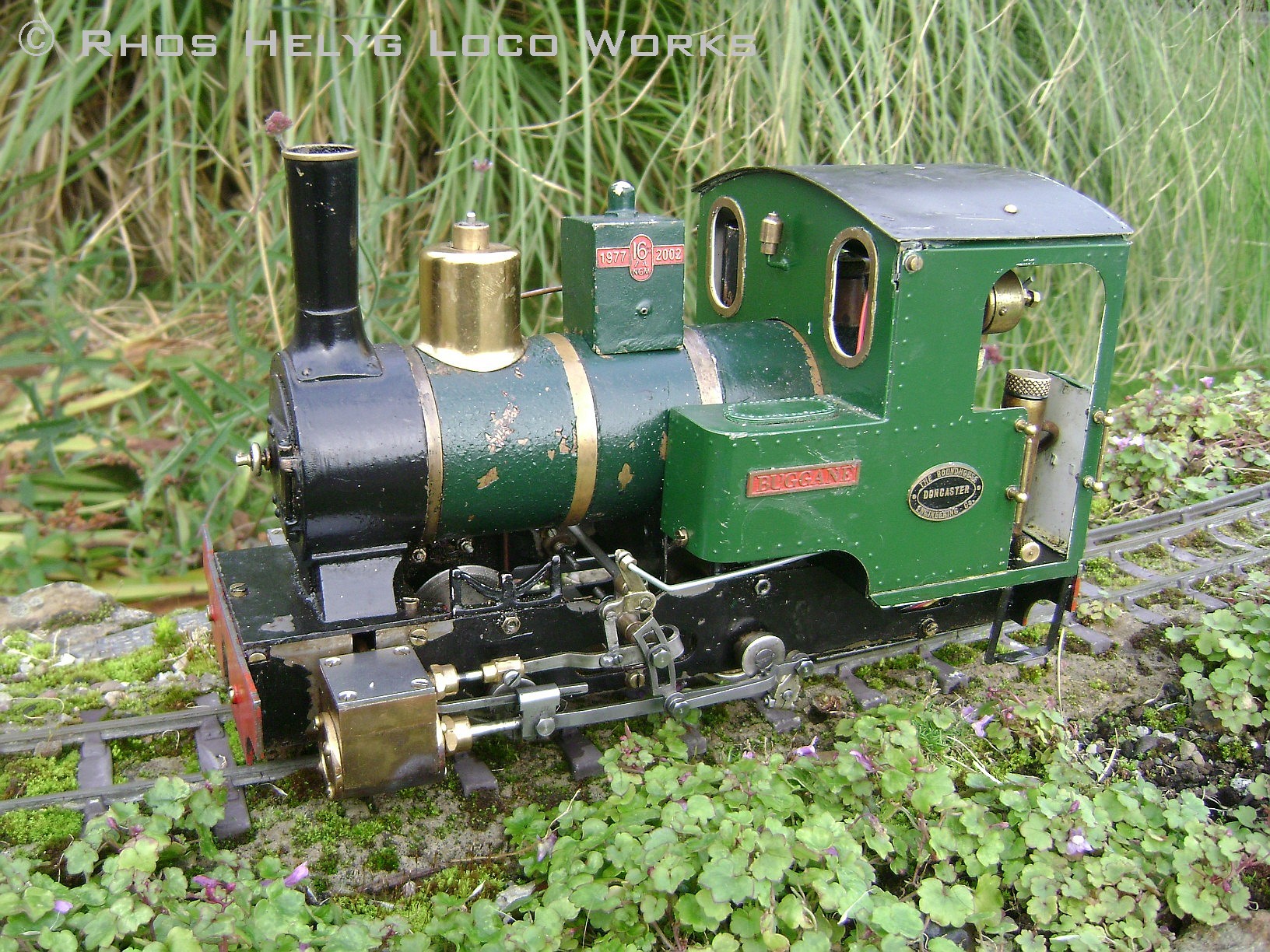
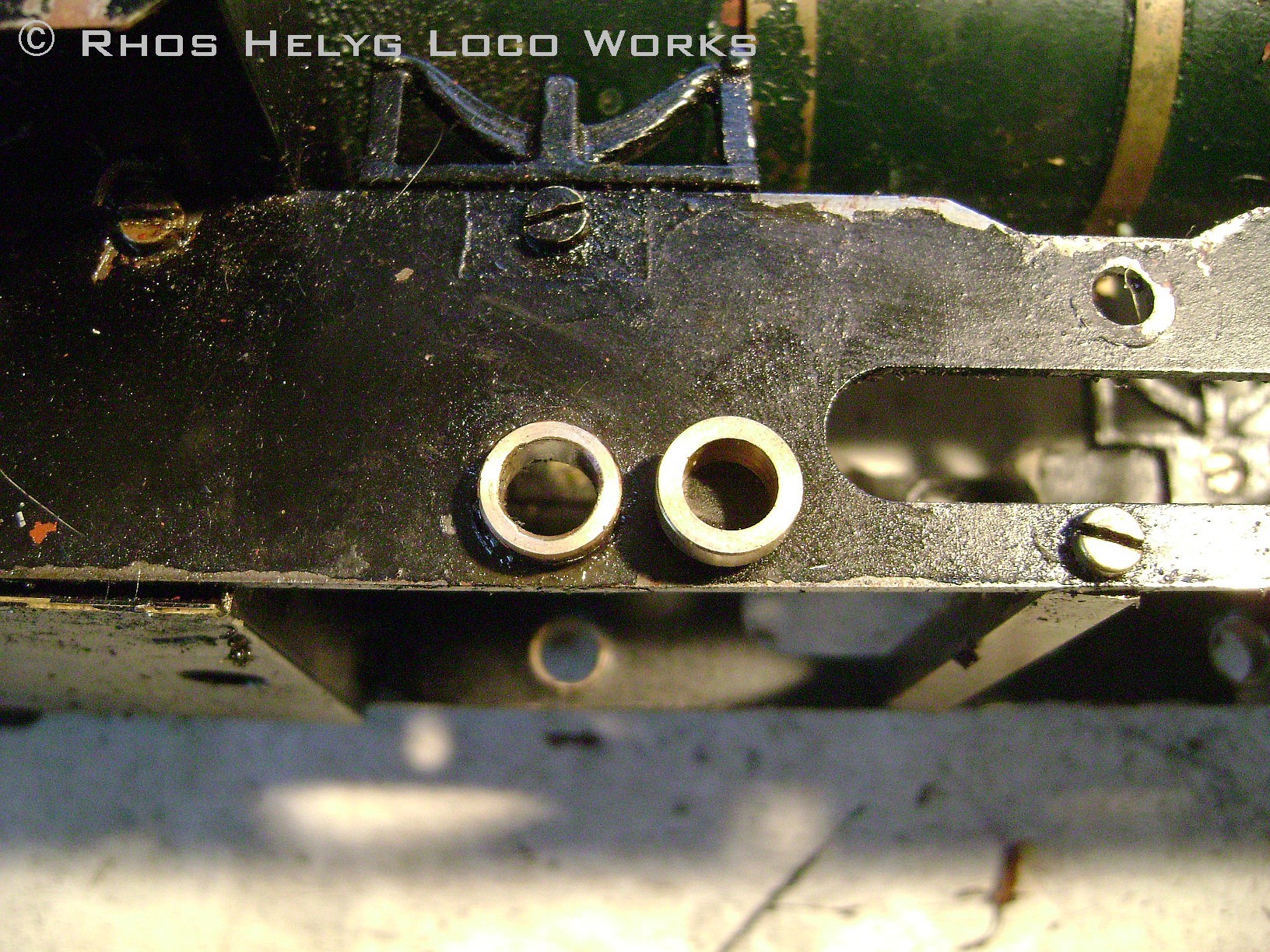
Roundhouse Engineering Billy 0-4-0T BUGGANE
Not every loco leaves here looking immaculate, but for good reason! This Roundhouse Billy
was built from a kit by its owner some time ago. Years of reliable running had taken their
toll and it came here for some repairs, including: |
|
|
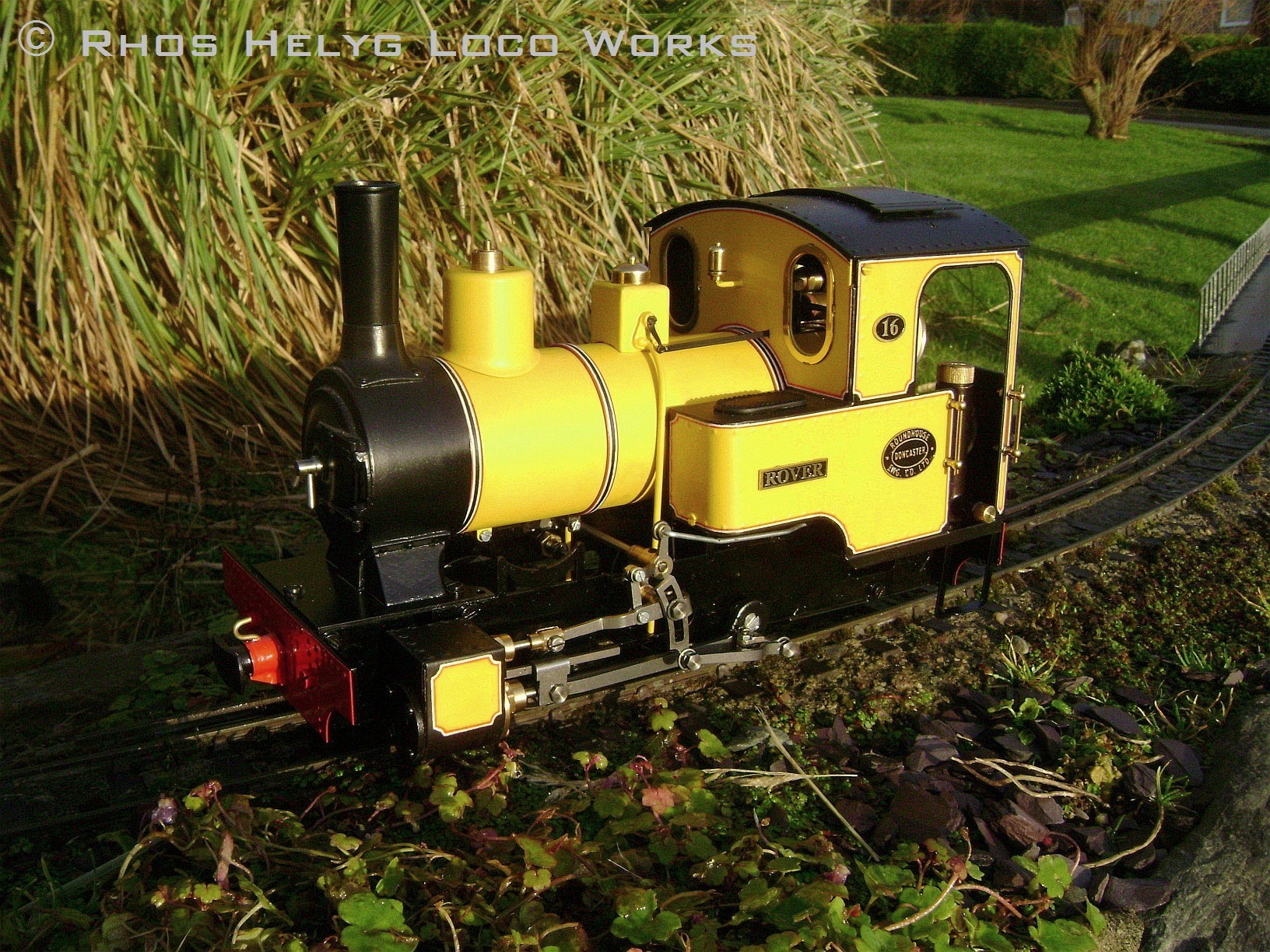
Roundhouse Engineering Billy 0-4-0T No. 16 ROVER
A change from the usual black, blues, greens and reds, this yellow Billy received red and white lining edged in black, an all-over satin finish and name and number plates from MDC. While it was in bits the smokebox dart was changed from the wheel type to the two-handle type. |
|
|
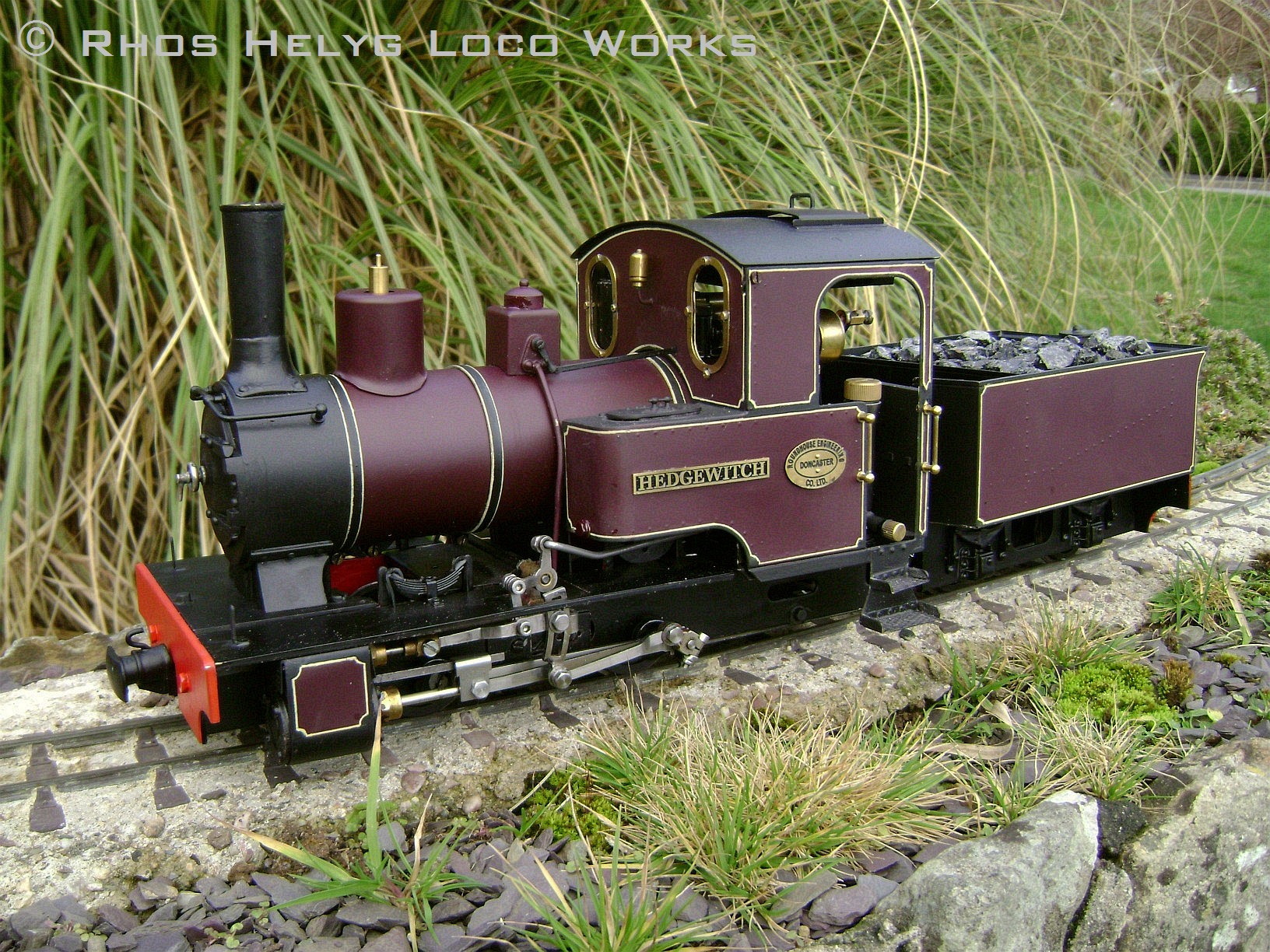
Roundhouse Engineering Billy 0-4-0TT HEDGEWITCH
HEDGEWITCH is a kit-built Roundhouse Billy. It had been very nicely constructed by somebody
who was obviously a talented model engineer but who made a few questionable decisions along
the way, for reasons best known to themselves. For example, those spectacle rings. Eschewing
the normal bent-over tabs they are instead each held in place by four 12BA nuts and bolts.
They look nice, but why use nuts? It would have been far easier, and cheaper, to just tap
12BA holes in the brass spectacle plate. Doing it that way would have made it far easier
and less fiddly to assemble, and reassemble. The cab roof hinge was another example, very
clever but it broke and was nowhere as near reliable as two 8BA screws.
|
|
|
Roundhouse Engineering Billy 0-4-0T
The bodywork parts for this Billy were sent here for painting and lining and then returned to the loco's owner. The owner then completed the assembly of his locomotive and the superb result is shown here. The lower picture shows the painted and lined parts. (Photo by Nigel Hobson) |
|
|
Roundhouse Engineering Billy 0-4-0T
The owner of this Roundhouse Billy asked me to paint the major parts of the kit he was building and kindly sent me a picture once he had finished assembly of the loco. (Photo by Colin Last) |
|
|
Roundhouse Engineering Billy 0-4-0TT MONARCH
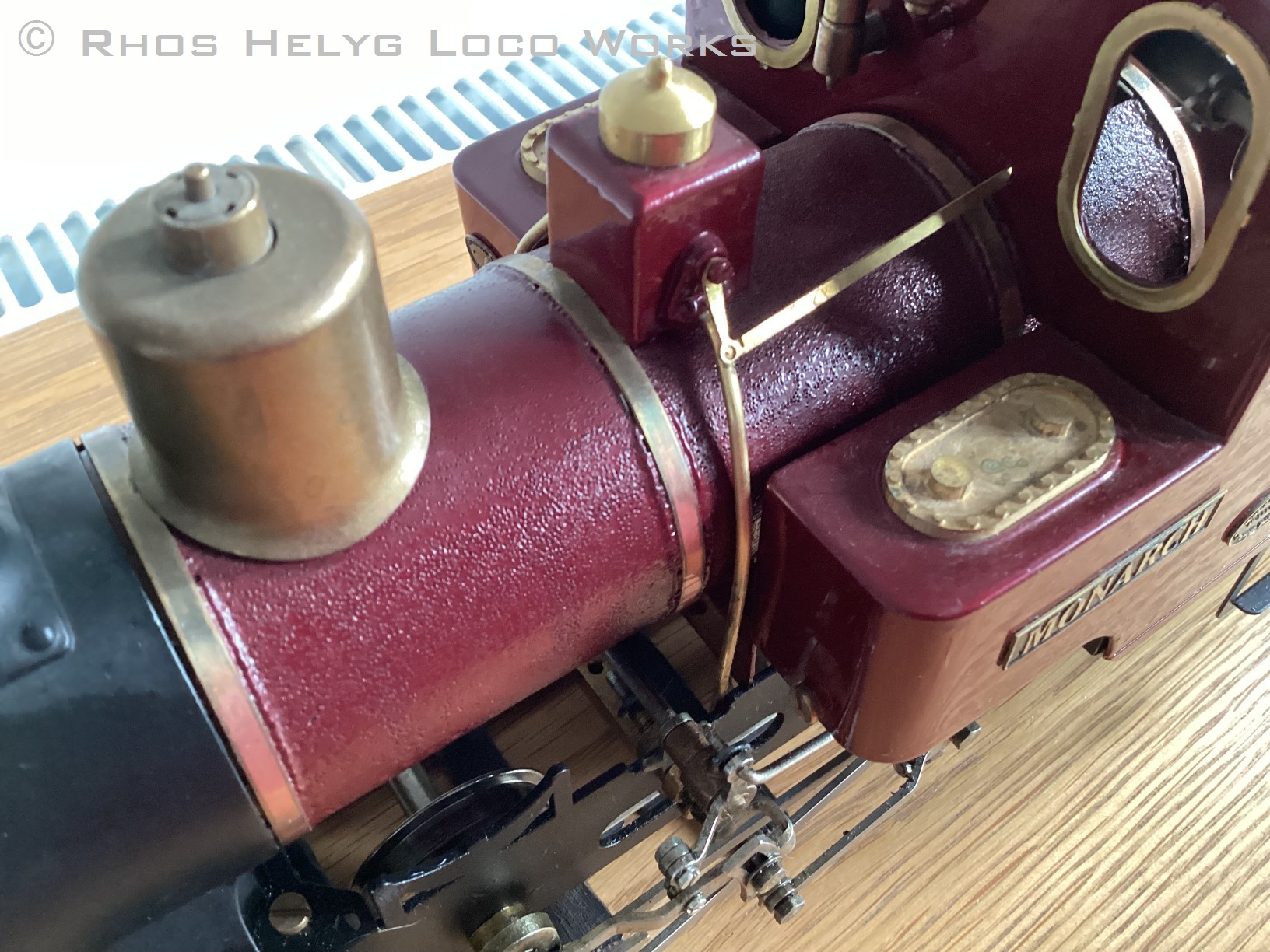
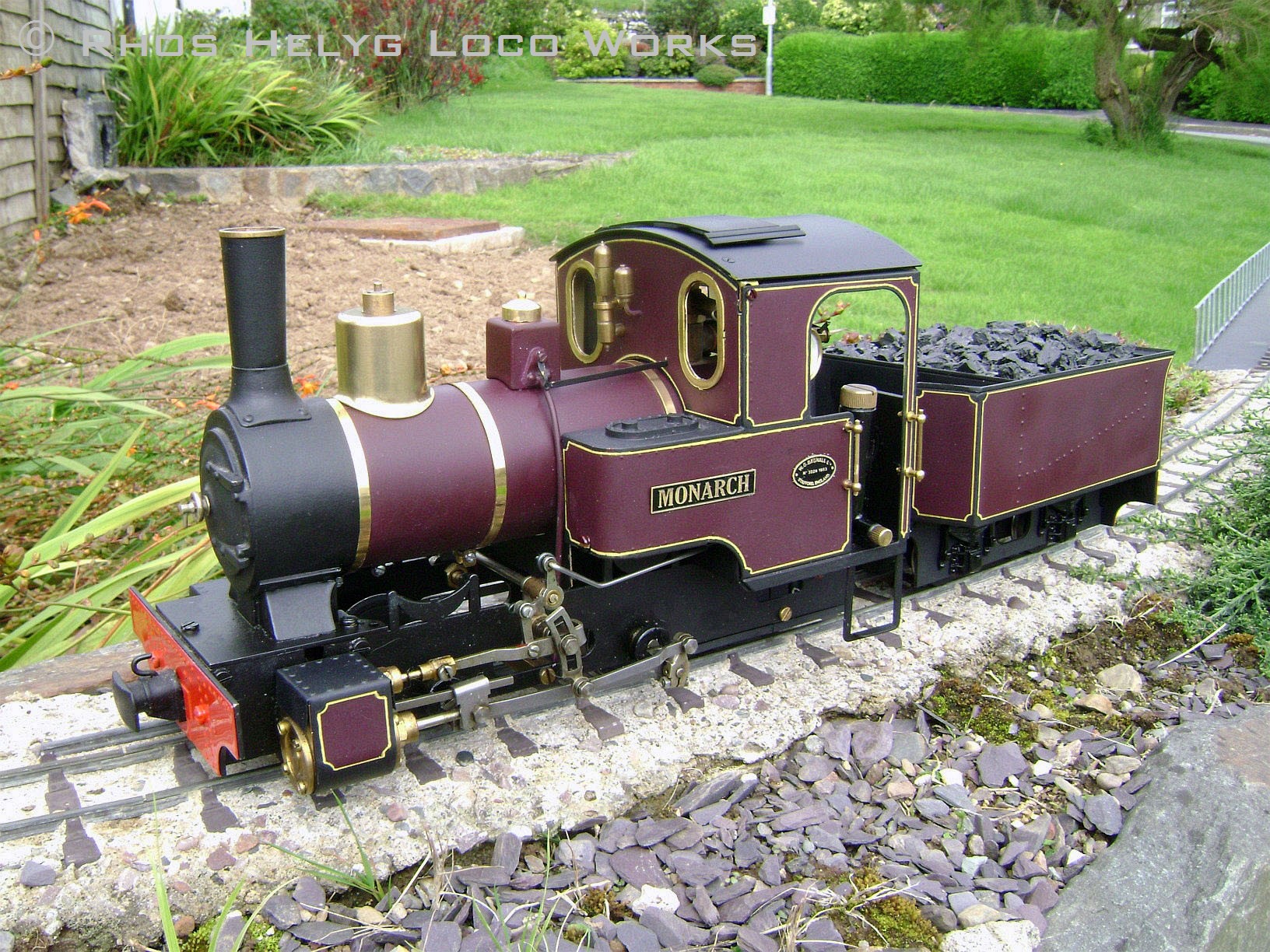
Many of you will know that, with the possible exception of Matt Black, my view is and continues to be that "no decent paint ever came out of a rattle-can". MONARCH here is a case in point. Repainted using a rattle-can, the paint went soft when the loco was steamed and then turned in to the finish shown in the first photo. It came here for stripping and a repaint in to Victorian Maroon with yellow lining and black edging. I don't know what it is about Billy owners and Victorian Maroon, but this must be the fourth one I've done in this colour. |
|
|
Roundhouse Engineering Darjeeling A-Class 0-4-0ST
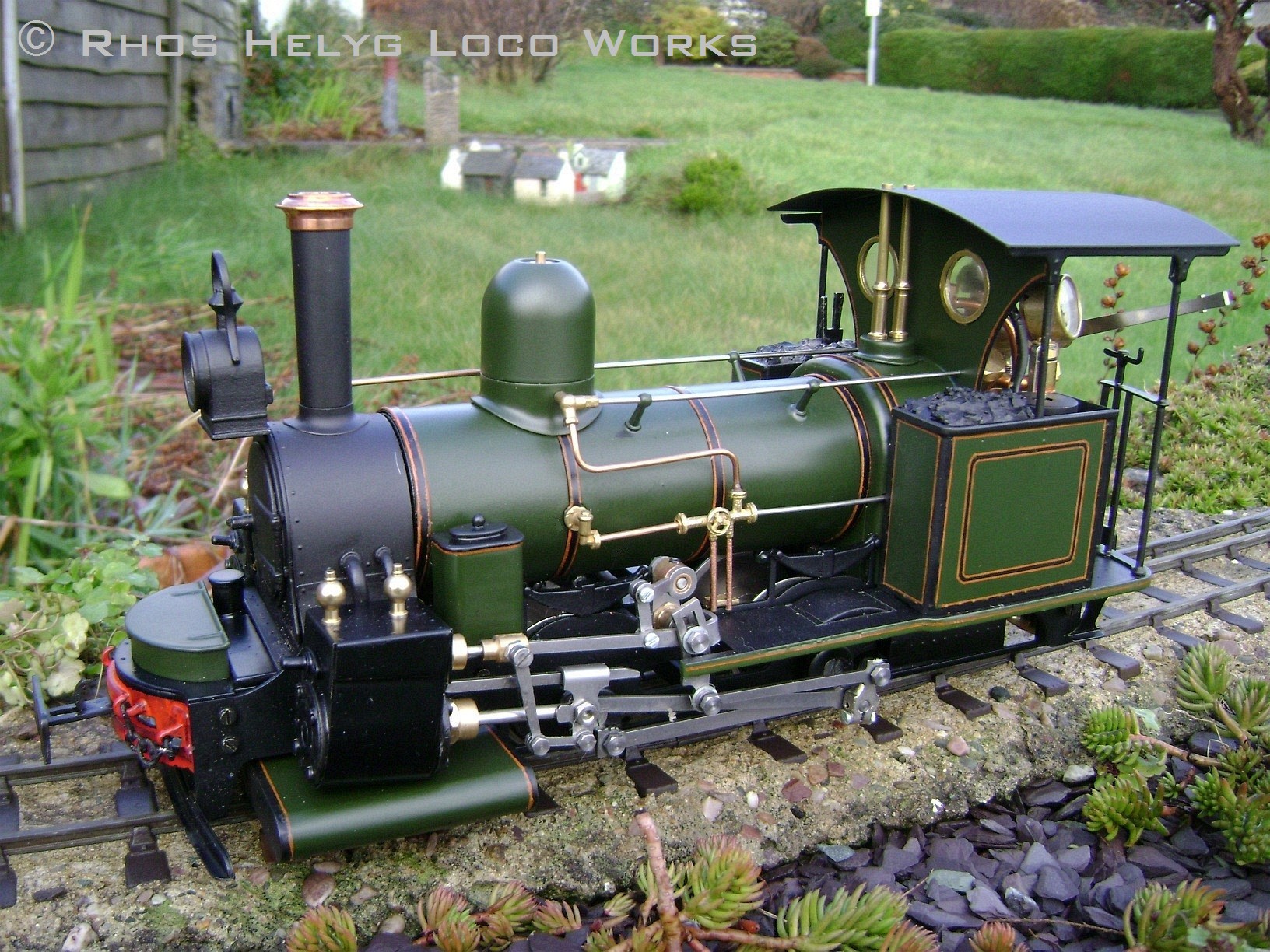
This is the RHLW version of the Roundhouse Darjeeling A-Class. This one came here for conversion to manual control (an option not available from Roundhouse) and lining, of course. Determination of the lining style used on locos of this antiquity is always a challenge. There are few photos of the A-Class locos in use (the best set perhaps being in the superb The Incredible Darjeeling B-Class book) but even these are dark and muddy and show little detail. One thing is for sure though: they had black wheels and other than when new they did not have glossy paint. |
|
|
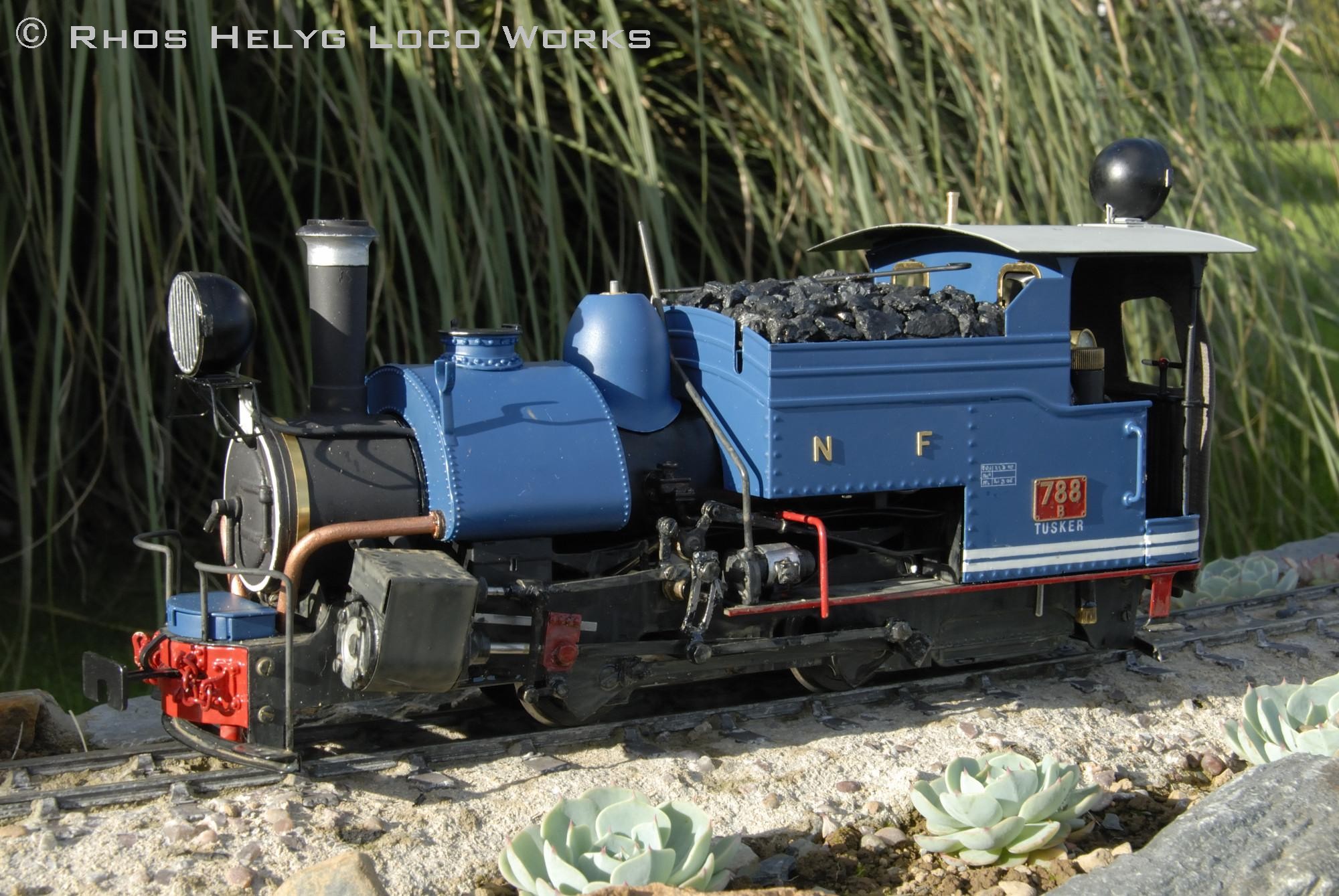
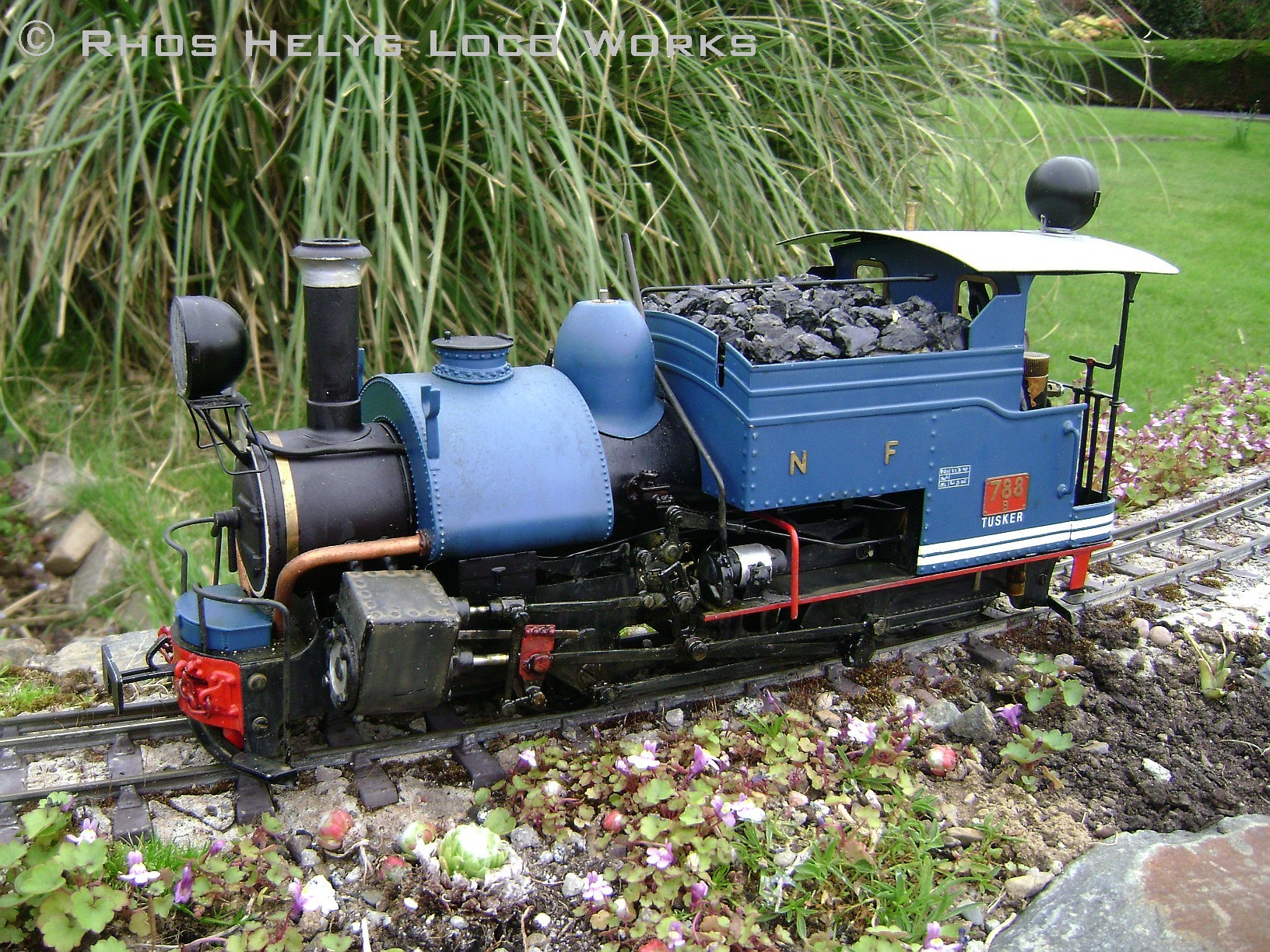
Roundhouse Engineering Darjeeling B-Class 0-4-0ST No. 788 TUSKER
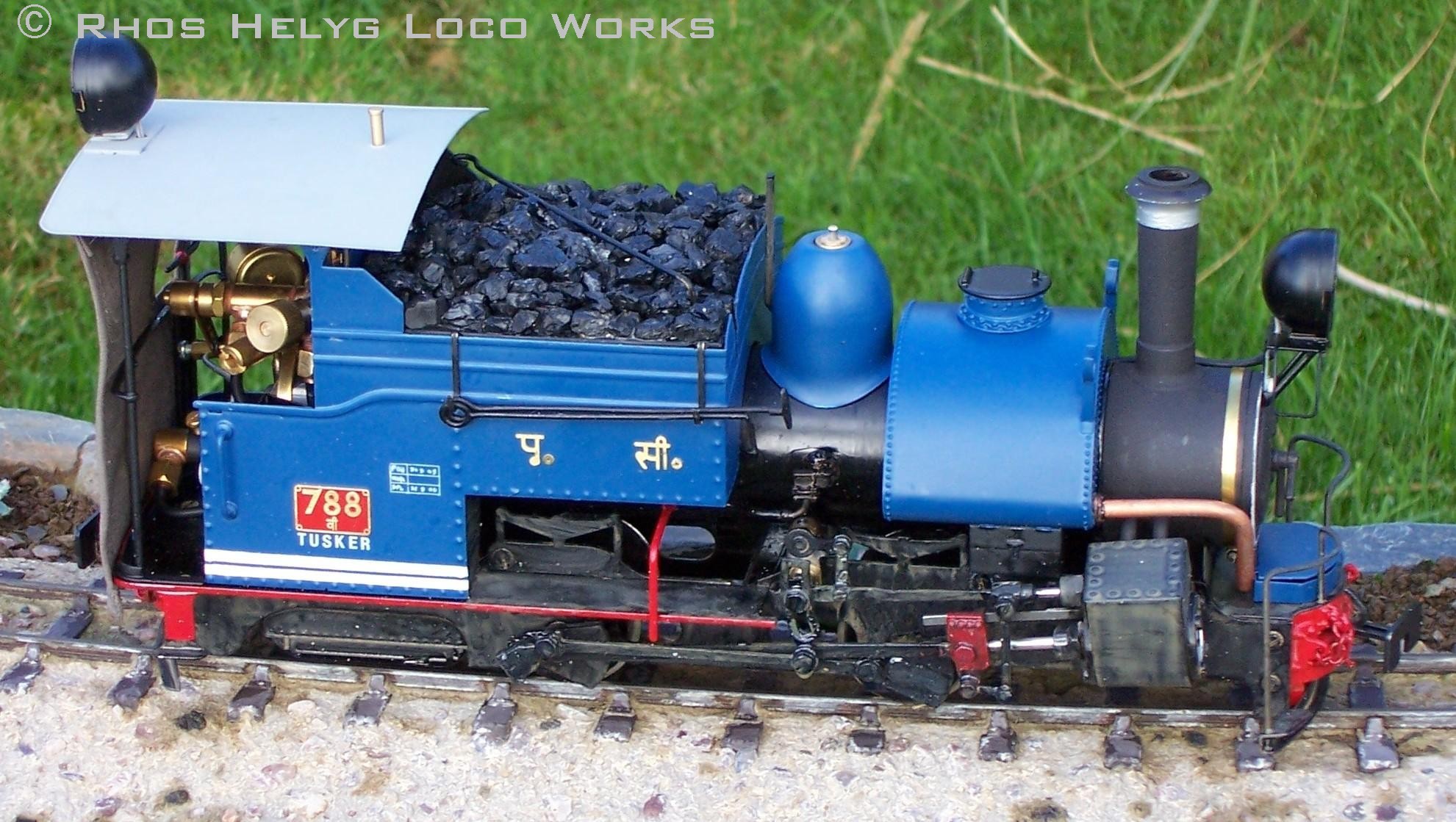
TUSKER was a standard factory-built Roundhouse loco that was modified to look as much like the
real 788 TUSKER as possible. The changes included:
|
|
|
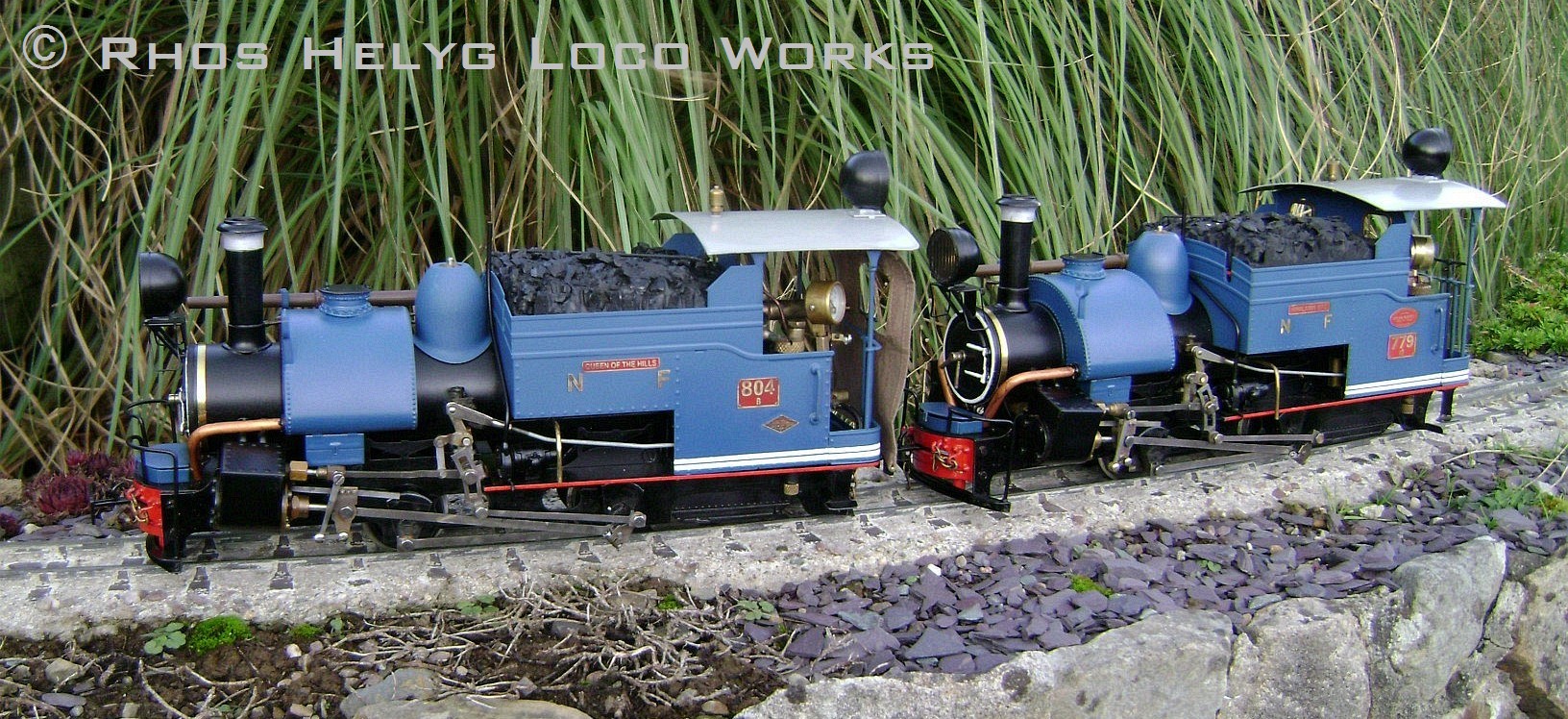
Roundhouse Engineering Darjeeling B-Class 0-4-0ST No. 779
HIMALAYAN BIRD and No. 804 QUEEN OF THE HILLS
The Roundhouse Engineering model of the Darjeeling B-Class is a fine representation of an
iconic prototype. For good reason though the paintwork is a bit plain on an out-of-the-box
model but a few apocryphal flicks of the proverbial paint brush coupled with some etched brass
plates can turn them in to something quite special.
|
|
|
Roundhouse Engineering Darjeeling B-Class 0-4-0ST No. 42
This Roundhouse Darjeeling B-Class came here for attention, including:
|
|
|
Roundhouse Engineering/Shawe Steam Services Darjeeling B-Class 0-4-0ST
Three coal-fired Darjeeling B-Class locos showing three authentic liveries that these locos can carry. Note that the blue and green locos have black boilers! |
|
|
Roundhouse Engineering Darjeeling B-Class 0-4-0ST No. 779 MOUNTAINEER
This Roundhouse Darjeeling B-Class came here for attention, including:
|
|
|
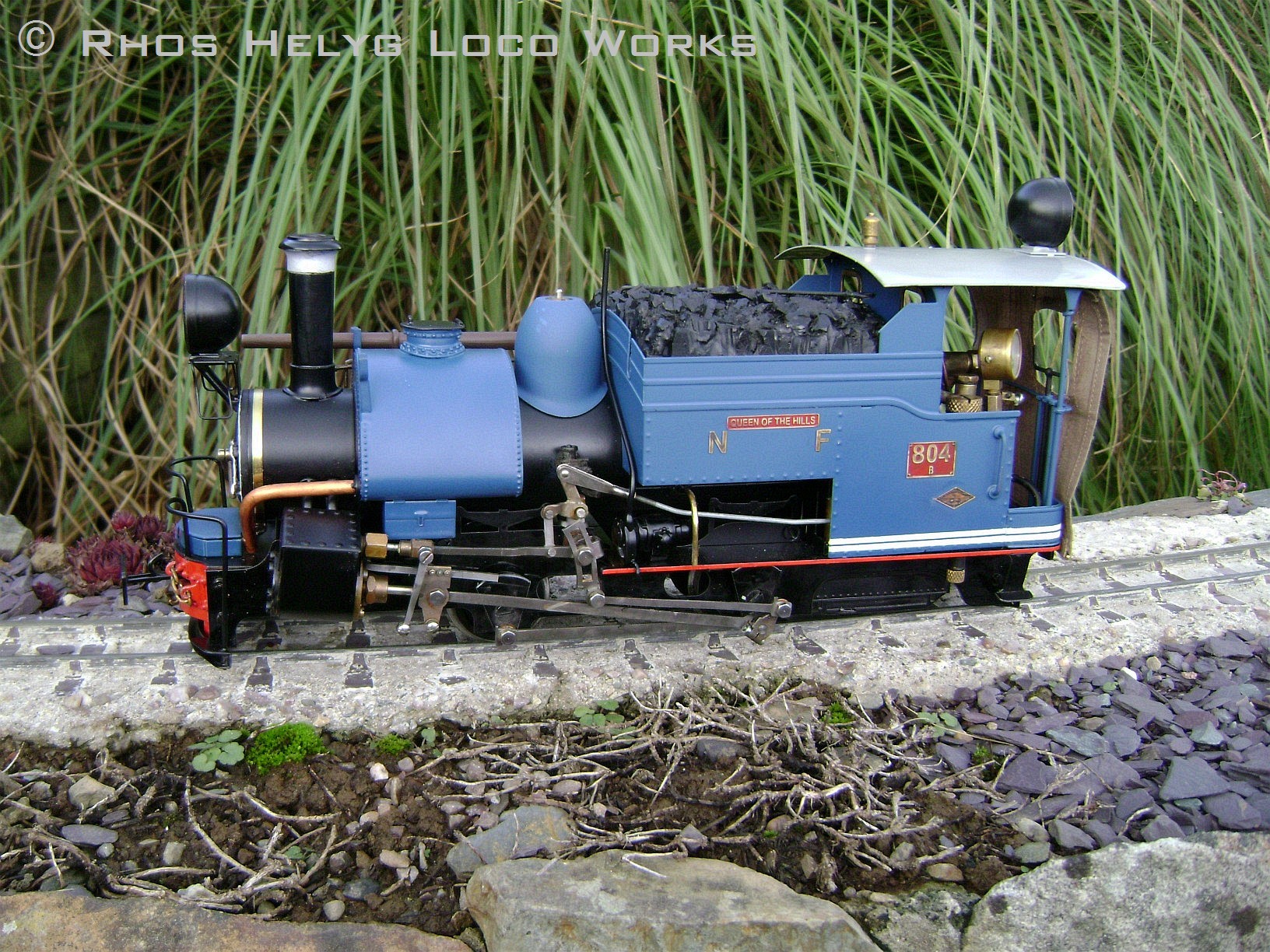
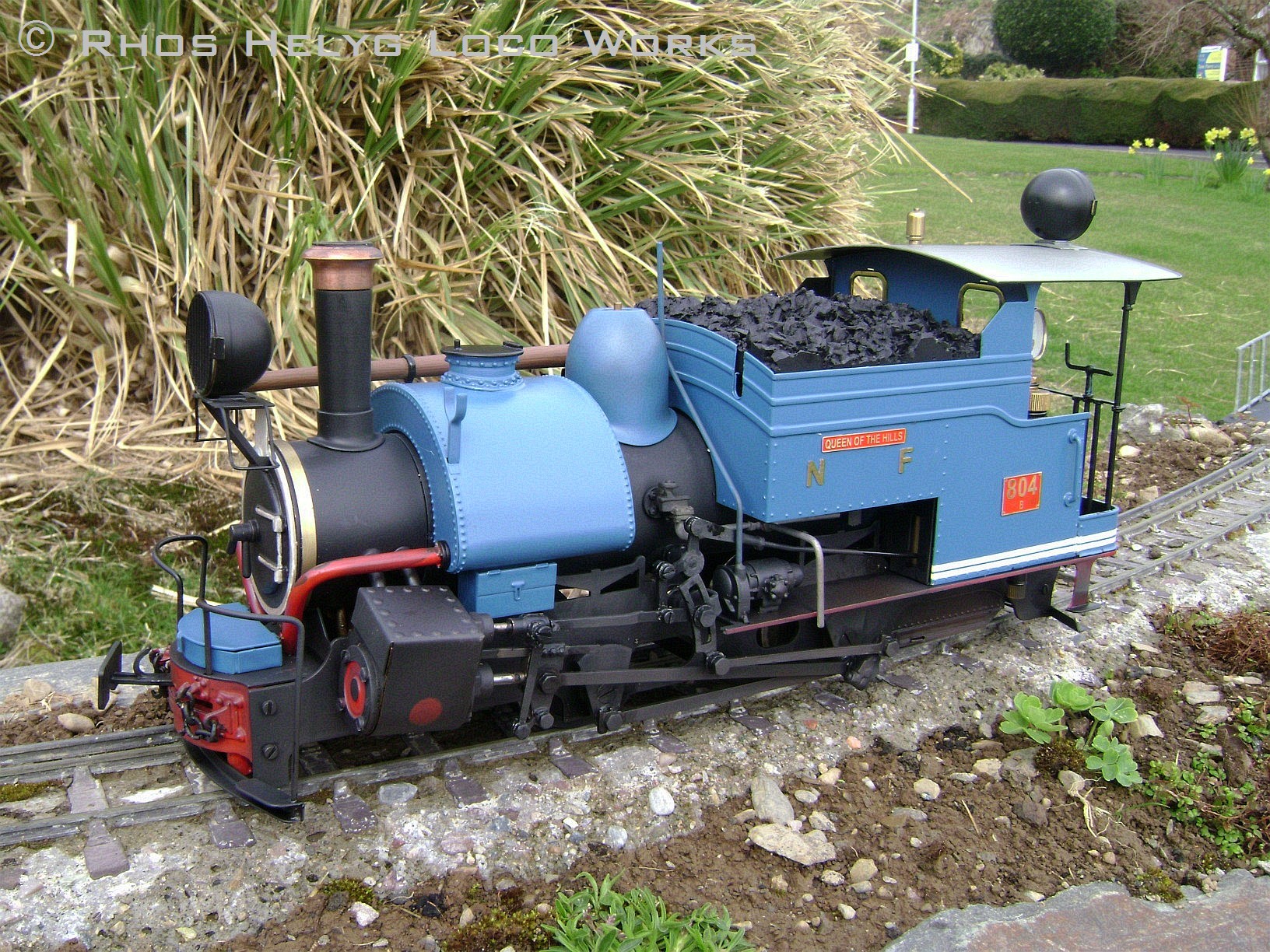
Roundhouse Engineering Darjeeling B-Class No. 804 QUEEN OF THE HILLS
Some of you may be lucky enough to possess a large-format book entitled The Darjeeling Himalayan Railway - A Photographic Profile 1962-1998. It is referred to as "The Australian Book" and it is certainly a thing of beauty containing, as it does, about 50 full-page full-colour photos of the DHR between those years. On the rear cover is a photo of B-Class 804 QUEEN OF THE HILLS taken in 1998 and the instruction I had was to turn this almost-new Roundhouse Engineering B-Class in to a representation of 804 as it appears in the photo. Lots and lots of painting later (including the obligatory repainting of the boiler from blue to black as blue locos have black boilers), the result is shown here. |
|
|
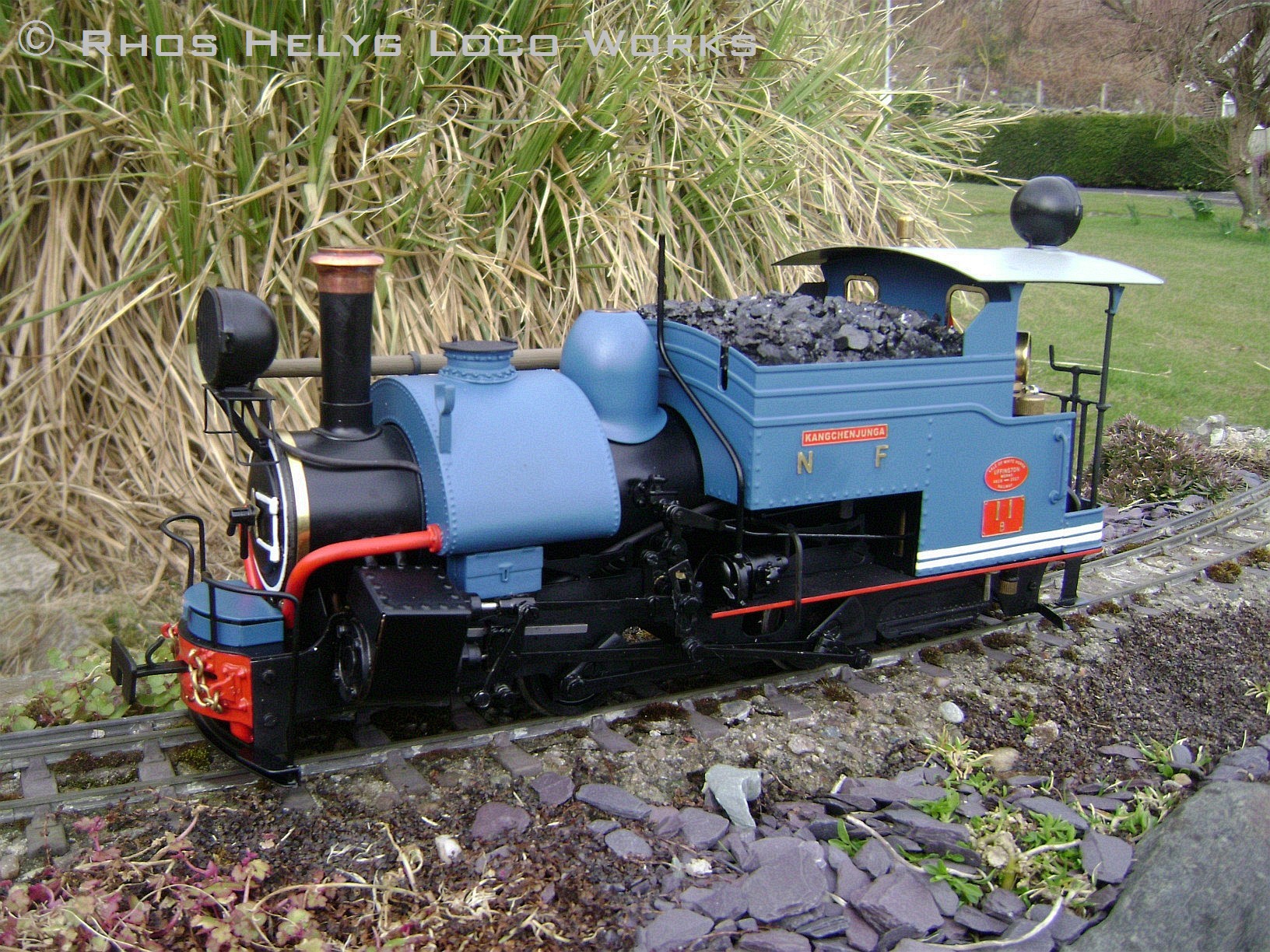
Roundhouse Engineering Darjeeling B-Class 0-4-0ST No. 11 KANGCHENJUNGA
Another Roundhouse Darjeeling B-Class that came here for the usual red and white paintwork details, a black boiler (just like the full-size blue locos have), an all-over satin finish and working headlights... |
|
|
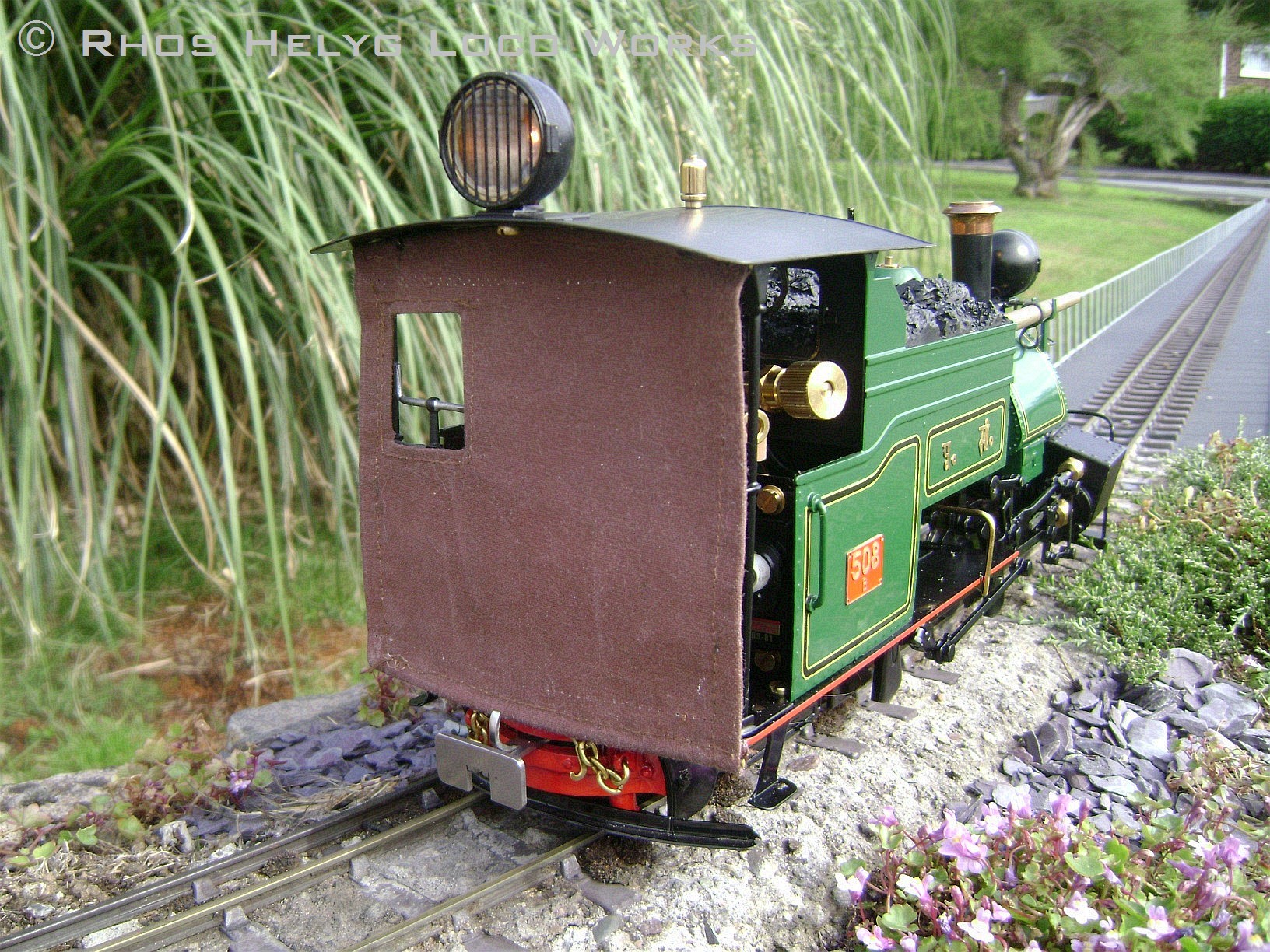
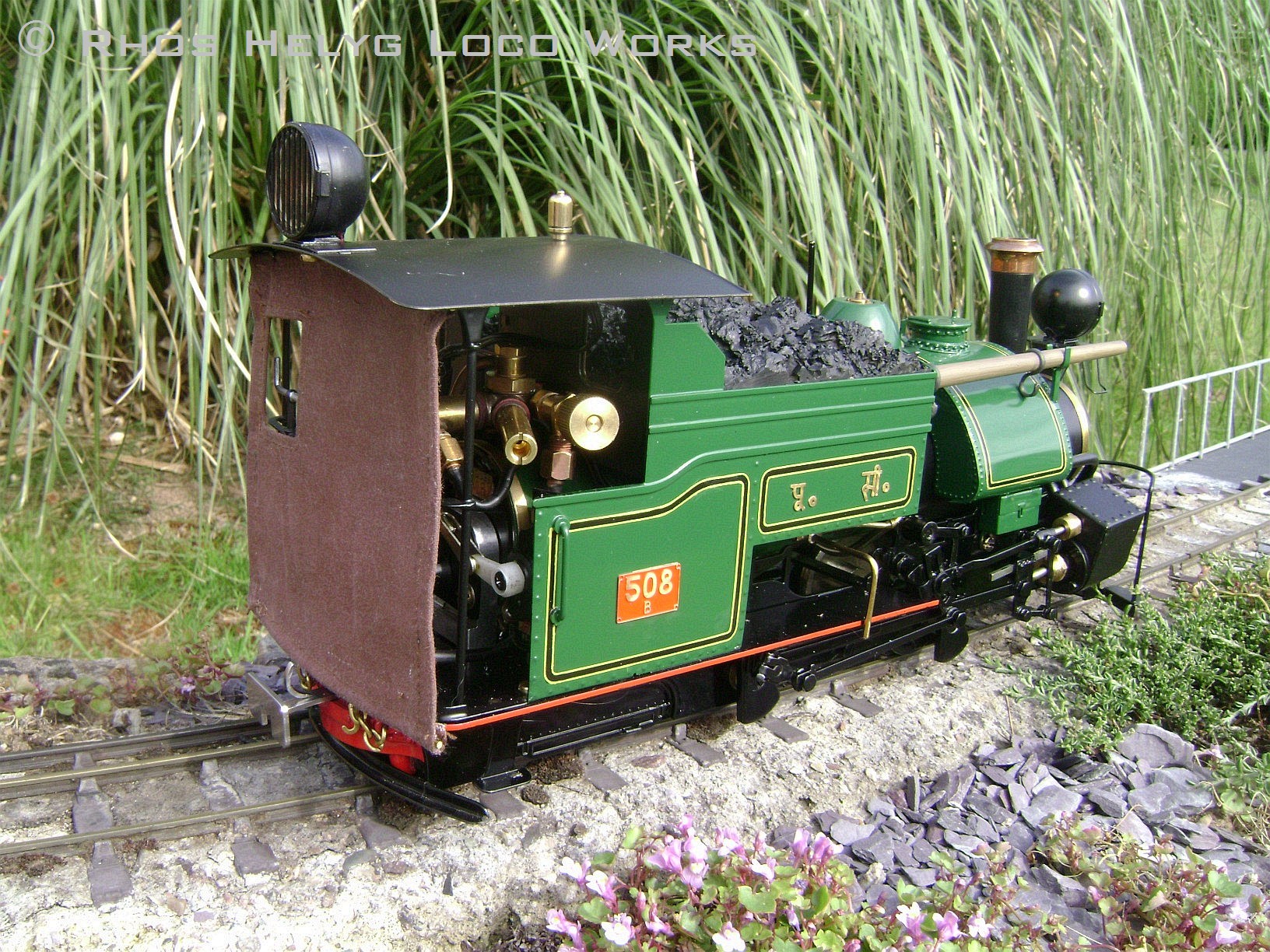
Roundhouse Engineering Darjeeling B-Class 0-4-0ST No. 50B
This Roundhouse Darjeeling B-Class came here for fitting of a cab back sheet, working lights and blackening of the rods and valve gear. |
|
|
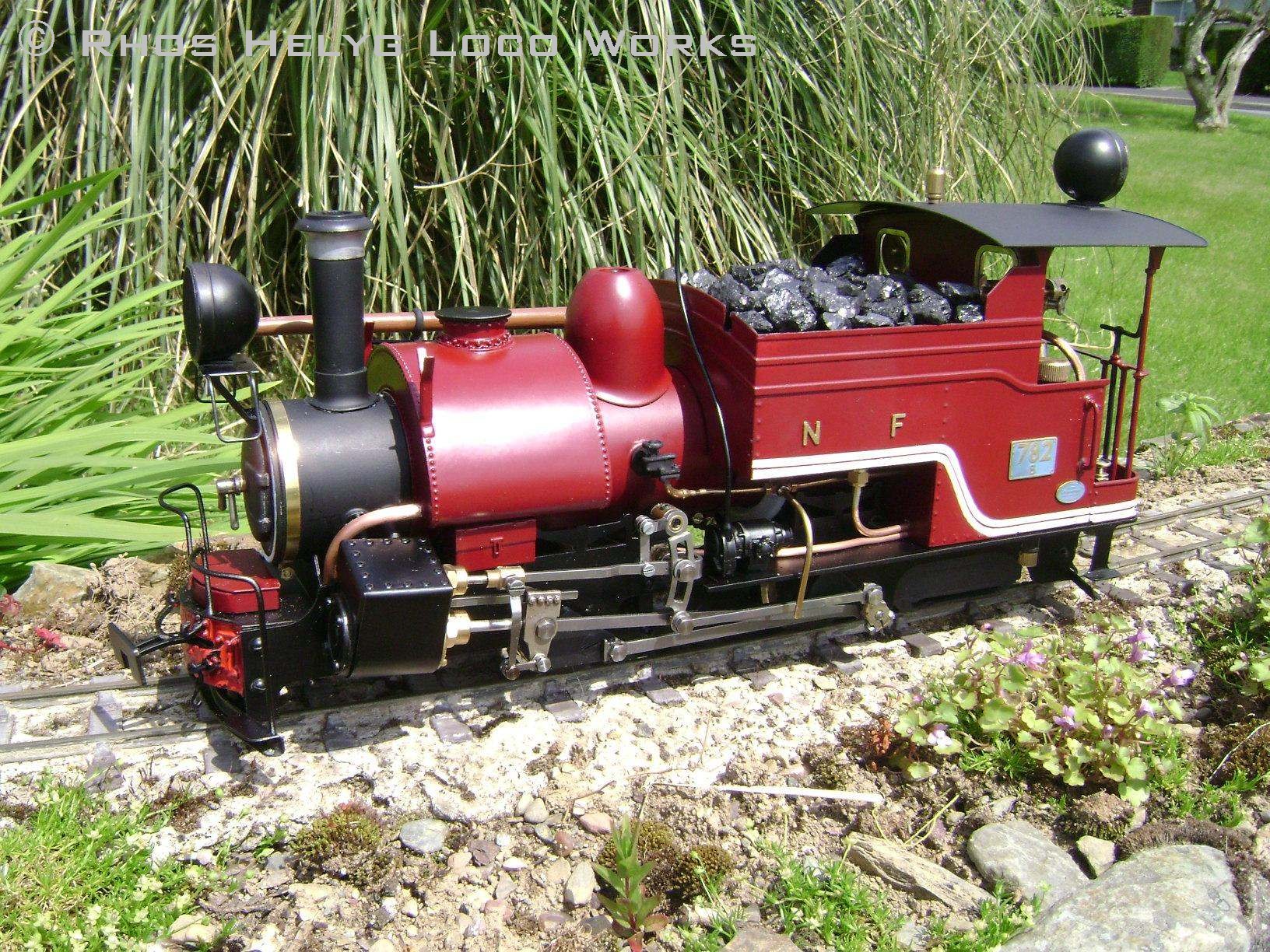
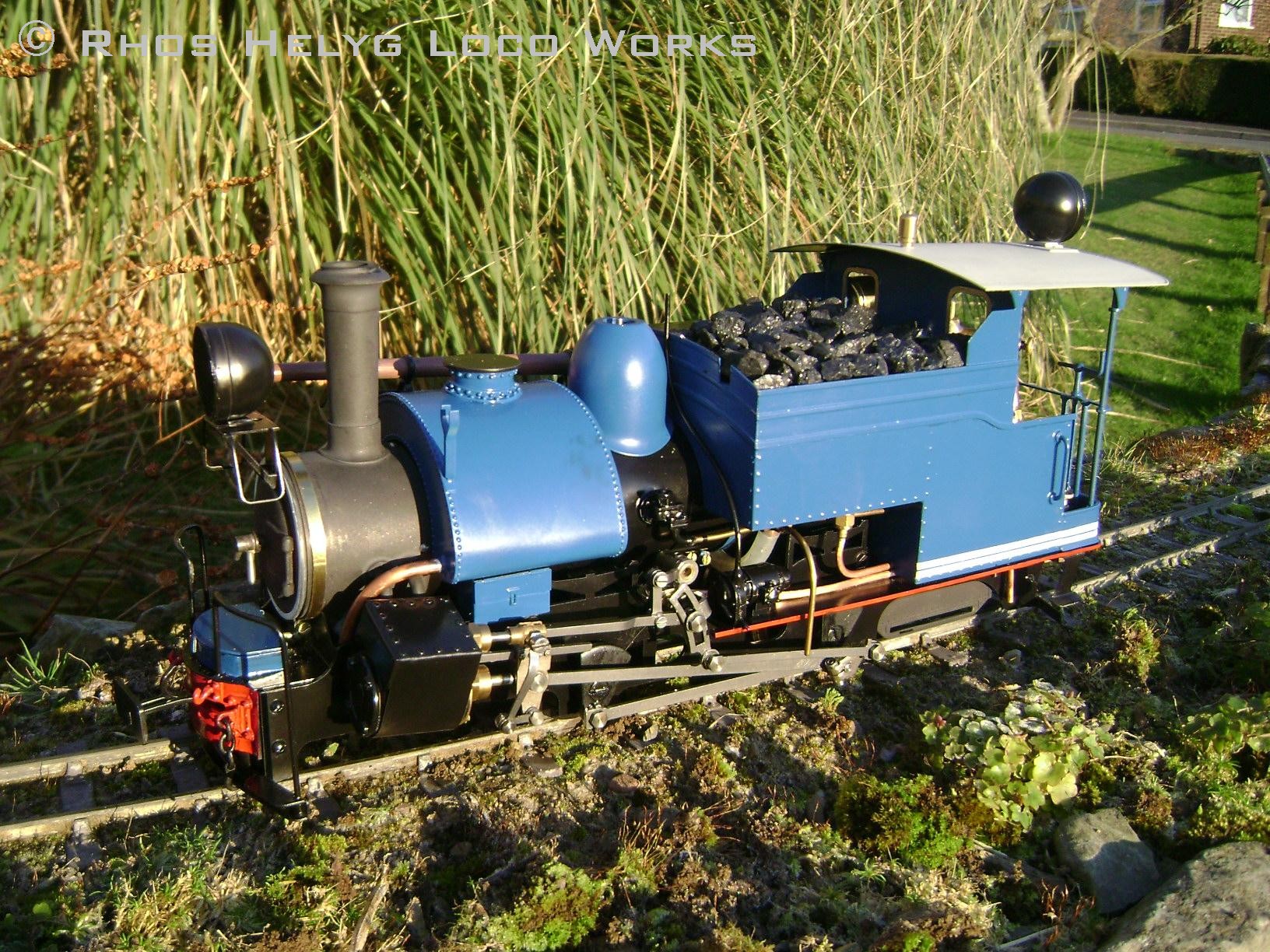
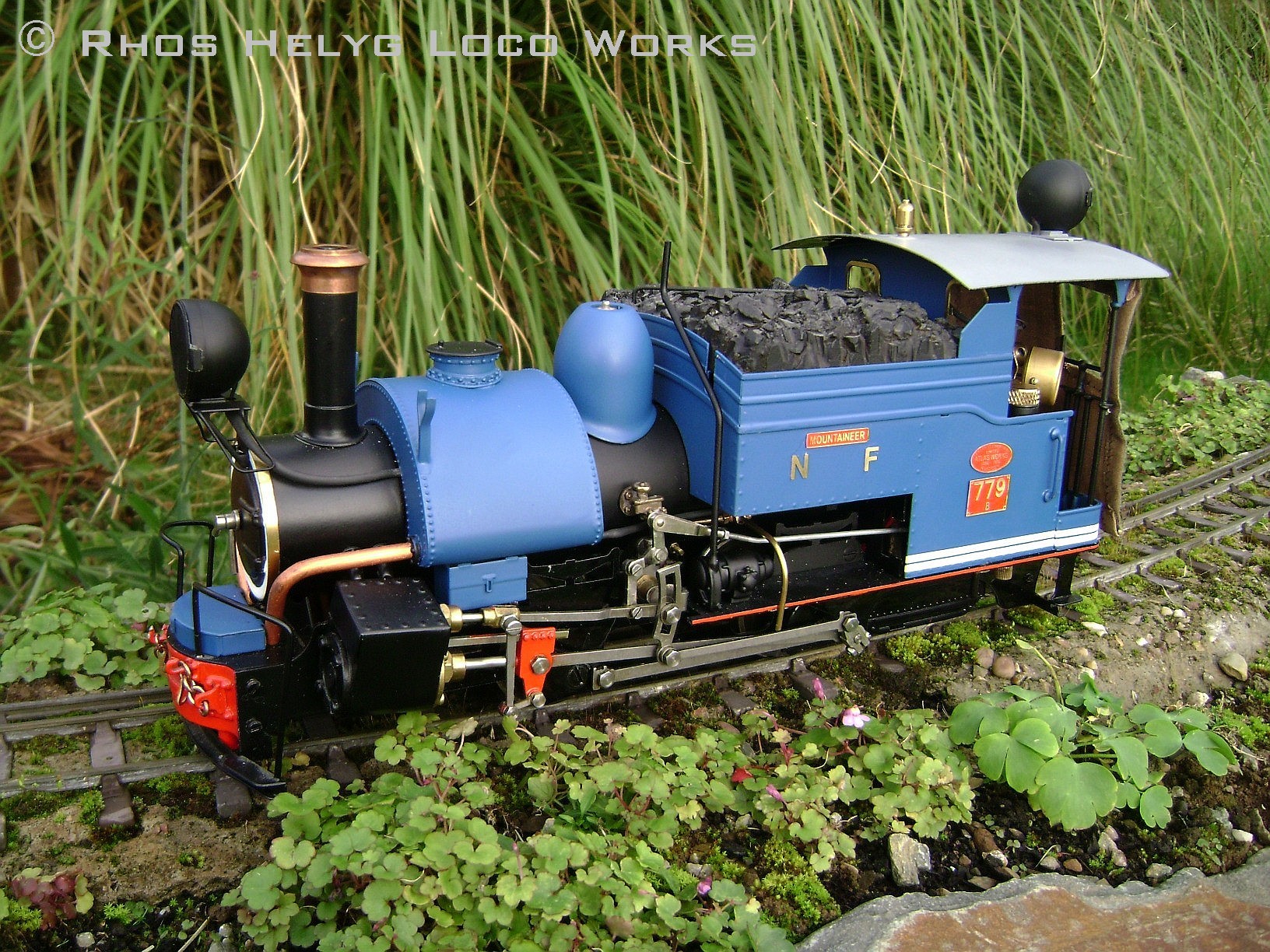
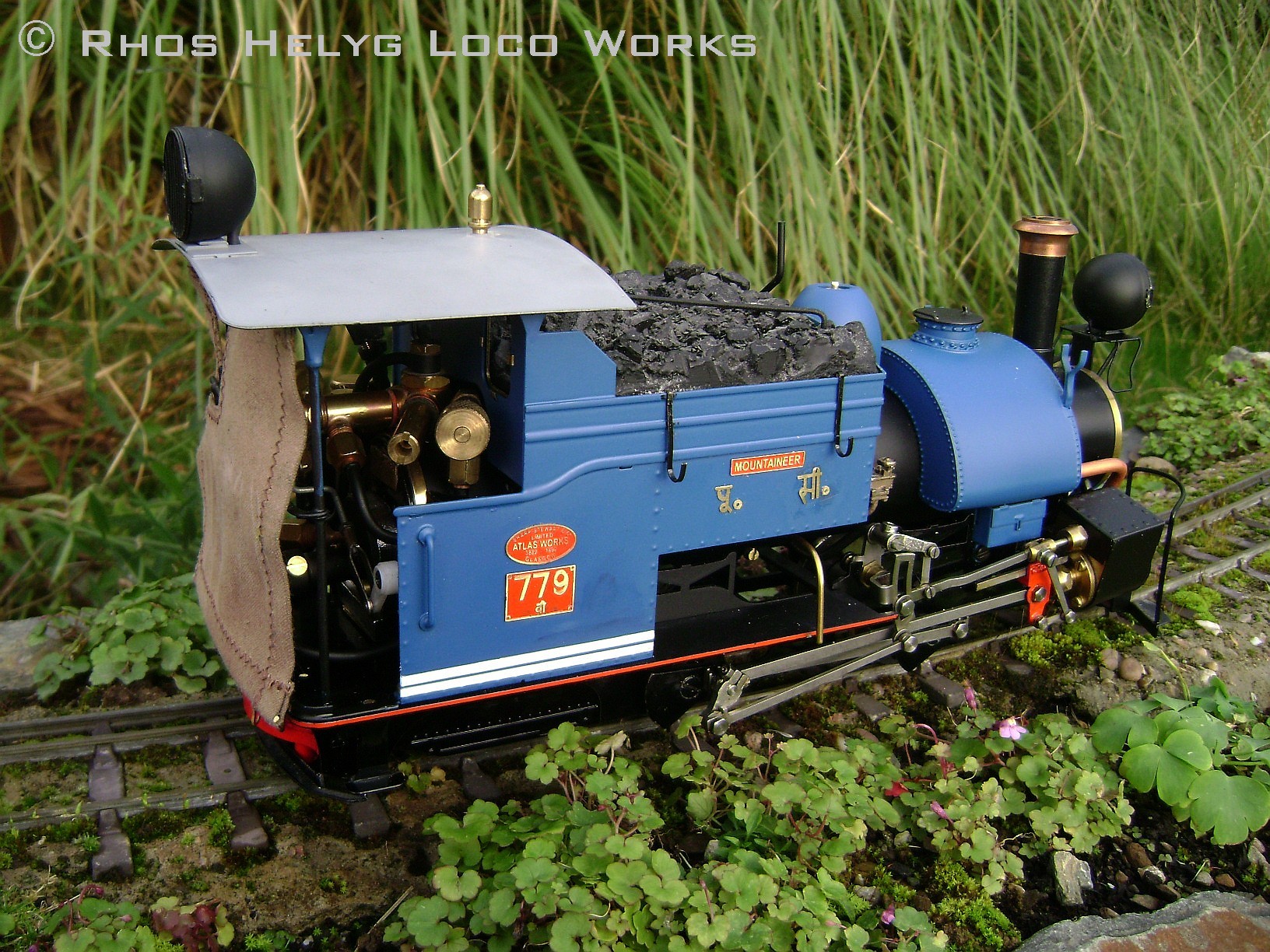
Roundhouse Engineering Darjeeling B-Class 0-4-0ST No. 5 MAID OF KENT
The loco has been finished to represent a loco that has been repatriated and preserved in the
UK, hence the MAID OF KENT nameplates.
|
|
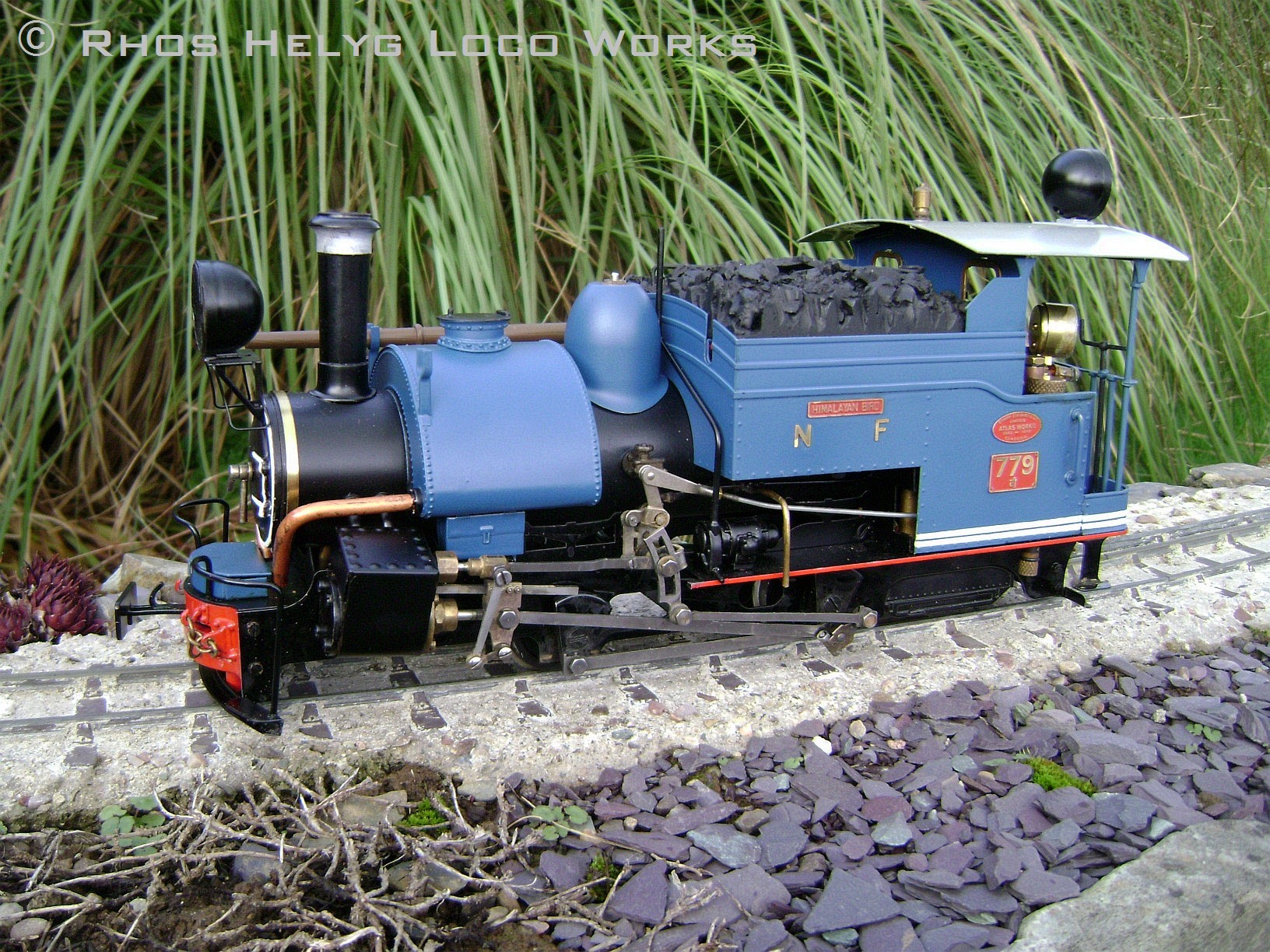
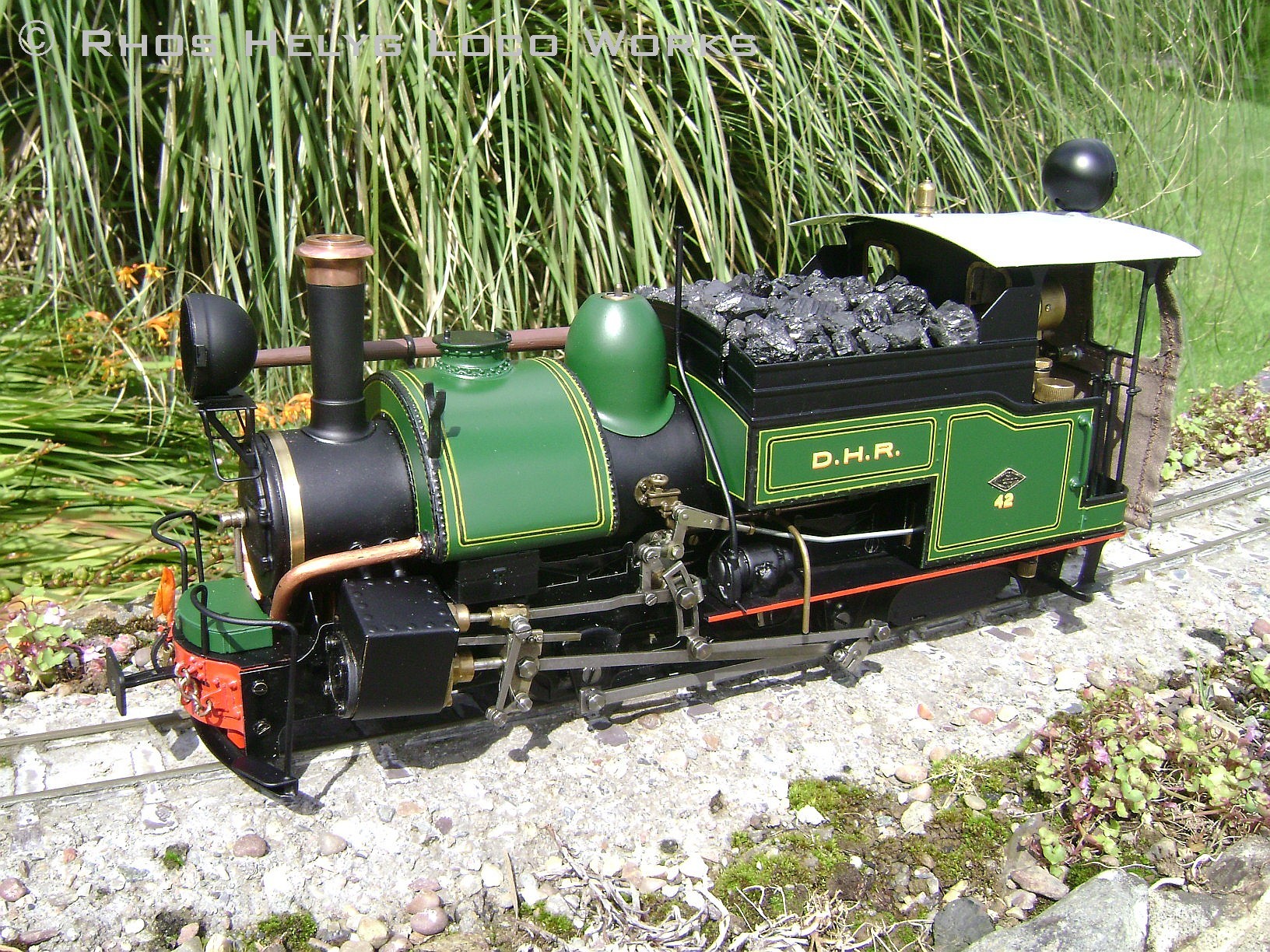
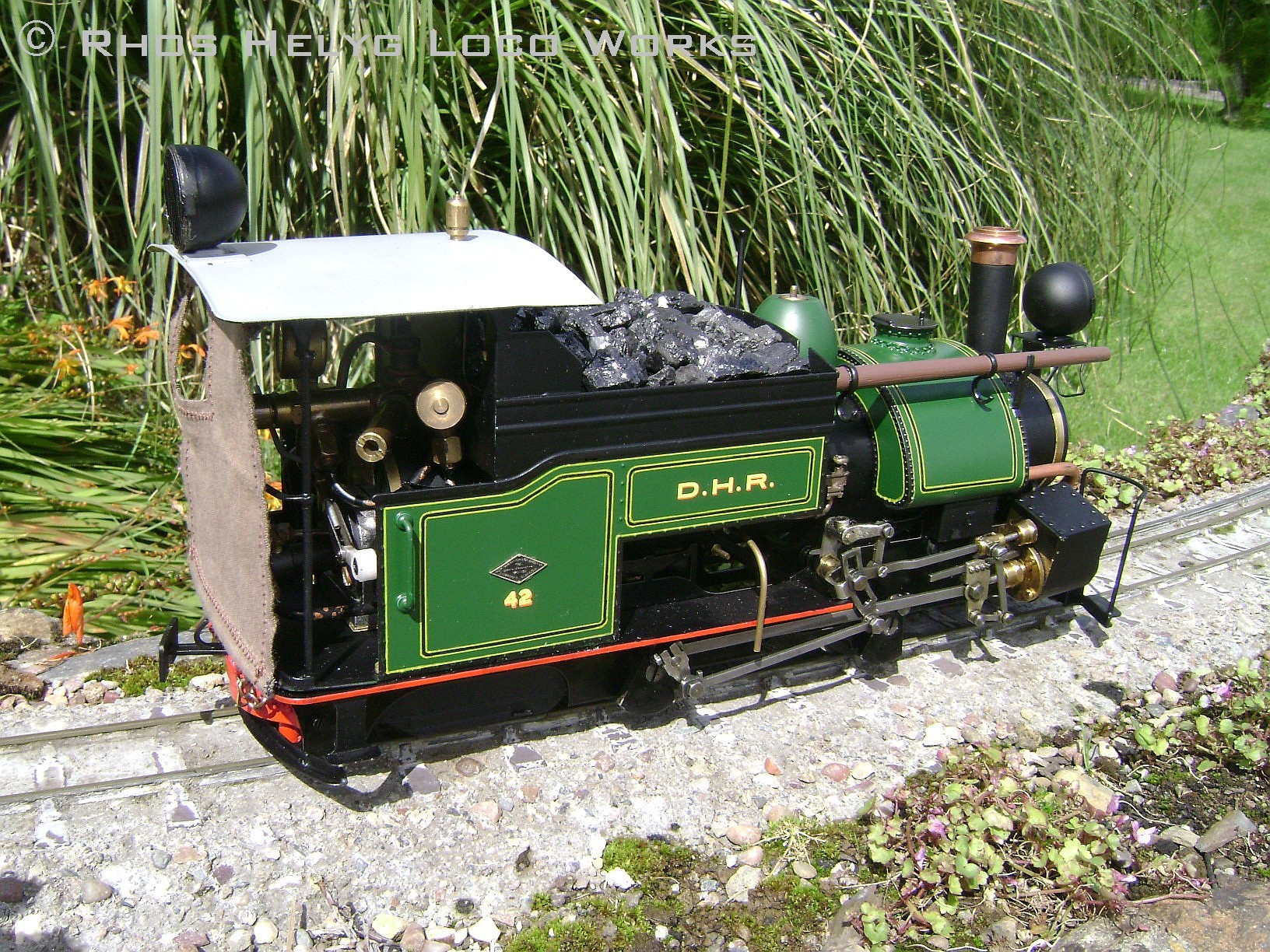
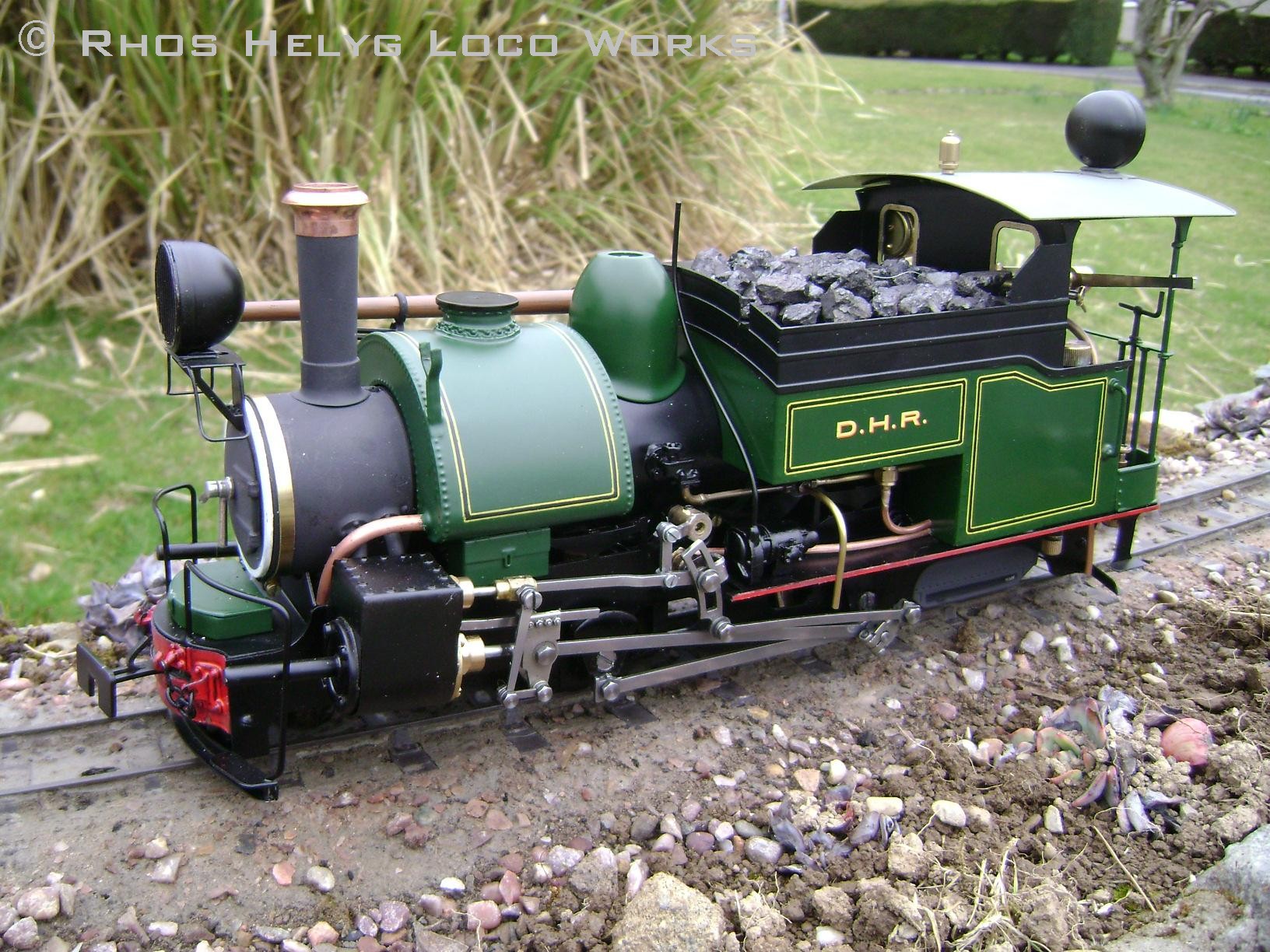
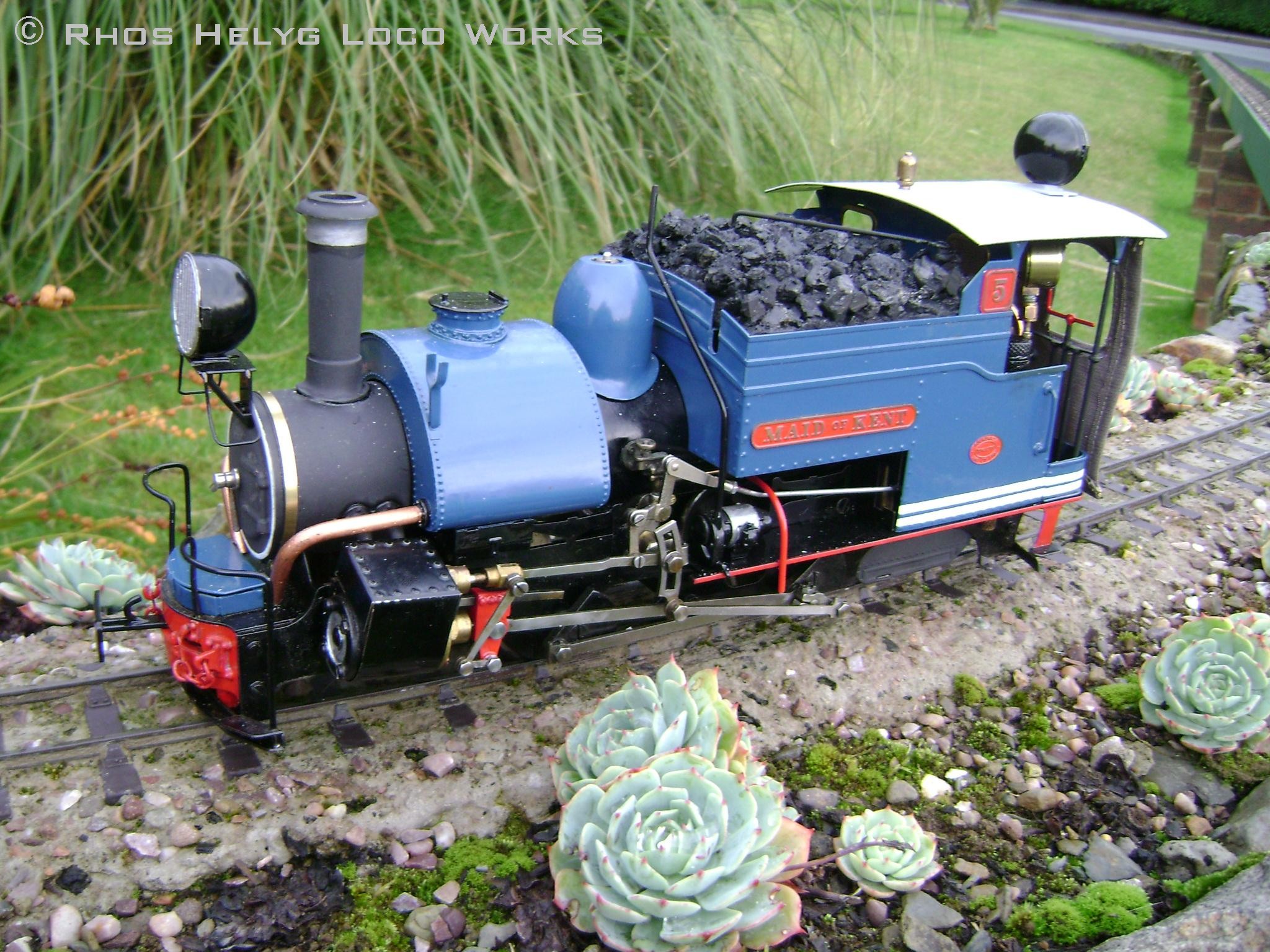
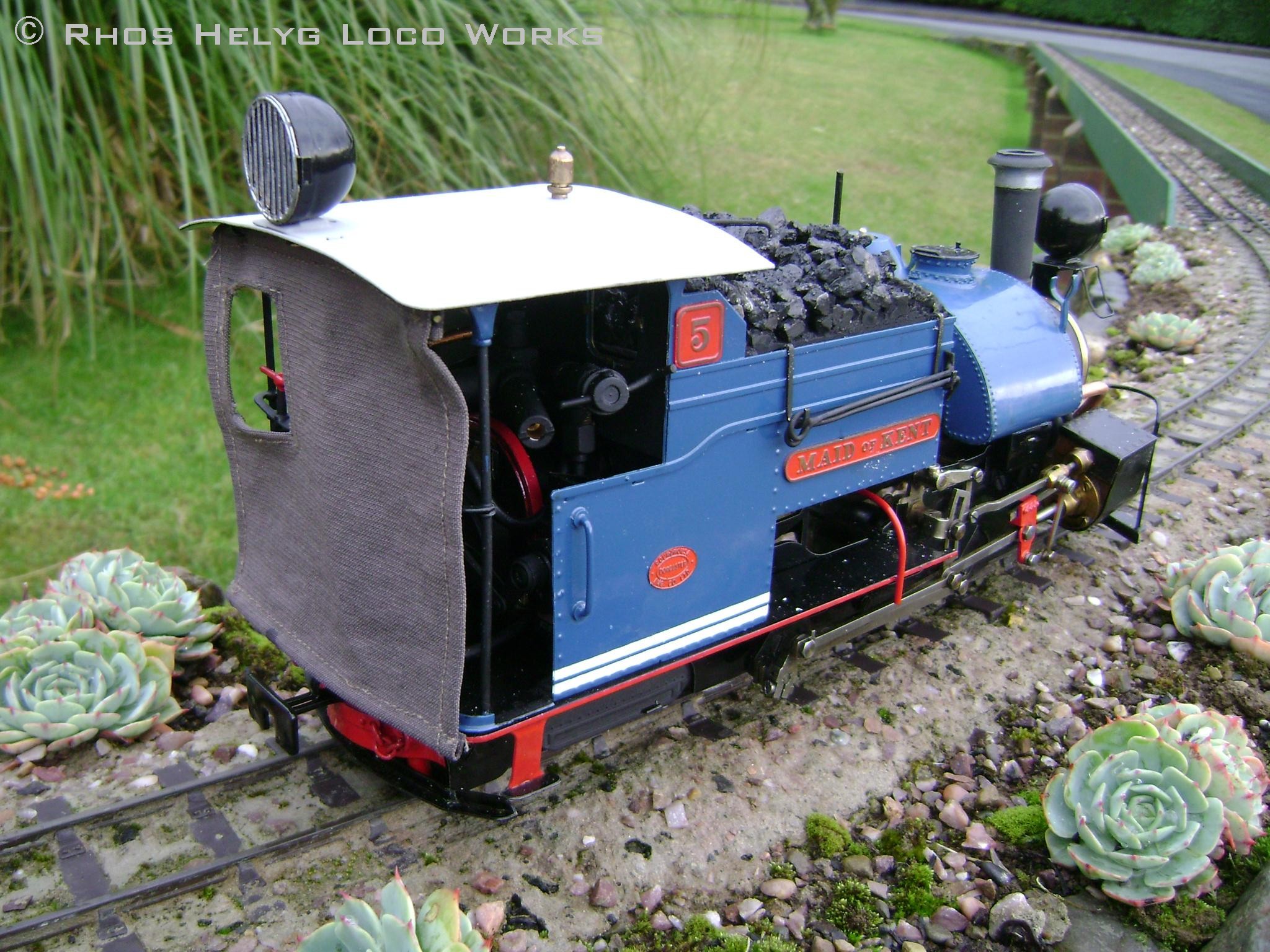
|
Roundhouse Engineering Tipong Colliery B-Class 0-4-0ST No. 789
The photographs alongside show the final result of an unusual project and commission that some
may not recognise. This collaborative project between Rhos Helyg Loco Works, model owner Adrian
Moore, John Shawe of Shawe Steam Services and inspired by the help of David Charlesworth of
the Darjeeling Himalayan Railway Society has been many weeks in the workshop of Rhos Helyg
Loco Works.
- Removal of headlamps, dome cover, buffer beams, dummy pipework, clack valves,
front handrails, front steps, cab steps, hand brake handle and couplings.
On completion of the metal work the loco was painted in filthy black and grubby green, with
basic red lining and a few yellow highlights.
|
|
|
Roundhouse Engineering Darjeeling B-Class 0-4-0ST No. 1001
There is nothing I like more than using photos of full-size locos and creating a model
representation from them. Such was the case with this one but in this case an extremely
unusual prototype was chosen: Darjeeling & Himalayan Railway B-Class No. 1001.
|
|
|
Roundhouse Engineering Darjeeling C-Class 4-6-2
This loco came here primarily for conversion from radio control to fully manual, an option not offered by Roundhouse themselves. It also had some minor cosmetic work including painting of the wheels and axle cranks, making it look so much better. |
|
|
Roundhouse Engineering Darjeeling C-Class 4-6-2 No. 807
Another C-Class, this one came here for de-glossing, weathering and fitting of appropriate
works and number plates (from MDC) and tender lettering (from Roundhouse), all intended to
recreate the kind of look these locos had at the end of their careers.
|
|
|
Roundhouse Engineering Darjeeling D-Class 0-4-0+0-4-0 Garratt No. 31
An impressive loco, this Roundhouse Darjeeling Garratt came here direct from the factory and got the full and thorough RHLW treatment! As per the full-size loco, the cylinder covers were repainted from black to green. The buffer beams had a large amount of red replaced with black and the remaining red panels were lined in cream. More black was applied to the insides and inner ends of the water tank and coal bunker, the cab interior, washout plugs, front cylinder covers, couplings, tool box lid, gas control valve knob, axle ends and, of course, the wheels. The bodywork was lined with red/black/red panels. Finally, the lifting jacks on the rear of the loco were suitably painted and the whole loco received a coat of satin clear to protect the lining and remove the gloss finish. |
|
|
Roundhouse Engineering Darjeeling D-Class 0-4-0+0-4-0 Garratt
Another Roundhouse Darjeeling Garratt came here for some body repairs, de-glossing of its paintwork and lining with a single red line. It also received the usual application of black to the insides and inner ends of the water tank and coal bunker, the cab interior, washout plugs, tool box lid, gas control valve knob and wheels. |
|
|
Roundhouse Engineering Double Fairlie 0-4-4-0T EARL OF MERIONETH
A Roundhouse Double Fairlie carrying a lining scheme based on that carried by the old (proper!) Earl of Merioneth prior to its withdrawal from traffic in 1971. Name and patent plates were supplied by MDC. |
|
|
Roundhouse Engineering Dylan 0-4-0ST No. 1 DYLAN
An interesting and unusual job was the regauging of a 30+ years old meths-fired Roundhouse Dylan 0-4-0ST from 45mm to 32mm, the One True Gauge. These locos were not built to be adjustable for track gauge and some considerable dismantling was needed to remove the wheelsets from the frames. Unlike the current Roundhouse products, the cranks and axles on these older locos are held together with grub screws and roll pins. The first picture shows the two wheelsets with the front one awaiting regauging and the back one completed, along with the slip-eccentric valve gear and modified rocker arms. It is always a pleasure to work on these old Roundhouse locos, there is just something about them. |
|
|
Roundhouse Engineering Dylan 0-4-0ST No. 3 DEHRA DUN
Another repaint, this time on an early 1980s Roundhouse Dylan. This loco has the original ½ inch diameter cylinders and steel bodywork and was showing every one of its 30-year life when it arrived. It was repainted in a representation of its original scheme: gloss maroon with yellow lining, with the smokebox, cab roof, frames and boiler finished in satin black. The whistle, name and number plates were fitted by the owner after it left here. (Photo by S Herring) |
|
|
Roundhouse Engineering Dylans 0-4-0ST No. 5 AURORA and No. 6 LUCIUS
These two Roundhouse Dylans were converted to gas-firing by using their original pot
boilers in conjunction with a burner and a gas tank from a Roundhouse Millie. The tenders are
the same as those used on the Roundhouse George.
|
|
|
Roundhouse Engineering Dylan 0-4-0ST No. 5 THE PIRATE
This venerable Roundhouse Dylan - an old lady, complete with 1/2-inch cylinders, came to me
for a mechanical check, various bodywork repairs and fitting of an Enots valve water filling
system (visible in cab door) allowing for continuous running.
|
|
|
Roundhouse Engineering Dylan 0-6-0ST EMILY
The bodywork for this Roundhouse Dylan came here for repainting in a Festiniog-inspired scheme of green with red lining and black edging. Once completed the parts were returned to the loco's owner for reassembly. (Photo by Simon Sparkes) |
|
|
Roundhouse Engineering coal-fired Dylan 0-4-0STT ODIE
It was back in 1987 that I first encountered 16mm/foot live steam garden railways. This was
at the renowned Paddock Railway at Hampton Loade station on the Severn Valley Railway.
I was an SVR volunteer at Bridgnorth back then and it became a nice Sunday afternoon diversion
to travel down to Hampton Loade and run my O-Gauge stock after the 16millers had finished
their session. I'd not seen anything in this scale before, and I was hooked immediately. My
good friend Paul would let me run his meths-fired Roundhouse Dylan, called
ODIE and named
after the dog in the Garfield cartoon strip. The loco's nickname was Bill, for reasons I am
sure I do not need to explain.
|
|
|
Roundhouse Engineering ⅞ths-scale Dylan 0-6-0ST VENTNOR
VENTNOR started life as a meths-fired Roundhouse Dylan and at some point in the past has had its bodywork modified to make it in to a 7/8ths-inch/foot scale loco. It came here for a chassis rebuild that incorporated new slip-eccentric valve gear, meths burner, axles, bearings, cranks and wheels. This has given the capability of running the loco on either 32mm or 45mm gauge track, rather then being fixed for 32mm as it was previously. While here it also had its cylinders overhauled and had its bodywork repainted. |
|
|
Roundhouse Engineering Elsa 0-6-0ST No. 19 ACANTHA
and No. 20 ALTHEIA
In 1990 Roundhouse produced the Elsa 0-6-0ST as a limited edition for one of their UK
dealers. It was based on the existing Jack design but used the 6-wheel chassis from
their William model and was supplied with a bogie tender.
|
|
|
Roundhouse Engineering England 0-4-0ST PALMERSTON
It did not take long for a new Roundhouse England to arrive here for some attention. The owner
already has a maroon England from a different manufacturer so he decided that he would like a
green one. To the best of my knowledge the full-size Palmerston has never carried the
Festiniog's green livery so we had some latitude as to which scheme we went with. The original
plan had been to apply the scheme carried by PRINCE in the 1960s, with the black tank top,
tank front and cab front but we decided it was a bit austere and to go with the scheme applied
to WELSH PONY just before its recent return to traffic. This meant the loco has two lining
panels on the tanks sides, instead of one, green tank top and front and green cab.
|
|
|
Roundhouse Engineering England 0-4-0ST PRINCE.
Another Roundhouse England, appearing in the guise of PRINCE this time. Festiniog locos in this livery are very much black locos with green panels, and that is exactly how the full-size ones were / are painted. This model was delivered in all-over green so had black added to the tank front, tank top, cab front, cab back and tender front (and interior) followed by lining in red with black edging. Name and four works plates provided by MDC, of course. |
|
|
Roundhouse Engineering Forney 0-4-4 No. 6 SALEM
Built for 32mm gauge track, this is possibly one of the rarest Roundhouse locomotives
that has been here. Repairs and modifications to this Roundhouse Forney included:
|
|
|
Roundhouse Engineering/Shawe Steam Services Fowler 0-6-2
The modified cab, footplating either side of the boiler and removal of the sand domes give this Fowler a very different appearance. |
|
|
Roundhouse Engineering George 0-4-0TT No. 2 OSPREY
OSPREY had been involved in an unfortunate derailment that resulted in it striking something very hard. The front right corner took the impact and it was sufficient to put a significant dent in the corner of the tank, move the smokebox, distort the bodywork and twist the loco's frames while also leaving the right side covered in dents and scratches. The first job on arrival here was to remove the bodywork and straighten the frames to confirm that there was no mechanical damage, which fortunately there was not. The bodywork was then straightened out and the dents and scratches were filled and smoothed. Despite having paint mixed to the same BS number, there was a minuscule shade difference between the paint that I had and that carried by the loco, so the whole loco (body, boiler and tender) were repainted to guarantee a consistent colour on all of the green surfaces. Reassembly and a successful steam test followed, and OSPREY was returned to "like new" condition. |
|
|
Roundhouse Engineering 0-4-0 HARLECH CASTLE / CASTELL HARLECH
The owner of this Roundhouse Engineering Harlech Castle / Castell Harlech used to drive the
full-size loco at the Festiniog Railway so he knows it well. Following the recent visible
modifications (full-width bonnet and vacuum brakes) and repaint he asked me to make his model
look "like INA used to look". INA is the loco's nickname and is derived from the initials of
its originally intended owner, Mozambique's Instituto Nacional do Acucar (National Sugar
Institute), the initials of which were on the cab sides when it first arrived in Wales.
|
|
|
Roundhouse Engineering Harrogate Peckett 0-6-0ST SYDNEY LANE
A first for me in a couple of ways... The first Roundhouse Engineering "Harrogate" I have seen, and the first loco I have ever lined without taking it apart. With lots of well-hidden fixings, I just could not work out how the loco came apart, so I spoke to the lovely people at Roundhouse. Their first reaction was "Do you really need to take it apart? Not recommended" followed by the extensive instructions on how to do so. I decided that there really was no need to take it apart and so I lined it "in one piece", the first time I have ever done that. |
|
|
Roundhouse Engineering Hercules 0-4-0
I do not do much work on non-steam locos, but doing some paint detailing and weathering on this Roundhouse Hercules battery loco was fun! It arrived on brand-new condition, and although the owner wanted a yellow loco he did not want the very gloss and very bright finish as supplied, preferring something a bit more credible. I hope I have achieved that... |
|
|
Roundhouse Engineering Hunslet 0-4-0ST LILLA
Another off my "I'd like to do one of those" list has recently been completed: A Roundhouse
Lilla in the condition that it ran when new at Cilgwyn Quarry in the Nantlle Valley here in
North Wales.
|
|
|
Roundhouse Engineering Hunslet 0-4-0ST LILLA
The Roundhouse Engineering model gives a good representation of Lilla as it appeared in 2016,
but there is always more that can be done to make a model look as close to The Real Thing as
it is possible to do. The owner of this model Lilla had “had a go” with Lilla in 2011 so my
instructions were to turn the model in to the loco as it appeared then.
|
|
|
Roundhouse Engineering Hunslet 0-4-0ST LILLA
A Roundhouse Lilla with blower pipe, injector water handles, lubricator drain pipe and Penrhyn-style lining with satin finish. (Photo by James Trebinski) |
|
|
Roundhouse Engineering Hunslet 0-4-0ST BLANCHE
A factory-painted Roundhouse Blanche in full Penrhyn Quarry Railway livery, complete with matt black smokebox, silver rings on the cylinder covers, red cranks, black wheels and a satin finish to the black bodywork. |
|
|
Roundhouse Engineering Hunslet 0-4-0ST LOUISE
This standard Roundhouse Linda came here in factory finish green paint, with a request to
repaint it in to Penrhyn Quarry Railway livery. The green paint was left in place but
thoroughly cleaned and prepared for over-spraying in black. Red and blue lining was then
applied with a satin clear coat for protection and to improve the appearance. The smokebox
was repainted in matt black, the axle cranks were painted red and the wheels were painted
black.
|
|
|
Roundhouse Engineering Hunslet 0-4-0ST SYDNEY
Another repaint of a brand-new Roundhouse loco, this time one of the new batch of Charles. Red and blue lining based on the scheme applied to the full-size CHARLES (preserved at Penrhyn Castle) was then applied to the factory black paint with a satin clear coat for protection and to improve the appearance. The smokebox was repainted in matt black, the injectors, axle cranks and springs were painted red, the wheels were painted black and the front cylinder covers received some silver. A brass ring was also added below the chimney cap. The Hunslet-style name plates were provided by MDC. |
|
|
Roundhouse Engineering Hunslet 0-4-0ST CHARLES
This brand-new Roundhouse Charles received the Penrhyn Quarry treatment with red and blue lining, satin black bodywork, cream and black cab interior and brass chimney ring. |
|
|
Roundhouse Engineering Hunslet 0-4-0ST CHARLES
Dating from 2006, this Roundhouse Charles was from the first batch of these locos built. Back then if radio control was wanted the equipment had to go in a coal wagon, so the owner chose to have this loco fitted for manual control. Technology has moved on since then and with the lure of radio control becoming ever greater it was fitted with a 2.4GHz system while it was here. It was then finished in satin black with Penrhyn-style lining in blue and red complete with brass ring around the chimney cap. |
|
|
Roundhouse Engineering Hunslet 0-4-0ST CHARLES
This Charles is finished in the pre-1936 (according to J I C Boyd) Penrhyn livery of brown and red. It was only later that the more familiar blue and red livery was used. Finishing touches included the brass ring under the chimney cap and a pair of new name plates by MDC. |
|
|
Roundhouse Engineering Hunslet 0-4-0ST CHARLE
Another Roundhouse Penrhyn Hunslet done... Charles again, with lined frames, chimney ring and, unusually, converted from radio to manual control... |
|
|
Roundhouse Engineering Hunslet 0-4-0ST BLANCHE
Another Penrhyn-style repaint, this time from well-worn blue, and with full lining on the loco's frames. |
|
|
Roundhouse Engineering Hunslet 0-4-0STT BLANCHE
Production of Roundhouse Engineering's model of the Festiniog Railway's Hunslet Linda was
discontinued a few years ago. Roundhouse did not offer a Festiniog Blanche in their range
and so a few Lindas have been converted to represent Festiniog sister loco Blanche by other modellers.
|
|
|
Roundhouse Engineering Hunslet 0-4-0STT BLANCHE
My second Blanche. After completion of the first one I said "Never again" but that one was converted from a Charles, this one was converted from a Roundhouse Festiniog Linda with tender, so much simpler to do. It only (!) needed new cab sides and a new tender body, re-using the Linda tender's floor. The owner decided to have it in mid-1960s coal-fired condition too, making it even easier, as that pre-dates the piston valve cylinders with their different shape. |
|
|
Roundhouse Engineering/Shawe Engineering Hunslet 0-4-0STT BLANCHE and MANNANIN
Built on a Roundhouse chassis, both of these locos received new bodies made by Shawe Engineering for loco and tender based on the Festiniog Railway's Blanche, rather than the more common Linda. The level of detail is outstanding and I was delighted to be asked to paint and line both locos. |
|
|
Roundhouse Engineering Hunslet 0-4-0ST LINDA
Hunslet 0-4-0ST LINDA arrived from the Penrhyn Quarry Railway (PQR) at the Festiniog Railway
(FR) in July 1962. At first it ran in pure PQR form, but it was inevitable that the FR would
make some alterations to improve its usability on their railway. Oddly, one of the first
alterations was to the cab back with the upper half being removed completely, presumably to
ensure that the loco crew always got a good soaking when running in reverse. The well-worn PQR
livery of black with blue and red lining remained for a while.
|
|
|
Roundhouse Engineering Hunslet 0-4-0STT LINDA
I have lined a number of brand-new factory-painted Roundhouse Linda locomotives in the style applied to the Festiniog Railway locomotive on which this model is based. This included red lining with black edging, black wheels and boiler cladding and red axle cranks. FR crests (supplied by DJB Engineering) were applied to the tender sides, and the cranks were replaced with items made by Chuffed2Bits. The paintwork on the body and tender was protected and given a satin finish by spraying with lacquer. The cab interior was painted cream and black. |
|
|
Roundhouse Engineering Hunslet 0-4-0STT LINDA
This Roundhouse Linda was finished in satin black with white and red lining. |
|
|
Roundhouse Engineering Hunslet 0-4-0STT LINDA
This loco arrived with me in scruffy condition with the intention of doing a repaint and
lining in Festiniog Railway condition but it soon became clear that all was not well.
|
|
|
Roundhouse Engineering Hunslet 2-4-0STT LINDA
The owner of this loco asked me to modify and paint it as Linda appeared from its 2001 repaint until 2004 when it was taken out of traffic for boiler repairs. Having been heavily involved with the 2001 repaint myself made it a bit easier! Modifications included adding the front frame extension, a representation of the front pony truck (Linda has been a 2-4-0 since the early 1970s), an oil fuel tank in the tender and moving the smokebox handrail from the front to the top. All of this was followed by addition of Penrhyn-style blue and red lining. |
|
|
Roundhouse Engineering Jack 0-4-0ST SPARTAN
A Roundhouse Jack repainted from maroon to black and then lined in Penrhyn style. |
|
|
Roundhouse Engineering Jack 0-4-0ST SIX OF ONE
This Roundhouse Jack had a cab back (upper and lower) added, various detailing parts applied, was repainted from blue to black and lined in brown and red. |
|
|
Roundhouse Engineering Jack 0-4-0ST No. 3 SIR FREDERICK
This Roundhouse Jack came here for some body repairs, fitting of Swift Sixteen opening spectacle windows and a smokebox lamp bracket. This was followed by a new coat of satin green paint and lining in cream with black edging. The smokebox, cab roof and footplating were also repainted in satin black. Additional footplating from Locoworks and name and number plates from MDC completed the job. |
|
|
Roundhouse Engineering Jack 0-4-0STT
Jack's got a tender behind... Adding a Roundhouse Fowler tender turns a Jack in to a large loco. It also gives an operational benefit in that the radio control equipment can be relocated to the tender, so avoiding the need to remove the body to change the batteries. The tender is coupled to the loco using a replacement rear buffer beam and with a fall-plate to bridge the gap, just like The Real Thing. |
|
|
Roundhouse Engineering Jack 0-4-0STT No. 6 BONIFACE
BONIFACE is a first-edition Roundhouse Jack that had been in storage for many years. With
the owner's new garden railway under construction the time came for it to be revived and
updated. The following happened while it was here:
|
|
|
Roundhouse Engineering Jack 0-4-0ST No. 5 HINTON
A "Special Edition" Jack which came for lining in red and white and other additional paintwork. |
|
|
Roundhouse Engineering/Shawe Steam Services Jack 0-4-0STT MAMMOTH
MAMMOTH is a Shawe Steam Services coal-fired Roundhouse Jack. It was painted and assembled here back in 2003 but 12 years later the owner decided to part with it. It was returned to Shawe Steam Services where it received various repairs and then re-sale to its second owner. The new owner decided he would like radio control fitted, but this would have been impossible to install with little available space on the loco in its original configuration. The answer was to fit a tender that could carry the radio equipment and a larger water supply. For ease of use, the hand pump was moved from the cab to the tender tank, with the loco now taking the supply for its axle pump from the tender and the saddle tank now used to top-up the tender tank. The owner built the Roundhouse George tender and my work then involved almost complete replacement of the loco's pipework in order to provide the three tender water connections (axle pump supply, bypass return and feed from saddle tank). The loco body was then stripped of its old paint and it and the tender received a coat of satin Victorian Maroon lined in cream with black edging. |
|
|
Roundhouse Engineering/Shawe Steam Services Jack 0-4-0ST
This pair of Jacks were modified for use on a ⅞ths-scale railway by lengthening the chimney, raising the cab roof and by adding a very short extension to the rear of the cab floor. |
|
|
Roundhouse Engineering/Shawe Steam Services Jack 0-4-0ST
A brand-new Shawe Steam Services/Roundhouse Jack which came here for painting, lining and assembly. This loco was something of a landmark for me as it was the fiftieth coal-fired loco that I had worked on for John Shawe. I wonder where the other 49 are now...? |
|
|
Roundhouse Engineering Jennie 0-4-2T JOSEPHINE
JOSEPHINE started life as a standard Roundhouse loco, but the owner decided to make it look somewhat different and scratch-built a new body for it. He made a rather nice job of it and it was a pleasue to paint and line it for him. (Photo by James Medd) |
|
|
Roundhouse Engineering Katie 0-4-0STT No. 3 THEODORE
The bodywork parts from this Roundhouse Katie kit were sent here for painting in black with lining in red and white. The owner then completed the assembly of his locomotive and the superb result is shown here. The lower picture shows the painted and lined parts. (Photo by Adrian Moore) |
|
|
Roundhouse Engineering Katie 0-4-0STT
This locomotive and tender were dismantled and had the bodywork stripped back to bare metal. The bodywork was then repainted using etch primer and black top-coat, followed by lining in blue and red. The paintwork was protected and given a satin finish by spraying with lacquer. The smokebox received coats of etch-primer and High Temperature matt black paint, the cab interior was painted cream and the axle cranks were painted red. |
|
|
Roundhouse Engineering Katie 0-4-0ST PEASLAKE
Work on this Roundhouse Katie included the fabrication of new buffer beams (including fitting of vacuum pipes and Accucraft couplings) and a sliding panel on the rear of the cab, replacement of the cylinder cover screws with hexagon head bolts, repairs to a radio servo and fitting of spectacle glasses. The loco was then stripped back to bare metal and repainted in a livery inspired by the Southern Railway's ownership of the Lynton & Barnstaple Railway. |
|
|
Roundhouse Engineering Katie 0-4-0ST
This Roundhouse Katie came here in factory green and was repainted in satin black with Talyllyn No. 1/BR Mixed Traffic-style lining of grey, cream and red. |
|
|
Roundhouse Engineering Katie 0-6-0ST No. 35 ENYO
This Roundhouse Katie was converted from an 0-4-0 to an 0-6-0, giving it a very chunky and workmanlike appearance. It was also fitted with upgraded radio control, lamp brackets, Accucraft couplings, doors on the lower half of the cab back and a canvas back sheet on the upper half. All of this was followed by a strip and repaint in the customer's stealth livery of satin black with blue and red lining. |
|
|
Roundhouse Engineering Katie 0-4-0ST DUBH ARTACH
The bodywork on this Katie was stripped, repainted and lined in blue and red. |
|
|
Roundhouse Engineering Lady Anne 0-4-0T SIR BOBBY
Sir Bobby is a lovely old Roundhouse pot boiler Lady Anne and came here, originally, for the manufacture and fitting of a meths tank and burner. However, seeing the loco was fitted with defunct gas firing I suggested to the owner that it might be easier, and better, to get that working properly again, and that was the course we ended up taking. The old gas control valve had seen better days so that was binned and replaced with a new one, with some new pipework to make it fit inside the cab, rather than outside. A problem with the gas tank was then found, in that it was almost impossible to get any gas in to it. The problem was the old Calibri filler valve. The tank made a quick visit to Shawe Steam Services where the valve mounting bush was replaced with one holding a "standard" Ronson valve, much better. I've seen a few of these gas-fired pot boiler Lady Annes. Roundhouse did offer gas firing on the early models, Lady Anne, Dylan and Charles Pooter. The mounting holes for the gas burner and tank were added to the etches so were on all the models even though very few were gas fired. The burners and tanks were made by Gratech and it wasn't long before Roundhouse stopped offering it as a factory option and left Gratech to sell them as an aftermarket add on. The gas burner was inserted through the hole in the back of the inner firebox and had a 4BA thread on the front end that poked through a hole in the front of the firebox and was fixed by a brass nut. The system worked well, but the Calibri filler valves used in the tank were problematic (as above) and it was often difficult to refill when hot. (Photo by J Mayo) |
|
|
Roundhouse Engineering Lady Anne 0-6-0T HIGHFLYER
and Roundhouse Engineering Dylan 0-6-0T PATHFINDER
This pair of meths-fired Roundhouse locos have spent most of their time together with the same
owner since the late 1980s. Both have given sterling service over the years, but with the
apparent reduction in the quality of methylated spirits and the scarcity of spare parts for the
slip-eccentric valve gear they now only see occasional use.
|
|
|
Roundhouse Engineering Lady Anne 0-6-0T
The owner of this loco sent the bodywork and the chassis to me for attention. The chassis received replacement axle bearings. The body was converted in to an oil-fired configuration with a dummy oil tank in the back bunker and removal of the tank top coal baskets. It was then repainted in Penrhyn-style livery. The bits then went back to the owner for final assembly. (Photo by James Trebinski) |
|
|
Roundhouse Engineering Lady Anne 0-6-0T ANDRASTA
This Lady Anne came here for a few repairs including replacement of coupling, connecting and eccentric rods and rebuilding of the dummy sliding doors on the cab back for which a previous owner considered plastic sheet to be the best material to use. My paint stripper thought otherwise. Once stripped, it was repainted in a Festiniog-inspired livery. |
|
|
Roundhouse Engineering Lady Anne 0-6-0T MARGARET
Now this was an interesting one. The owner of this Roundhouse Lady Anne contacted me and
asked me to give it a full service / repair and then repaint and line it. He also kindly sent
me a picture of the loco which, to be honest, I did not study in any detail - I'd seen a Lady
Anne before!
|
|
|
Roundhouse Engineering Lady Anne 0-6-0T Y DDRAIG GOCH
This Roundhouse gas-fired Lady Anne came here as a very poorly-constructed kit. It had been found for sale in a shop where nobody knew what it was, and was purchased by the owner for less than £100. It is seen here after receiving a full mechanical overhaul, radio control and then repainted in satin red lined in black and yellow. |
|
|
Roundhouse Engineering Lady Anne 0-4-0T DEFIANT
A dear old Lady Anne dating from 1983, or thereabouts. DEFIANT features tinplate bodywork, ½-inch diameter cylinders and the original form of meths burner with two separate tanks. Unfortunately at some point during the past 30 years its cab back sheet had been lost, so it came here for a replacement to be made to the original design. The new back sheet was finished in etch primer so that it could be painted to match the rest of the loco by its owner, as shown in the second picture (by Steve Drew). |
|
|
Roundhouse Engineering Lady Anne 0-4-0T RIVER BLITHE
The body of this lovely vintage meths-fired Lady Anne came here for a couple of minor repairs and a repaint in to plain satin black. The owner reassembled the loco and the finished result is seen here. (Photo by Jeremy Mayo) |
|
|
Roundhouse Engineering Lady Anne 0-6-0T ALICIA
This loco had been lined when new by LightLine, but the owner now wished to run it without the rear coal bunker, and so revealing the unlined rear of the cab. Rhos Helyg Locomotive Works lined the back of the cab to match the rest of the loco's lining. Two lamp brackets were also supplied, fitted and painted to match the body colour. The rear coal bunker can be put back on the loco at any time and will fit over these new lamp brackets. |
|
|
Roundhouse Engineering Lady Anne 0-4-0T CARBON
Another Roundhouse Lady Anne, this time a vintage meths-fired 0-4-0 dating from the mid-1980s. This loco had a full repaint, including a strip back to bare metal of the bodywork and boiler, followed by coats of etch primer and gloss black, finished off with red lining and a cream cab interior. |
|
|
Roundhouse Engineering Lady Anne 0-6-0T SIR DAVY ARMSTRONG
This kit-built Lady Anne had been purchased second-hand by its new owner, and was sent here for
a comprehensive overhaul and repaint. The work included:
|
|
|
Roundhouse Engineering Lady Anne 0-6-0T CARNETHY
This factory-built Lady Anne was sent here for a comprehensive overhaul and repaint after
seeing a photo of similar loco Y DDRAIG GOCH on this web site (shown above). The work included:
|
|
|
Roundhouse Engineering Lady Anne 0-6-0T KESTREL
Originally maroon, this Lady Anne was repainted in to the same red lined in yellow and black scheme carried and inspired by Y DDRAIG GOCH and CARNETHY but with a few minor differences as KESTREL has the later Lady Anne body style. Other work included a boiler descale, some bodywork repairs and the fitting of new piston rings, coupling rods, crank pins and Accucraft chopper couplings. |
|
|
Roundhouse Engineering Lady Anne 0-6-0T LADY ALDA
People have some strange ideas that never cease to puzzle me. Lady Alda is a manual control gas-fired Roundhouse Lady Anne built from a kit. It arrived here in a shade of blue that gave it more than a passing resemblance Thomas The Tank Engine, so the current owner asked me to repaint it and repair the running gear, which was showing its age. It was time that had affected the latter rather than mechanical wear, and so all six cylinder O-rings (valve spindle, piston rod and piston x 2) had gone hard and brittle and were replaced with new items. ` Repainting and the simple red lining were easy enough but I found some strange things when stripping it. It was missing the cab back, fair enough, but it also had a battery box installed under the cab roof. On a manual loco? Why? There was no sign of any of the other parts needed for radio control, so I doubt if it was a "might do one day" thing. Roundhouse supply as part of the kit a very nice hinge bracket for the cab roof, but there was no sign of that either, just two bits of rough brass angle instead. Again, why? Normal practice is to put the lubricator in a cab doorway allowing for easy access, but no, on this one it is in the middle of the cab floor with a bloomin' great hole cut in the back of the bunker to allow very fiddly access to the drain. It is as if the builder took one look at the parts and instructions provided and thought "I can do better than that" and then couldn't. Anyway, all sorted out now and running very nicely... |
|
|
Roundhouse Engineering Lady Anne 0-6-0T No. 7 CHATSWORTH
This loco was purchased from an internet auction site by the current owner, who also owns the
two Dylans AURORA and LUCIUS shown on this page. It came here for an overhaul and repaint
with a desire for it to match the appearance of the Dylans as much as possible. Like the
Dylans, this loco is gas-fired using a ceramic burner and its original pot boiler. The overhaul
included:
|
|
|
Roundhouse Engineering Lady Anne 0-4-0T LADY ANNE
This meths-fired Lady Anne dates from 1984 and the owner had noticed its performance was not quite as good as it was or how it should be. Fortunately it was found to be in good mechanical condition and was not afflicted by the problem of worn valve gear that has reduced a number of these fine locos in to static Shelf Queens. To improve its performance it received a new set of wicks made from modern material and had adjustments made to the safety valve and slide valve timing. The performance was transformed from a loco that struggled to make enough steam to move itself to one that comfortably hauled six bogie wagons around my test track without having to stop to raise steam. |
|
|
Roundhouse Engineering Lady Anne 0-4-0T LIGNITE
Here is Roundhouse Lady Anne LIGNITE, a real Old Lady. Meths-fired with tinplate (not brass) bodywork and half-inch cylinders, it must date from the earlier half of the 1980s. It came here for a repaint and a general check over, but there was nothing wrong with it! |
|
|
Roundhouse Engineering Lady Anne 0-6-0T LADY CAROLINE
This Roundhouse Lady Anne had a respray in the same green as used on the owner's Roundhouse Russell LADY EMILY and was then lined in yellow and black. Other work included the upgrading of the radio control from 40MHz to a Planet 2.4GHz system, moving of the radio control power switch from under the cab roof to below the cab floor and fitting of a Summerlands chuffer pipe which was lengthened to match the short exhaust pipes on this loco. The name plates and "Roundhouse Engineering - Doncaster 1992" works plates were supplied by MDC. |
|
|
Roundhouse Engineering Lady Anne 0-6-0T No. 2 LADY OLIVIA
Lady Olivia came here for for fitting of new coupling, connecting and eccentric rods, a radio control upgrade from 40MHz to 2.4GHz, fitting of various Locoworks detailing parts and a repaint from dark blue in to satin black with blue and red lining. |
|
|
Roundhouse Engineering Lady Anne 0-6-0T SHANKLIN
A brand-new loco, SHANKLIN came here for lining in a Southern Railway Lynton & Barnstaple-inspired scheme along with the fitting of some Locoworks detailing parts and de-glossing. |
|
|
Roundhouse Engineering Lady Anne 0-6-0T No. 1 MAN OF KENT
MAN OF KENT received one of my personal favourite lining schemes: British Railways Mixed
Traffic. The lining is in three colours: grey, cream and red. It was derived, I think,
from a much earlier London & North Western Railway scheme and was used by BR on thousands
of locomotives during the 1950s and 1960s, but this is only the second model to which I
have applied it.
|
|
|
Roundhouse Engineering Lady Anne 0-6-0T No. 15 PENDRAGON
The bodywork parts for this Lady Anne were sent here for painting and lining in the colour and style carried by the Rudyard Lake Railway's locomotive PENDRAGON. The owner then completed the assembly of his locomotive and the superb result is shown here. The middle picture shows the model sitting on the full-size PENDRAGON, and the lower picture shows the painted and lined parts. (Photos by Keith Greenwood) |
|
|
Roundhouse Engineering Lady Anne 0-6-0T PUFFIN
PUFFIN, a Roundhouse Lady Anne has been here for fitting of a DJB Model Engineering Ltd steam whistle and associated radio control, new rods, lining and de-glossing. |
|
|
Roundhouse Engineering Lady Anne 0-6-0T TAROO USHTEY
TAROO USHTEY is a Roundhouse Lady Anne chassis with a home-made body constructed by its owner about 16 years ago. It came to me for fitting of radio control, made slightly more complicated by the non-standard body and the gas tank being exactly in the place where the regulator servo had to be positioned. While here it also gained a strengthening piece at the front of the side tanks to make the body less flimsy. |
|
|
Roundhouse Engineering Lady Anne 0-6-0T THORNHILL
The bodywork parts for this Lady Anne were sent here for painting and lining and then
returned to the loco's owner. The owner then completed the assembly of his locomotive
which incorporated many additional detailing parts and the superb result is shown here.
The lower picture shows the painted and lined parts. (Photos by Steve Thornhill)
|
|
|
Roundhouse Engineering Lady Anne 0-6-0T TILLY
TILLY was built by its owner from a set of Roundhouse Lady Anne kits (chassis, boiler and body) and came here fully assembled but unpainted and unsteamed. It also has some Locoworks detailing parts. Setting the valve timing soon had the chassis running nicely and allowed the return cranks to be pinned in place. The whole loco was then returned to its component parts and thoroughly cleaned before receiving coats of etch primer and black and blue top coat. Although not visible in the photo it has also had the insides of its frames painted red, like many full-size locos. It then received cream lining with black edging inspired by Lady Anne THORNHILL which received a similar scheme here and was featured in the November 2015 issue (no. 156) of 16mm Today magazine. |
|
|
Roundhouse Engineering Lady Anne 0-6-0T
This Roundhouse Lady Anne arrived in poor condition and received the following attention:
|
|
|
Roundhouse Engineering Lady Anne 0-6-0T
This Roundhouse Lady Anne was built from a kit by a former owner. The current owner sent it here for a repaint, lining, upgrading of the 40MHz radio control to 2.4GHz and fitting of Locoworks detailing parts. The original paint was stripped and it soon became obvious that it had been used to hide a multitude of sins, including glued or poorly soldered joints in the bodywork many of which had failed. All of these joints were cleaned up and re-soldered and other repairs made as needed. The chassis had also been painted in a colour other than black, so this was dismantled, stripped, repainted and reassembled with some new mechanical parts. A Yatton Model Engineering TRXYS radio control system was fitted. The whole thing was repainted in satin black with cream lining, and real coal added to the coal bunkers. |
|
|
Roundhouse Engineering Lady Anne 0-6-0 No. 7 WILLIAM ARMSTRONG
WILLIAM ARMSTRONG is an interesting variation of the Roundhouse Lady Anne. It was built by the owner using kits supplied by Roundhouse but with modified bodywork and the addition of a tender. The bodywork parts were sent to me for painting in a specific colour: Muscat Green. This is the colour used on the Ravenglass & Eskdale Railway's loco NORTHERN ROCK. My paint supplier and all other usual sources could not get even close to what was required, so a bit of research was needed. Fortunately a good friend works for the R&ER and he came to the rescue with a colour sample taken from the tin of paint applied to the full-size loco. I passed this on to my paint supplier, who scanned it and mixed the paint to match. Maroon lining and the usual cream/black cab interior completed my part of the job, and the parts were then returned to the owner for assembly. (Photo by Paul Humphries) |
|
|
Roundhouse Engineering Lady Anne 0-4-0T No. 3 BRIAN
An old meths-fired Roundhouse loco has been on the bench, this time a Lady Anne 0-4-0. This one had been converted to gas firing at some point but the current owner wanted it converting back to meths. The burner was in a sorry leaky state so some re-soldering was followed by a new set of wicks. It also needed attention to its safety valve that lifted at about 5psi and a few other minor repairs, including replacement of the boiler filling system using components provided by DJB Engineering. Subsequent testing under steam showed that all was not well, and the cause of the poor performance reported by the owner lay very firmly elsewhere. Basically, the poor thing was mechanically worn out. Such was the wear to the slip-eccentric valve gear that the slide valves barely opened and were preventing steam from entering the cylinders. It would run in one direction, but not the other. As the loco has sentimental value to the owner he decided that it should have a full and proper repair. New wheels, axles, bearings and, most-importantly, slip-eccentric valve gear were provided by Roundhouse Engineering and fitted. Both cylinders received overhauls, including replacement of all O-rings, gaskets and re-facing of the slide valves and their faces. All of this returned the loco to full working order. The owner and his grandson would be dealing with its bodywork and paintwork issues. |
|
|
Roundhouse Engineering Lynton & Barnstaple Railway 2-6-2T YEO
This loco arrived carrying the first version of the L&B lining scheme (simple orange and black lines). This lining was carefully removed, leaving the original Roundhouse factory paint intact, and then re-lined in the later "intermediate" scheme of black edging with orange lining. The frames were repainted in Indian Red and the smokebox was repainted in matt black, with the rest of the loco having a satin finish. |
|
|
Roundhouse Engineering Mildred 0-4-0T SADIE
SADIE is the first Mildred (like a George but with no tender) that has been here. It arrived in plain black with a list of modifications required by its new owner, including a rear coal bunker. I always think in terms of full-size, and full-size locos always carry supplies of fuel and water. Mildred, as supplied, would have *loads* of water, but where would the coal be stored? Adding coal a bunker makes it far more plausible. It also gained a rear spectacle plate, inner tank sides, additional handrails and lamp brackets. It was then repainted green and lined in yellow with black edging. |
|
|
Roundhouse Engineering Millie 0-4-0TT SIR CHRISTOPHER
Sir Christopher came here in its basic factory-finished form but was soon enhanced with the addition of an overall cab, piston cross-heads and one of my Millie tenders, together with simple yellow lining and a matt black smoke box. |
|
|
Roundhouse Engineering Millie 0-4-0T CHRISTINA
This loco's paintwork had been badly scratched in a derailment and so it was repainted to look as good as new once again. Also, the wheels were painted black and cylinder covers were fitted. |
|
|
Roundhouse Engineering Millie 0-4-0T NICHOLAS JOSEPH
Alterations to this Roundhouse Millie included:
|
|
|
Roundhouse Engineering Millie 0-4-0TT CAPERCAILLIE
This Roundhouse Millie came here in plain blue and with an open cab. The work included:
|
|
|
Roundhouse Engineering Millie 0-4-0TT MERLIN
This Roundhouse Millie was fitted with a tender and an overall cab featuring a doorway to the tender. Radio control was installed, with the receiver and batteries in the tender. It was then repainted and lined. |
|
|
Roundhouse Engineering Millie 0-4-0T MIKASA
Roundhouse Millie MIKASA lives in Japan but was shipped back to the UK so that I could apply yellow lining with black edging to its maroon paintwork, paint its wheels and valve rods black, repaint its smokebox and footplating in satin black and fit a Summerlands chuffer pipe and MDC name plates. |
|
|
Roundhouse Engineering Millies 0-4-0TT HEBE, HERA and HERO
Three little maids... I'm not sure what the collective noun for Millies might be, but here
are HEBE, HERA and HERO. These arrived here as factory-fresh models and each then received
the following changes:
|
|
|
Roundhouse Engineering Millie 0-4-0T LUCY
The first picture shows this 20-year old Roundhouse Millie in as-received condition. I think the word "forlorn" accurately describes it. My work consisted of straightening out the smokebox and cab and then replacing its axles, bearings, eccentrics and rods, all of which were well worn. All of the old paint was then removed and it received etch primer, bronze green, black and the simplest of orange lining: just one panel each side but enough to "lift" its appearance and showing, once again, that sometimes less is more. |
|
|
Roundhouse Engineering Millie 0-4-0T No. 11 MILLIE
A Roundhouse Mk1 Millie, which came here for repainting, lining, a general service including mechanical repairs and fitting of sand pots. It was also fitted with radio control, all contained on-board the loco. |
|
|
Roundhouse Engineering Millie 0-4-0T
Repainted maroon, lined in yellow and sent back to its owner for reassembly. |
|
|
Roundhouse Engineering Millie 0-4-0T
A pair, repainted black, lined in red and sent back to their owner for reassembly. (Photos by Tony Shepherd) |
|
|
Roundhouse Engineering Mr. Merlin's Pooter 0-4-0T PENTREFELIN
Could this be the rarest Roundhouse Engineering loco type...? It was back in 1986 that this
model first appeared, but only a very limited number were made. It is a Mr. Merlin's Pooter.
I can find very little about these on the internet, with the prime source being Roundhouse's
own "History & Museum" page and which includes the only picture
I could find of one.
|
|
Roundhouse Engineering Mr. Merlin's Pooter 0-4-0T PANGUR BÁN
PANGUR BÁN is another of those rarest of Roundhouse Engineering locos: a Mr Merlin’s Pooter.
|
|
|
Roundhouse Engineering / SMD Models Michael 0-6-0WT No. 11 ANDRASTA
One of the rarer Roundhouse models was their Michael. Basically, it was a Lady Anne chassis
with a Dylan cab and a Fowler smokebox. Only a few were made, exclusively for SMD Models in
1991.
|
|
|
Roundhouse Engineering ⅞ths-scale Old Colonial 0-6-0T GWYNEDD
An interesting ⅞ths-scale conversion, this loco started life as a Roundhouse Old Colonial
and was converted by the owner from 16mm/foot to ⅞ths-inch/foot by increasing the height
of the chimney and cab. It is meths-fired and gave many years of use until the slip-eccentric
valve gear wore out to such an extent that it became unusable.
|
|
|
Roundhouse Engineering Pooter 0-4-0T No. 5 MOUDROS BAY
This Mark 3 Pooter came to me for some body repair work and a repaint in to satin black with blue lining. Very kindly the owner had removed the old paint, saving me time and him money! Its meths tank had returned to its component parts so that was rebuilt while it was here, together with the fitting of "current" cylinder covers to its old-style rectangular valve chest cylinders. |
|
|
Roundhouse Engineering Pooter 0-4-0T LILIAN
Here we see a Roundhouse meths-fired Pooter dating from the mid-1980s. I was asked to find a
buyer for this locomotive by an existing customer, and a fortuitous visit by another existing
customer soon found a new owner for this locomotive. A full and comprehensive cosmetic
overhaul followed, including:
|
|
|
Roundhouse Engineering Pooter 0-4-0T
This Roundhouse Pooter came here for some bodywork repairs and, in a homage to its original livery, a full repaint in to Bronze Green with orange lining and black detailing. |
|
|
Roundhouse Engineering Russell 2-6-2T LADY EMILY
The body and boiler wrapper (only) of this Russell came to me for repainting from maroon in to satin green and lining in yellow with black edging. New name and works plates from MDC were also supplied and fitted, and real coal was added to the bunkers. |
|
|
Roundhouse Engineering Russell 2-6-2T ENGIADINA
Lots of small jobs were carried out on this loco, including:
|
|
|
Roundhouse Engineering Russell 2-6-2T body
As shown in the first picture this Roundhouse Russell body had suffered some paintwork damage around the name plates on both sides. The owner asked me to repair the paintwork, and the result is shown in the second picture. My work was restricted to the tank sides only, not the cab sides, using the horizontal black lining band to hide the join between old and new paint. The tank side required filling and sanding of the surface to make it flat again, repainting in matching maroon and reapplication of the black and yellow lining. |
|
|
The same loco is seen here after reassembly by the owner. (Photo by Luke Petch) |
|
|
Roundhouse Engineering/Shawe Steam Services Russell 2-6-2T
This coal-fired Roundhouse Russell was painted and assembled for Shawe Steam Services - the 51st loco that I have worked on for SSS. This is only the second coal-fired Russell of this type. The first was built by John Shawe about 12 years ago and was fitted with radio control. The one seen here has manual control and so some redesign work was required to increase the size of the water tanks in order to make use of the space that would have been occupied by the radio equipment. |
|
|
Roundhouse Engineering Sammy 0-4-0STT
Very much in "as new" condition when it arrived, the owner of this Sammy asked me to de-gloss the shiny black paintwork and make a few cosmetic changes, including painting of the wheels and the eccentric rods. While here it also gained a Roundhouse Jennie tender (holding the radio control equipment), cylinder covers and crossheads, and a more UK style of front buffer beam instead of the wooden "plank" it had before. |
|
|
Roundhouse Engineering Sandy River & Rangeley Lakes 2-6-2 No. 24
This locomotive was constructed using Roundhouse components for 45mm gauge track and includes
the following features:
|
|
|
Roundhouse Engineering Sandy River & Rangeley Lakes 2-6-2 No. 24
This Roundhouse Engineering Sandy River & Rangeley Lakes No. 24 is a Mark 1 variant and was starting to show its age. The paintwork was worn and scratched and the rings and glands in the cylinders were not at their best. The loco was completely dismantled, had many years of accumulated muck removed, received an overhaul to cylinders and valves and was then partially stripped of its old and all-over gloss black paint. A repaint in to satin black with graphite smokebox, red oxide cab roof and green cab interior (a very common feature on American steam locomotives) followed. Although I've had several gas- and coal-fired Mark 2 No. 24s here, this was the first Mark 1 to come here for work. The change from Mark 1 to Mark 2 production occurred in 2003 with the major alterations being a completely different method of boiler cladding and cab construction, removal of the tender water tank and hand pump and introduction of sprung driving axles. |
|
|
Roundhouse Engineering Sandy River & Rangeley Lakes 2-6-2 No. 24
"I am very keen that you will be able to undertake a full service of my 29-year-old Mark 1 Roundhouse
SR&RL loco" the owner's email said. Now, I've done lots of "servicing" over the last 20 years but I
think this one was the most comprehensive I have ever undertaken. The loco had been running fine,
until one of the expansion links made a bid for freedom and parted company with its pivot pin.
Once it arrived here a full inspection revealed that this loco had had a tough life and most
definitely in need of a service. Worn-out running gear was the main problem (see rear crank pin in
first picture) so it ended up being completely dismantled and having new axles, bearings, rods,
expansion links and crank pins fitted, as well as a full cylinder overhaul involving new O-rings
throughout and refacing of the slide valves. Also done:
|
|
|
Roundhouse Engineering Silver Lady 0-6-0T LLWYN GWYN
The owner of this Silver Lady sent the body, dome, cylinder covers and boiler wrapper here for respraying in Somerset & Dorset Railway blue. The parts were then returned to the owner who reassembled the loco. (Photo by Steve Jackson) |
|
|
Roundhouse Engineering Silver Ladies 0-6-0T No. 4 LADY OF LAVAN and LADY KATHERINE This Roundhouse Silver Lady came here in its original Roundhouse green paint. A single orange line on tank and coal bunker sides was added to the existing paintwork, together with black tank tops, coal bunkers, wheels and cranks. The body and boiler were then given a protective coat of satin clear. The final touches were the tank inners (not visible in the photo), step overlays and front footplating from Locoworks, and real coal in the bunkers. |
|
|
LADY OF LAVAN was followed by LADY KATHARINE which came here for much the same treatment. |
|
|
Roundhouse Engineering Silver Lady 0-6-0T No. 20 HJALTLAND
Accidents are part of life, unfortunately. The owner of this Roundhouse Silver Lady found it laying on the floor having fallen from the desk on which it was displayed. The only witness to the accident was his cat who, if anything like ours, will probably have brought the matter to his attention in a nothing-do-to-with-me "I'm doing you a favour so you'd better come and see what has happened in here" manner. Damage included a less than vertical chimney, a corresponding dent in the smokebox, boiler pushed to one side and rotated in its now damaged fastenings, cab roof hinges pulled out of shape and a crease in the roof itself. Fortunately there was no paintwork damage as it landed on a carpeted floor. The loco was dismantled, straightened out, had its cab roof and smokebox repainted (original paint marked during straightening), reassembled and tested. |
|
|
Roundhouse Engineering Silver Lady 0-6-0T
A brand-new Roundhouse Silver Lady finished in crimson lake with double yellow lining, black tank tops and a plethora of Locoworks detailing enhancements. |
|
|
Roundhouse Engineering Silver Lady 0-6-0T No. 3 GLASLYN
GLASLYN came here for the addition of white lining with black edging to its factory paintwork. While here I also filled an unwanted hole in the cab front, upgraded the radio control system and added a servo to control the whistle. |
|
|
Roundhouse Engineering Stanley Tram THE LADY MARIA
A Roundhouse Stanley from the latest batch which came here for lining in cream with black edging, and a satin finish to all of its paintwork. |
|
|
Roundhouse Engineering Talyllyn Railway 0-4-0T No. 7 TOM ROLT
This brand-new loco came here for lining in the style that the full-size loco carried when it first entered service at the Talyllyn Railway, and before the air pump was fitted to the right-hand side tank. The job included fitting of TR crests, respraying of the cab roof, boiler, smokebox and tank tops in satin black, and painting the wheels in green. A satin clear coat then reduced the factory gloss finish to a more prototypical shine. |
|
|
Roundhouse Engineering Vale of Rheidol 2-6-2T No. 9 PRINCE OF WALES
The first Welsh narrow gauge steam locomotives I ever saw were OWAIN GLYNDWR and PRINCE OF WALES at the Vale of Rheidol railway in 1968. They had just been repainted in to BR's plain corporate blue livery and, although it may not be to everybody's taste, I have always really liked it. Never having seen a model in this scheme, I have wanted to recreate the look on a 16mm/ft scale model for some time and I was delighted when an opportunity to do so came my way. I was asked by the owner of brand-new gloss black Roundhouse loco for my suggestions as to how the look of his loco could be improved by alterations to the paintwork and/or the addition of lining. We agreed that BR green ones and post-1977 lined-out blue ones were really common, the 1980s "heritage" liveries were not to his taste, and that he really wanted something a bit different. I then mentioned my memories of Aberystwyth and Devil's Bridge from all those years ago. The owner had also visited around that time and remembered the locos in BR blue well, and to my surprise accepted my suggestion of a repaint in to this scheme. The result is seen here. |
|
|
Roundhouse Engineering Vale of Rheidol 2-6-2T No. 7
This loco came here in well-worn lined maroon livery with a request to repaint it in gloss
bronze green. The maroon paint was in such a state that it had to be removed but on doing
so I found that this loco started life in gloss black. Fortunately the maroon paint detached
from the black very easily, leaving me with a loco with perfect paintwork over which the green
could be applied and avoiding the need to strip to bare brass and reapply etch primer.
|
|
|
Roundhouse Engineering William 0-6-0 FALCON
Originally green, this Roundhouse William was repainted in to red and lined in yellow and black. Other work included a boiler descale and the fitting of new piston rings, coupling rods, crank pins, Accucraft chopper couplings and a Summerlands chuffer. |
|
|
Roundhouse Engineering William 0-6-0 GWILYM
This Roundhouse William came here for repainting from green to satin finish dark blue with ` cream lining. GWILYM later returned for a full mechanical overhaul. During this visit it had its original old-style (rectangular valve chests) cylinders fully over-hauled which included restoring the slide valves and their faces, replacement of all O-rings (pistons, piston rod glands, valve spindle glands and live steam connections) and fitting of new gaskets (valve chests and cylinder covers). It was also fitted with new axle bearings, axles, crank pins and coupling, connecting and eccentric rods. |
|
|
Roundhouse Engineering William 0-6-0WT No. 22 ERIS
This Roundhouse William lost its tender, the dummy doors on the cab sides and the intermediate boiler bands. Losing the tender meant that there was no water supply for the loco so a dummy well tank has been fitted between the frames with its filler in front of the smokebox. It was also fitted with upgraded radio control, lamp brackets, Accucraft couplings, doors on the lower half of the cab back and a canvas back sheet on the upper half. All of this was followed by a strip and repaint in the customer's stealth livery of satin black with blue and red lining. |
|
|
Roy Wood Models Janet 0-4-0T CARLIT
The cab, tanks and bunker for this Roy Wood Models Janet came here for priming, painting and lining in a yellow and red scheme inspired by the livery of SNCF's Le Petit Train Jaune in the Pyrenees. On completion the parts then went back to RWM for final assembly. (Photo by Roy Wood) |
|
|
Roy Wood Models Janet 0-4-0TT JOHN KEYLOCK
The cab, tanks and Swift Sixteen tender for this Roy Wood Models Janet came here for priming, painting and lining in a scheme based on that used by the Talyllyn Railway. On completion the parts then went back to RWM for final assembly. (Photo by Roy Wood) |
|
|
Roy Wood Models Janet 0-4-0TT
Another set of bodywork parts lined here, but unlike with other locos if this type the lining was applied to the powdercoat finish normally supplied, rather than being painted here first. On completion the parts then went back to RWM for final assembly. (Photo by Roy Wood) |
|
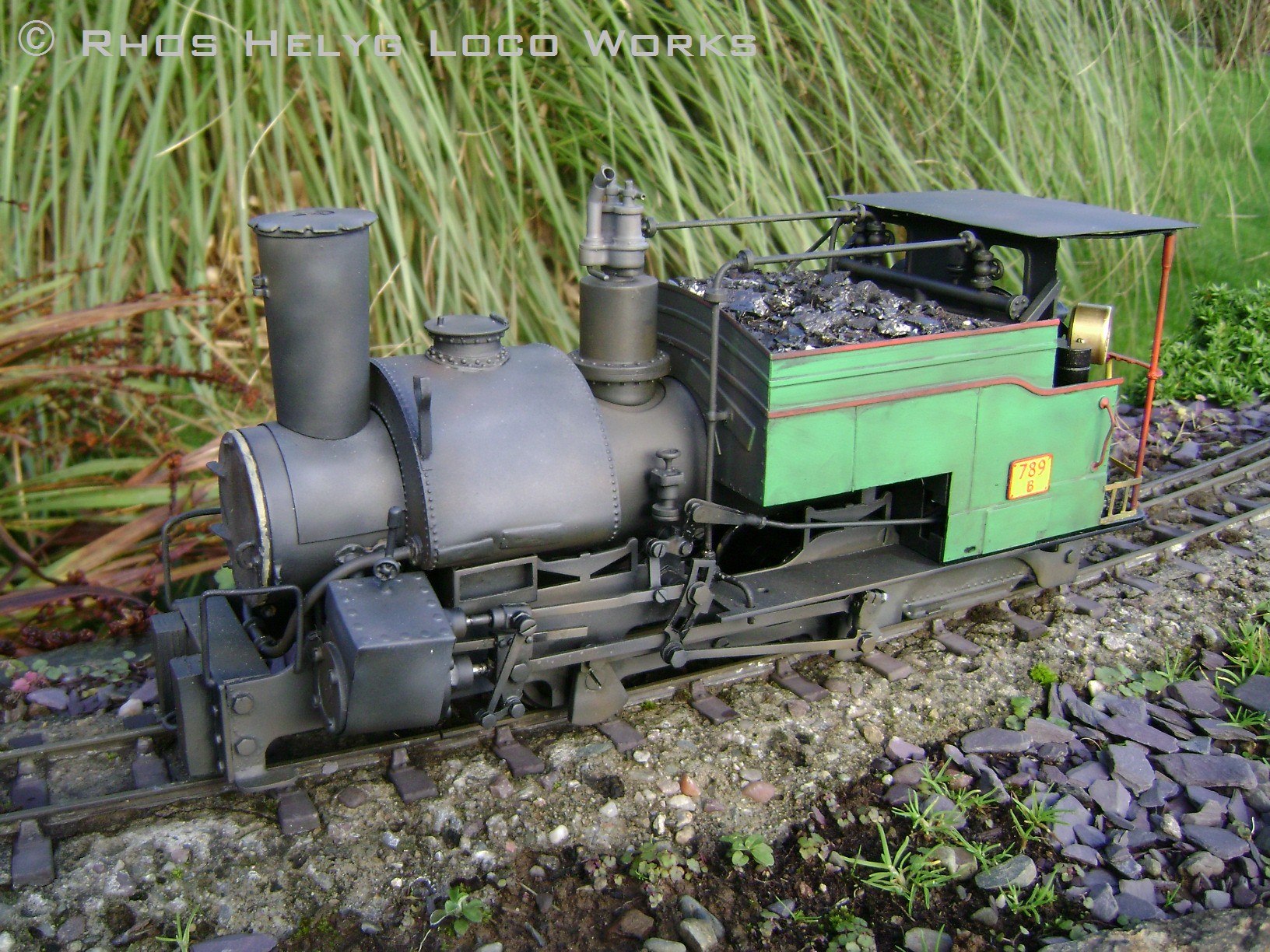
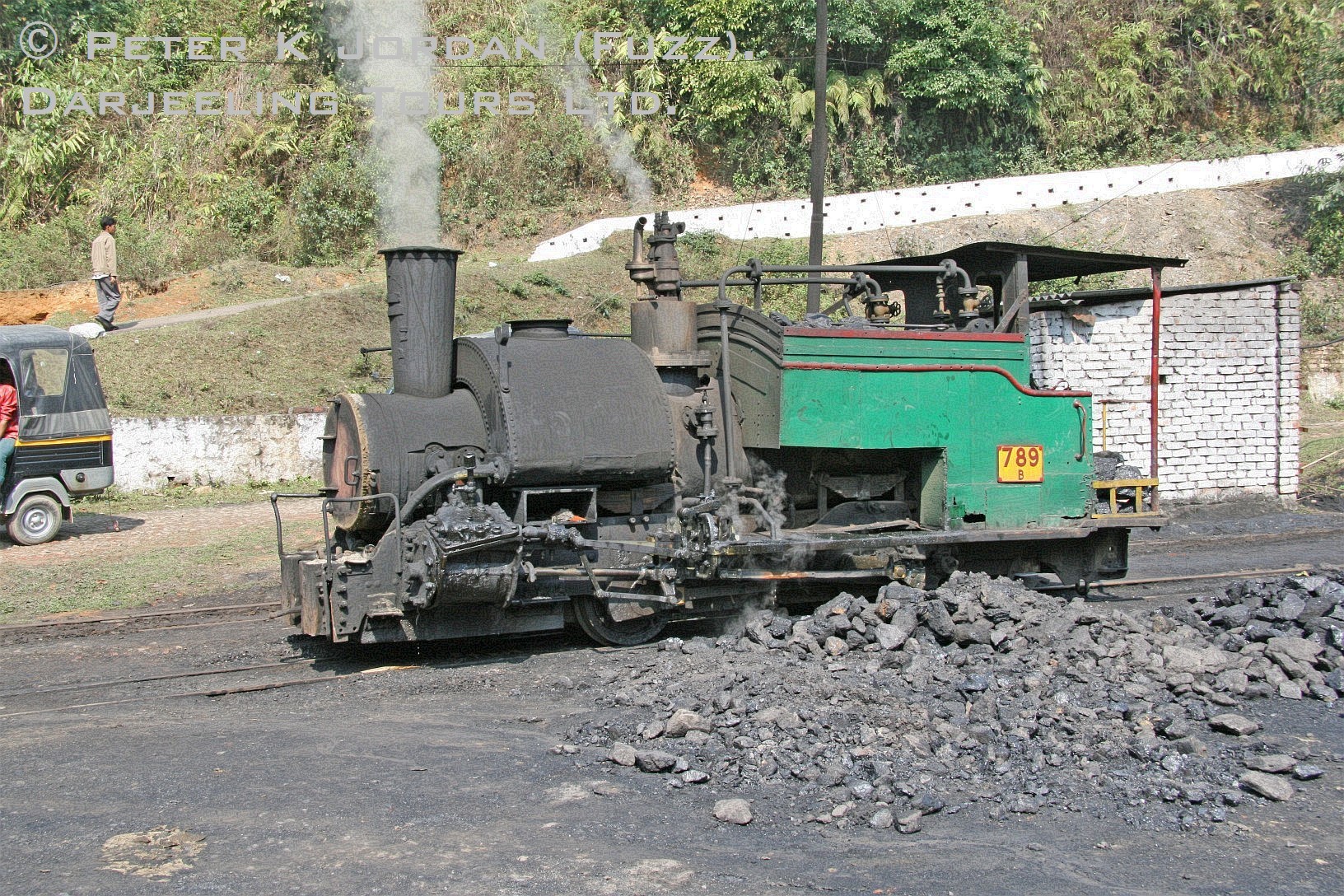
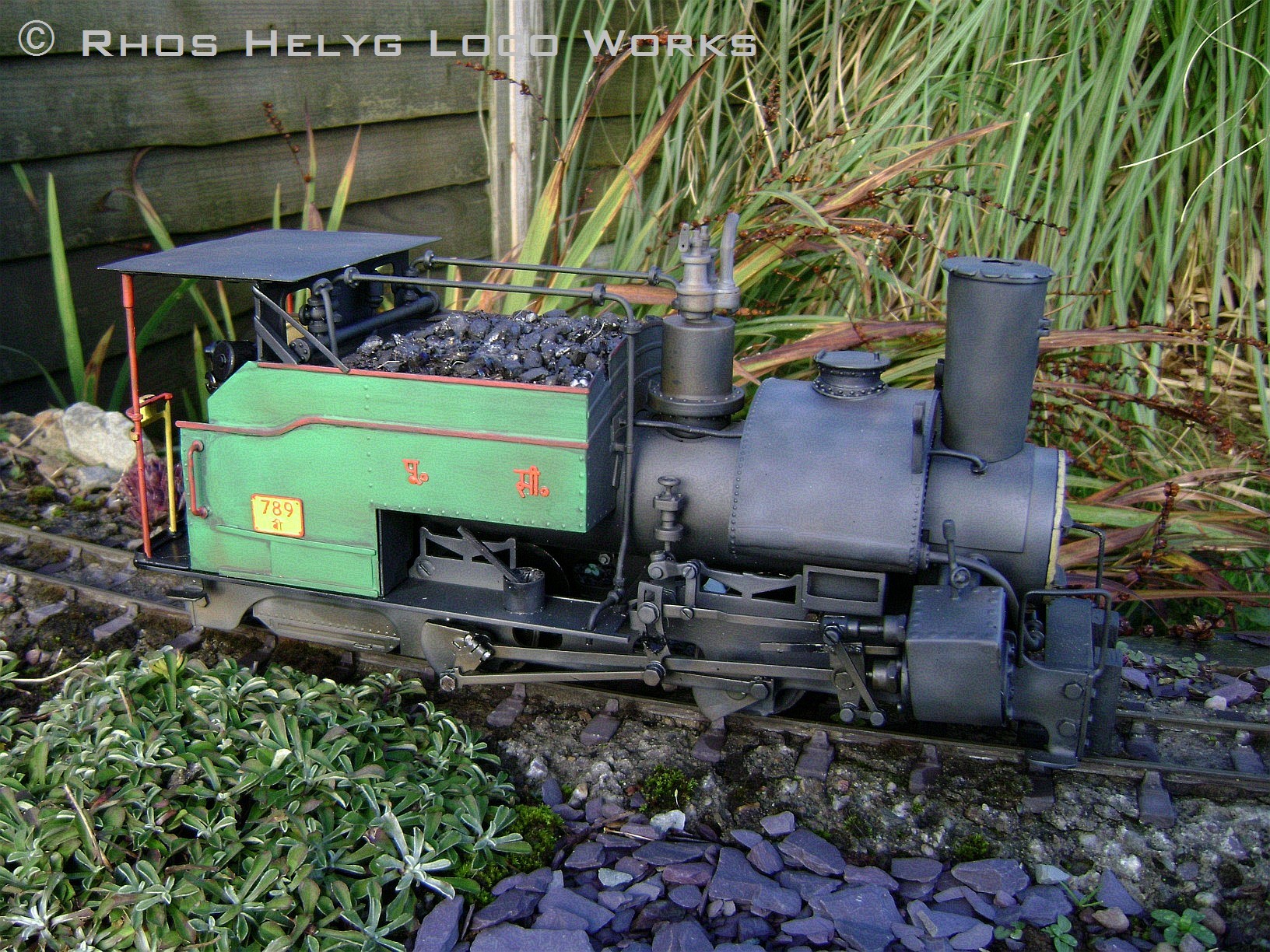
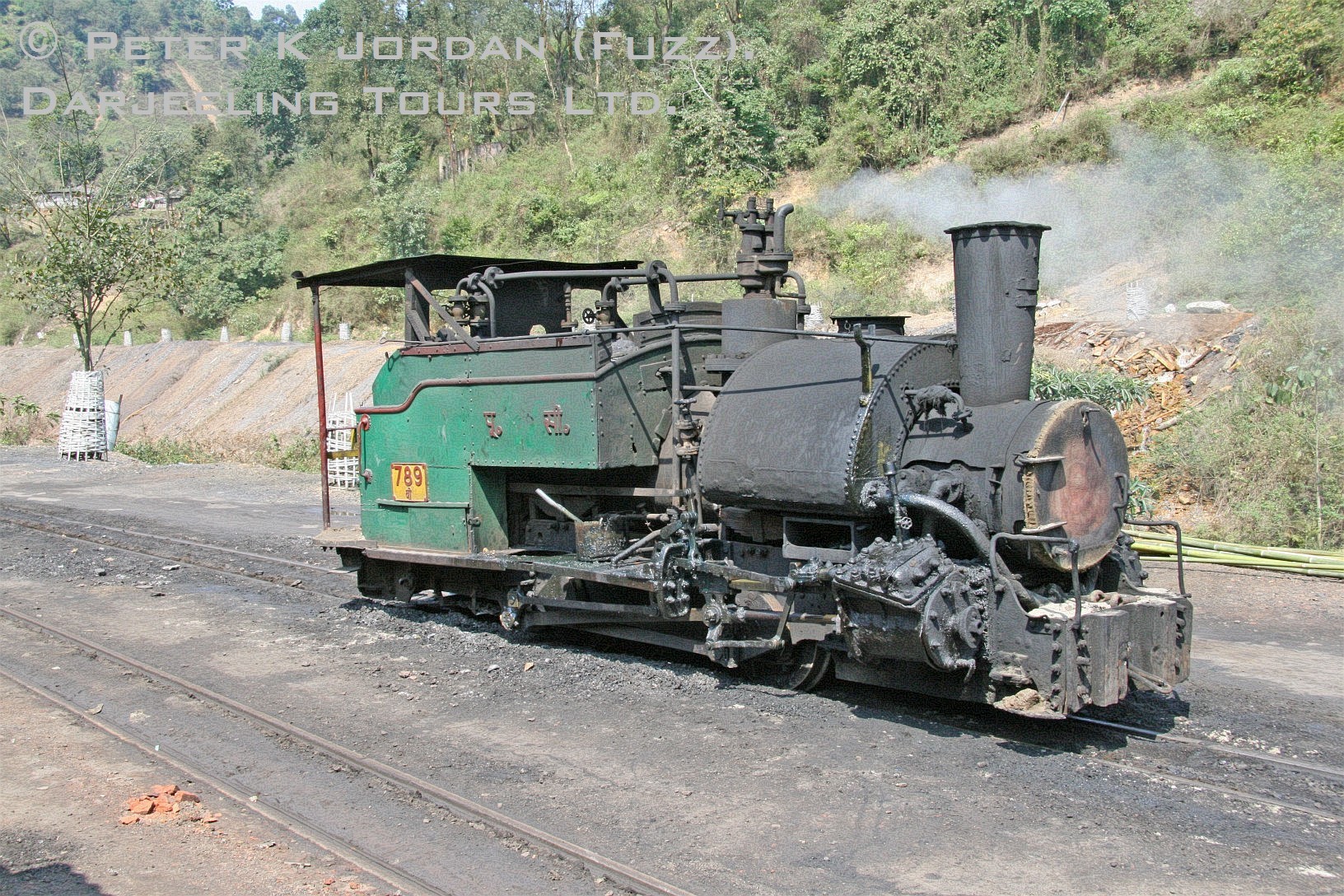
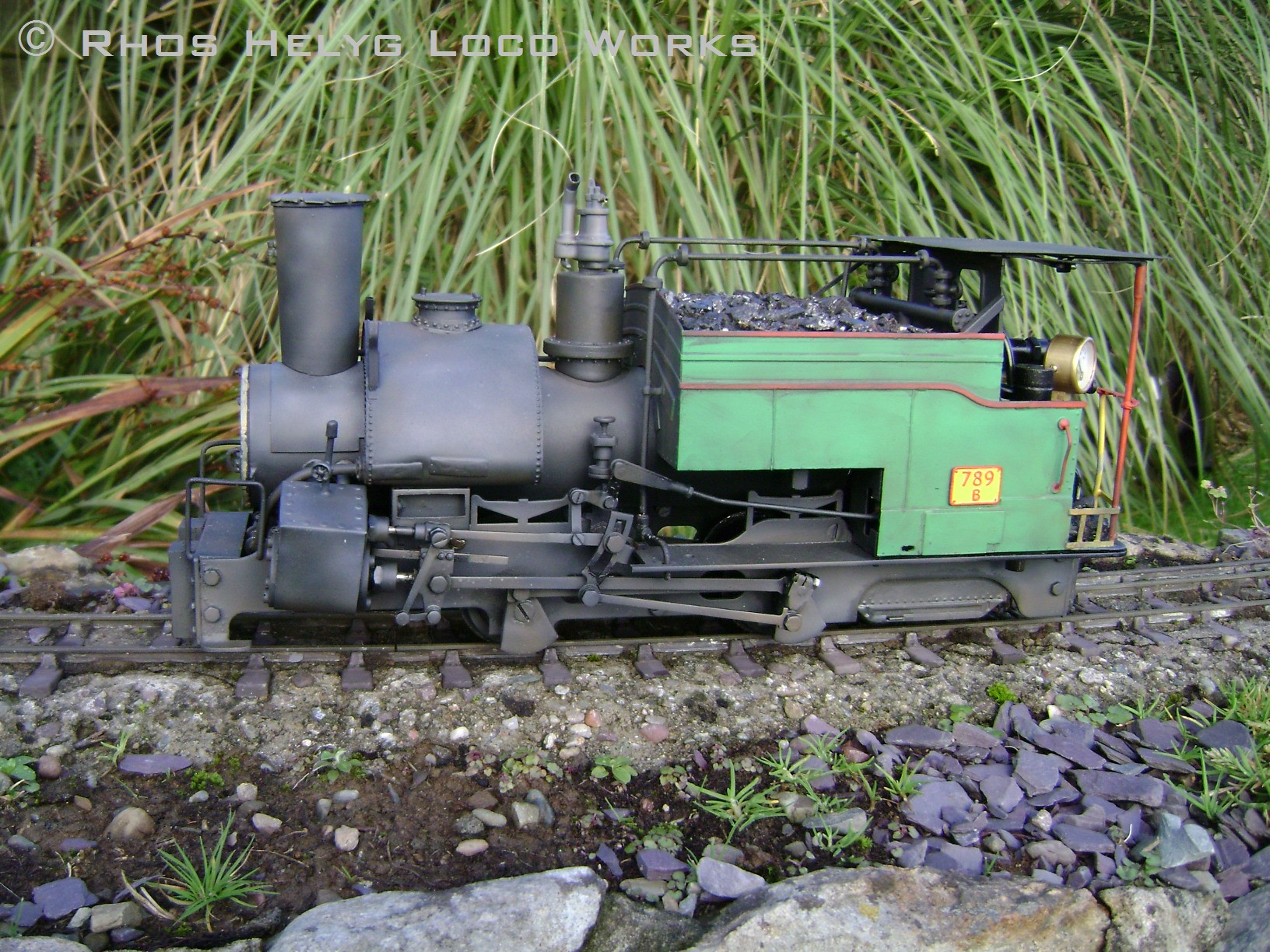
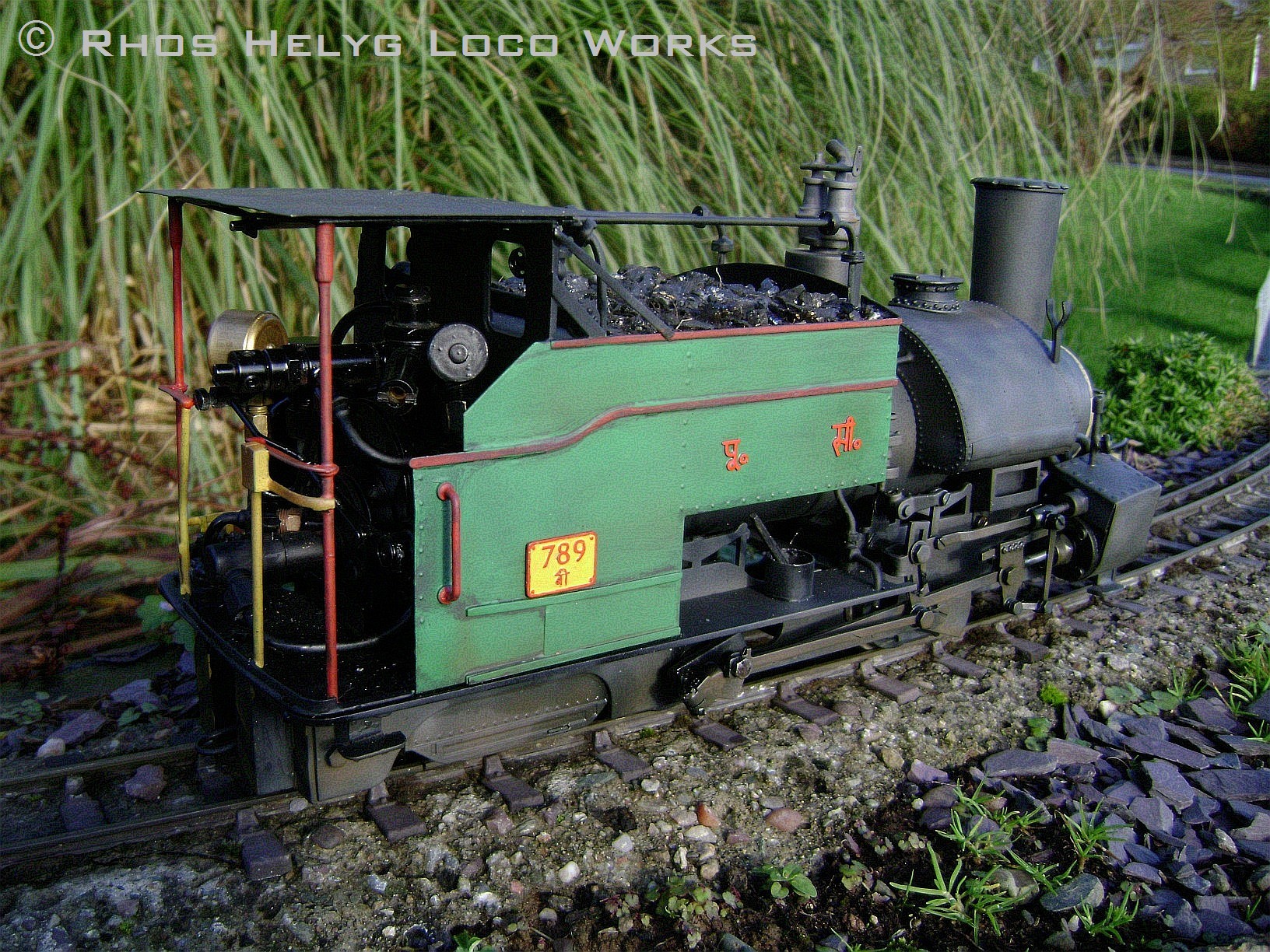
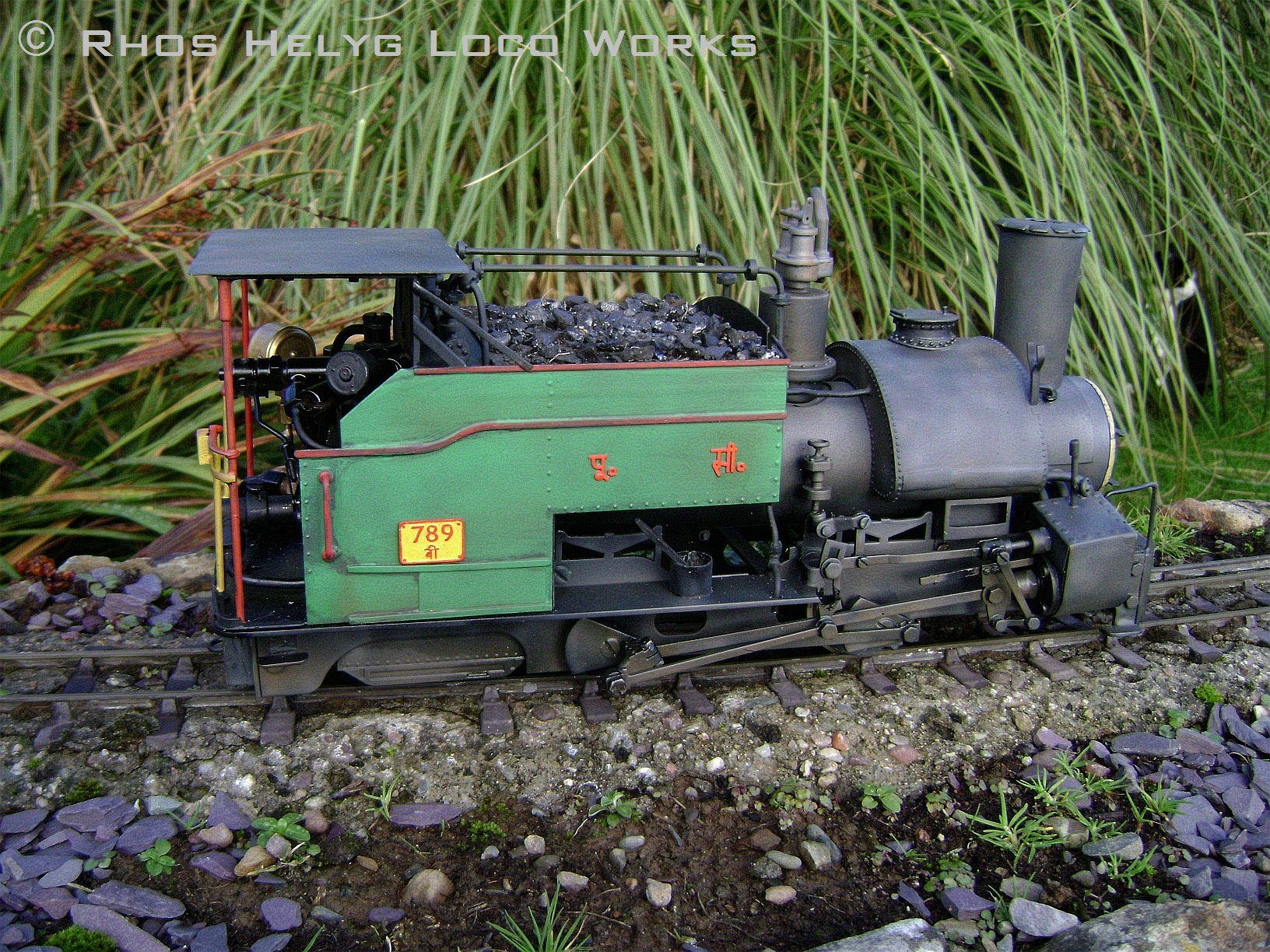
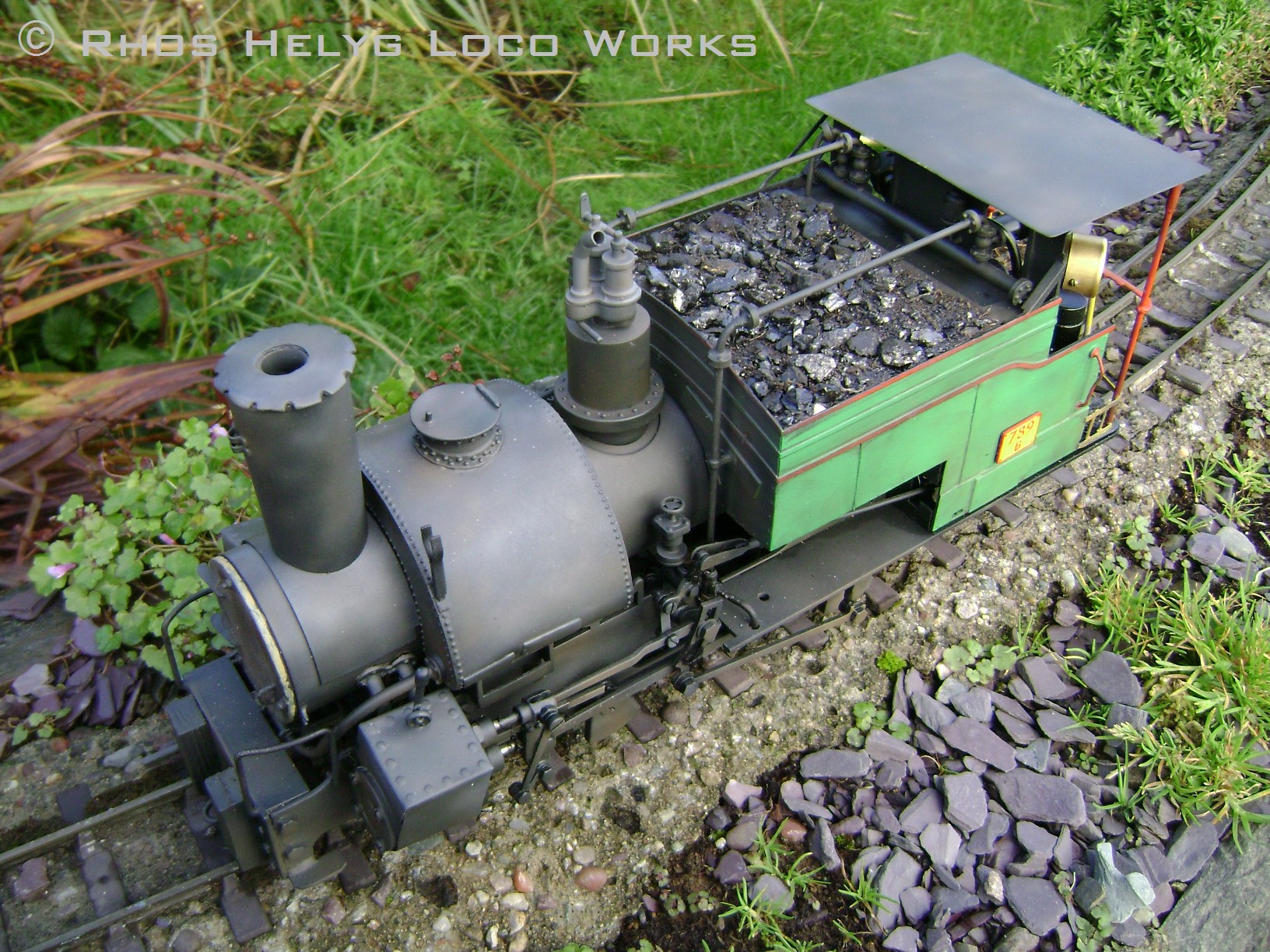
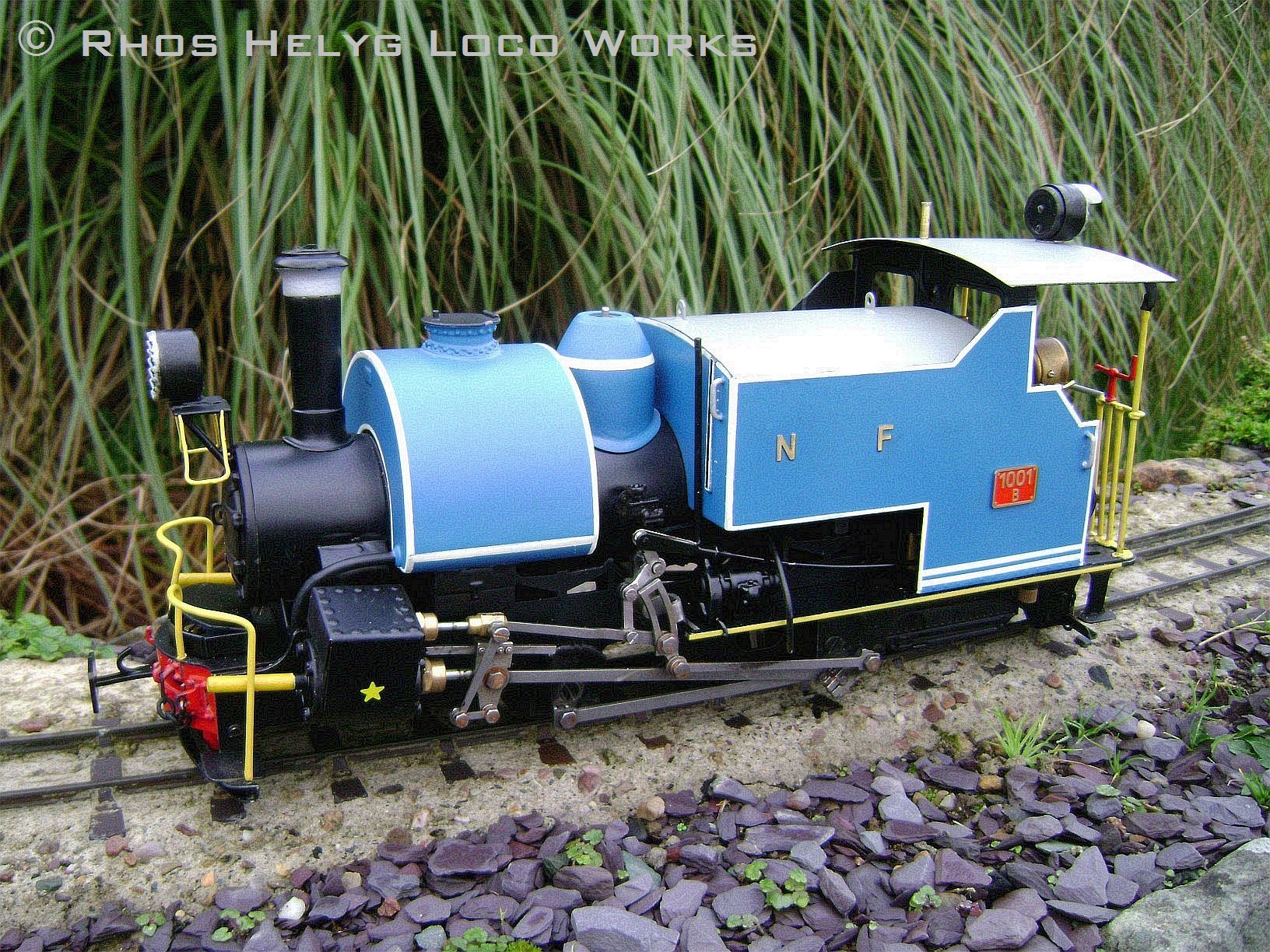
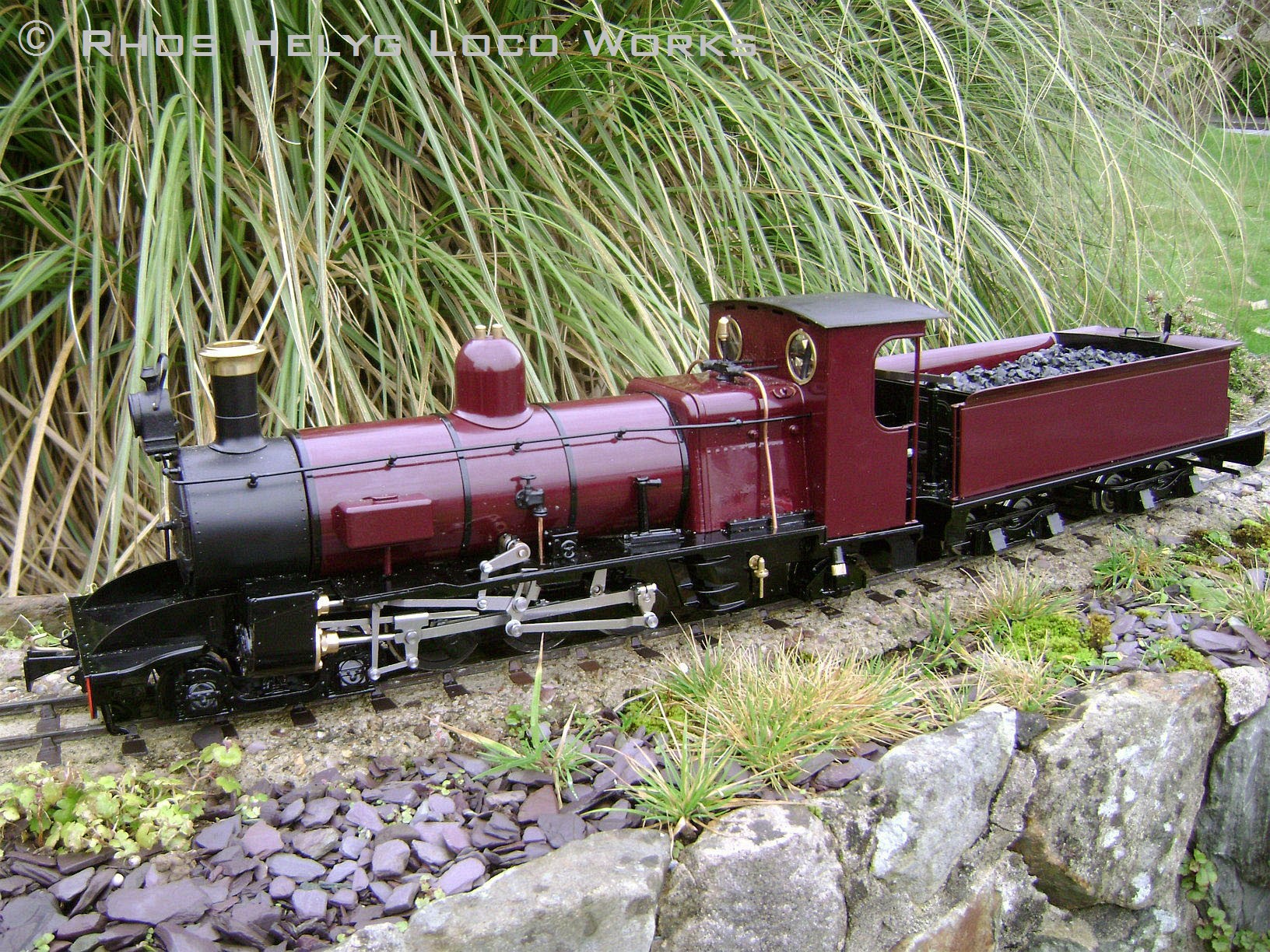
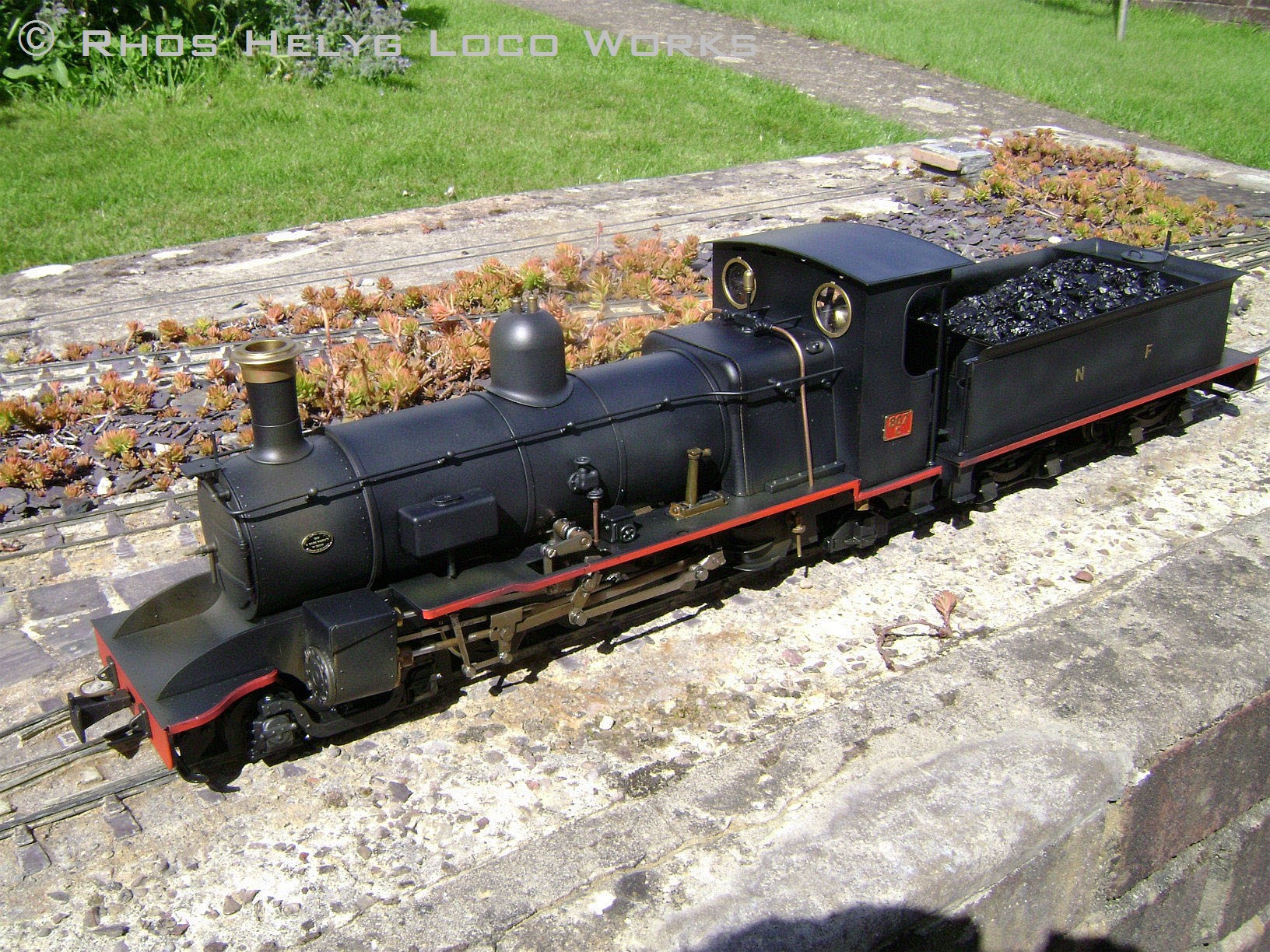
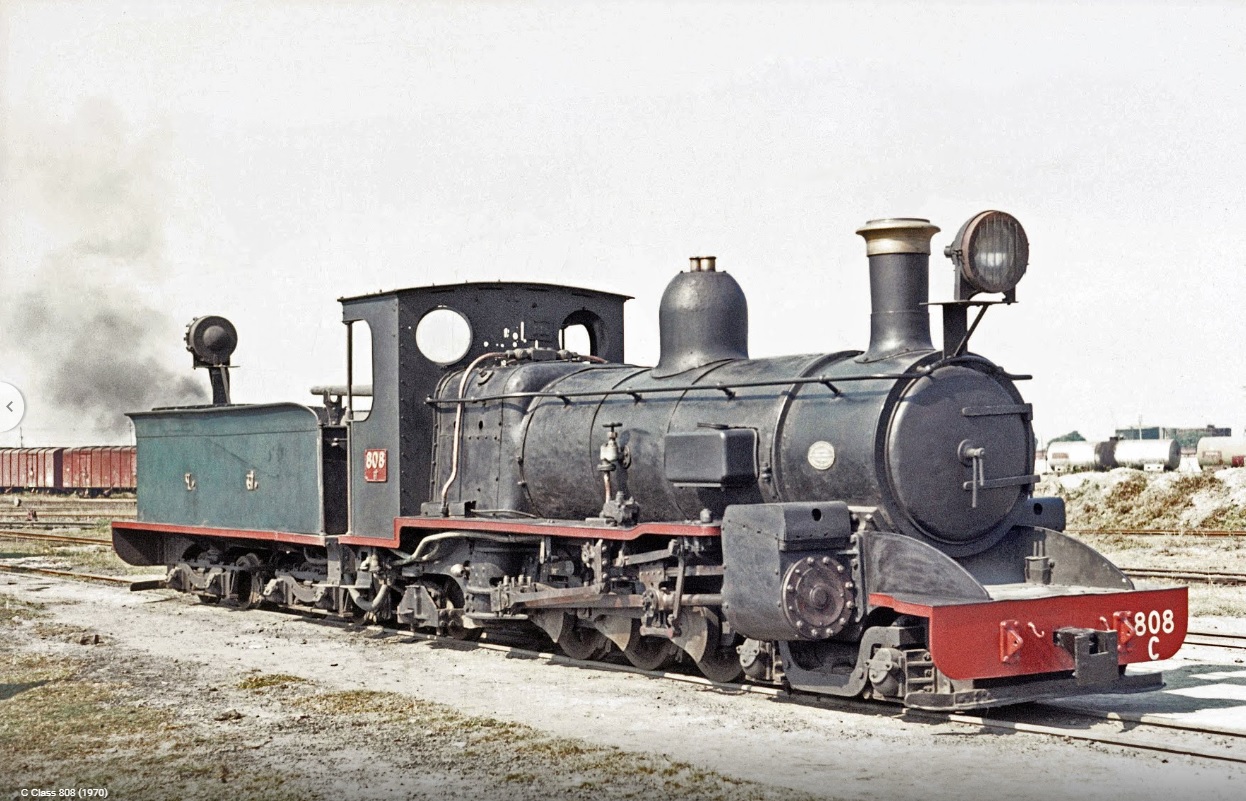
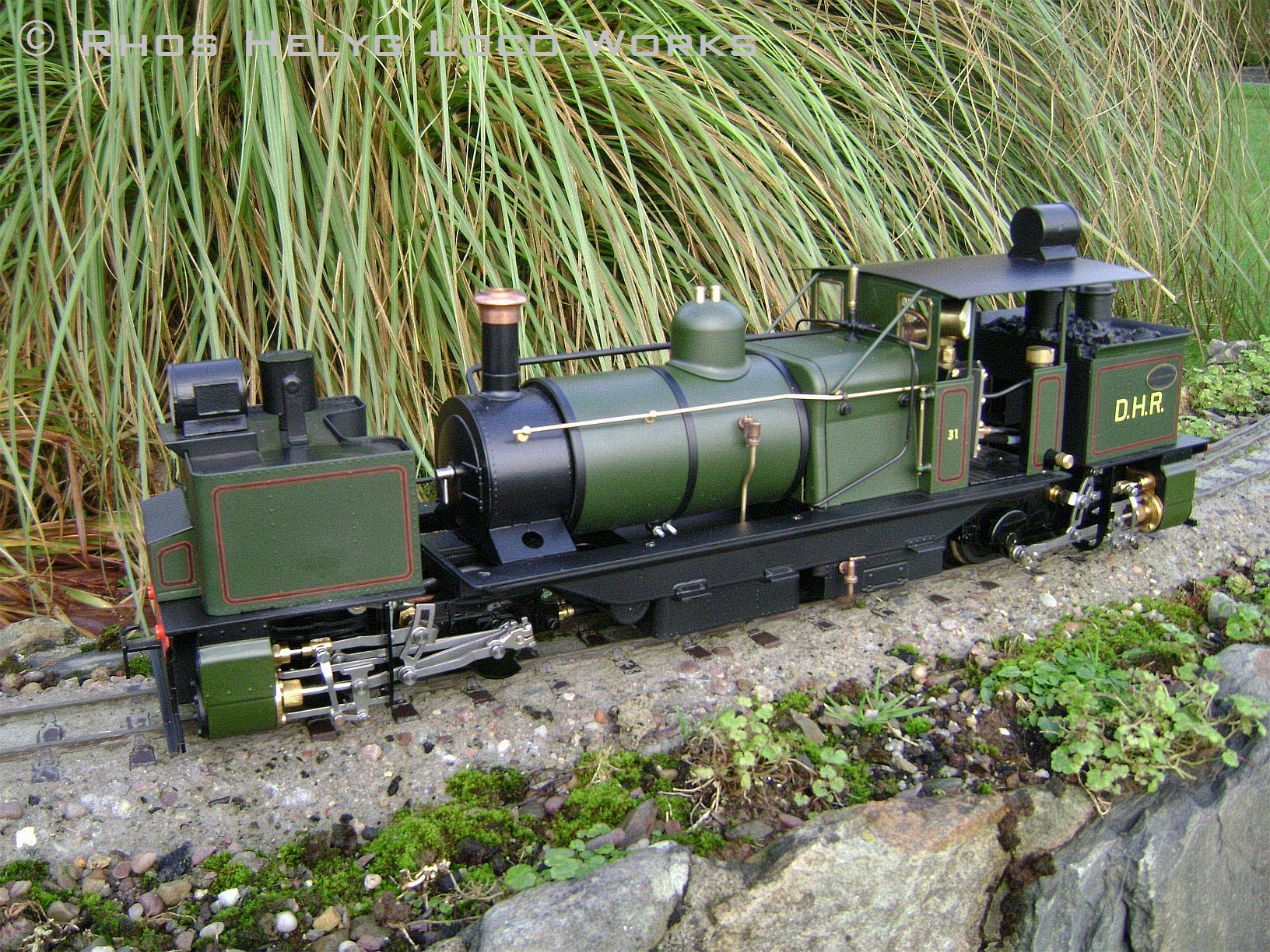
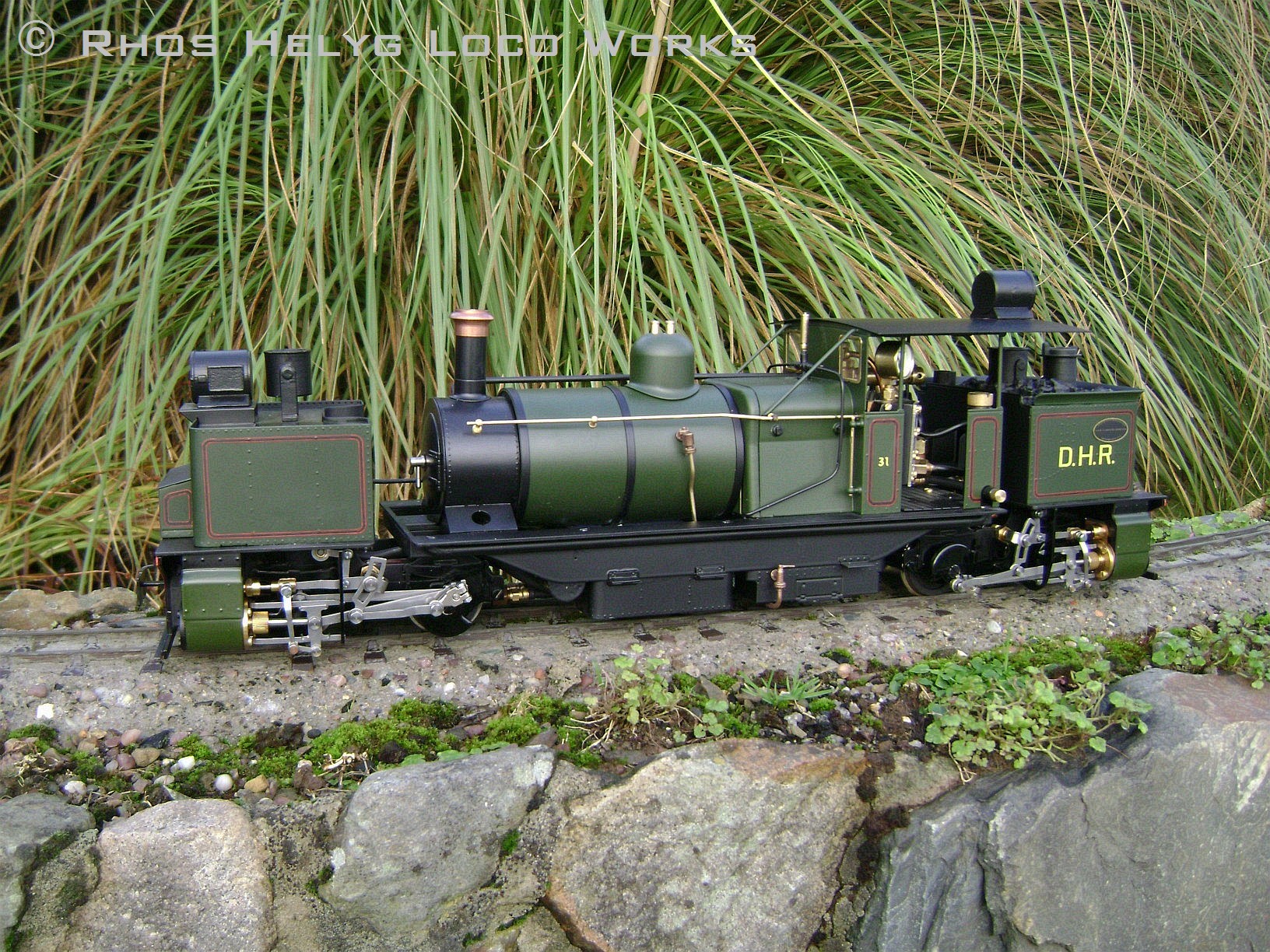
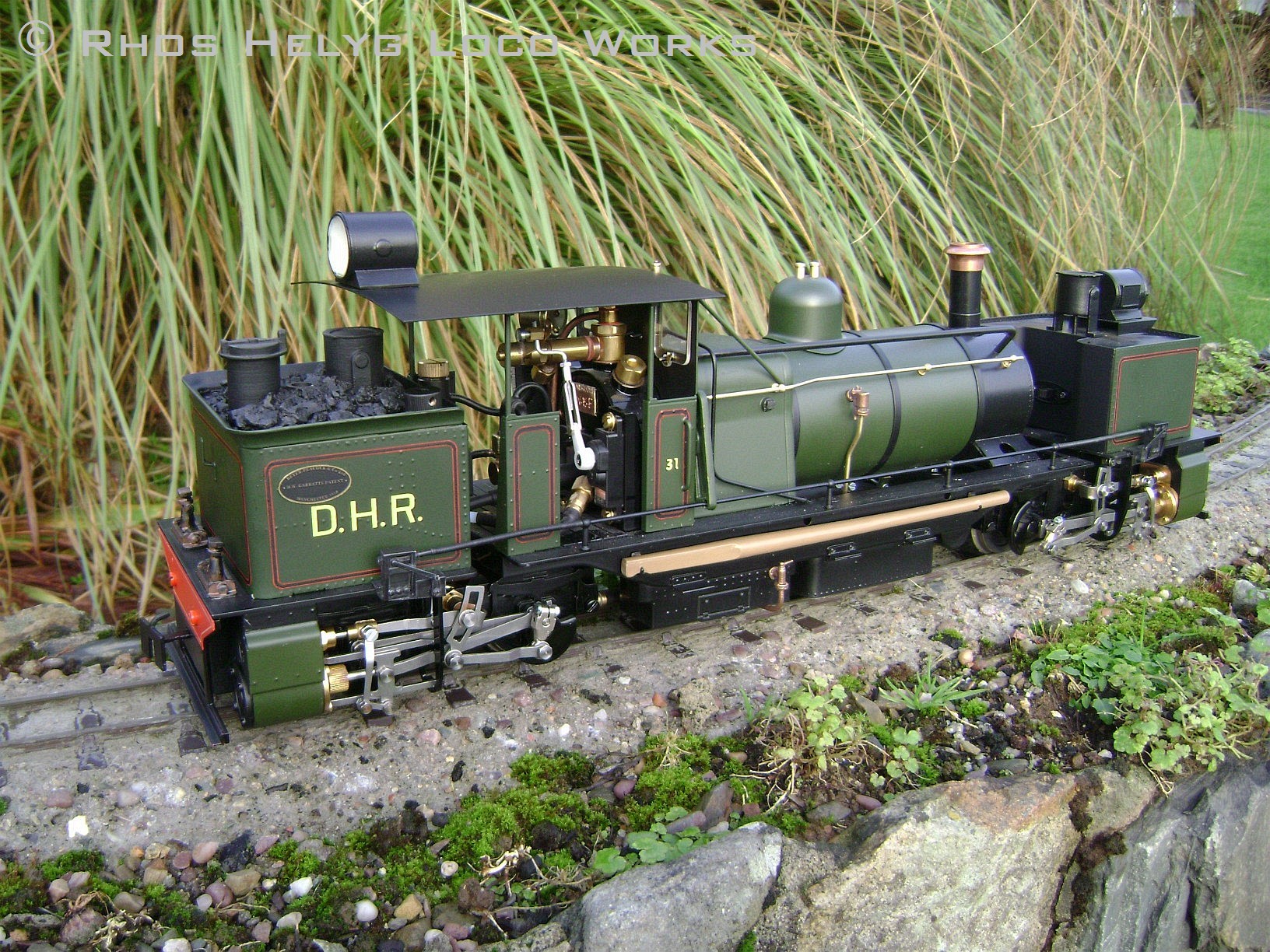
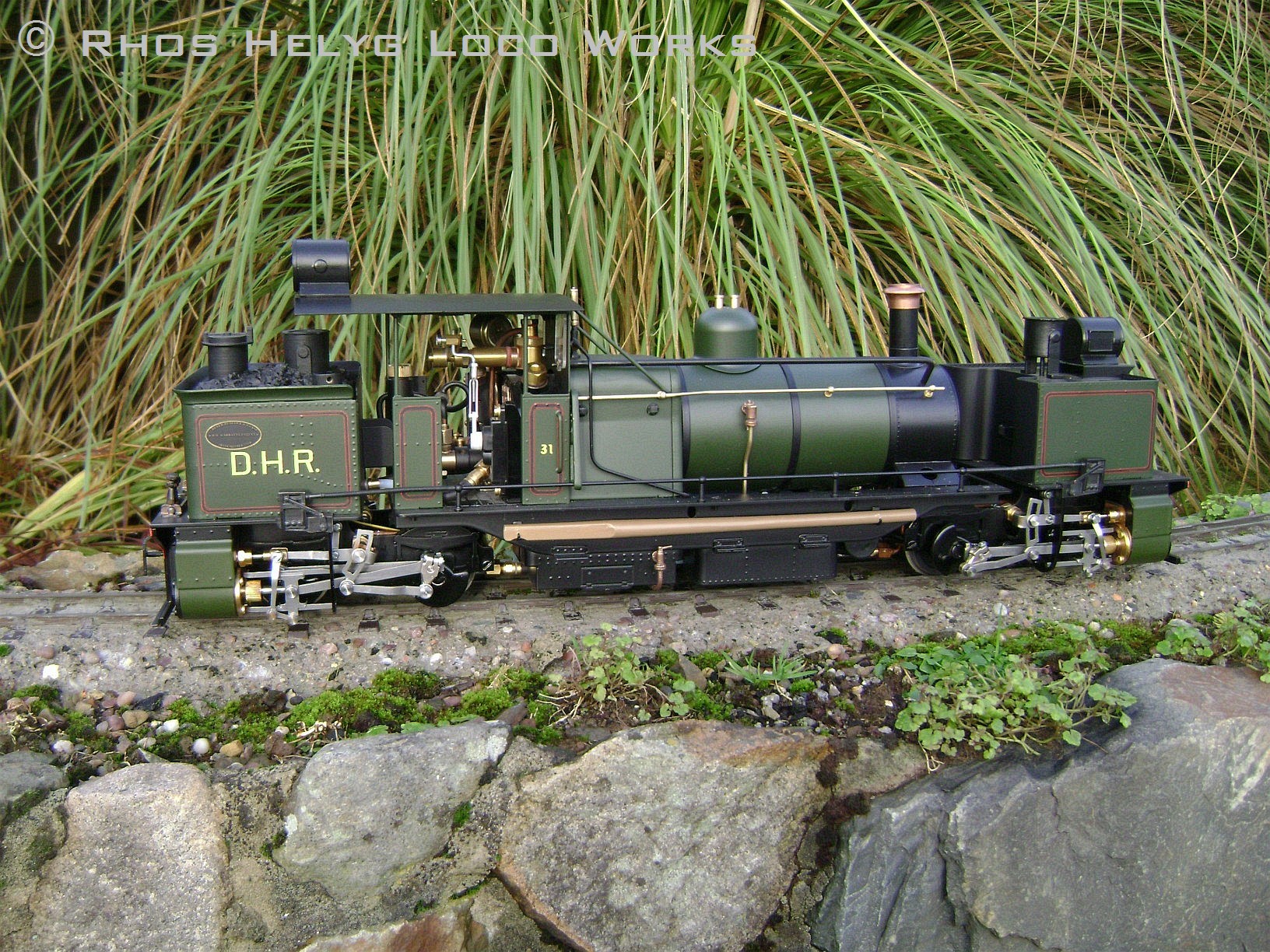
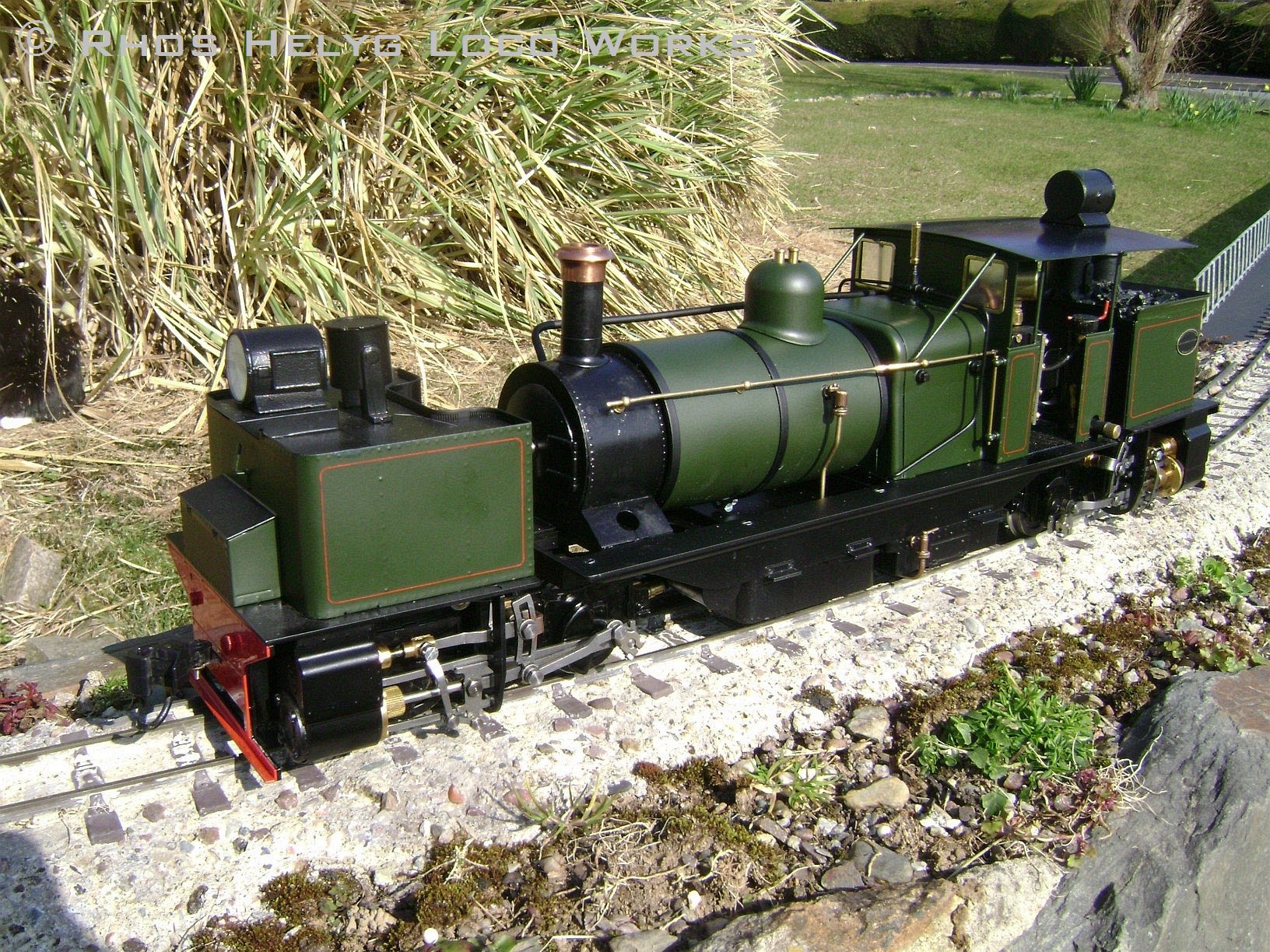
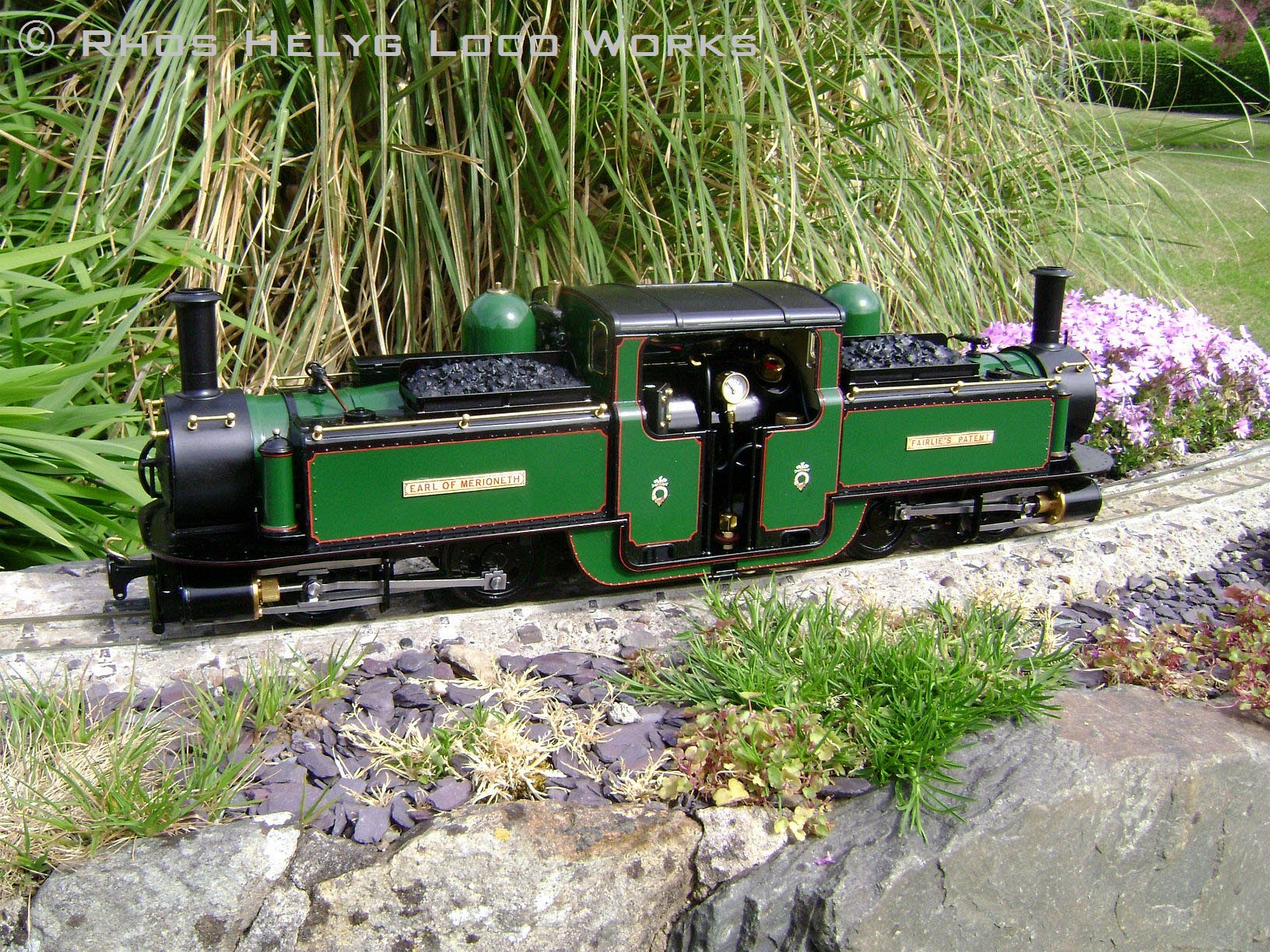
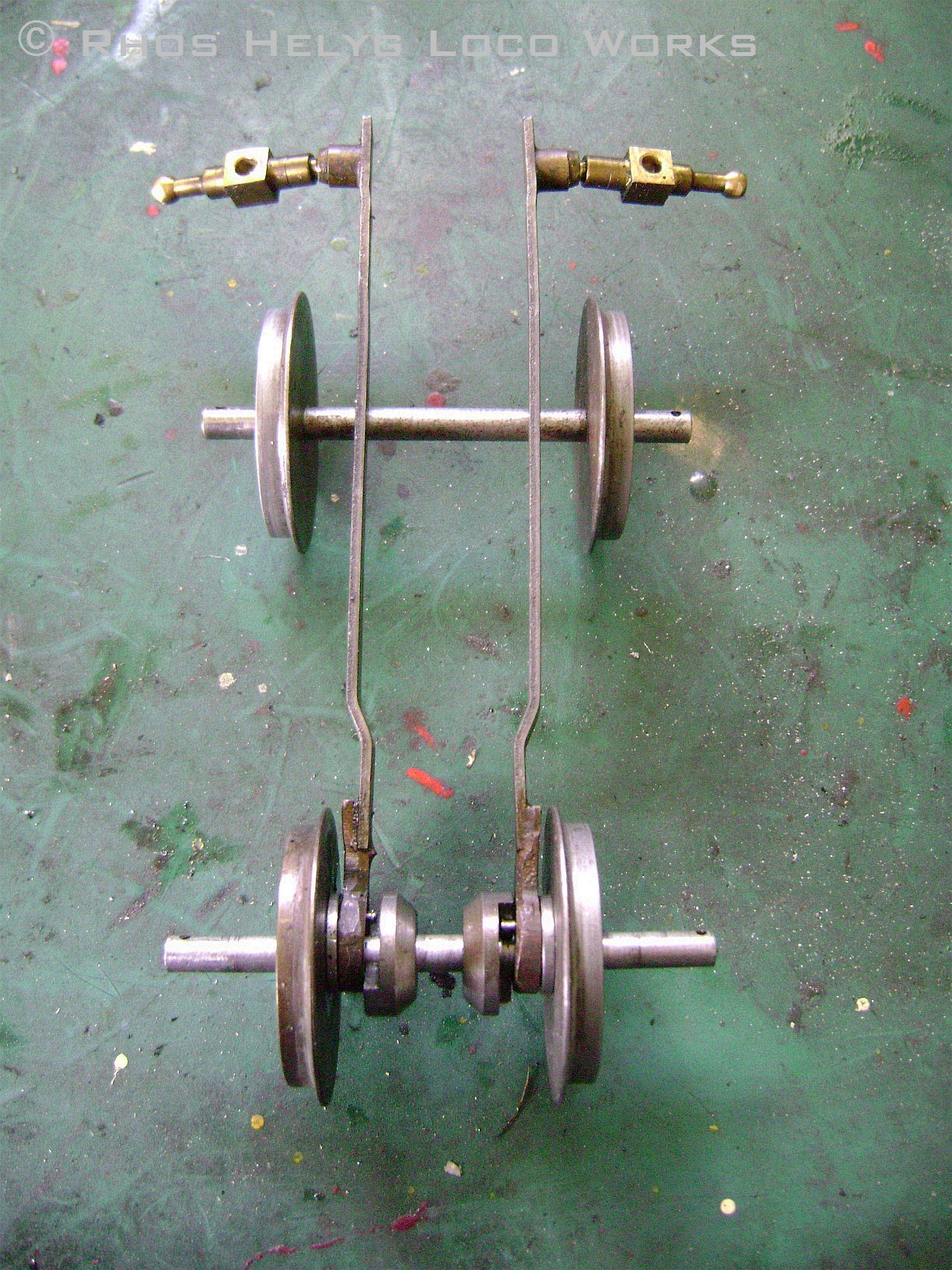
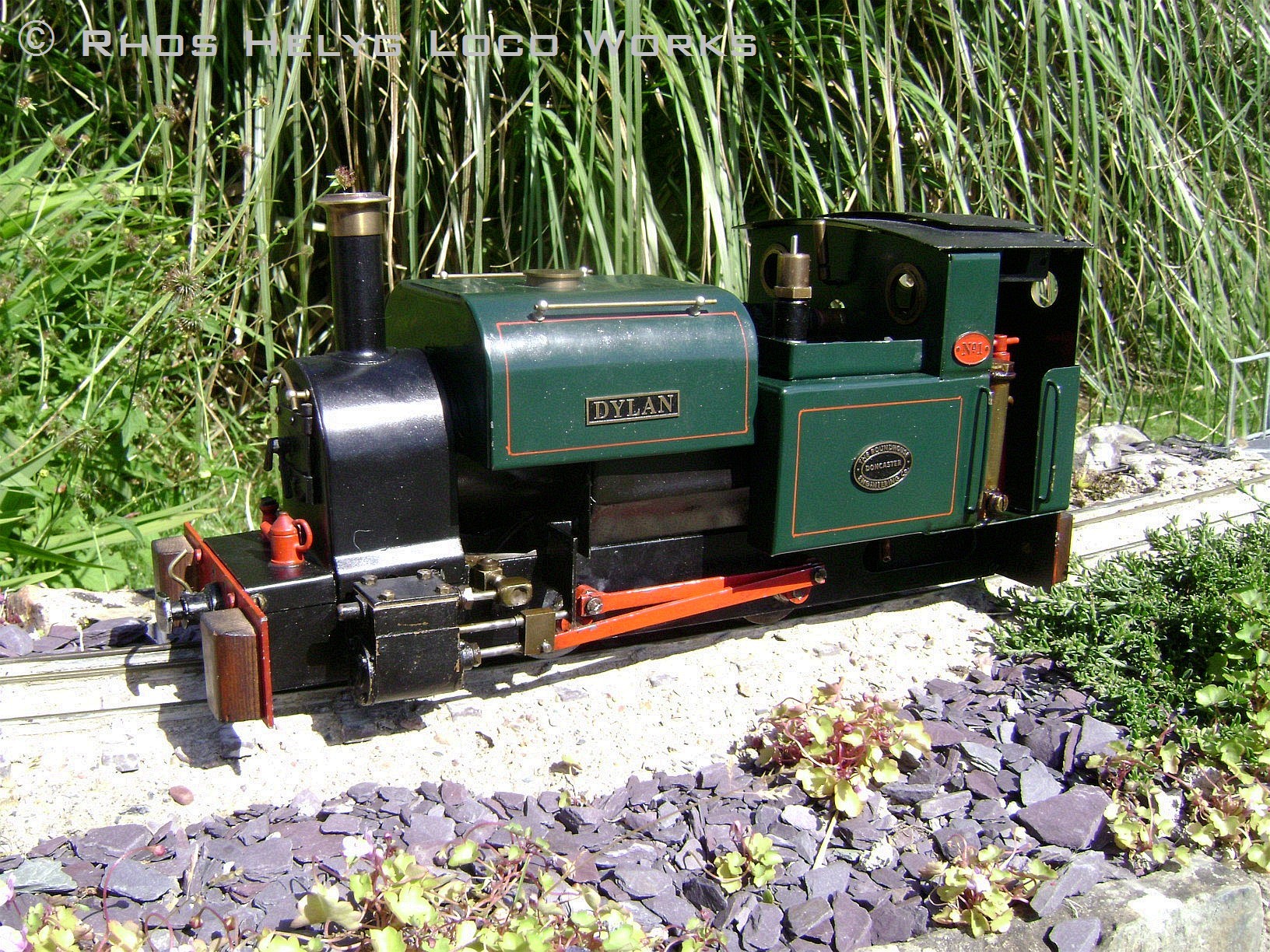
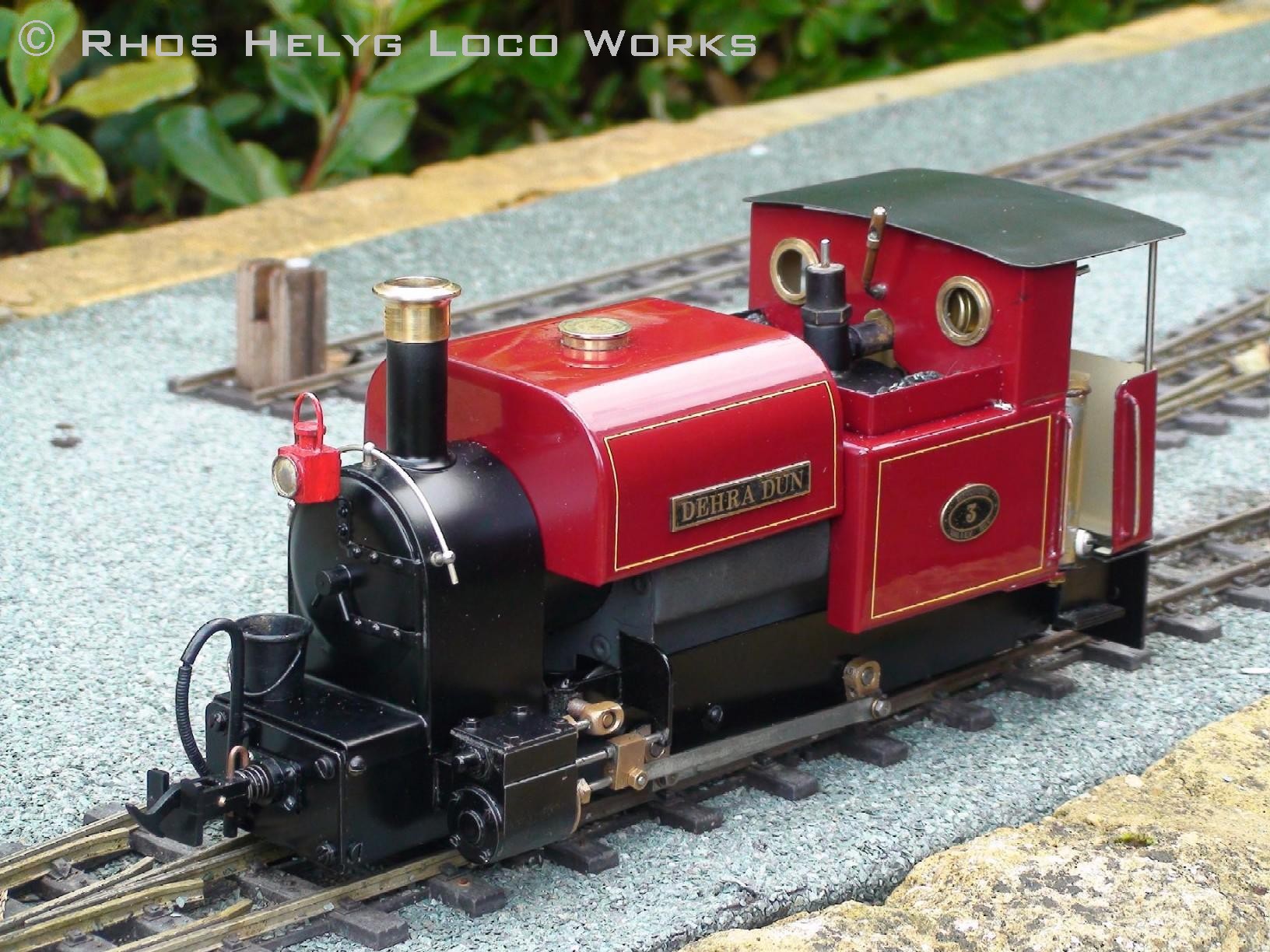
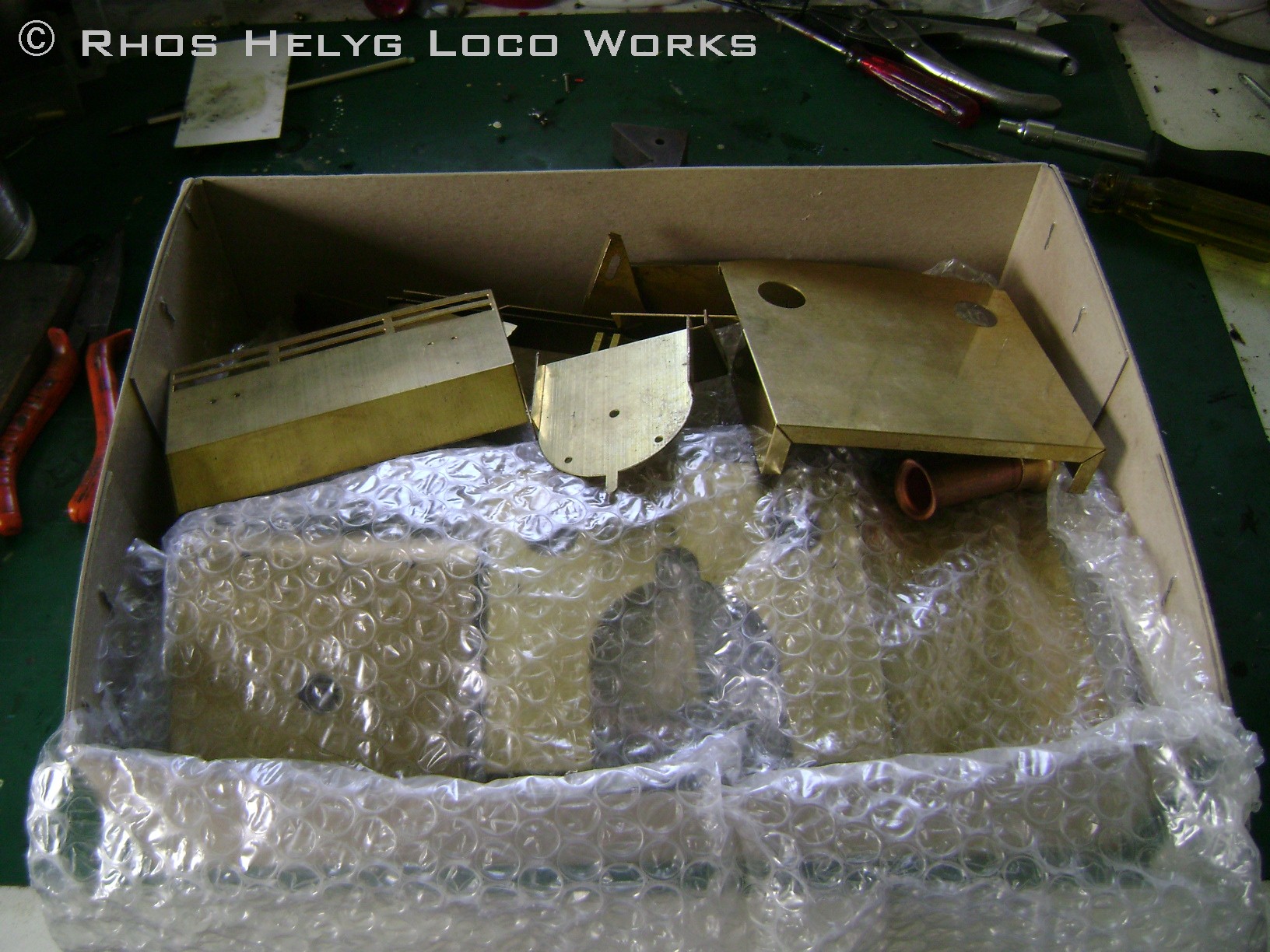
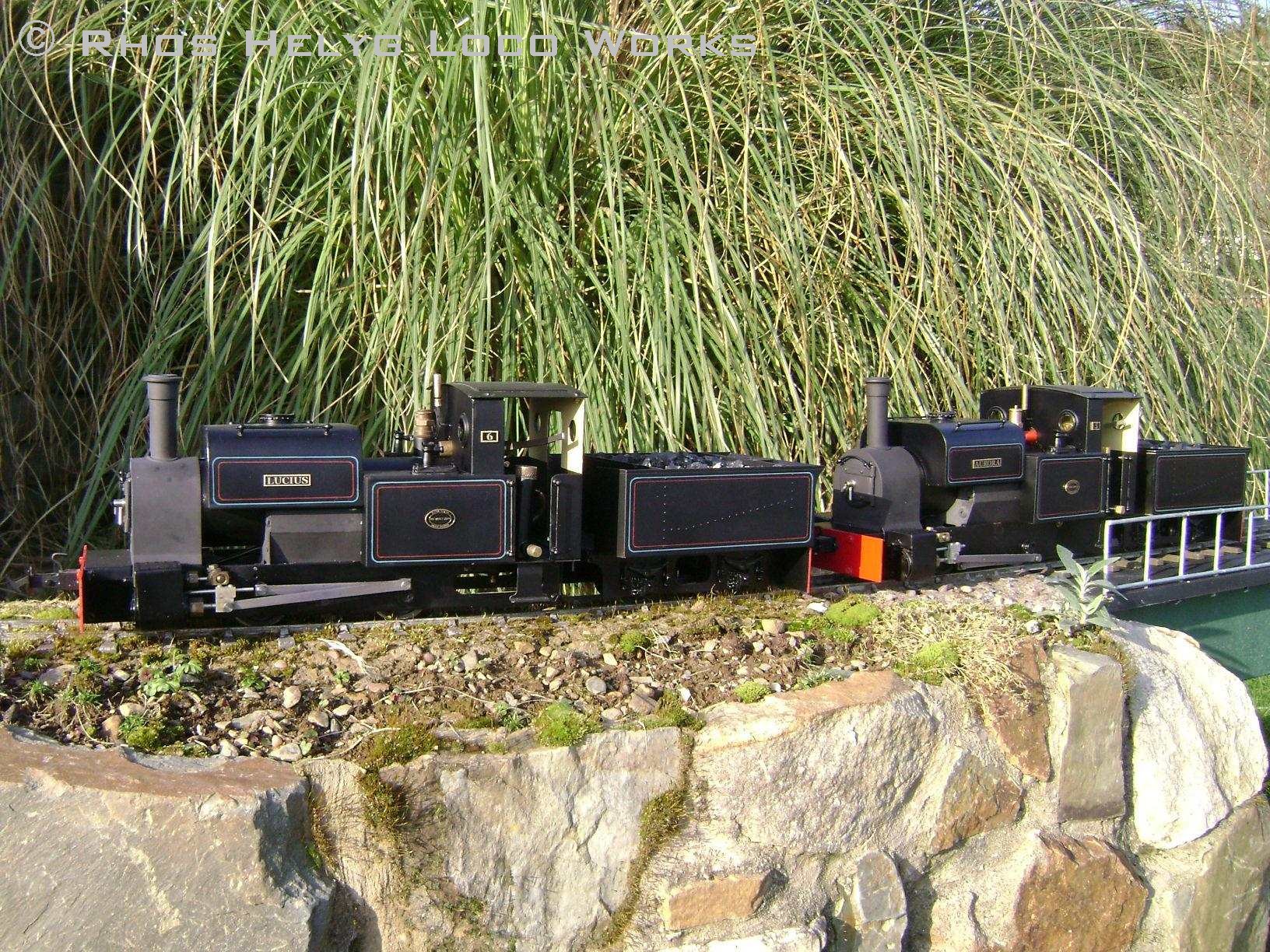
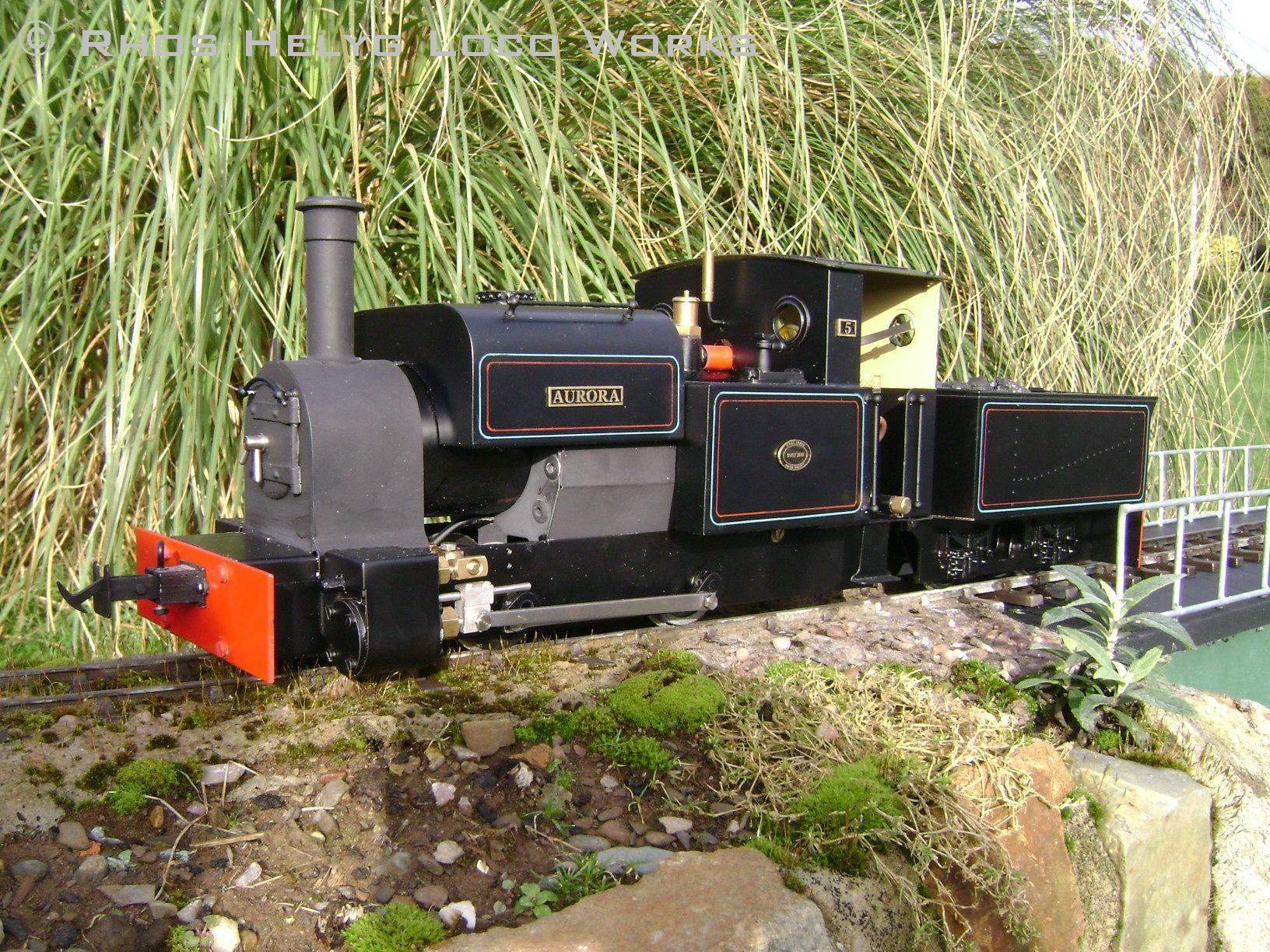
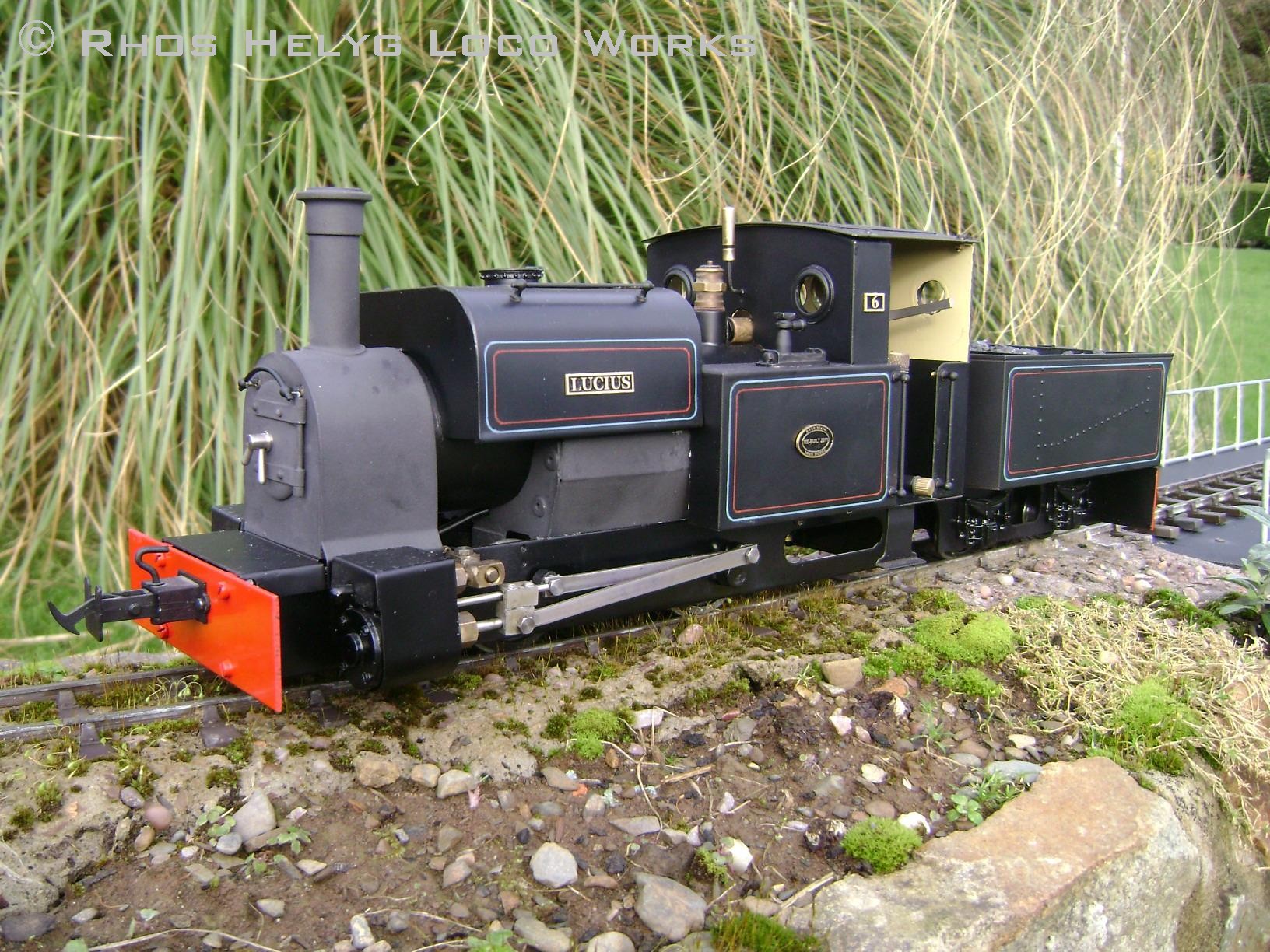
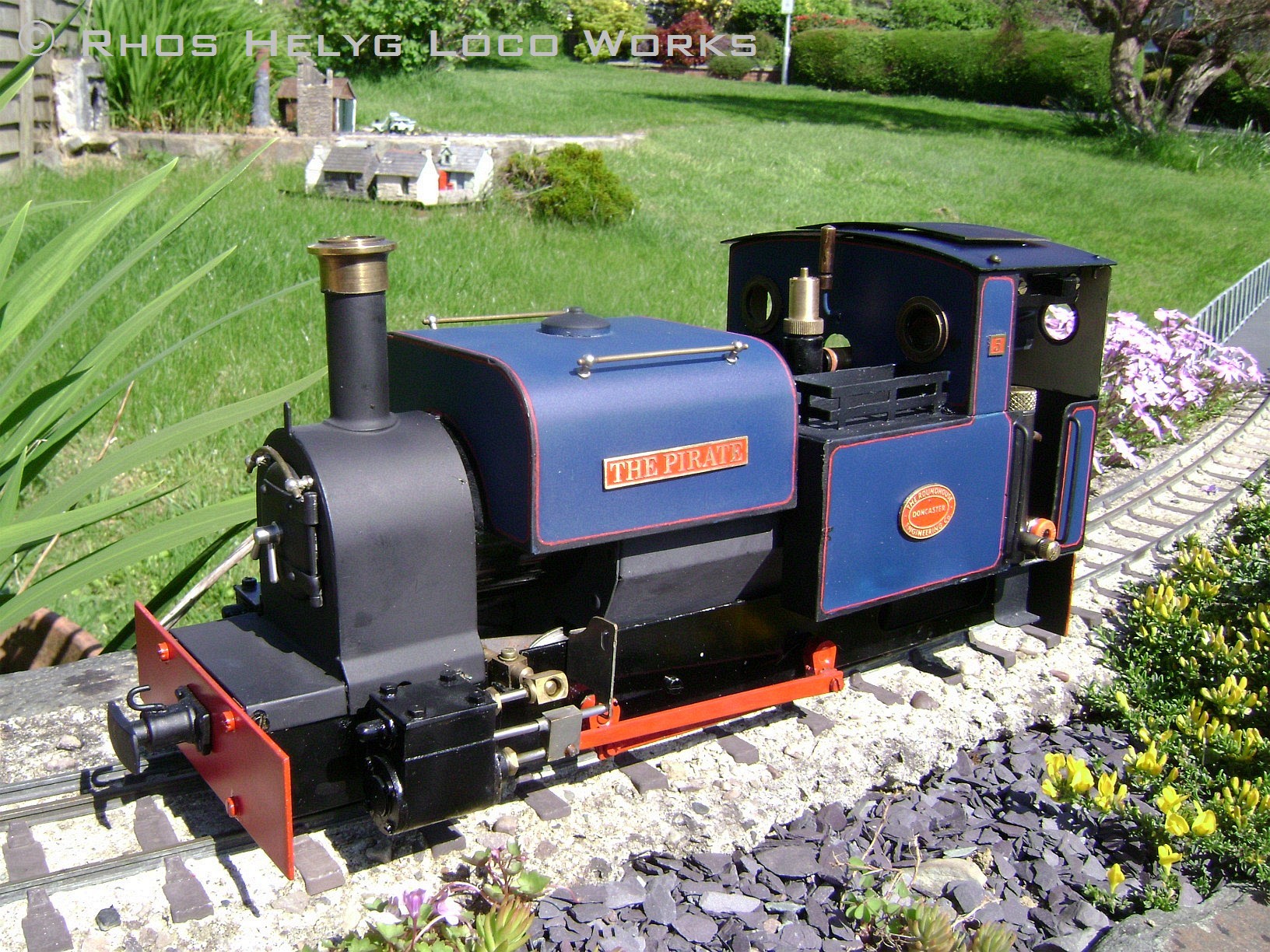
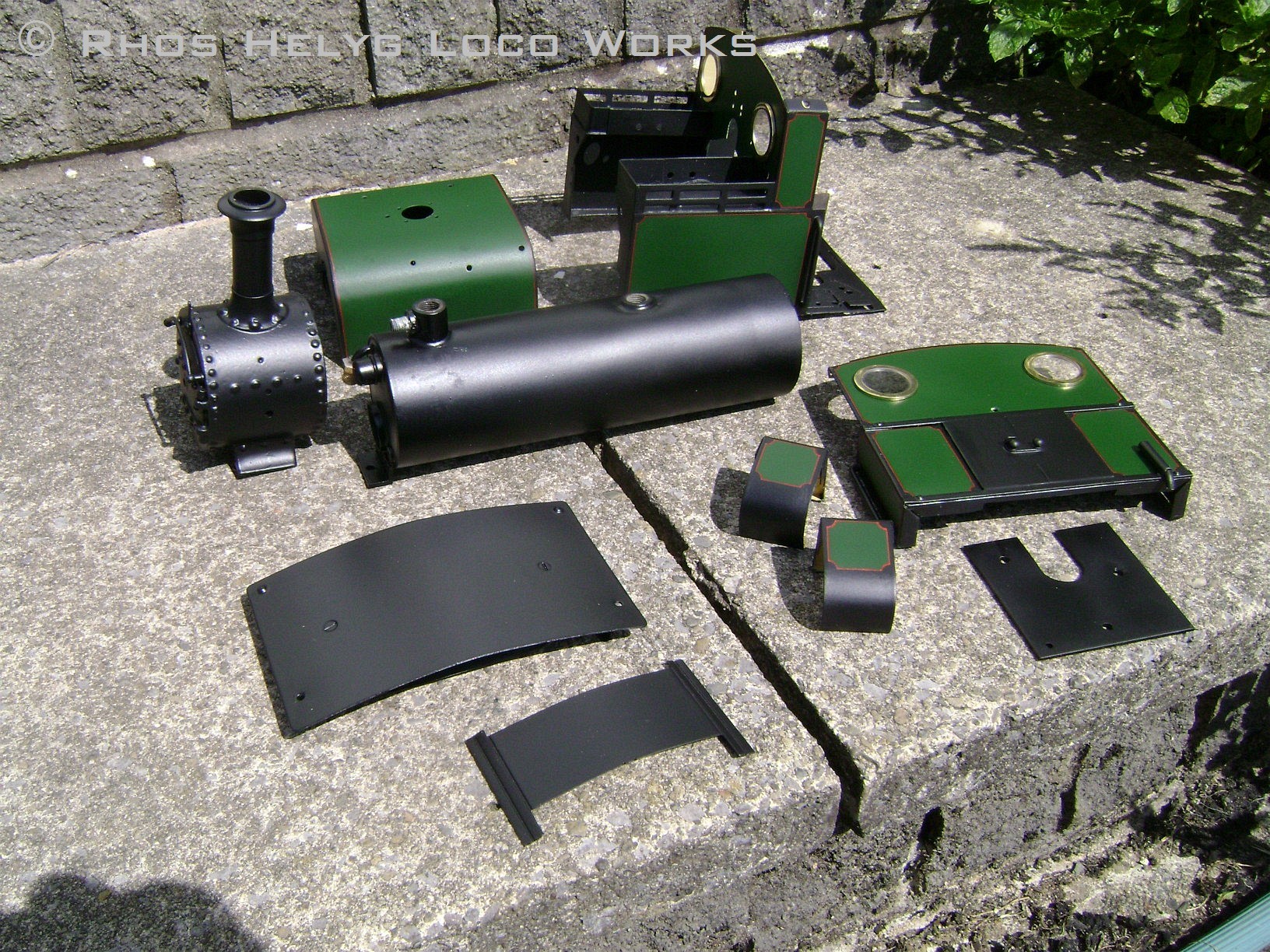
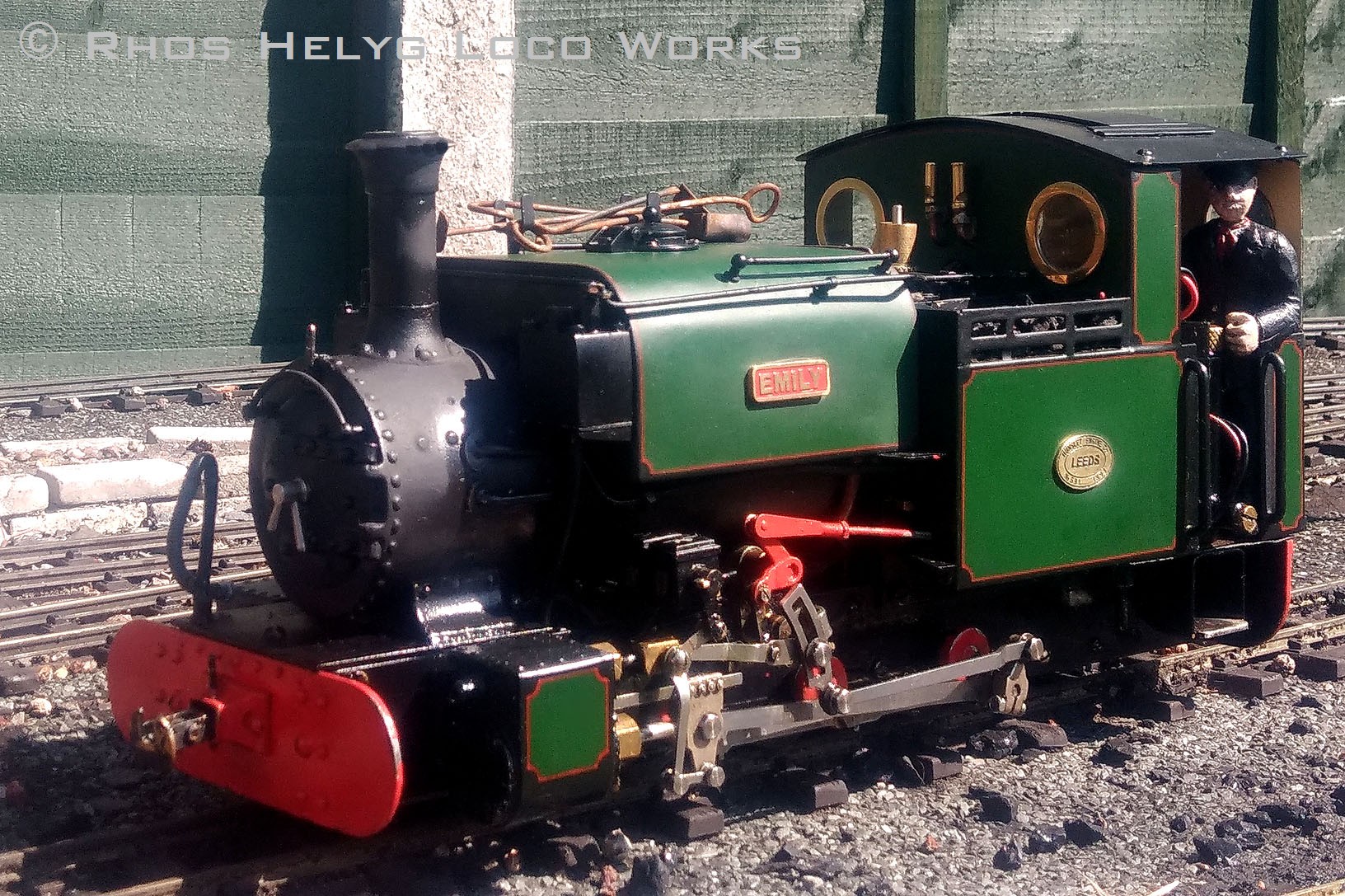
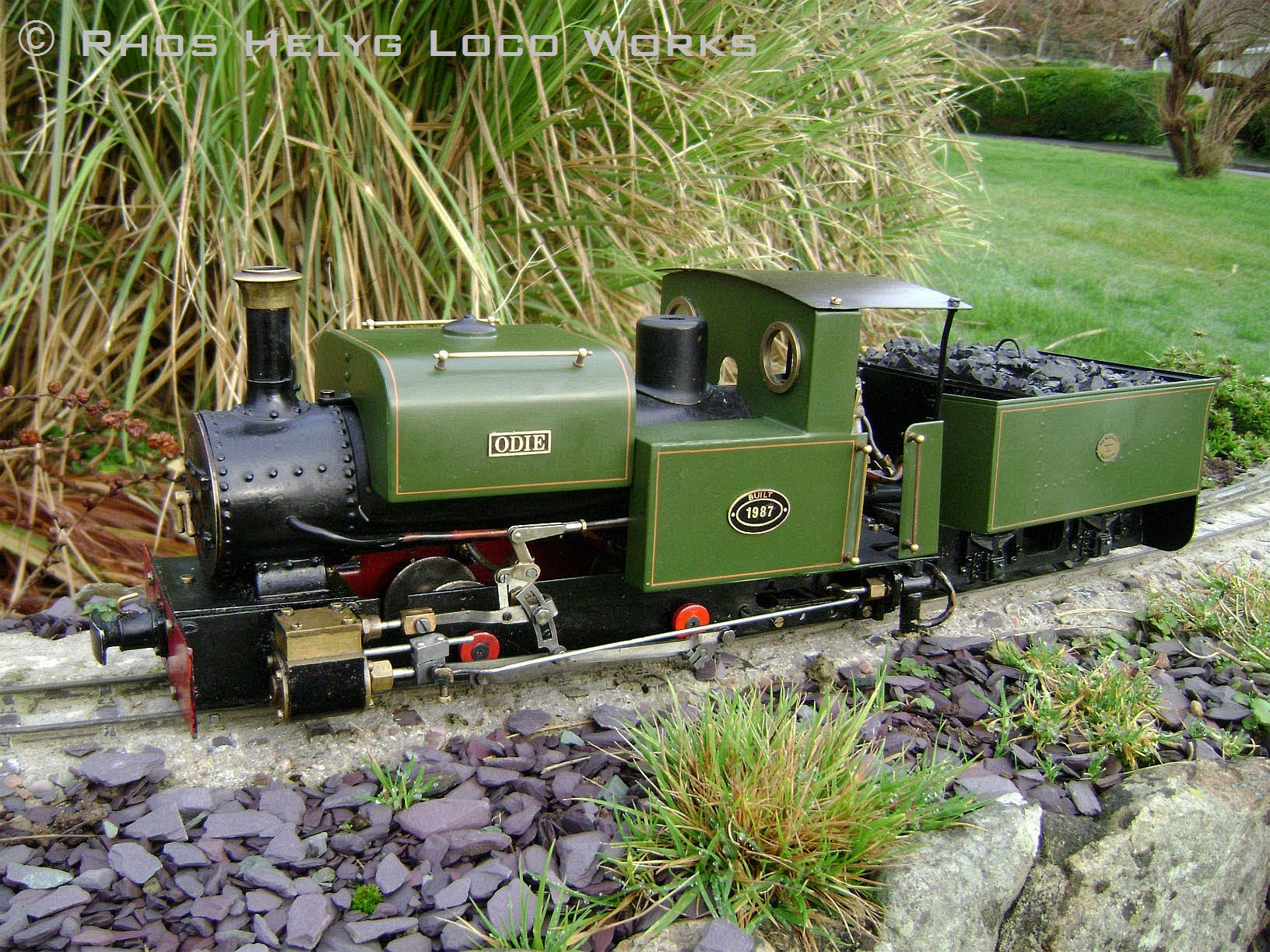
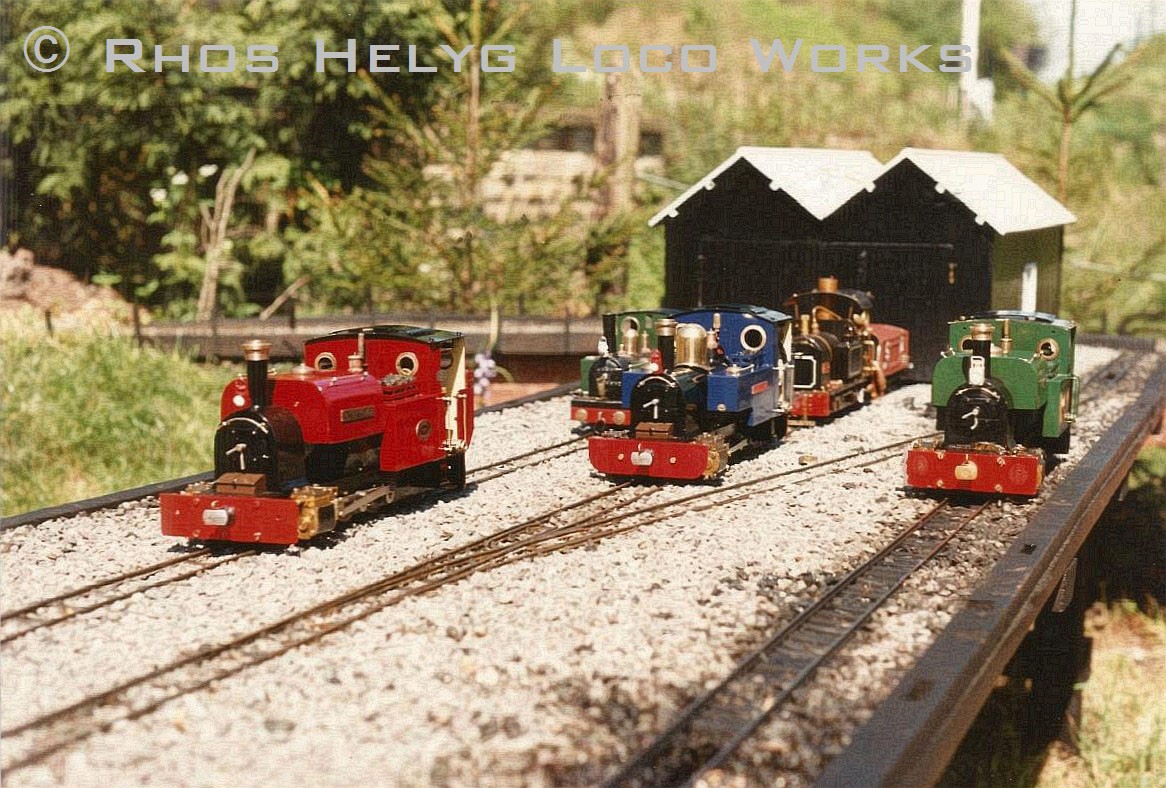
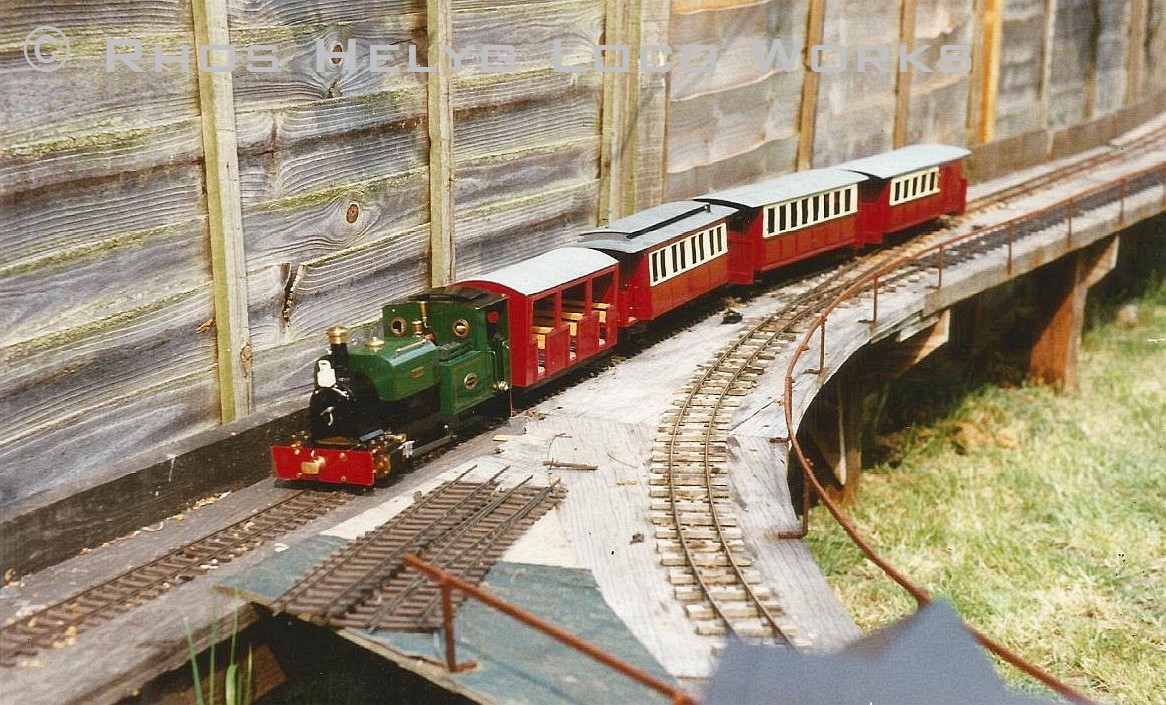
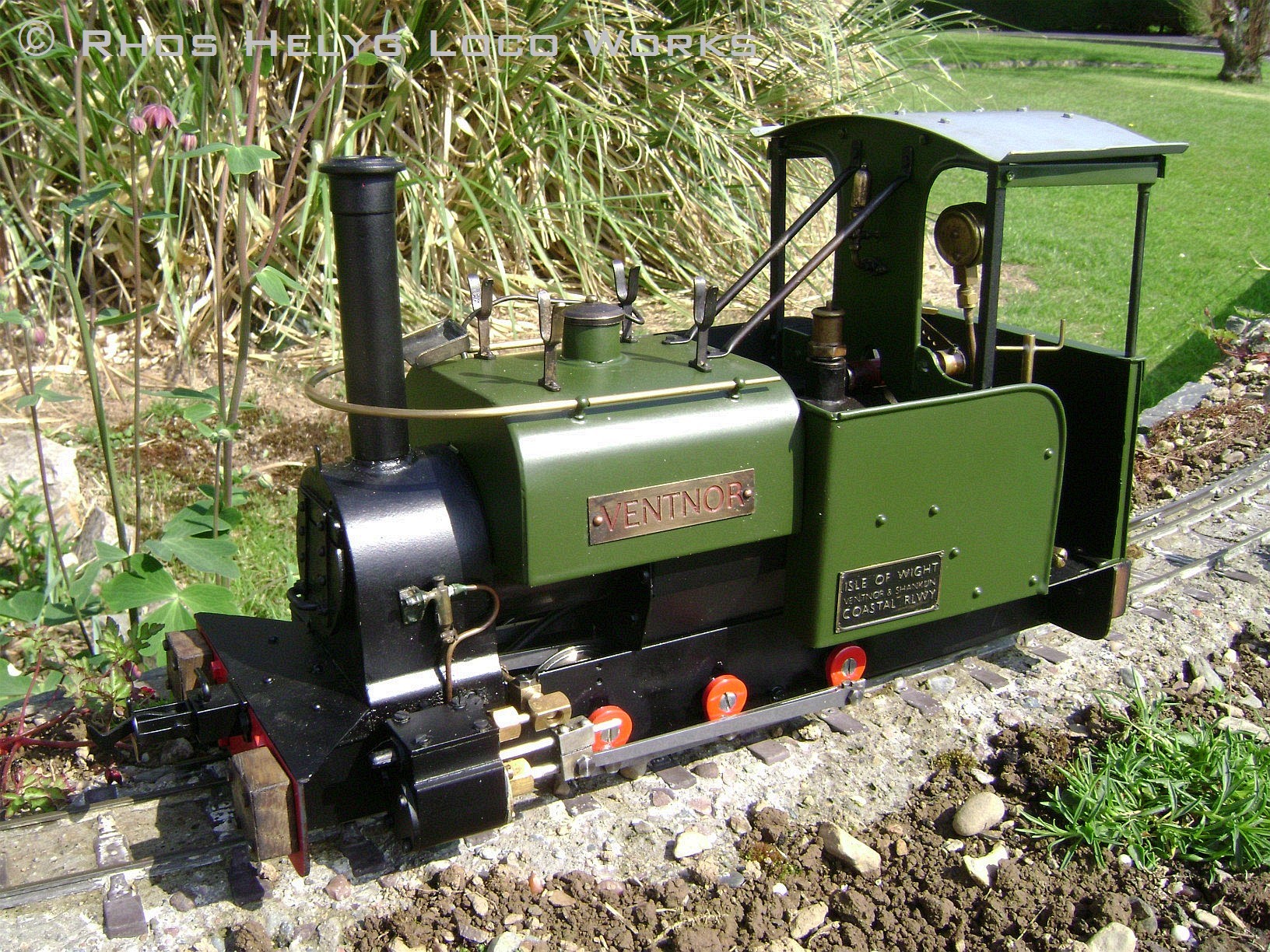
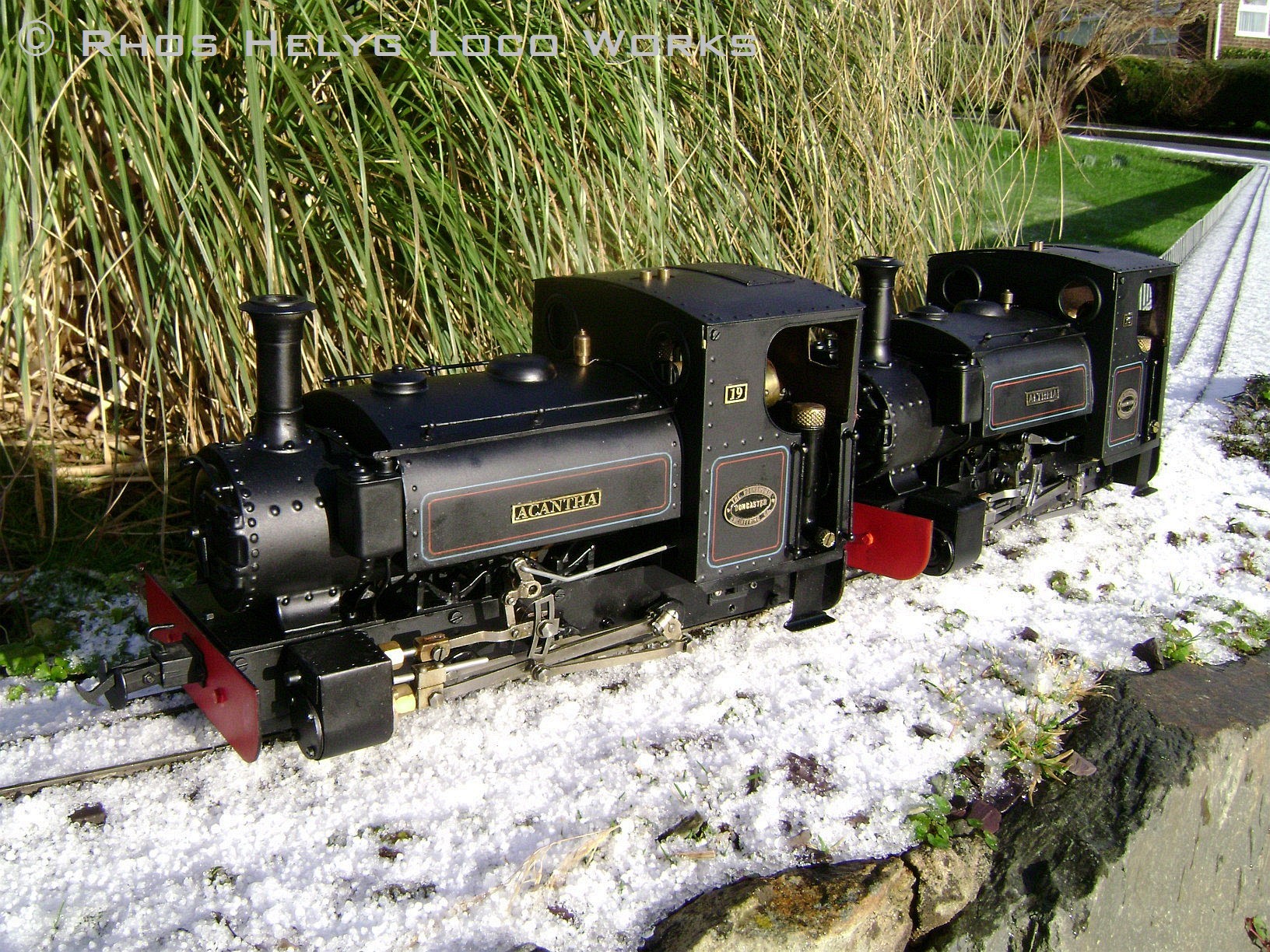
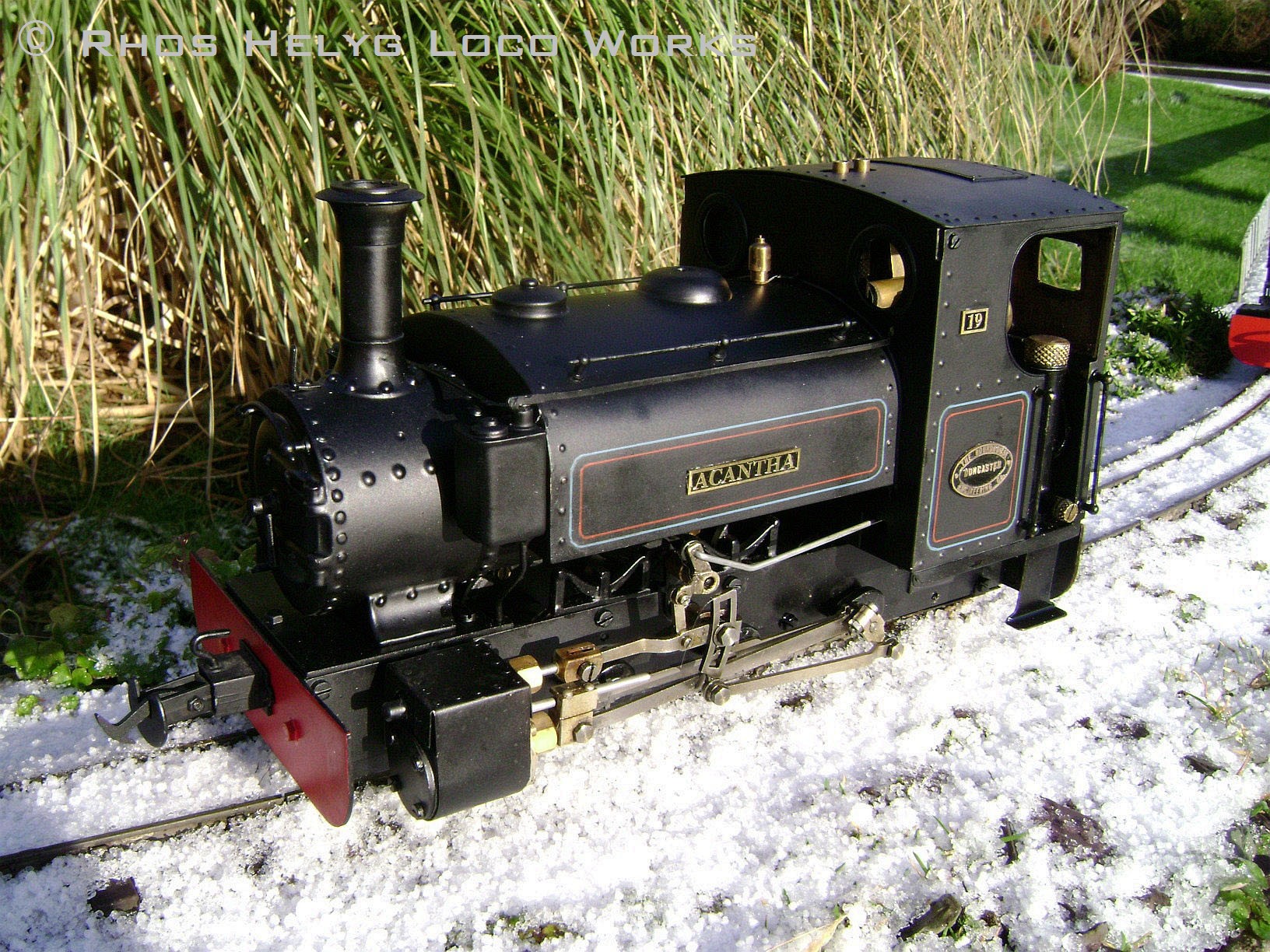
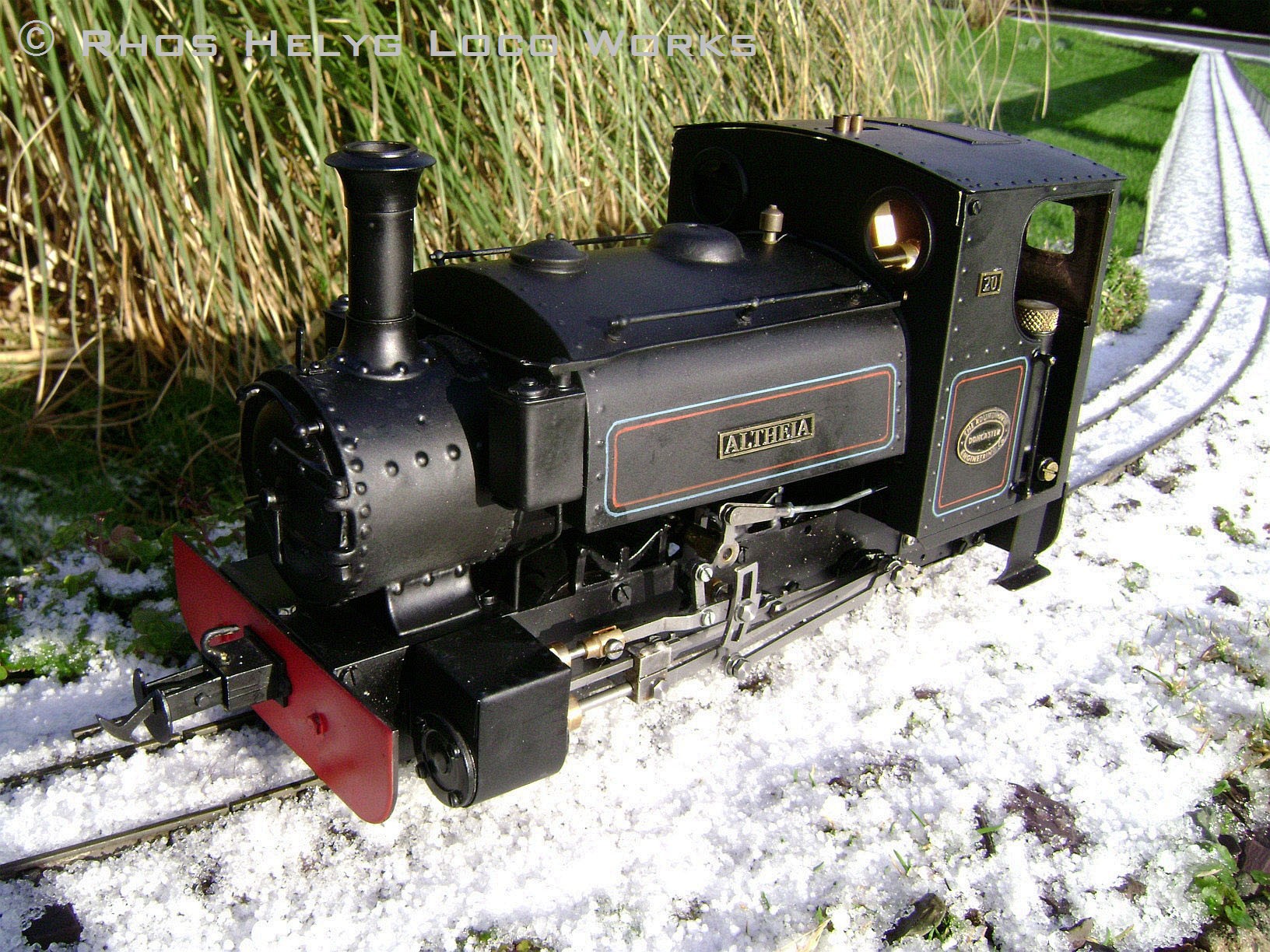
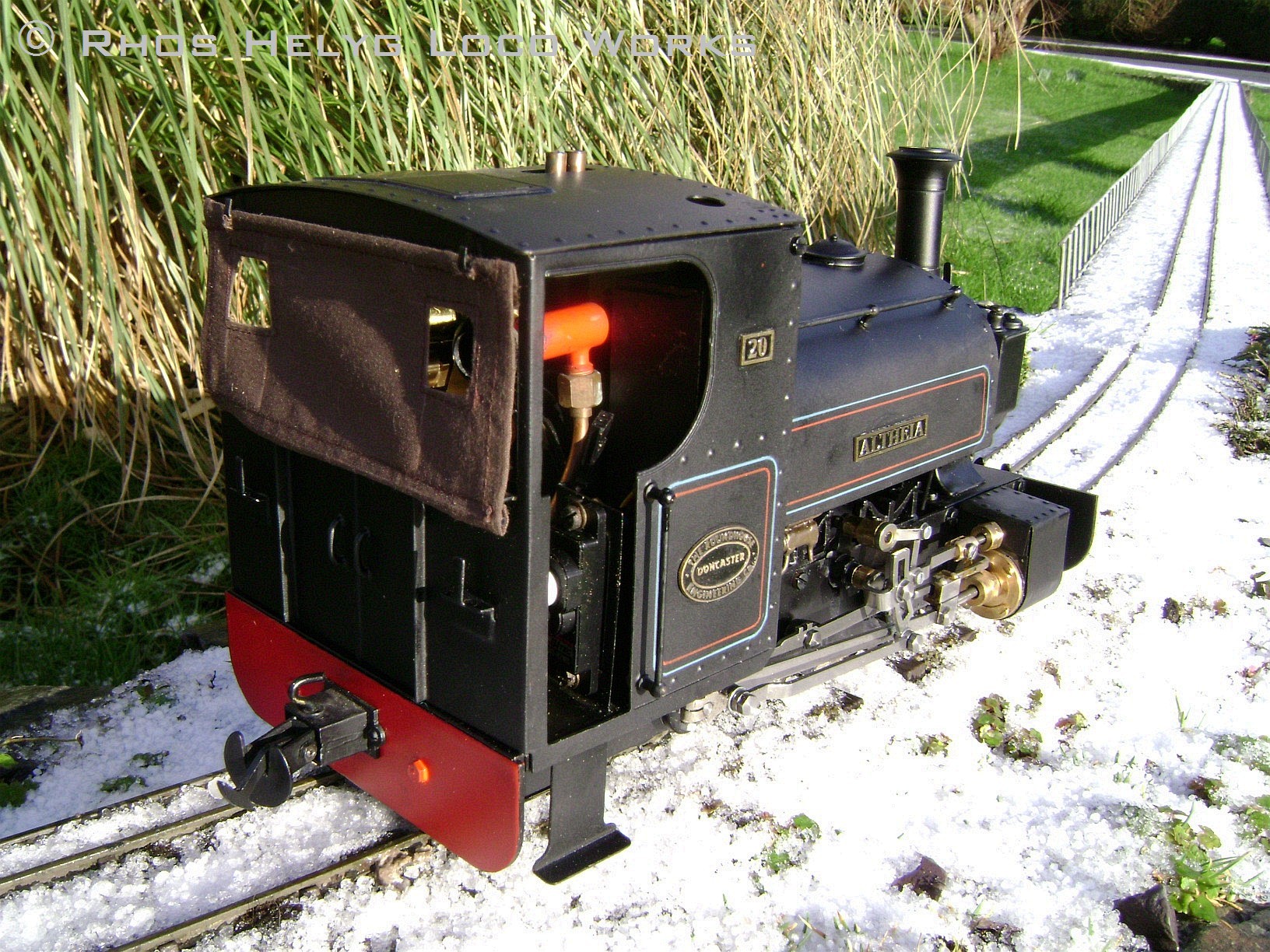
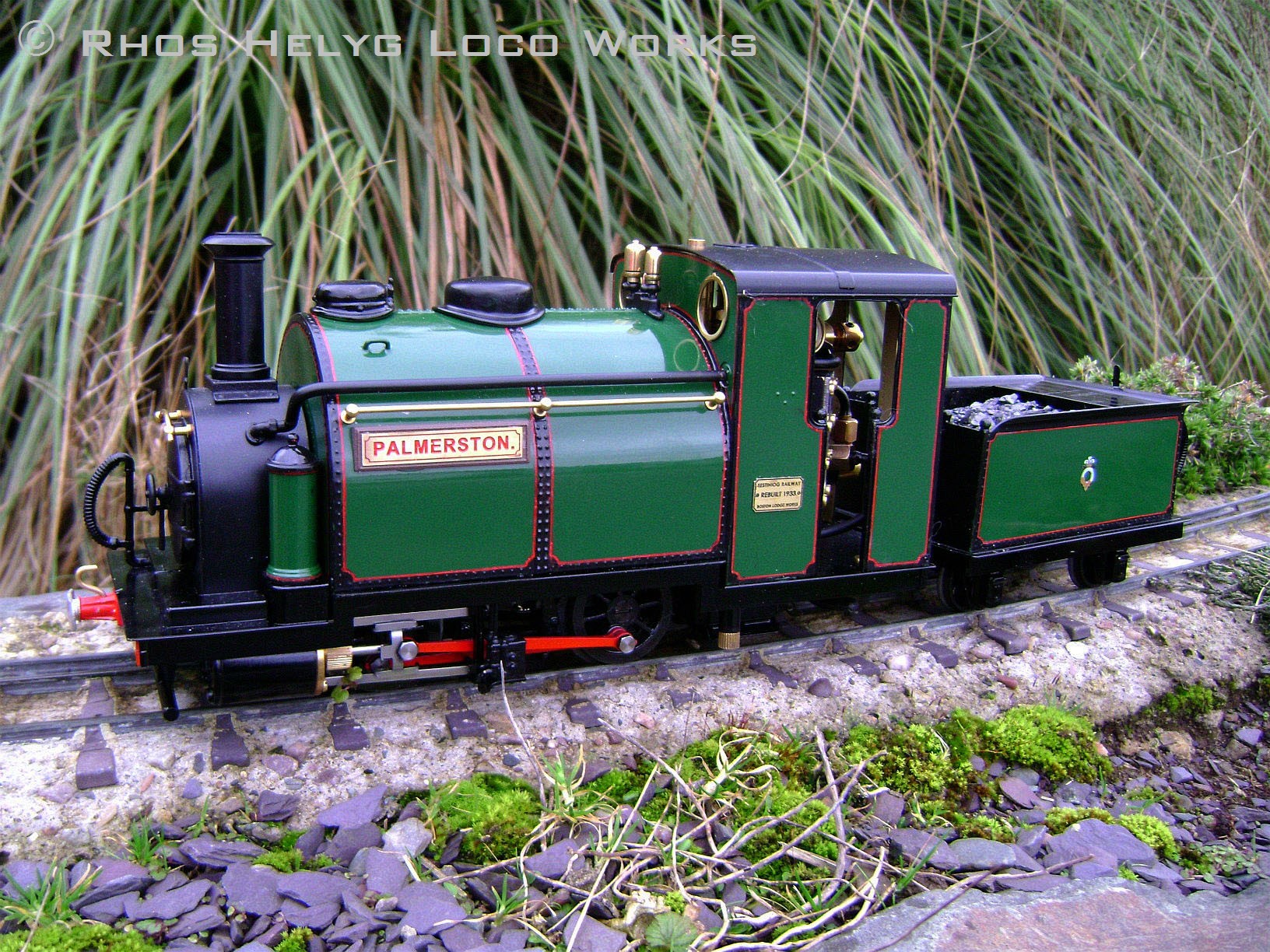
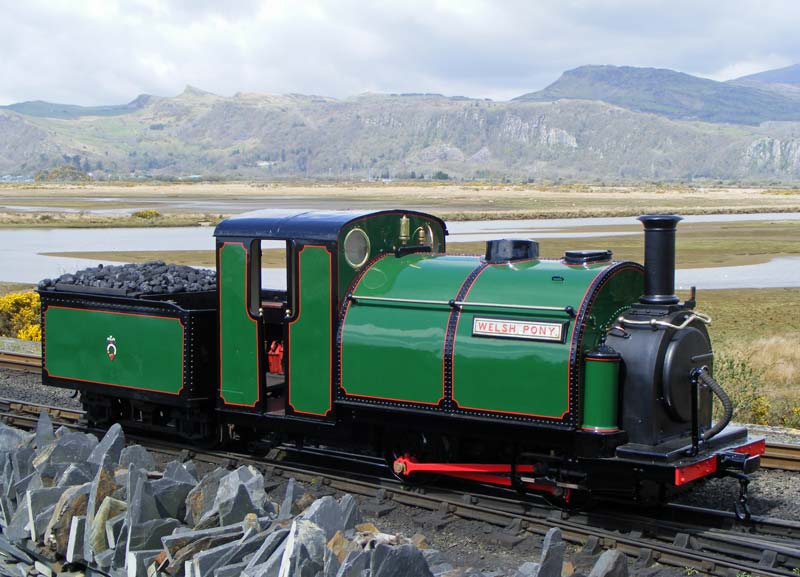

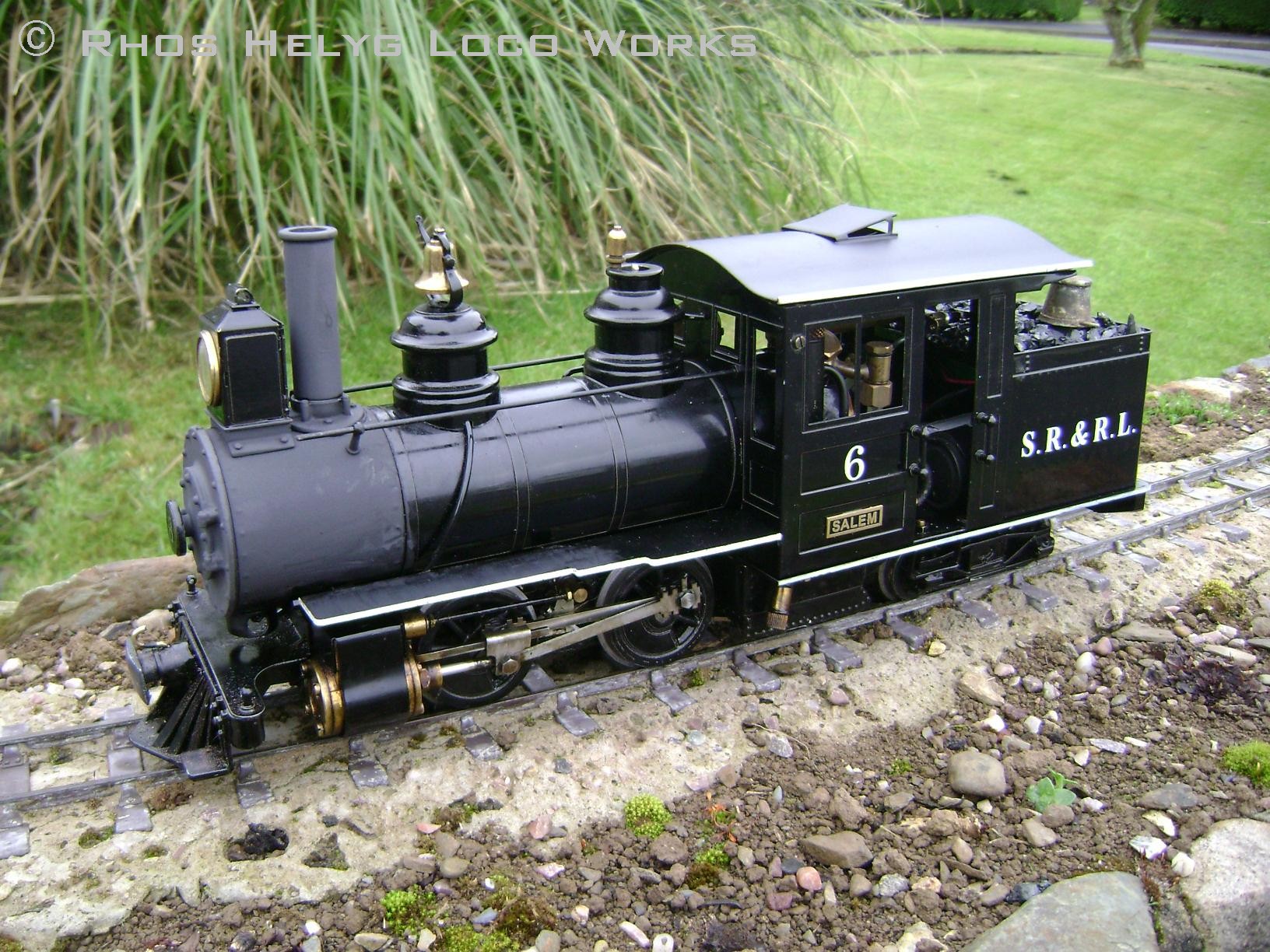
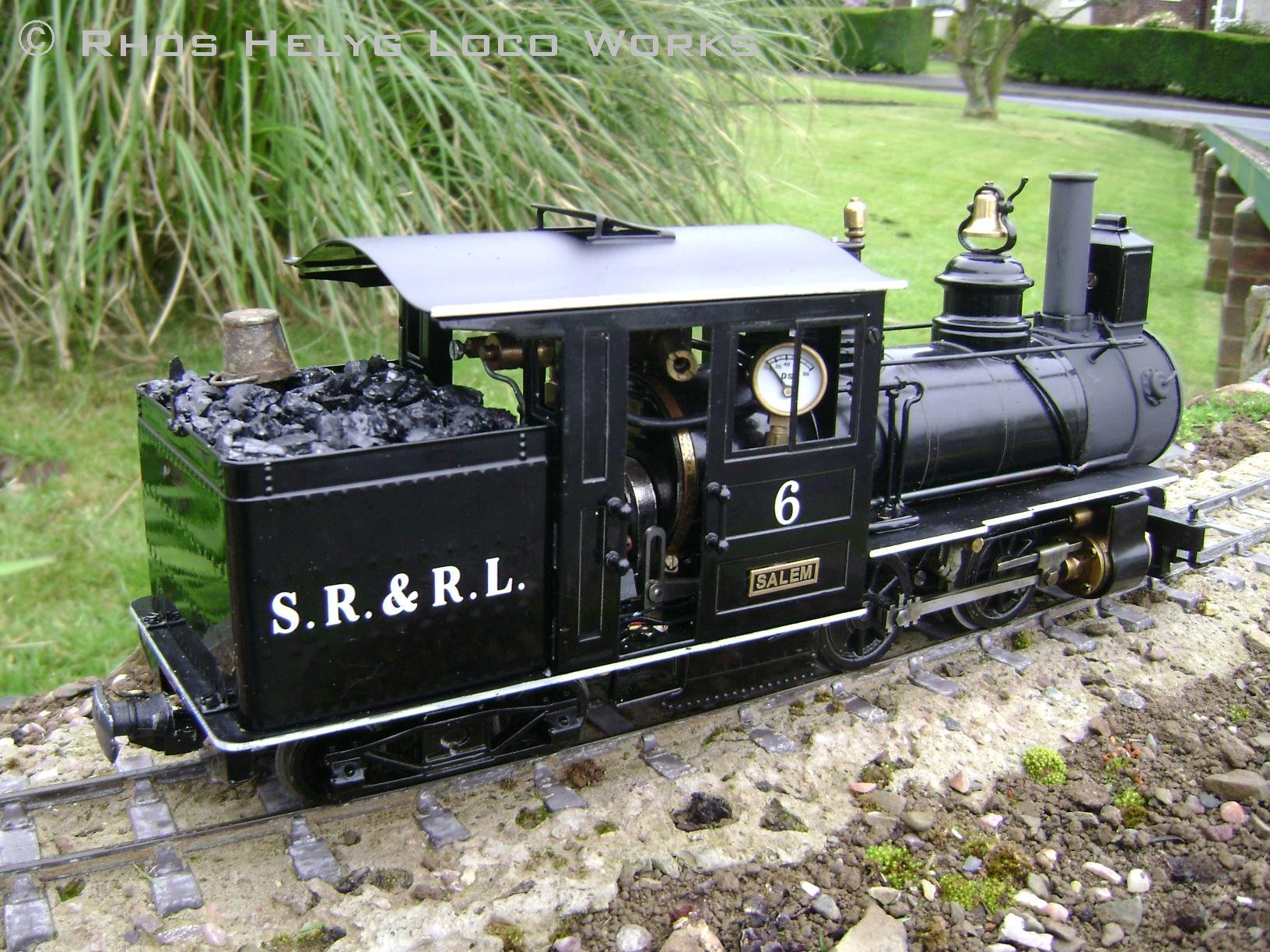
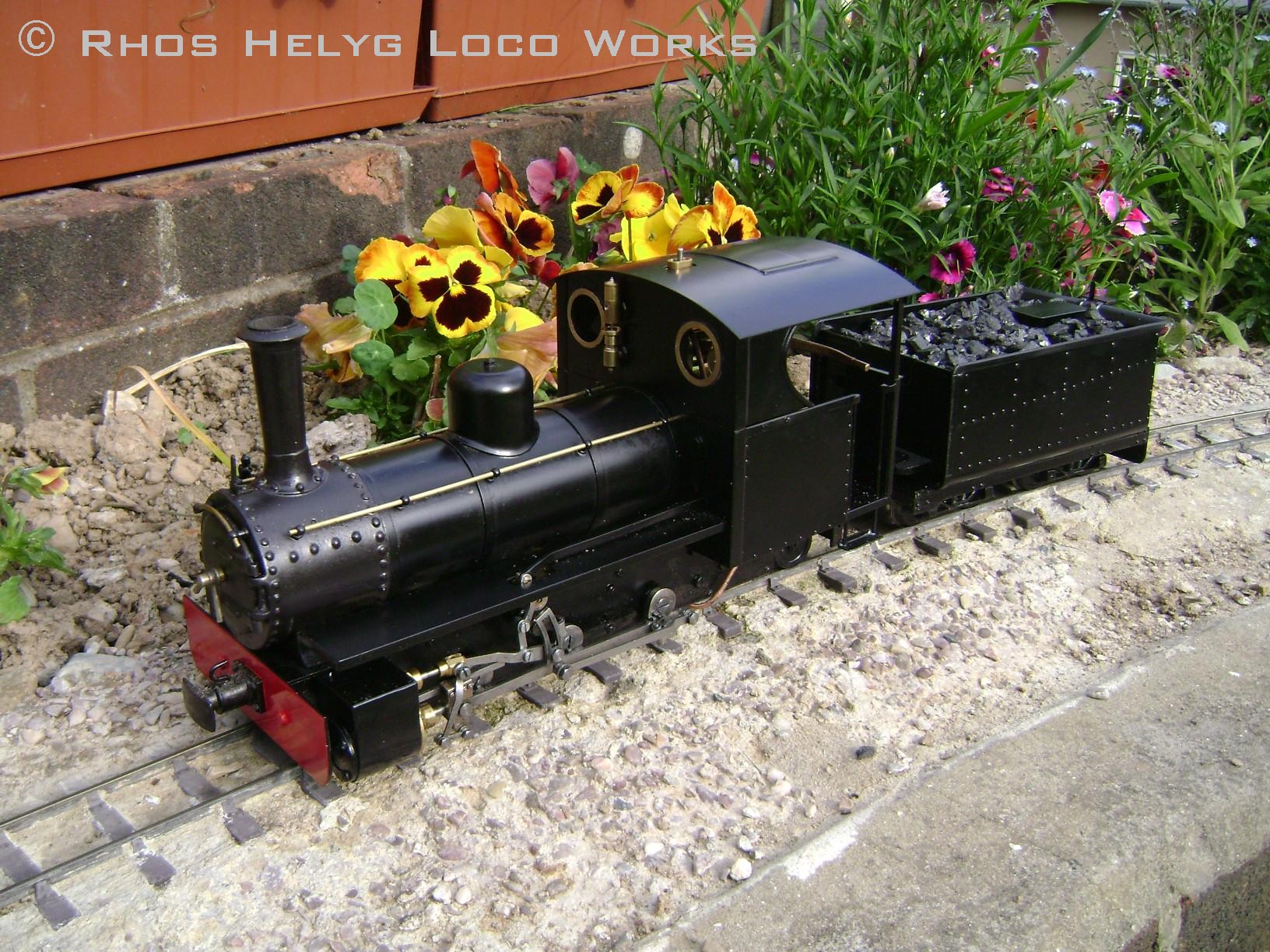
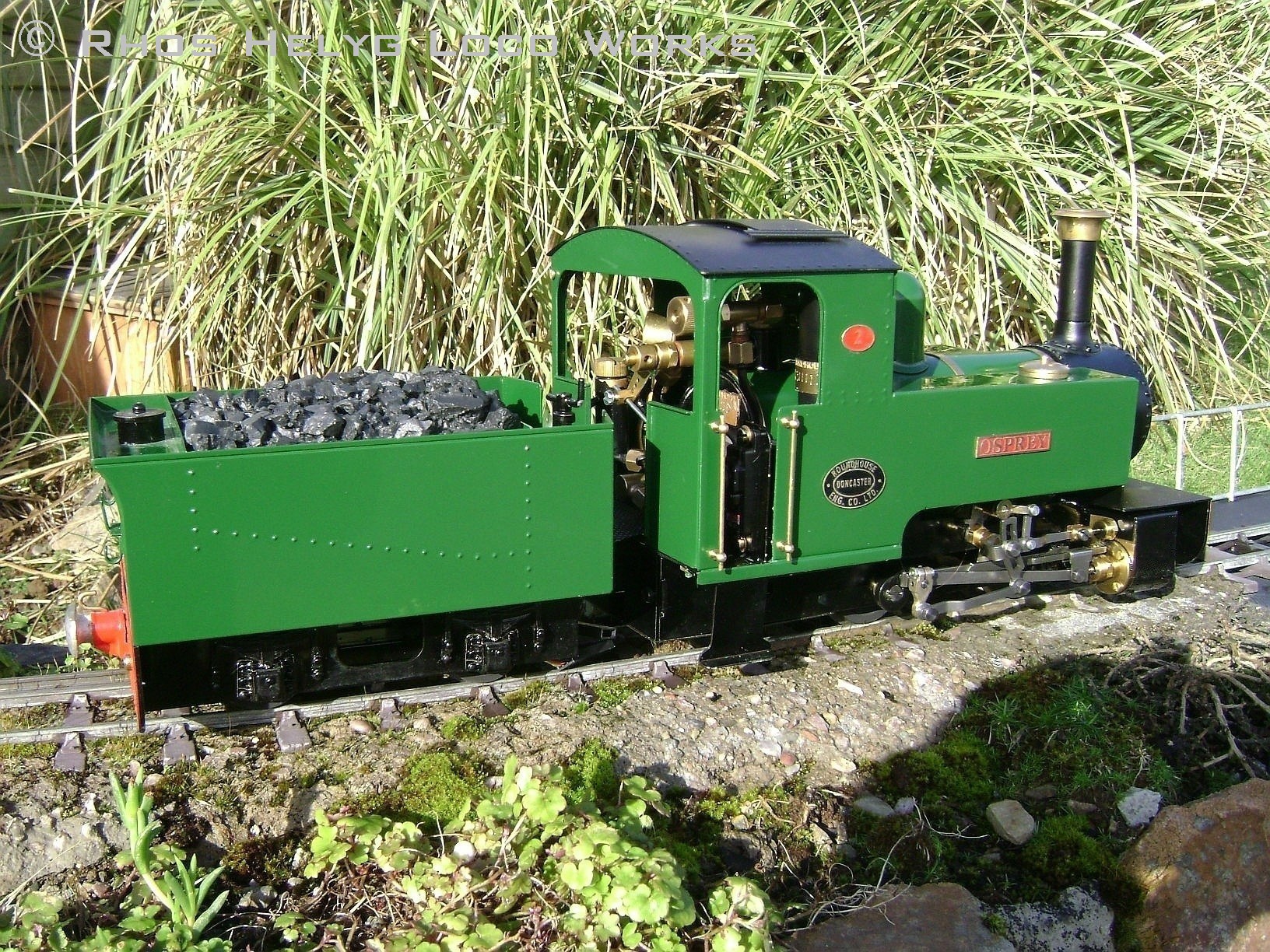
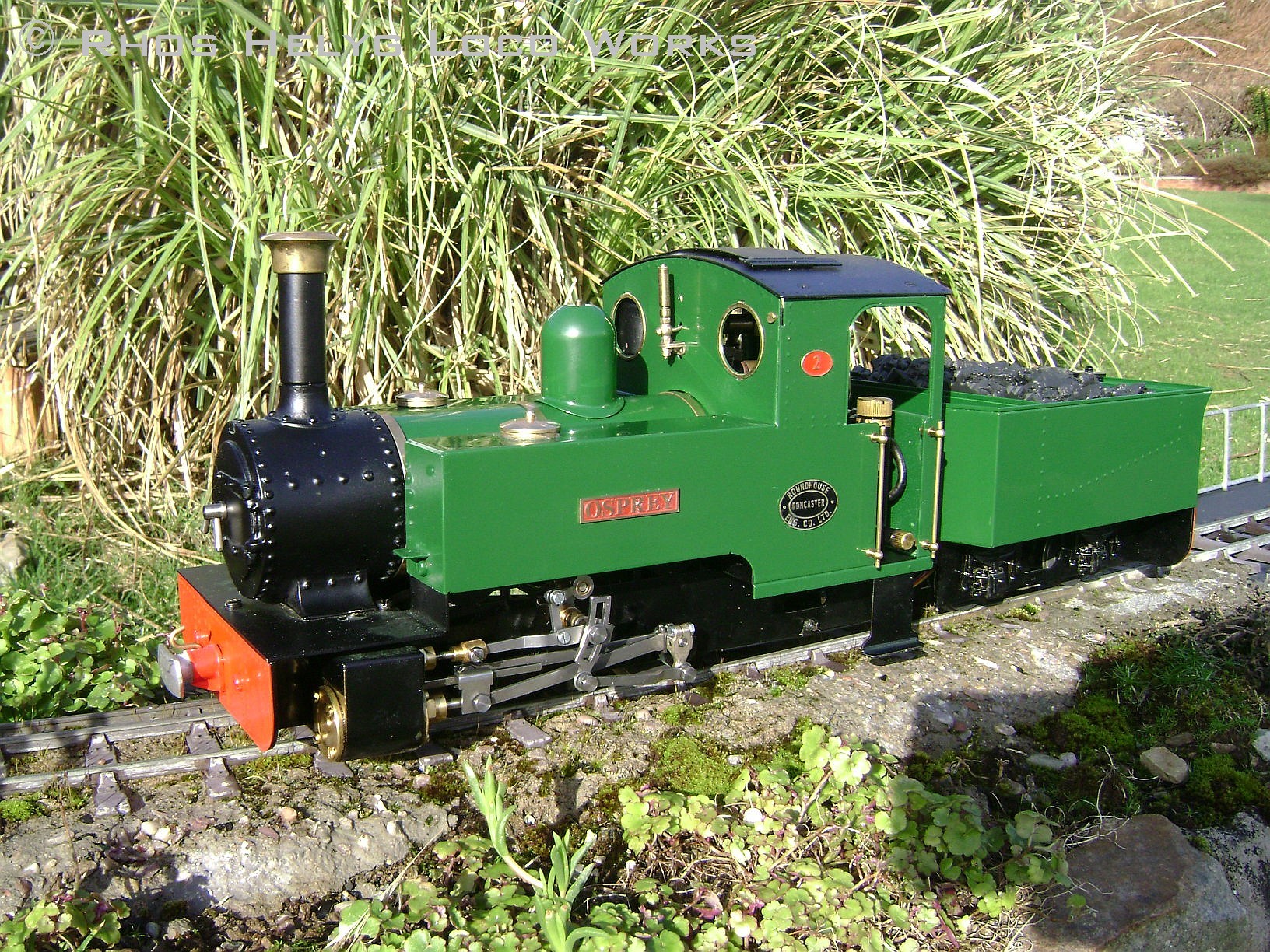
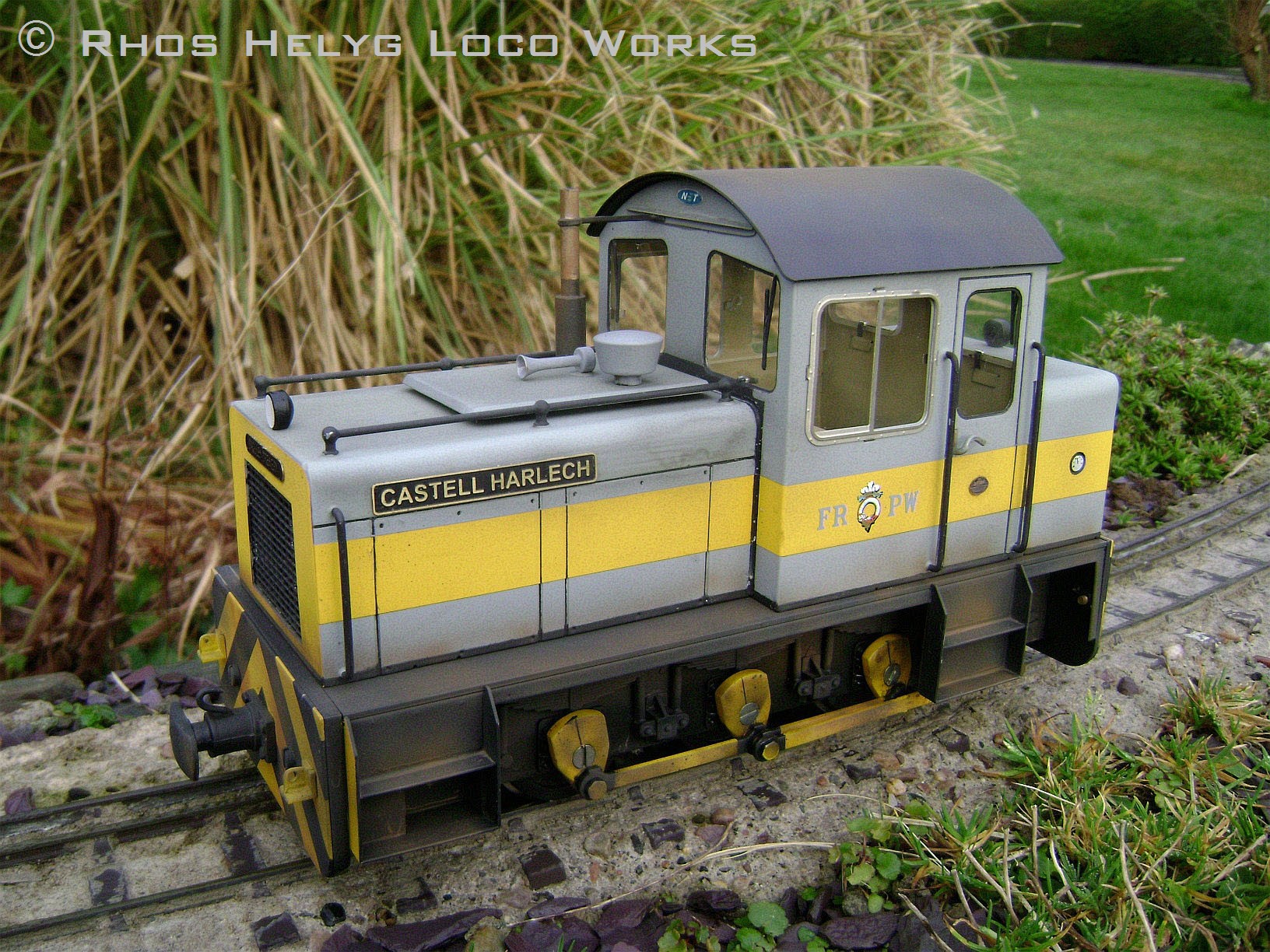
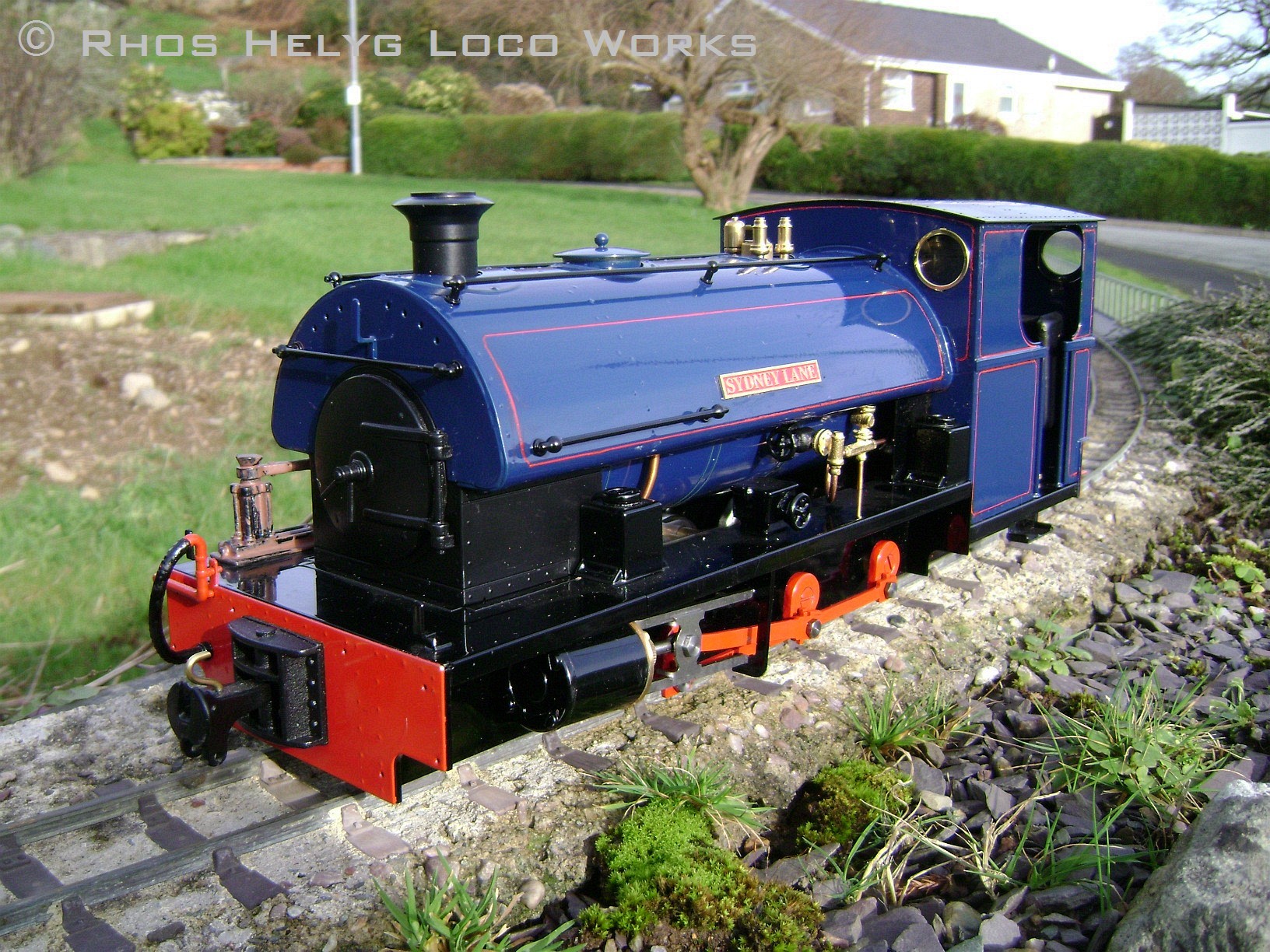
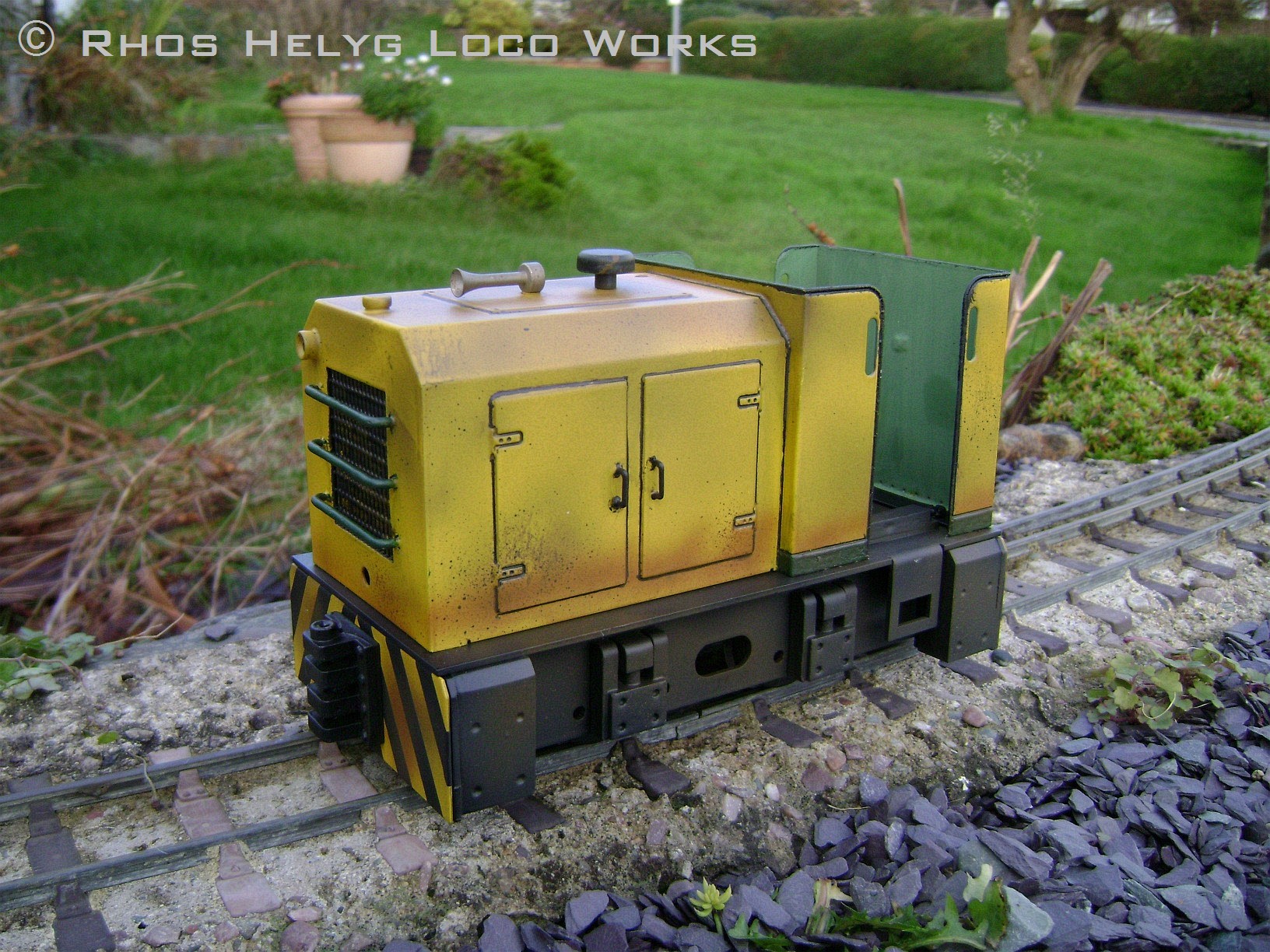
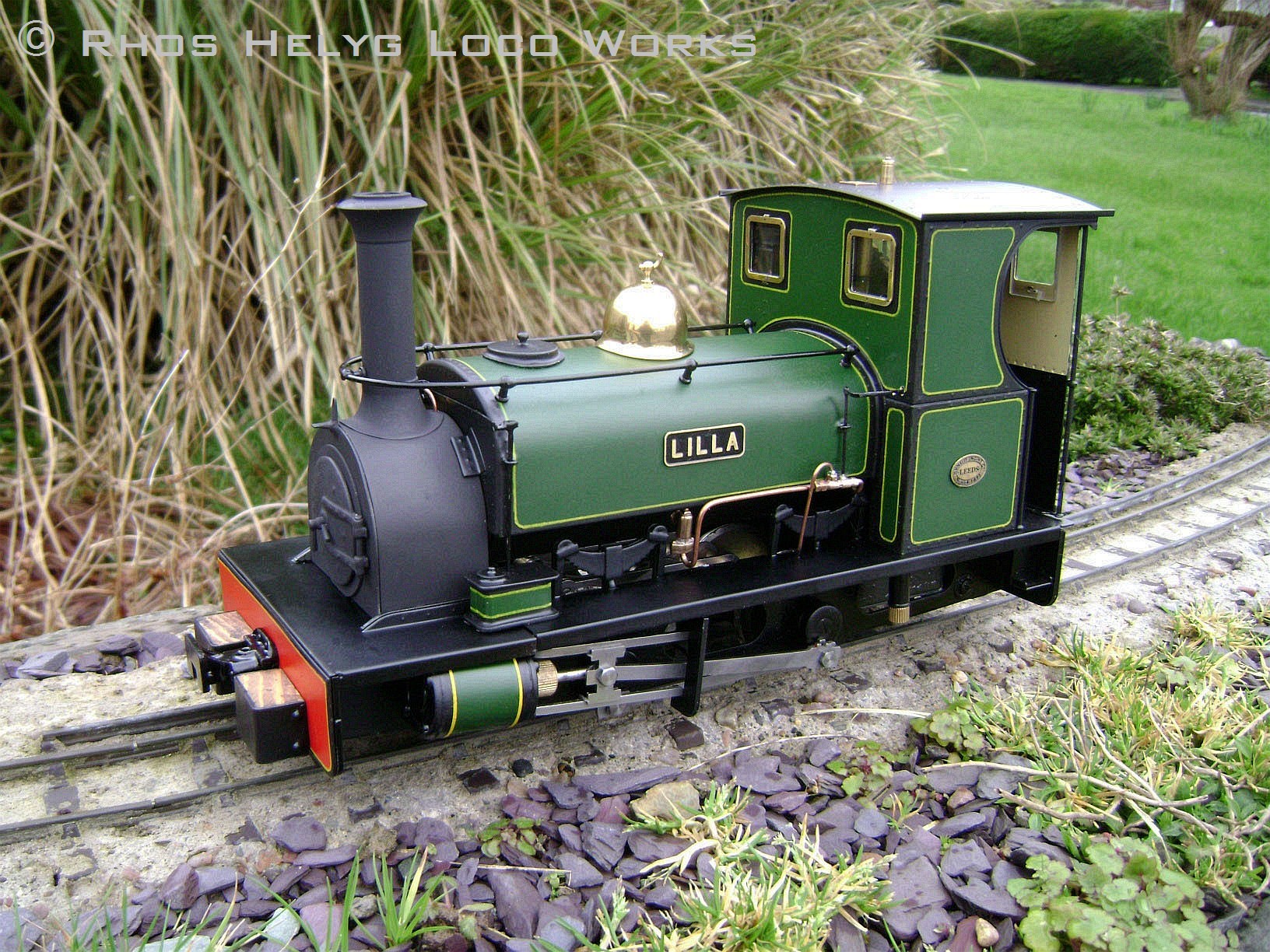
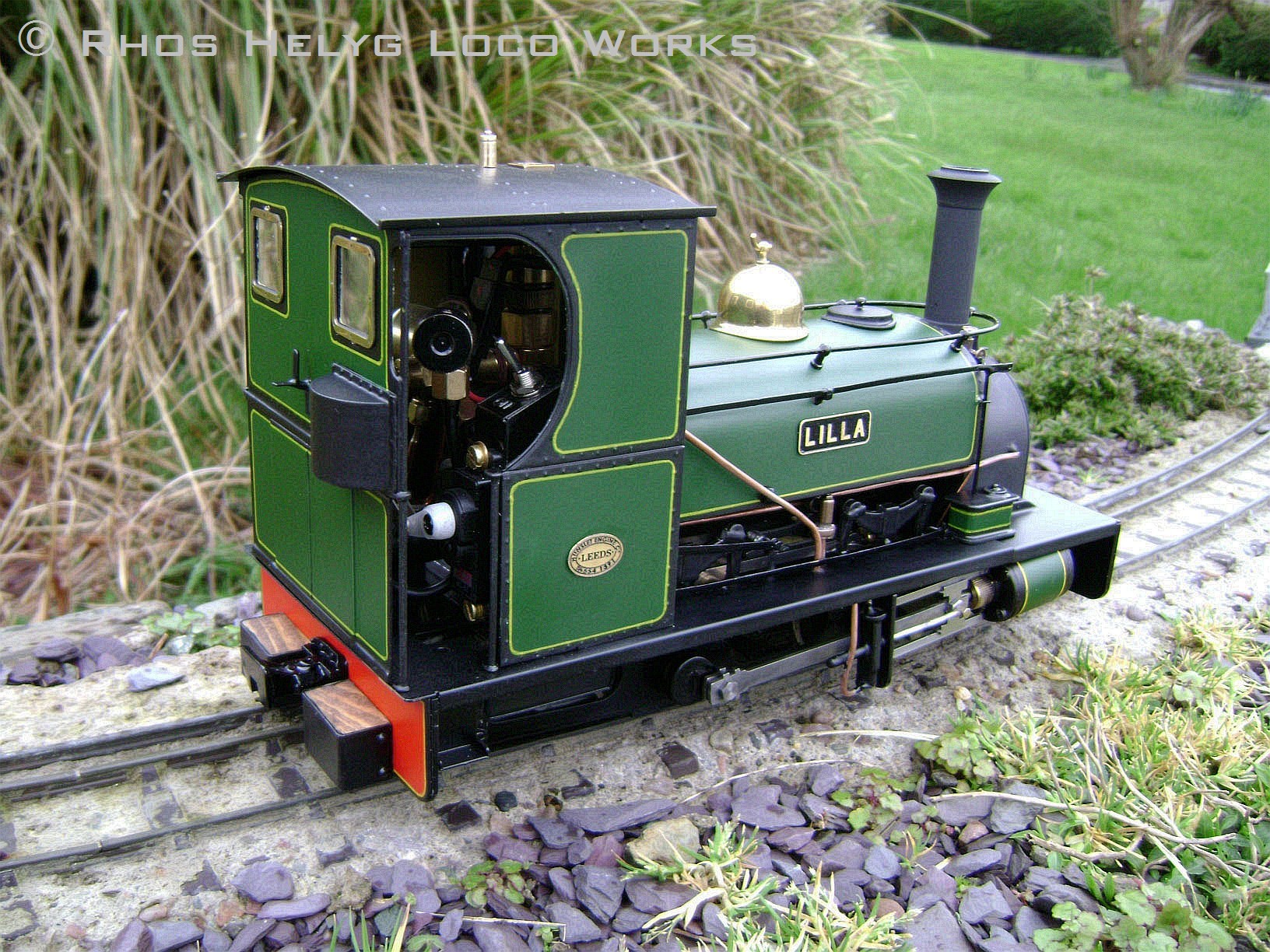
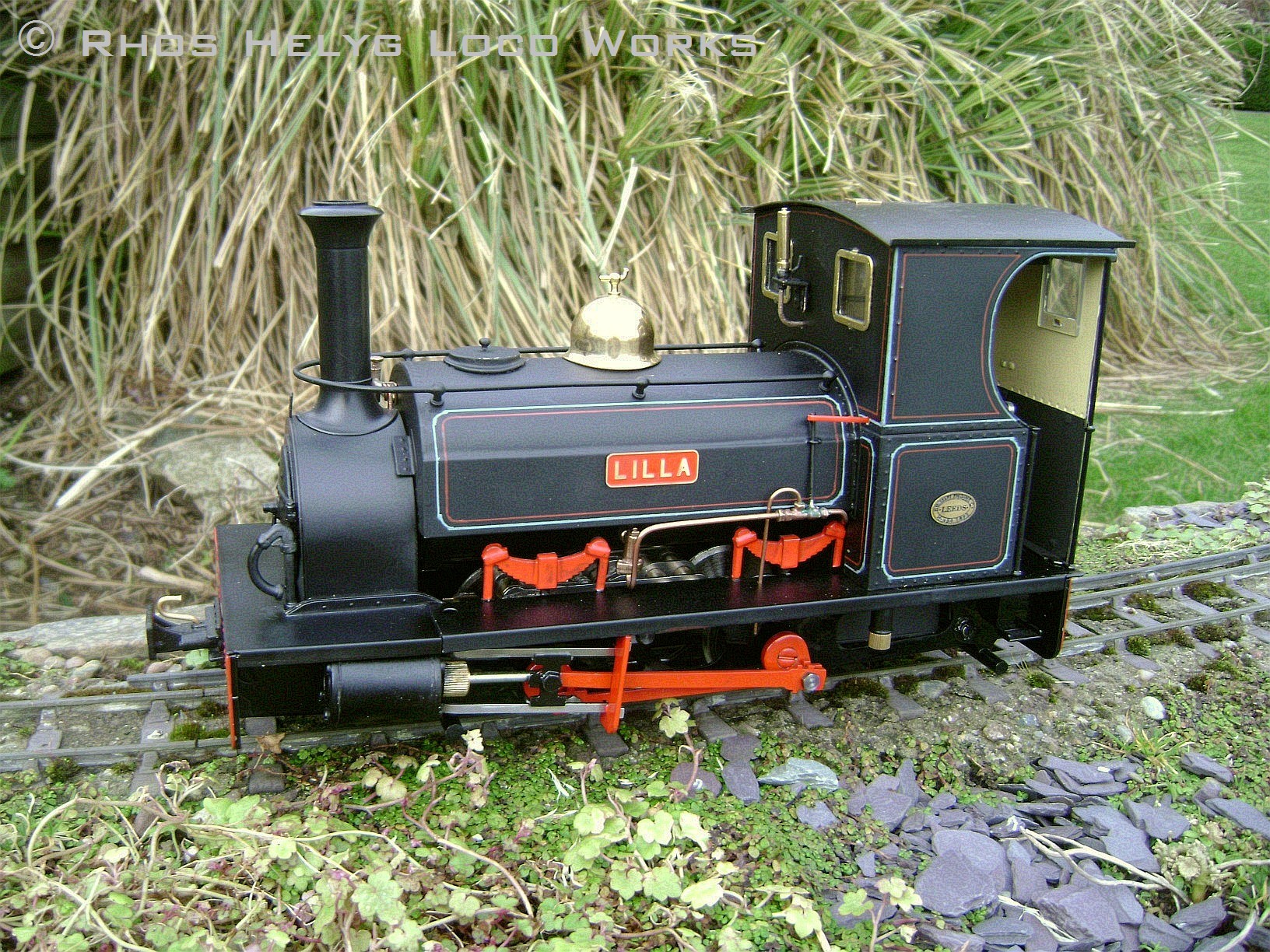
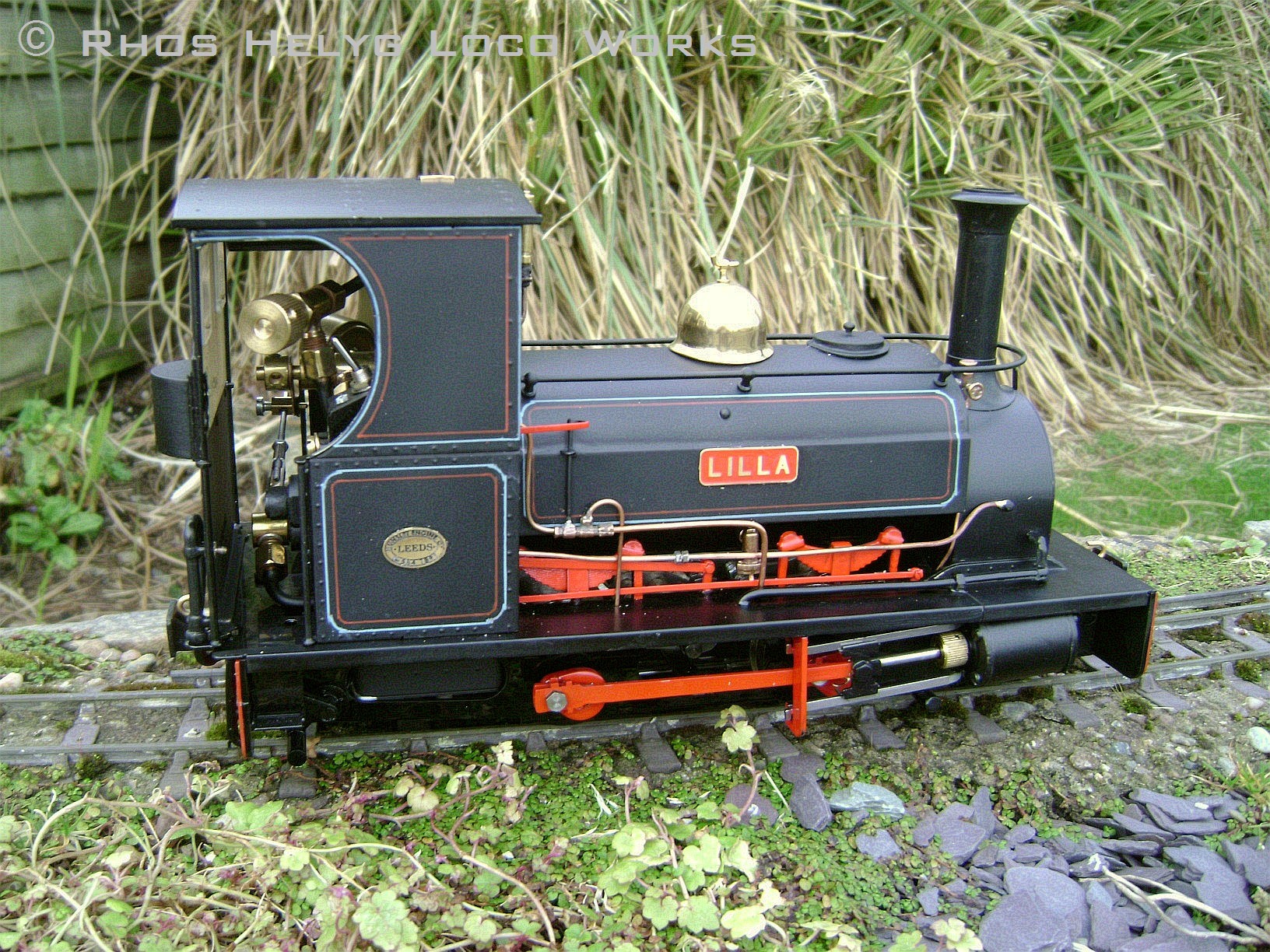
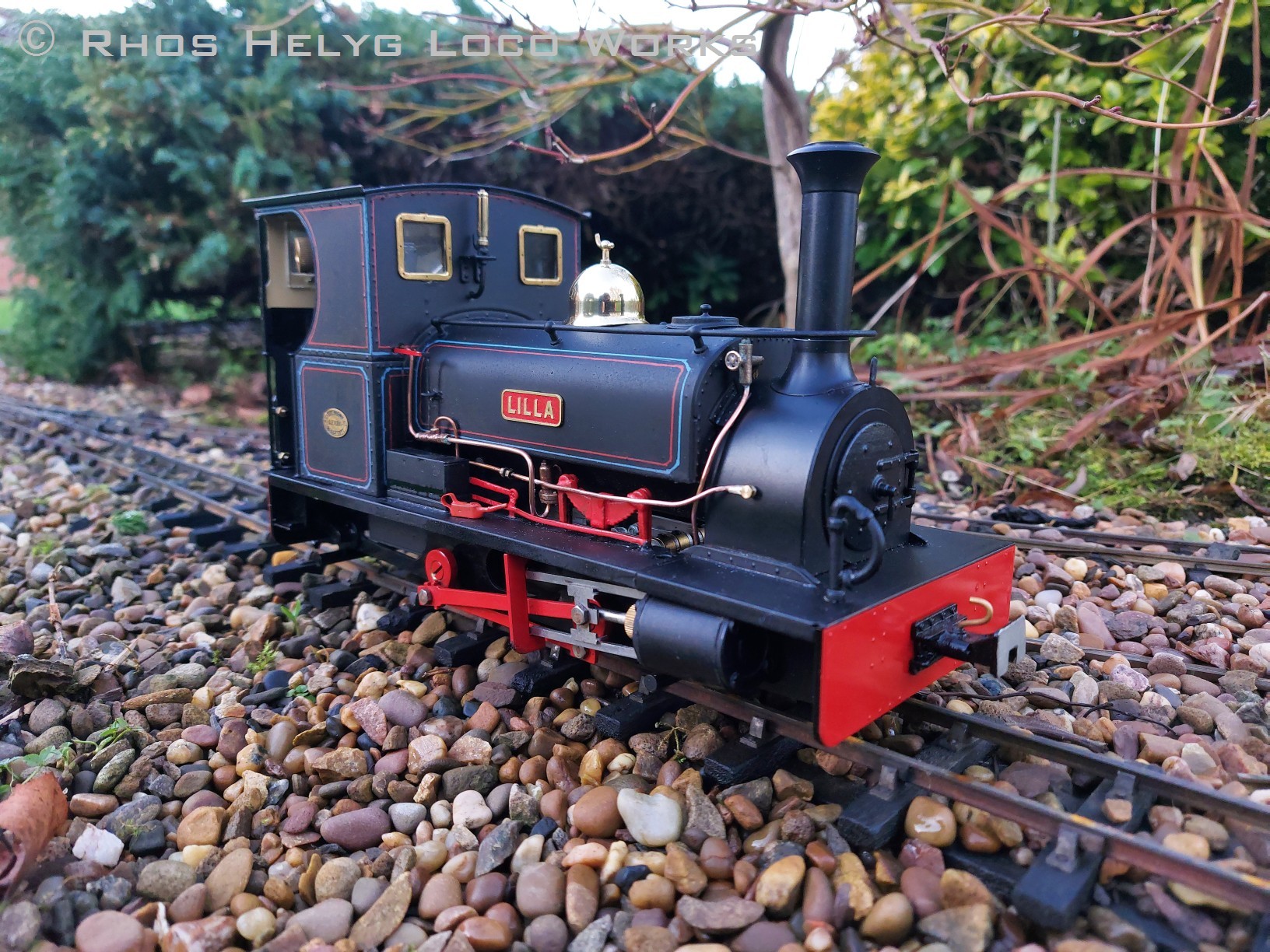
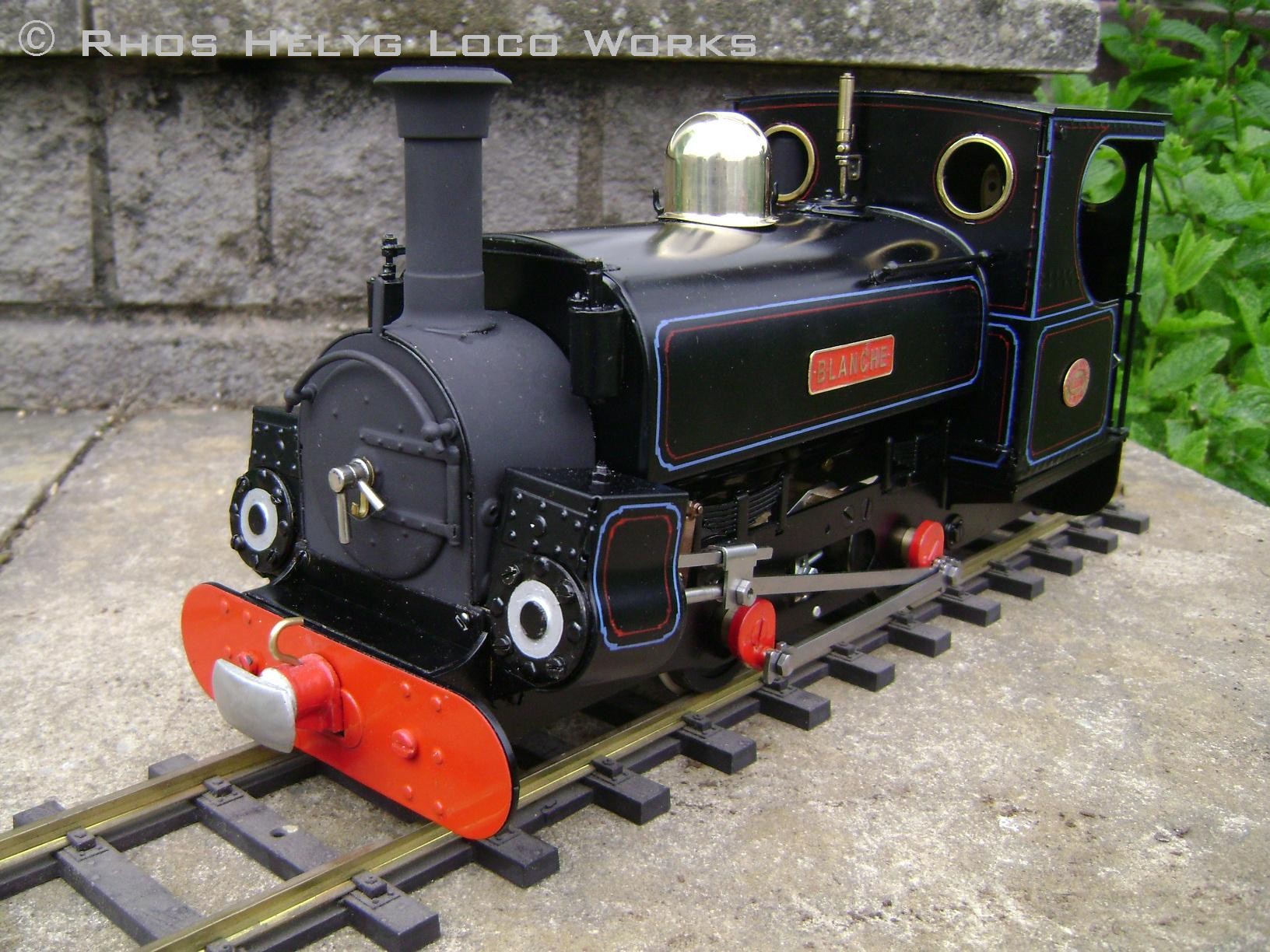
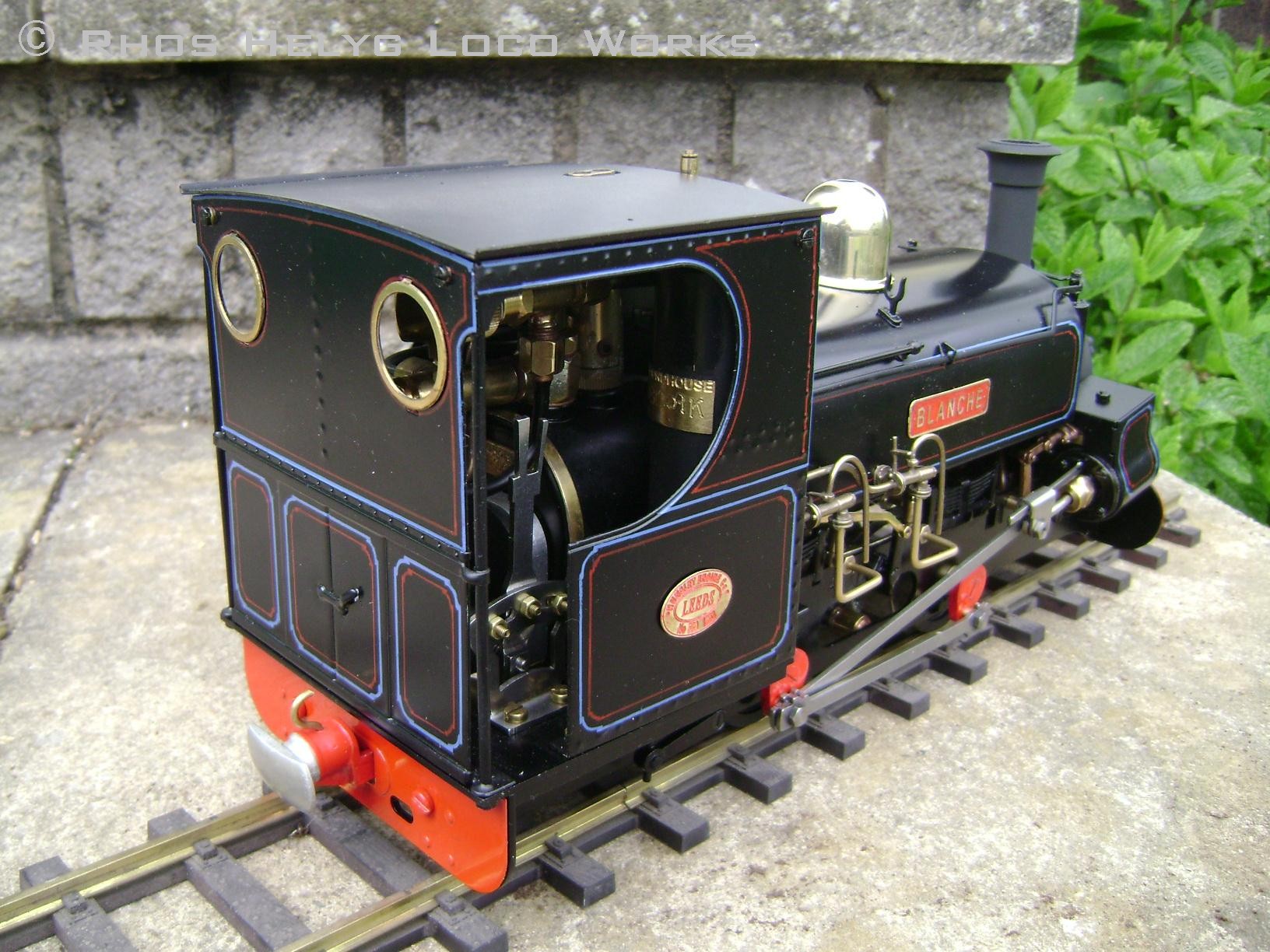
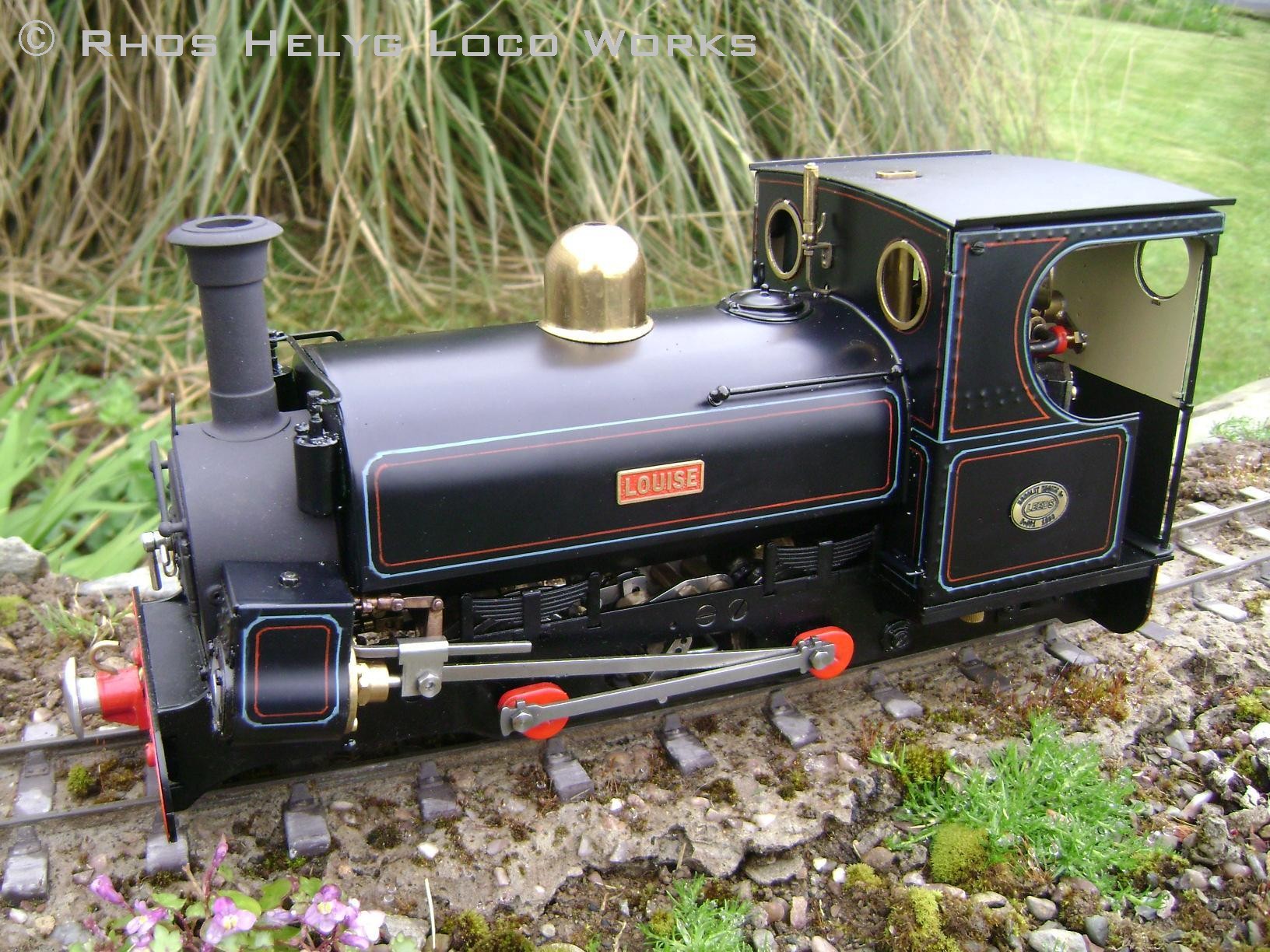
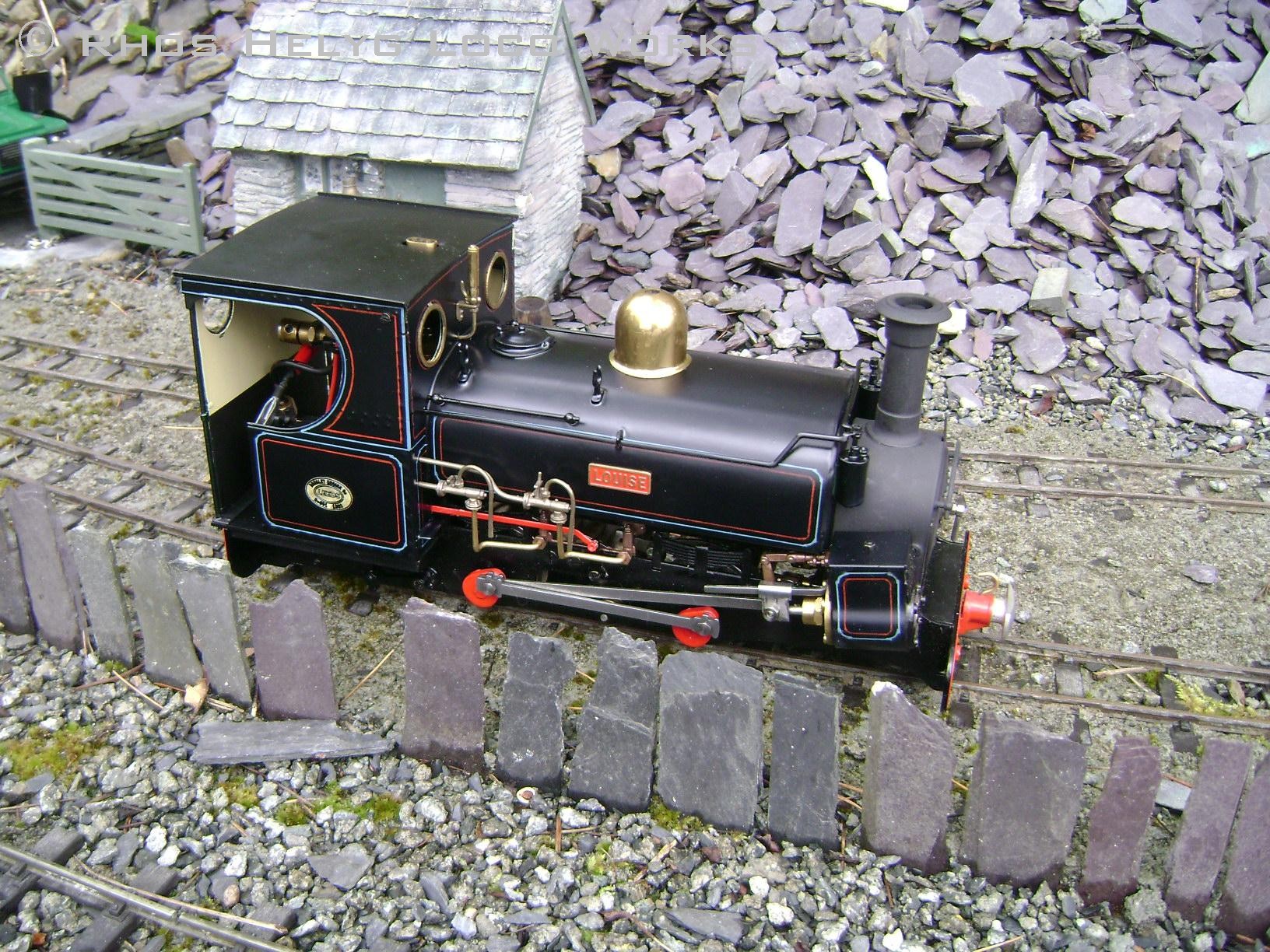
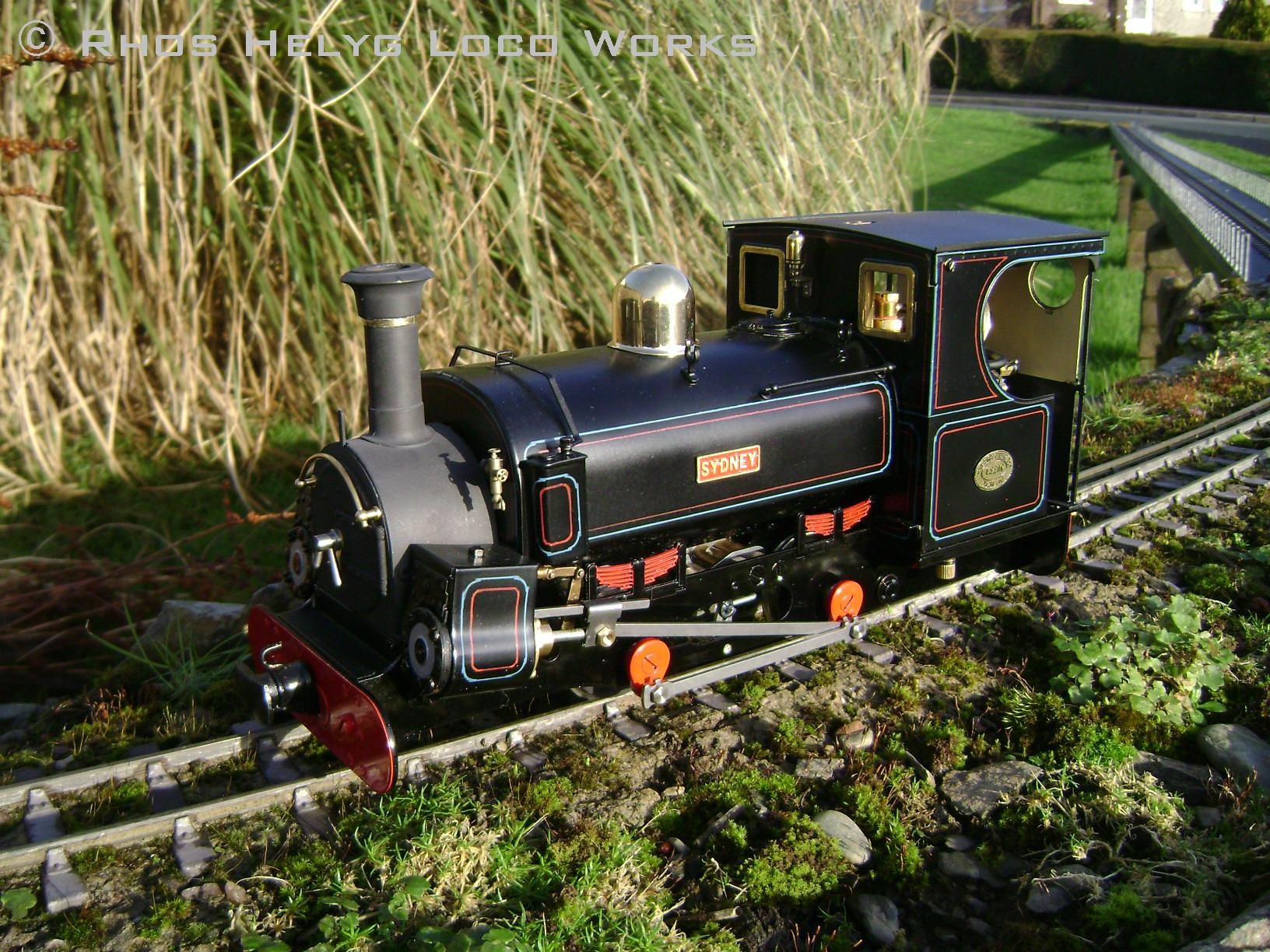
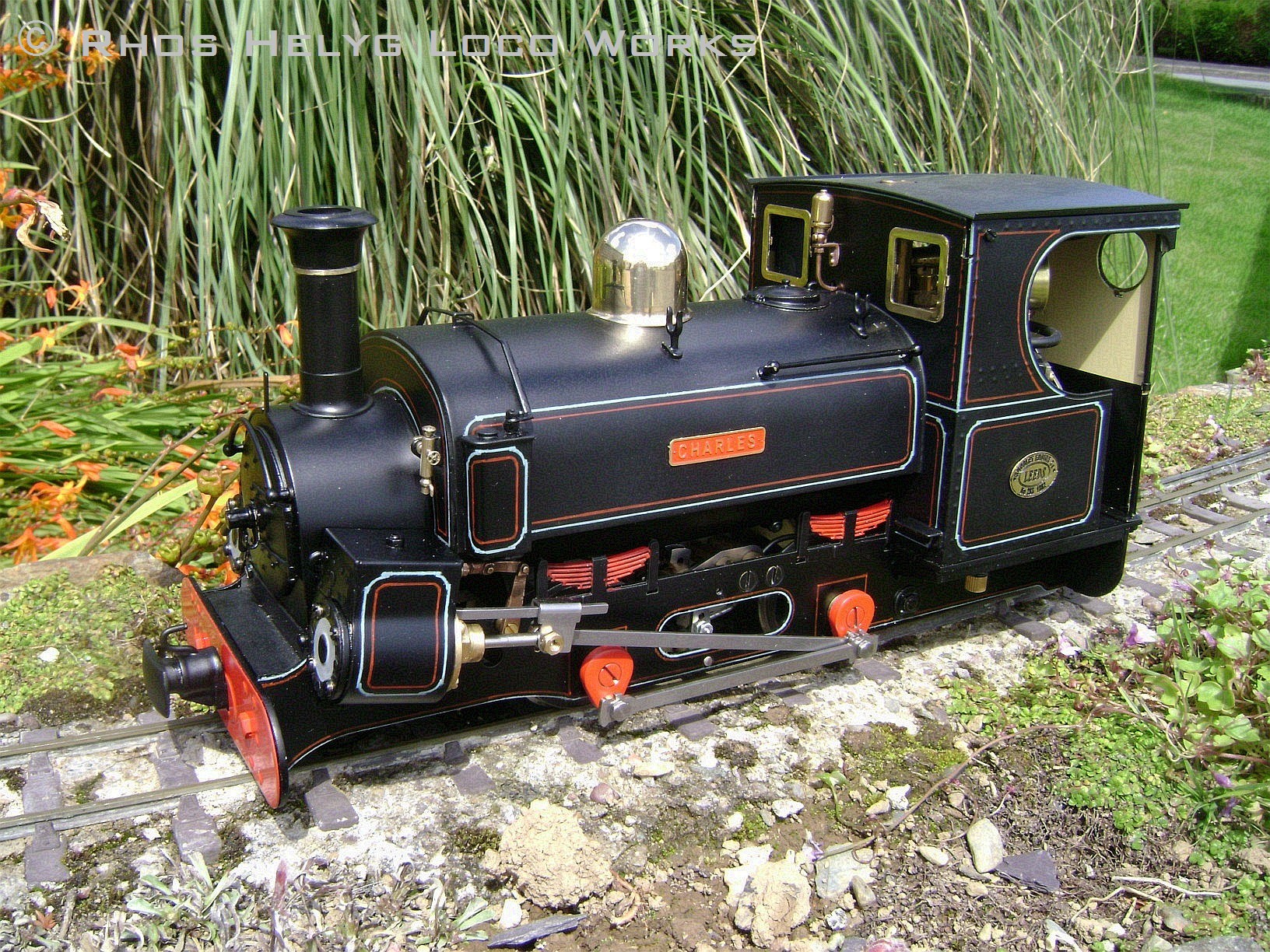
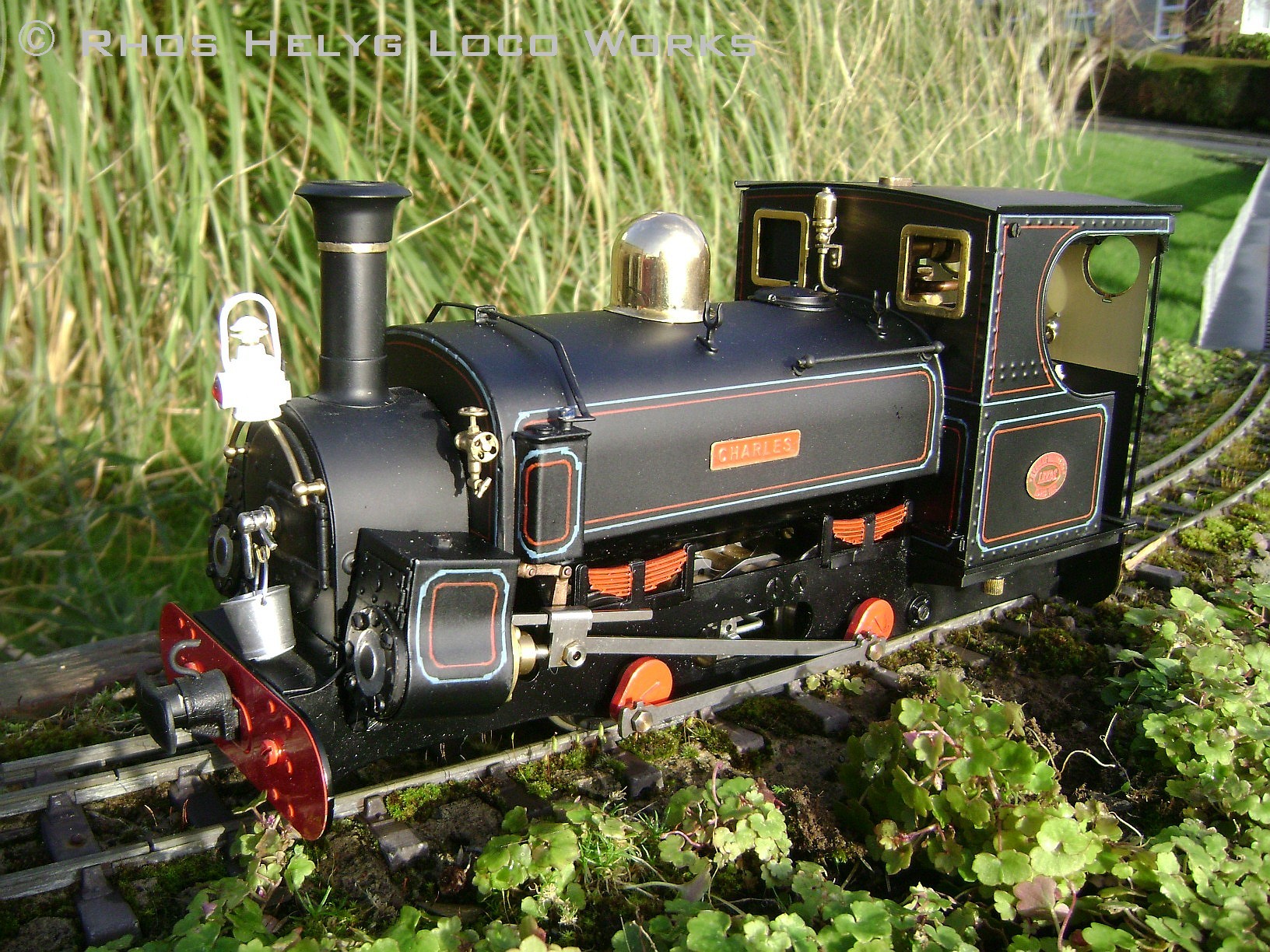
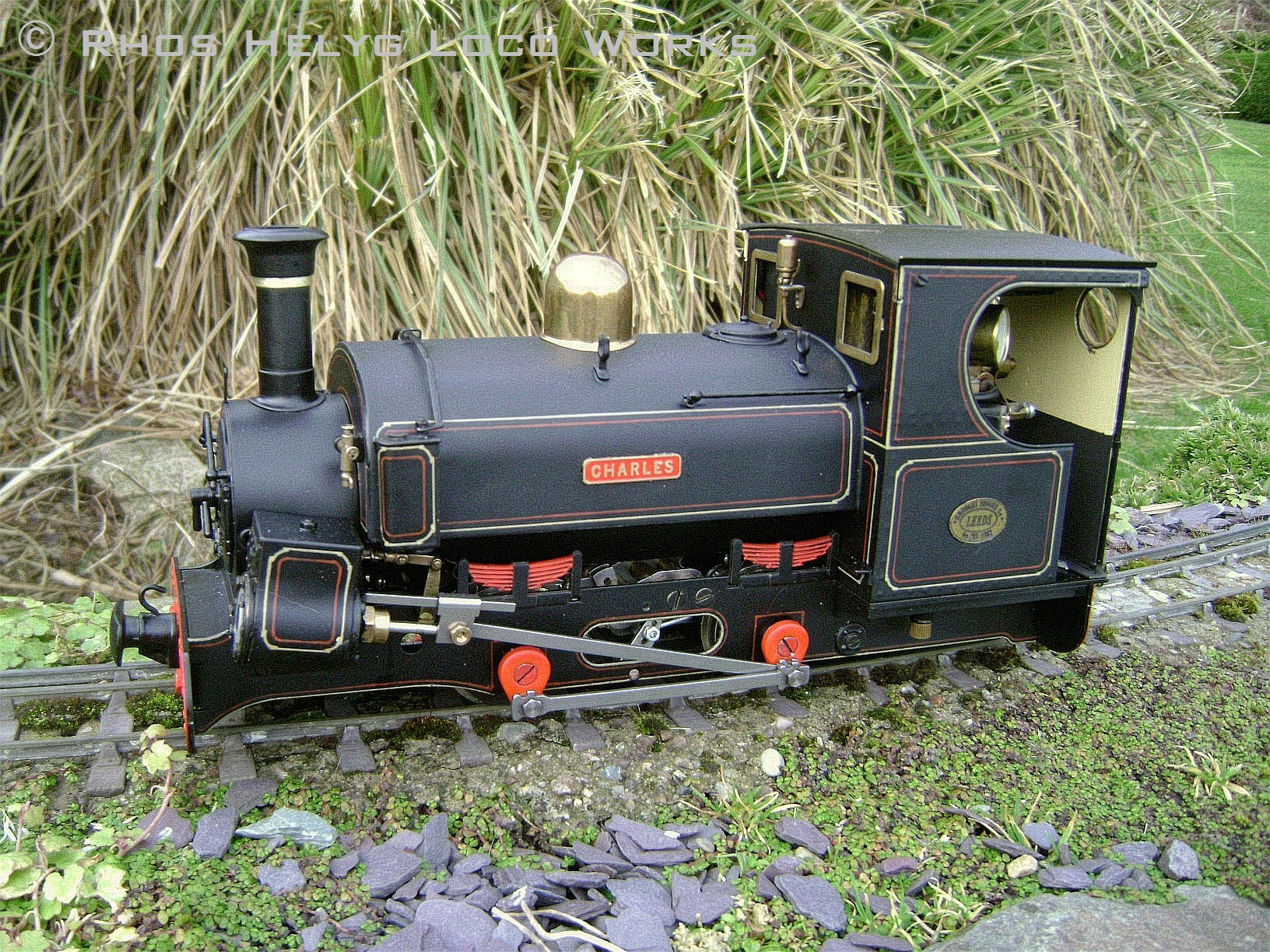
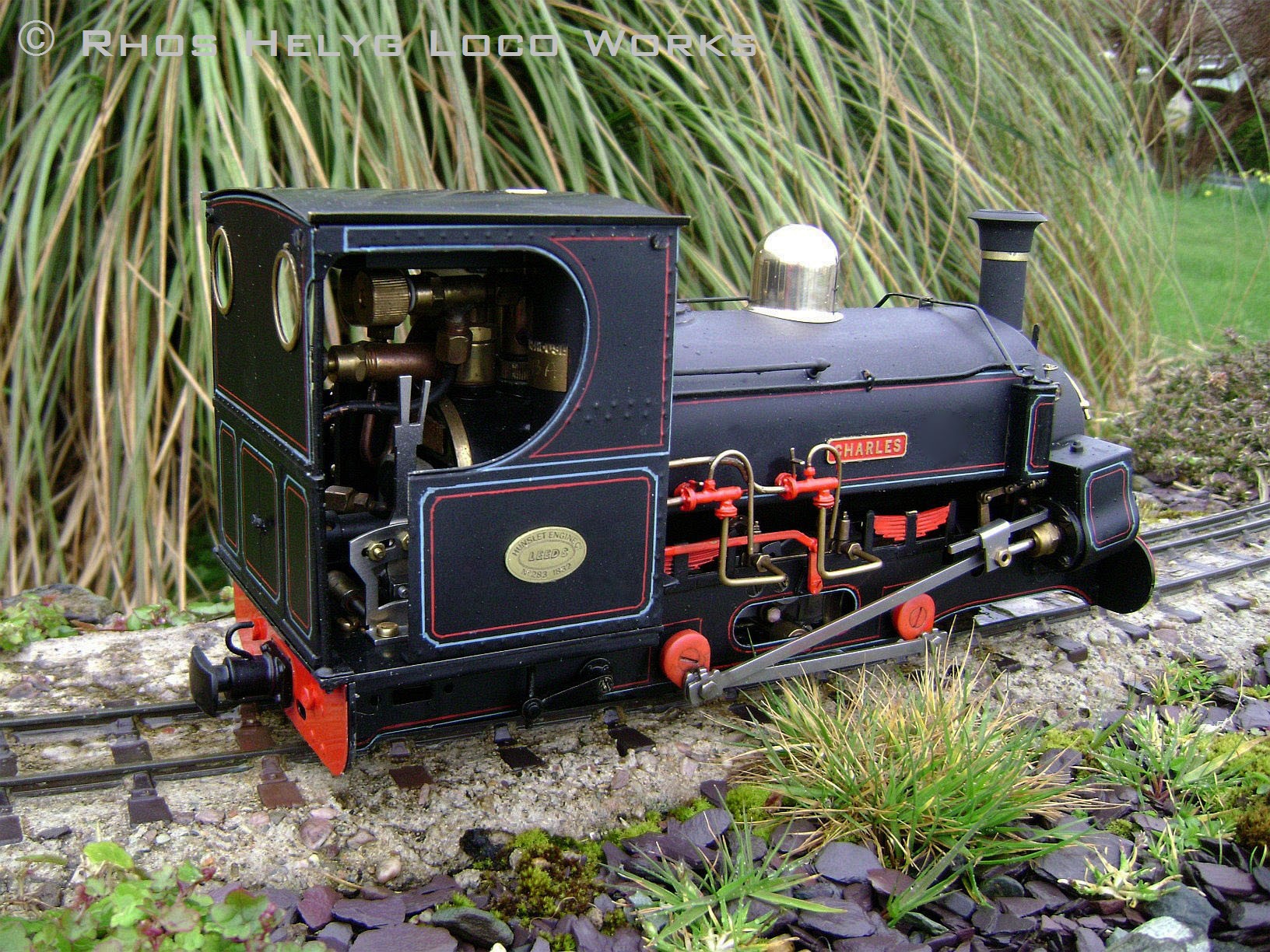
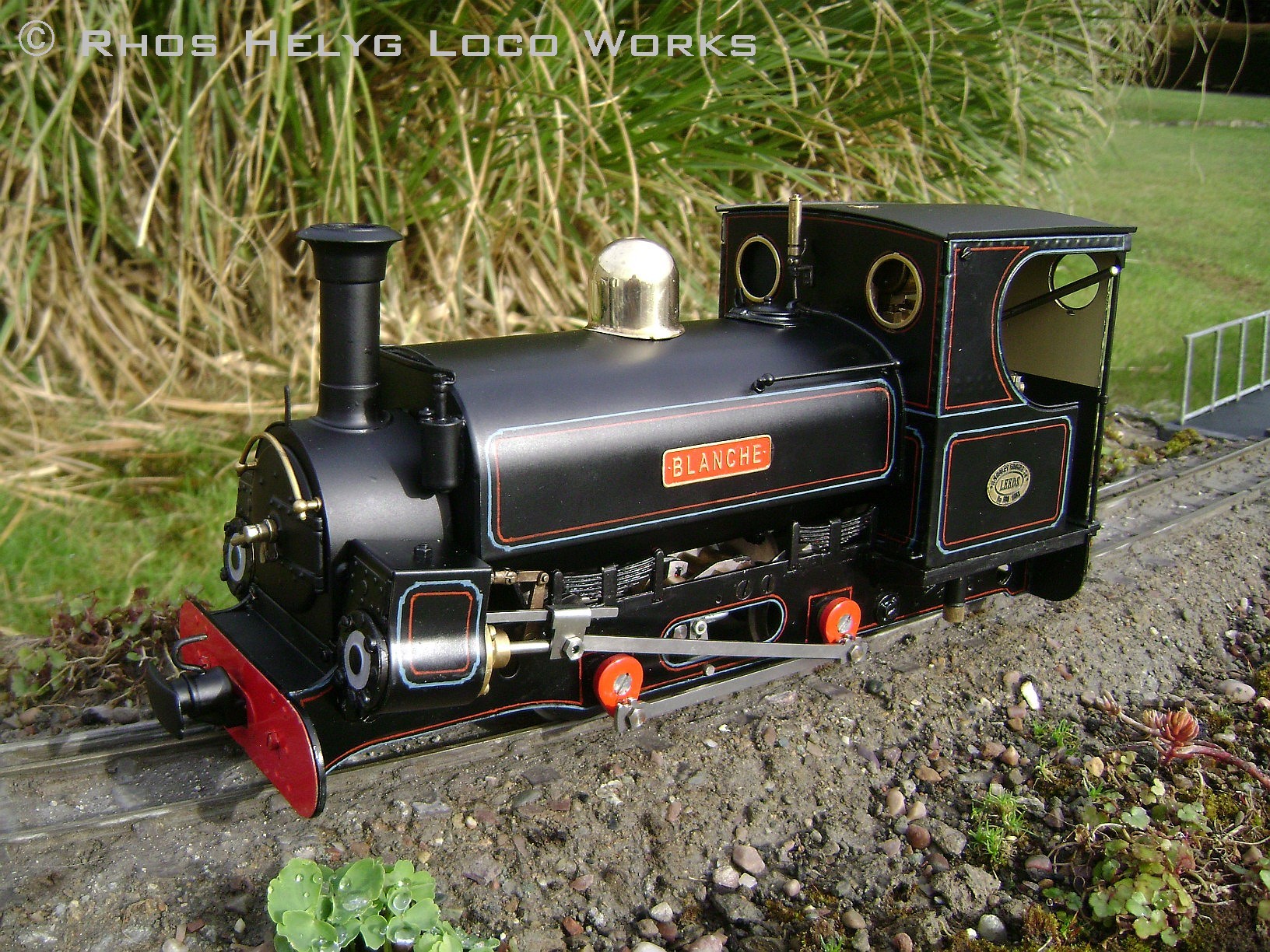
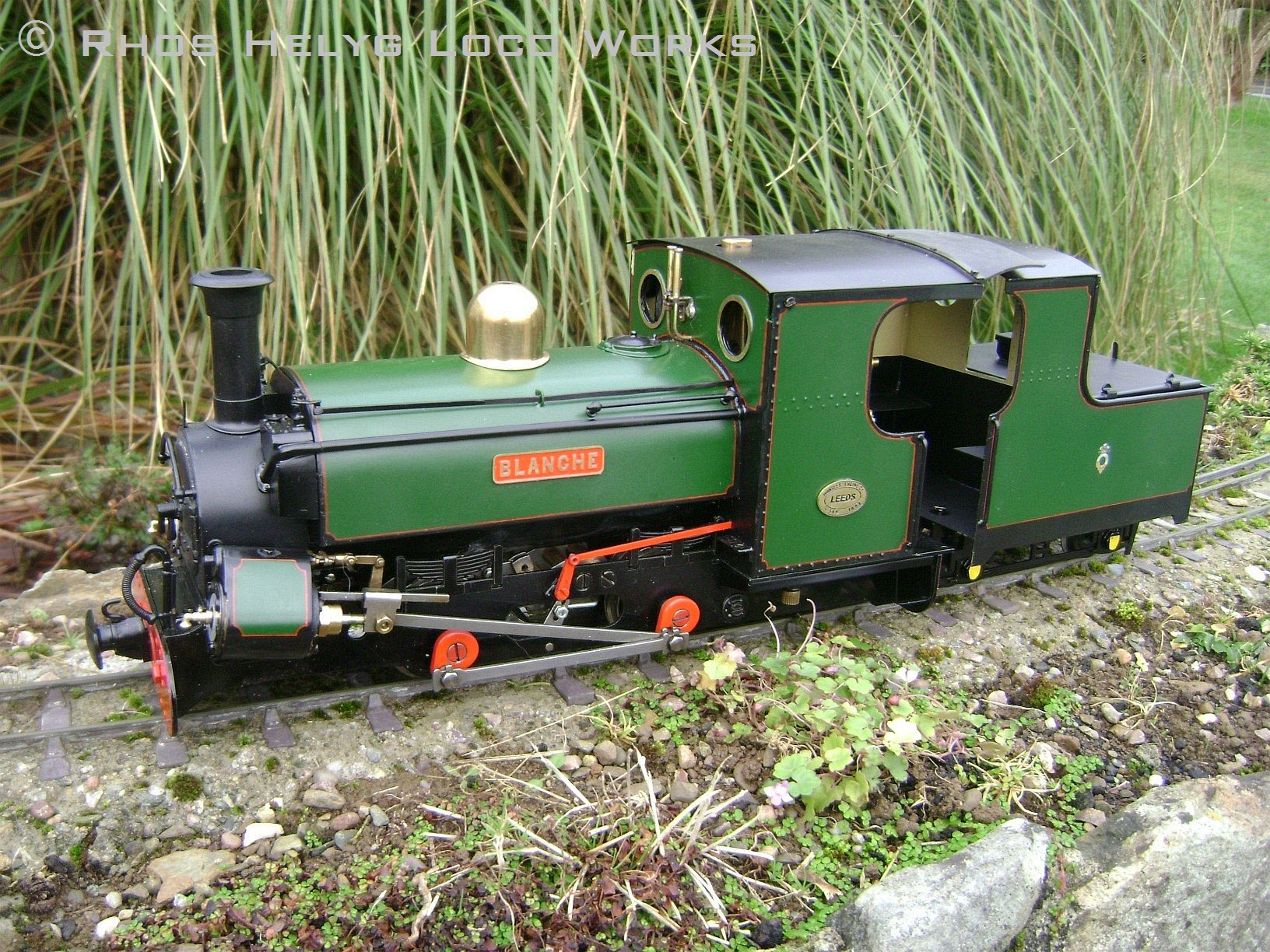
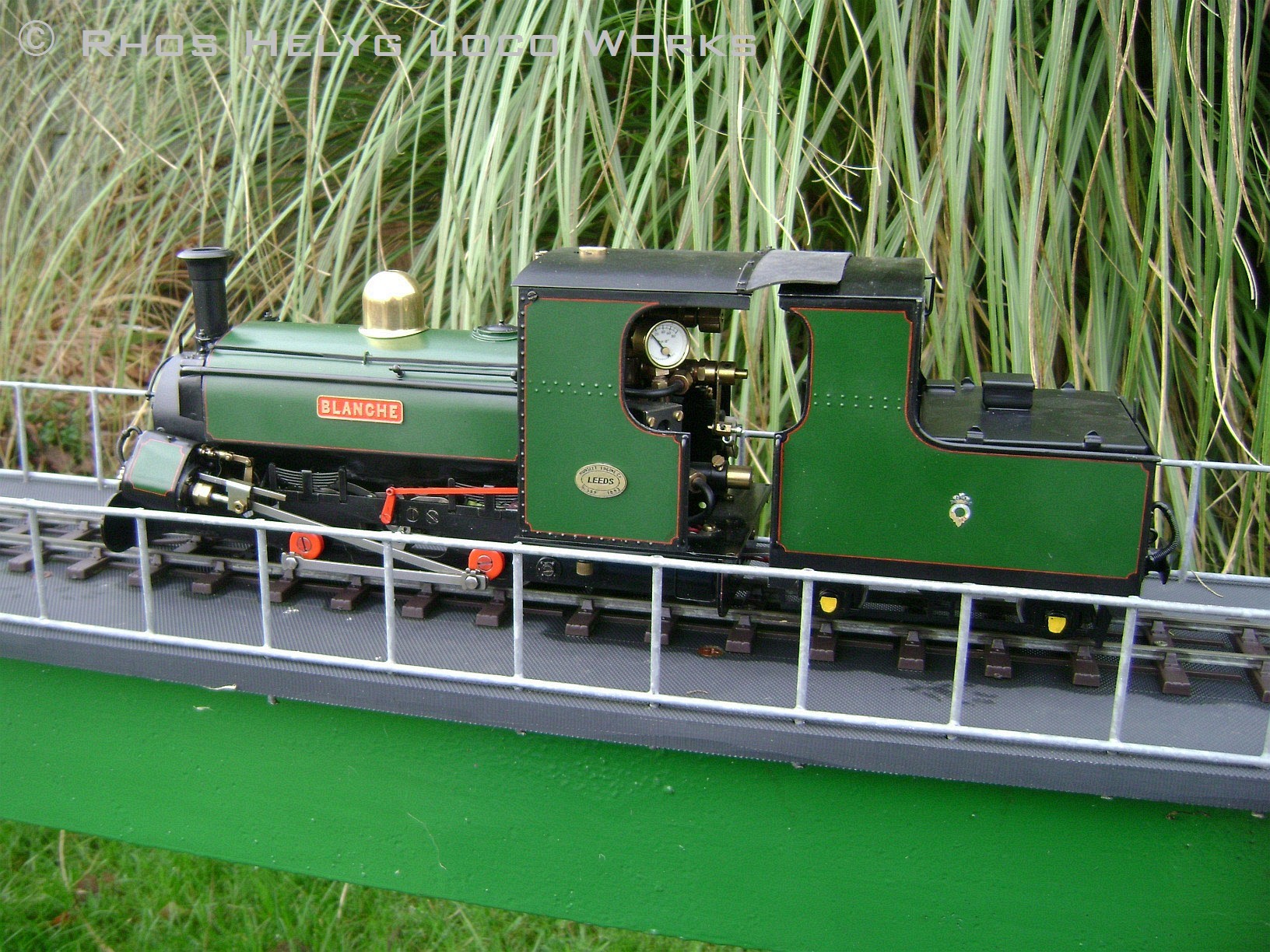
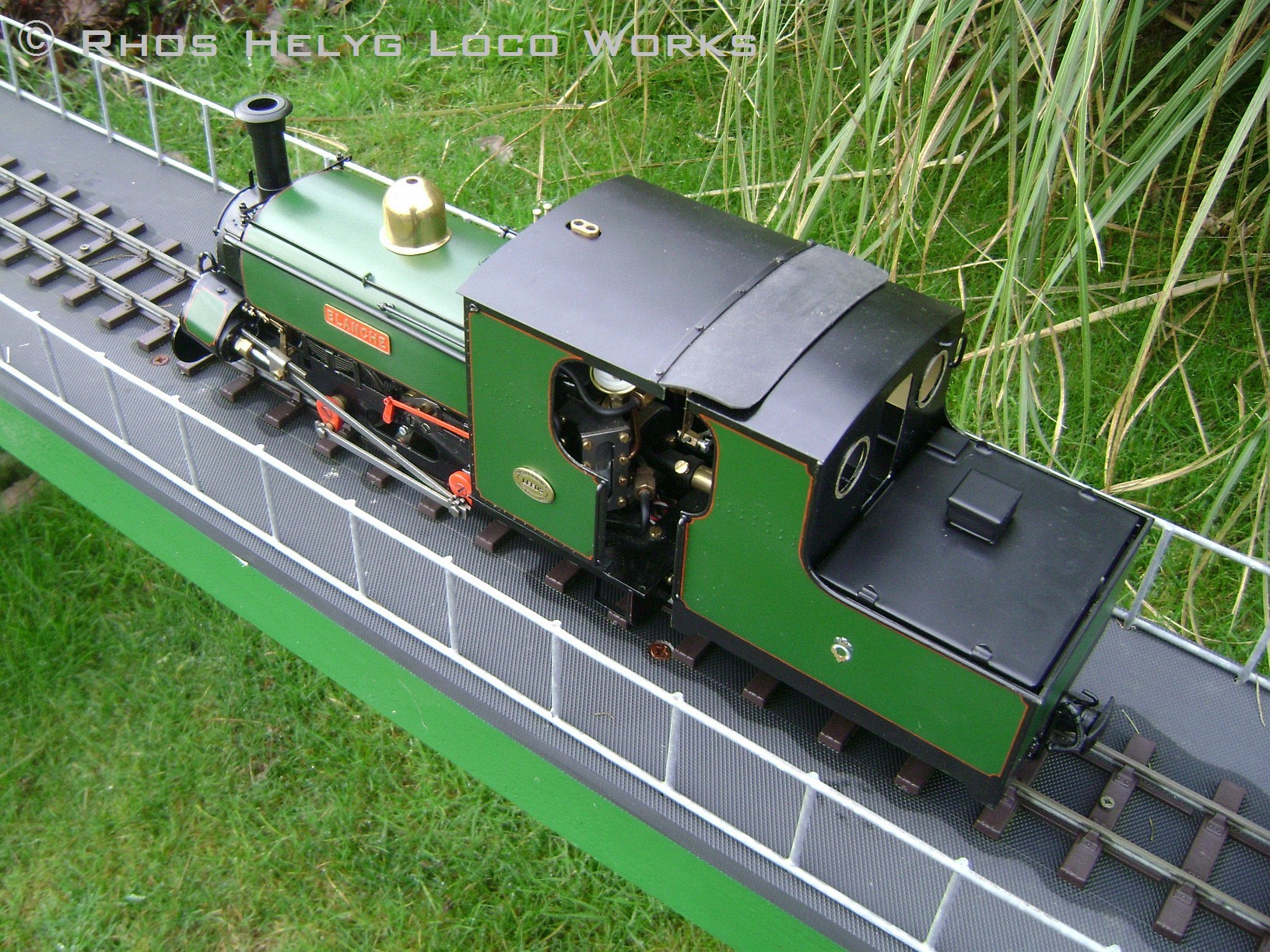
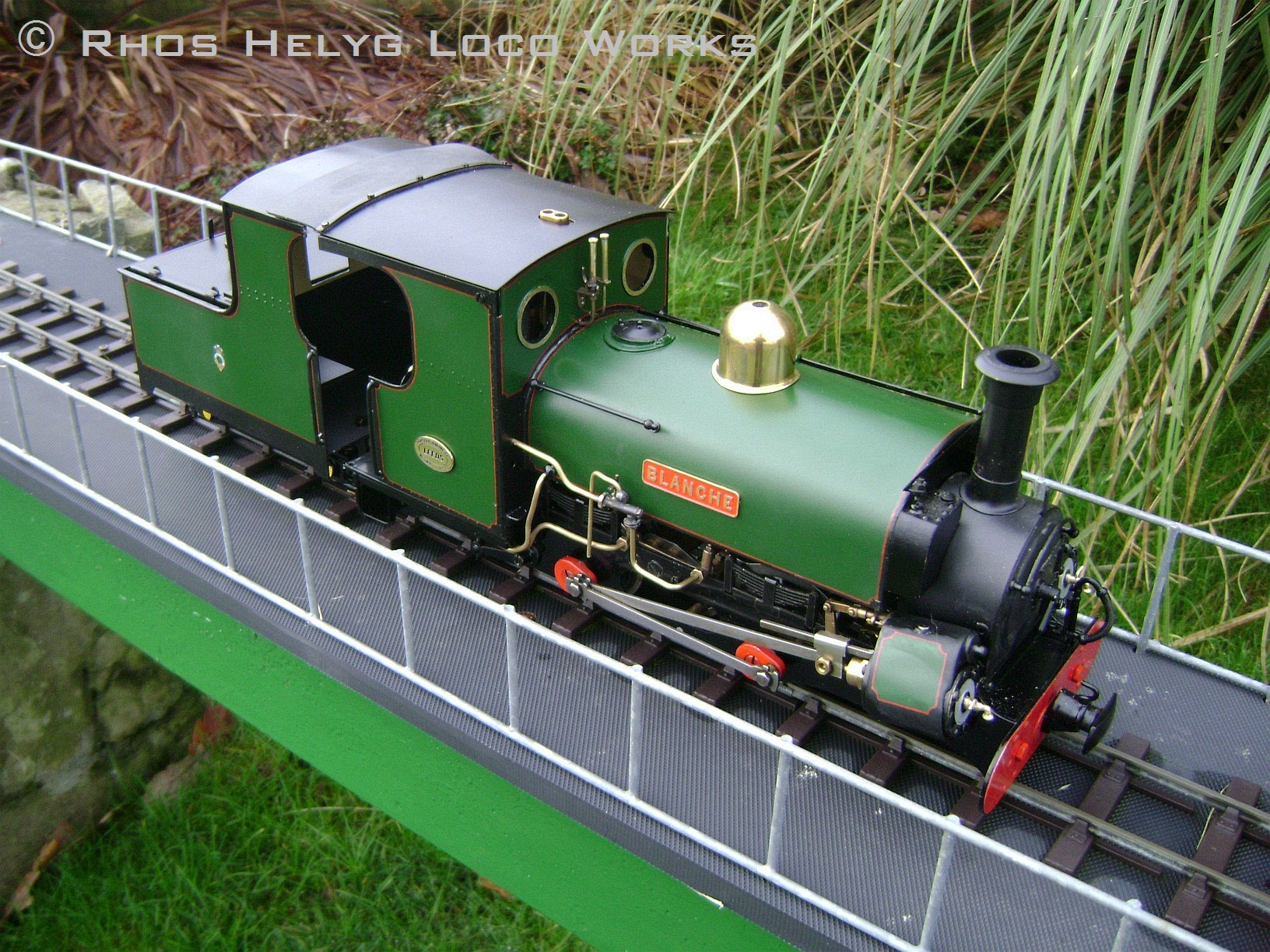
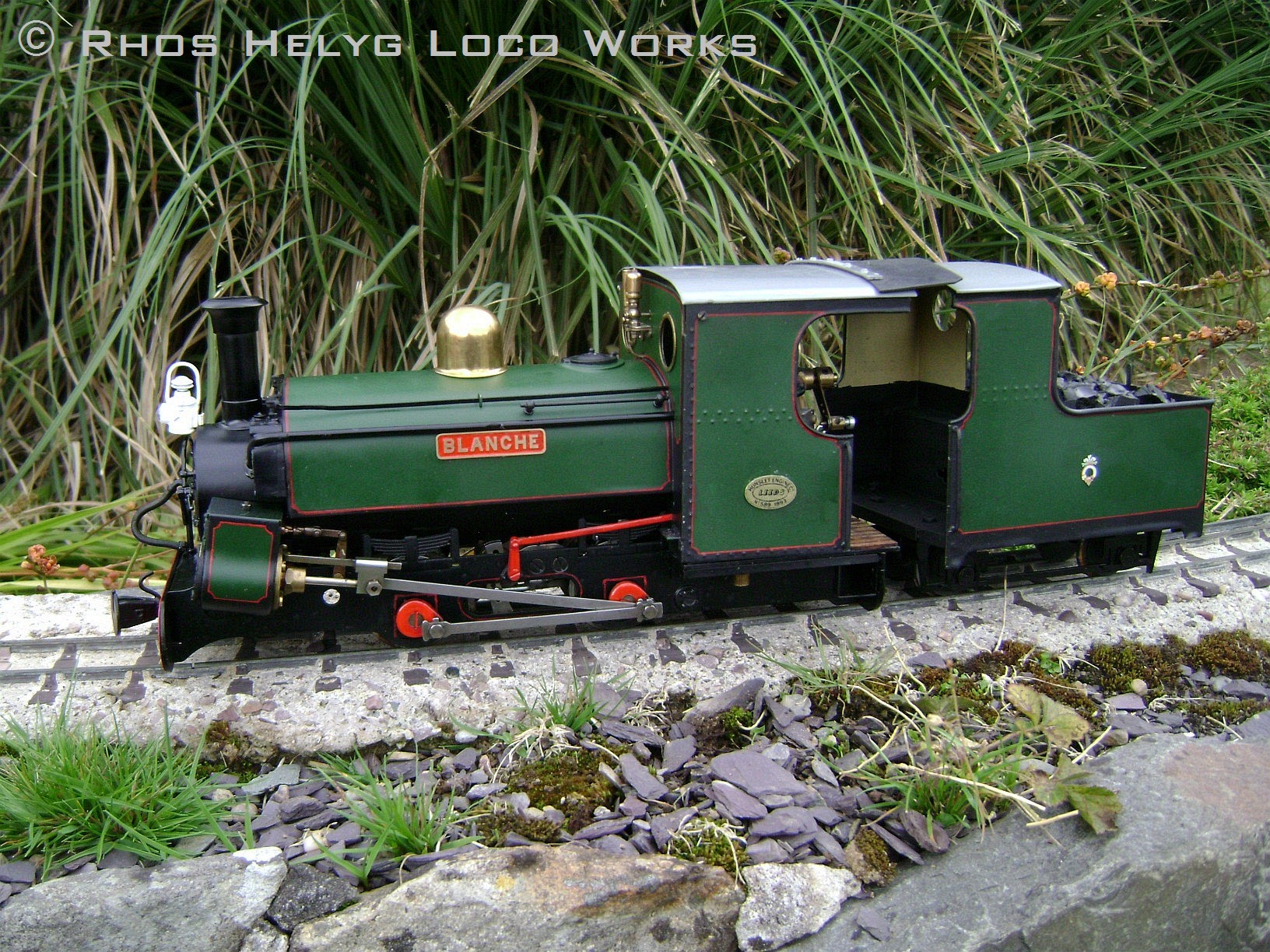
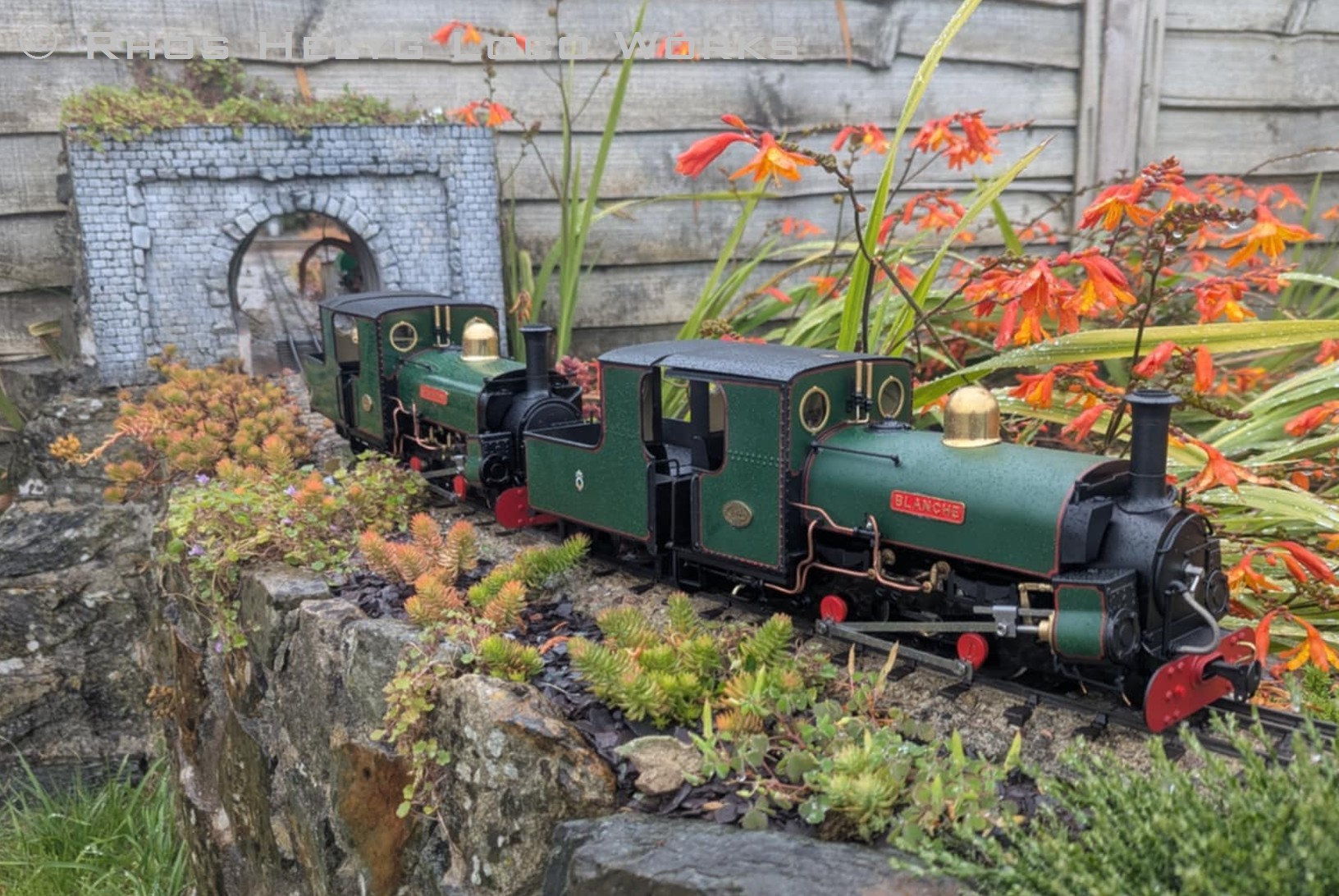
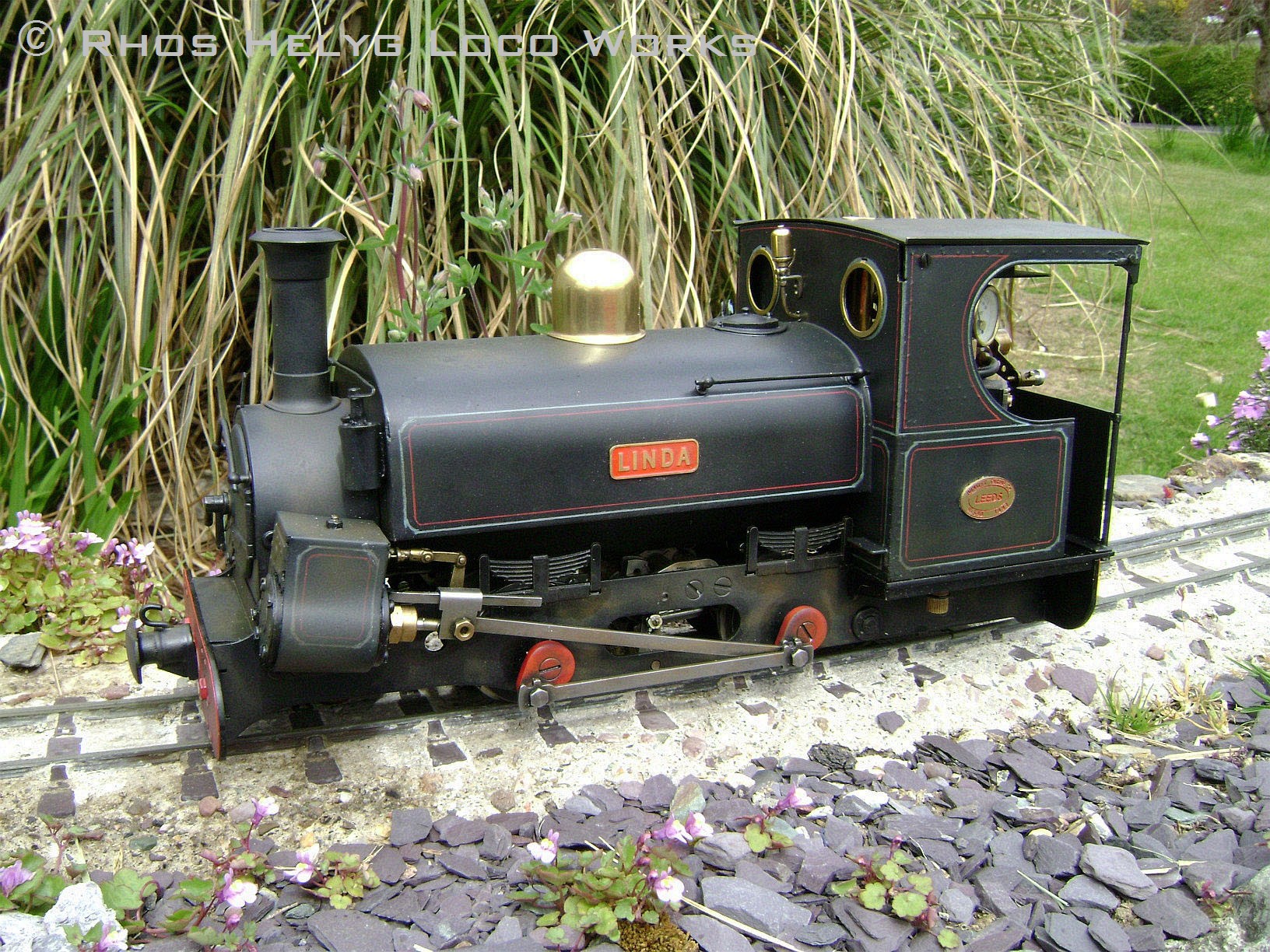
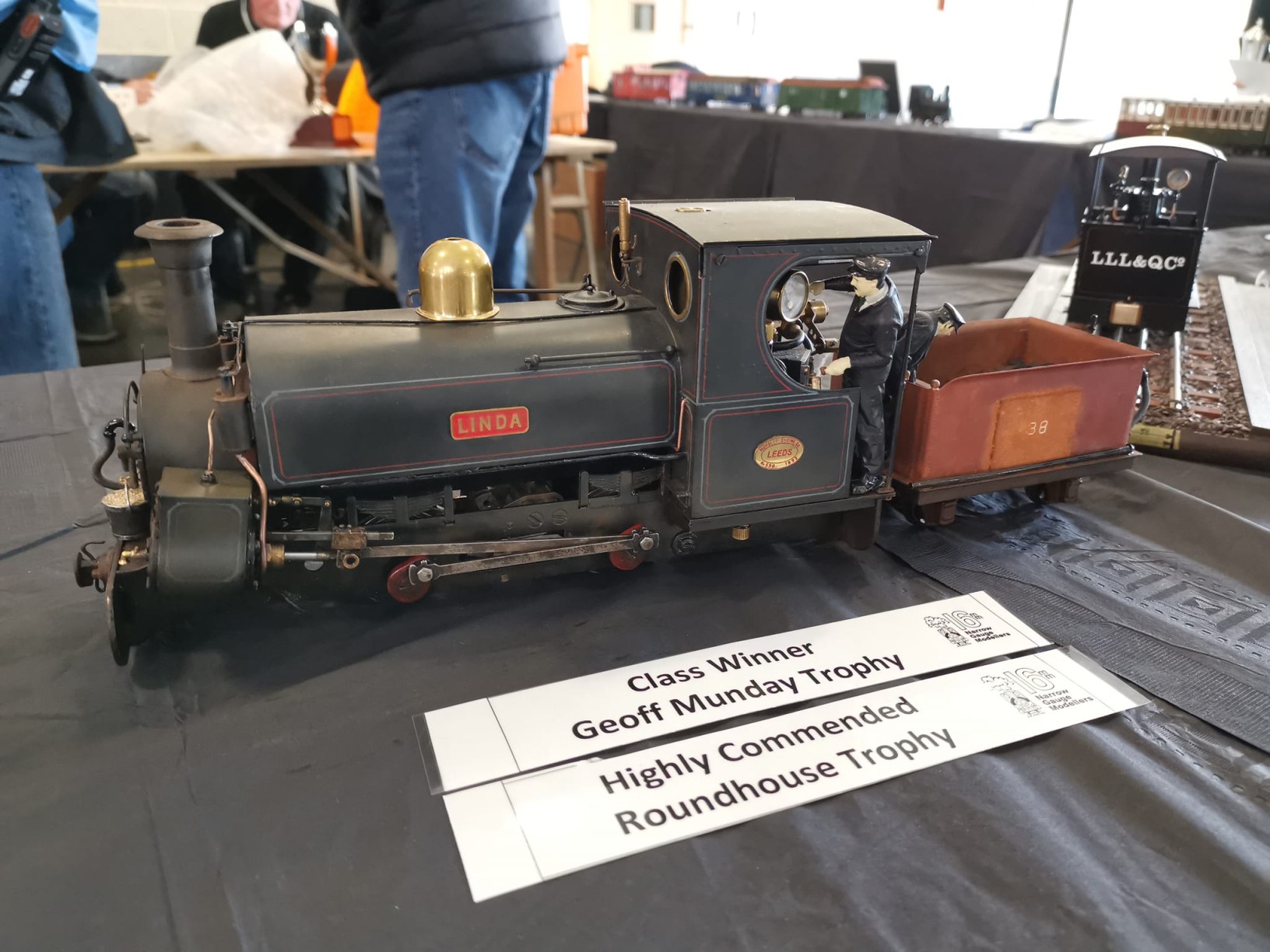
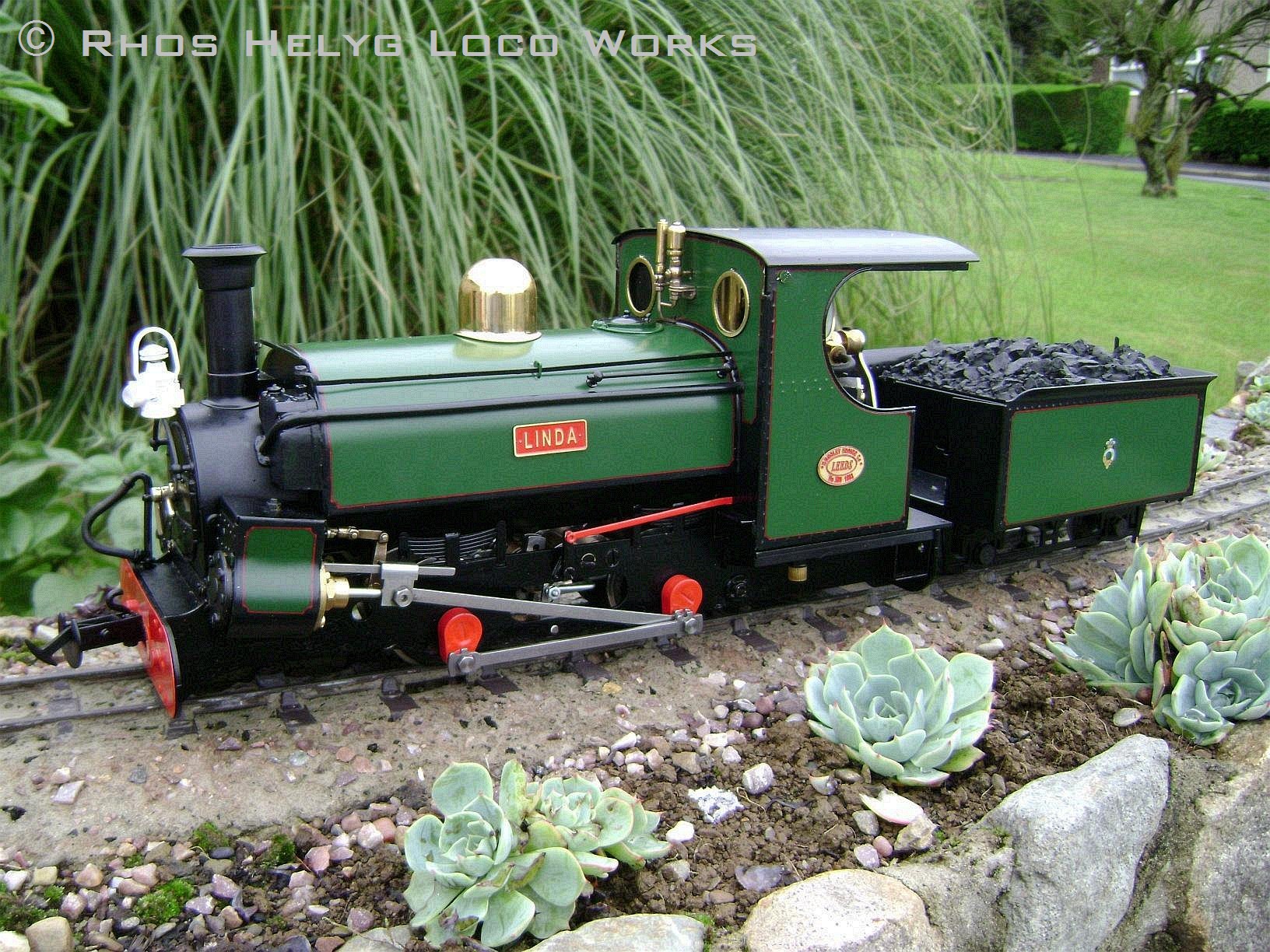
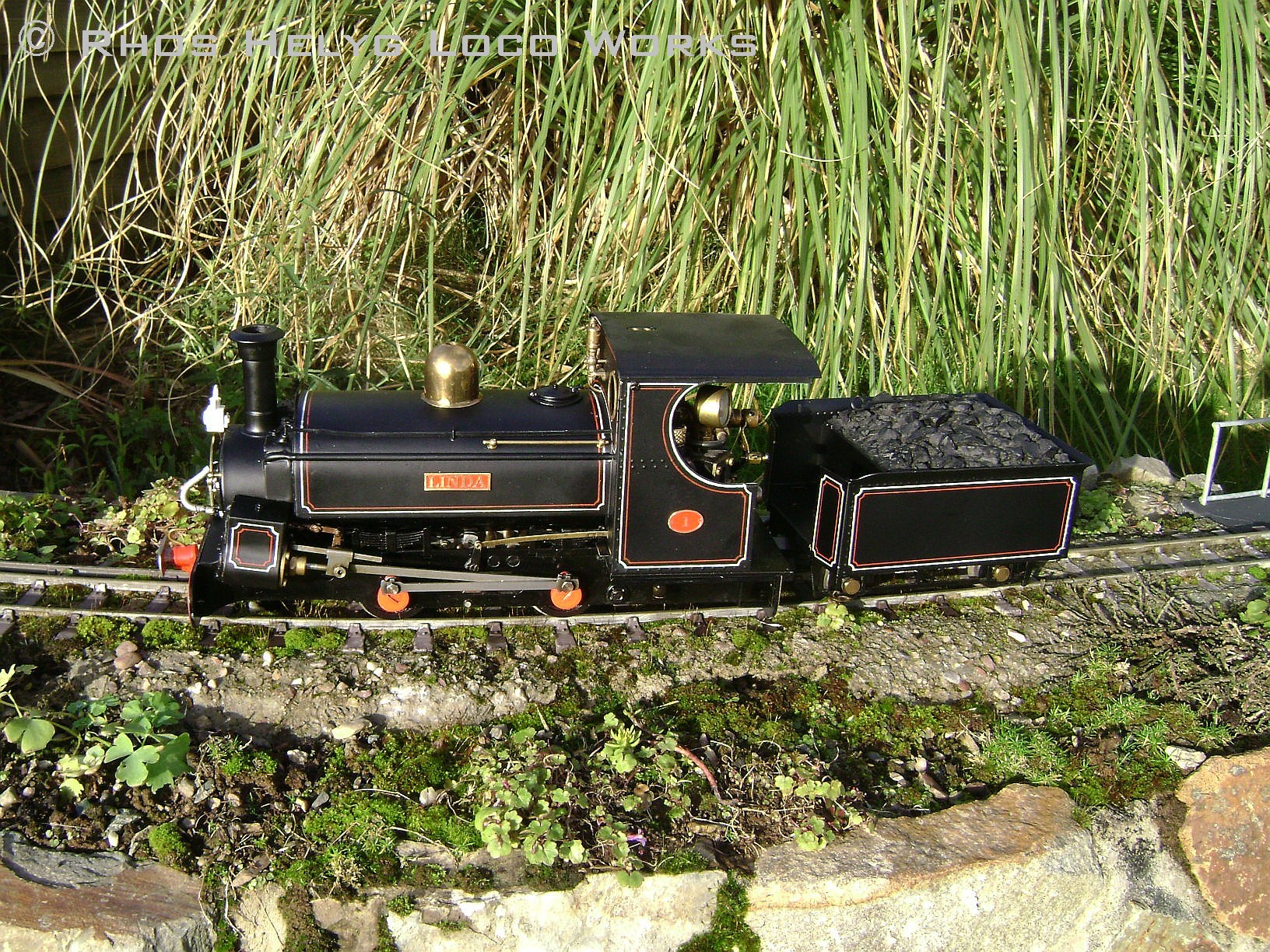
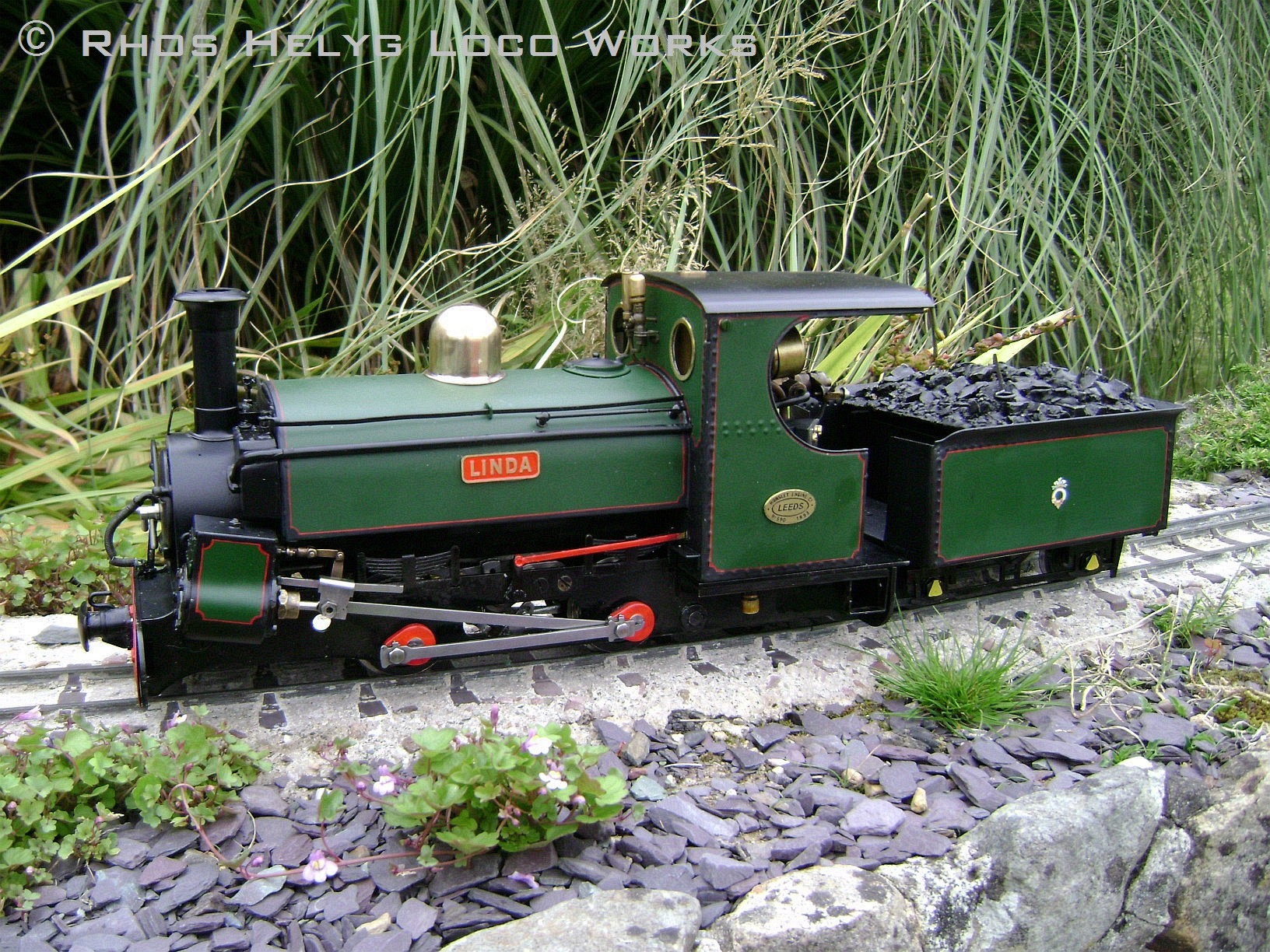
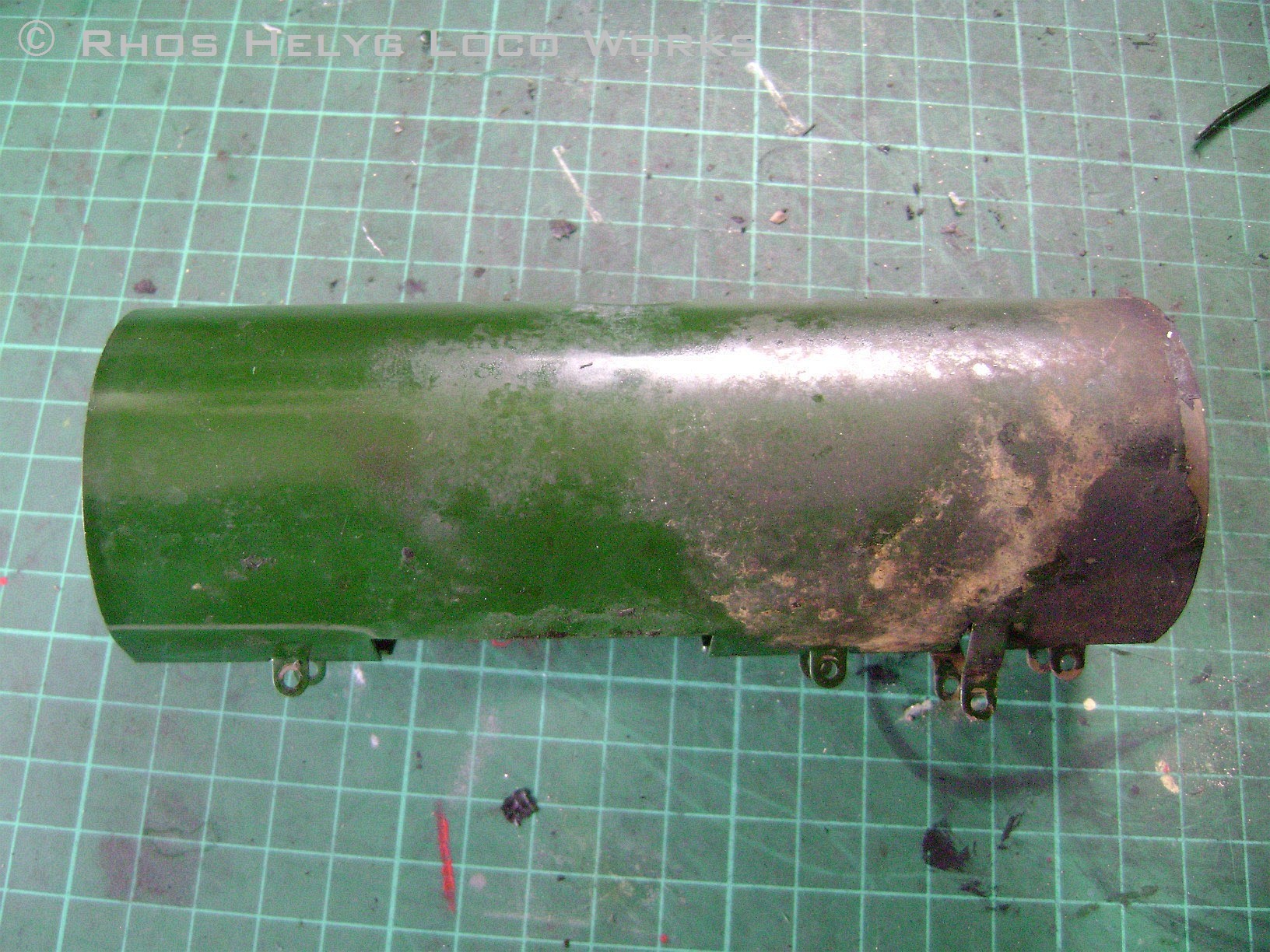
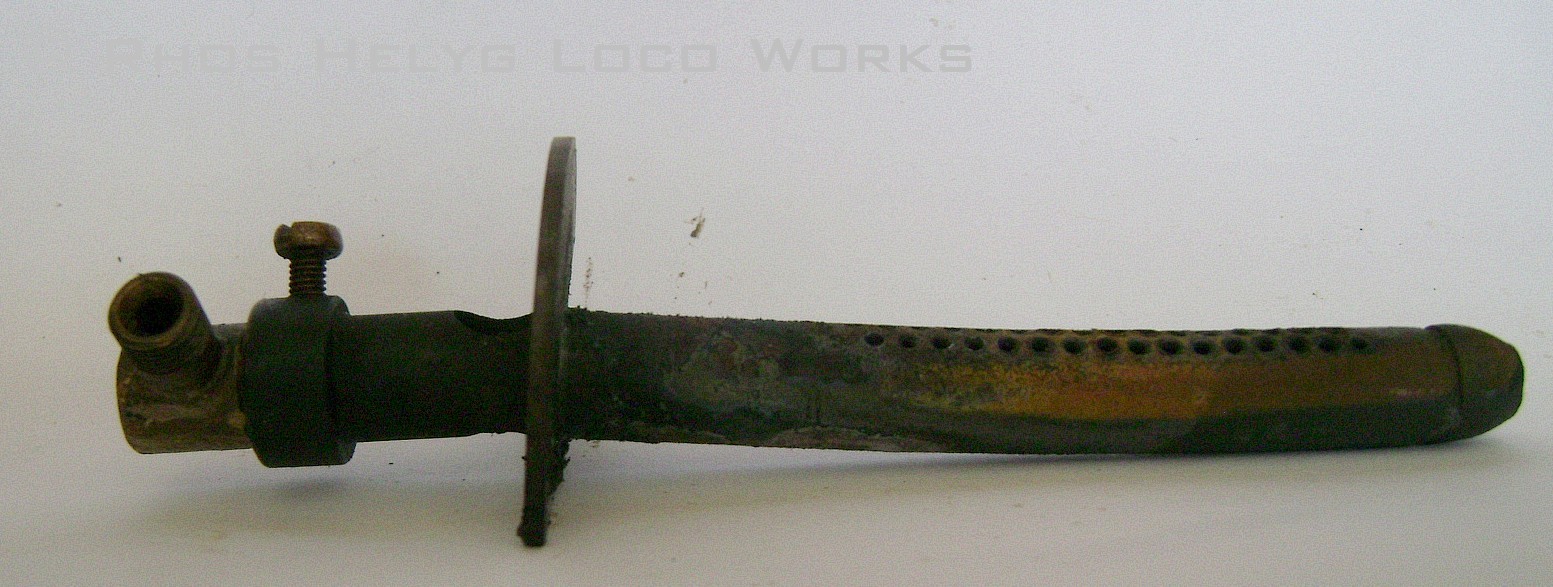
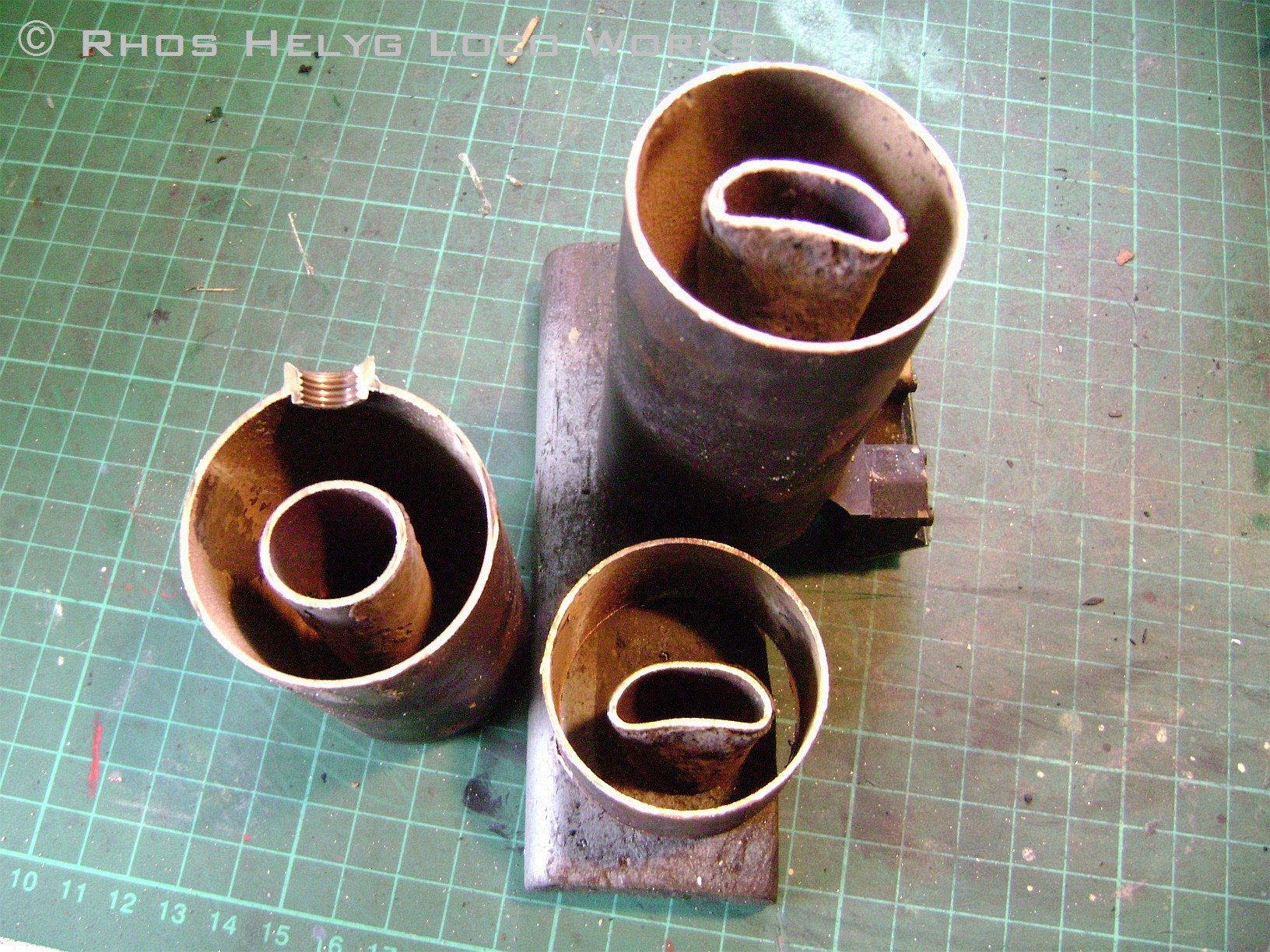
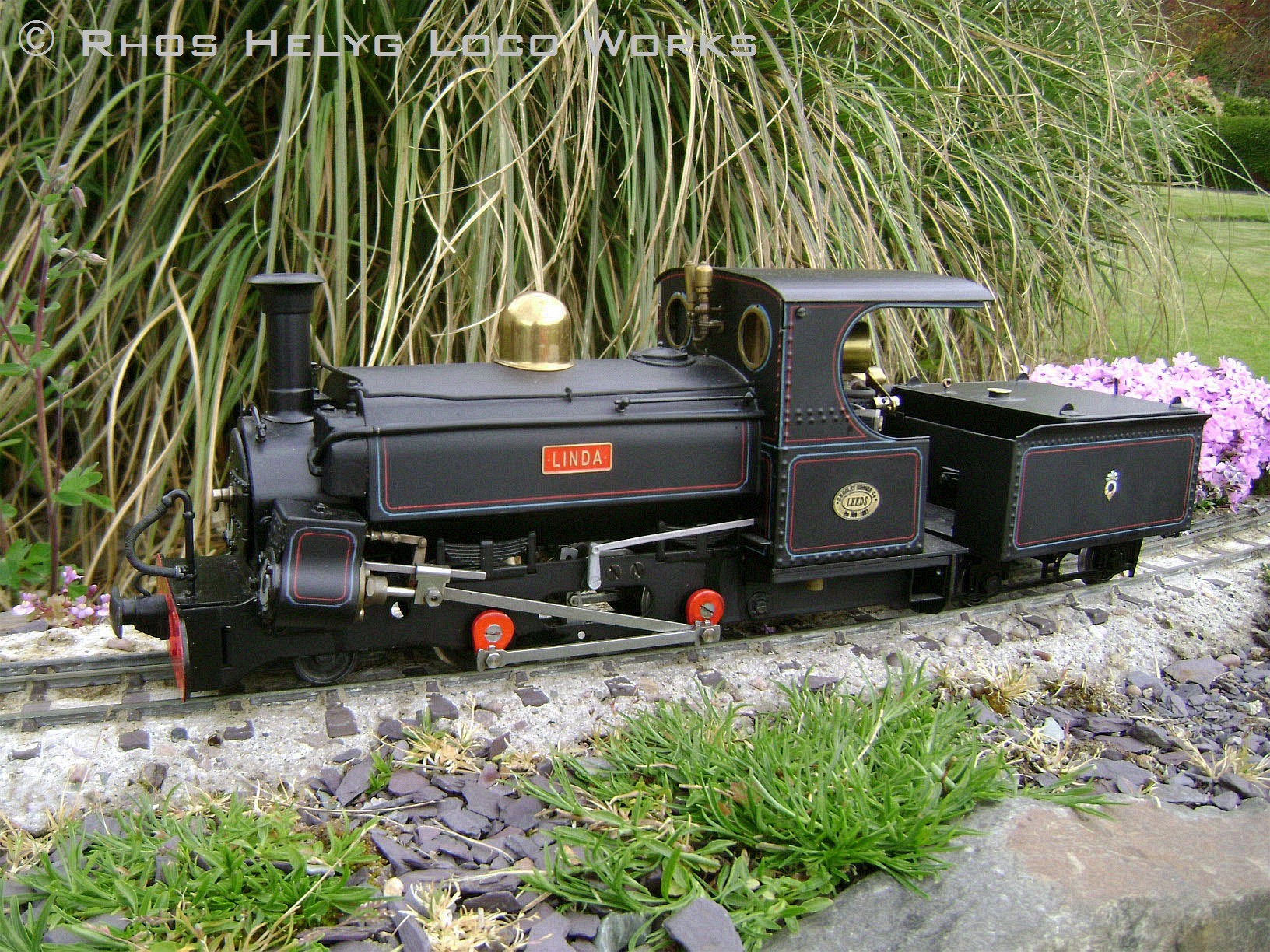
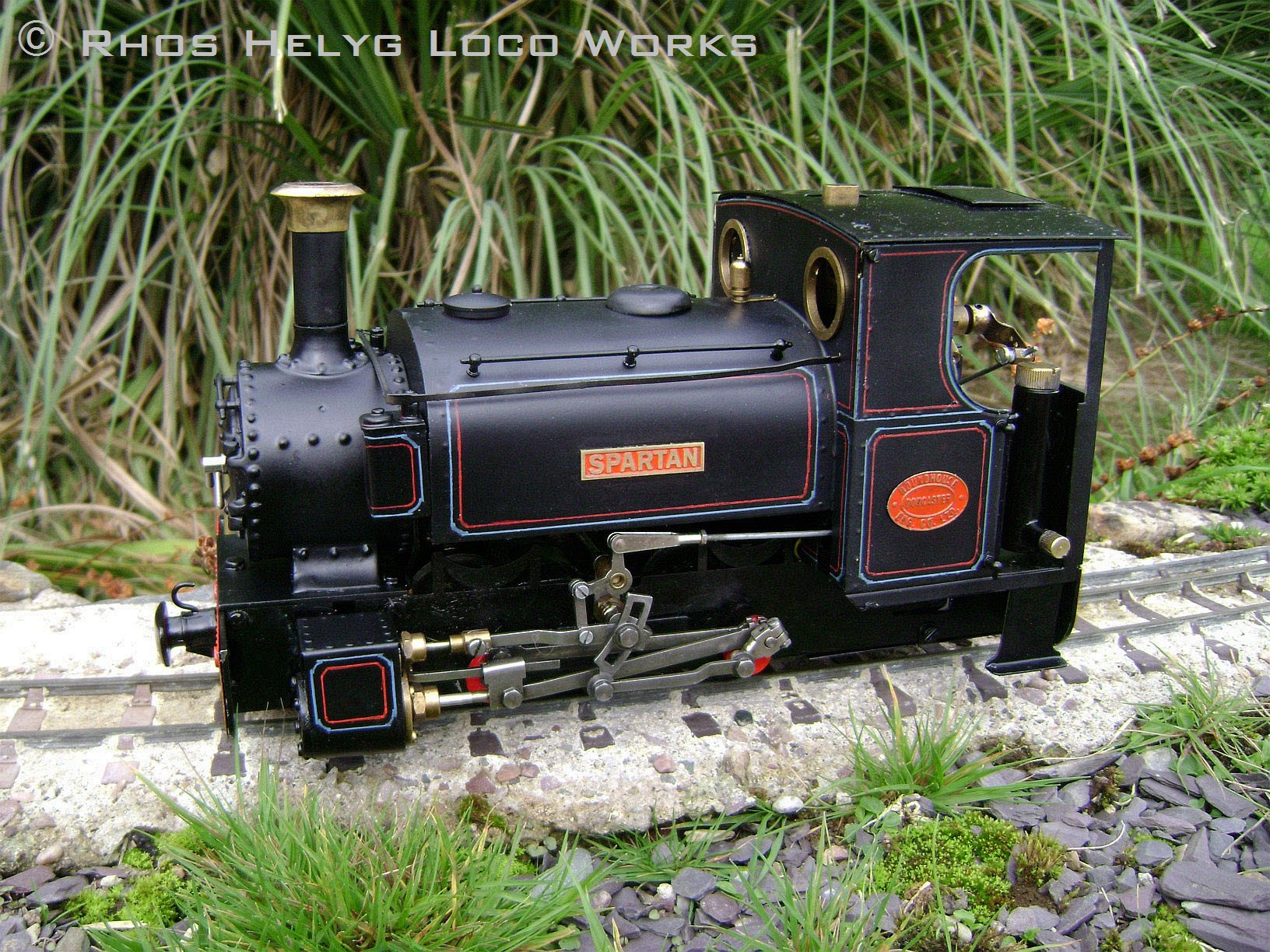
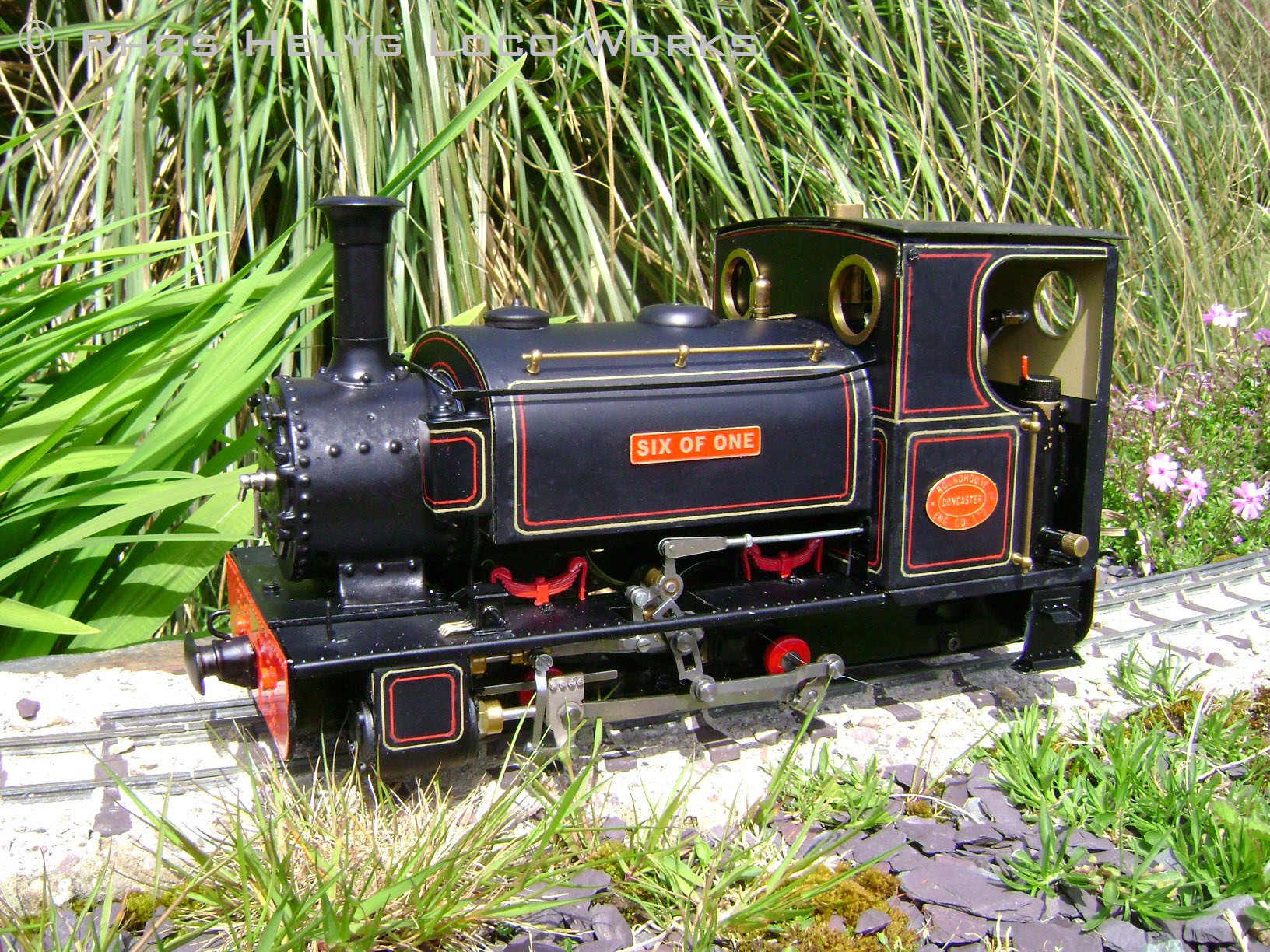
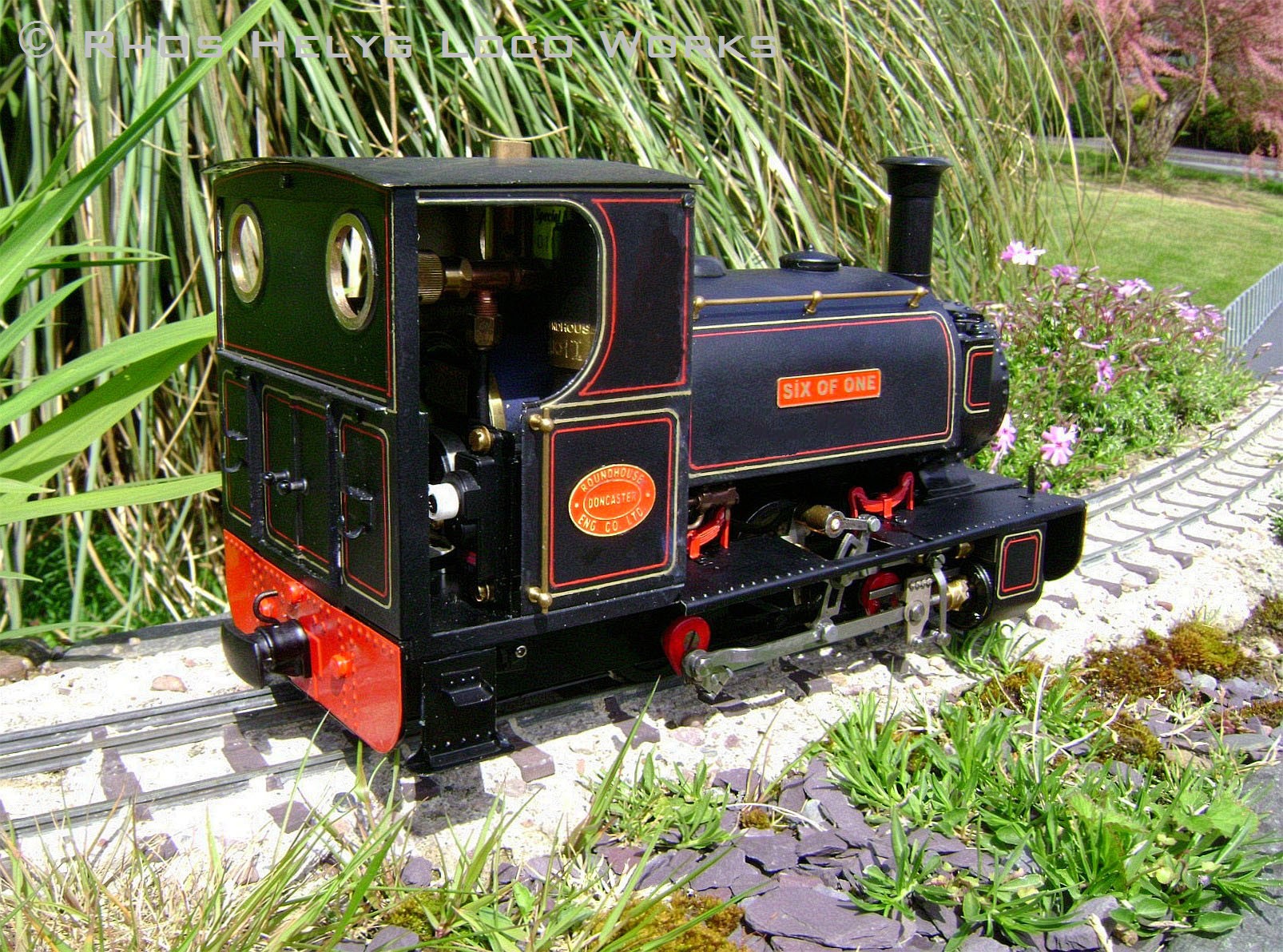
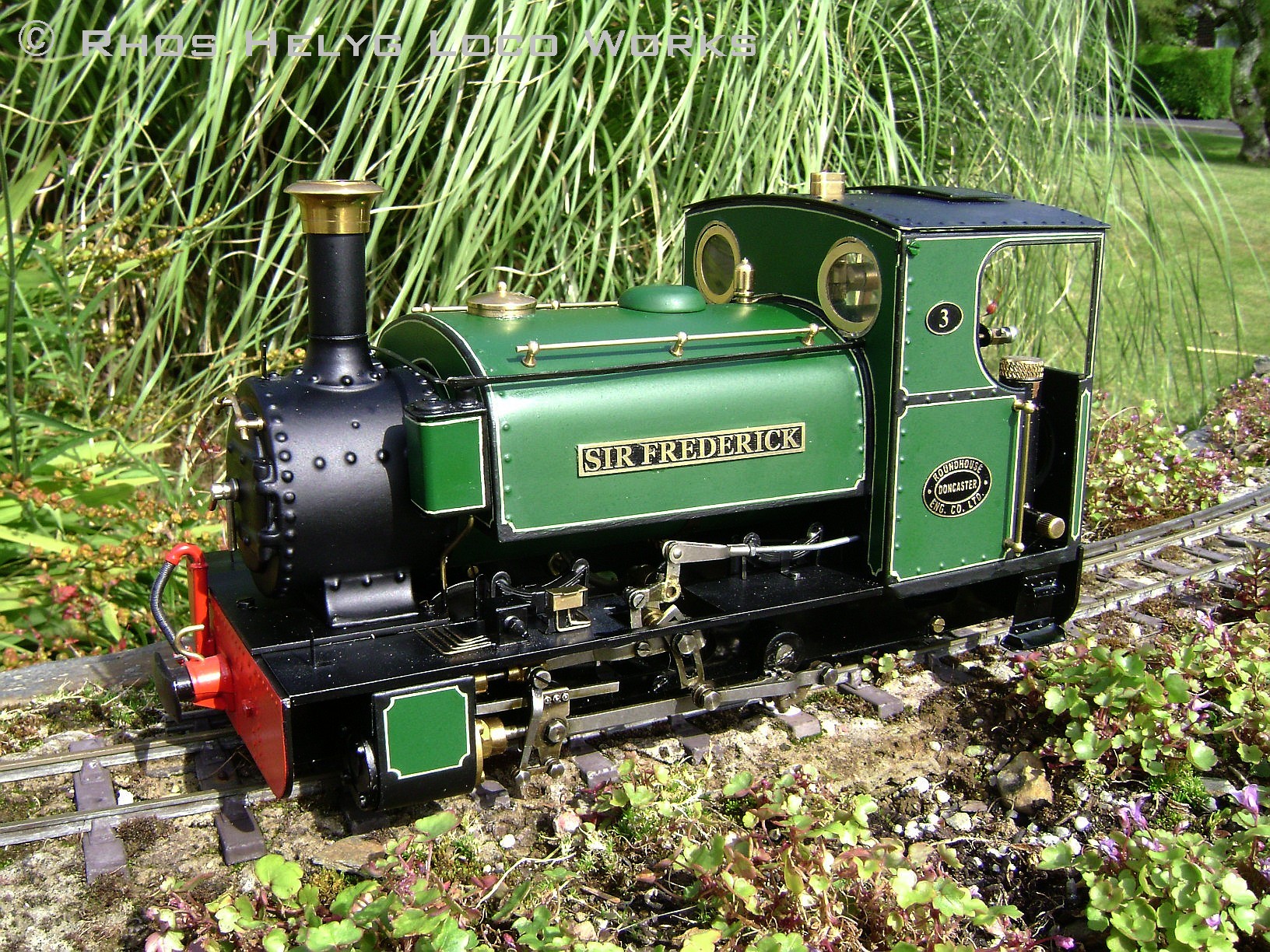
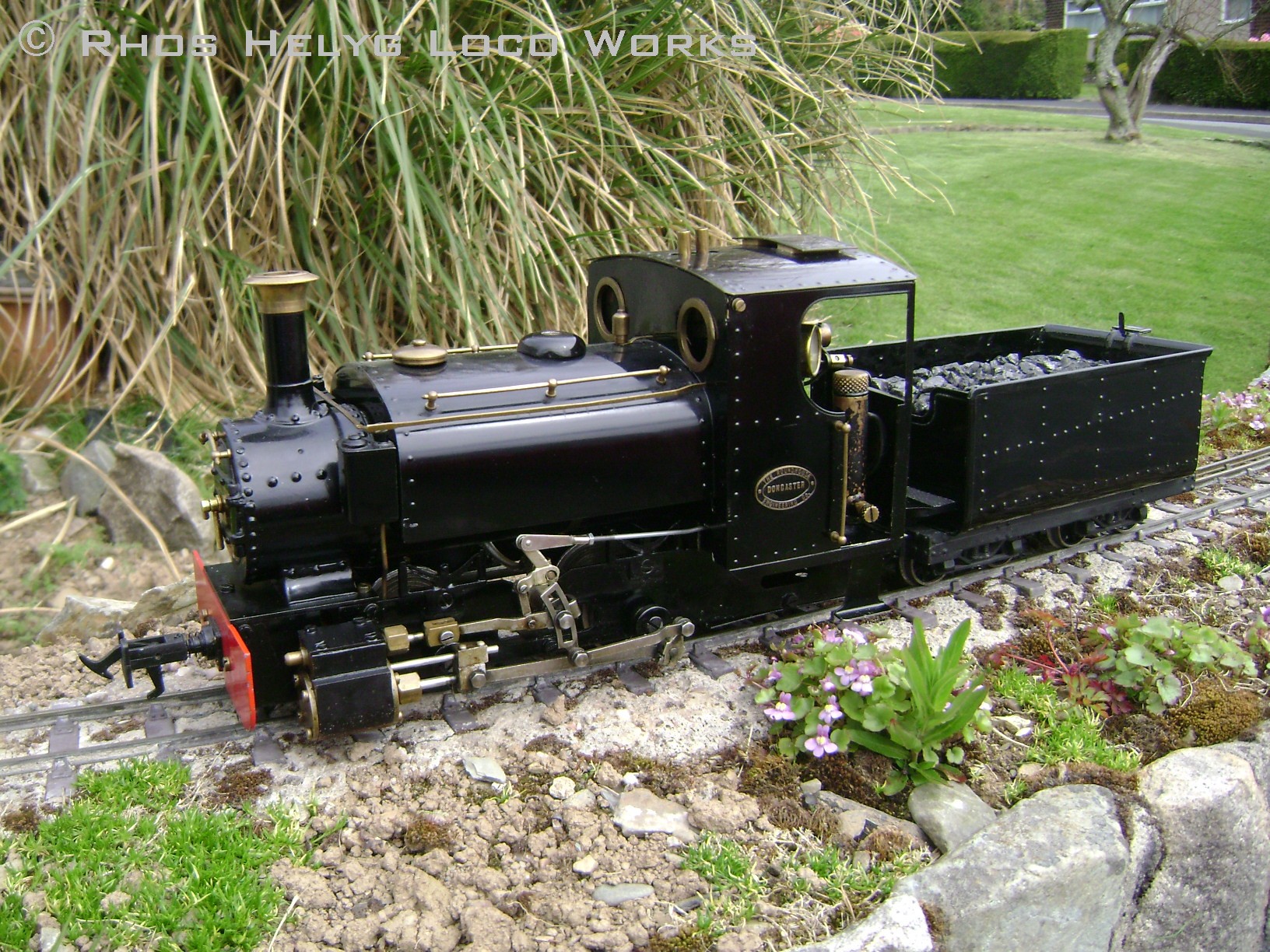
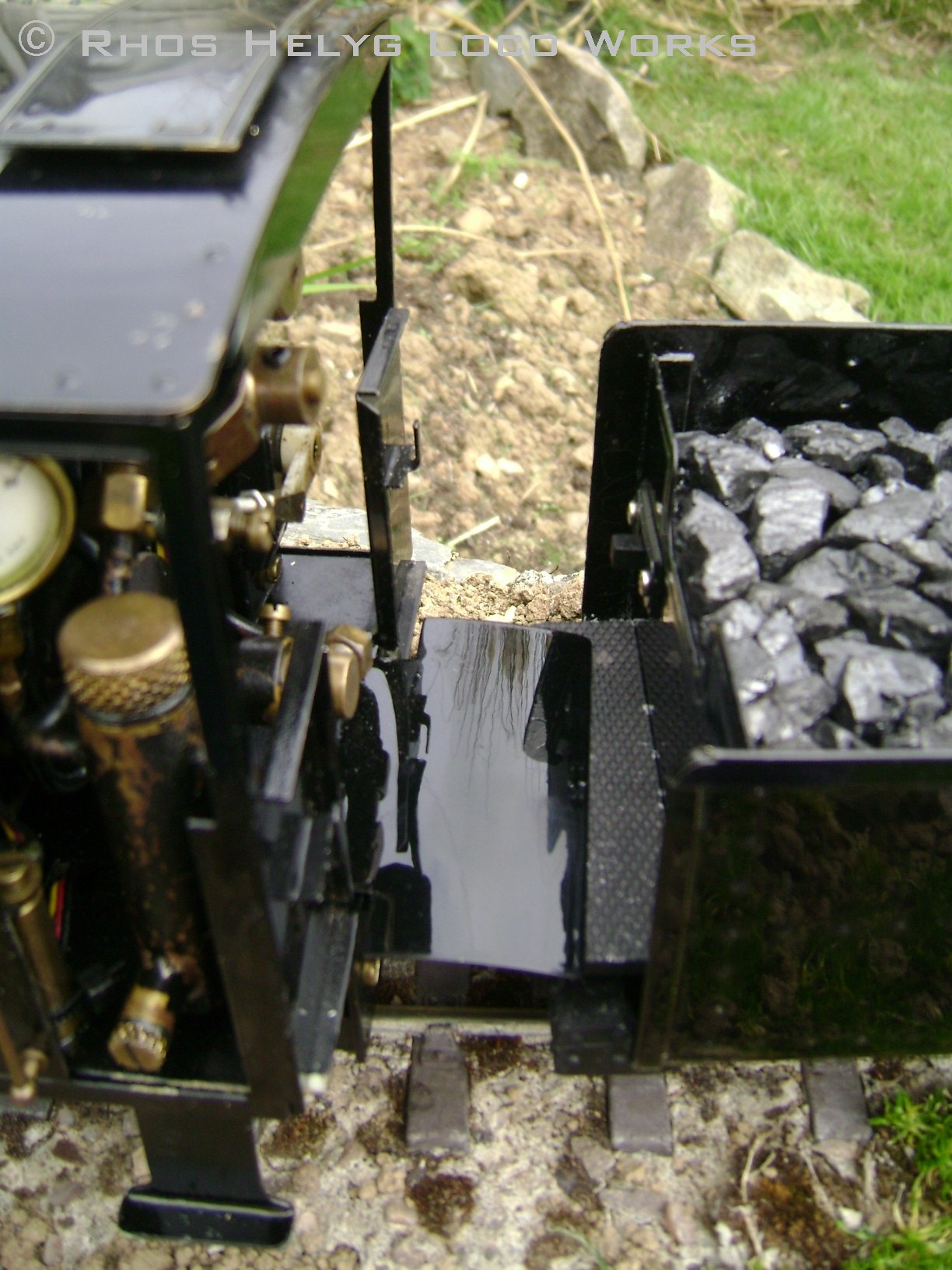
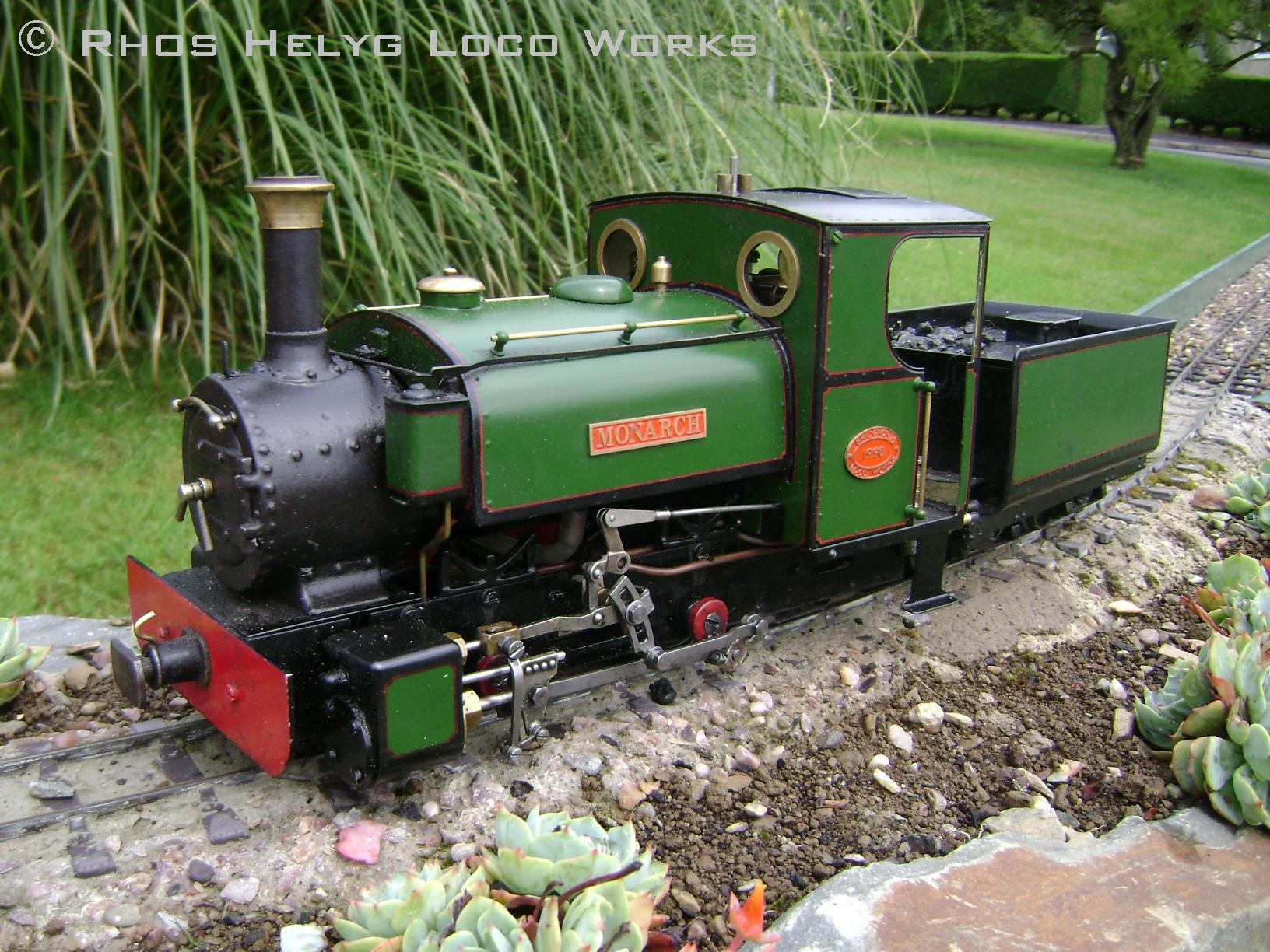
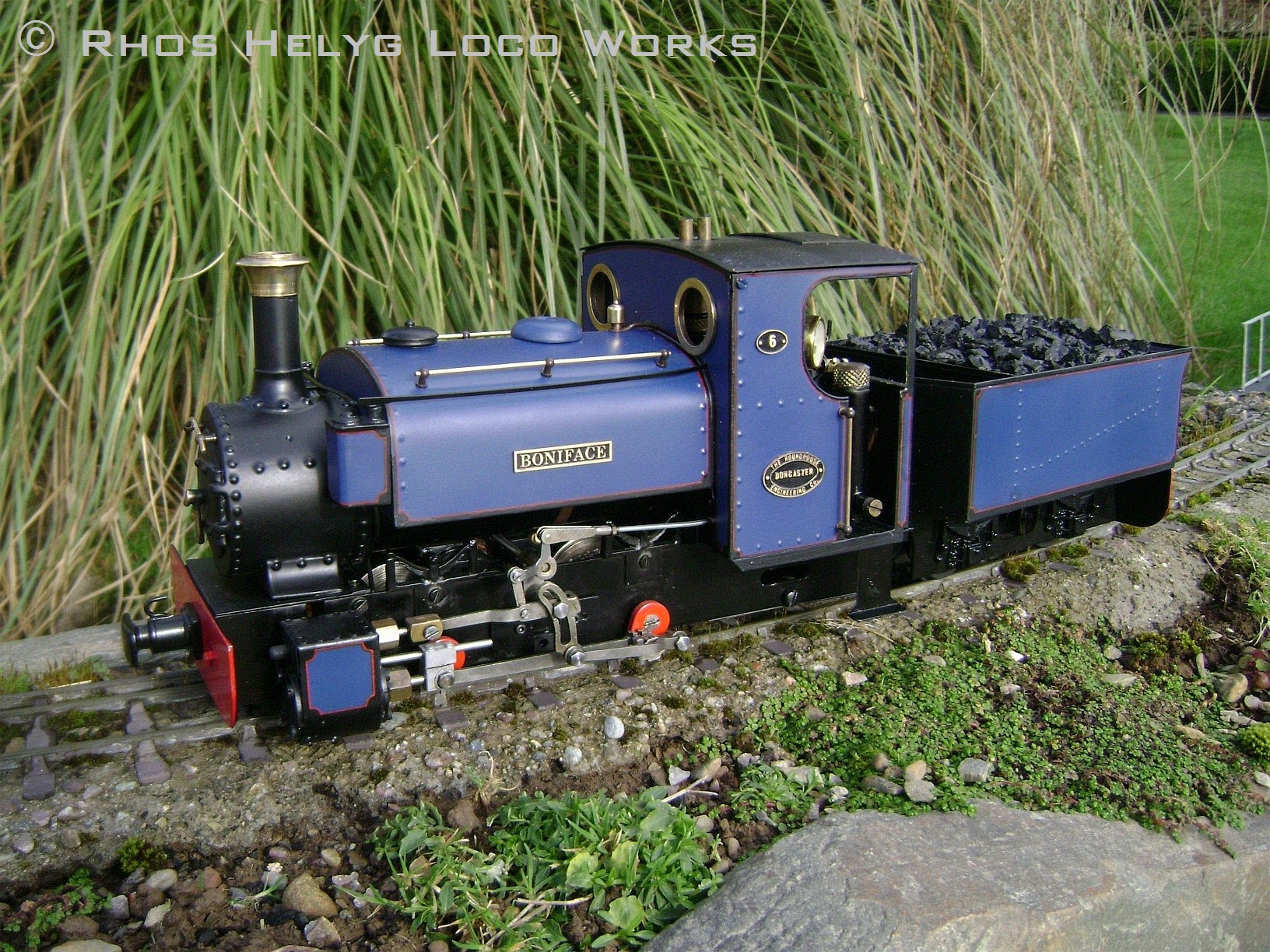
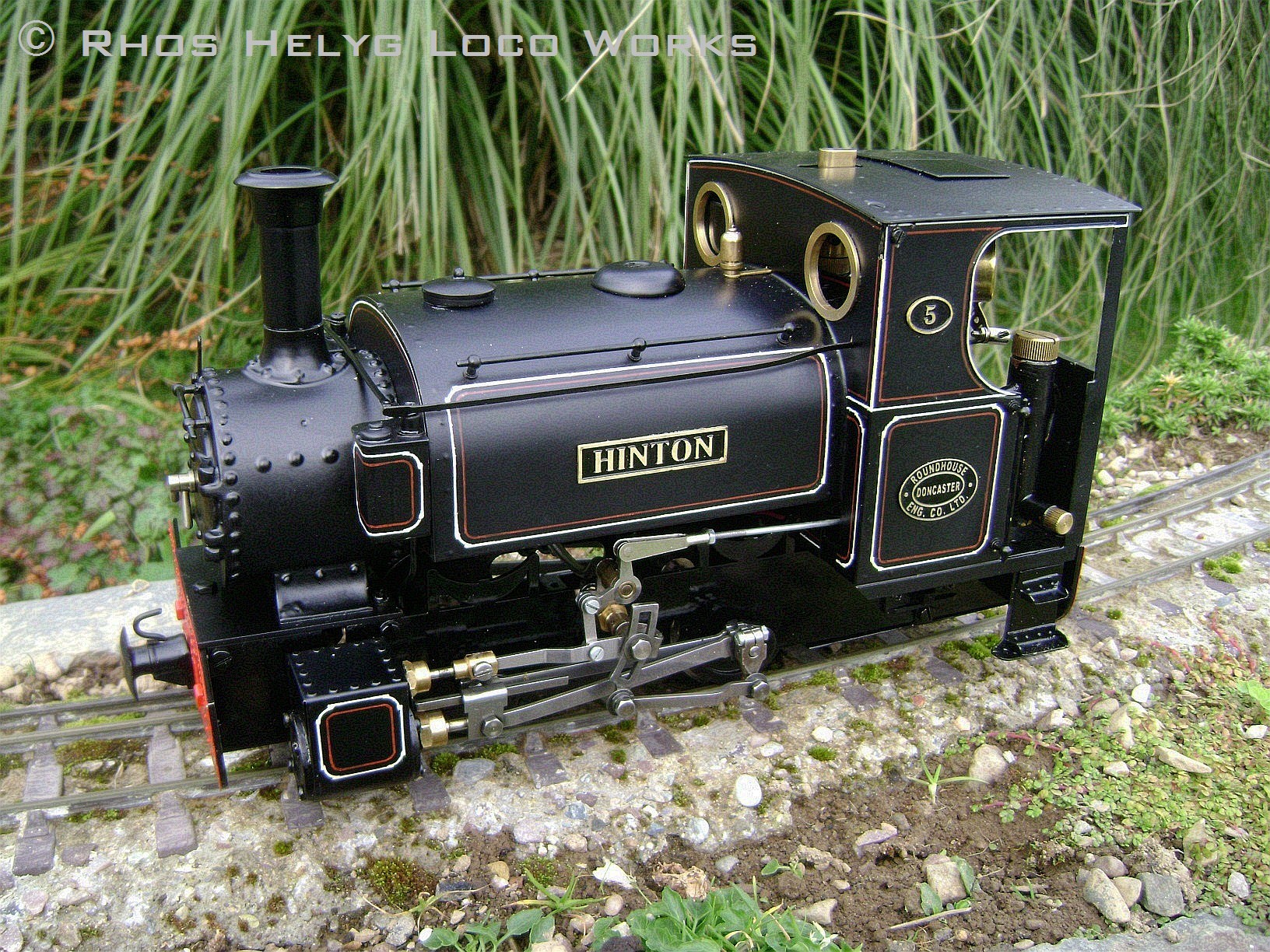
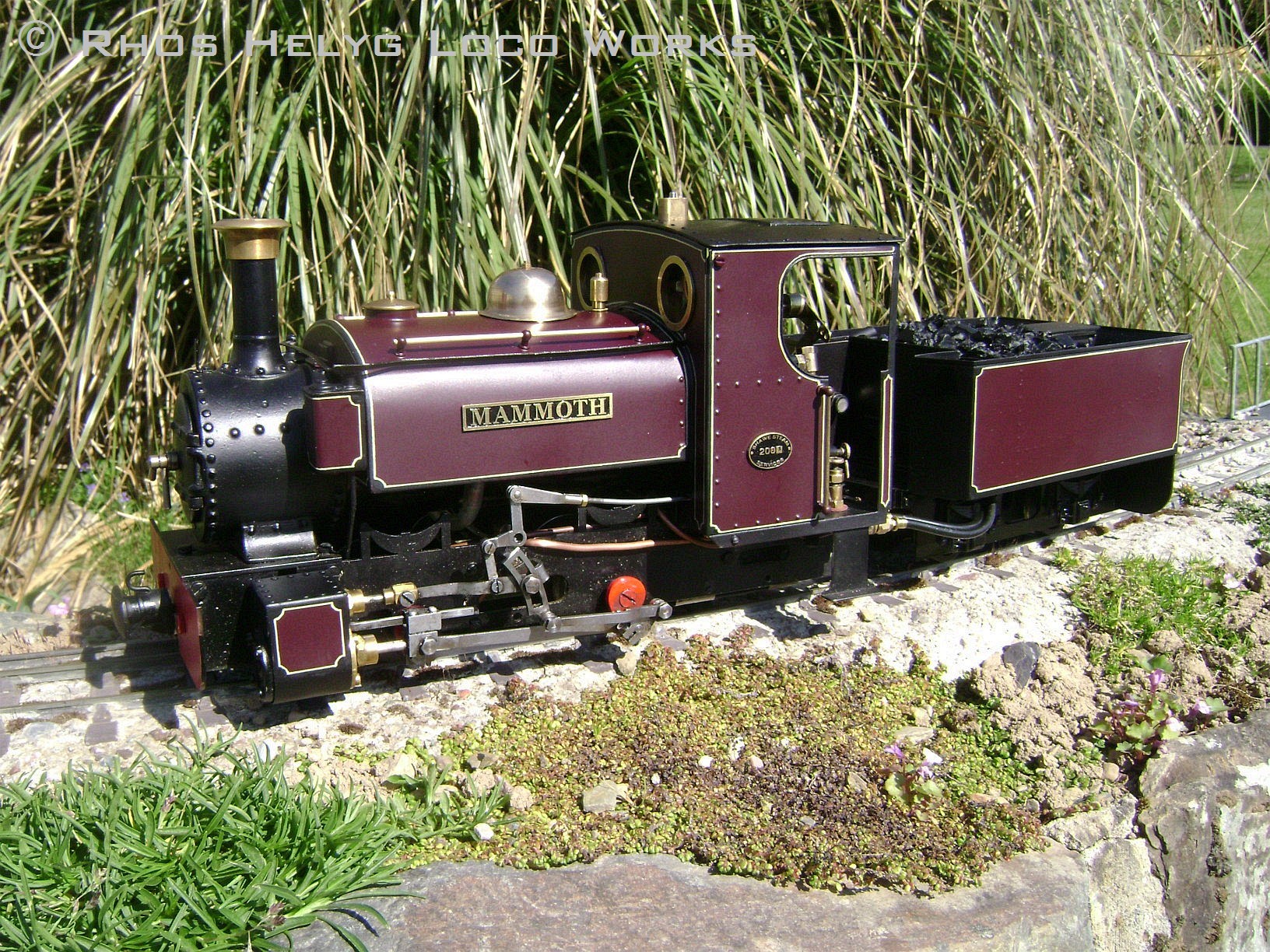
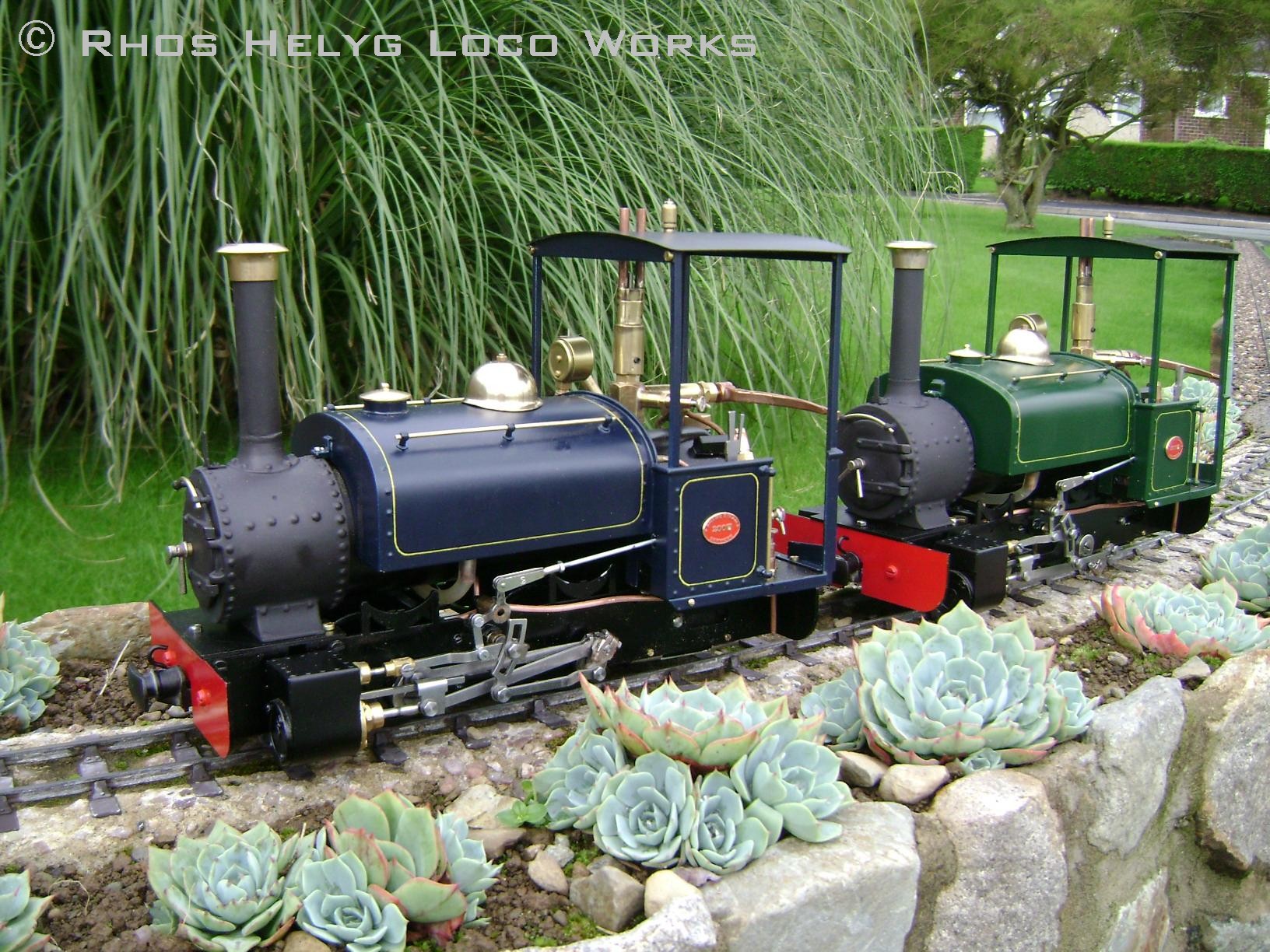
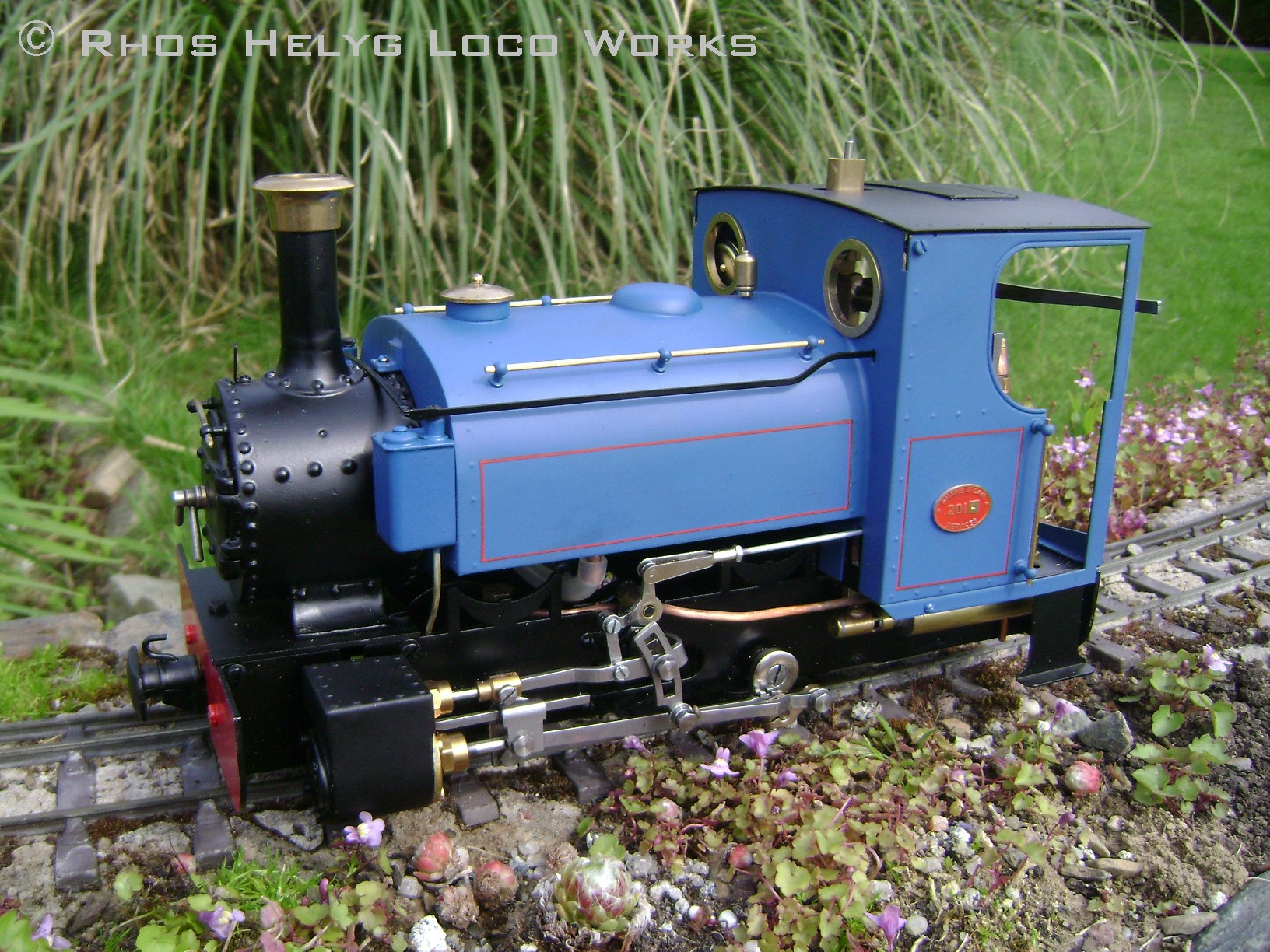
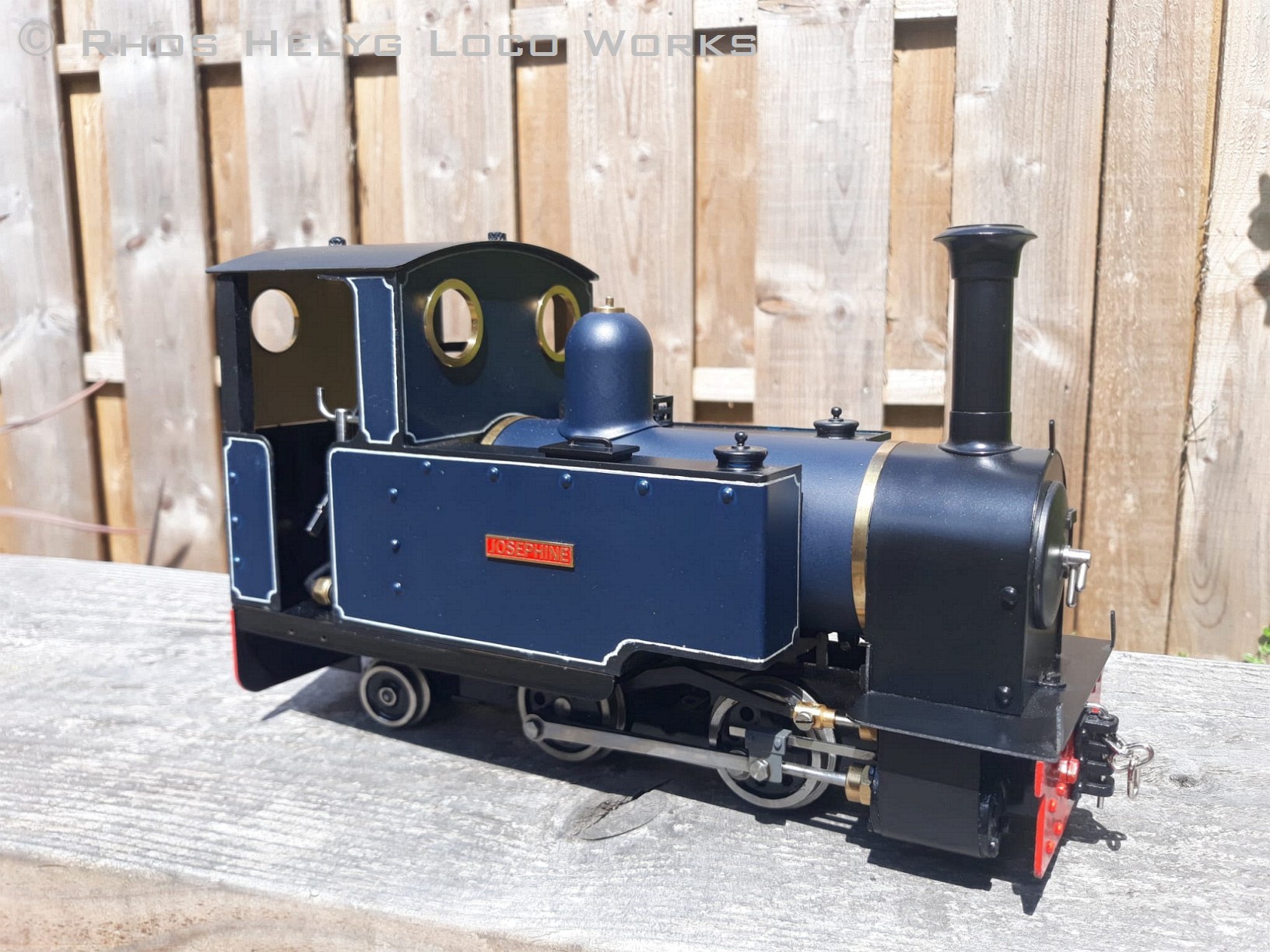
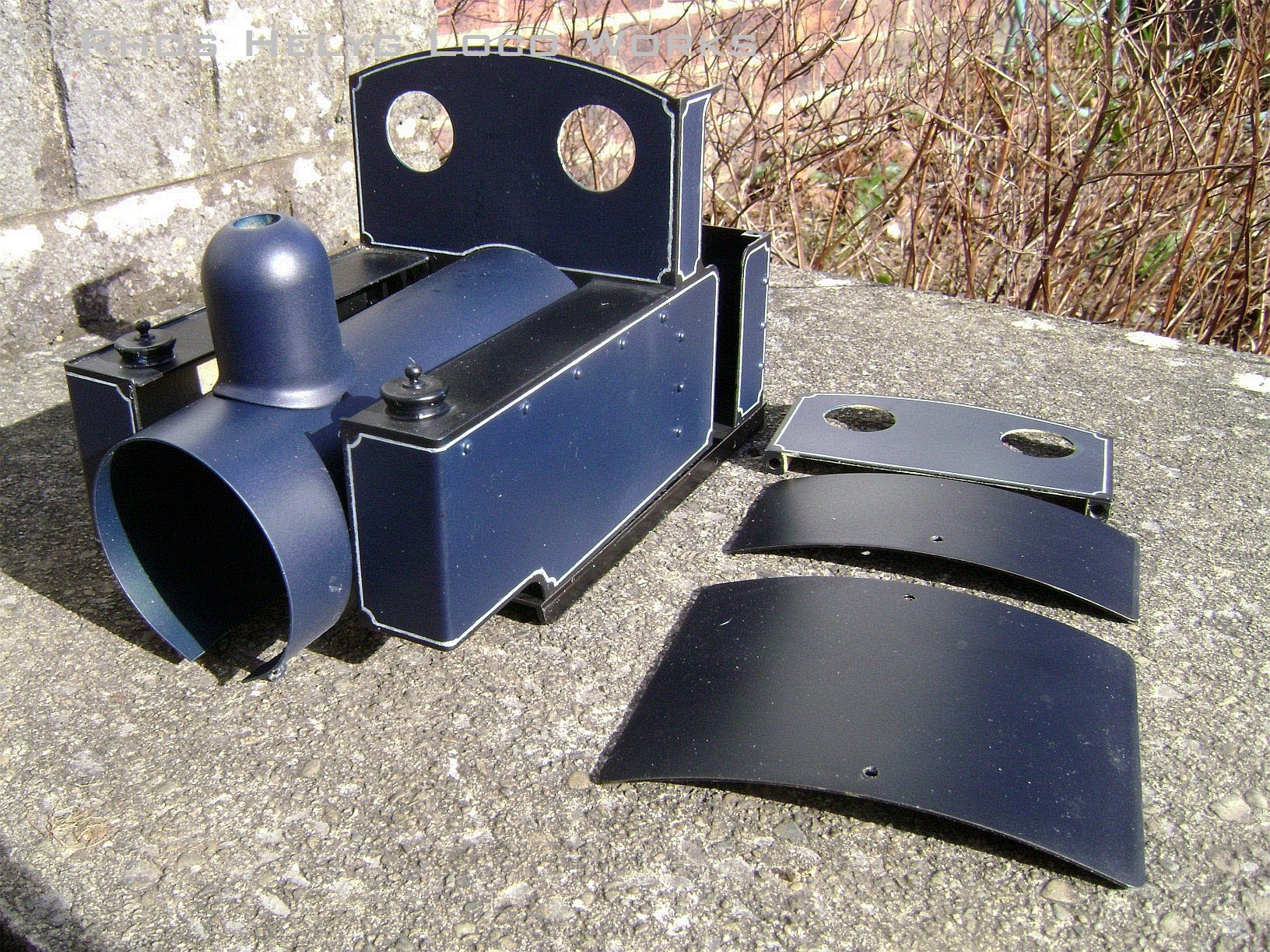
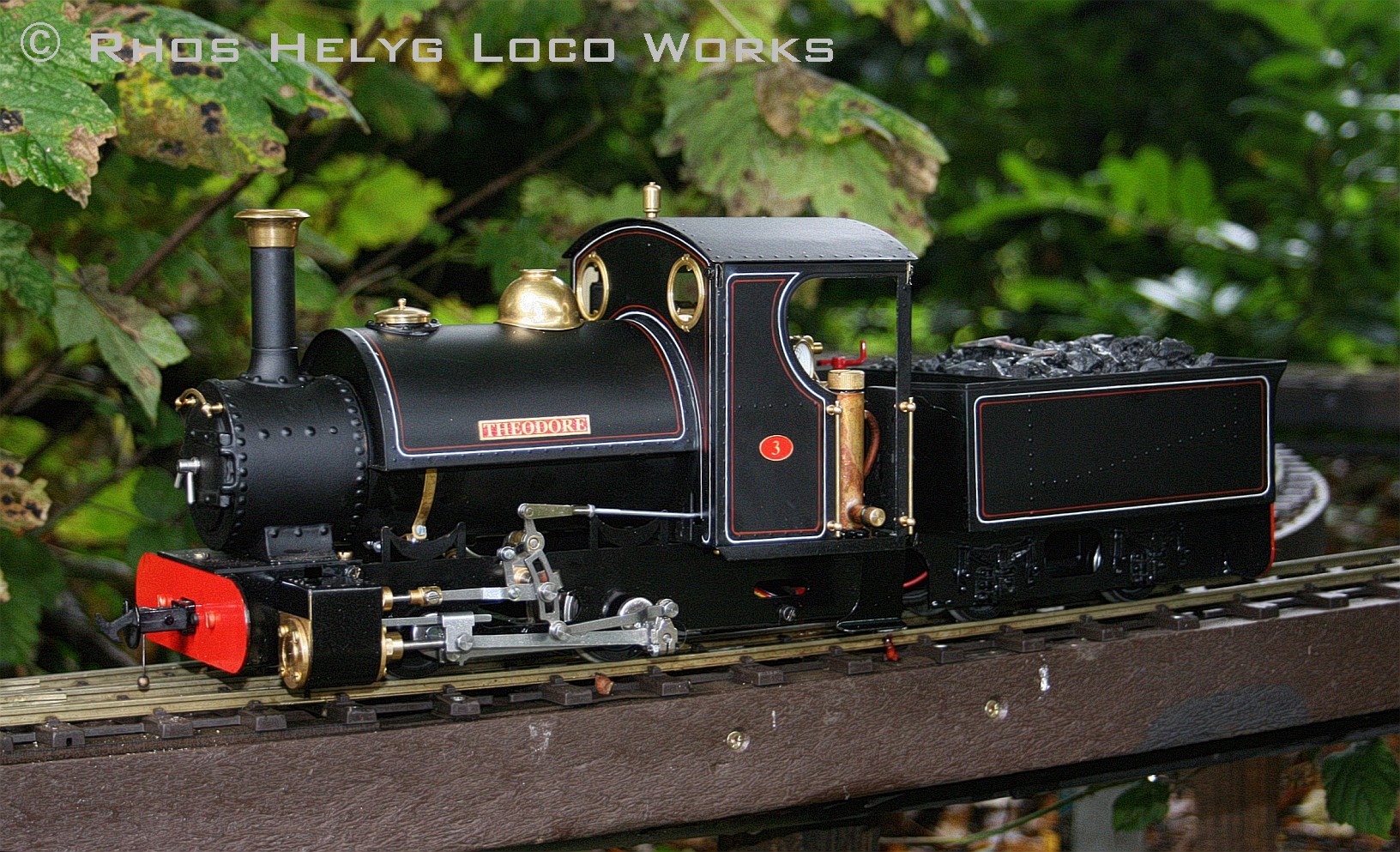
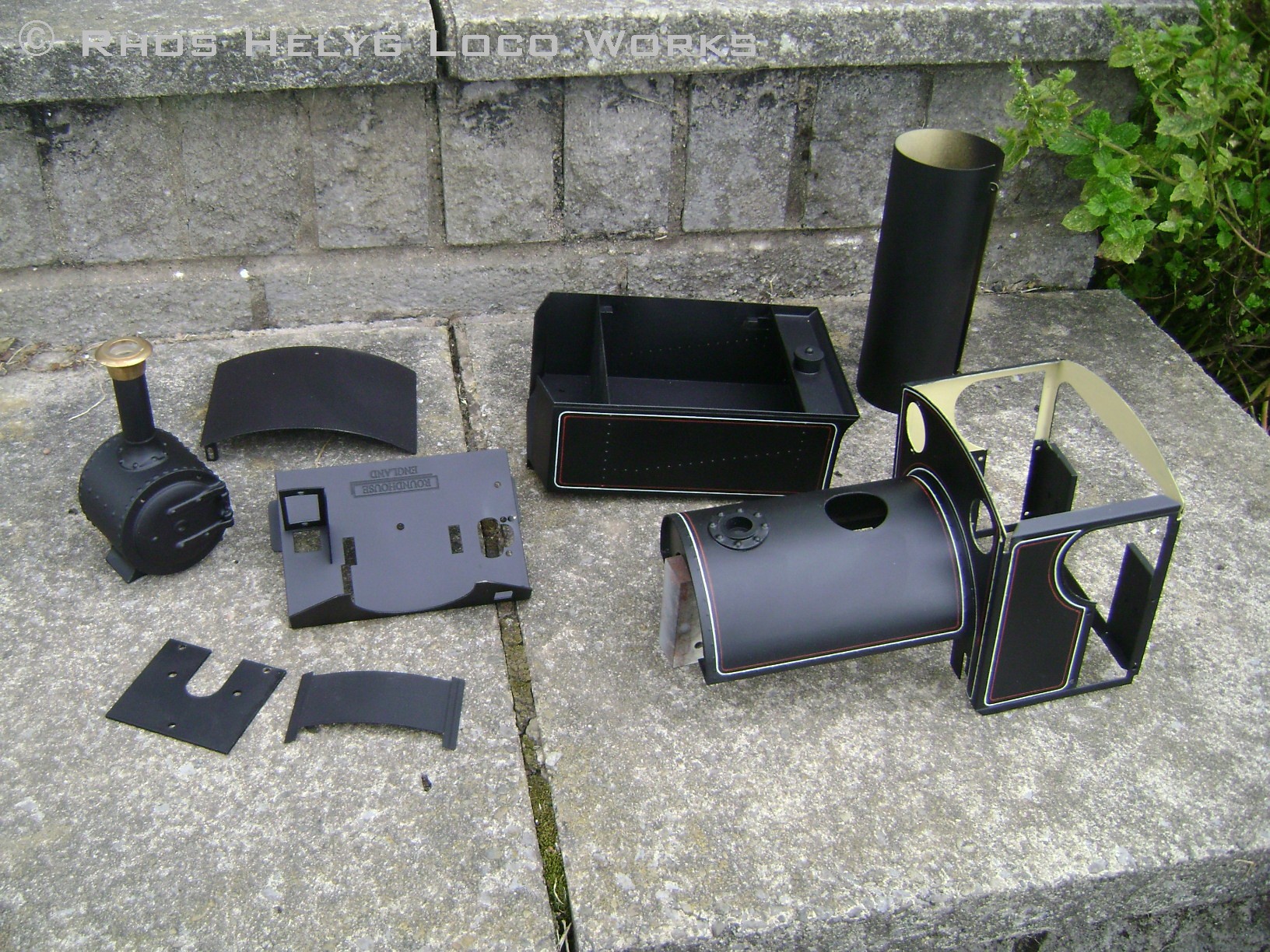
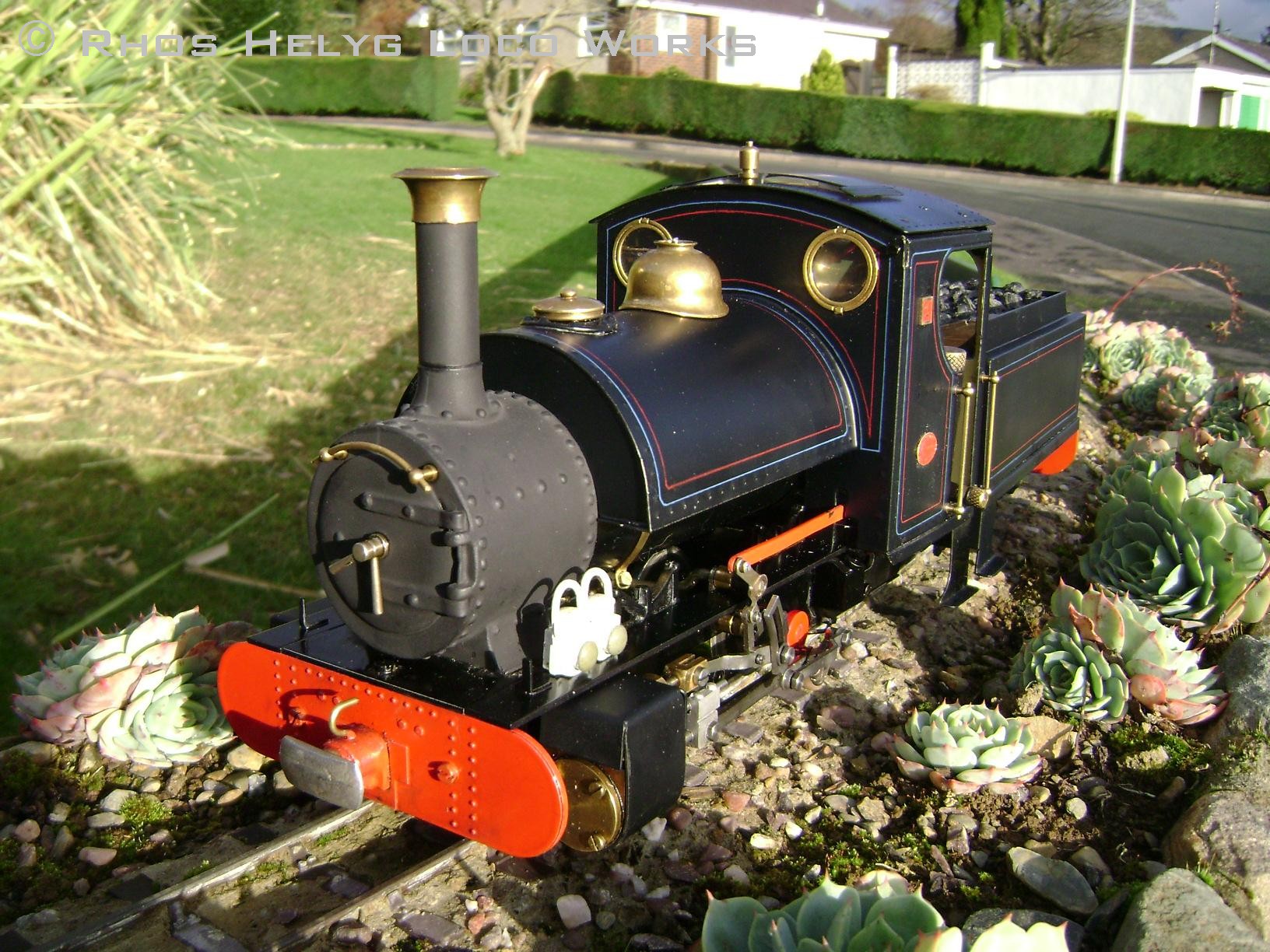
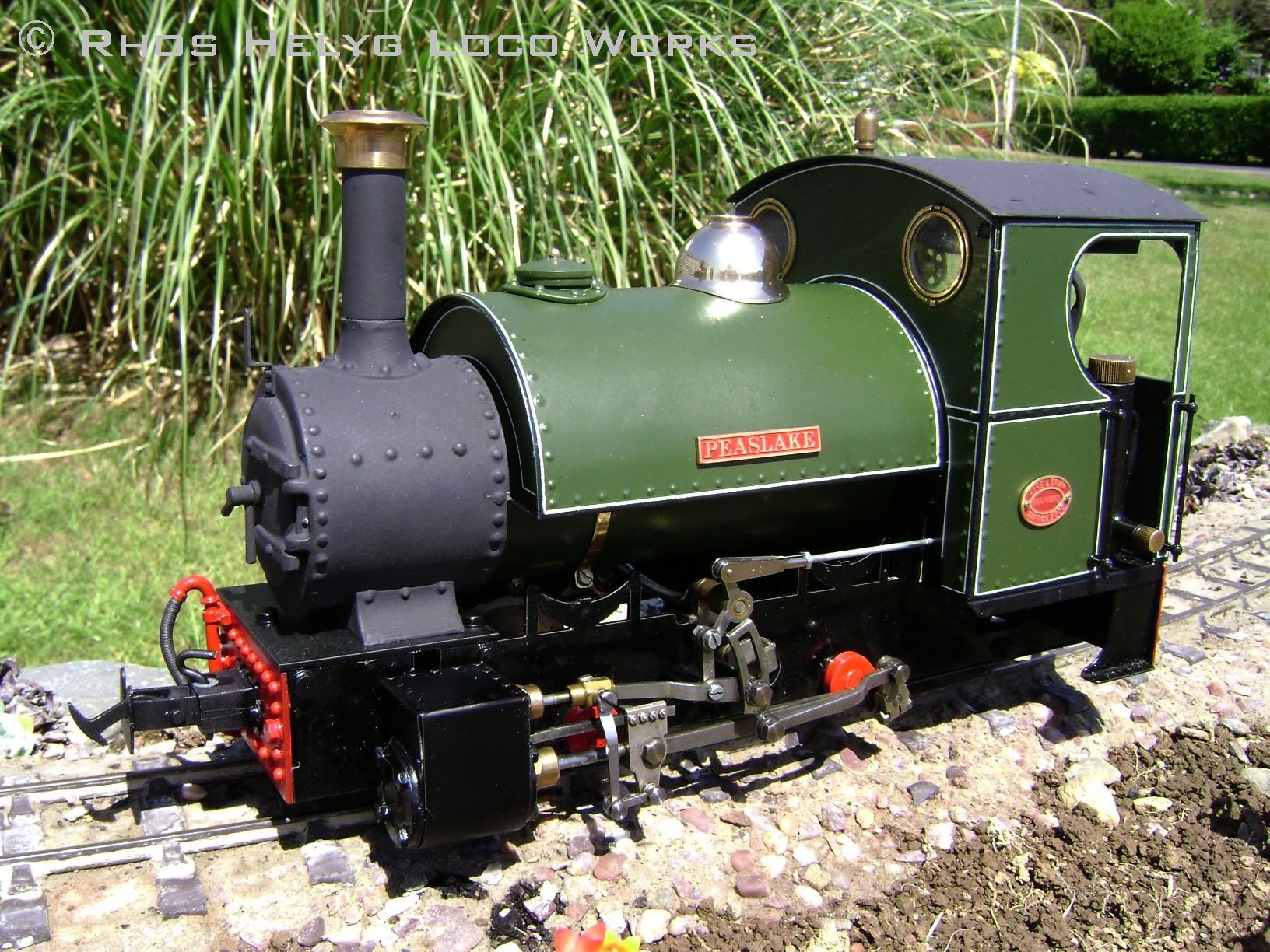
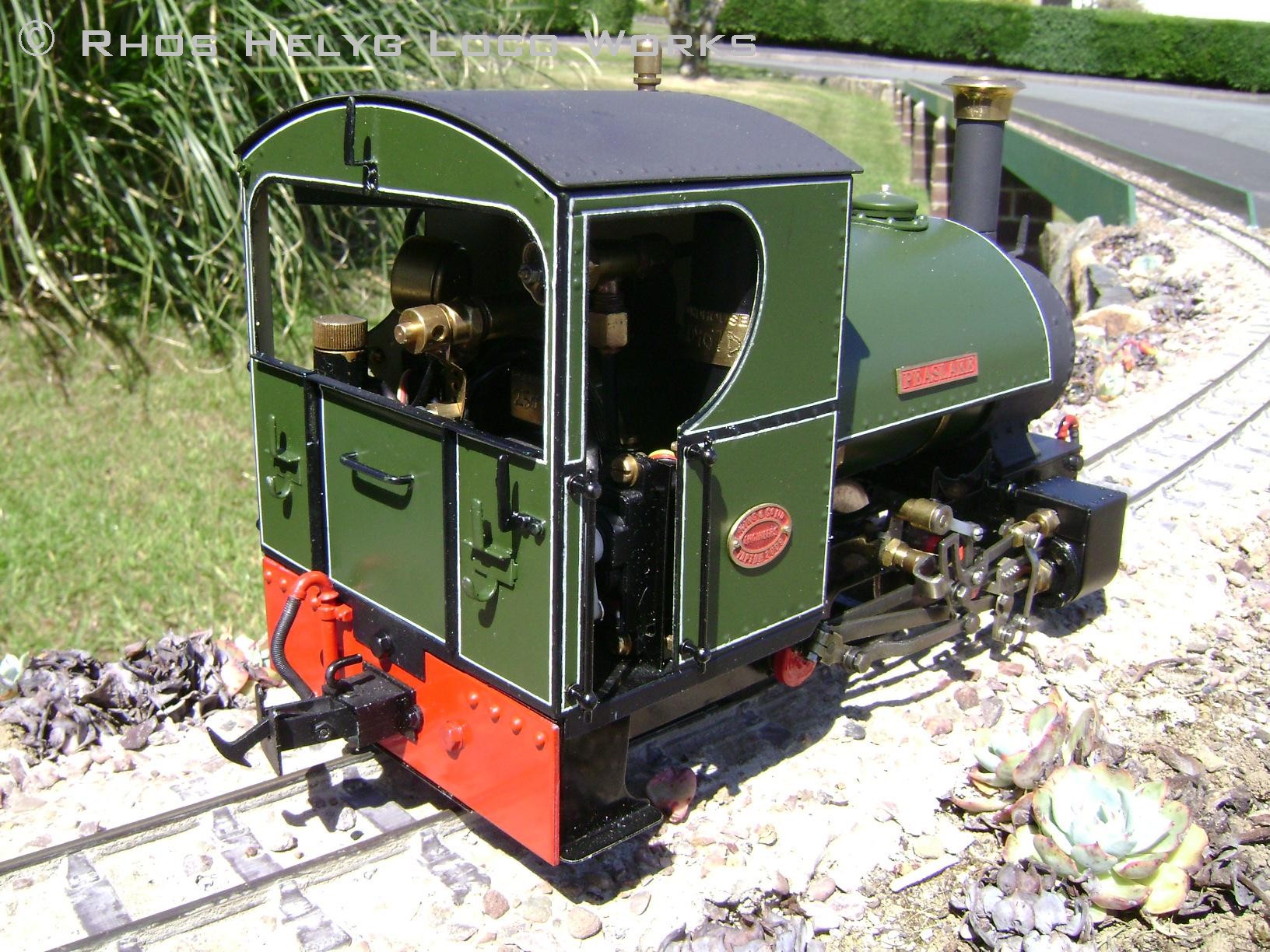
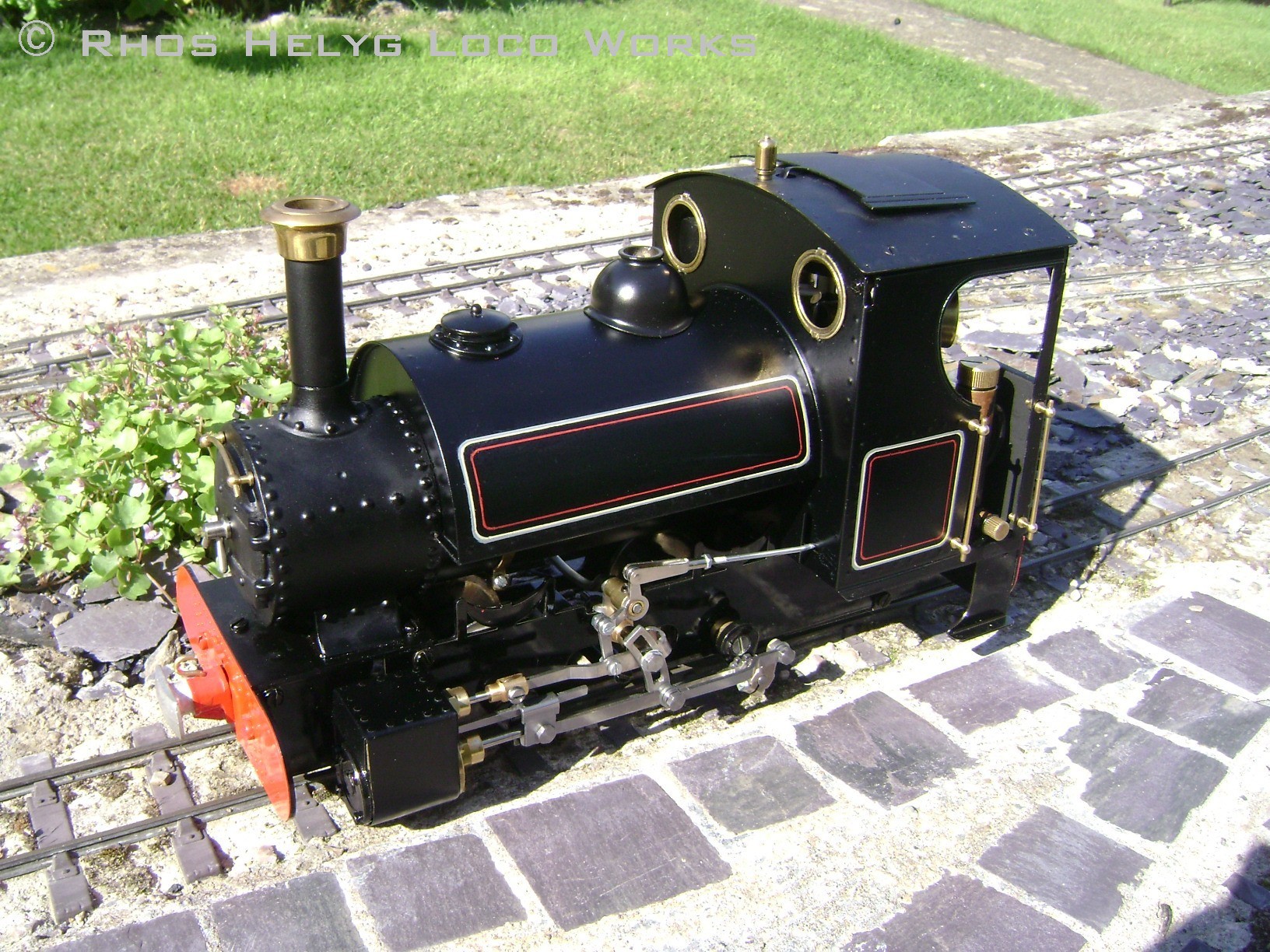
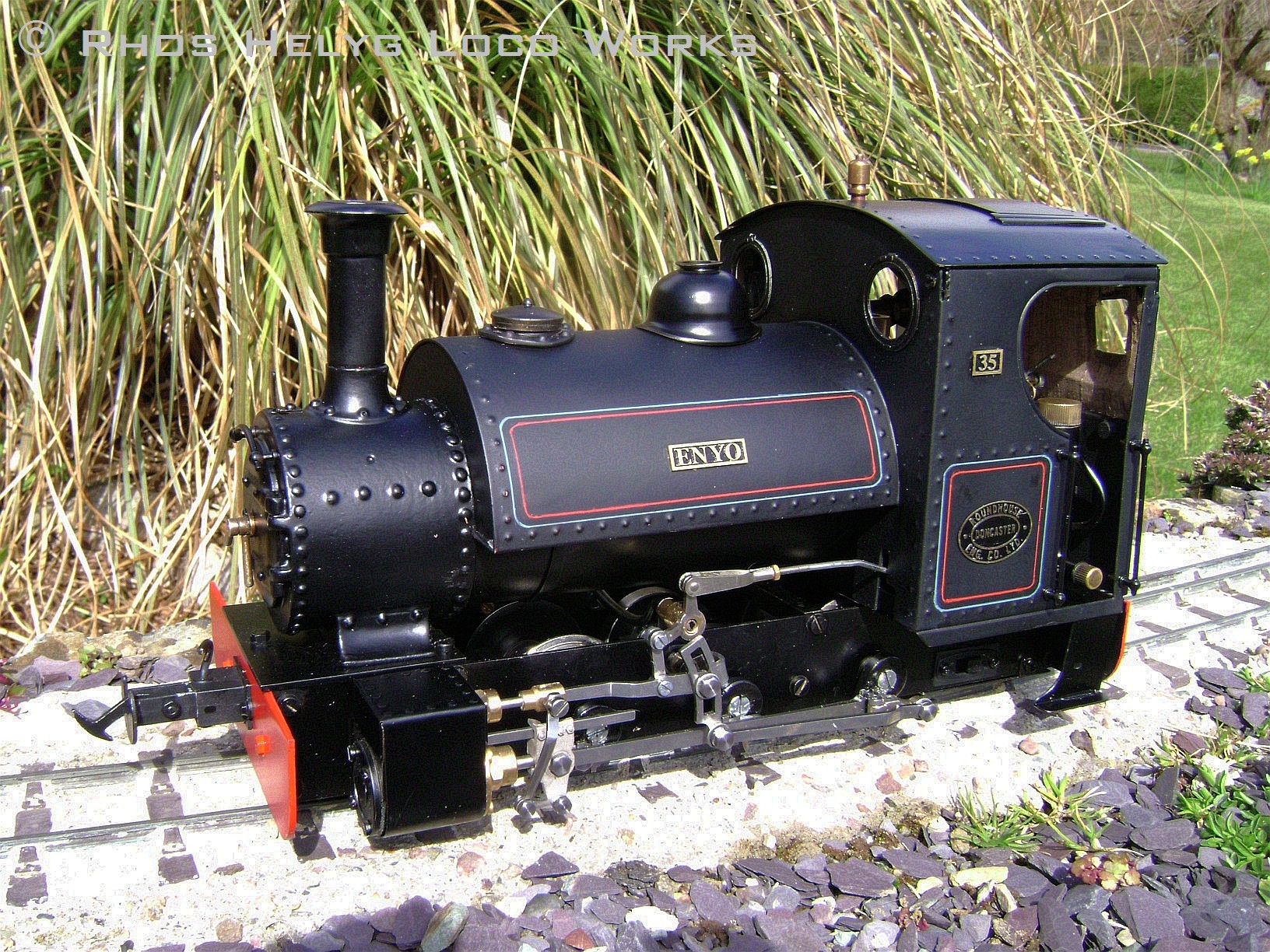
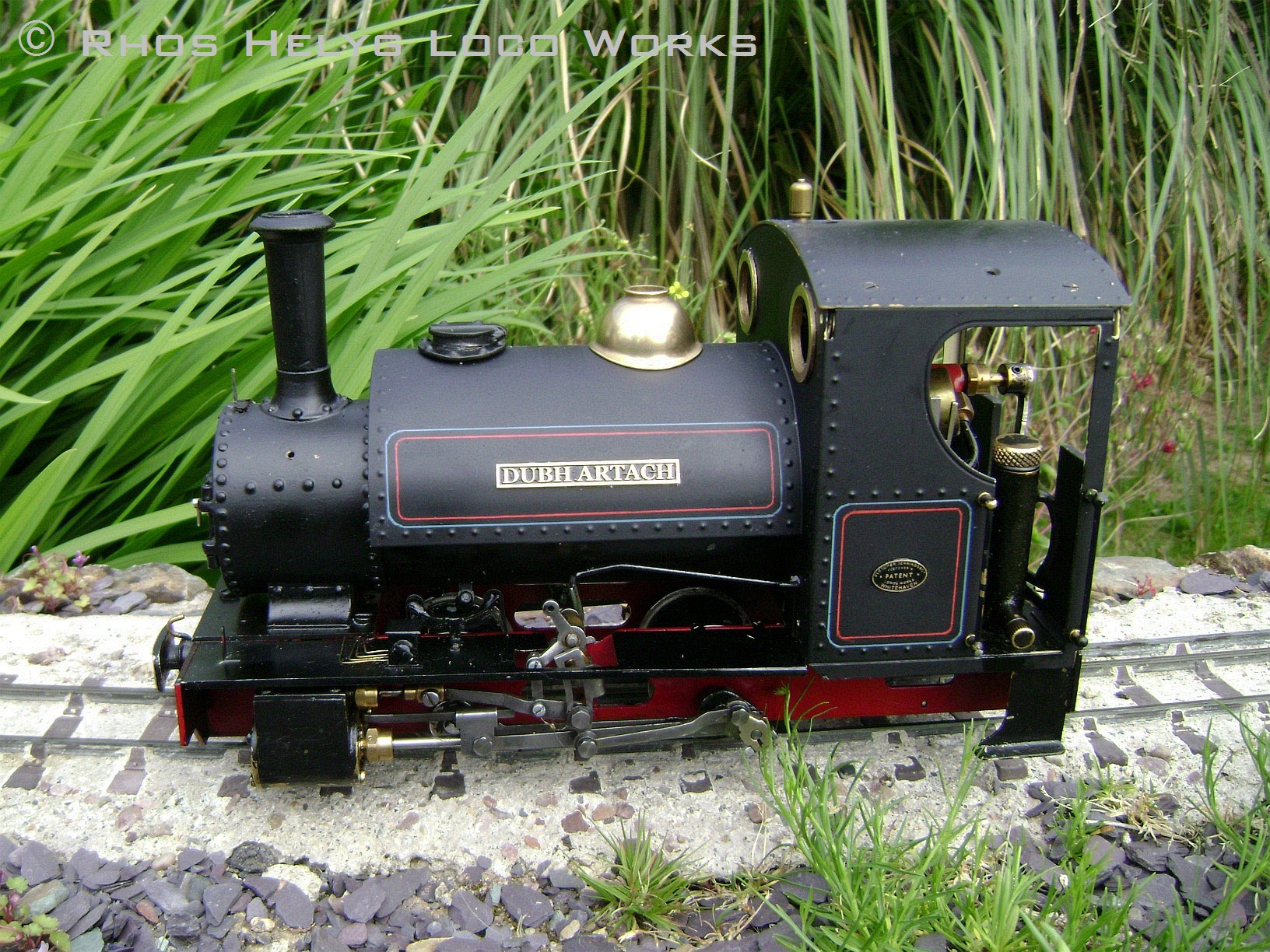
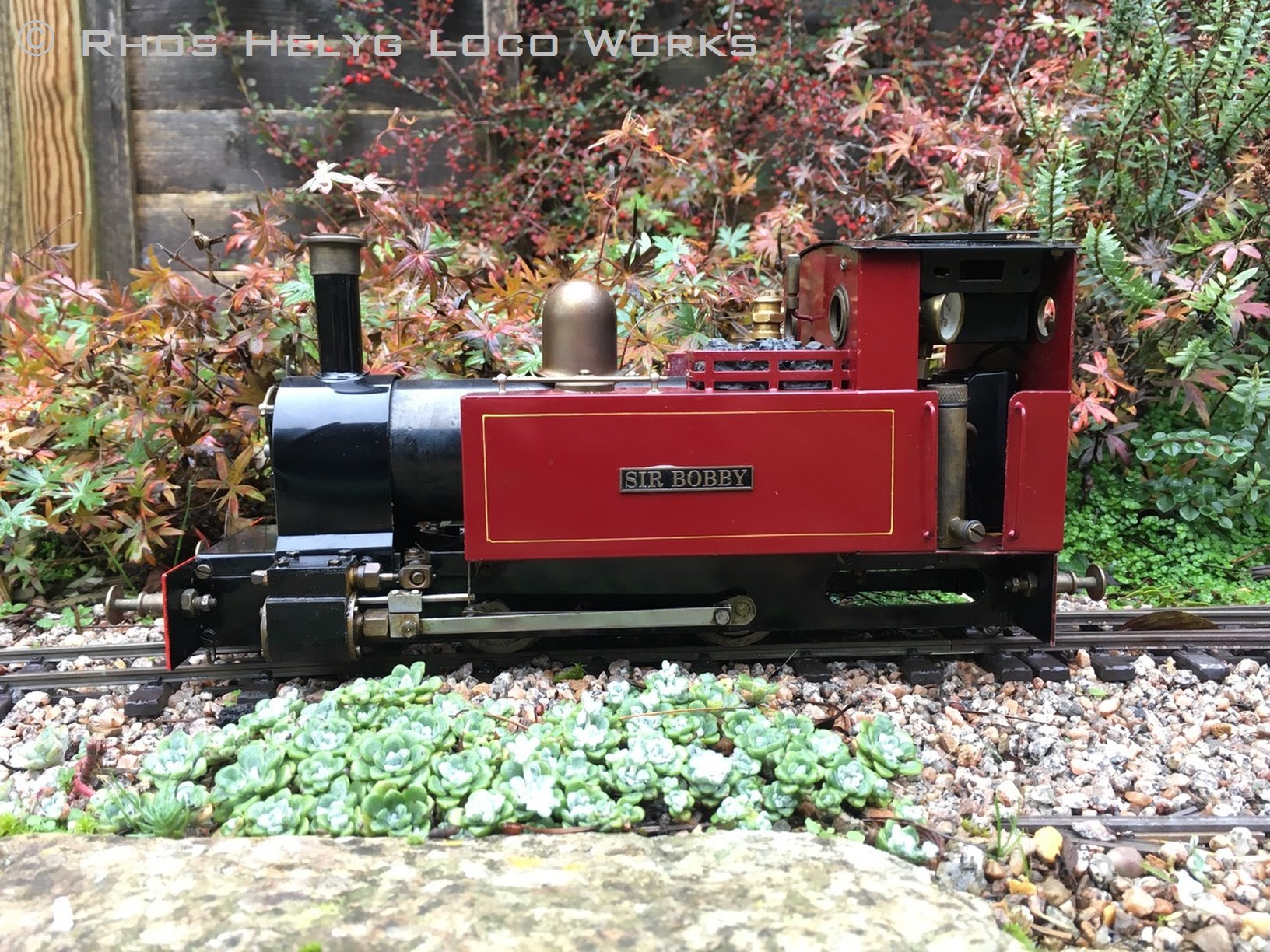
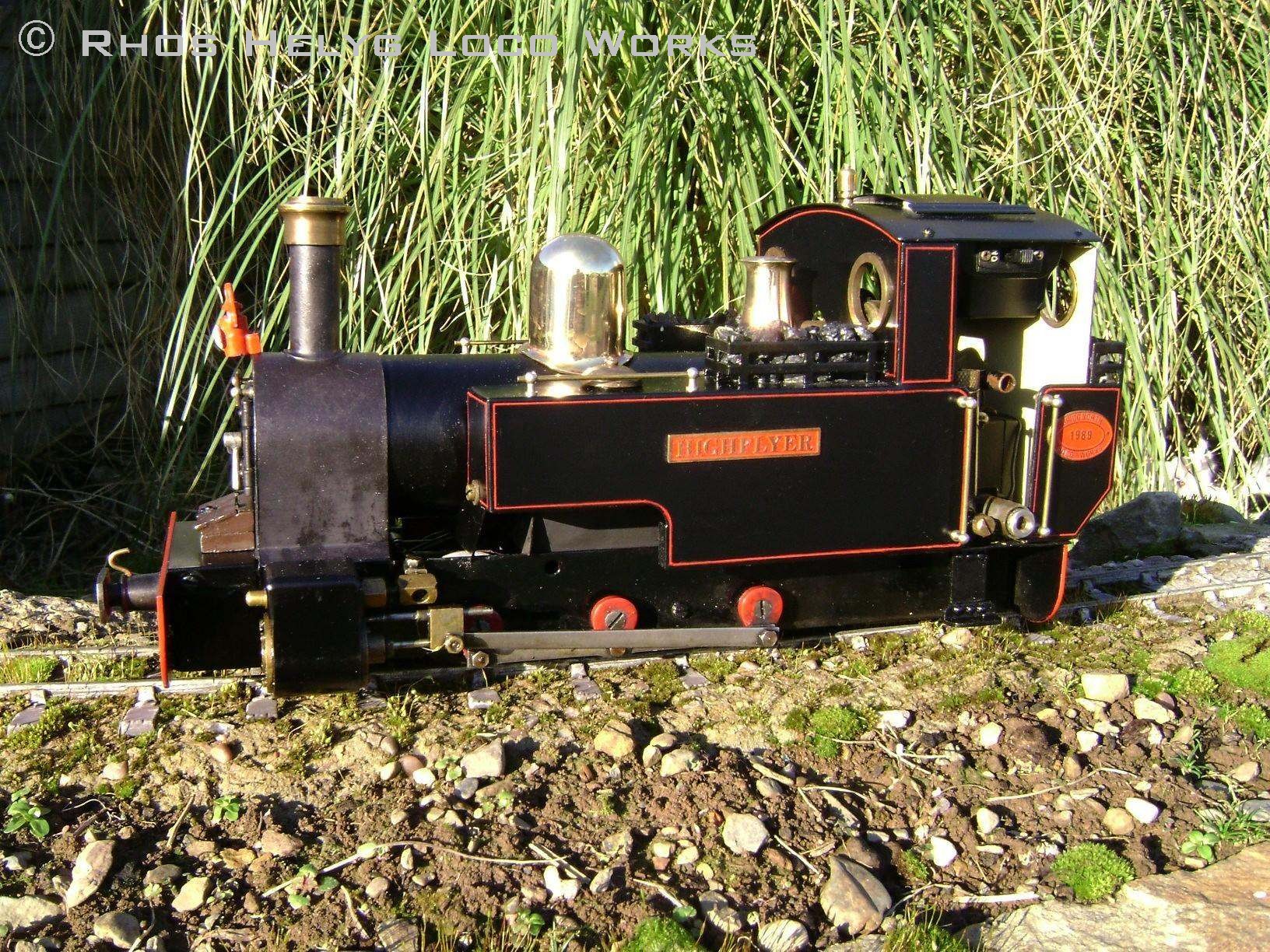
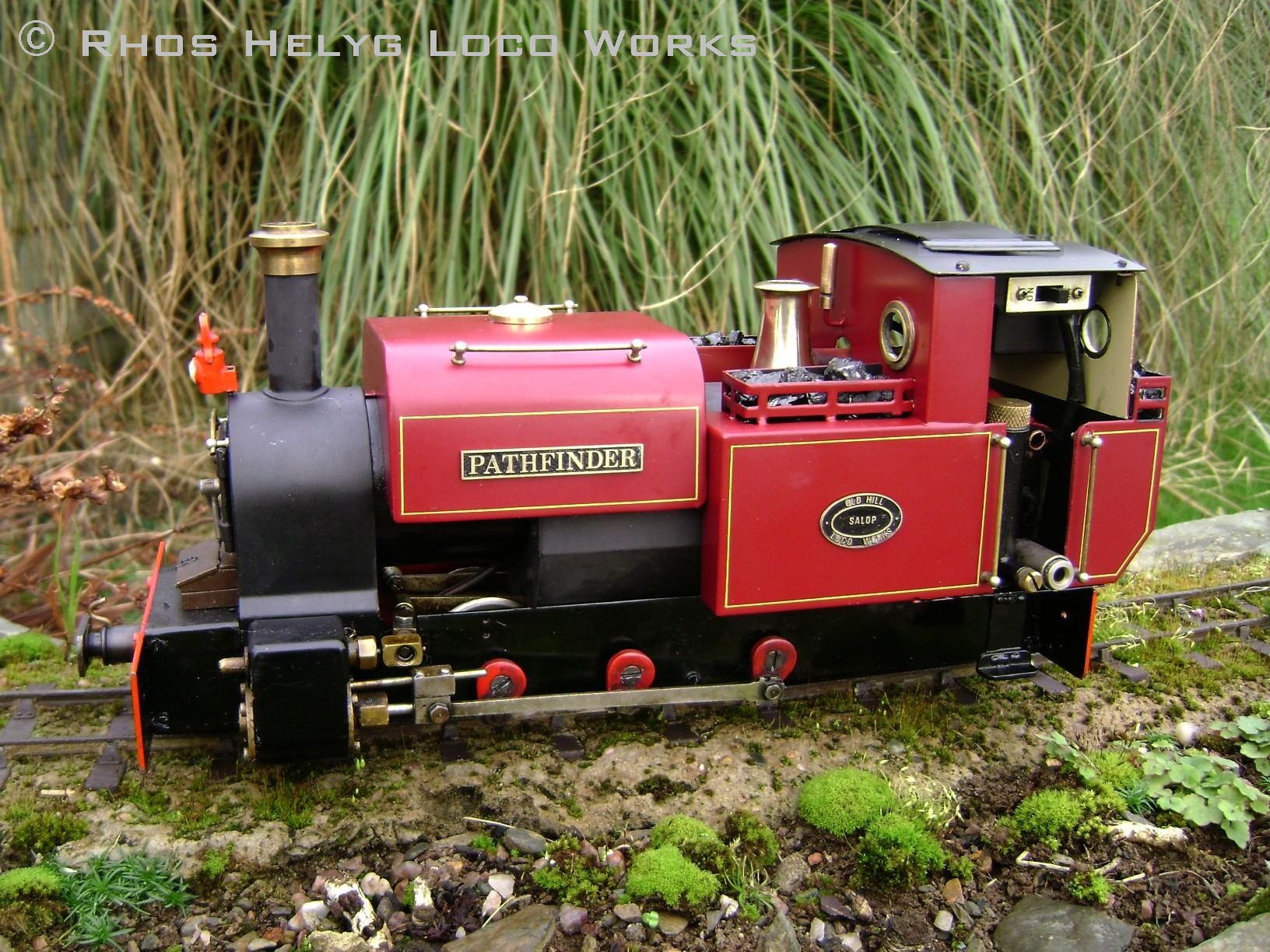
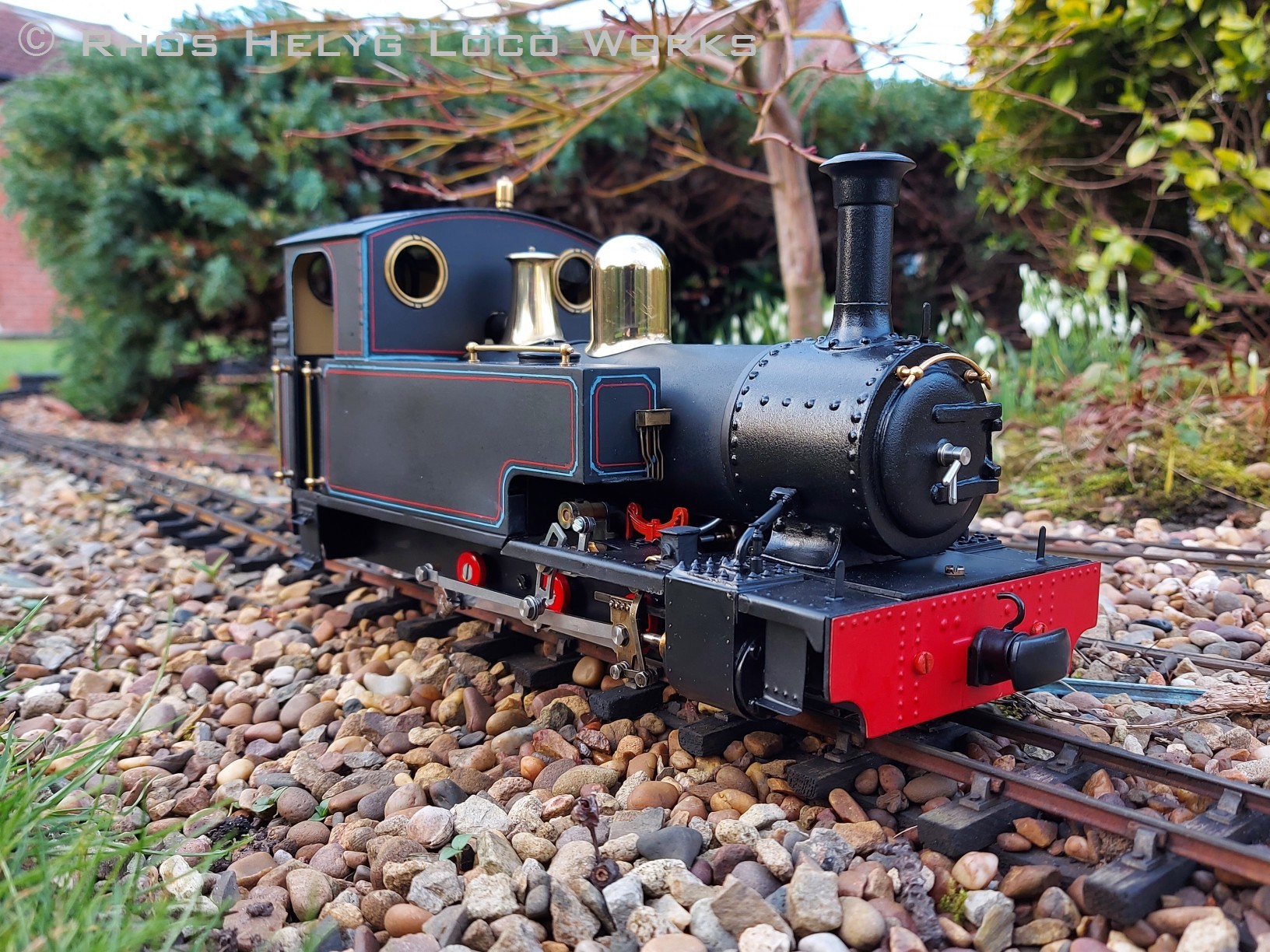
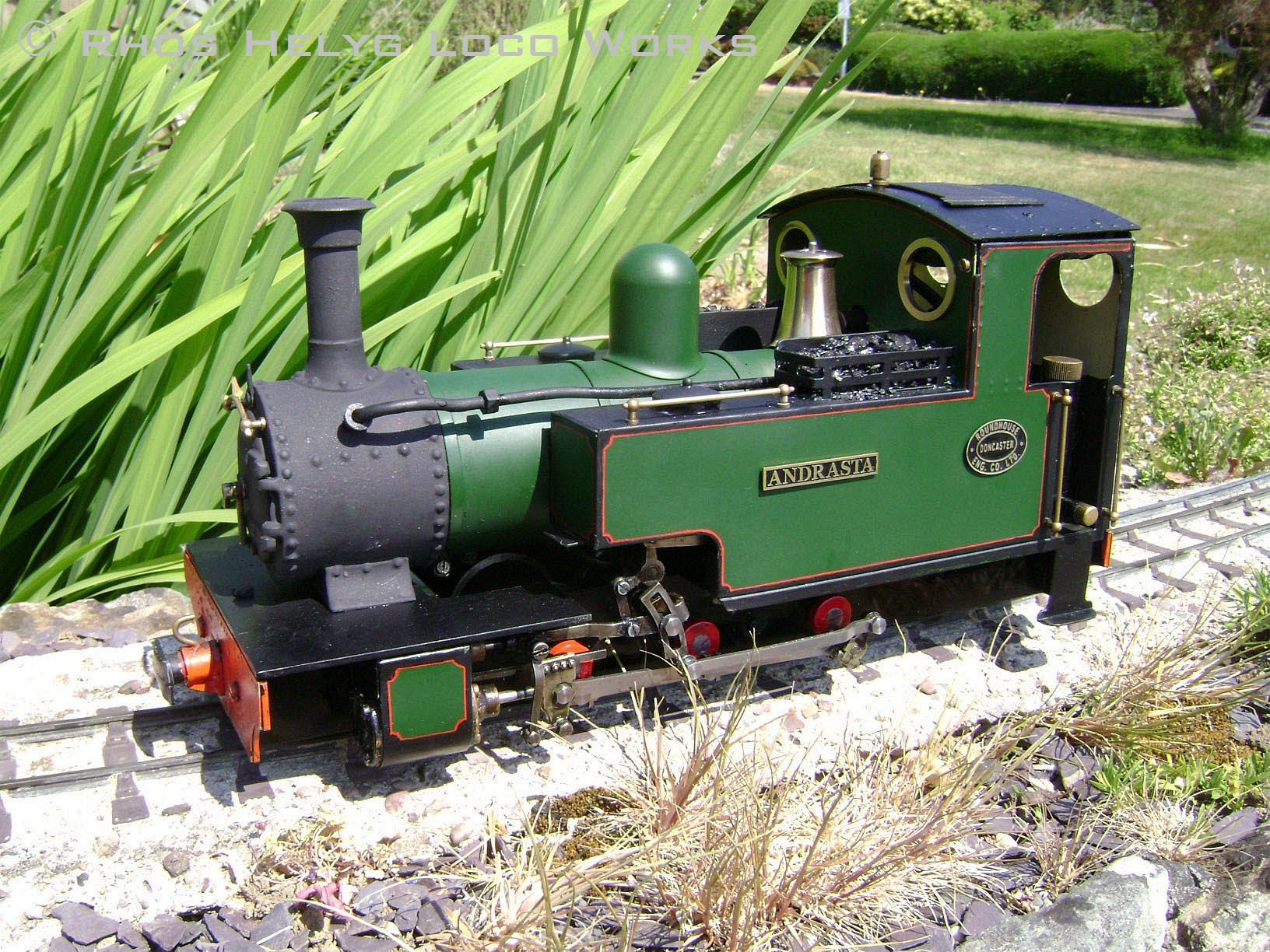
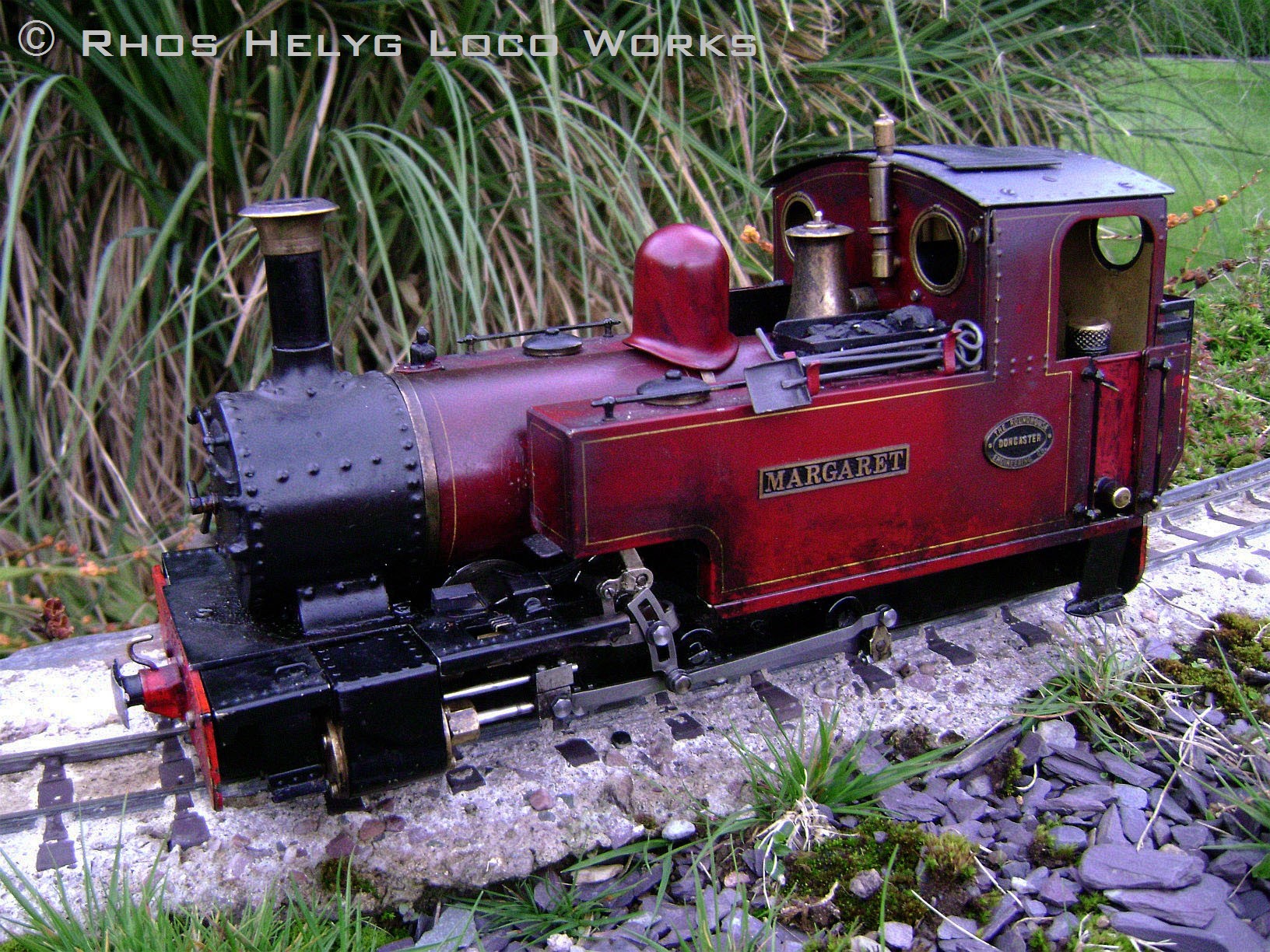
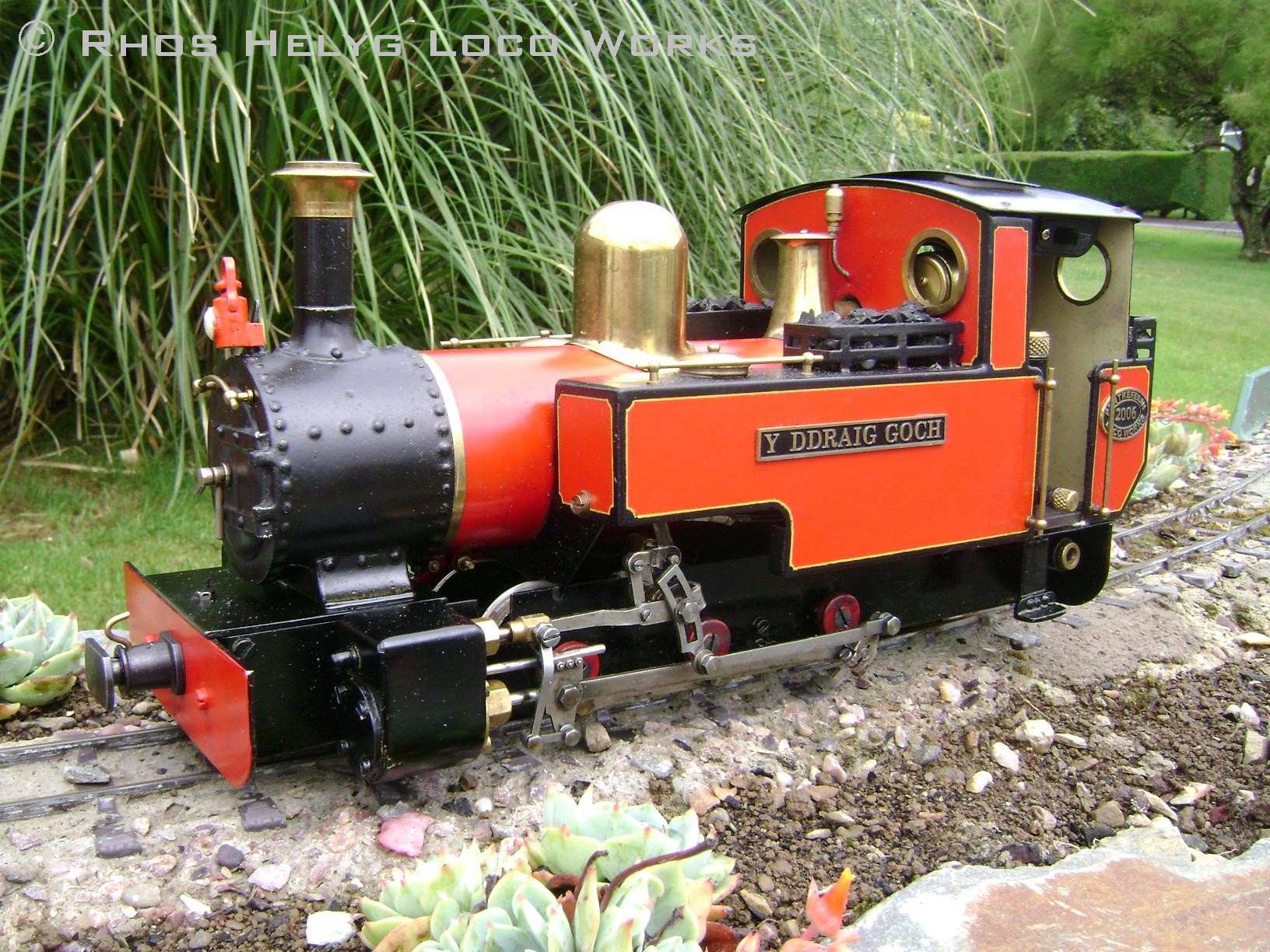
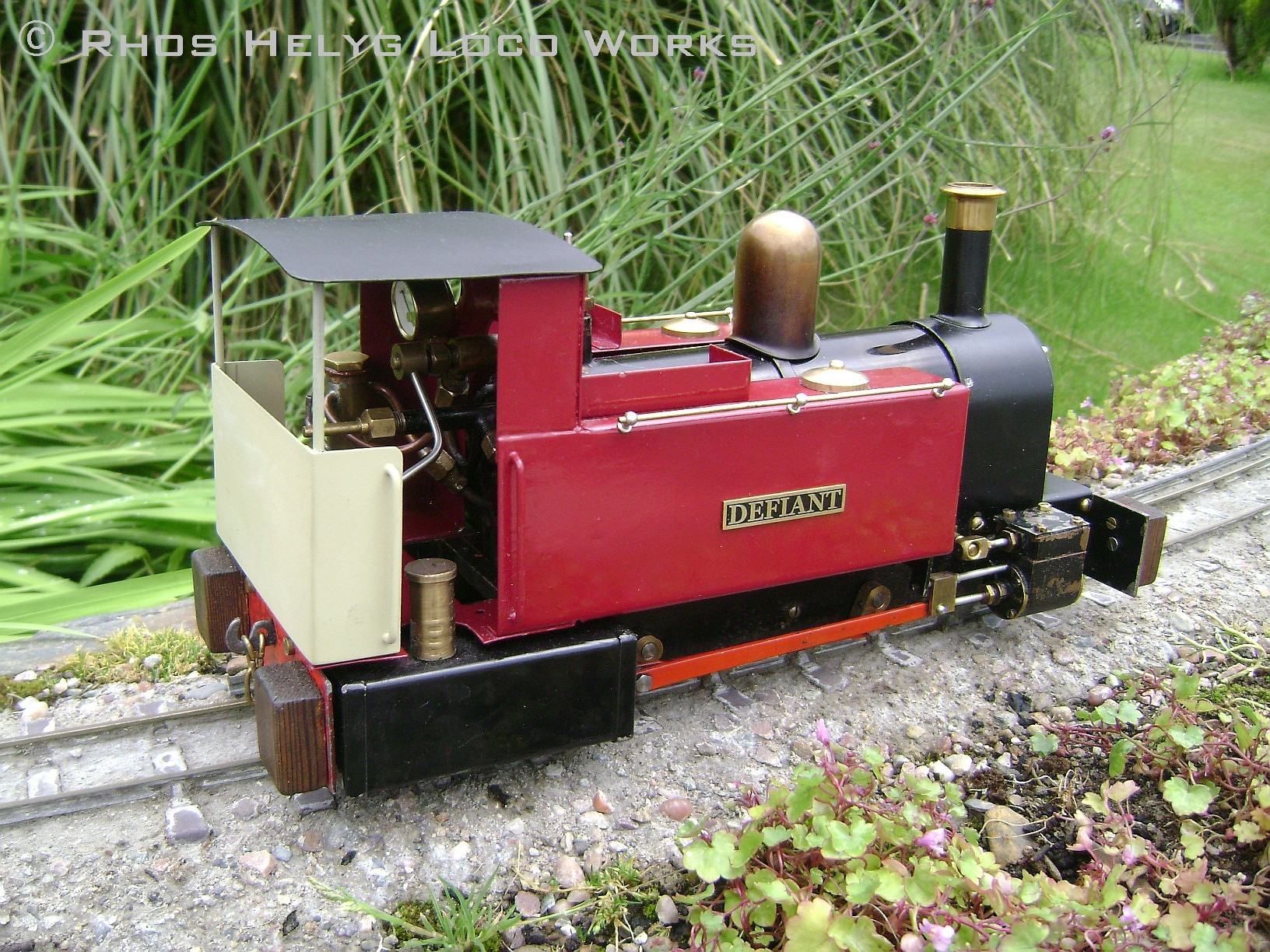
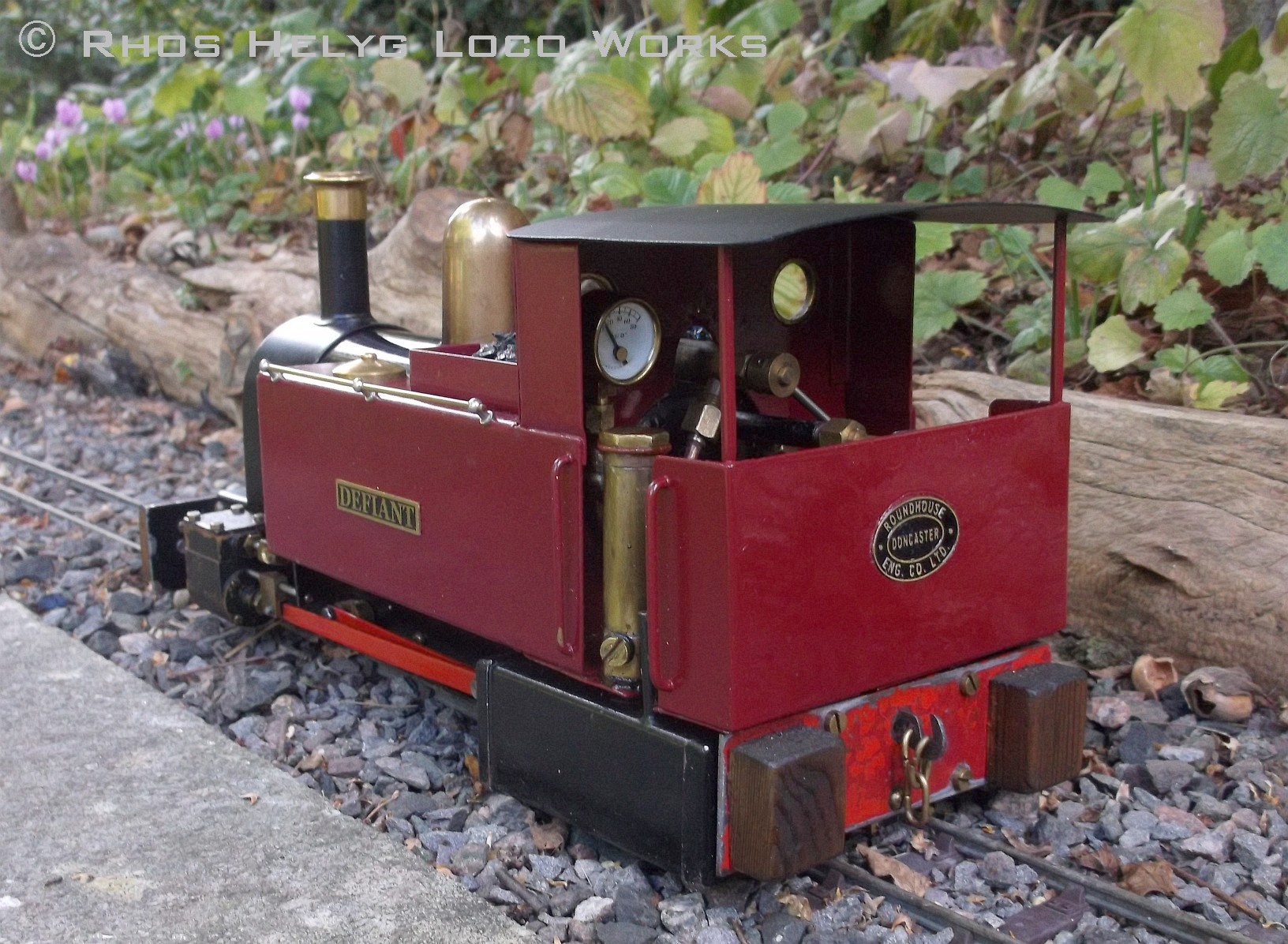
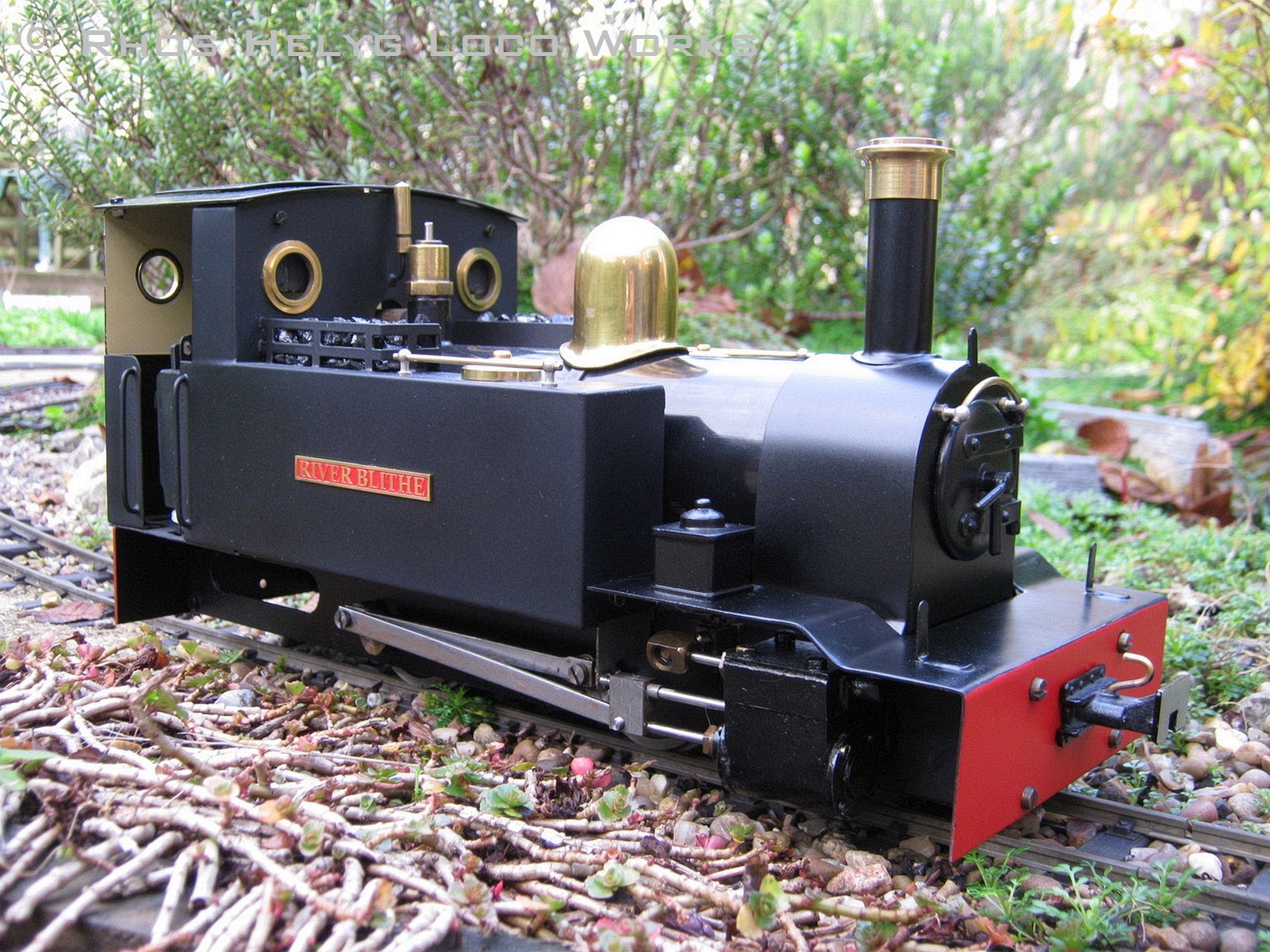
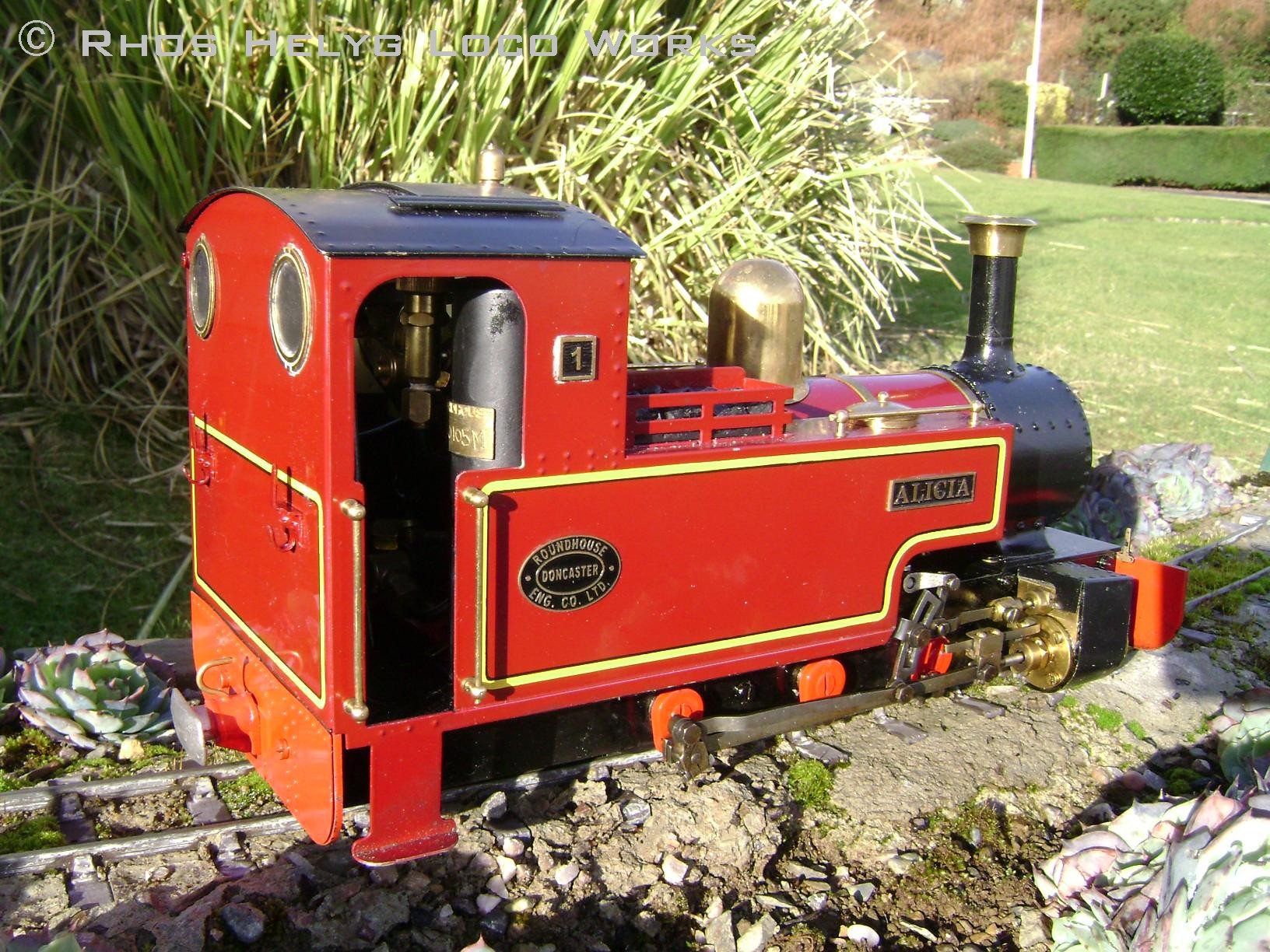
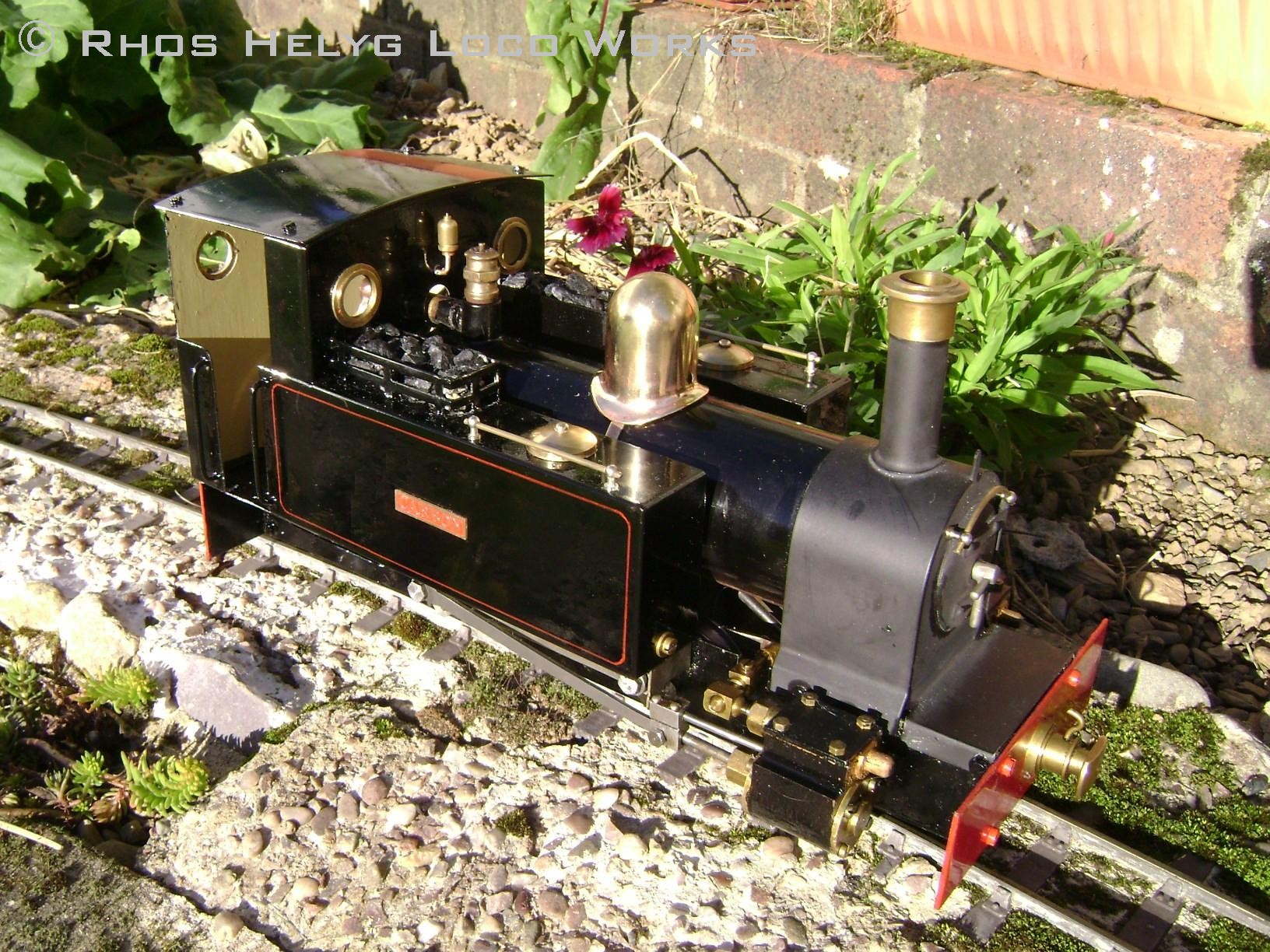
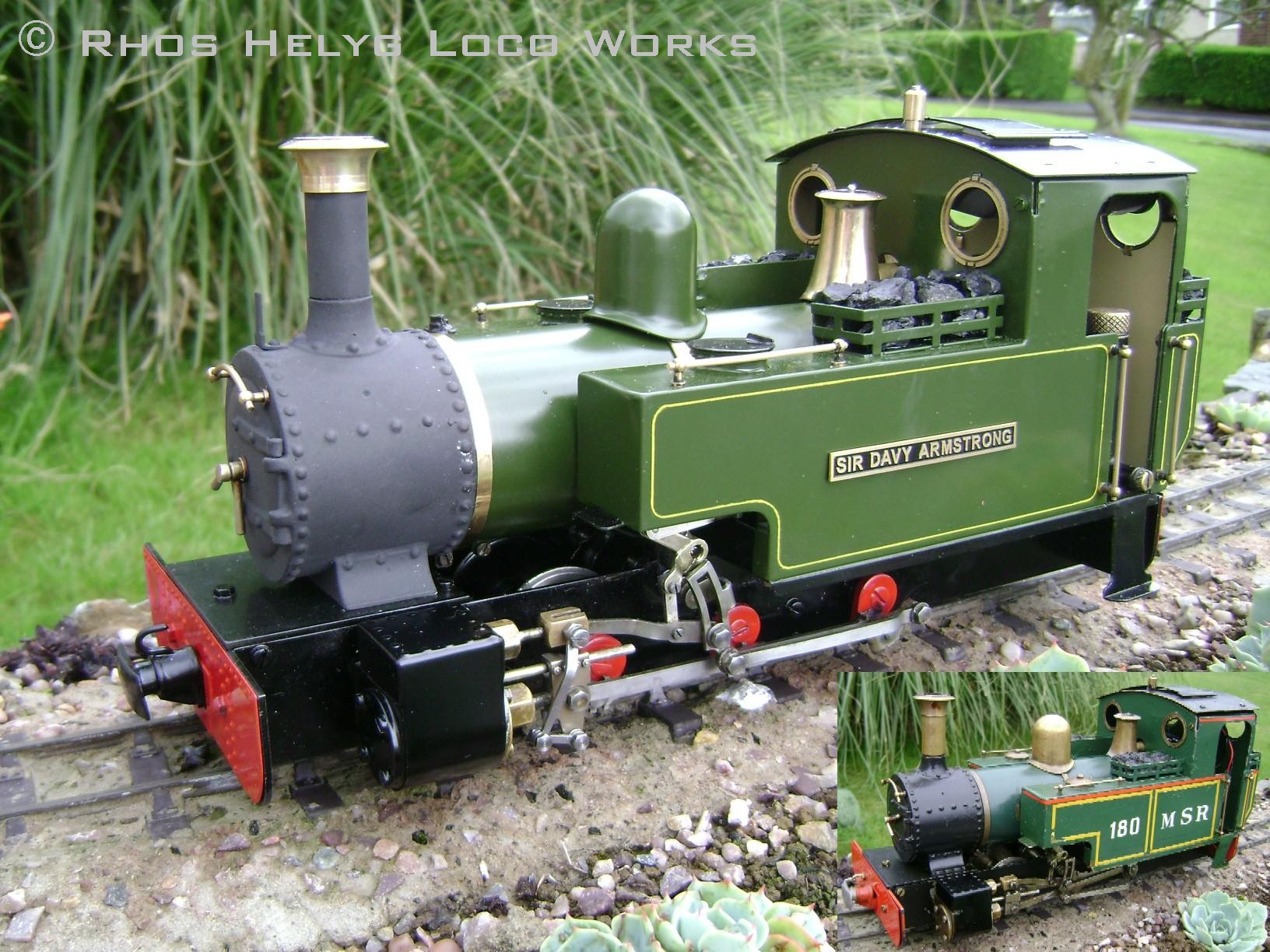
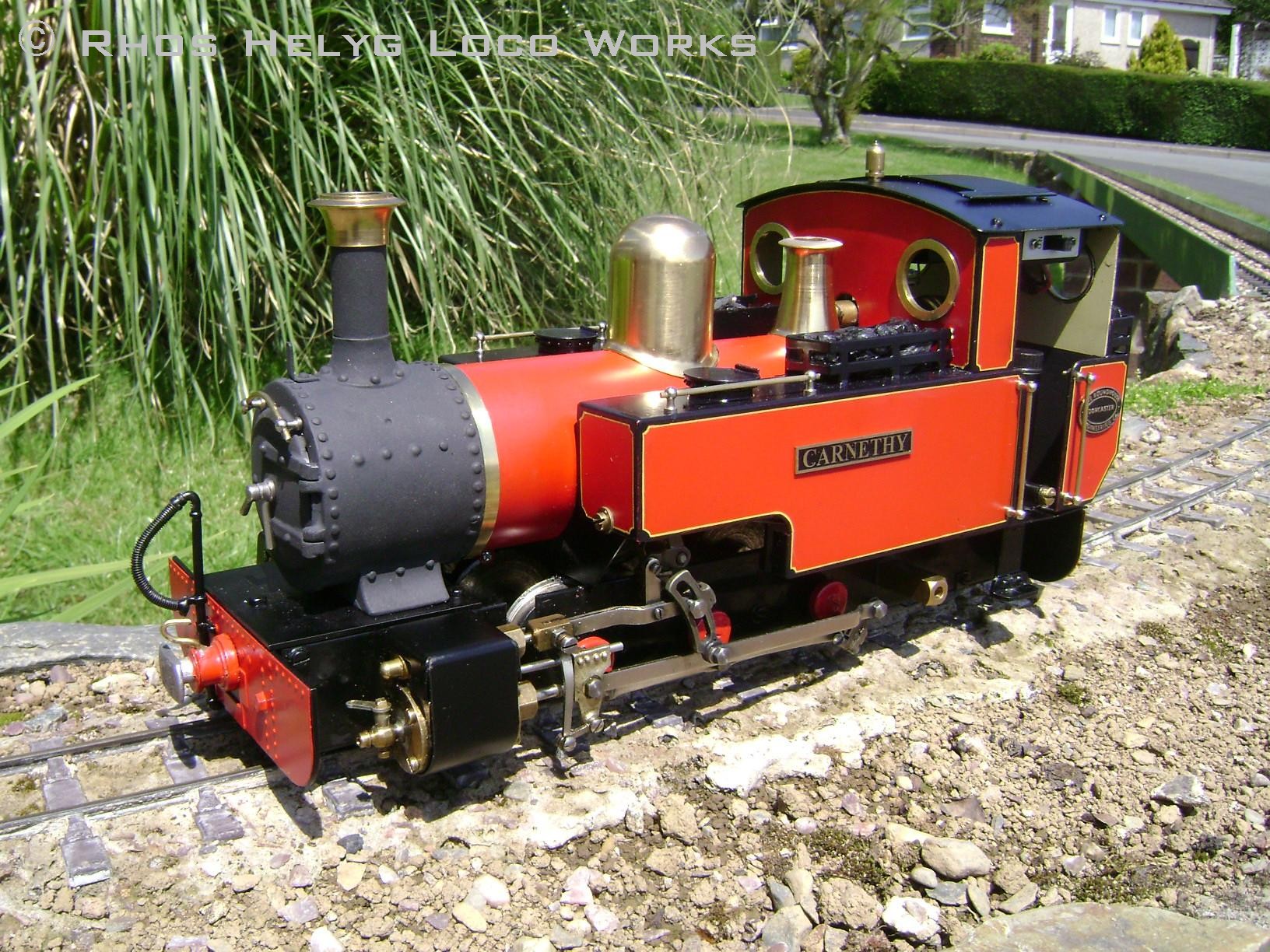

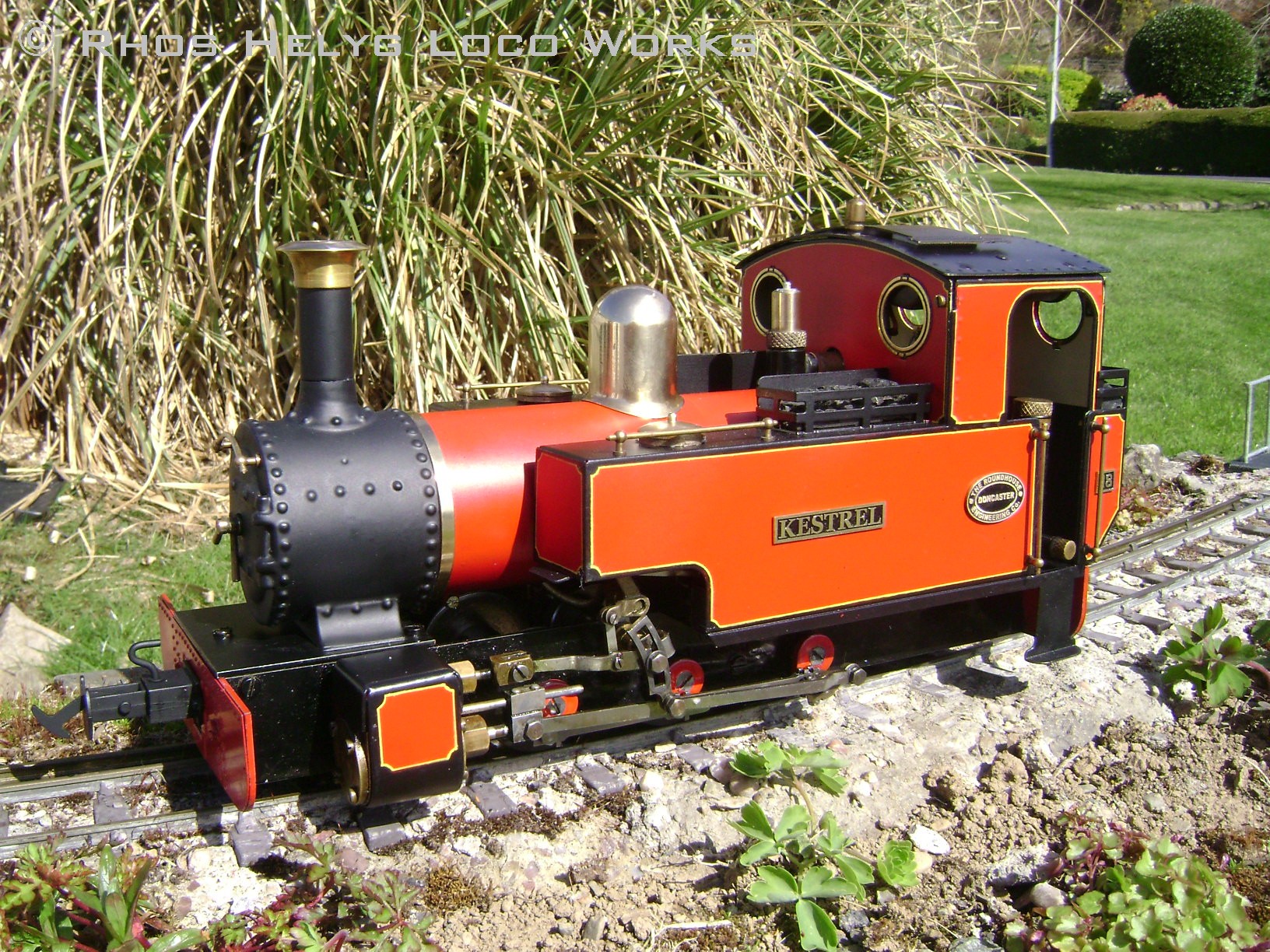
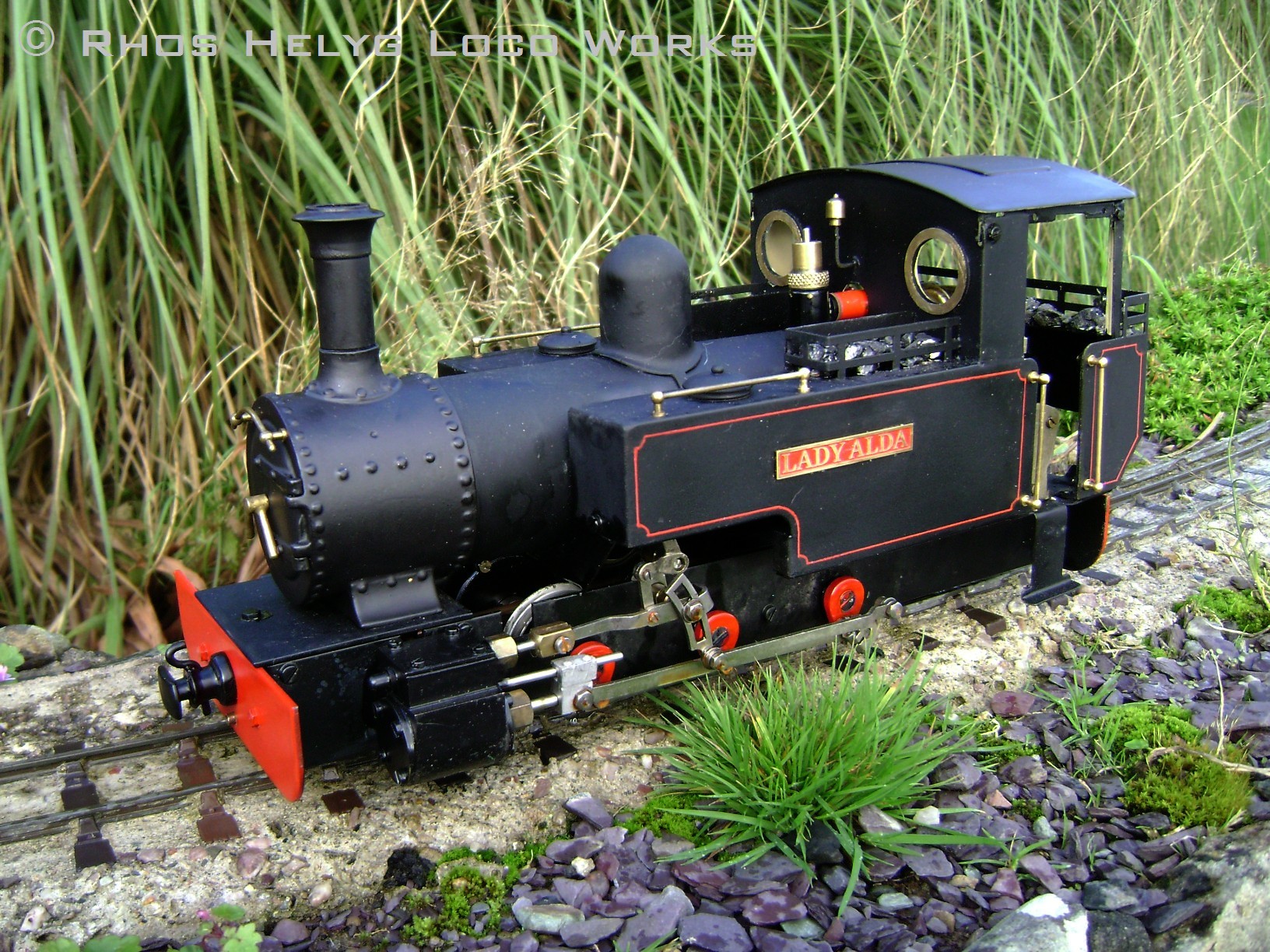
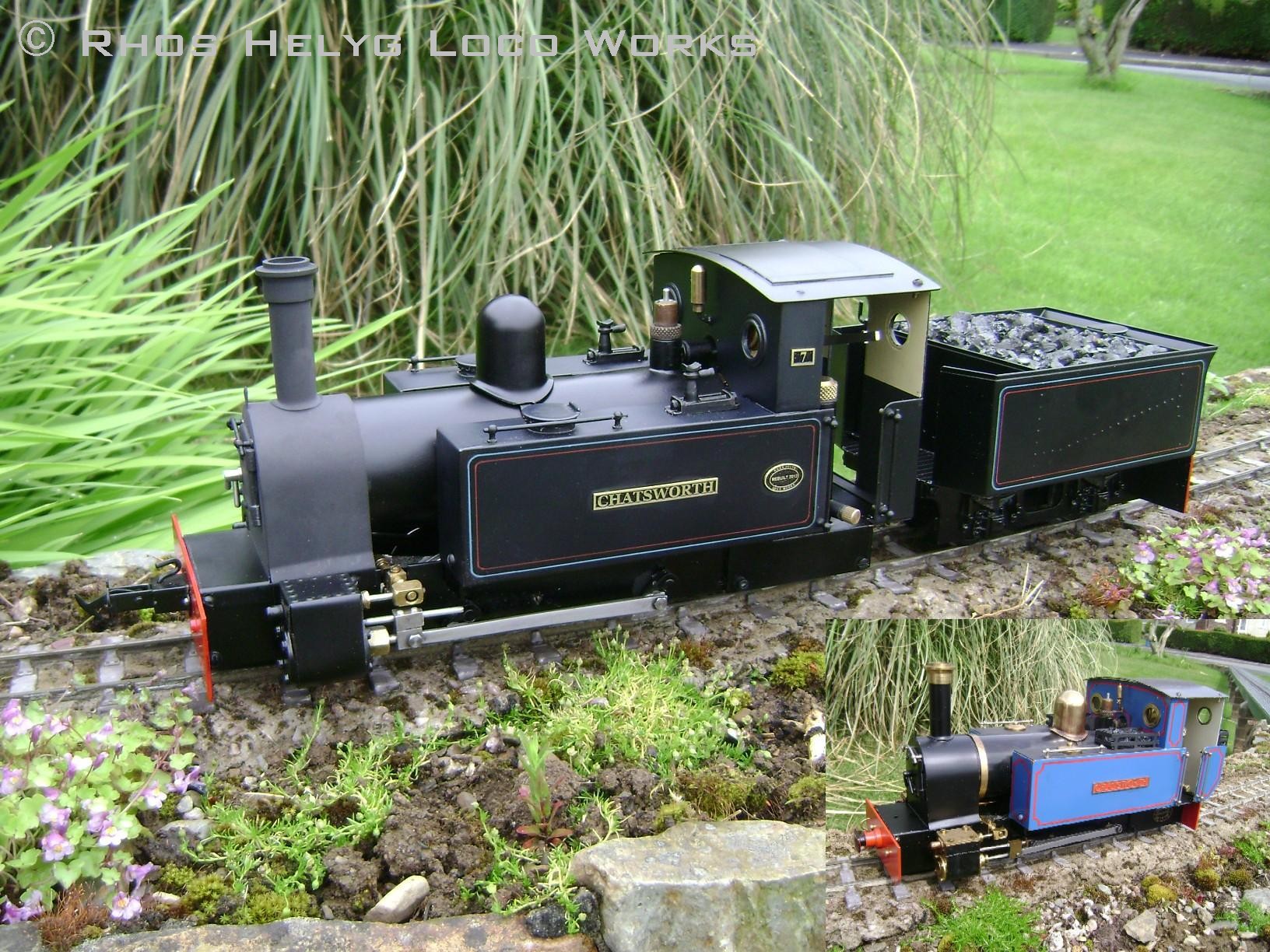
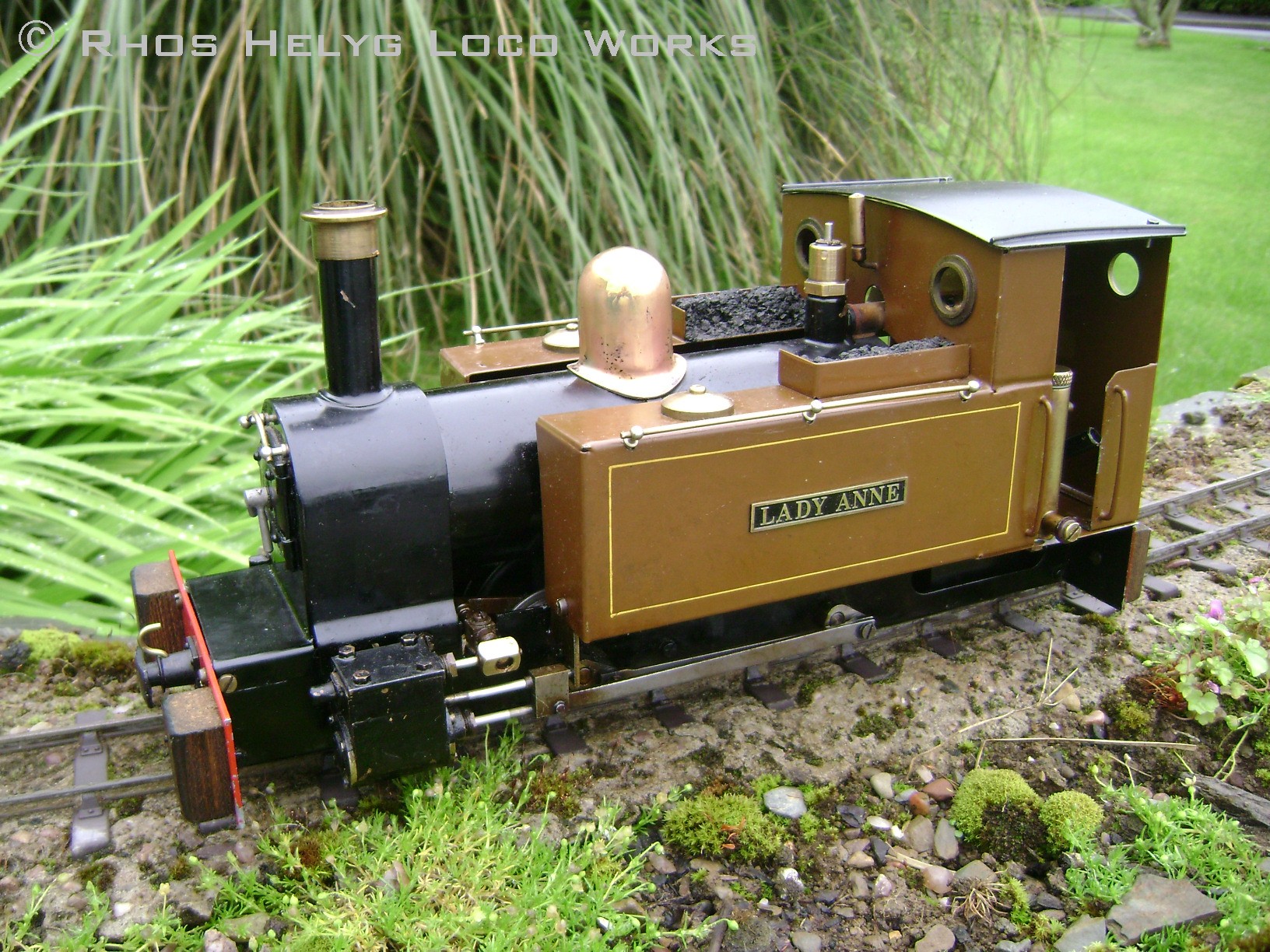
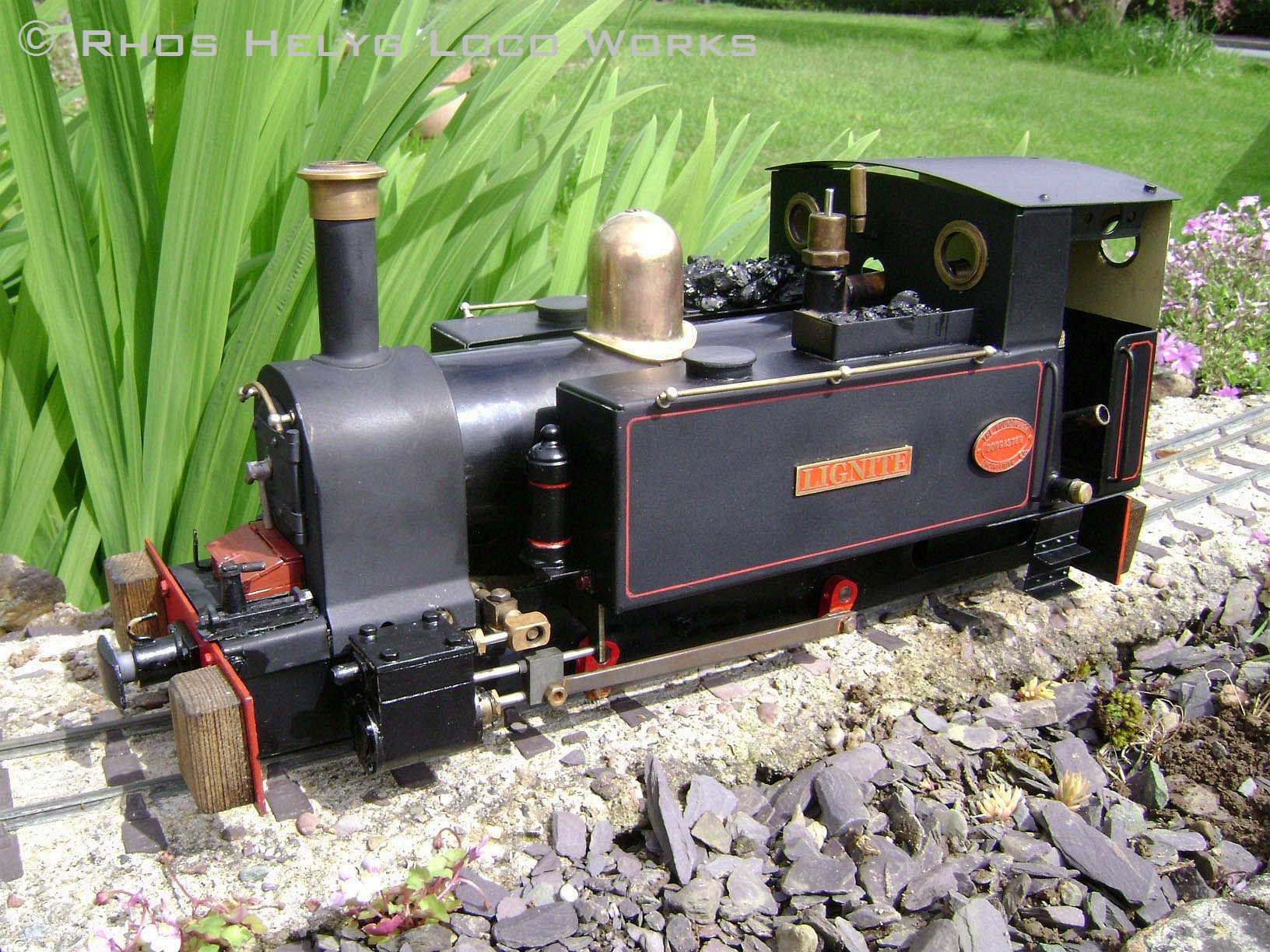
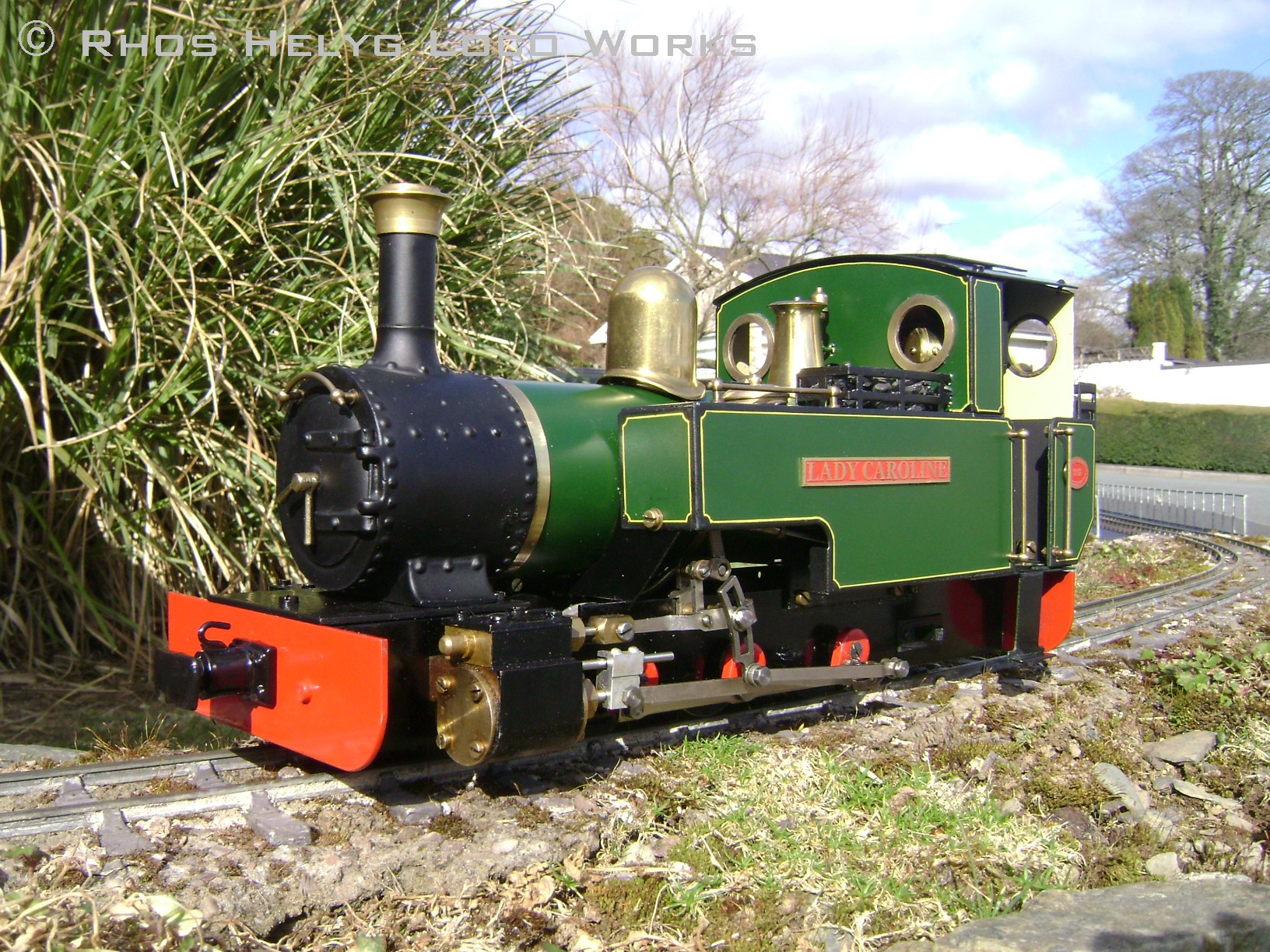
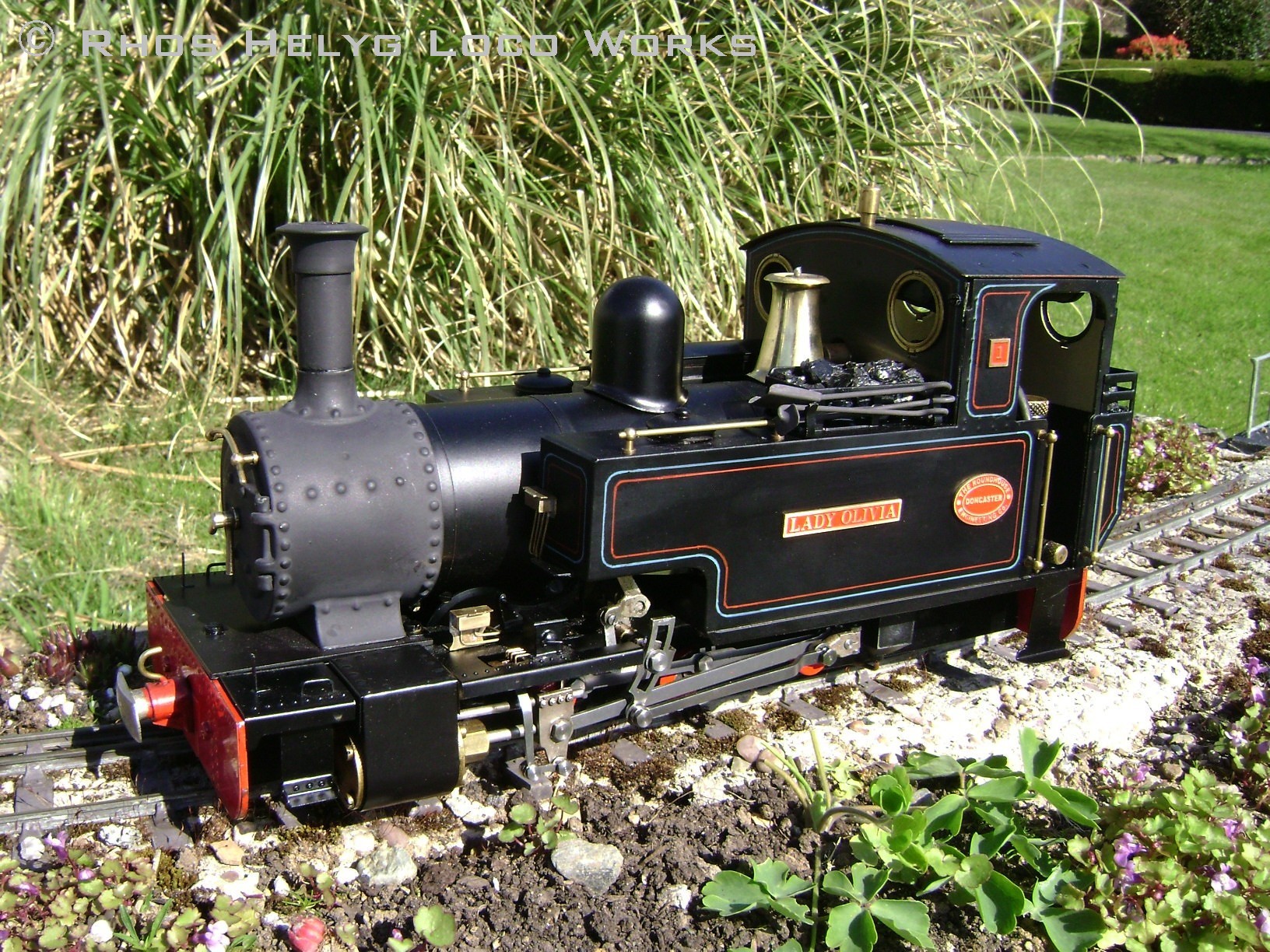
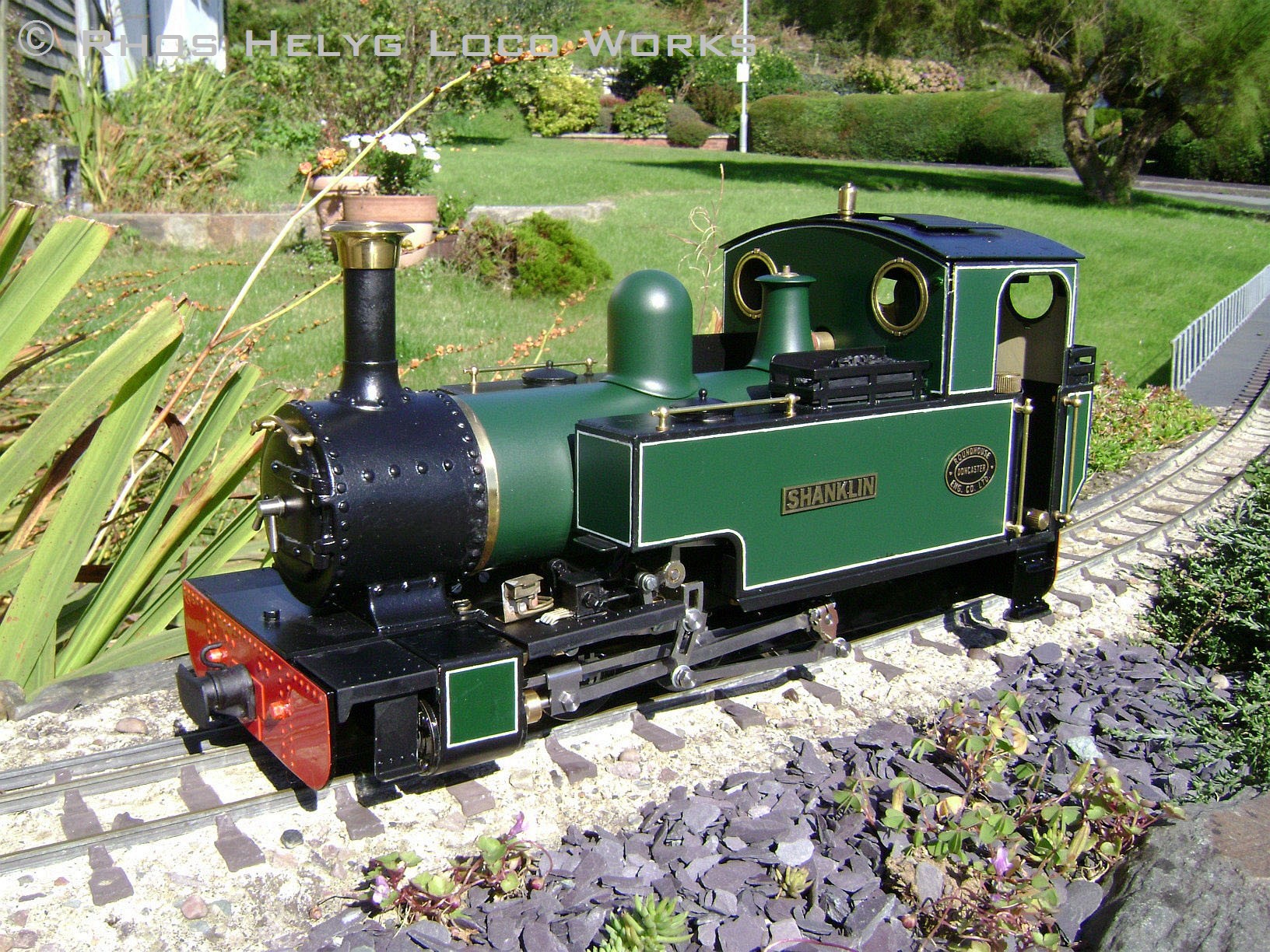
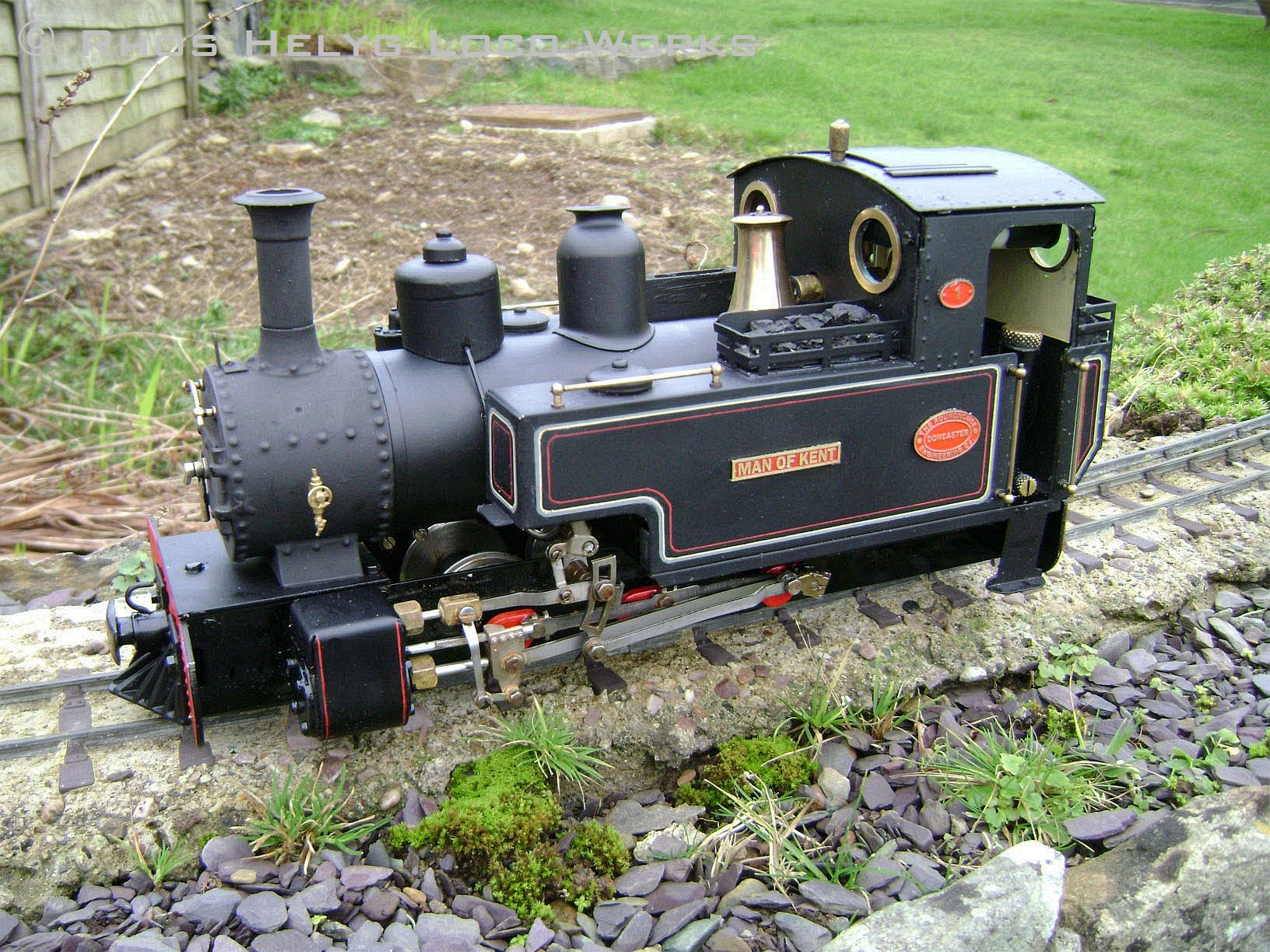
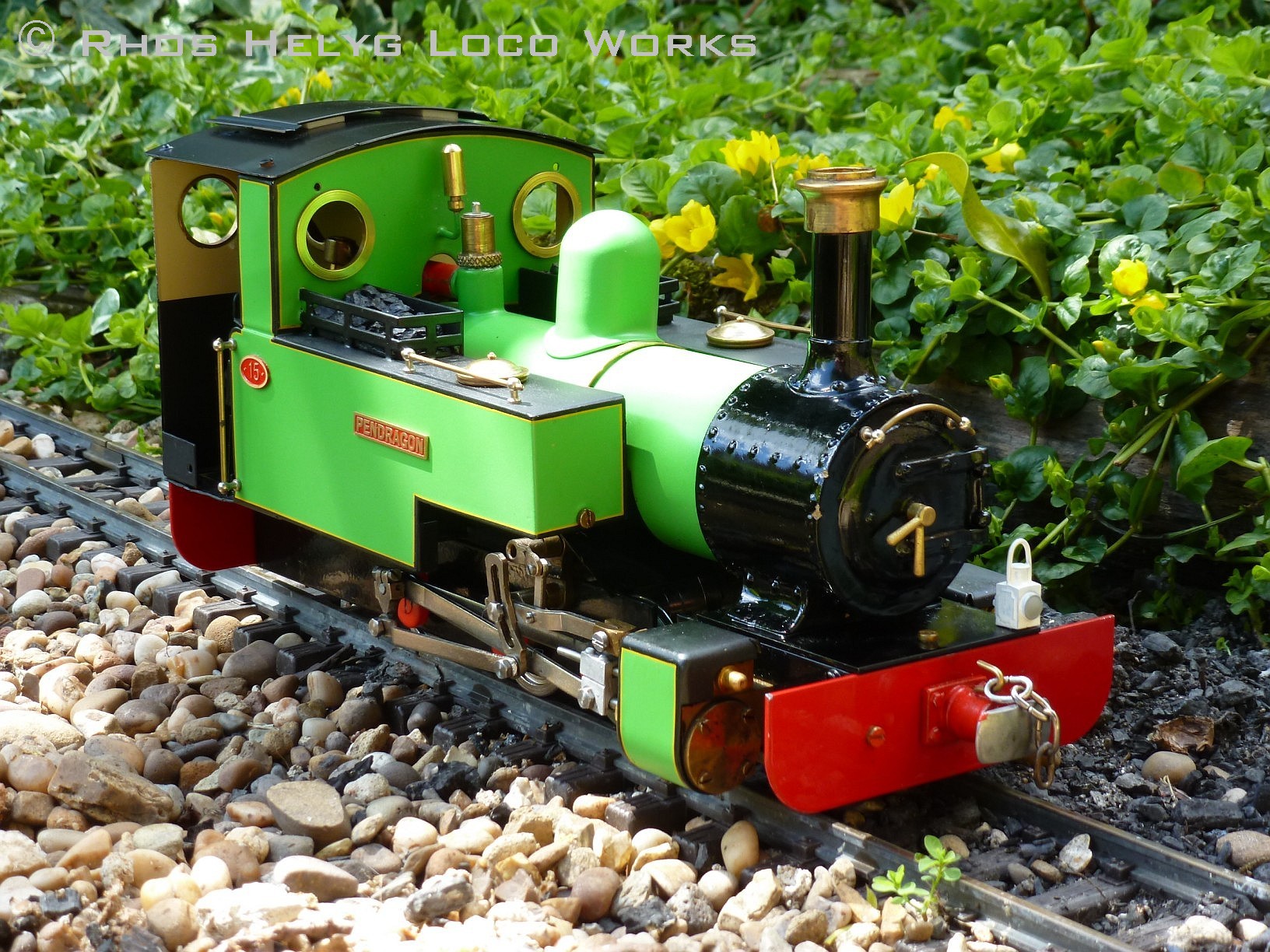
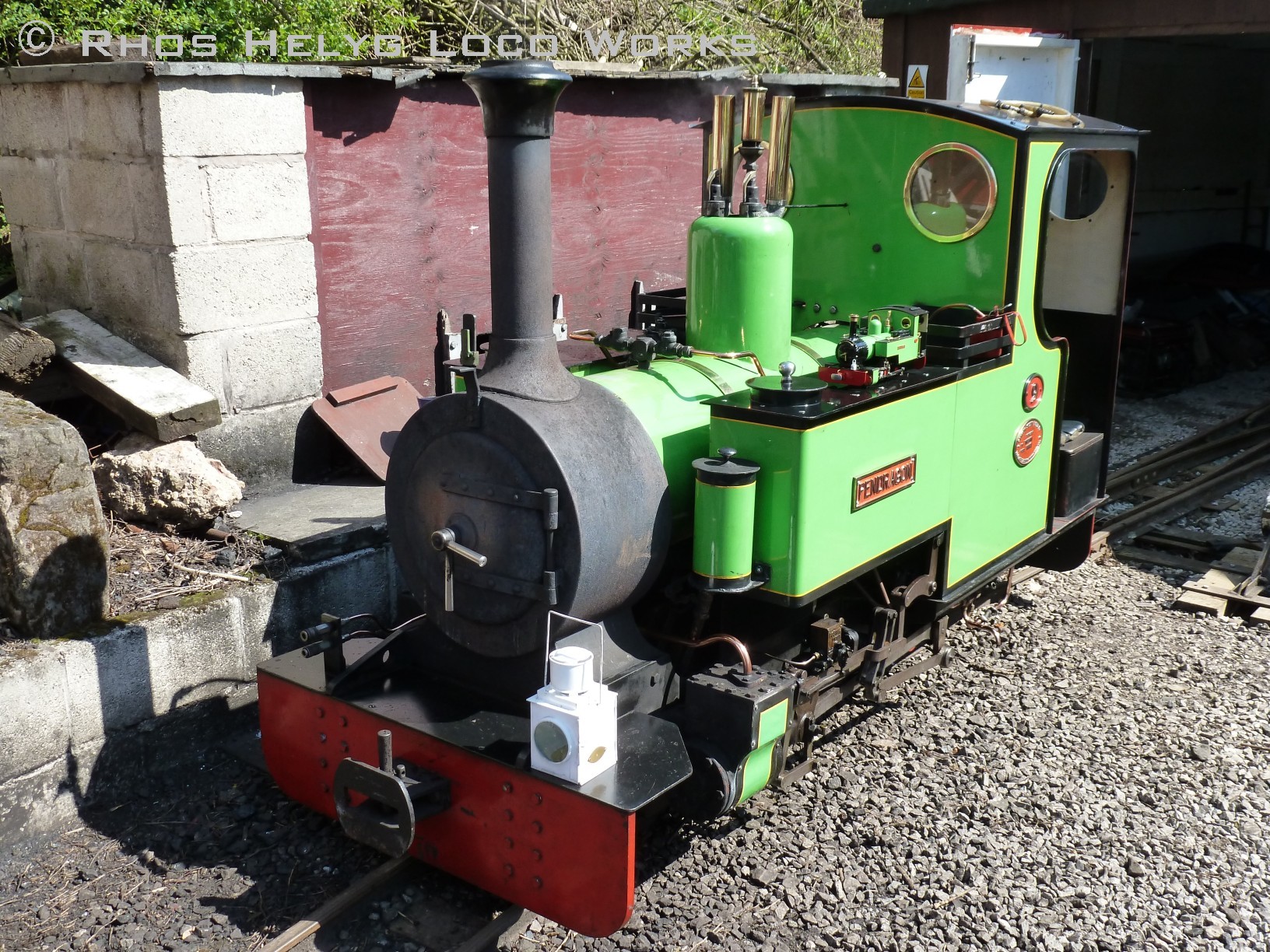
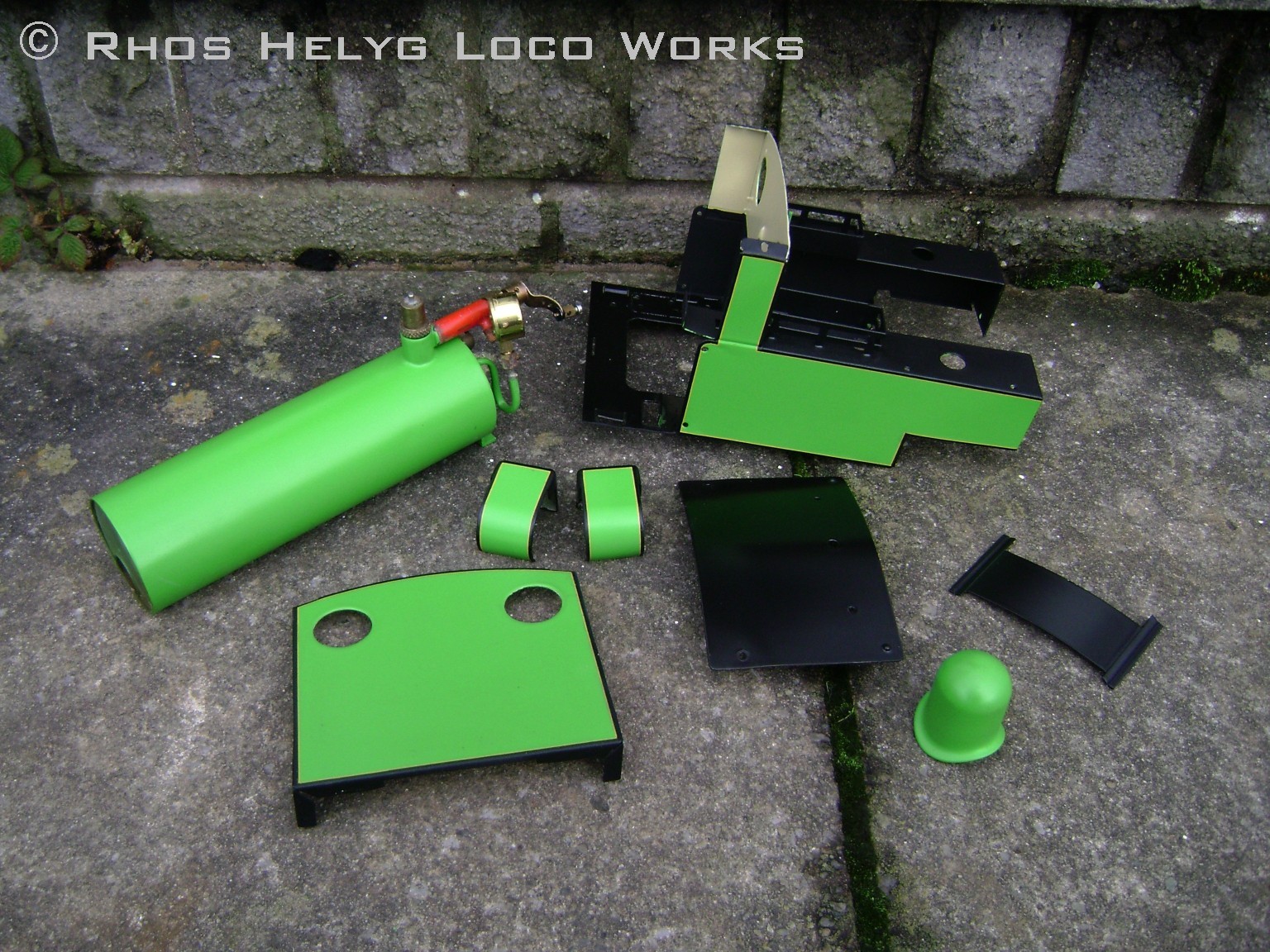
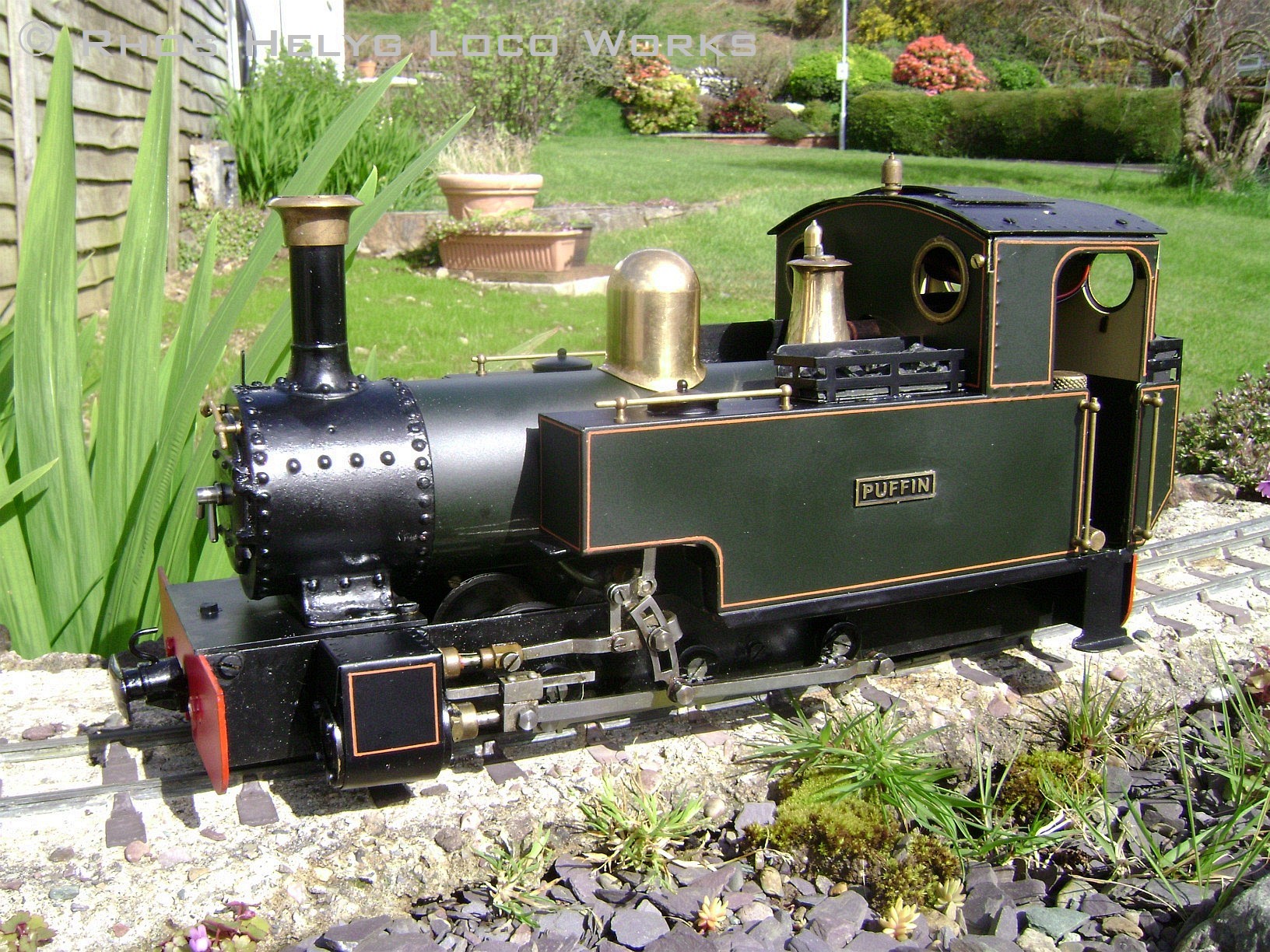
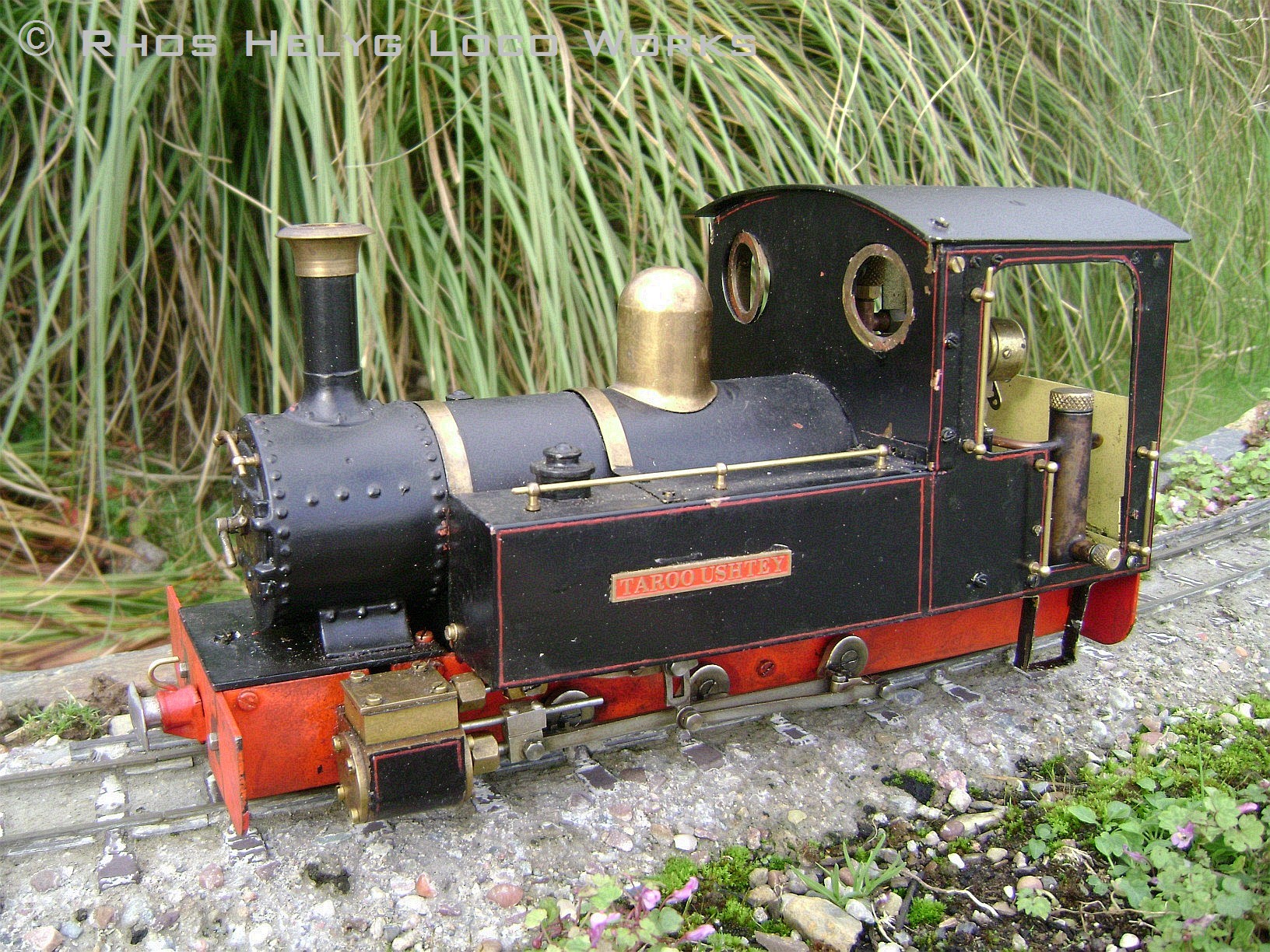
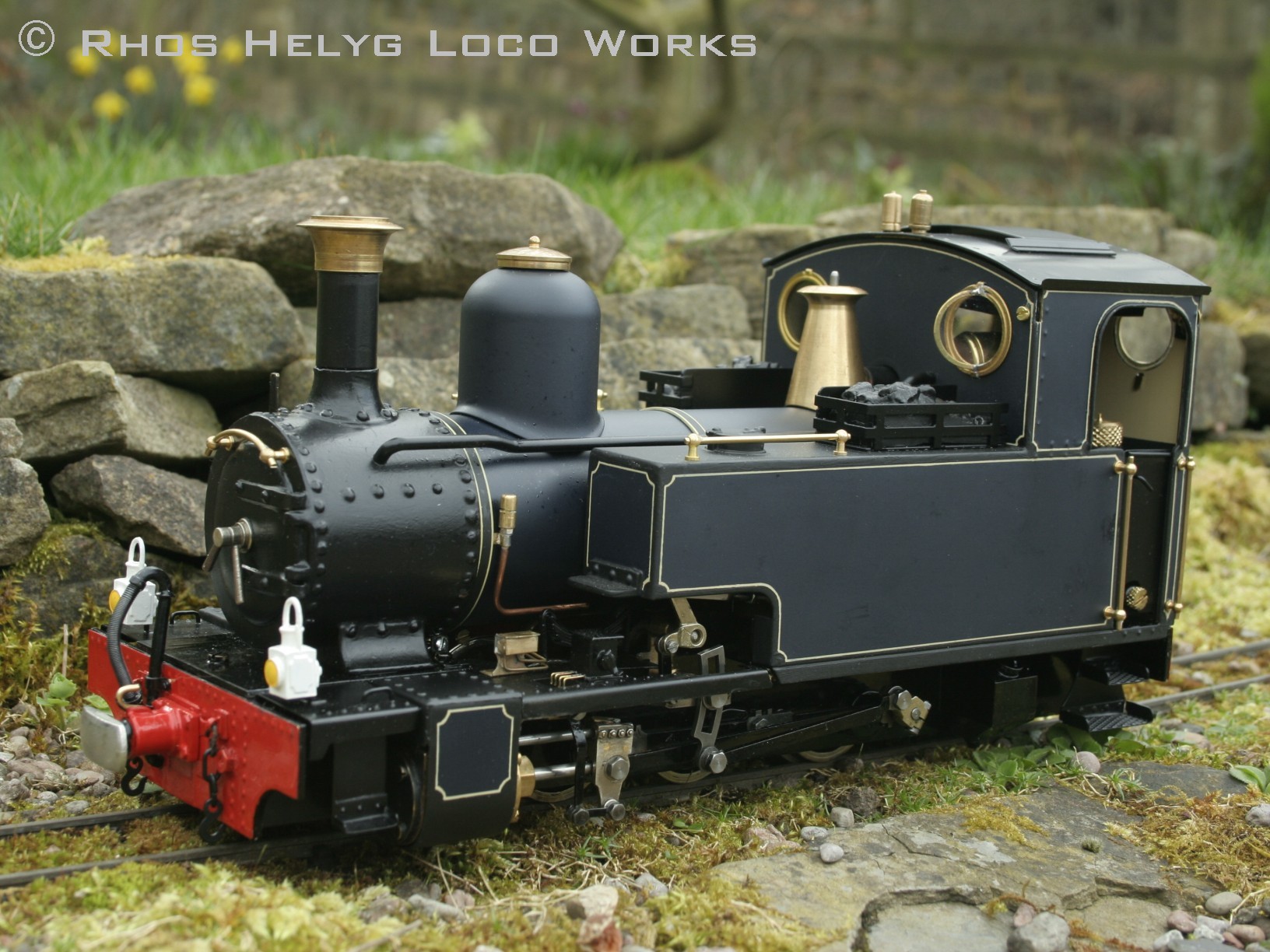
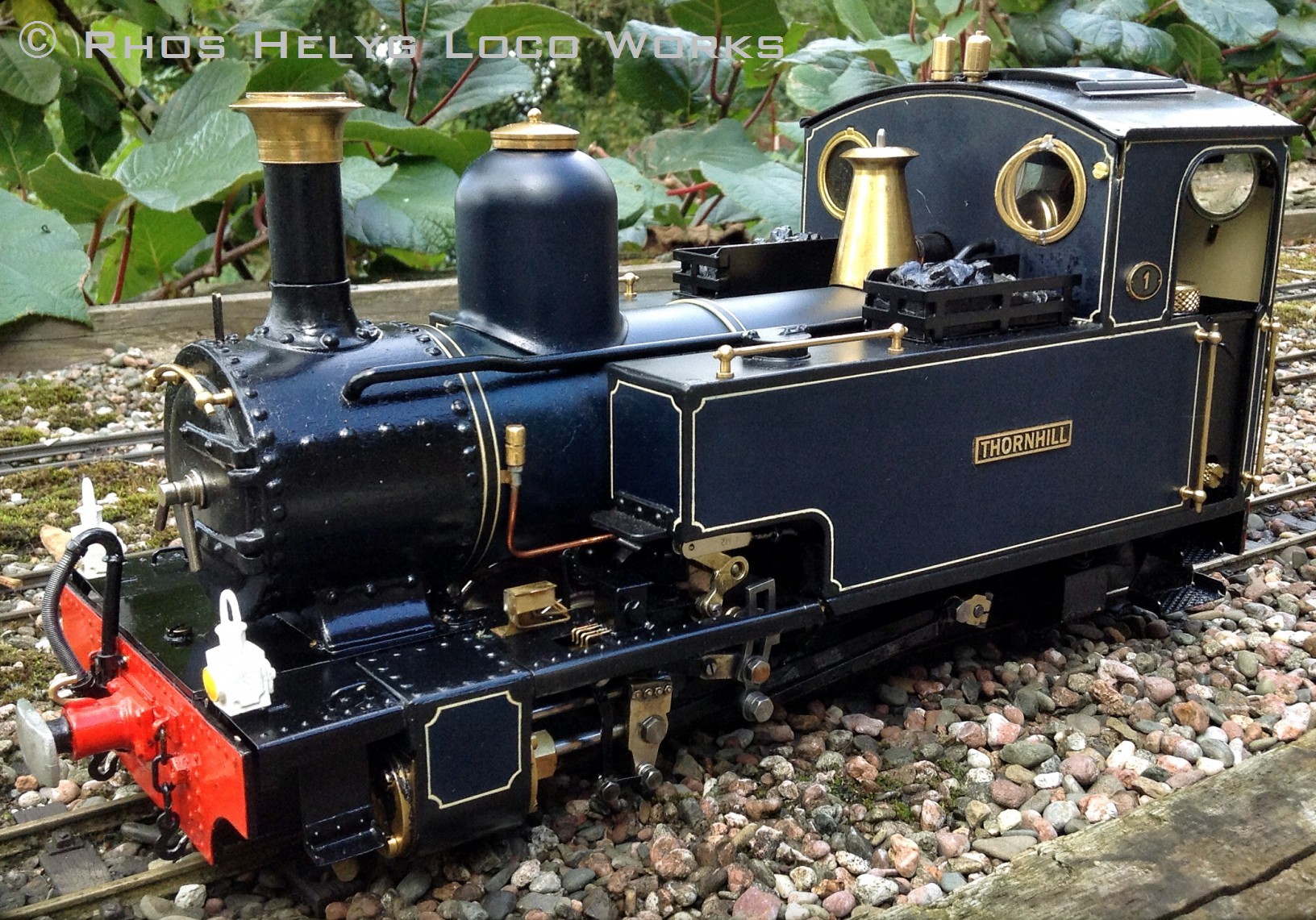
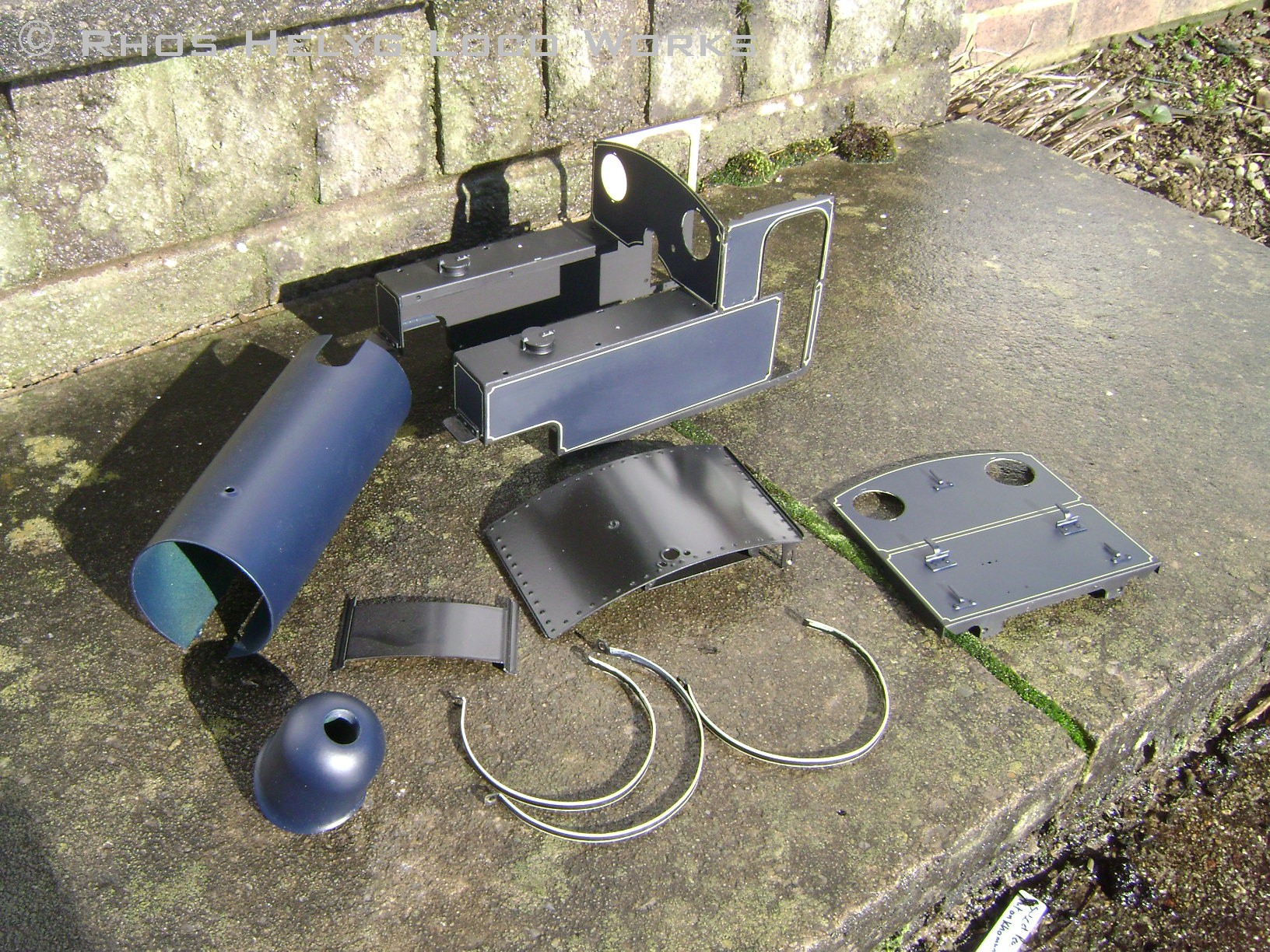
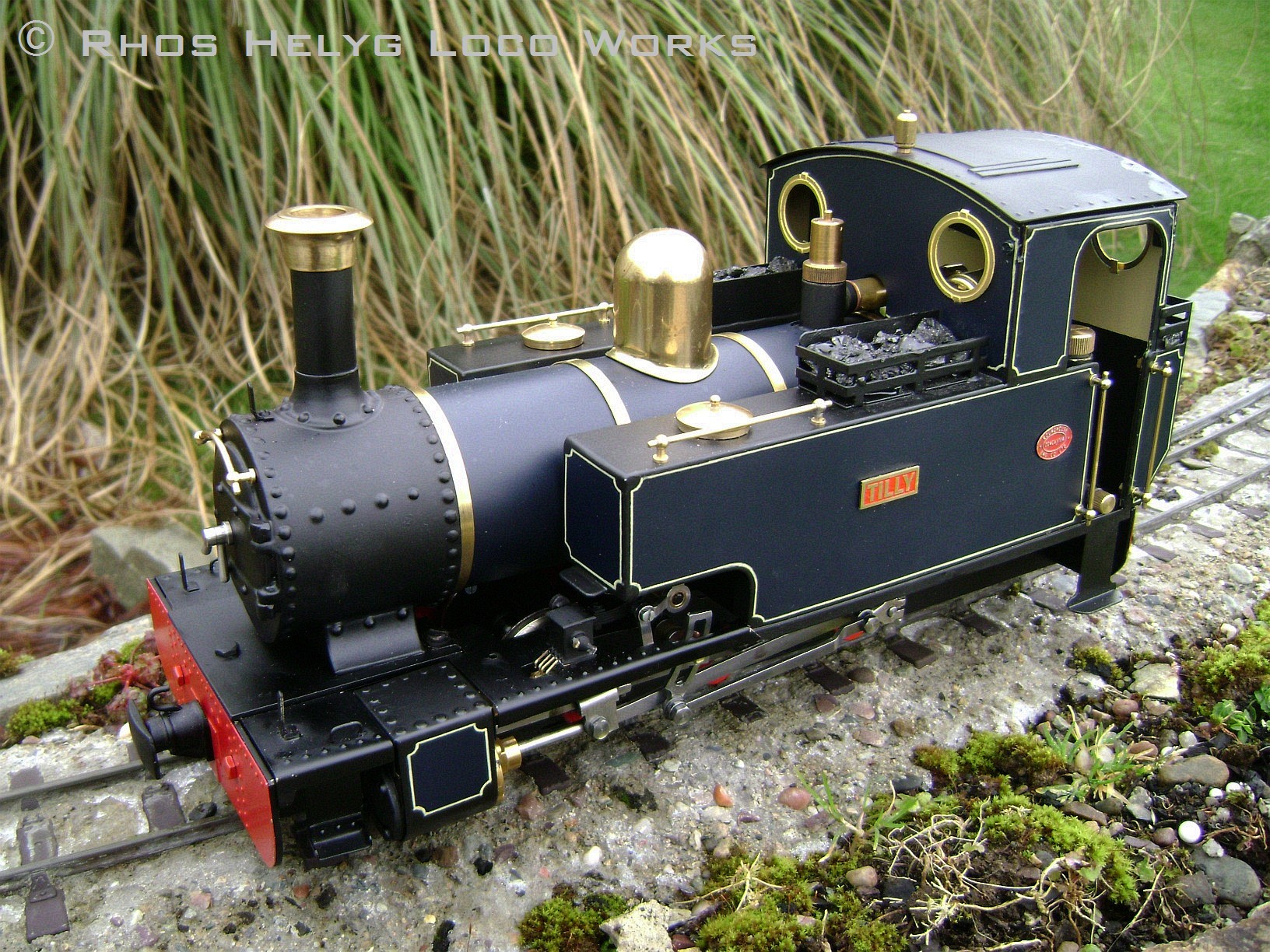
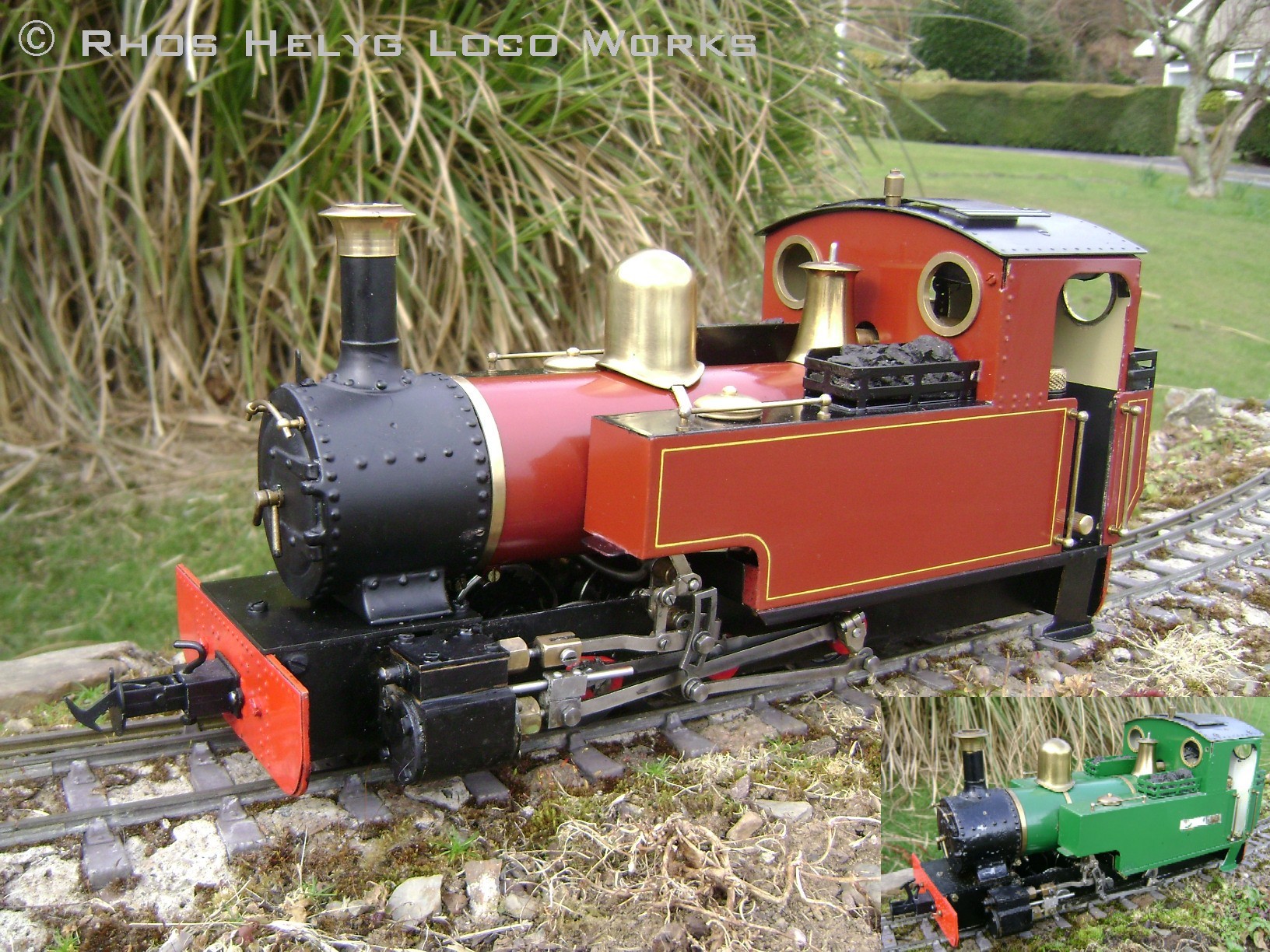
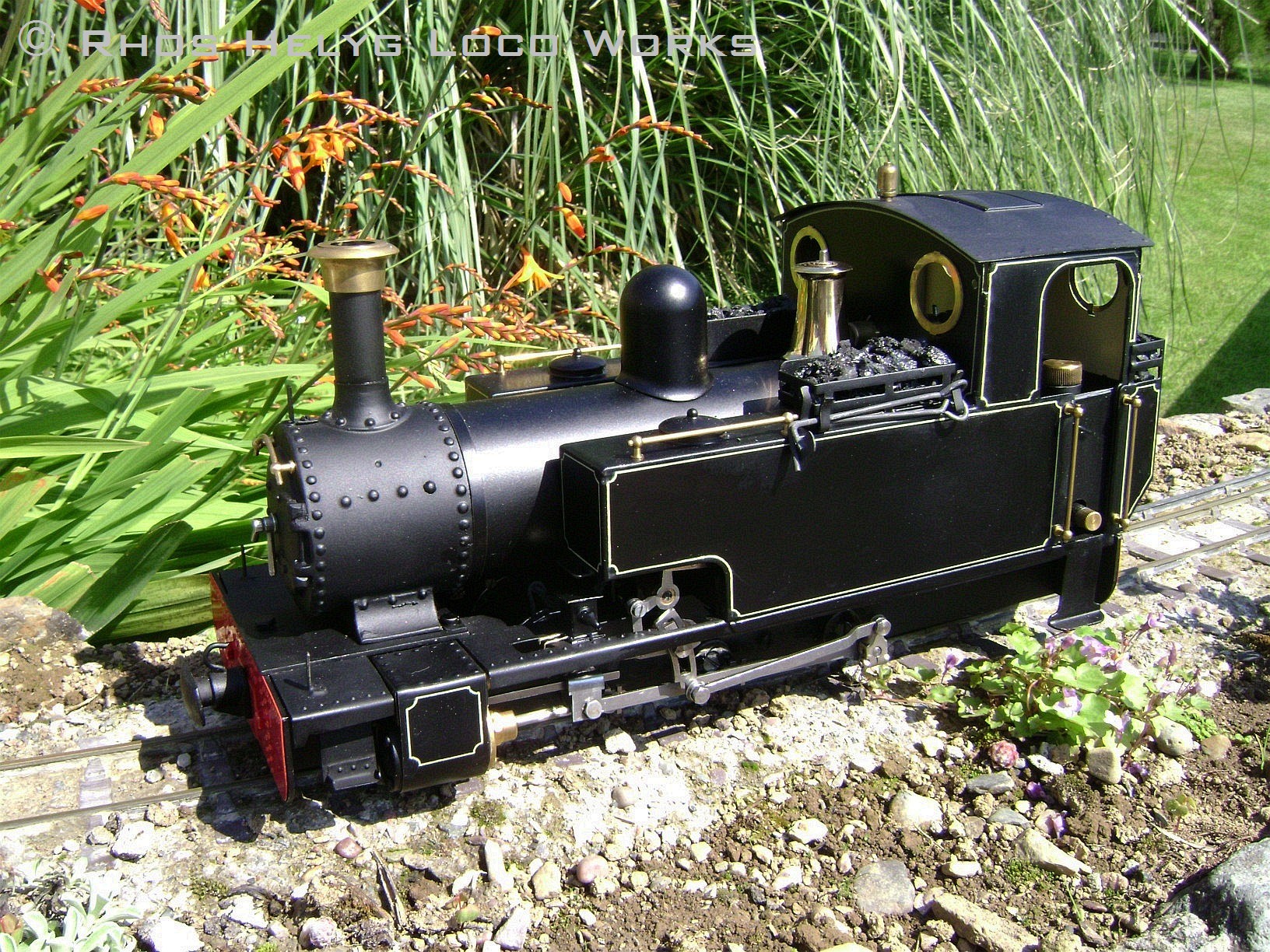
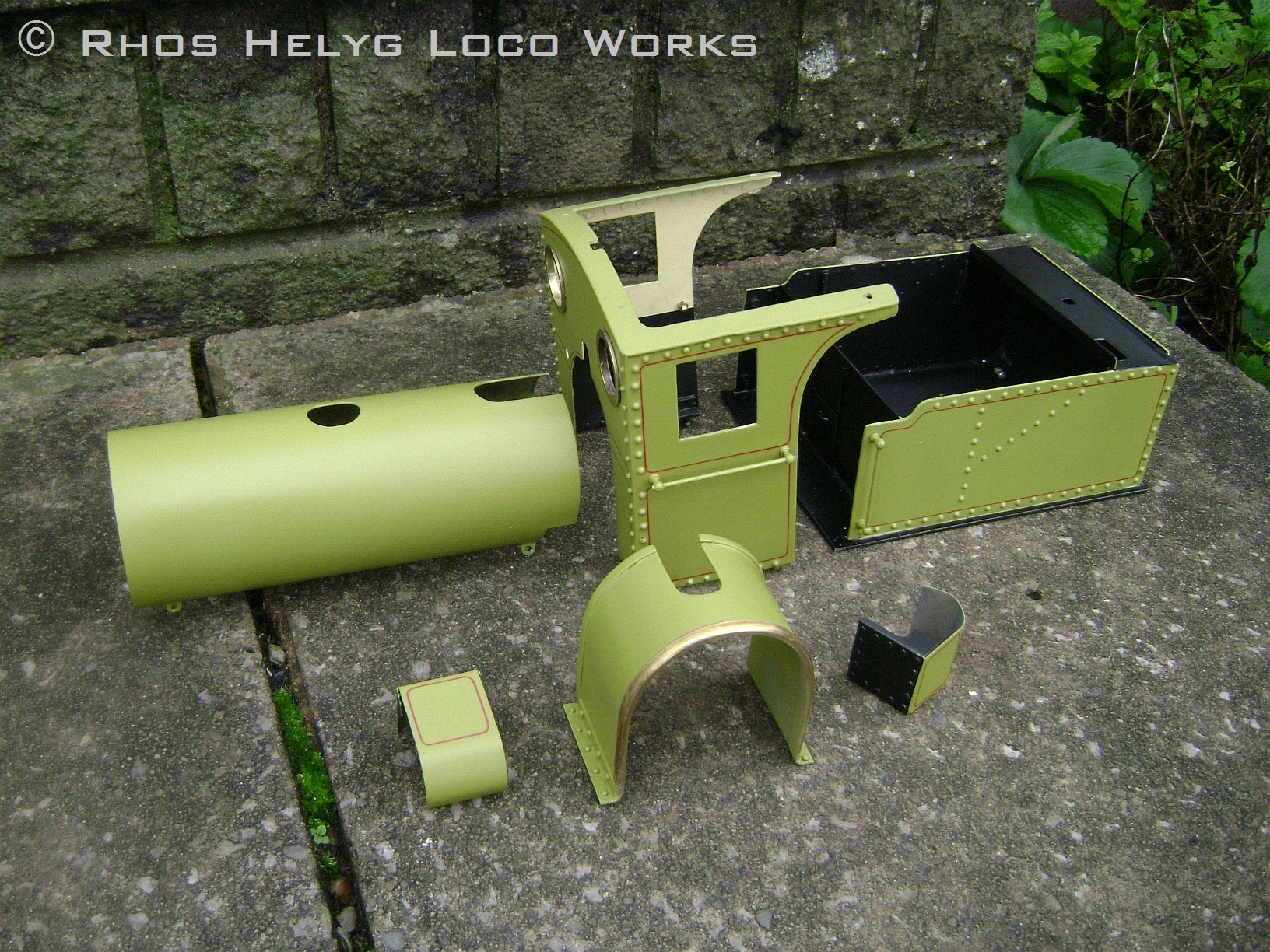
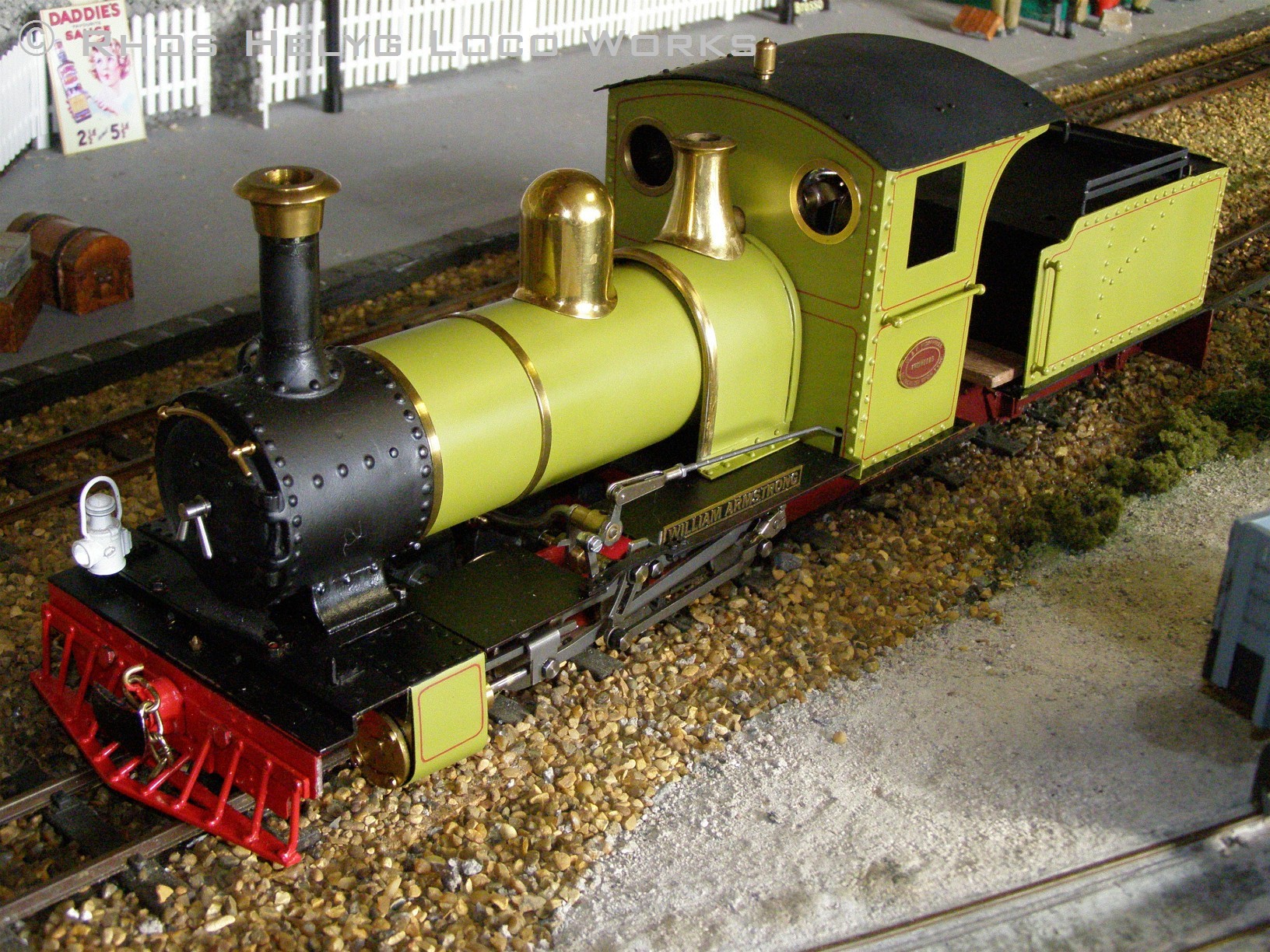
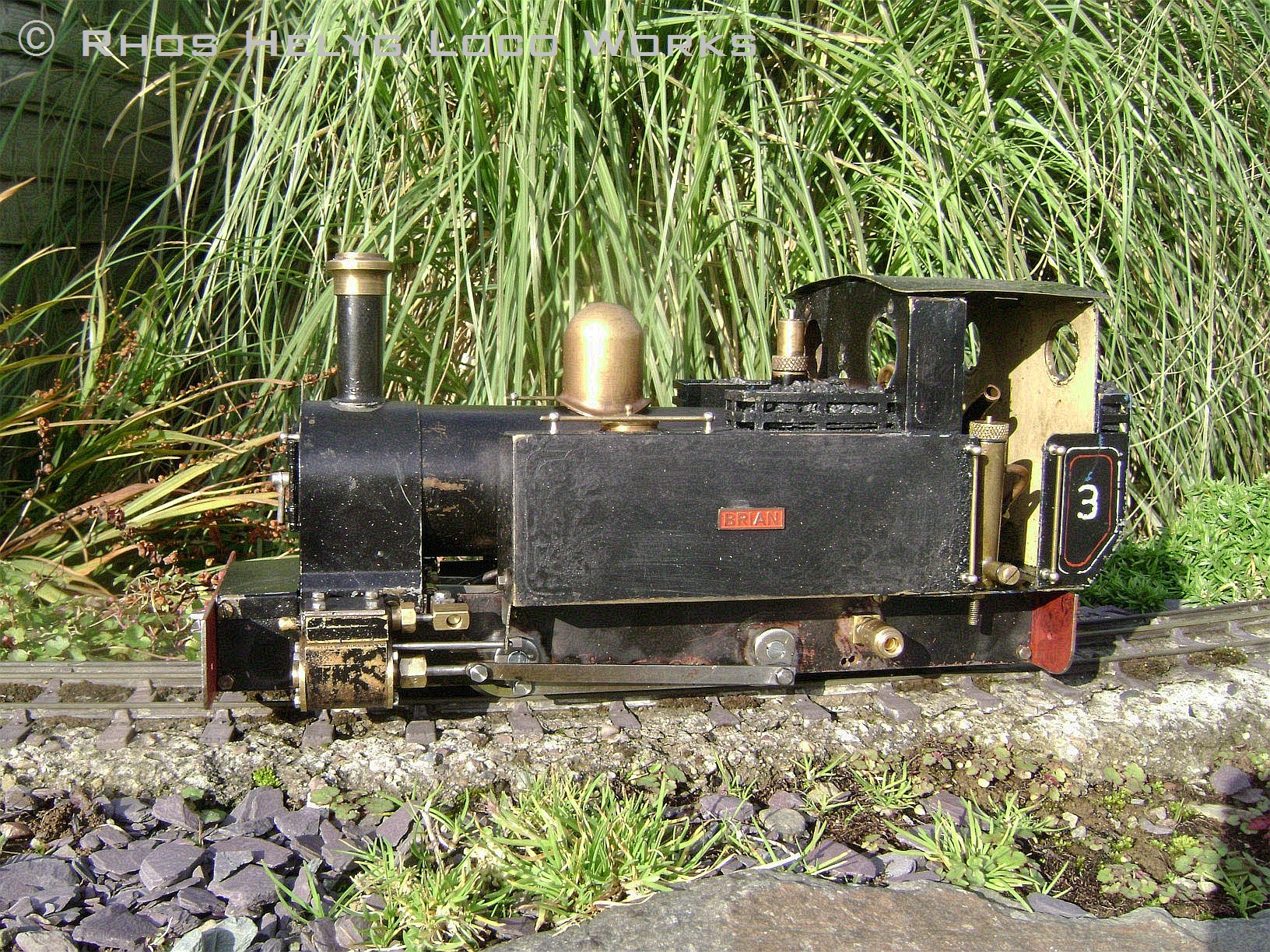
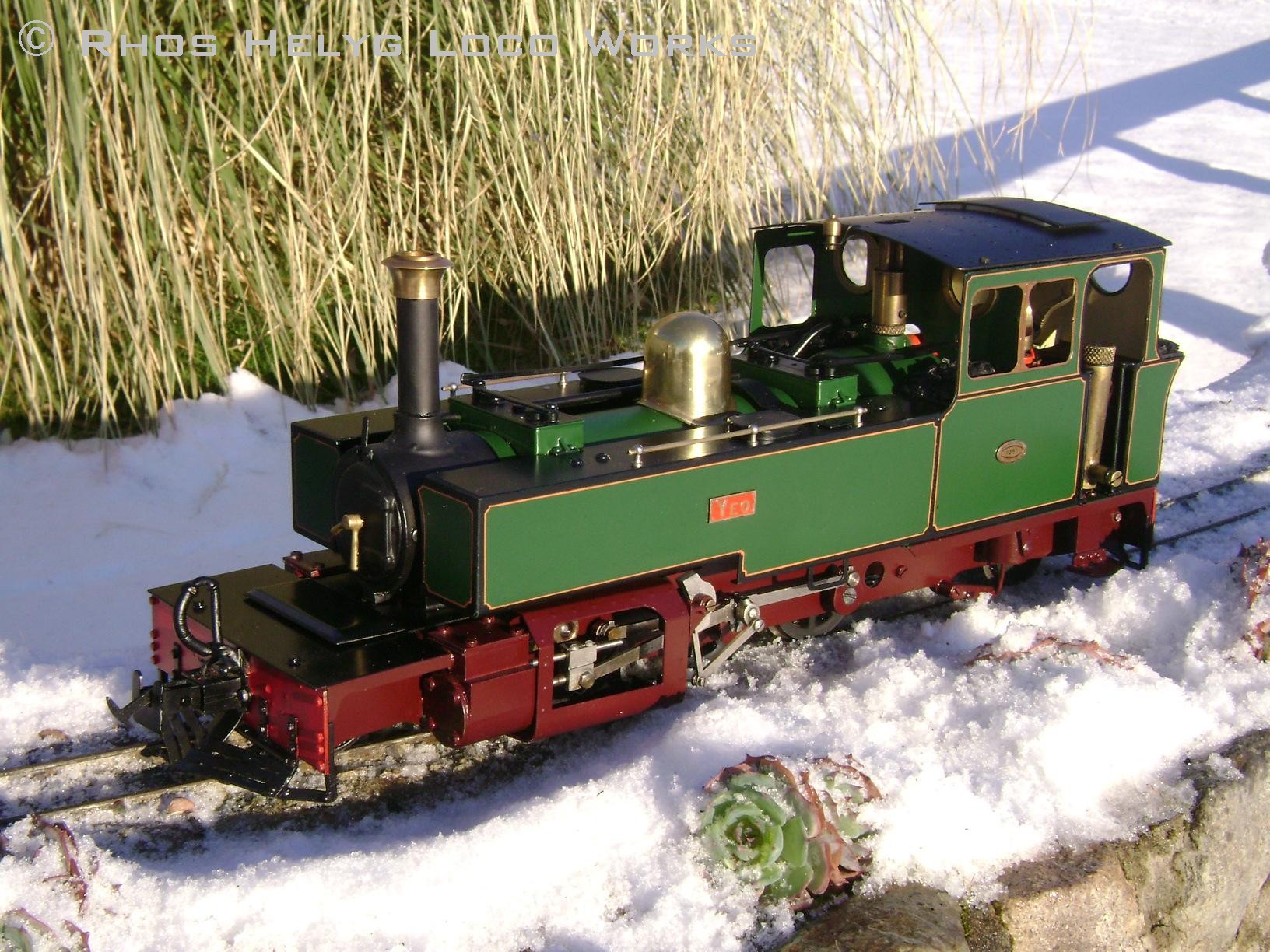
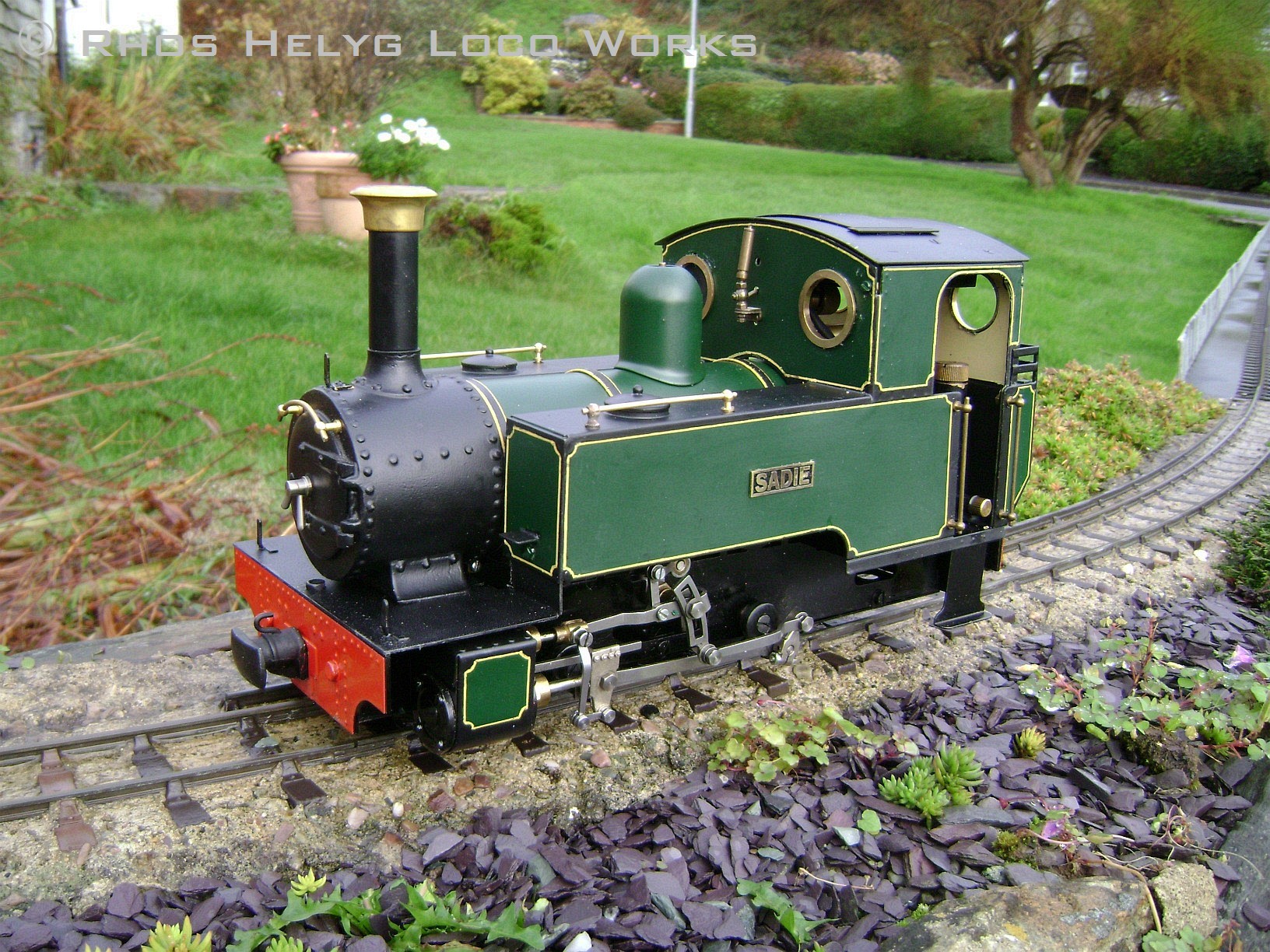
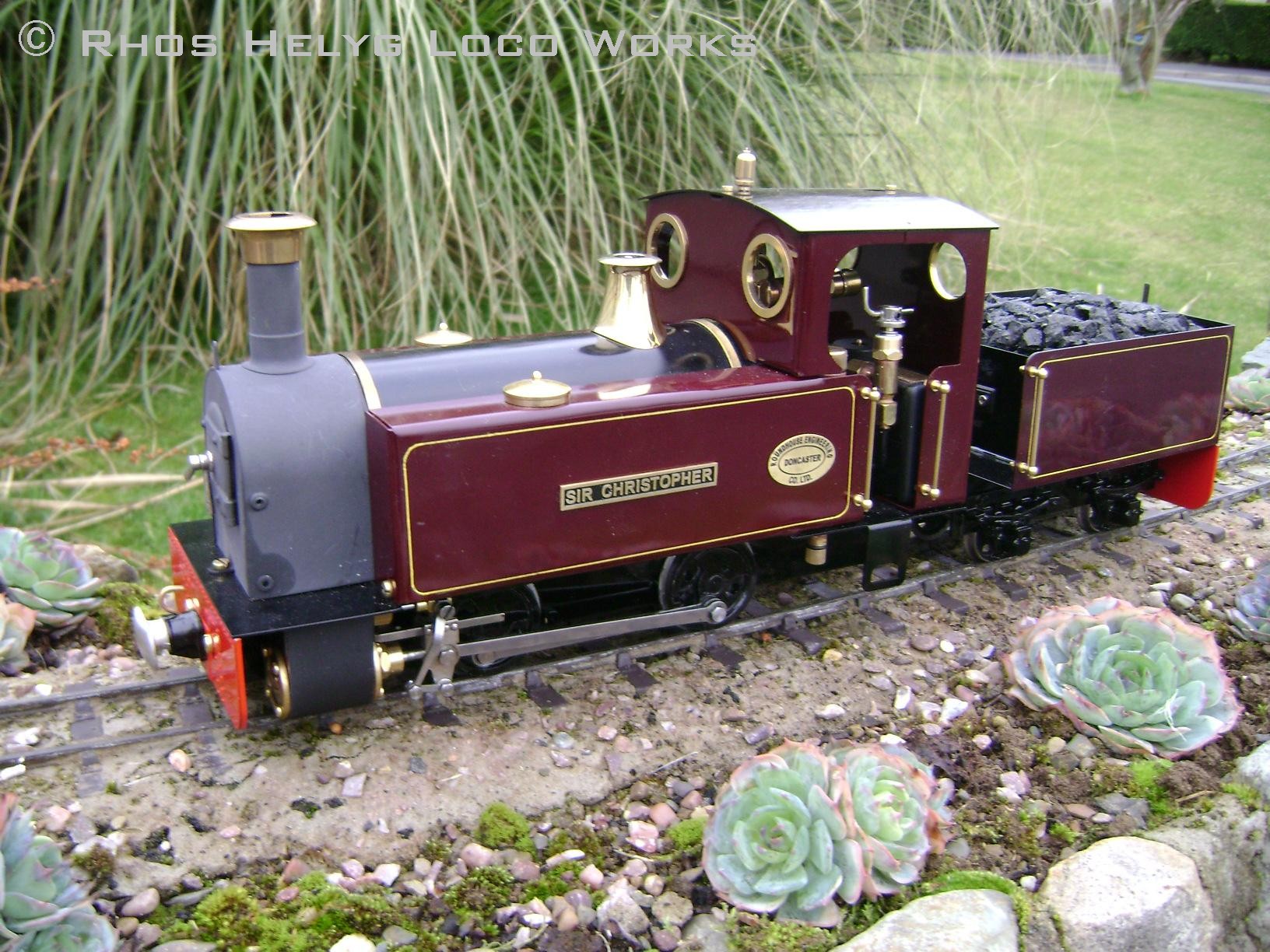
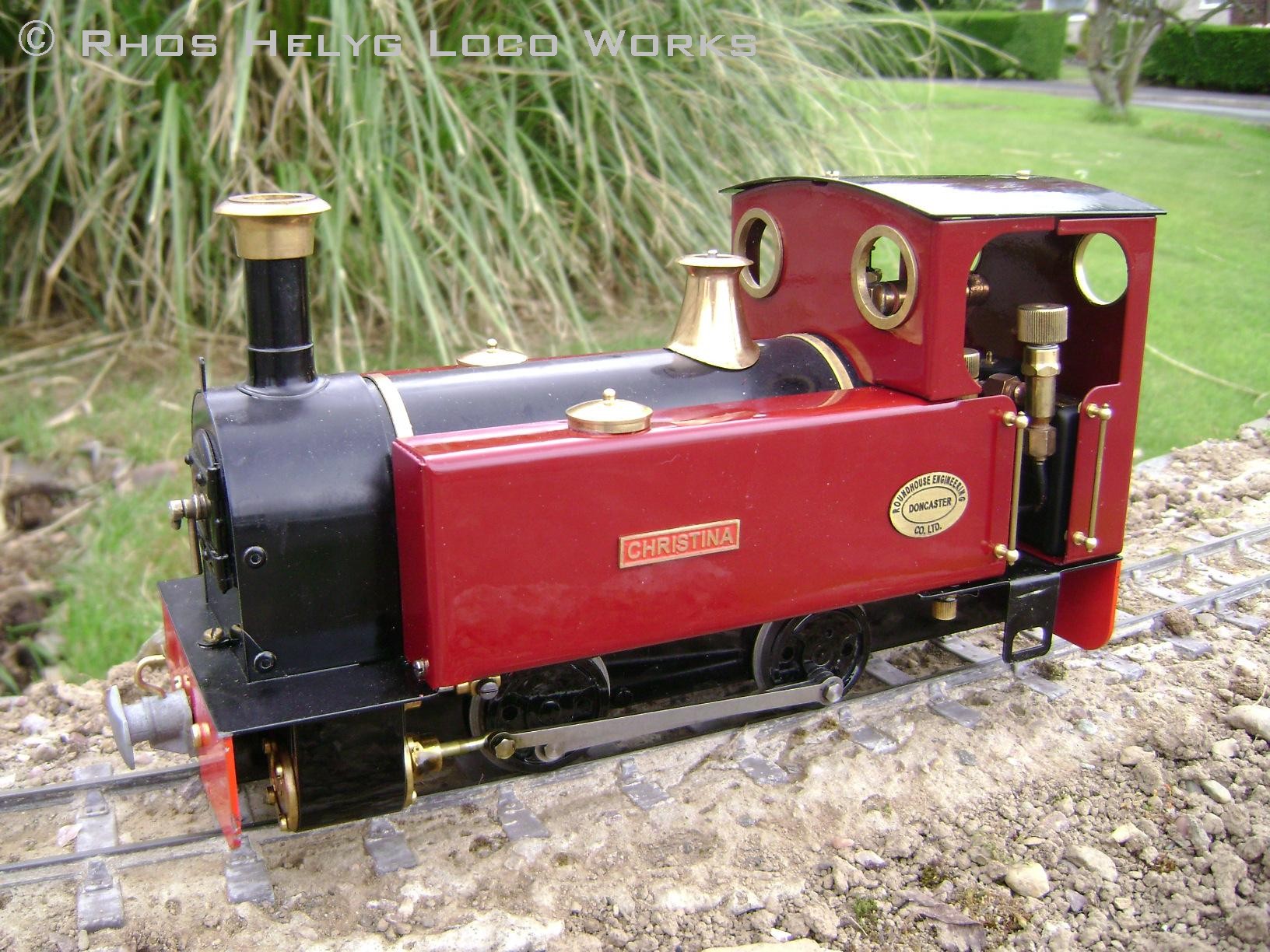
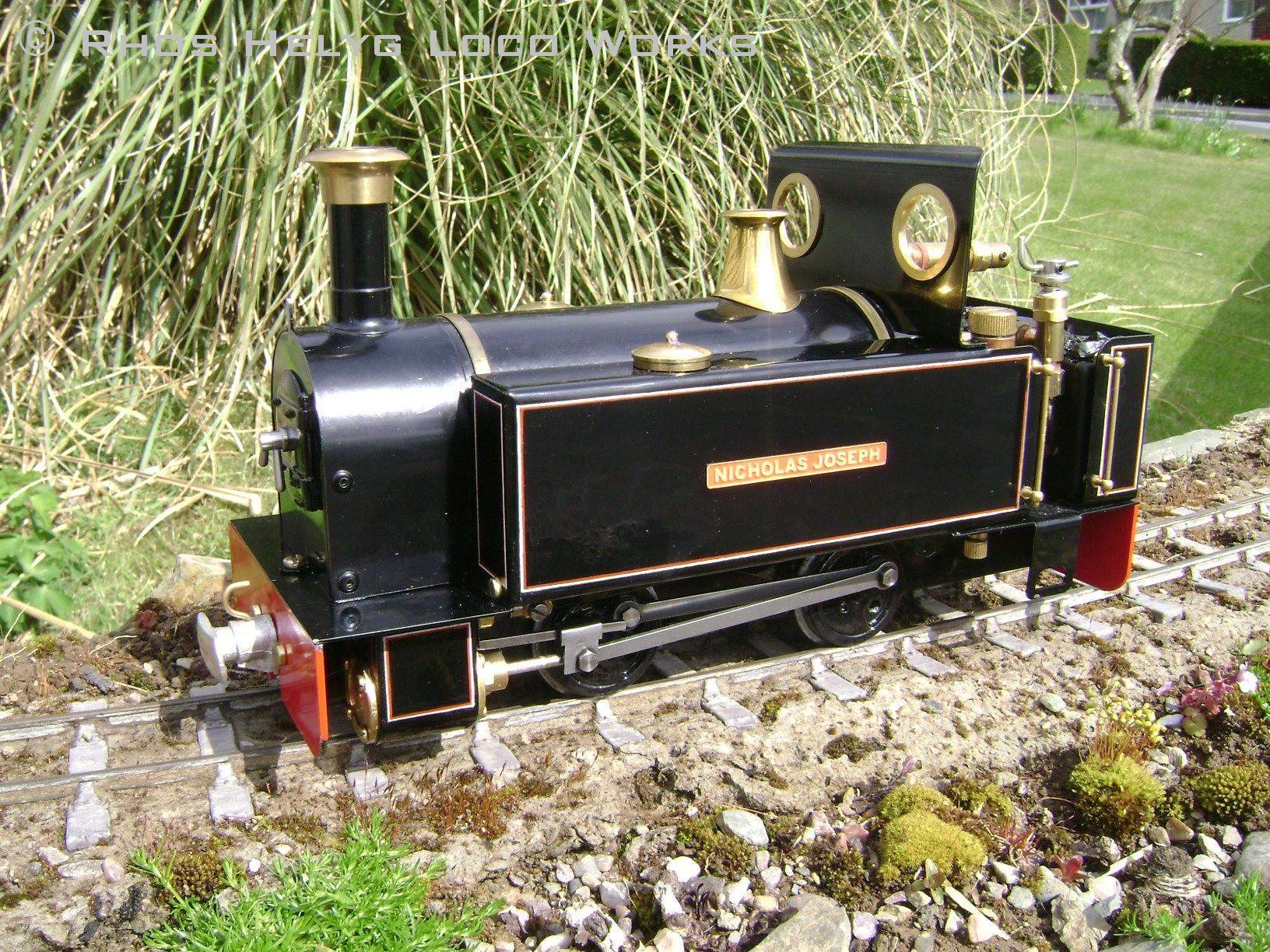
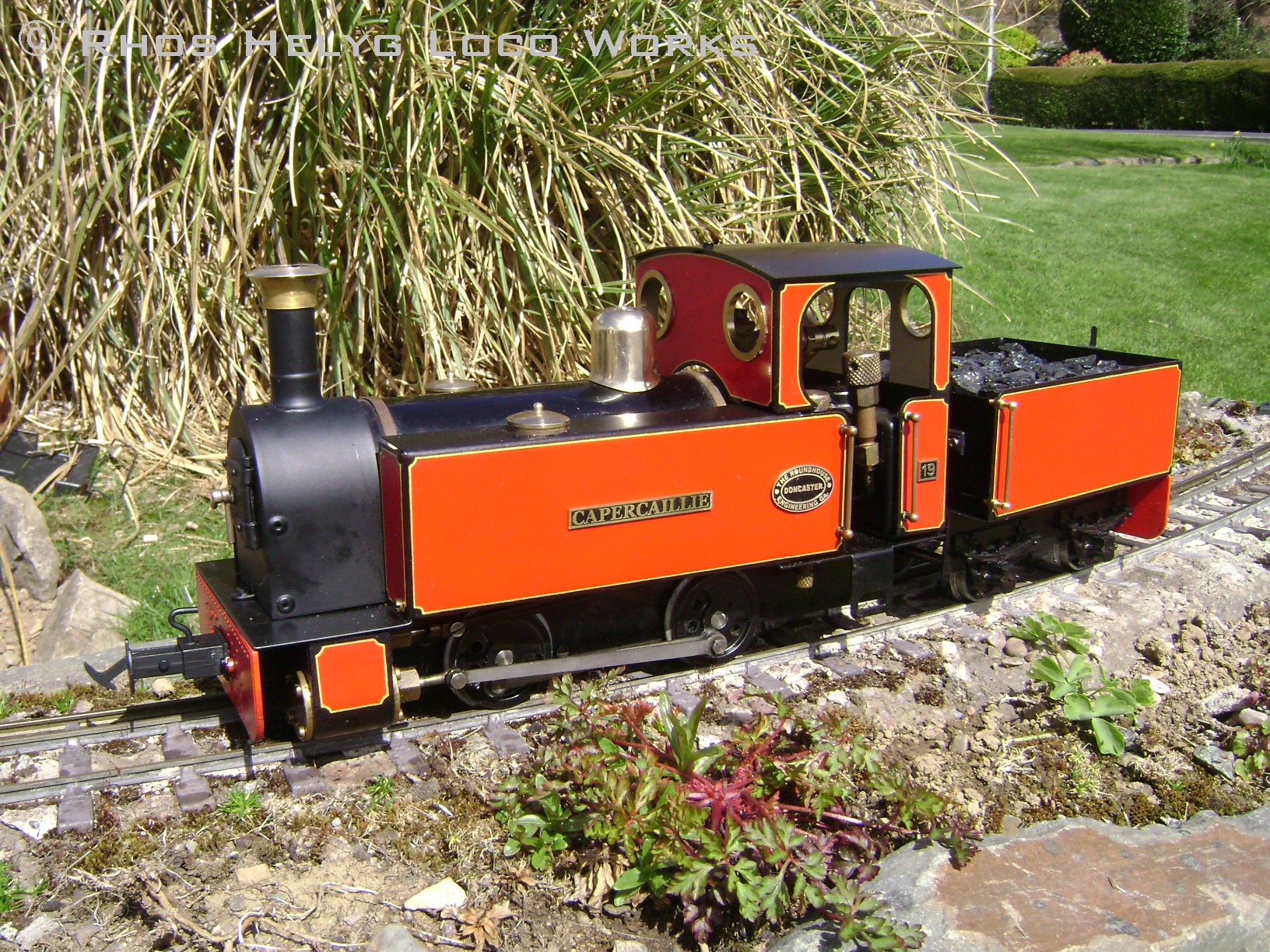
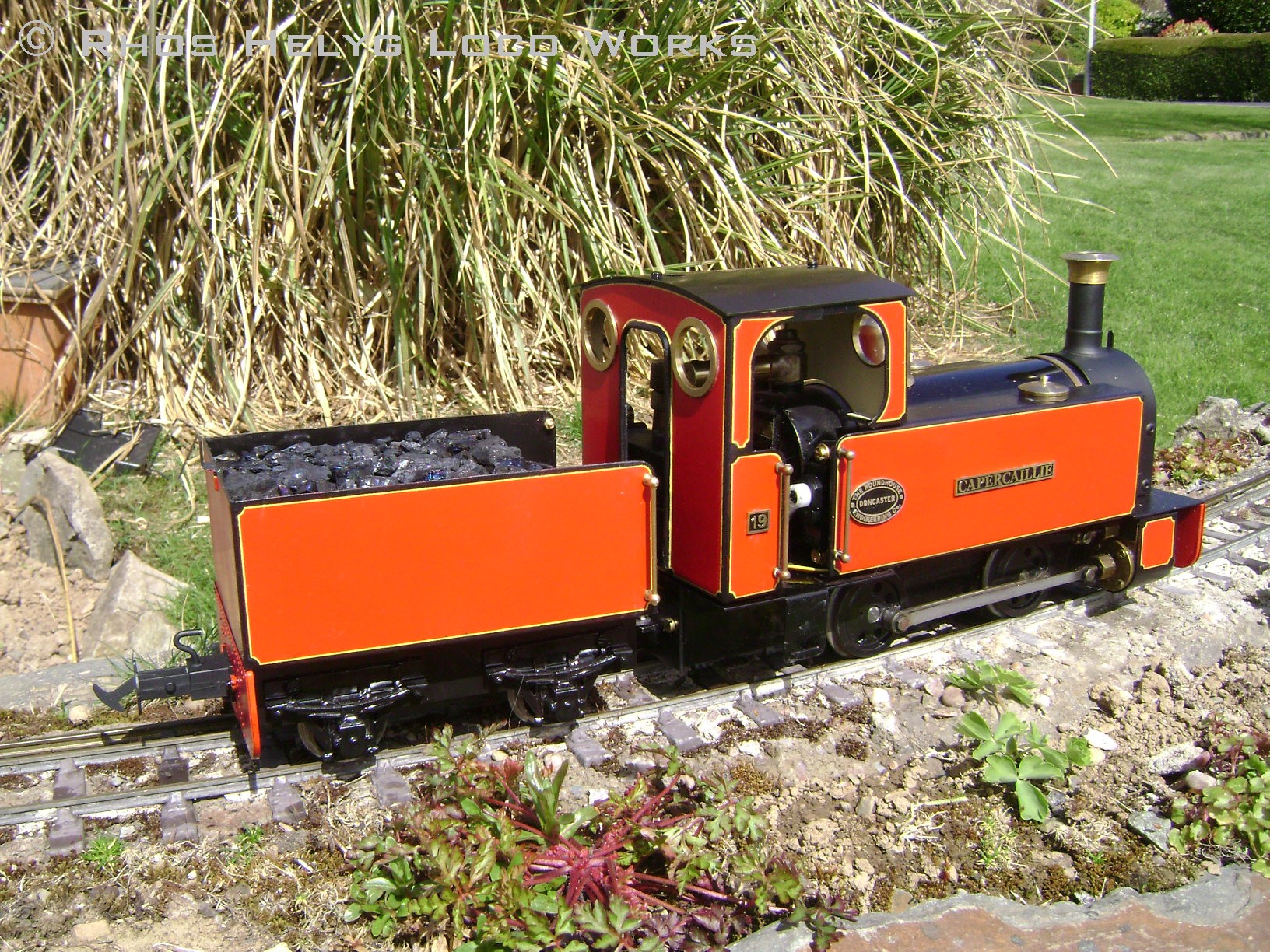
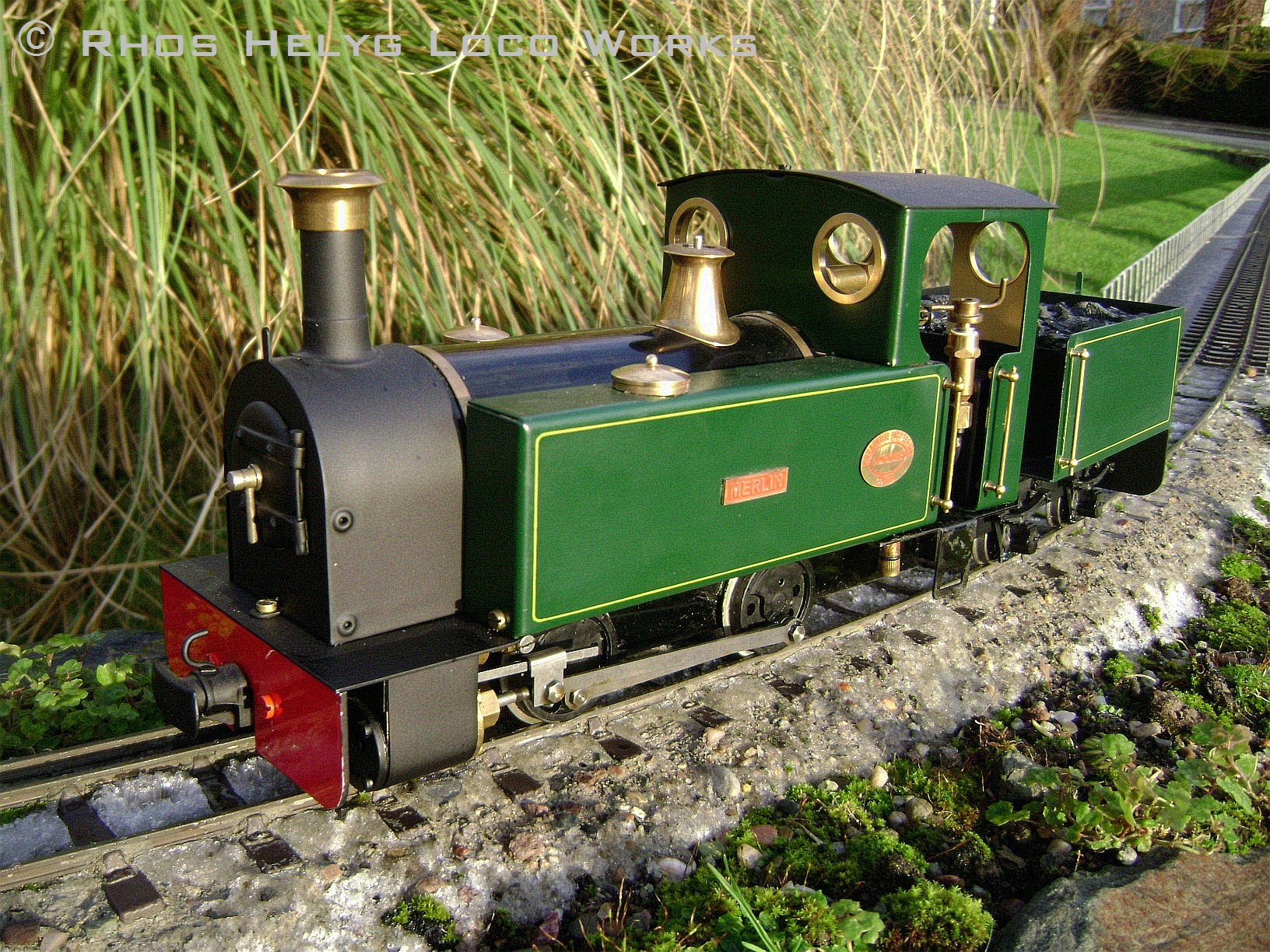
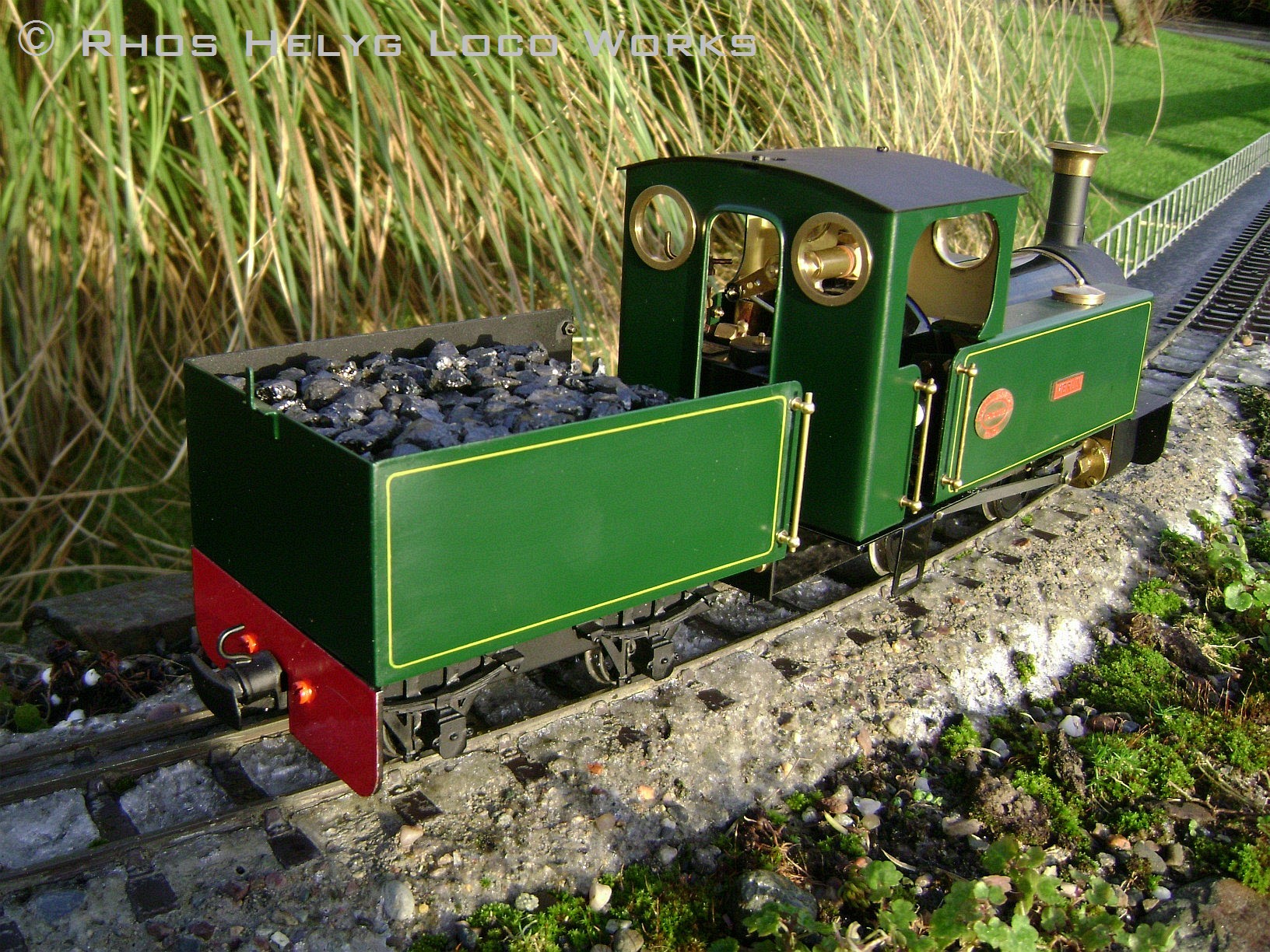
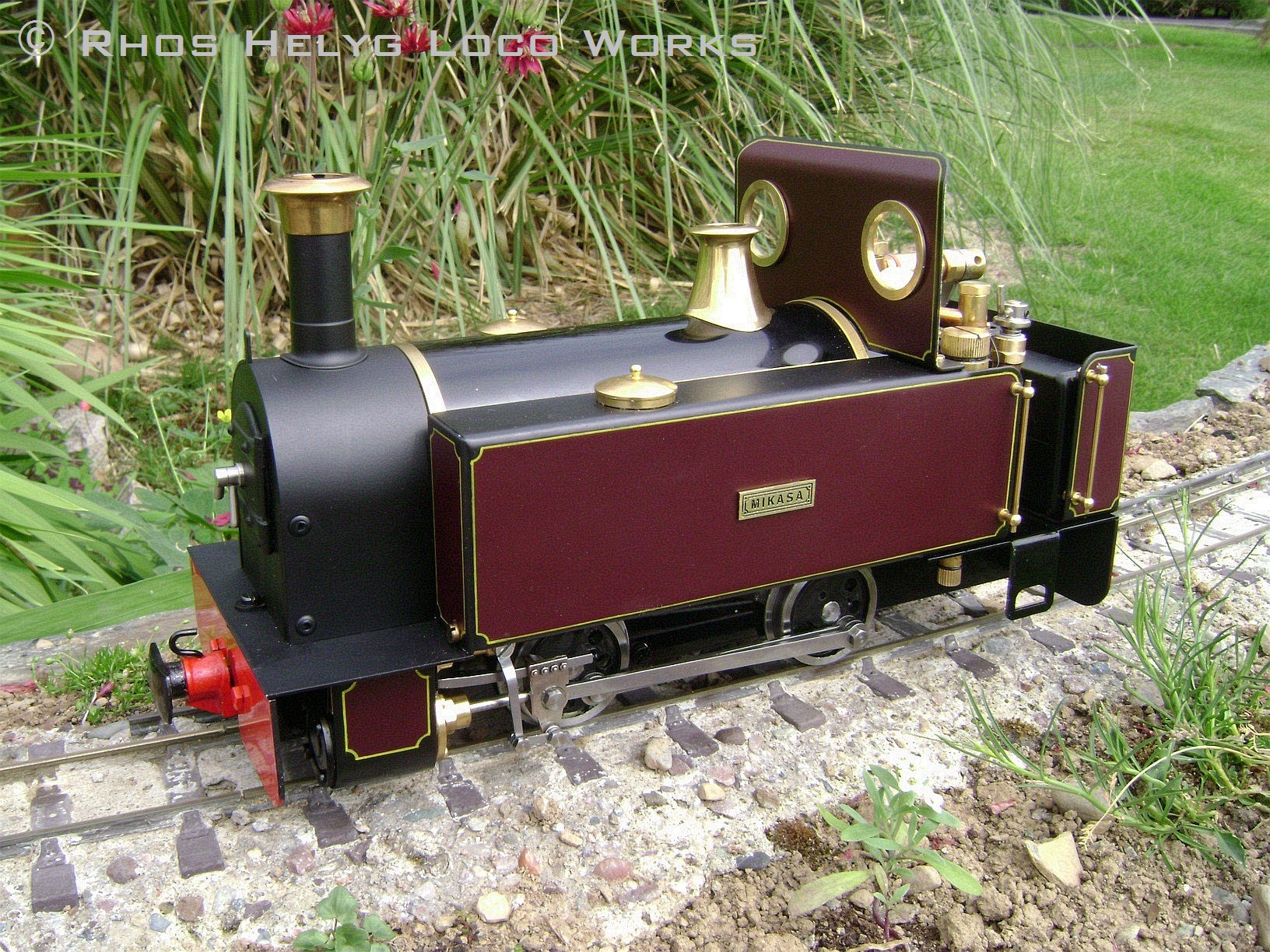
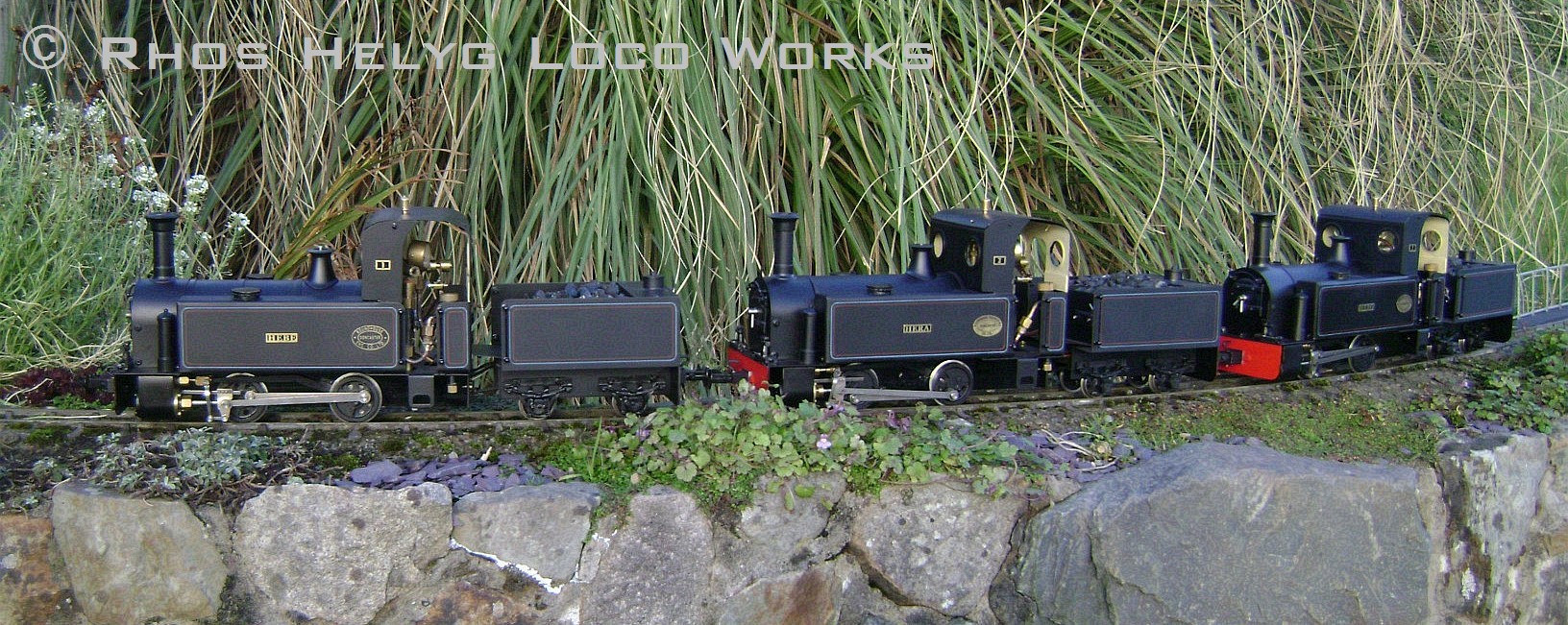
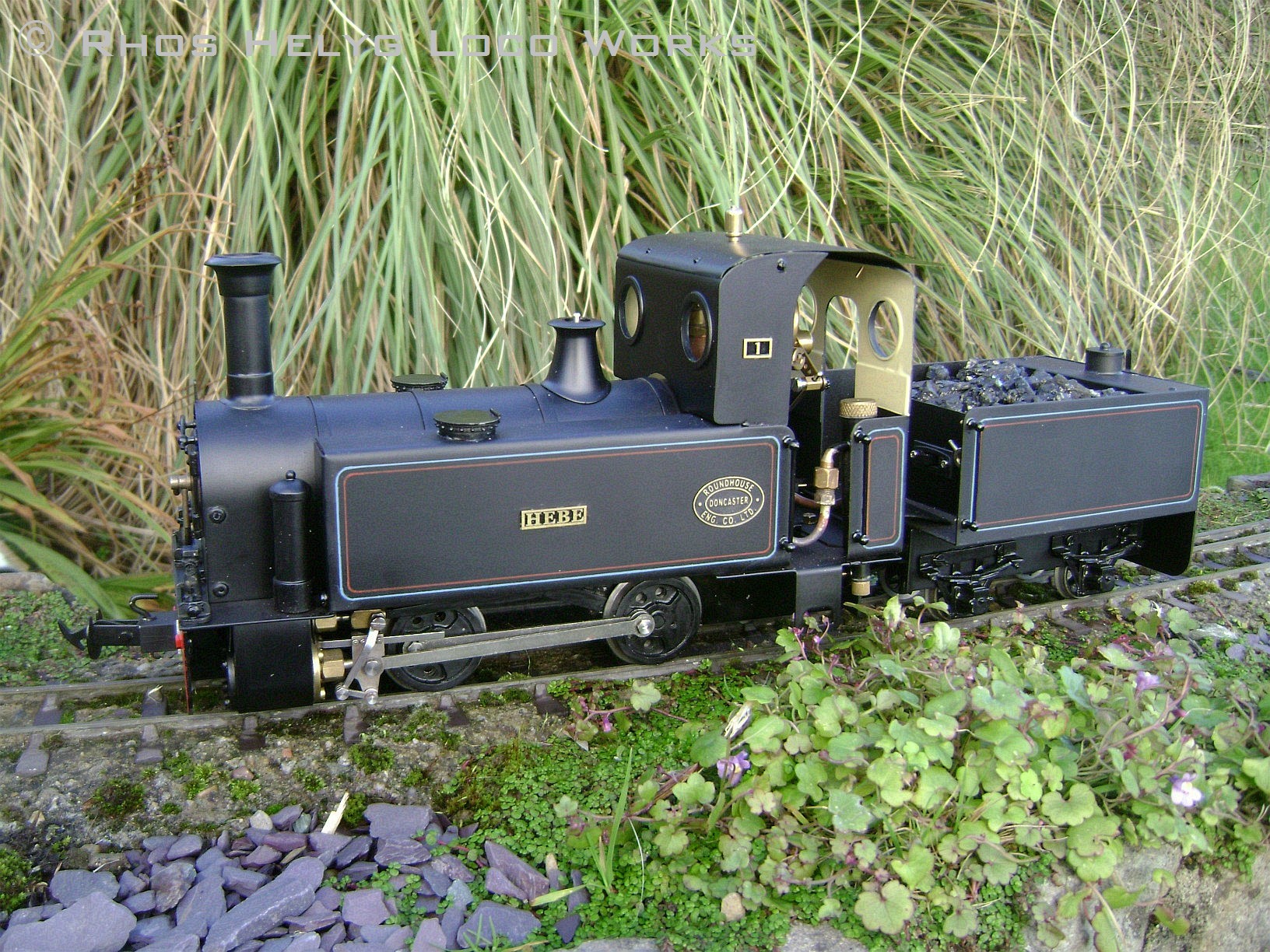
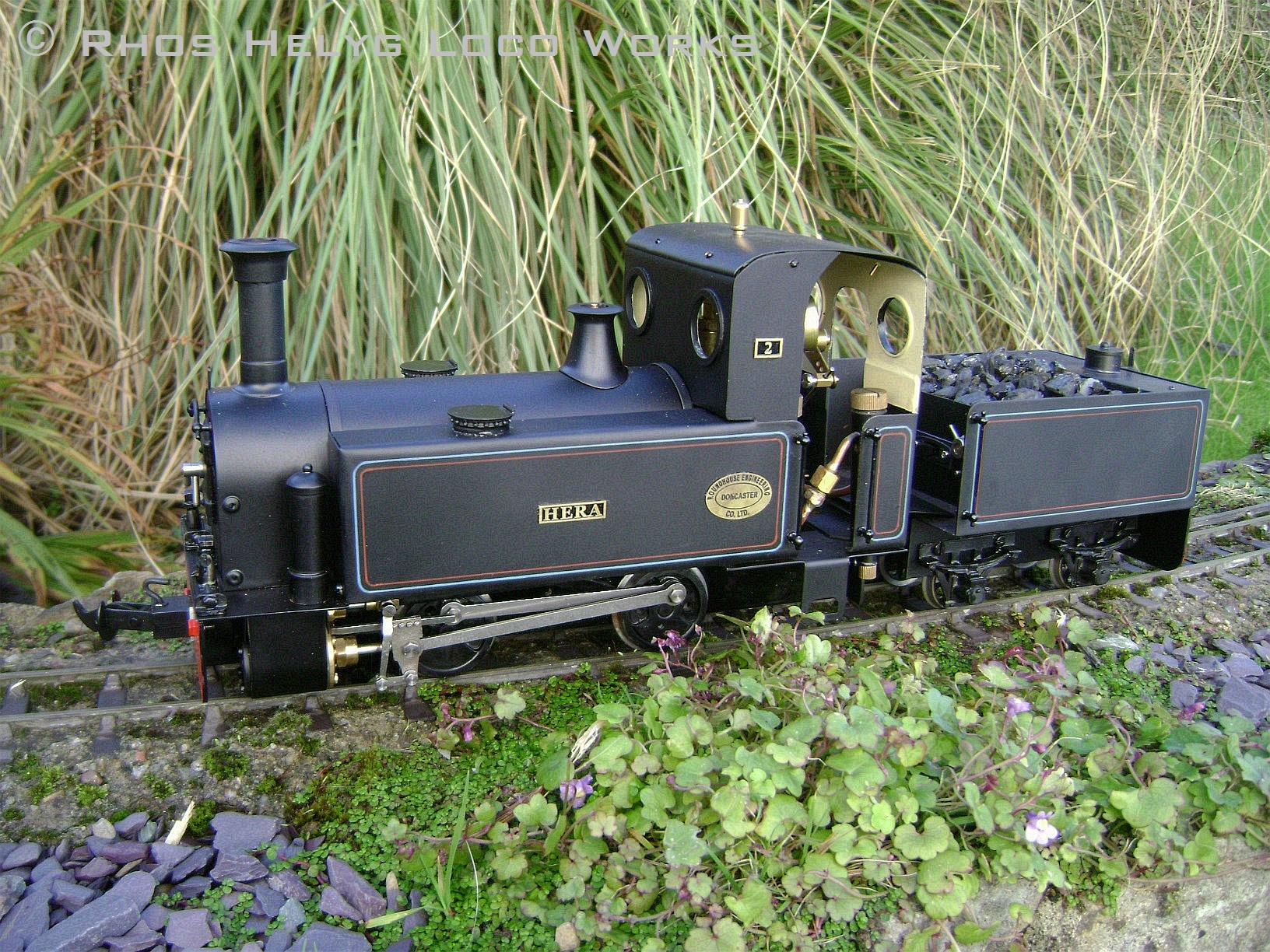
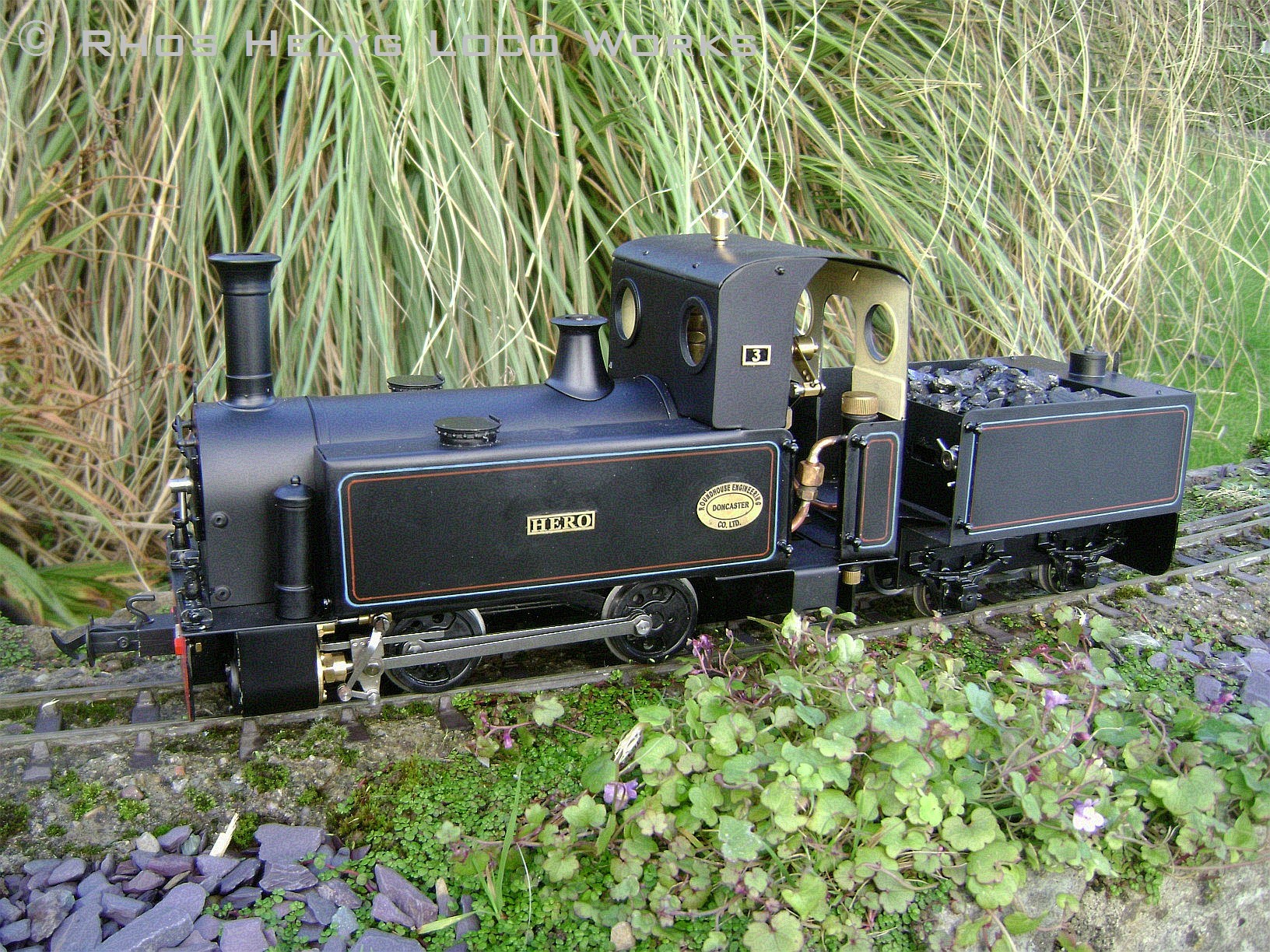
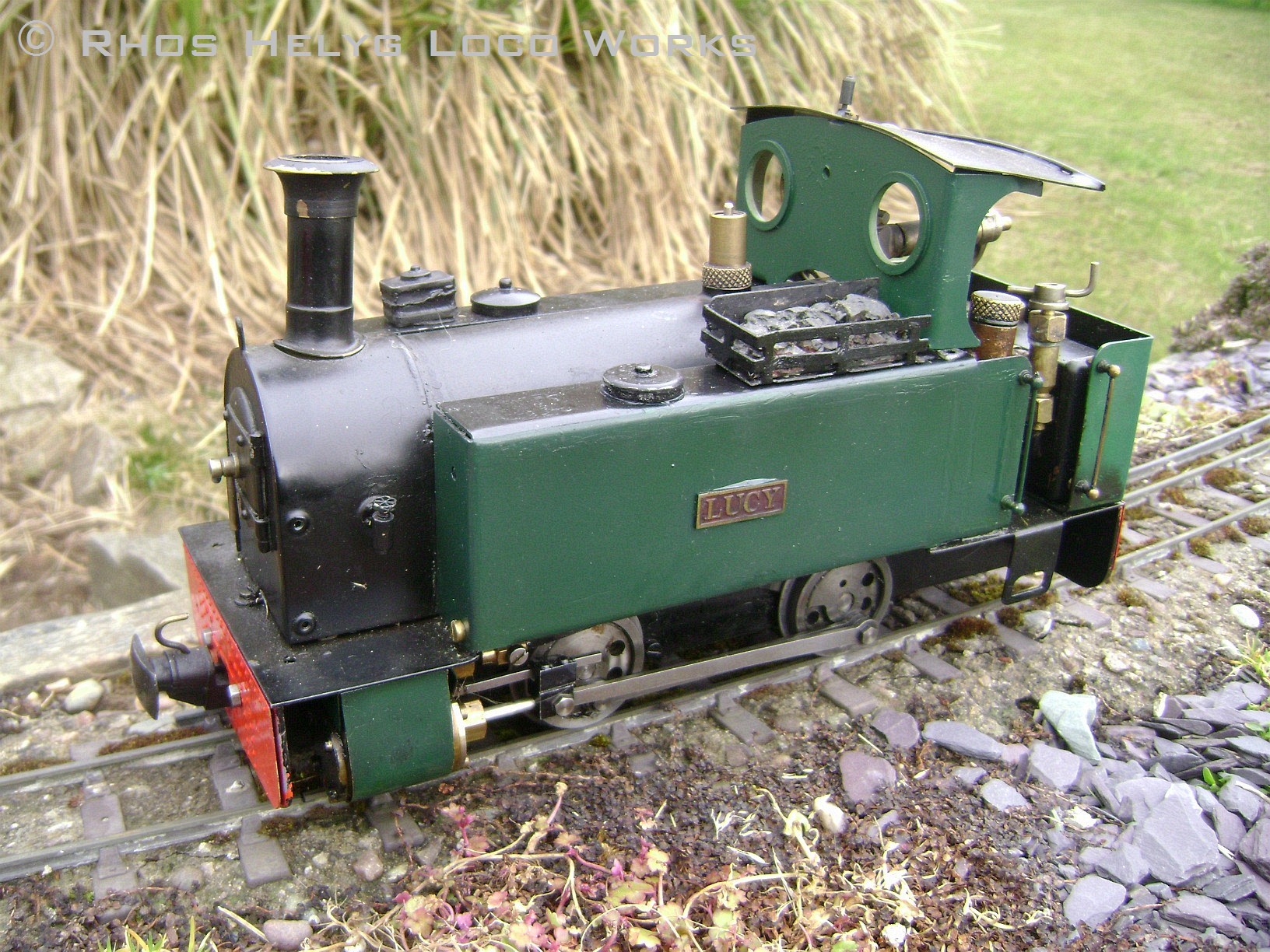
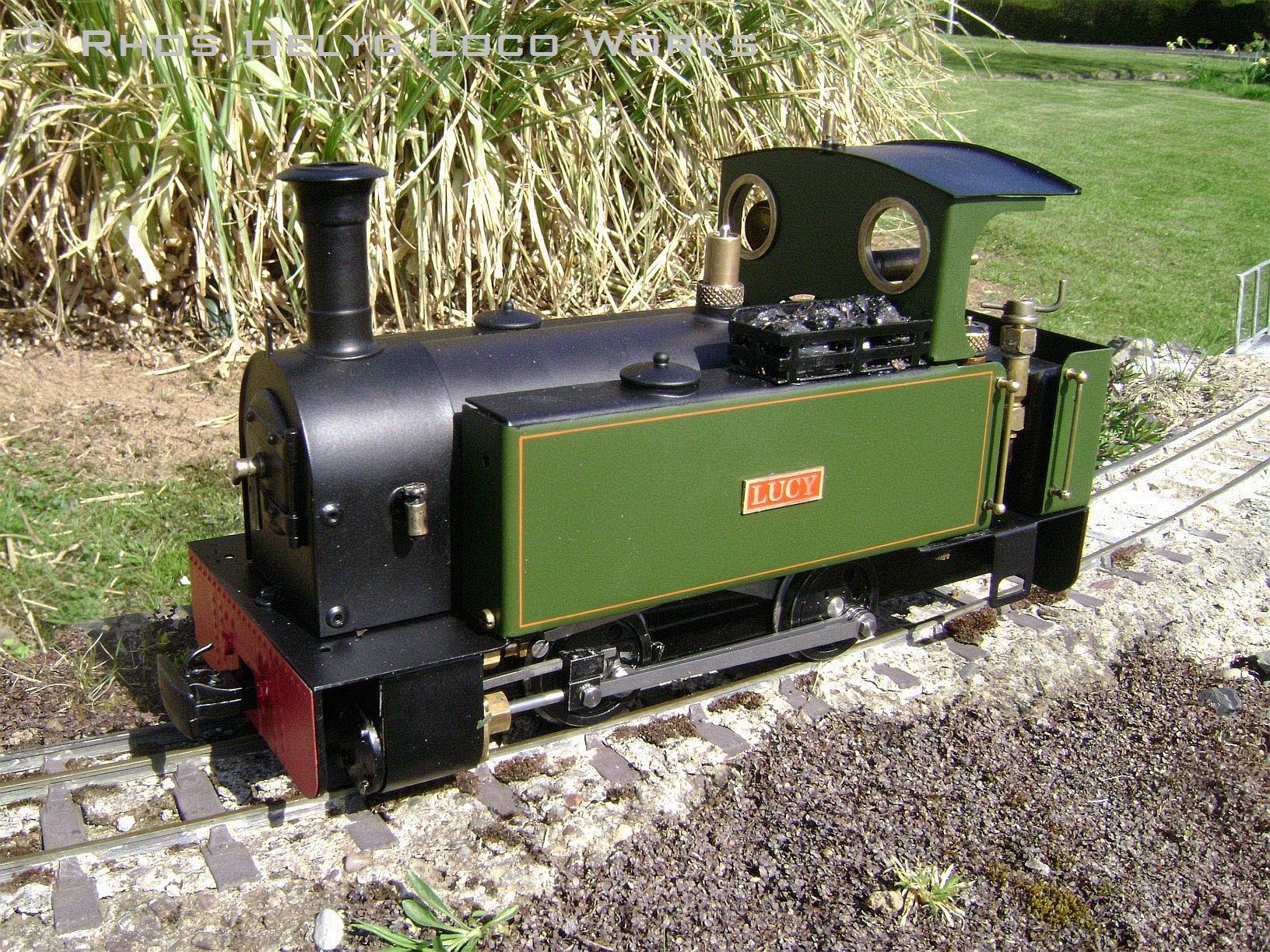
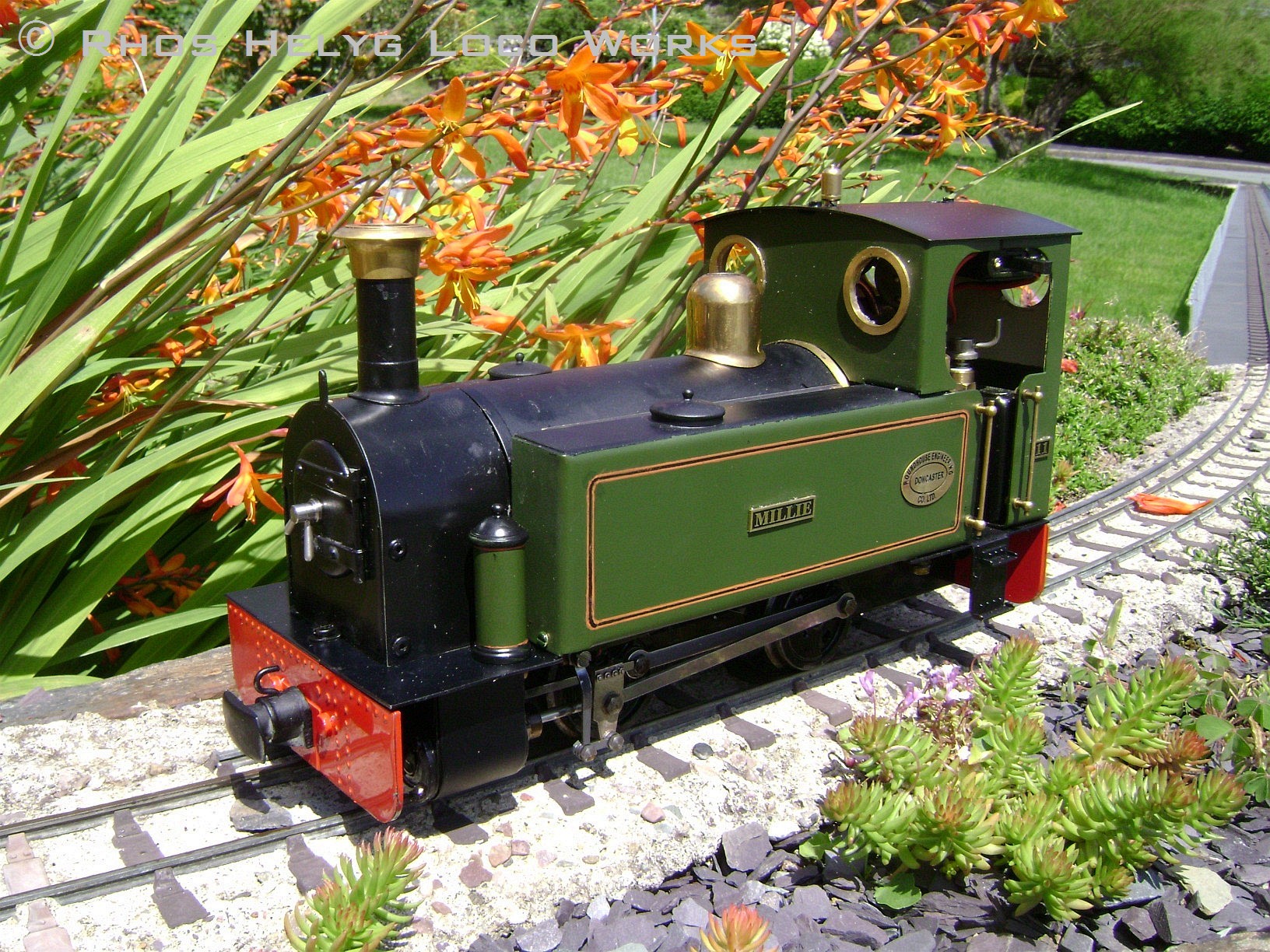
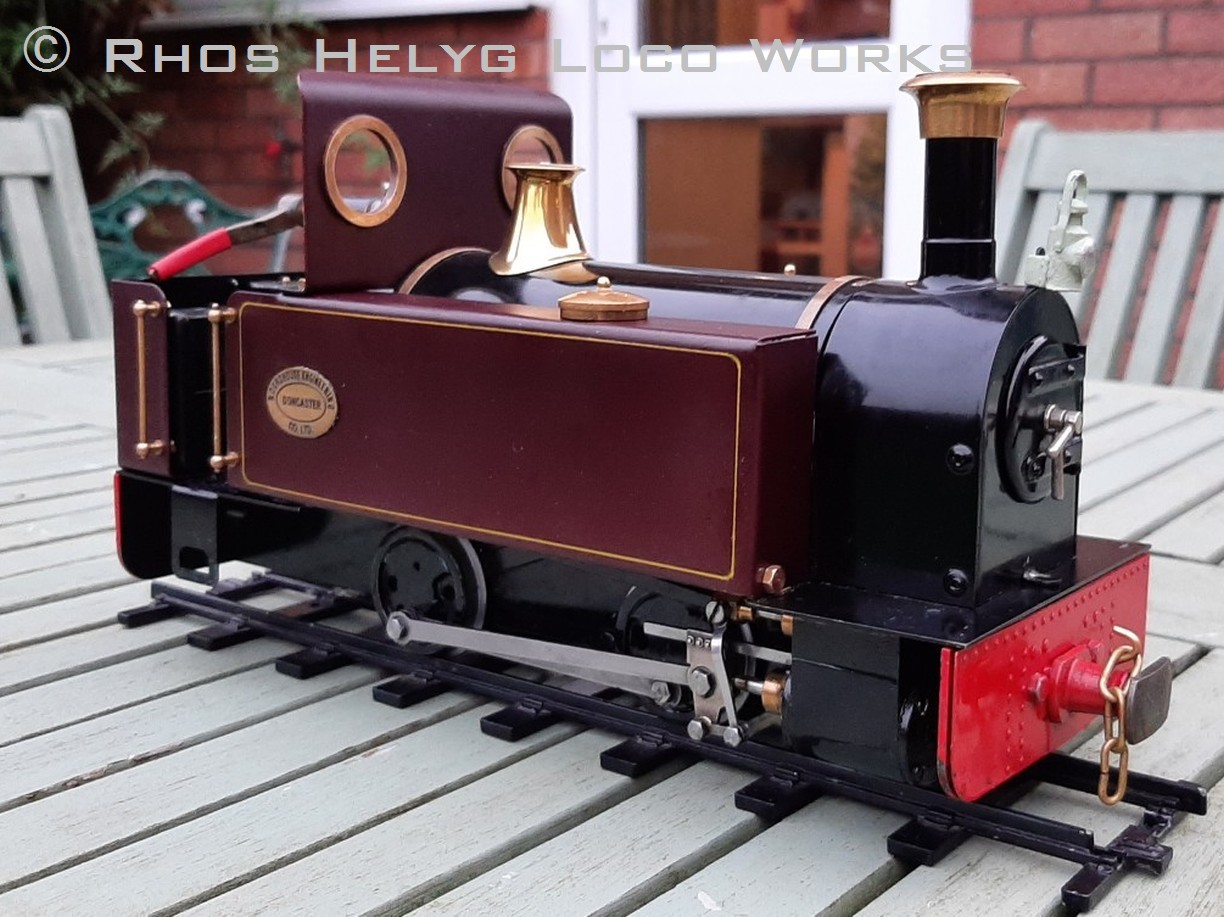
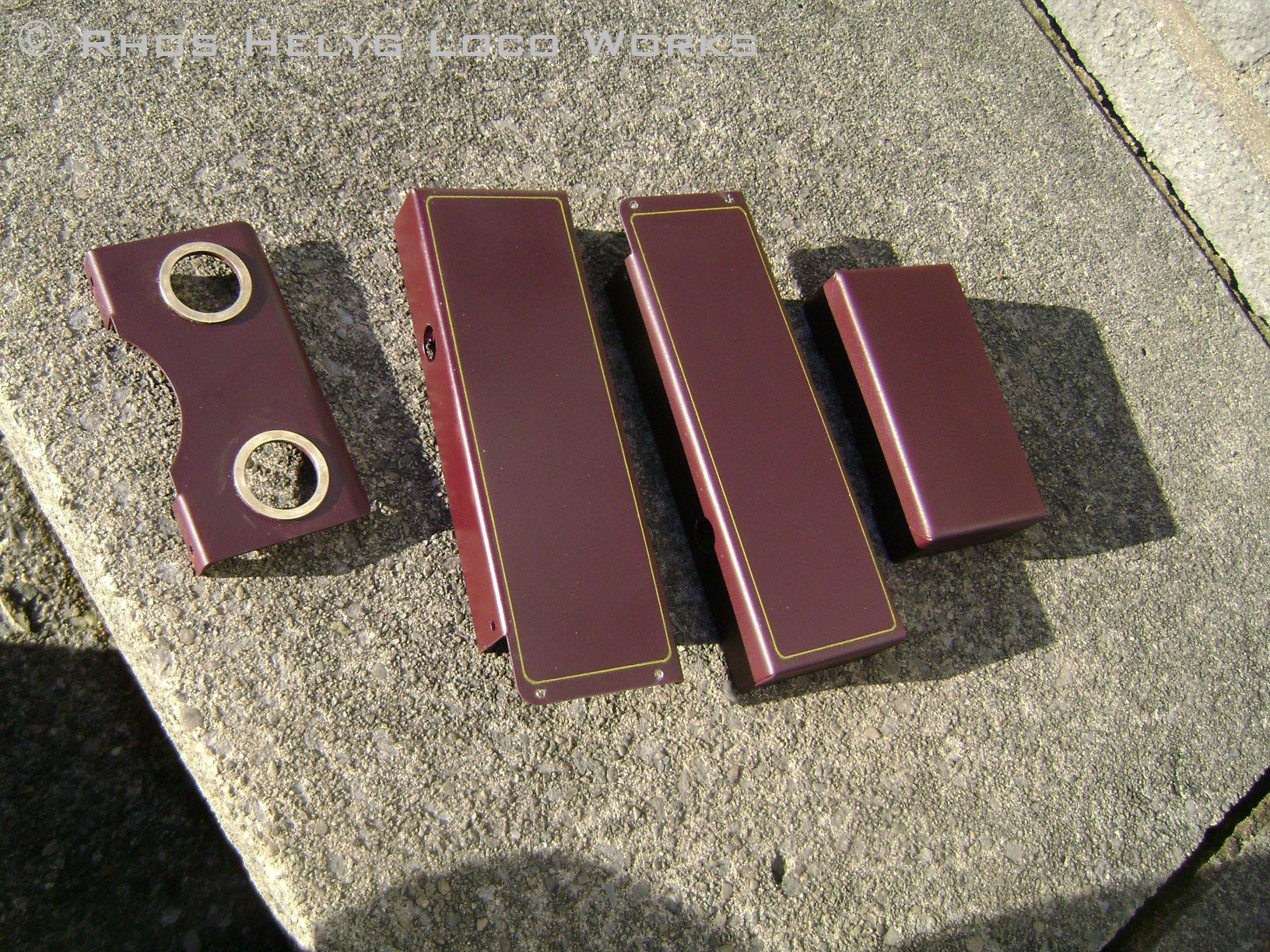
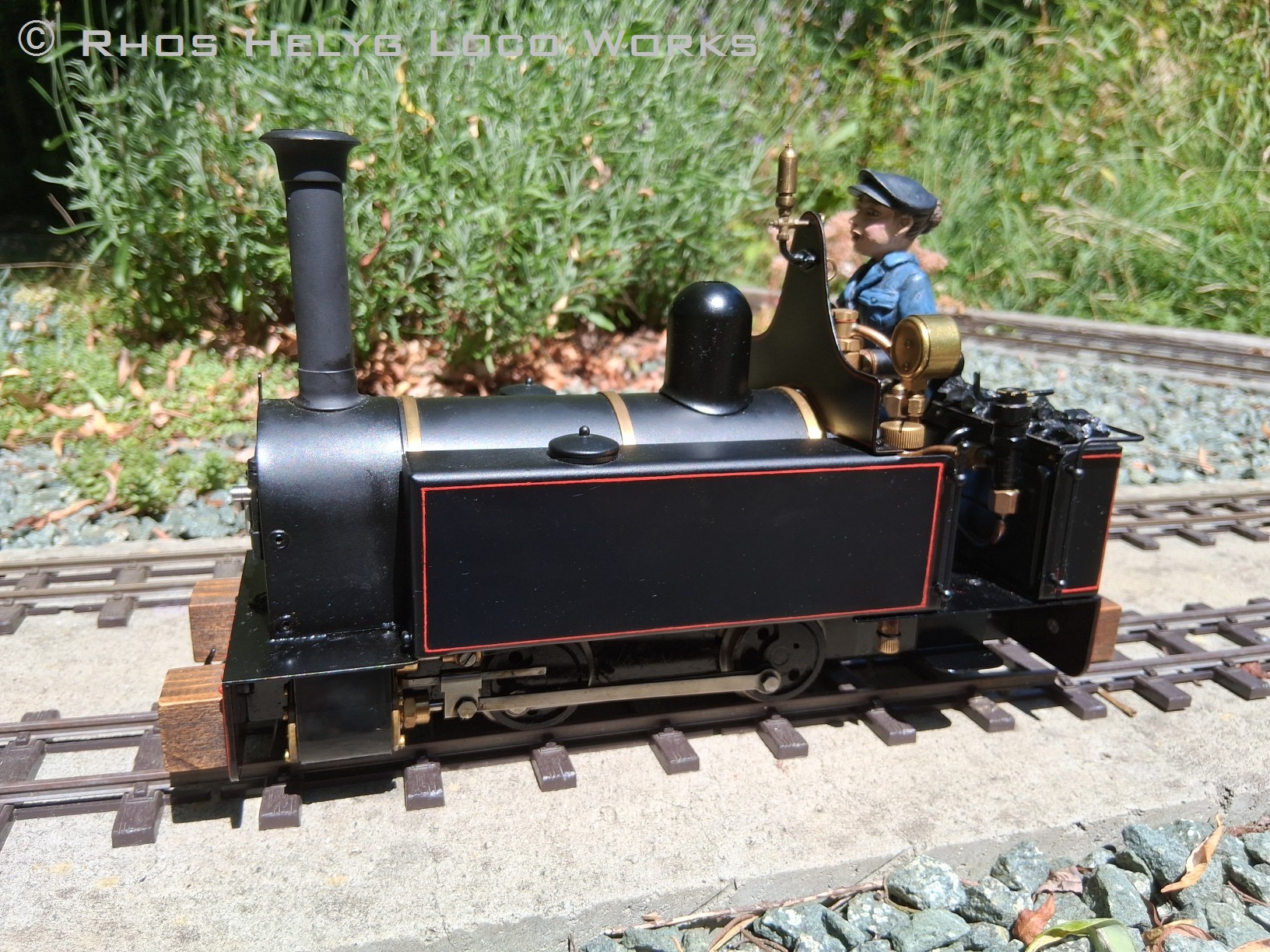
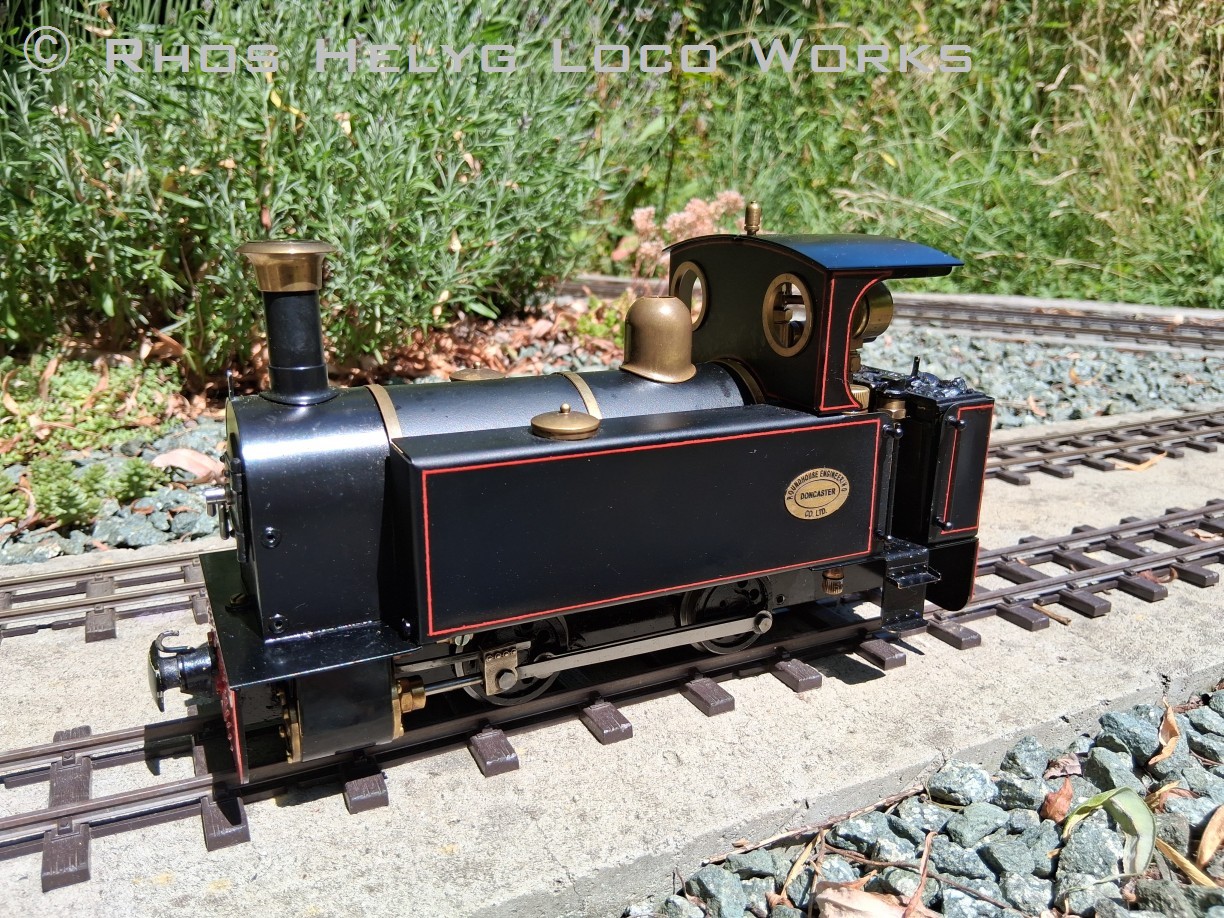
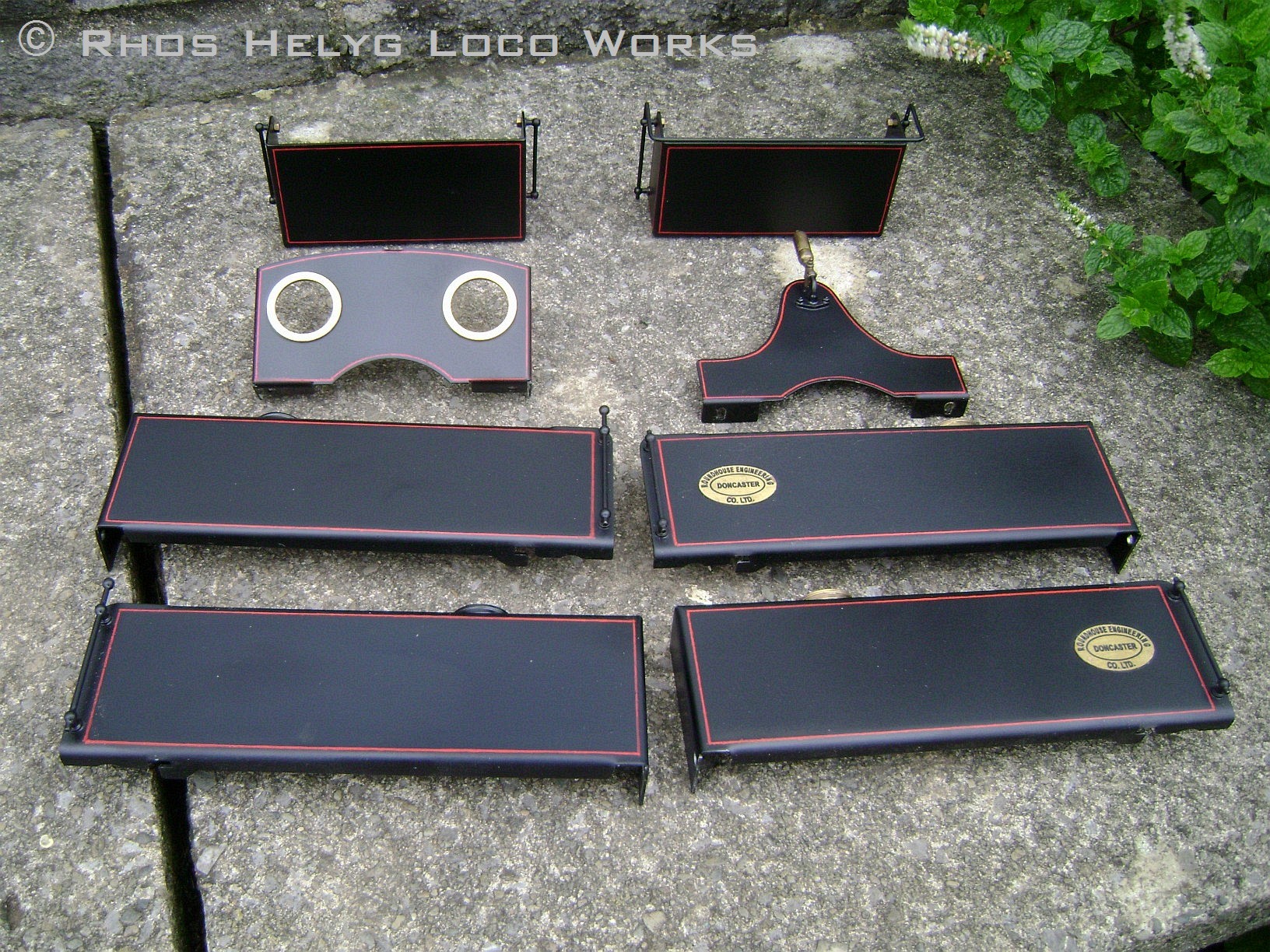
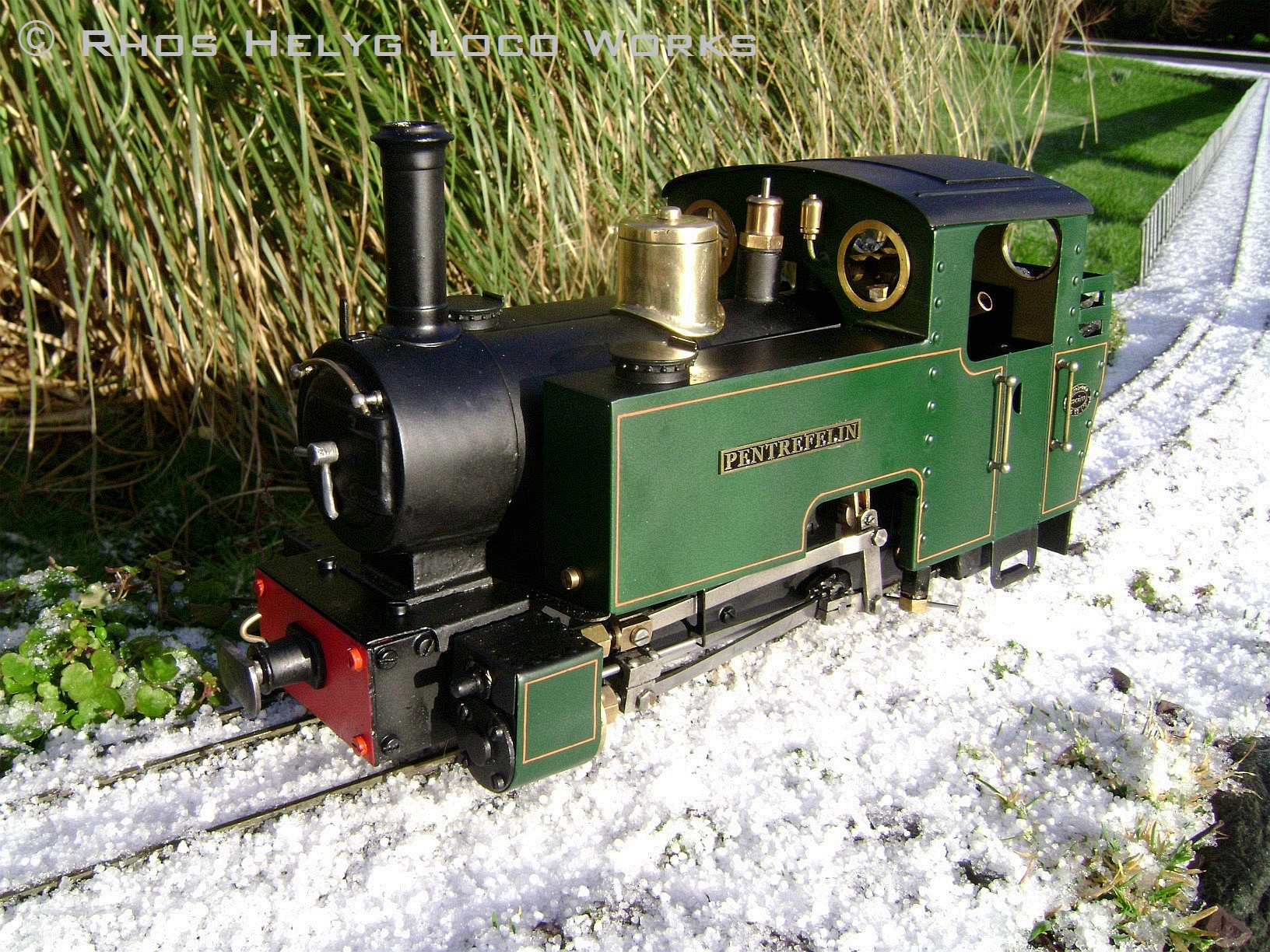
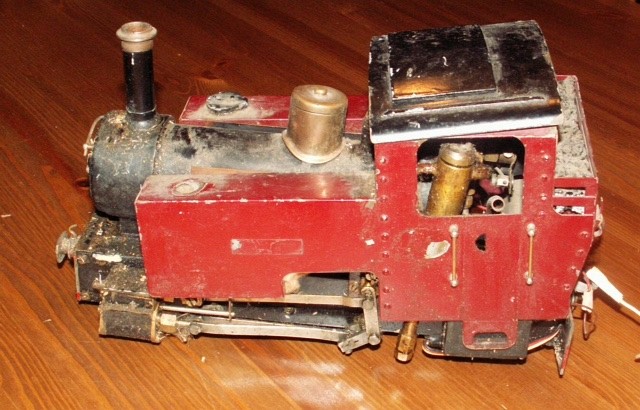
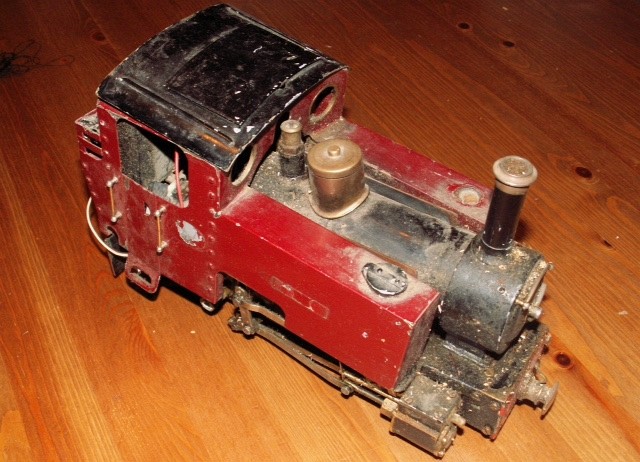
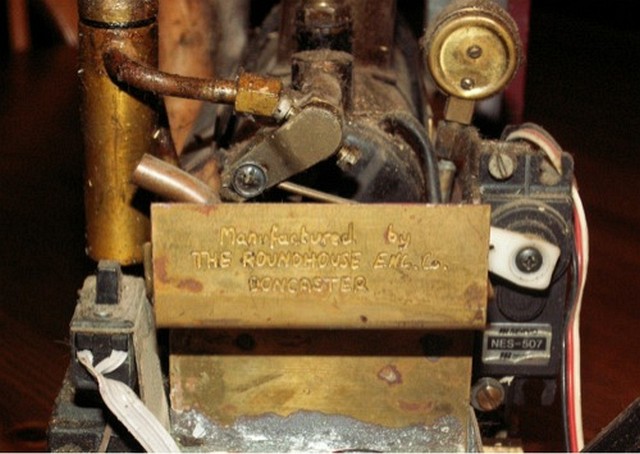
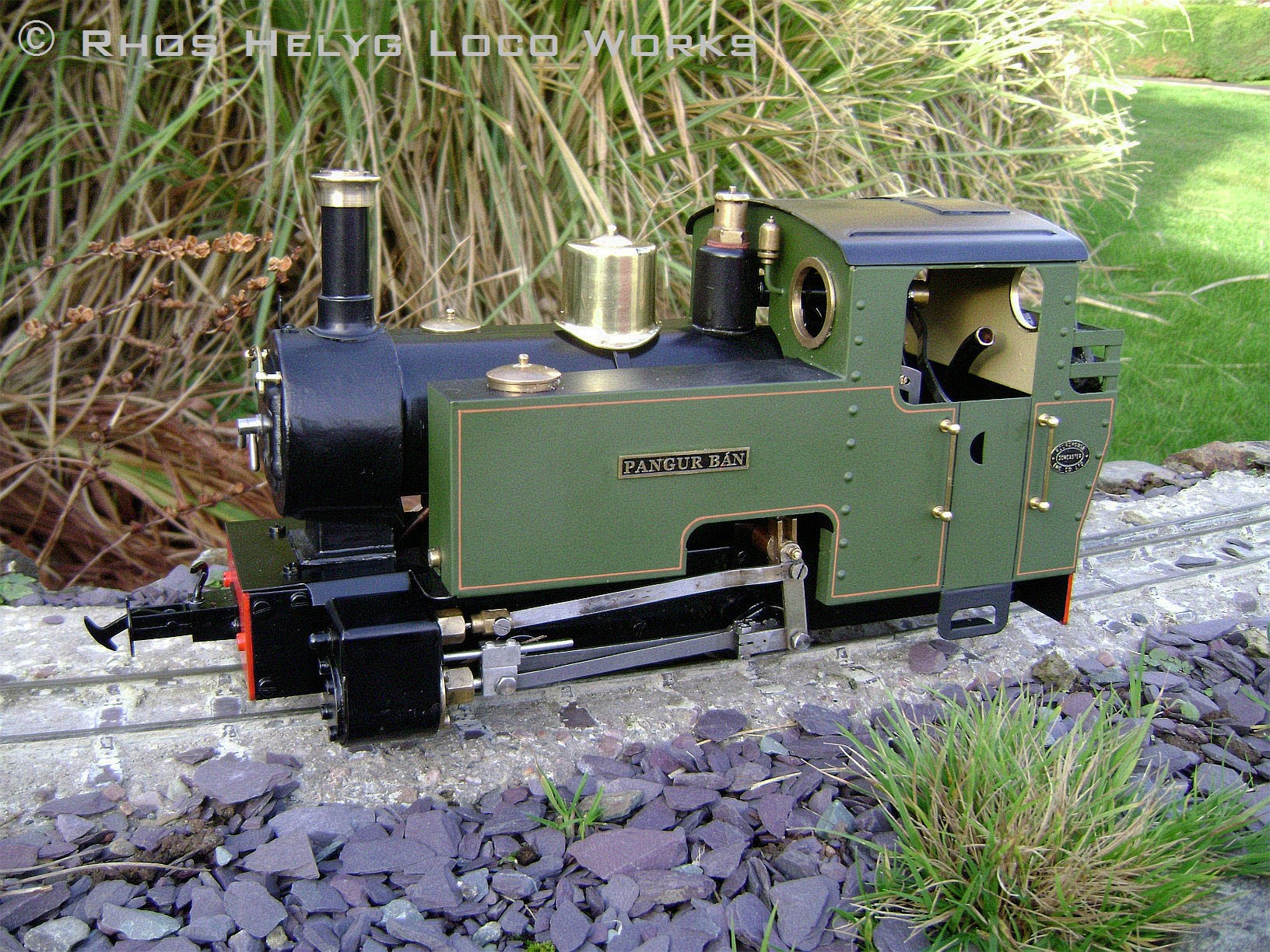
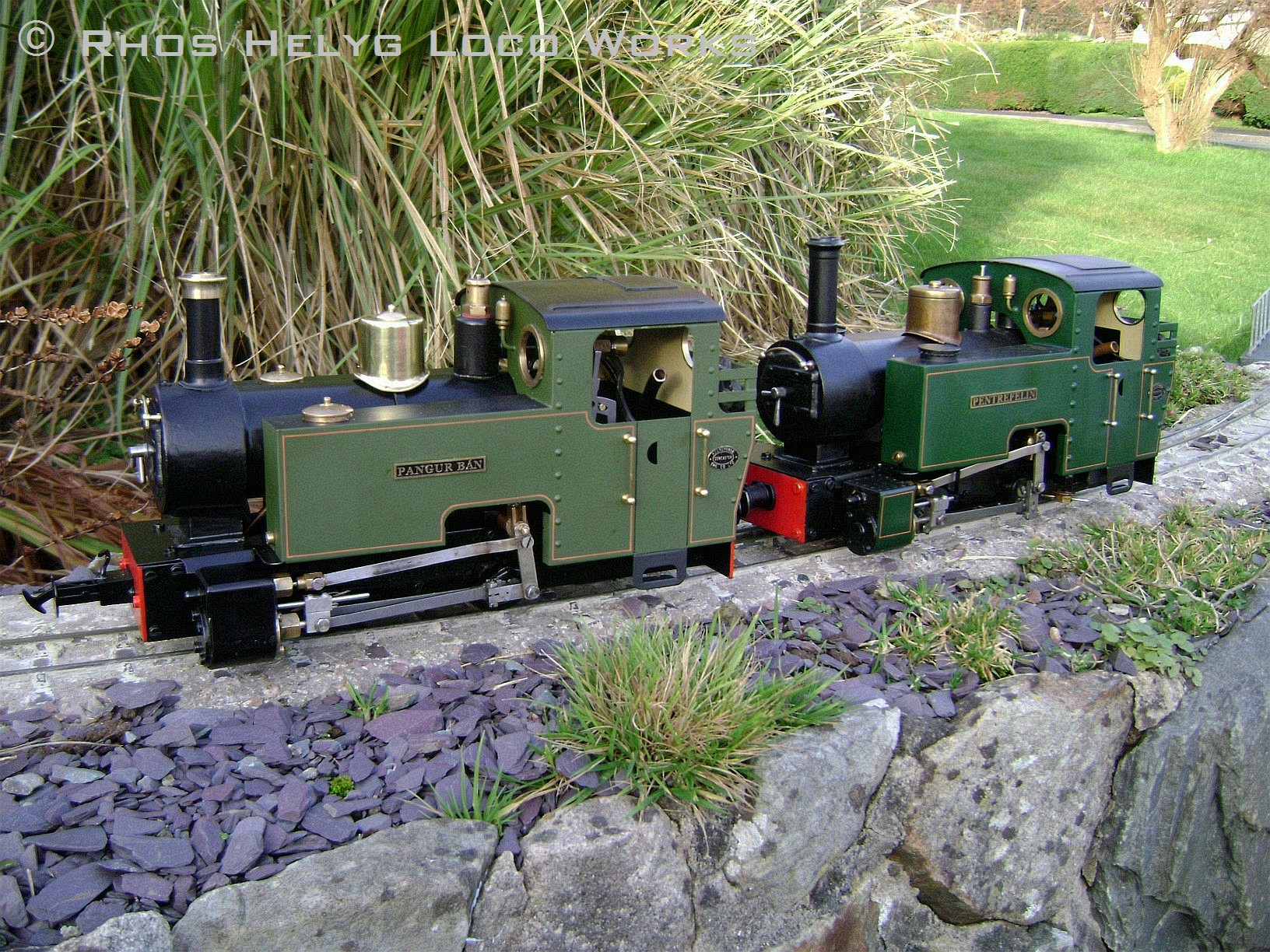
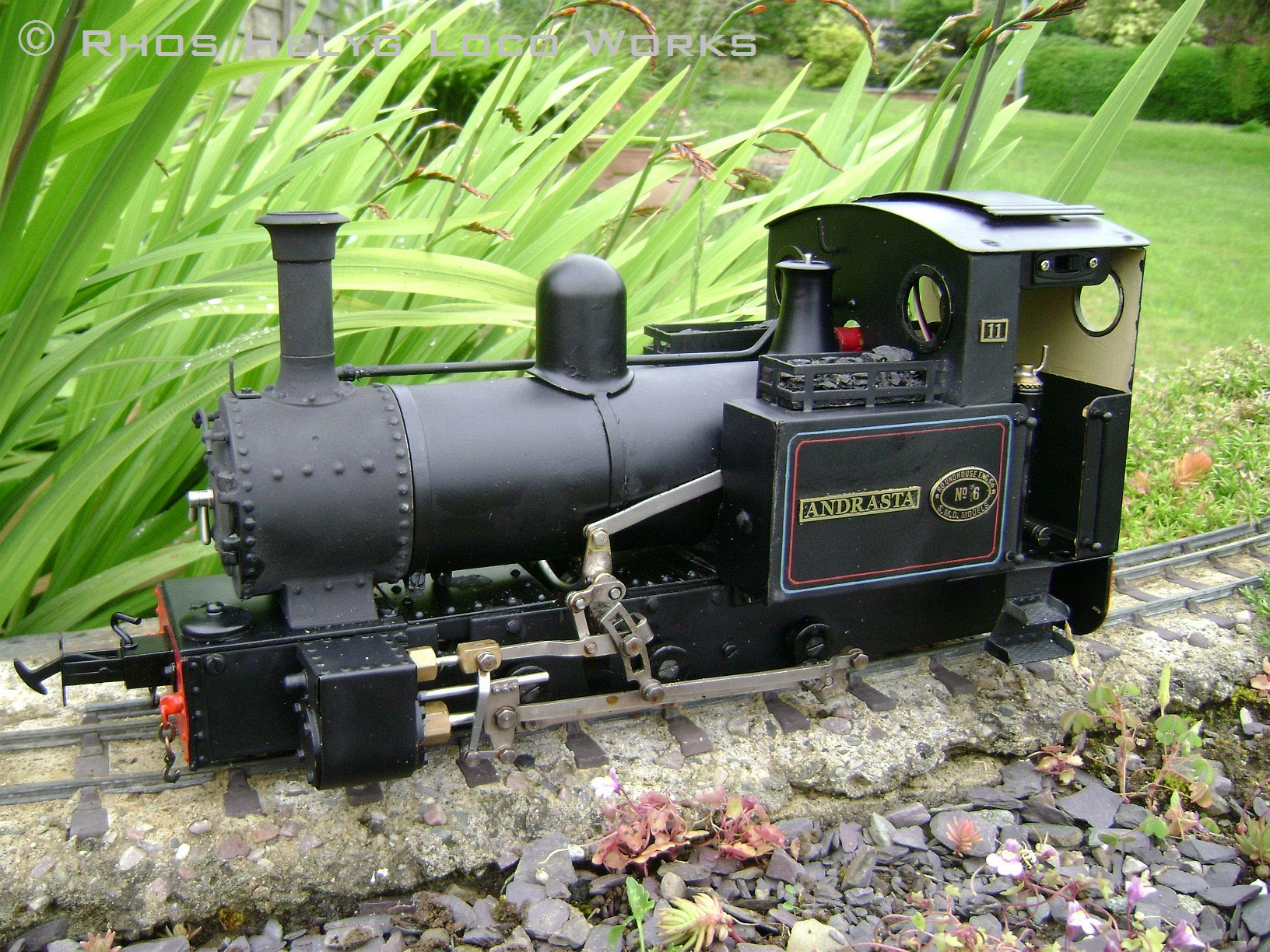
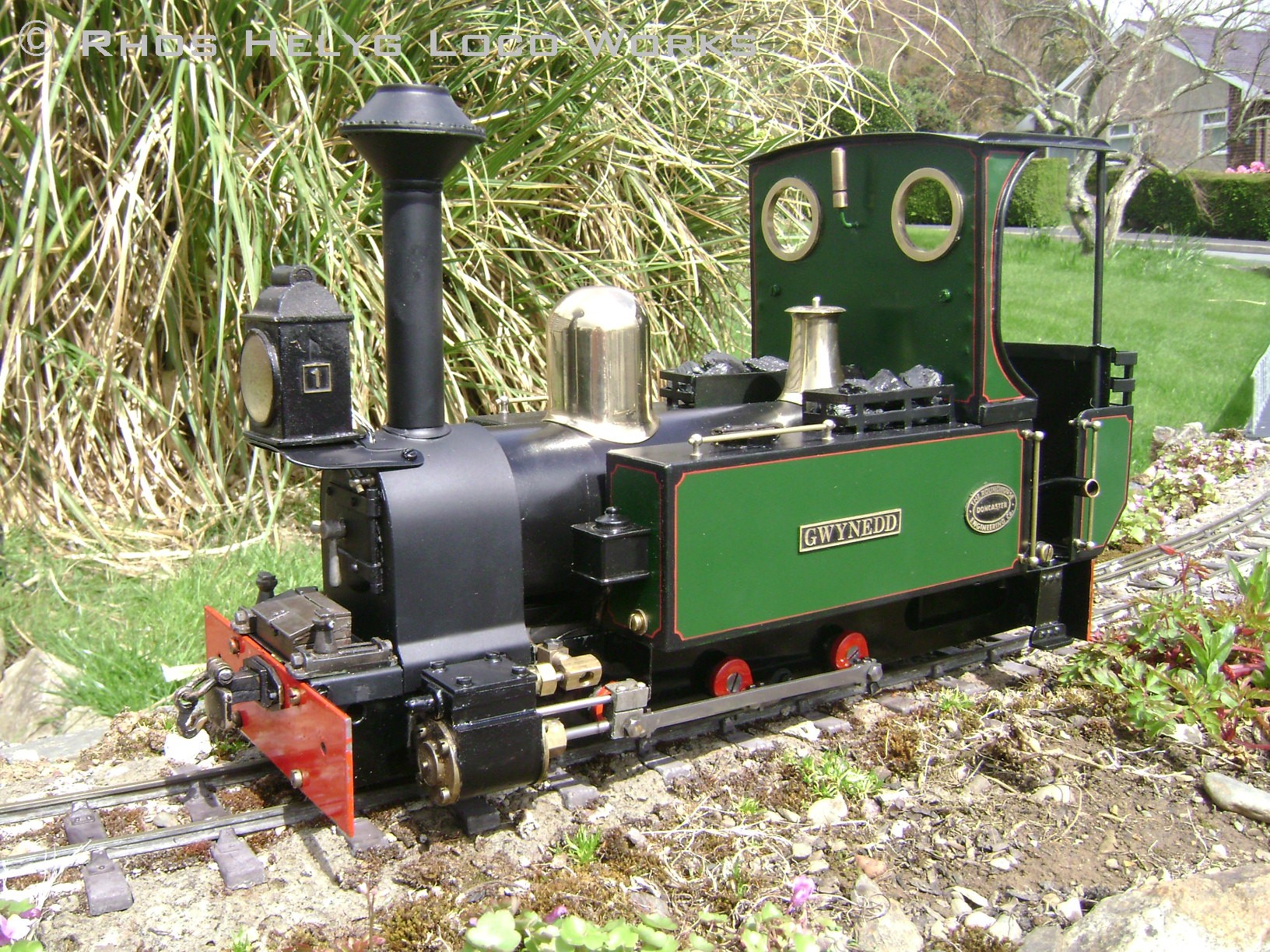
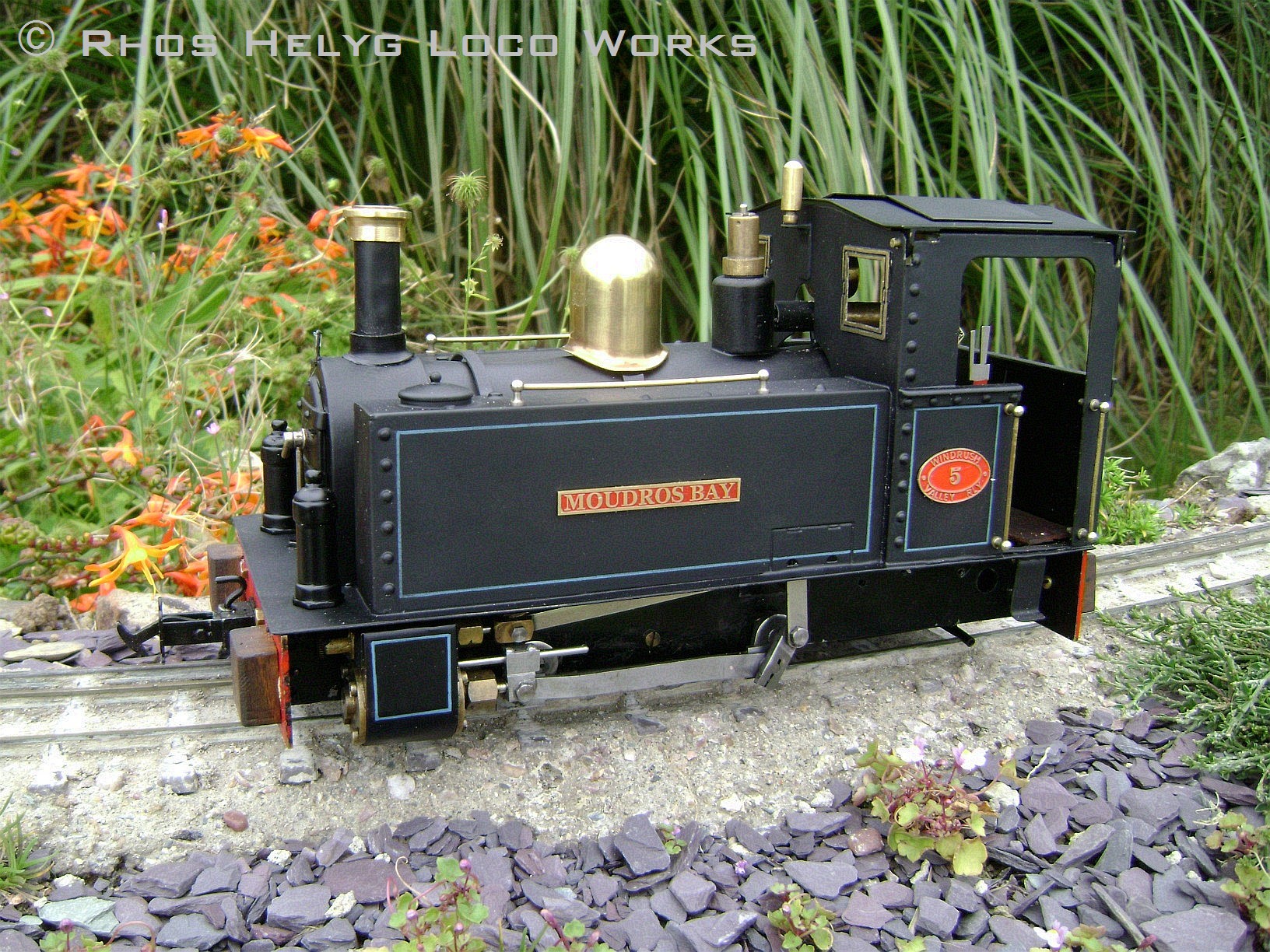
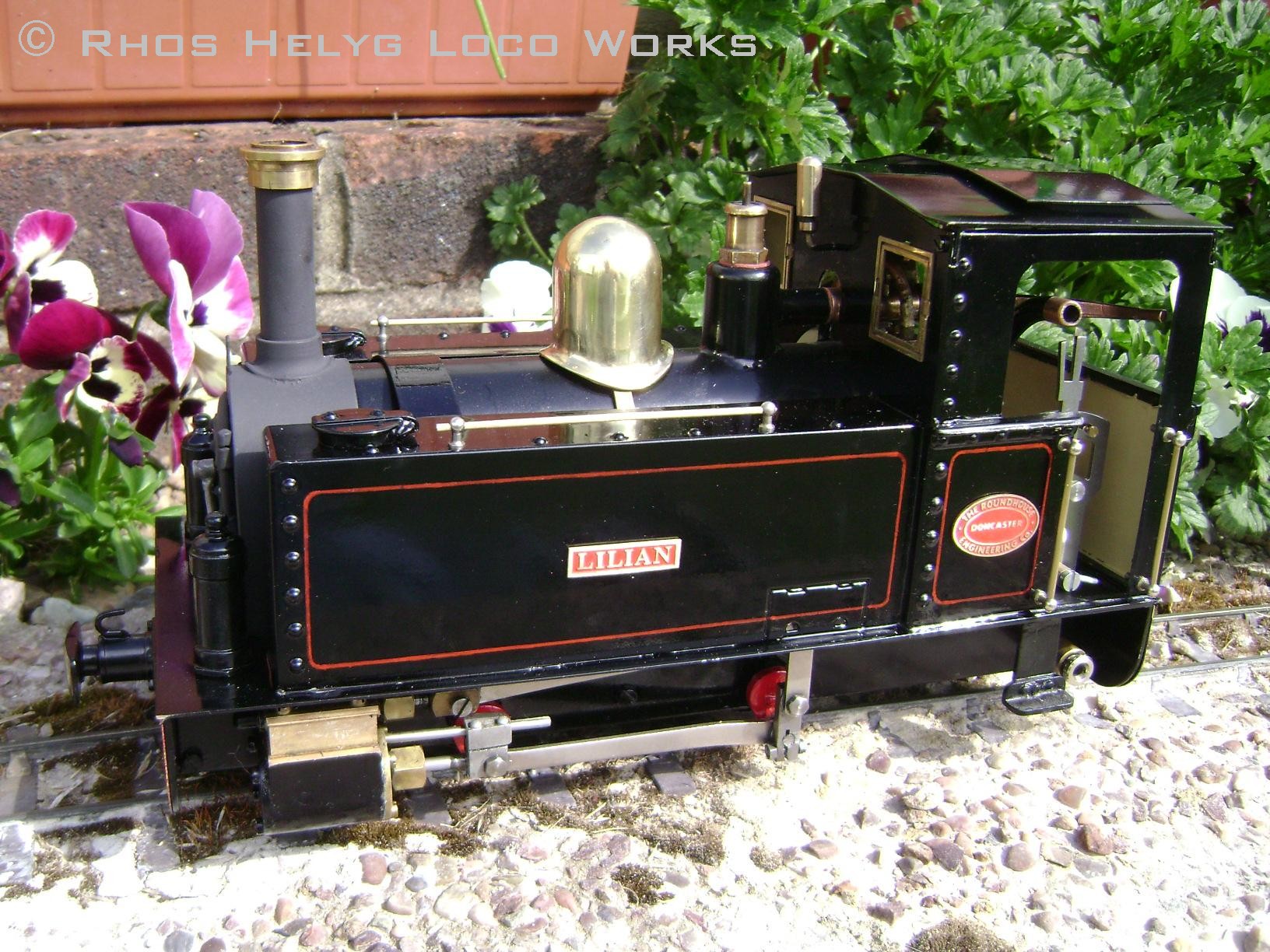
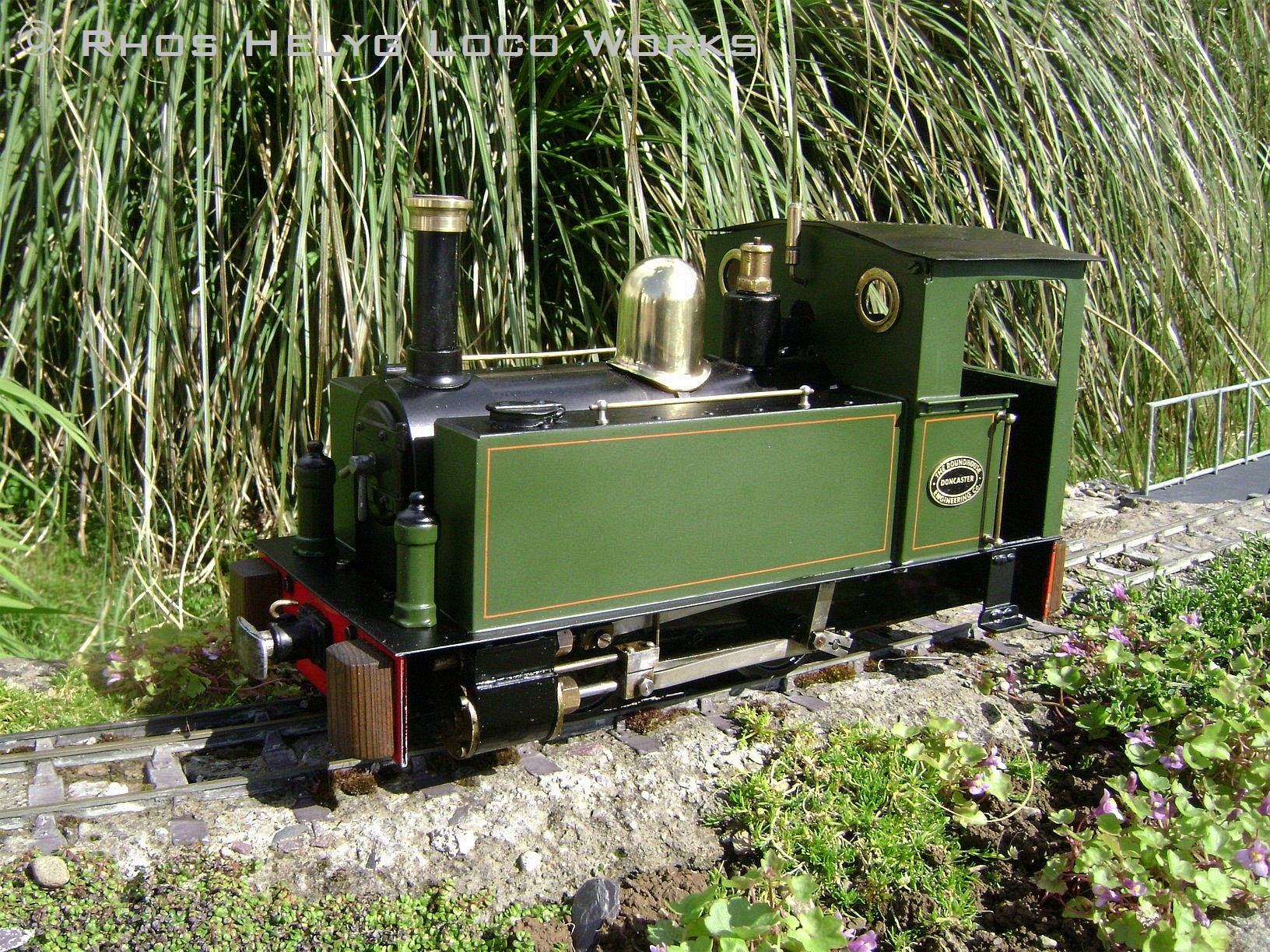
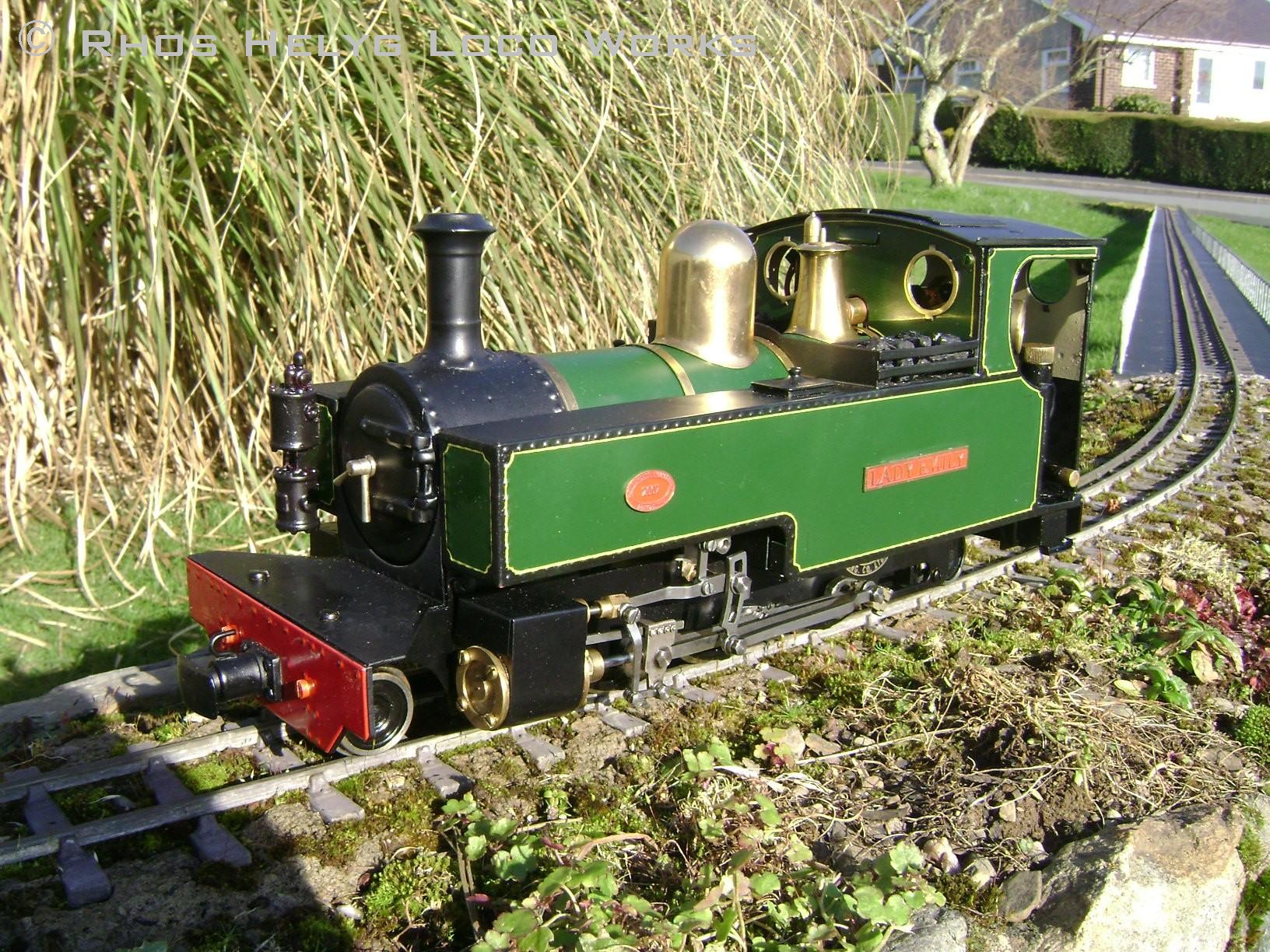
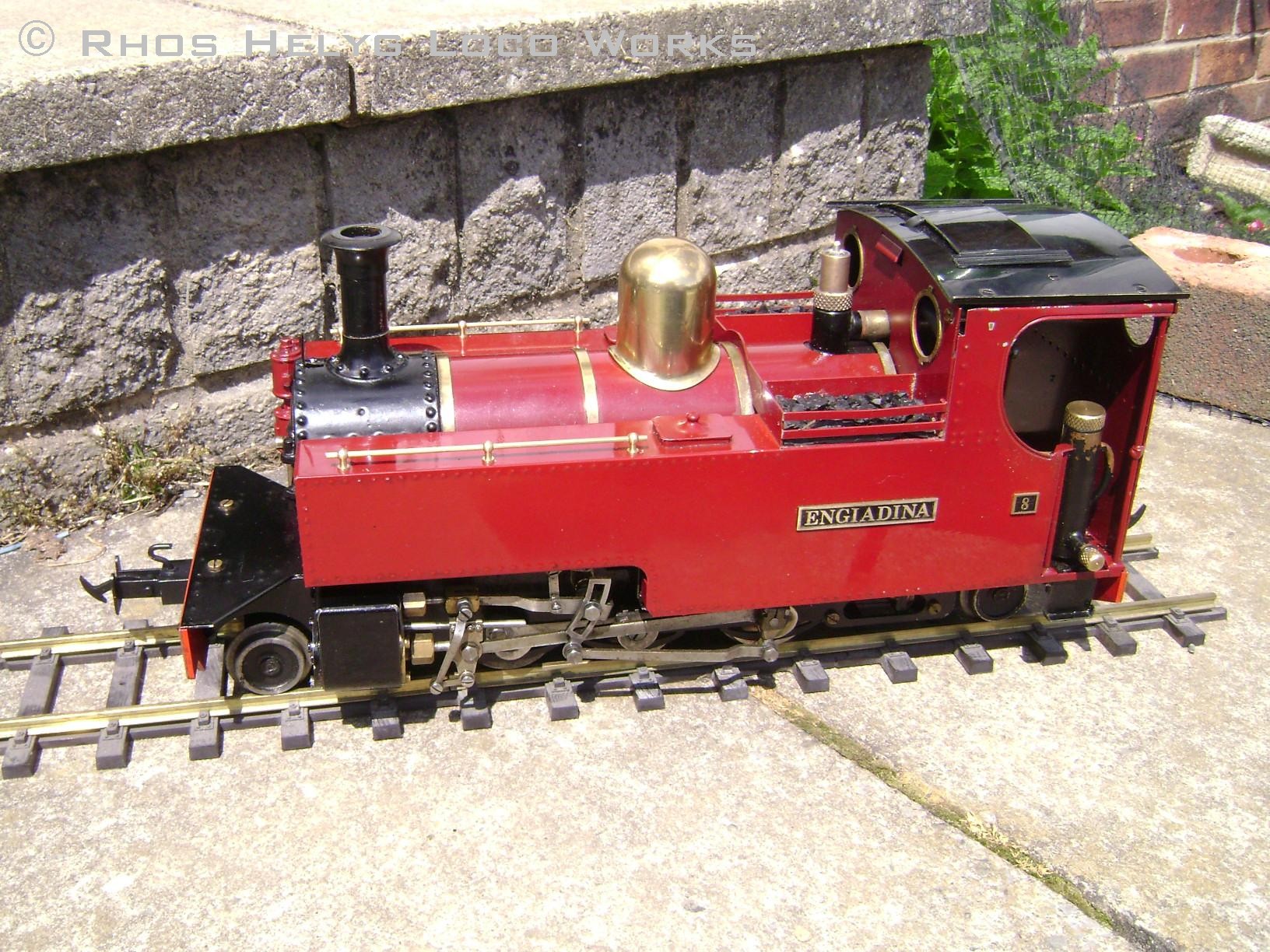
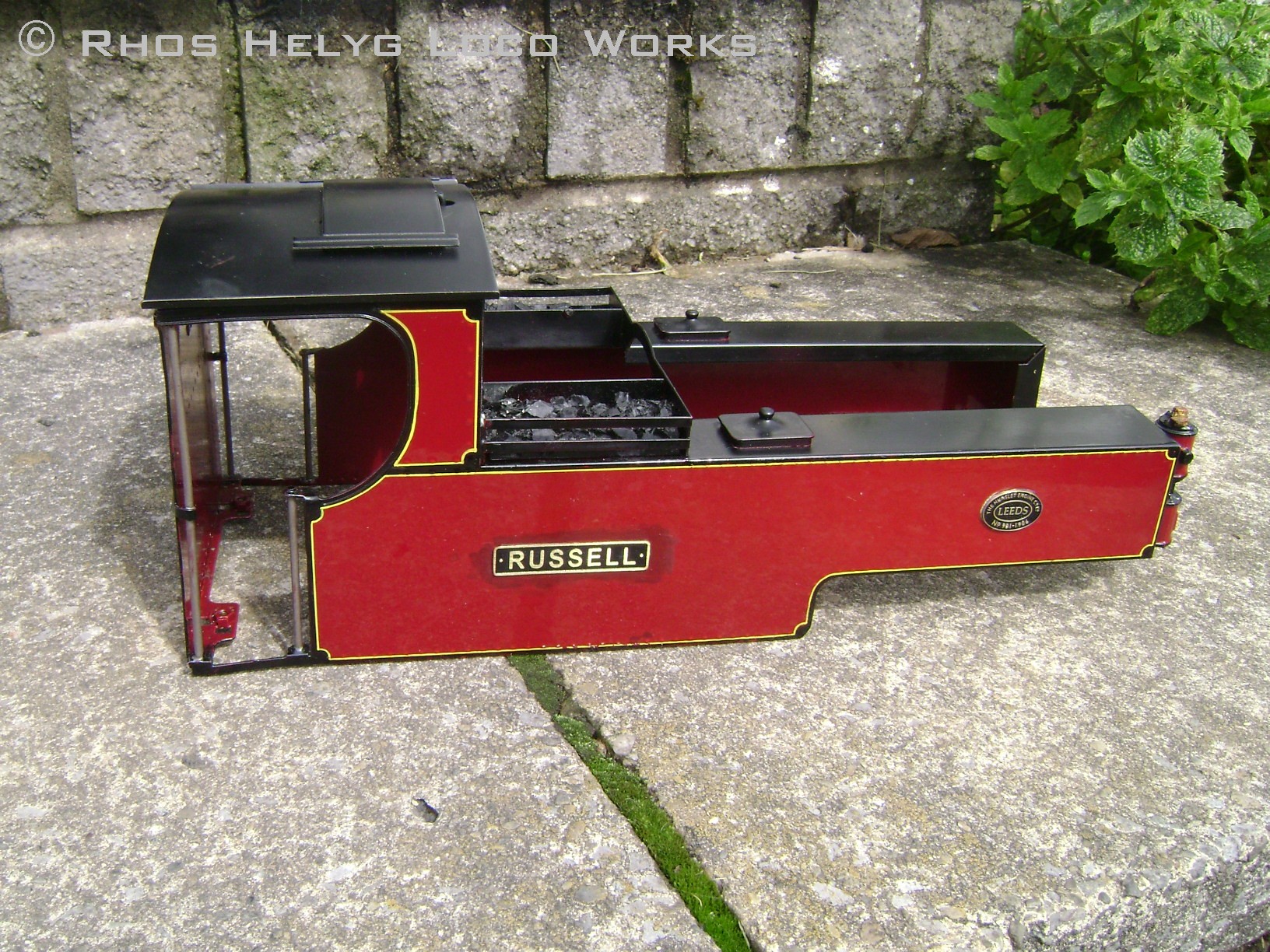
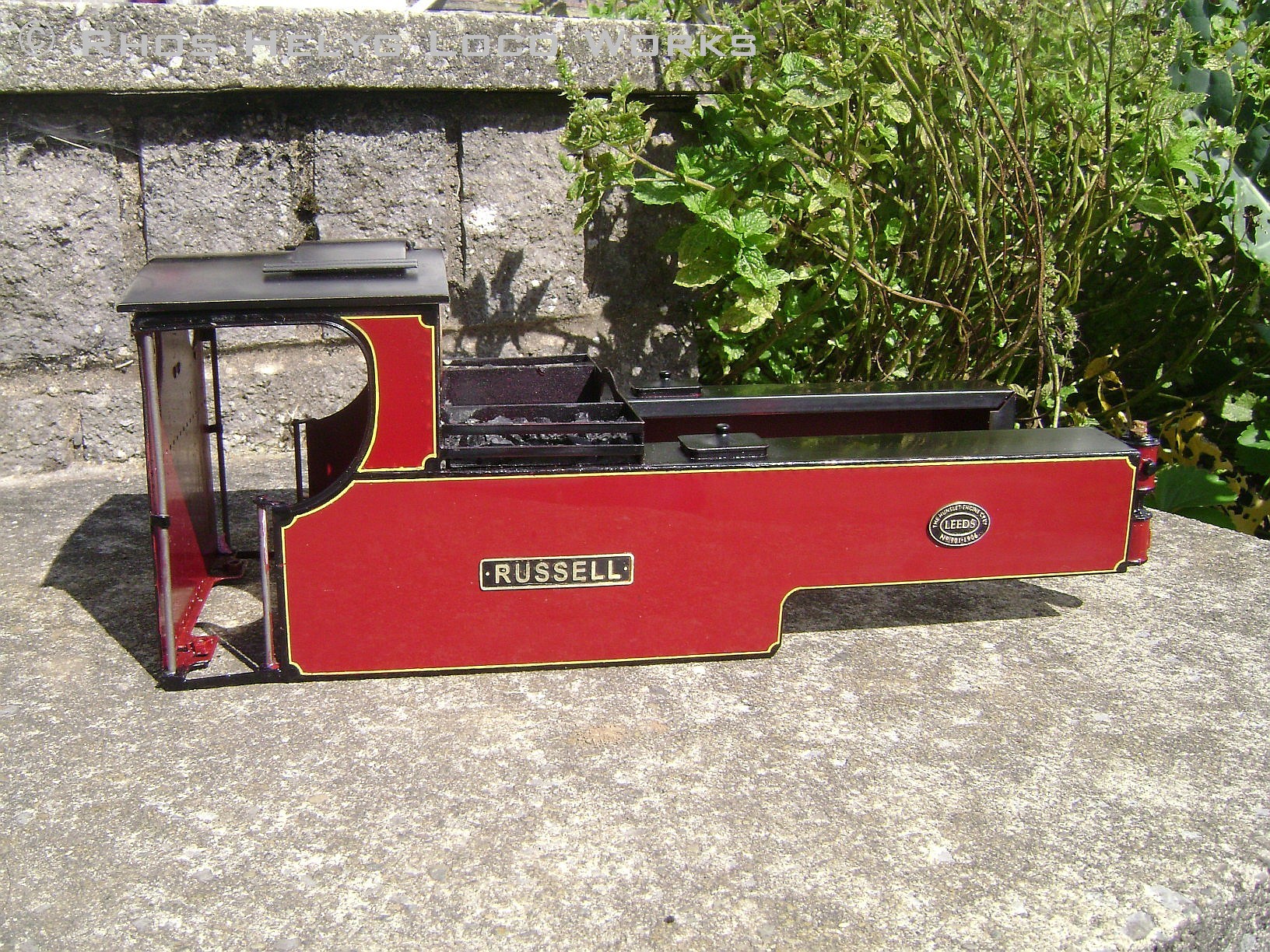
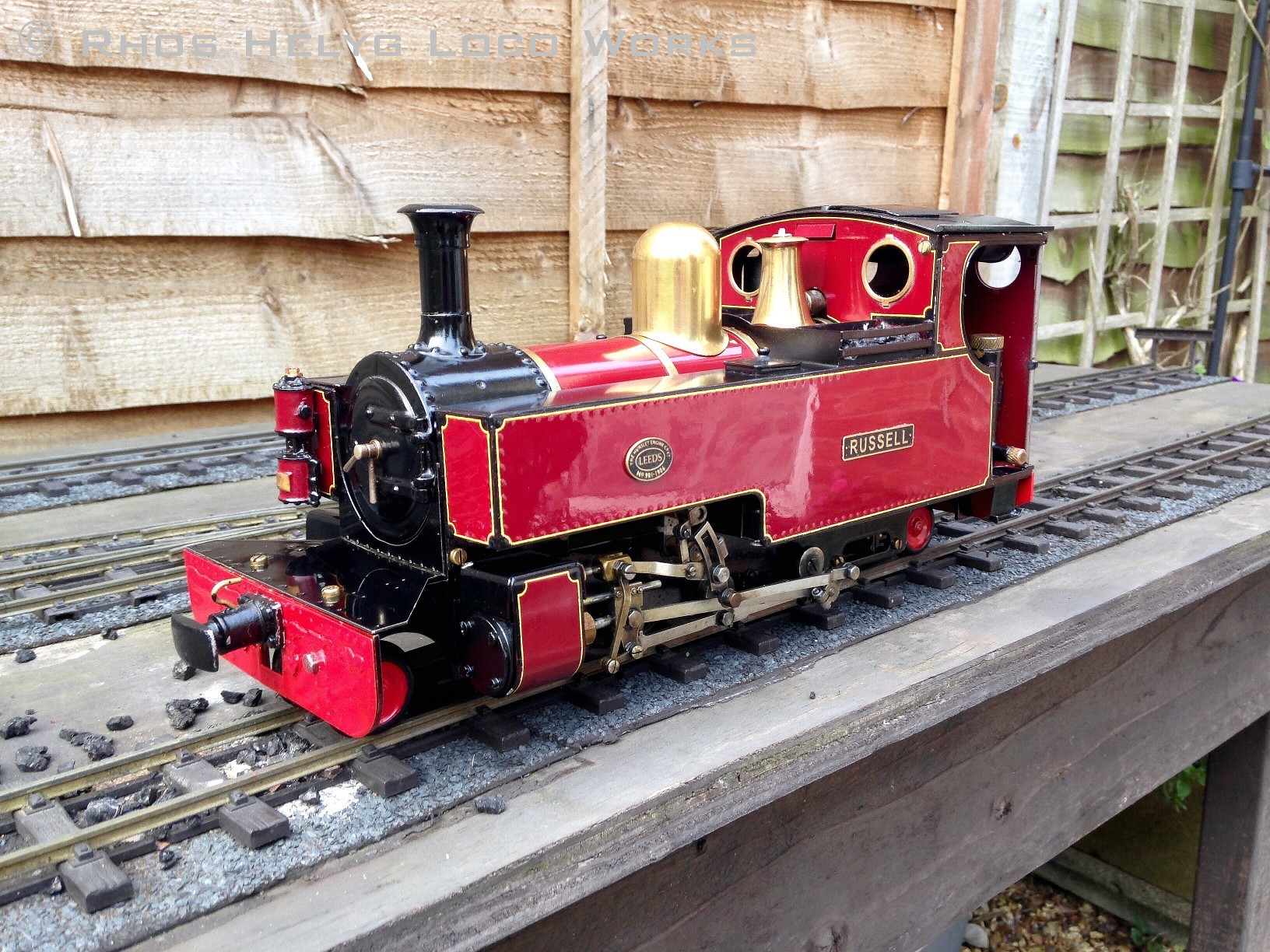
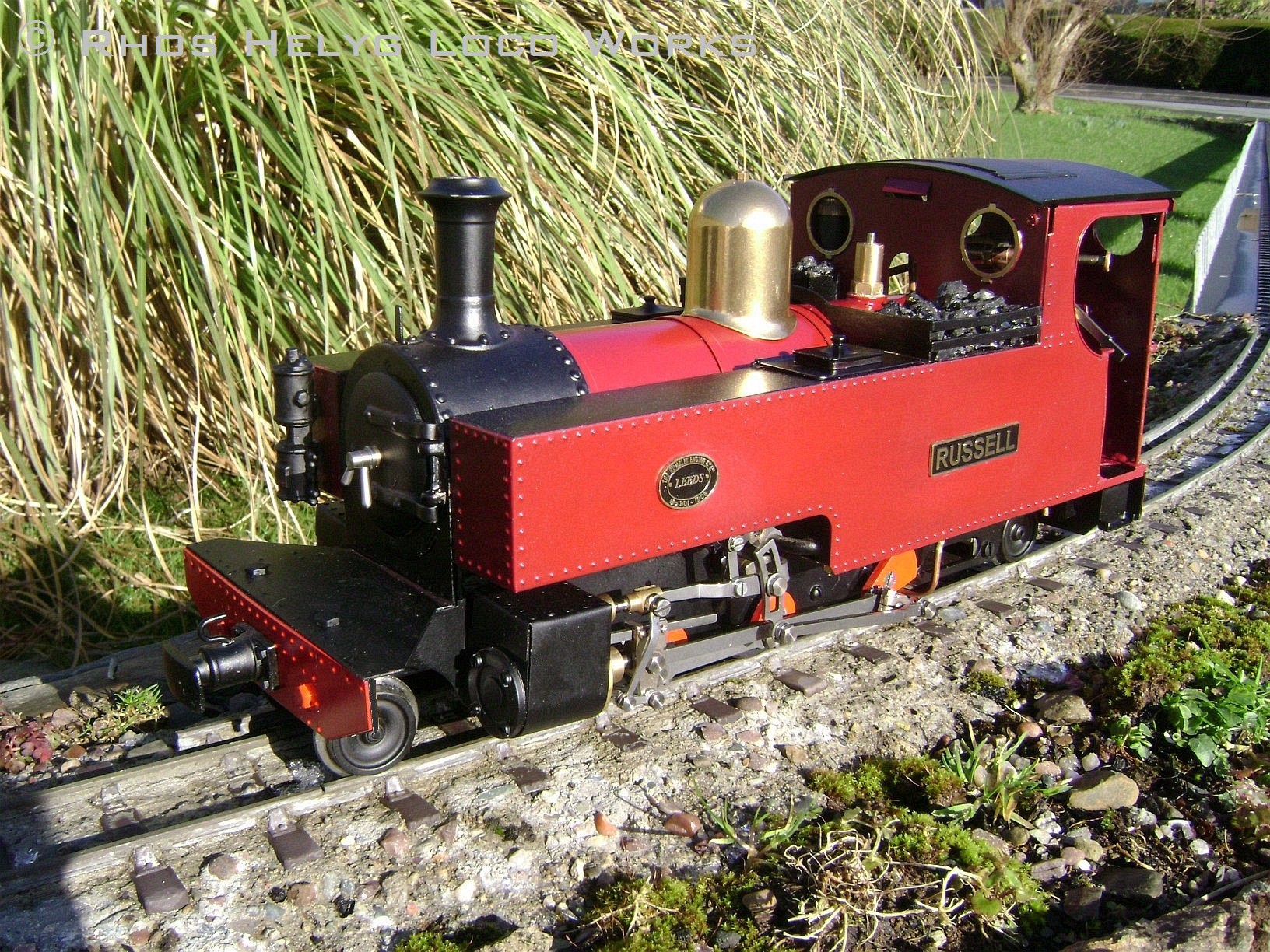
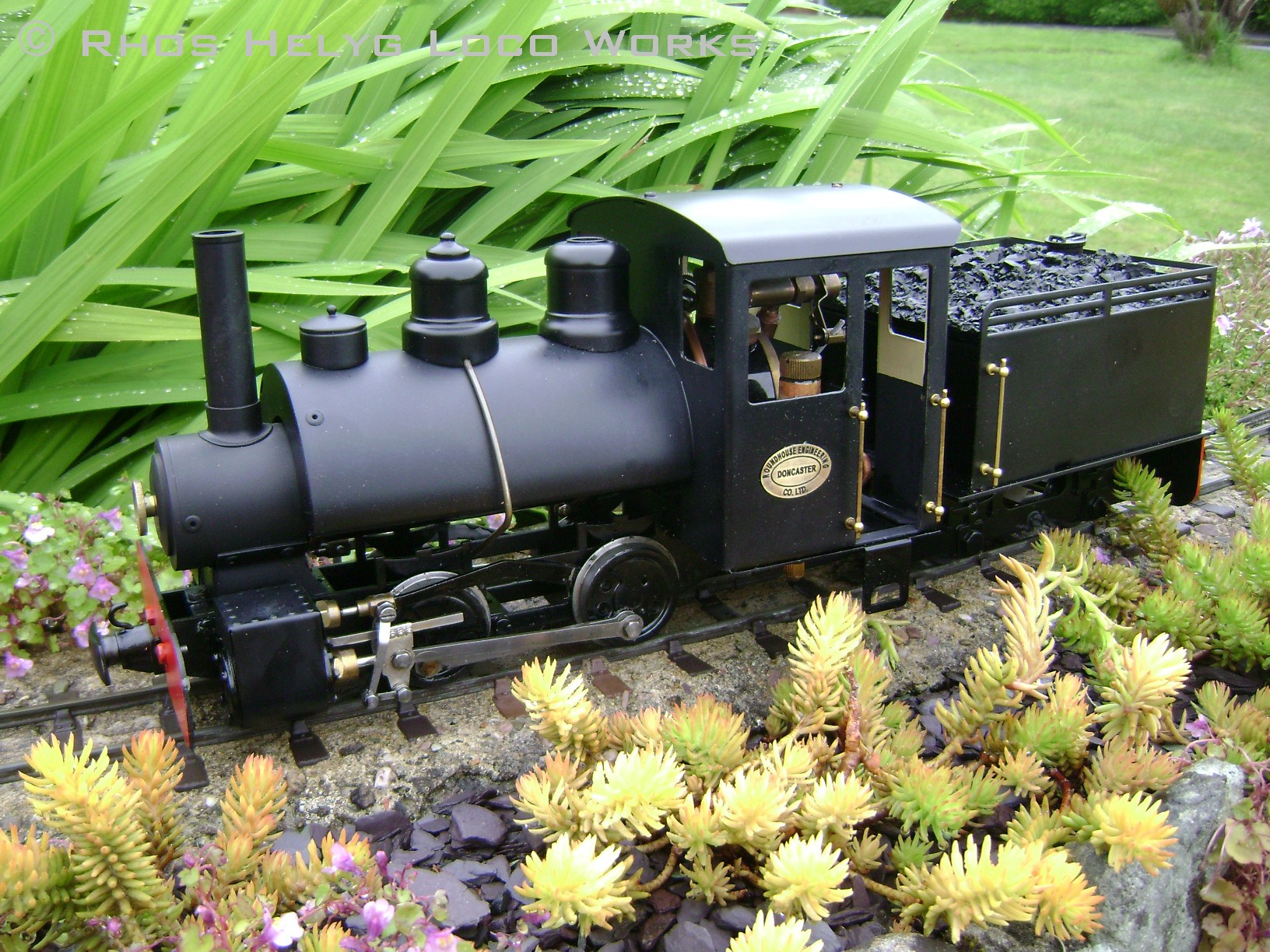
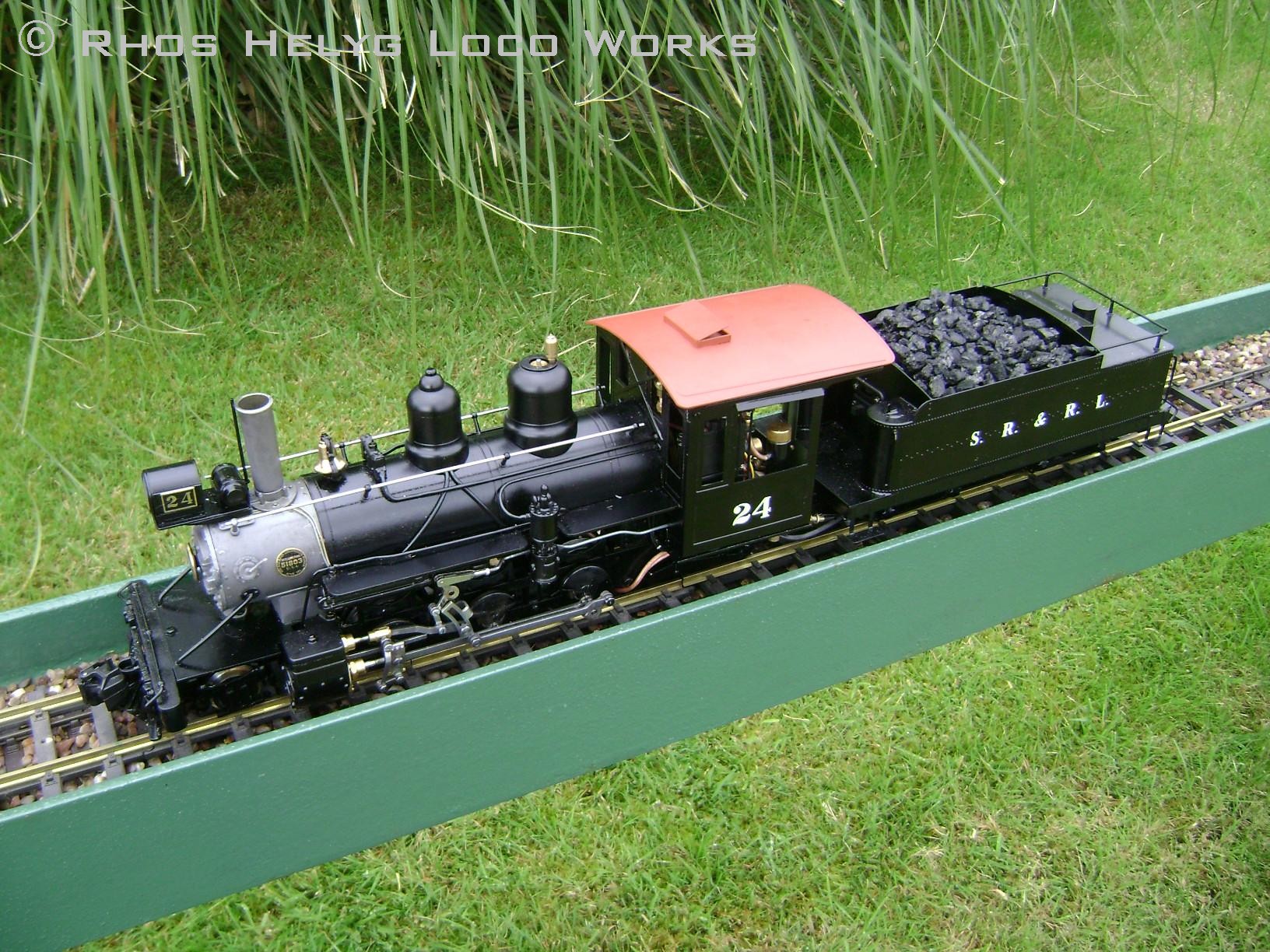
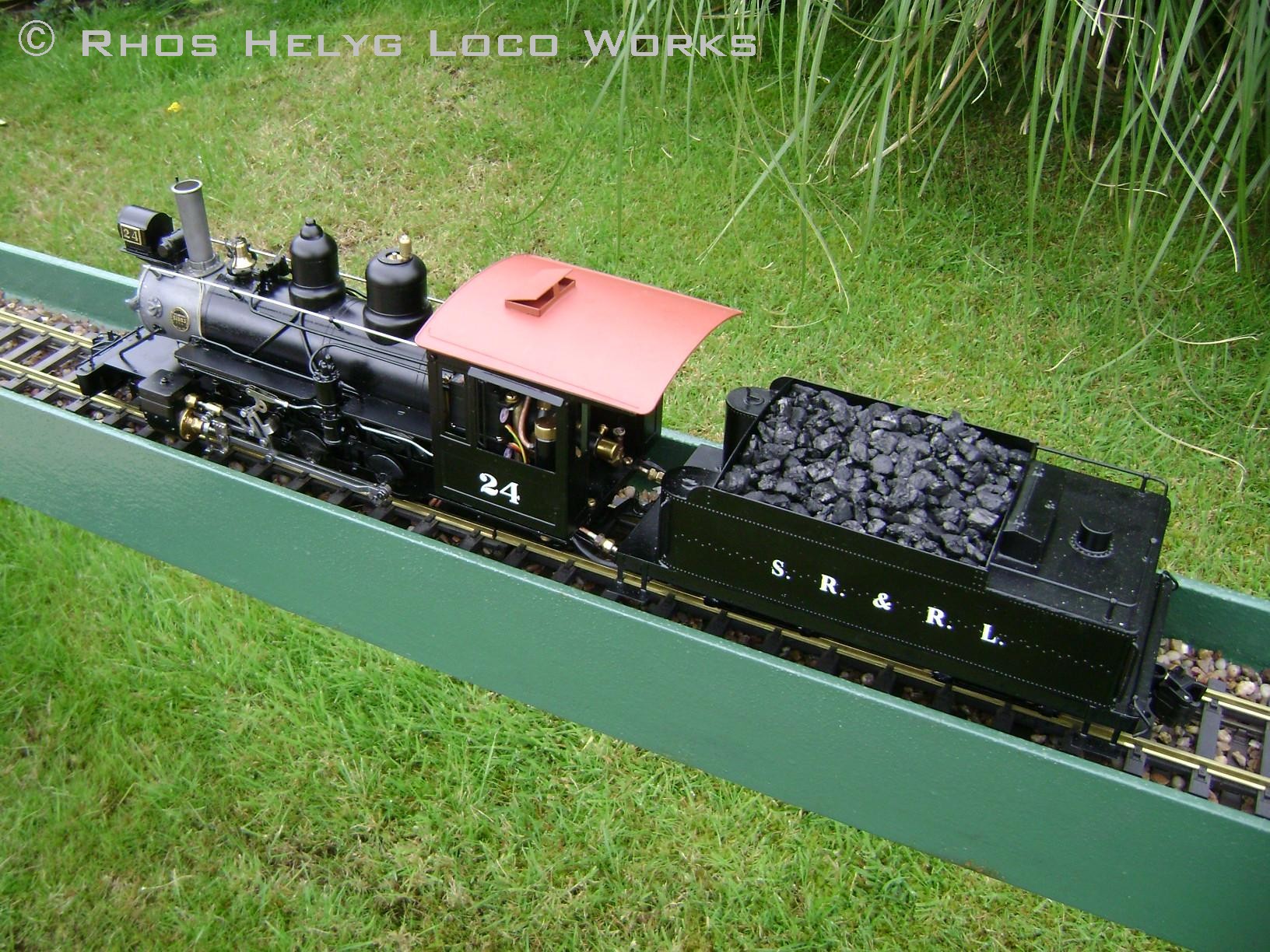
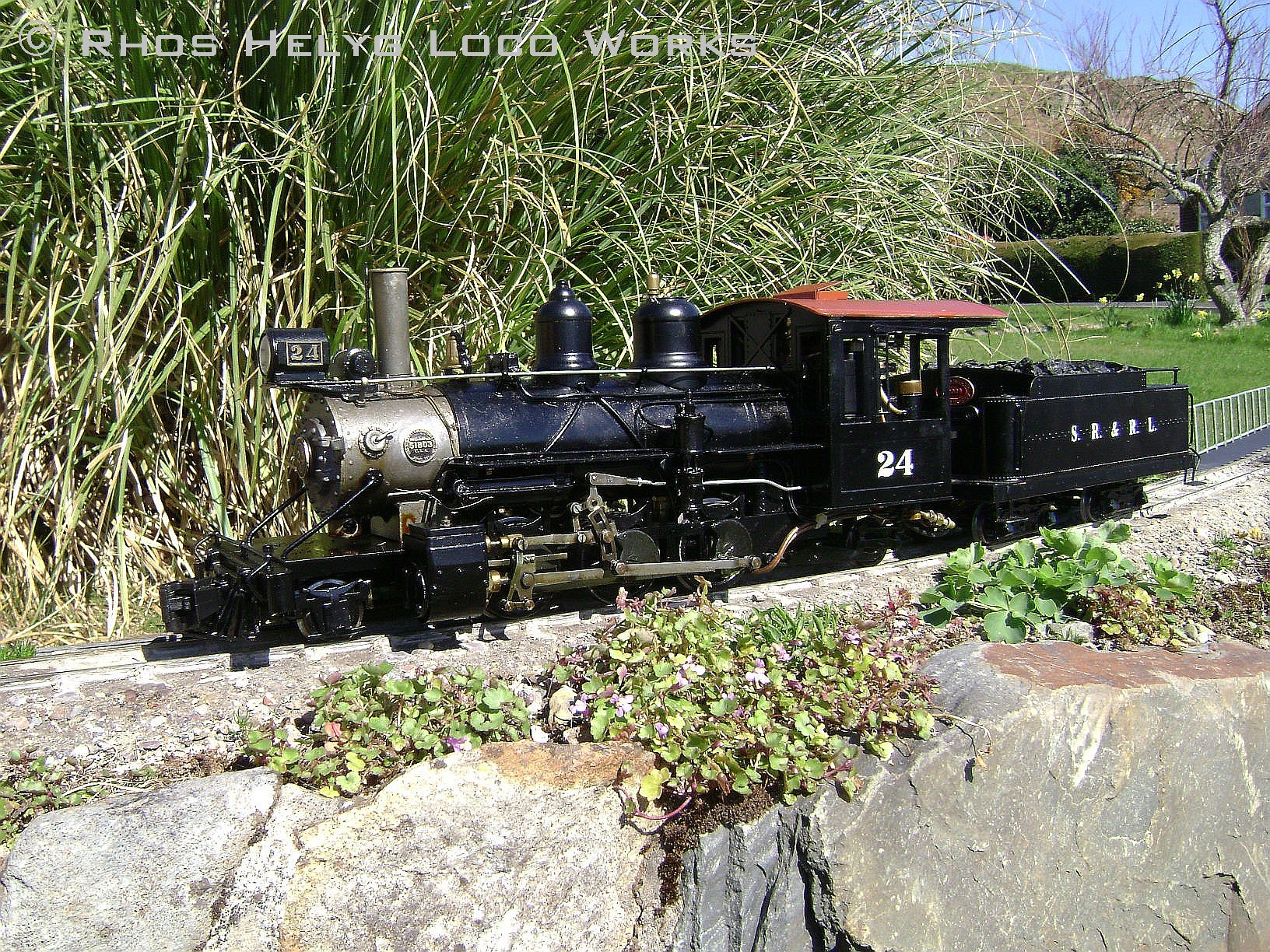
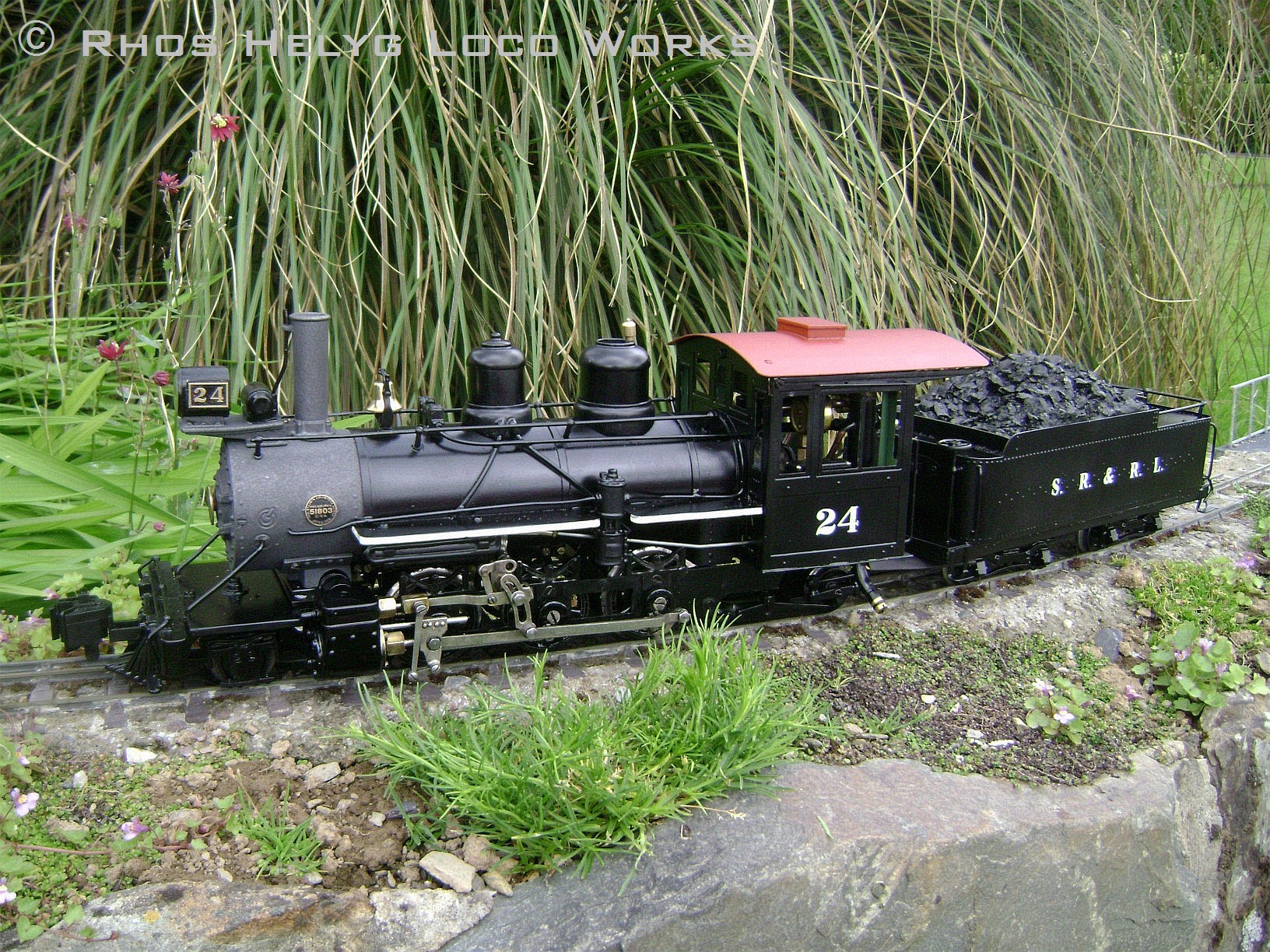
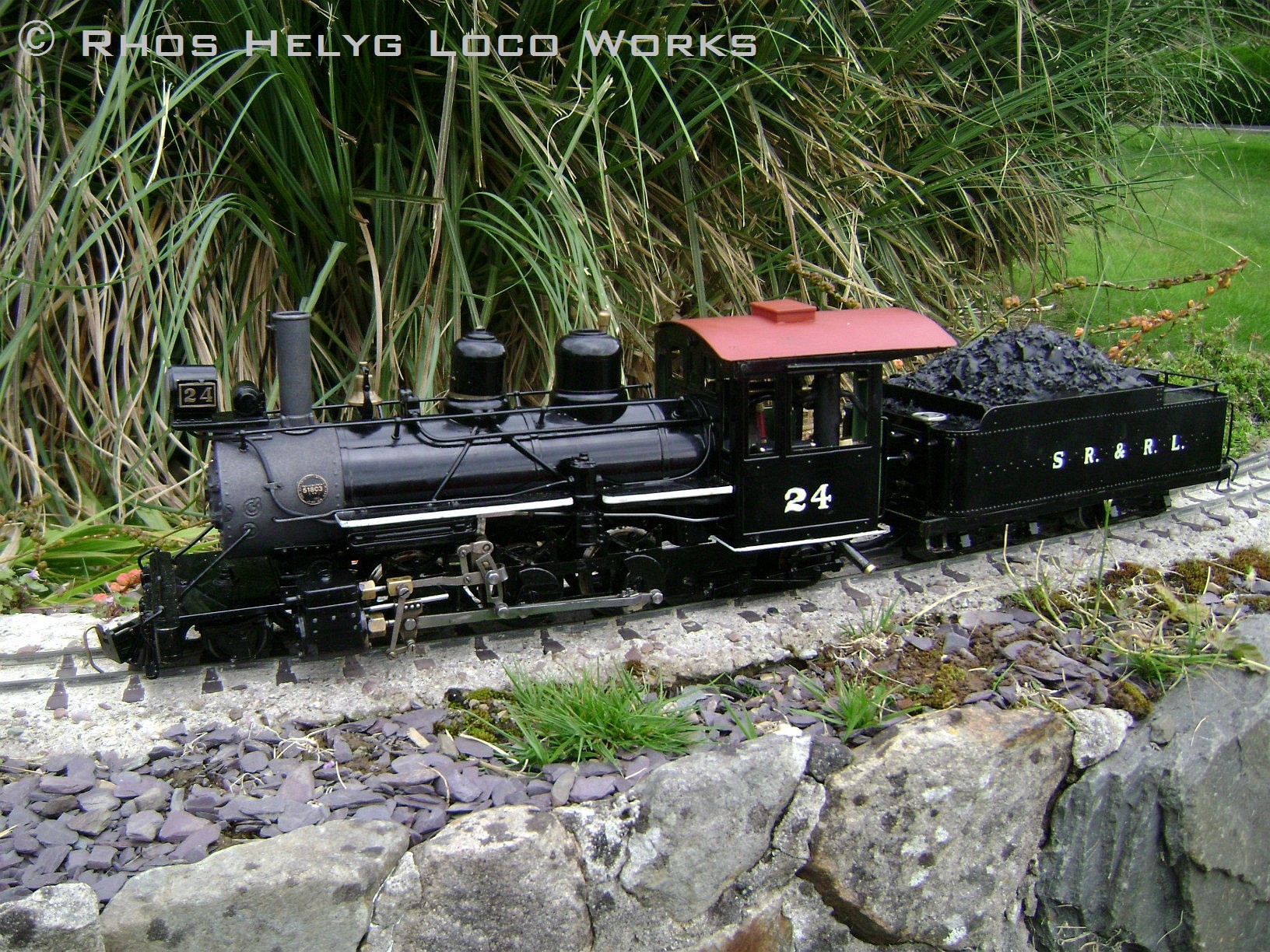
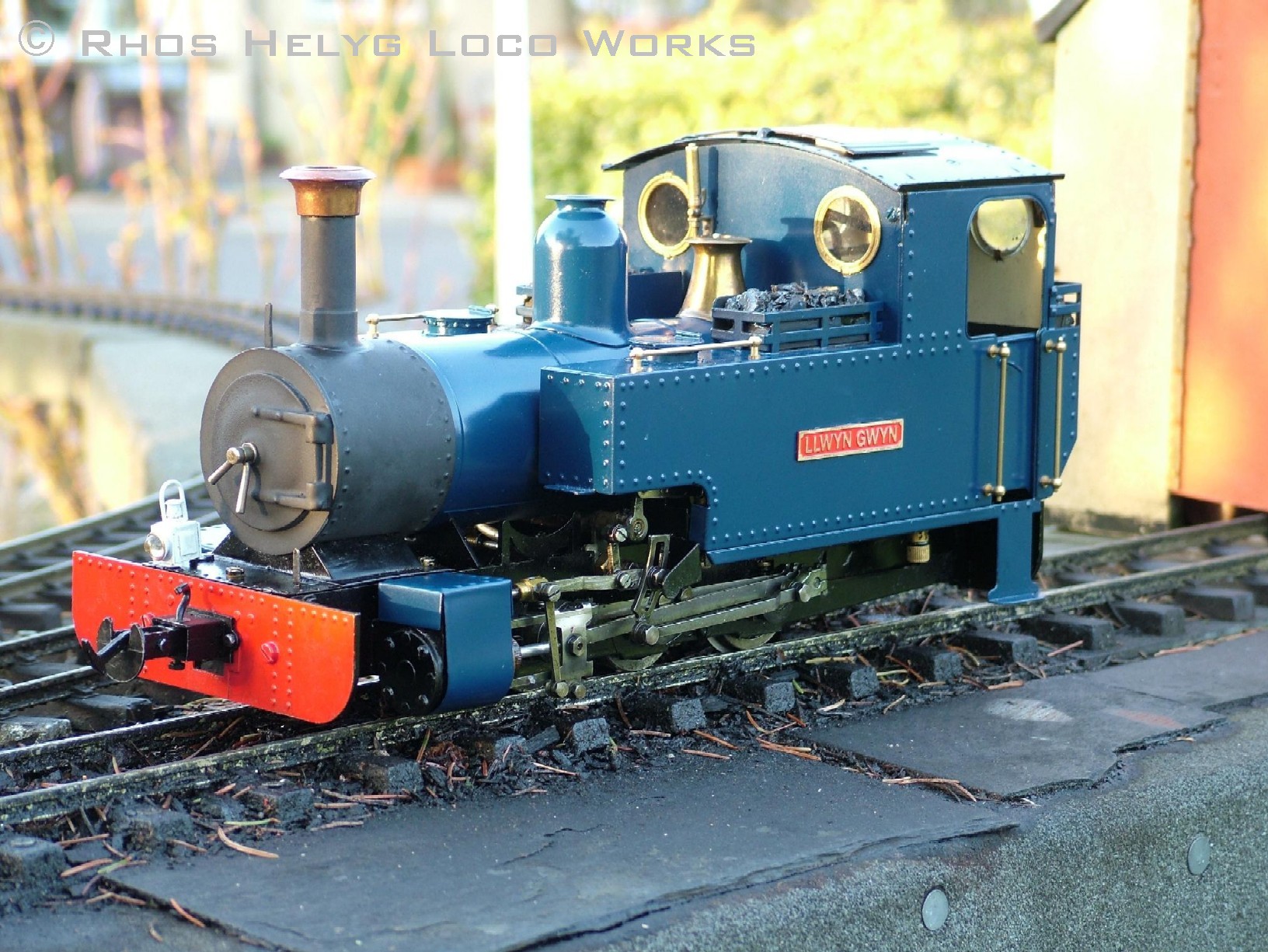
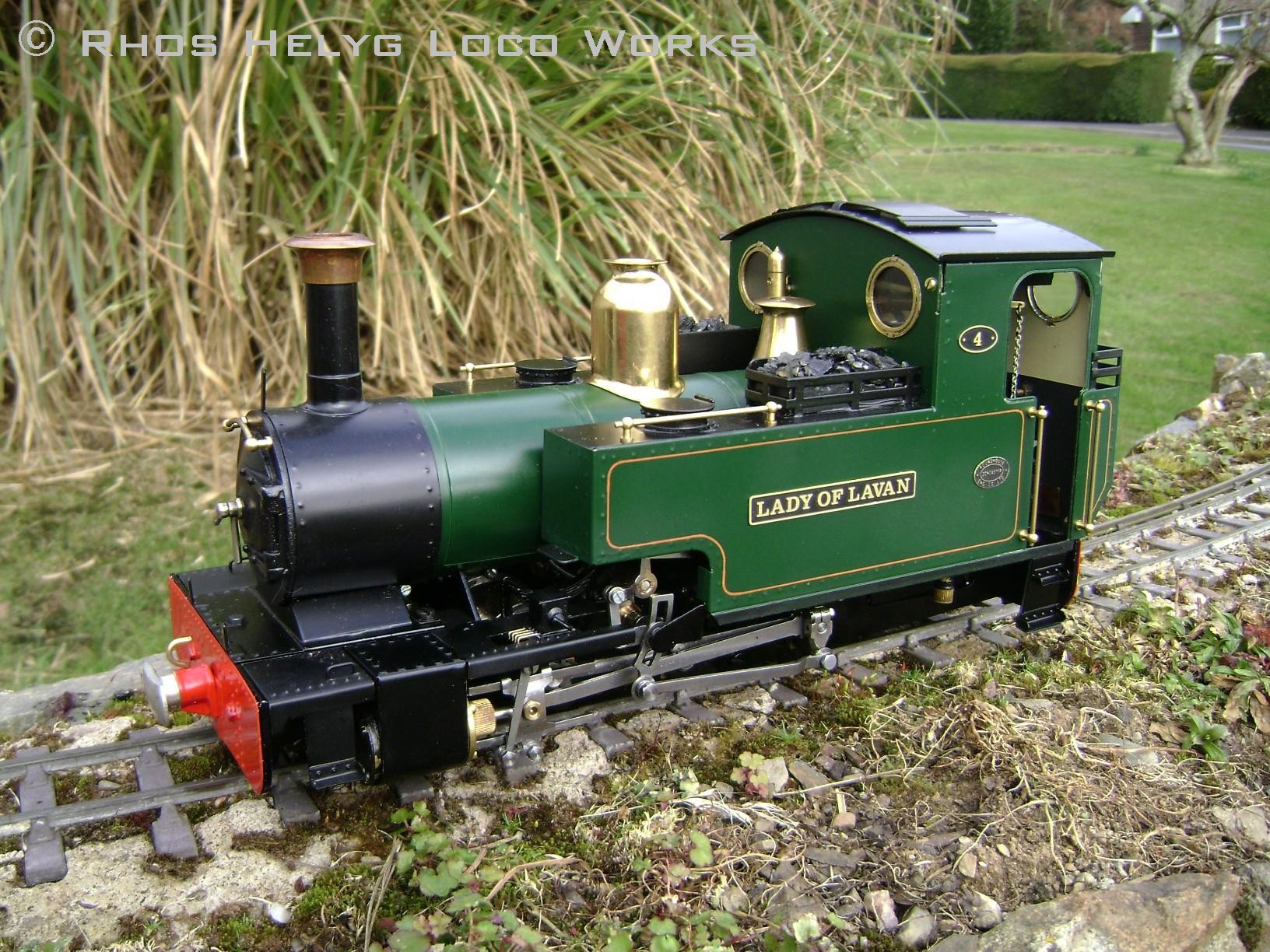
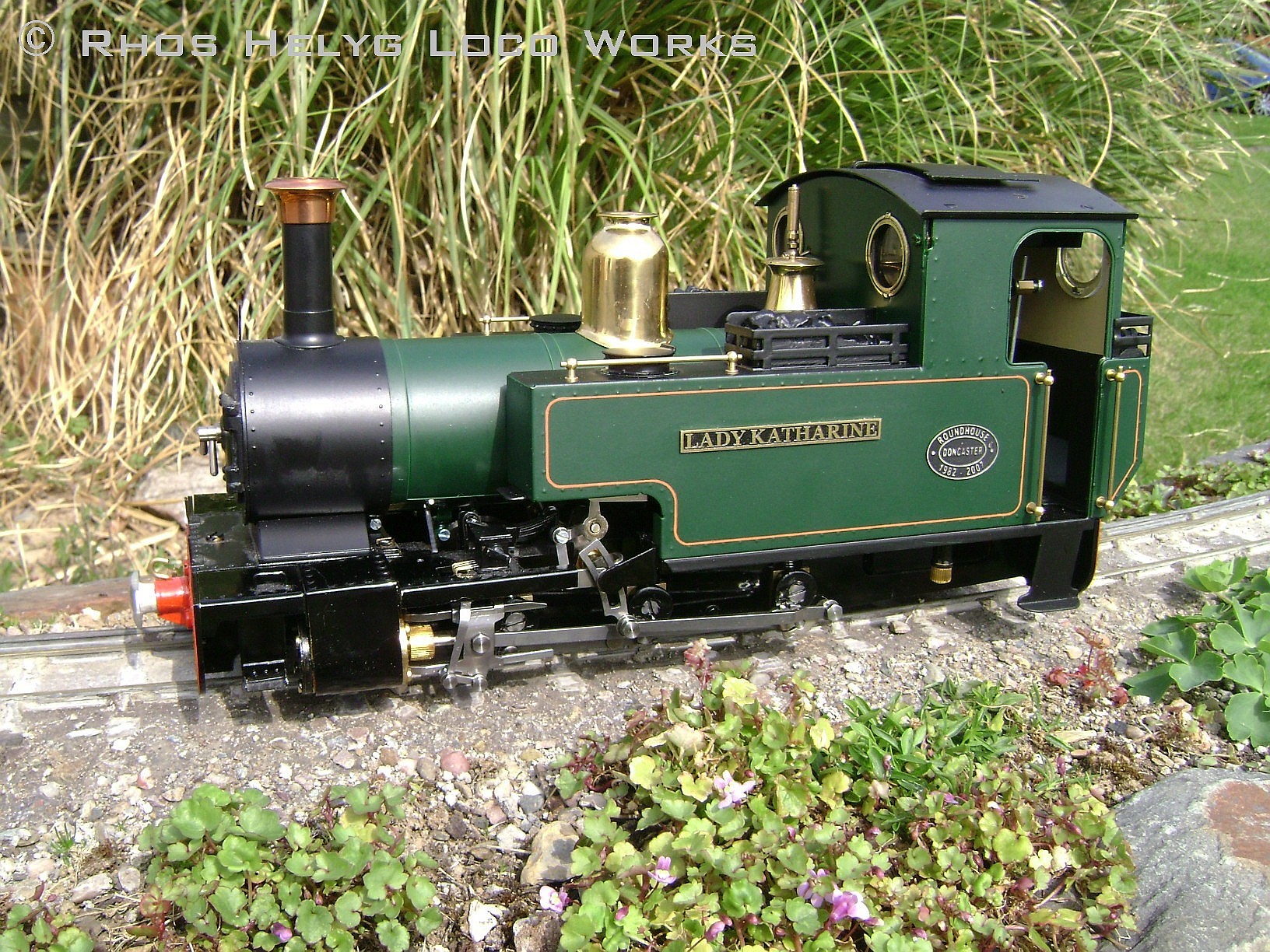
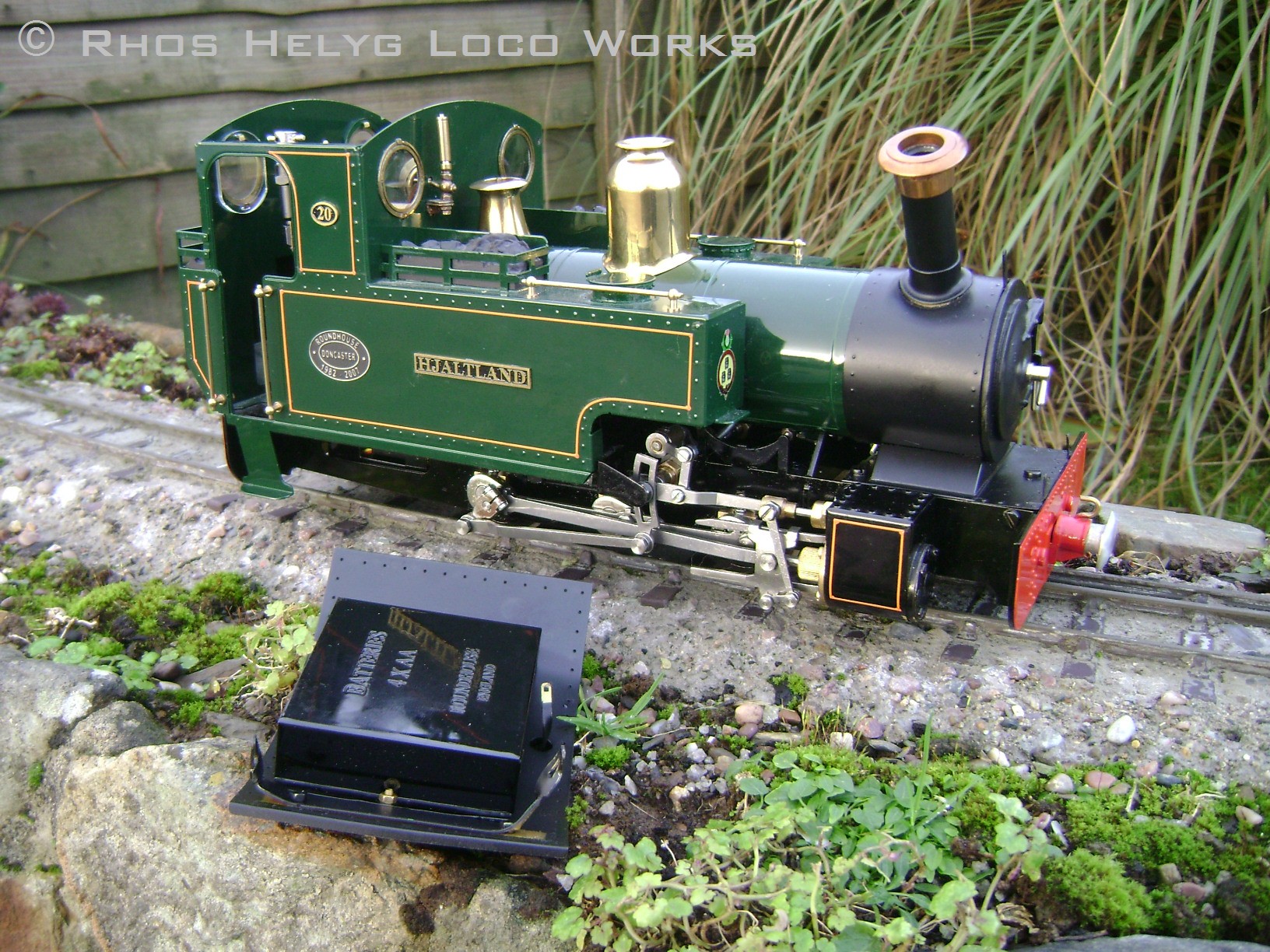
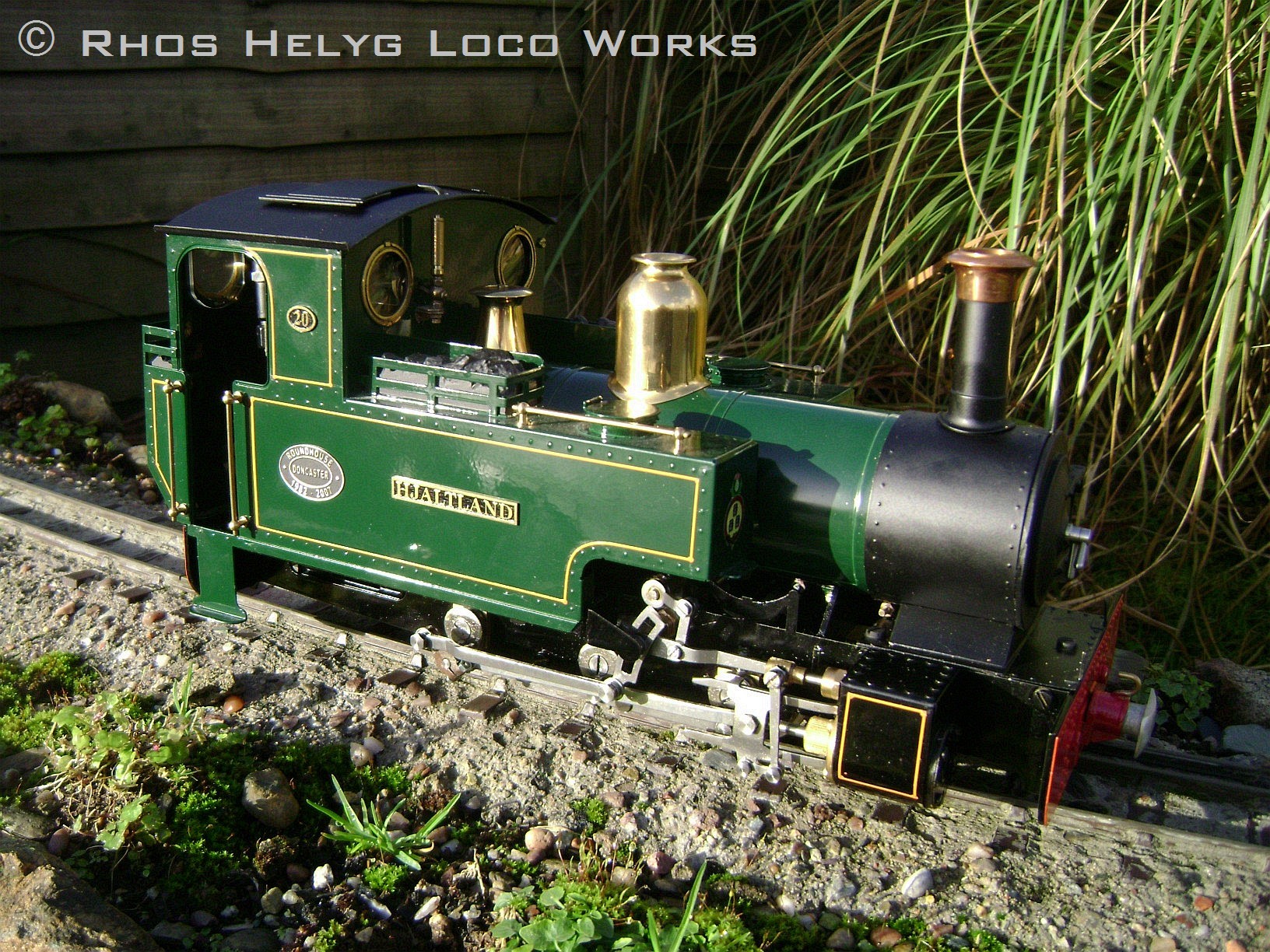
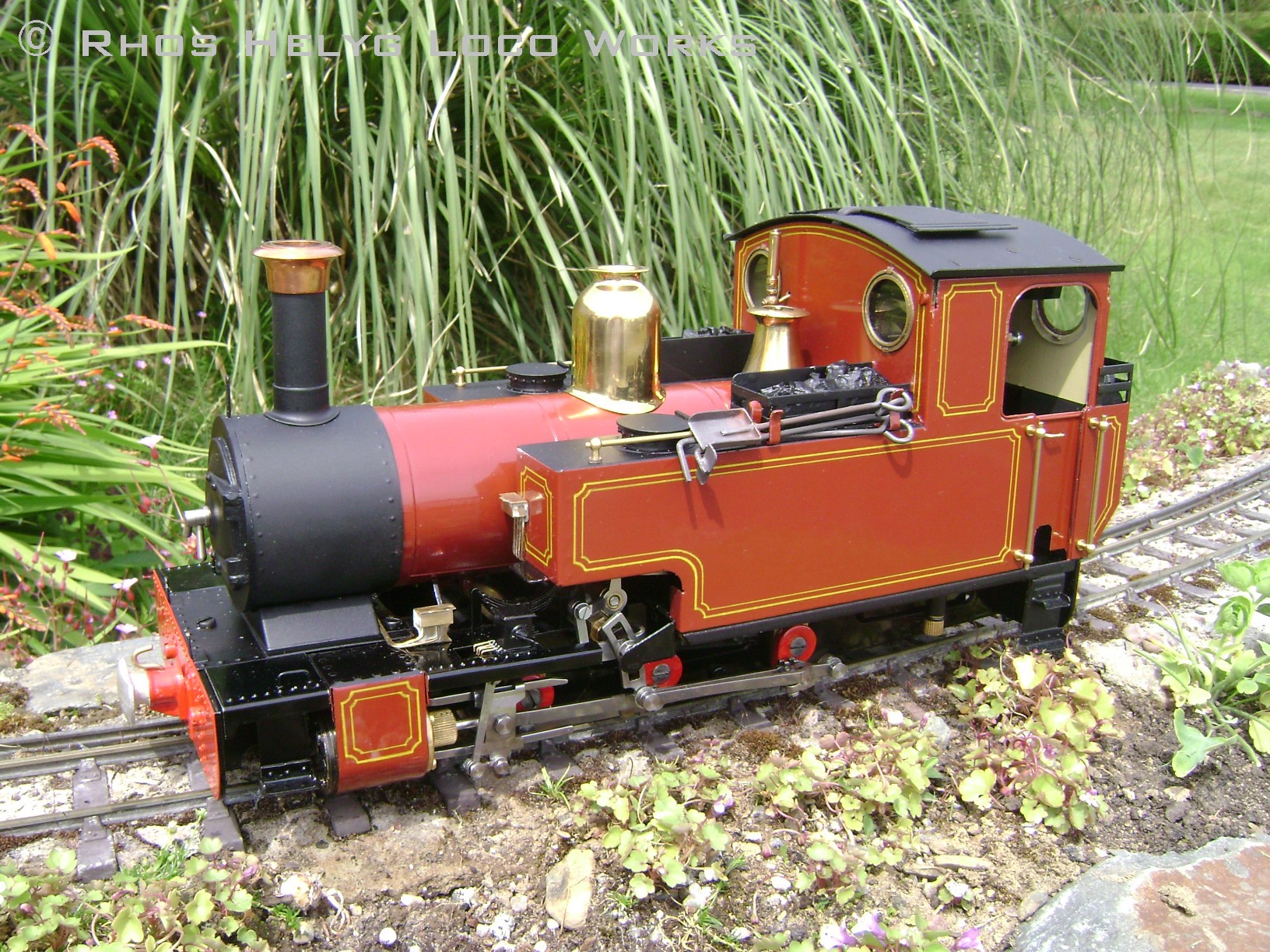
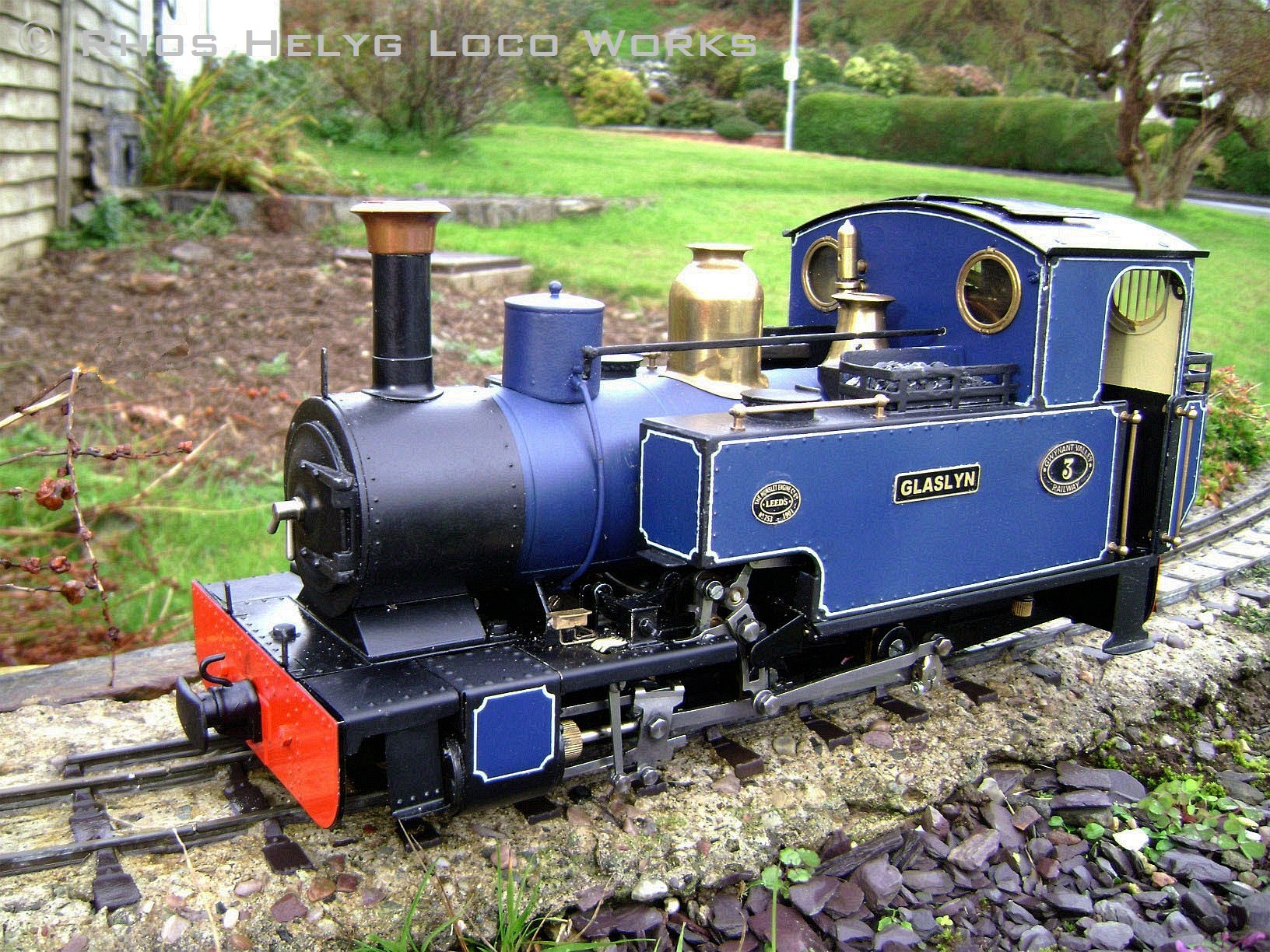
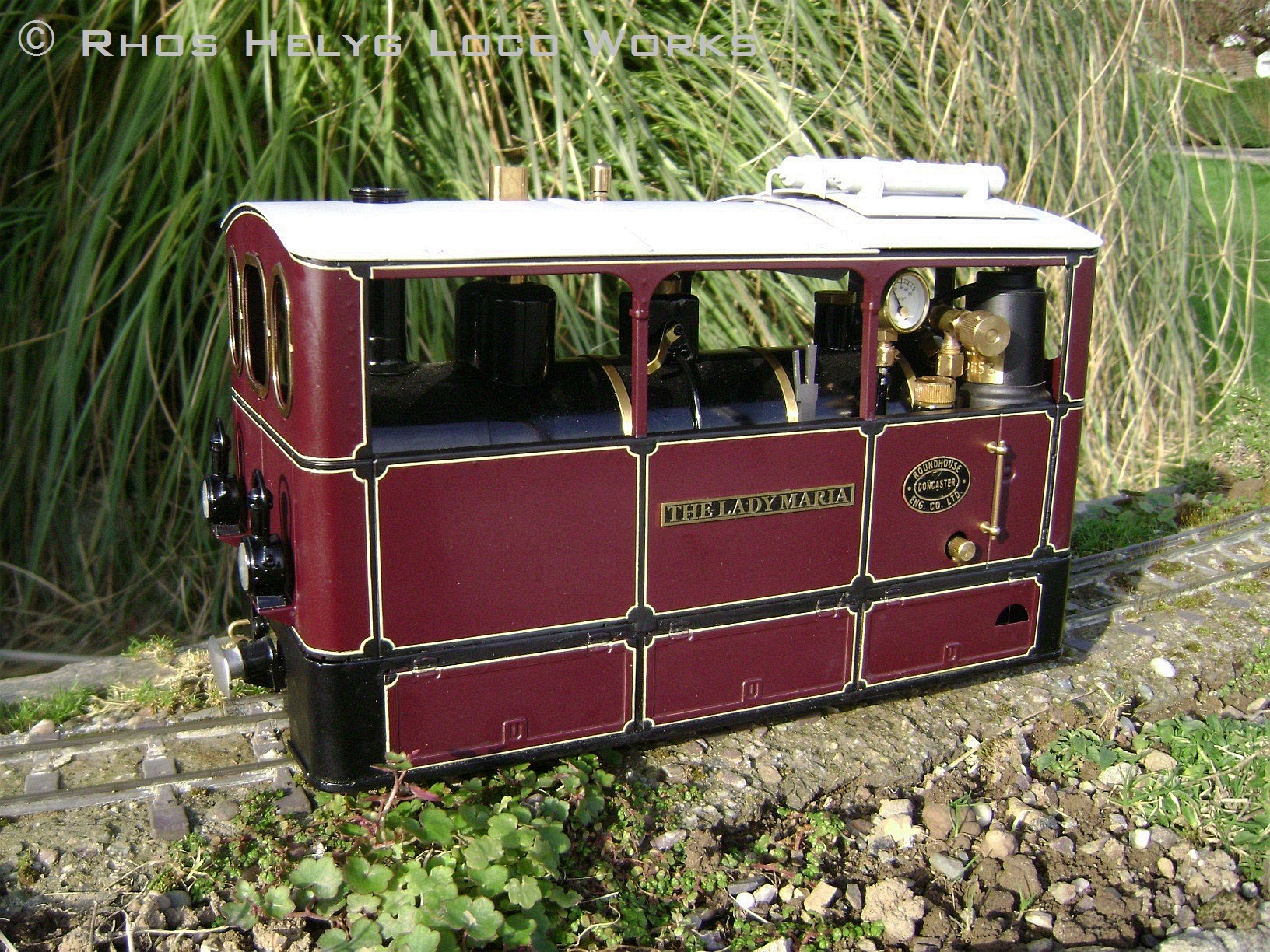
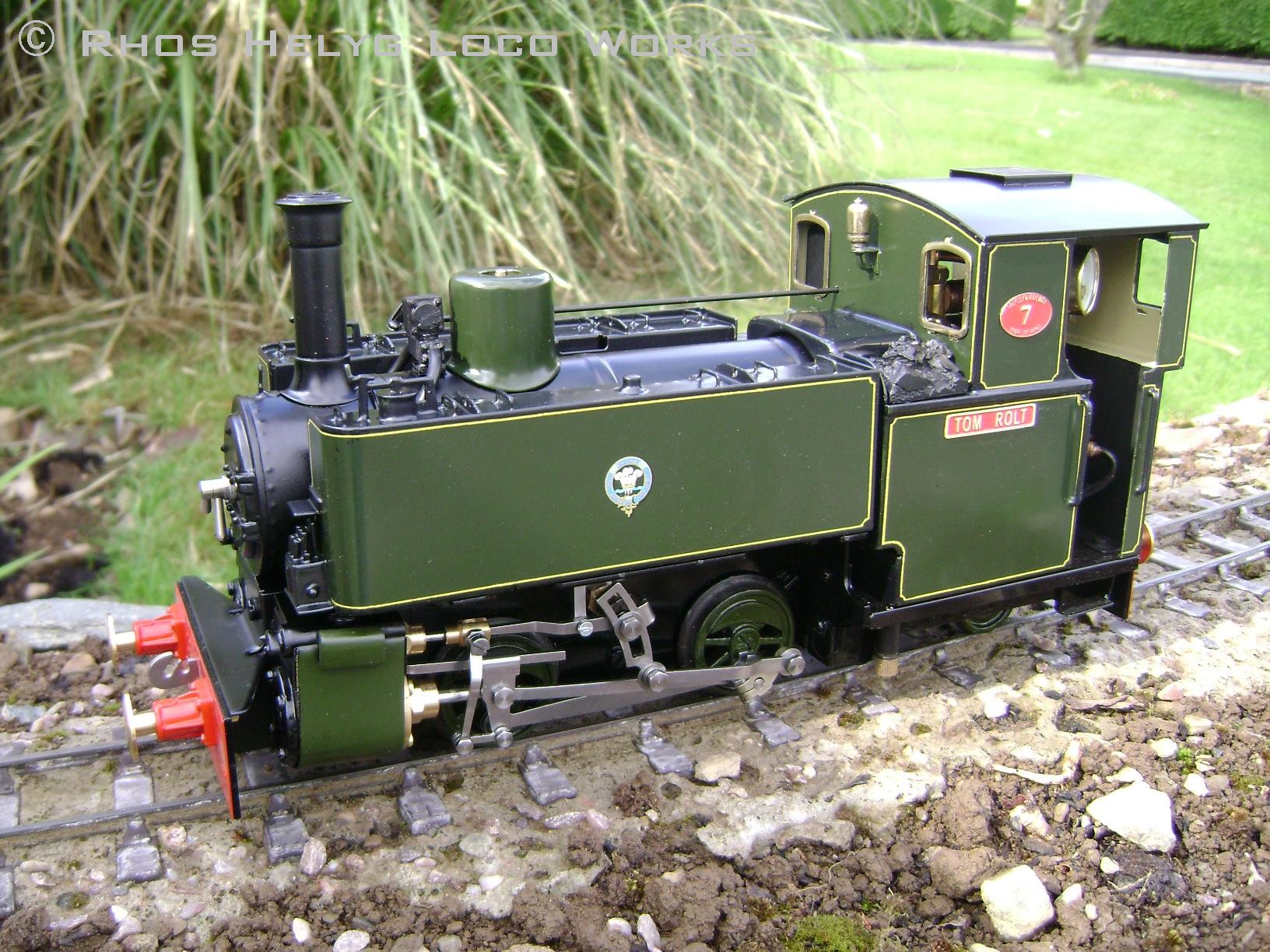
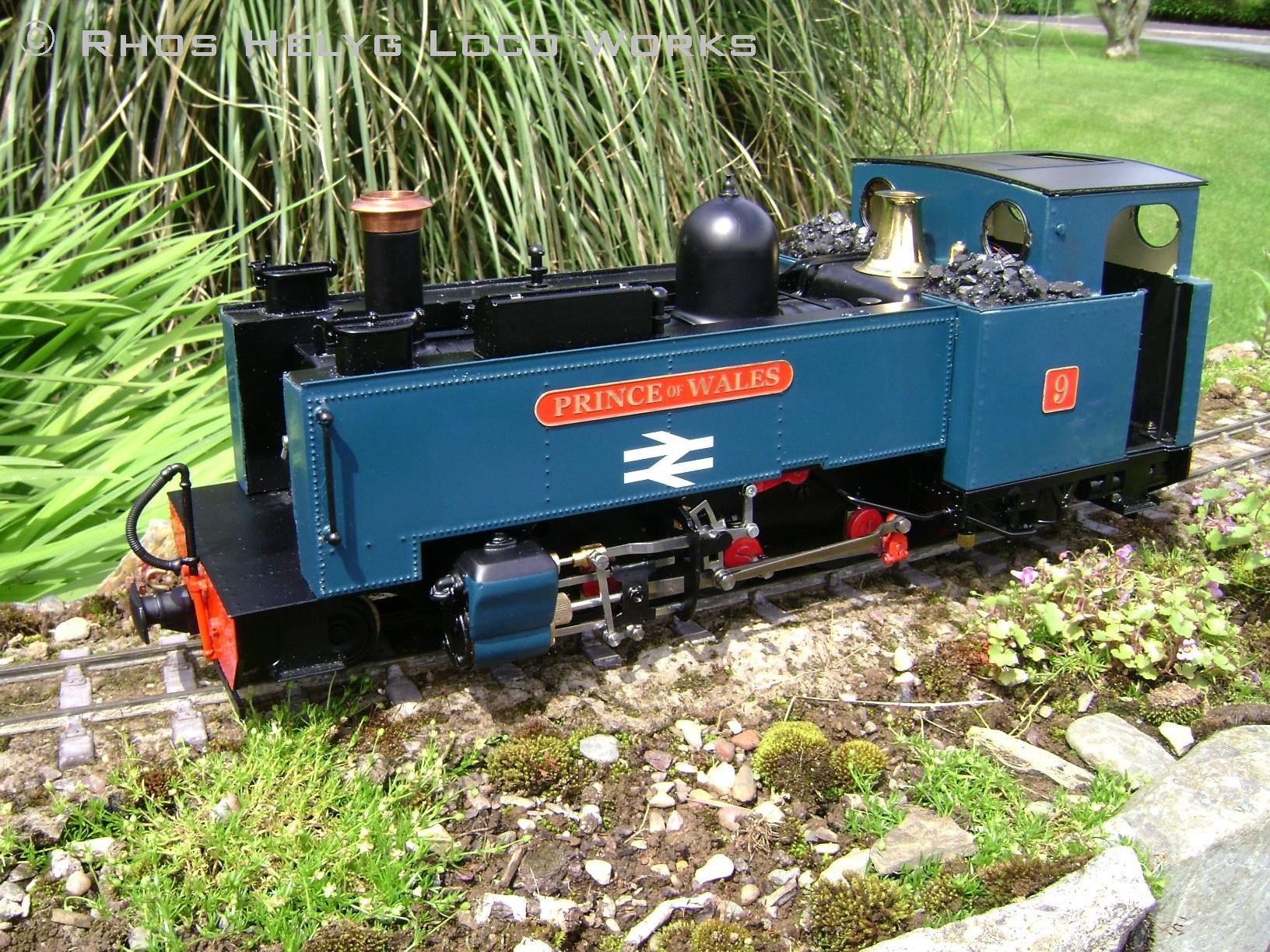
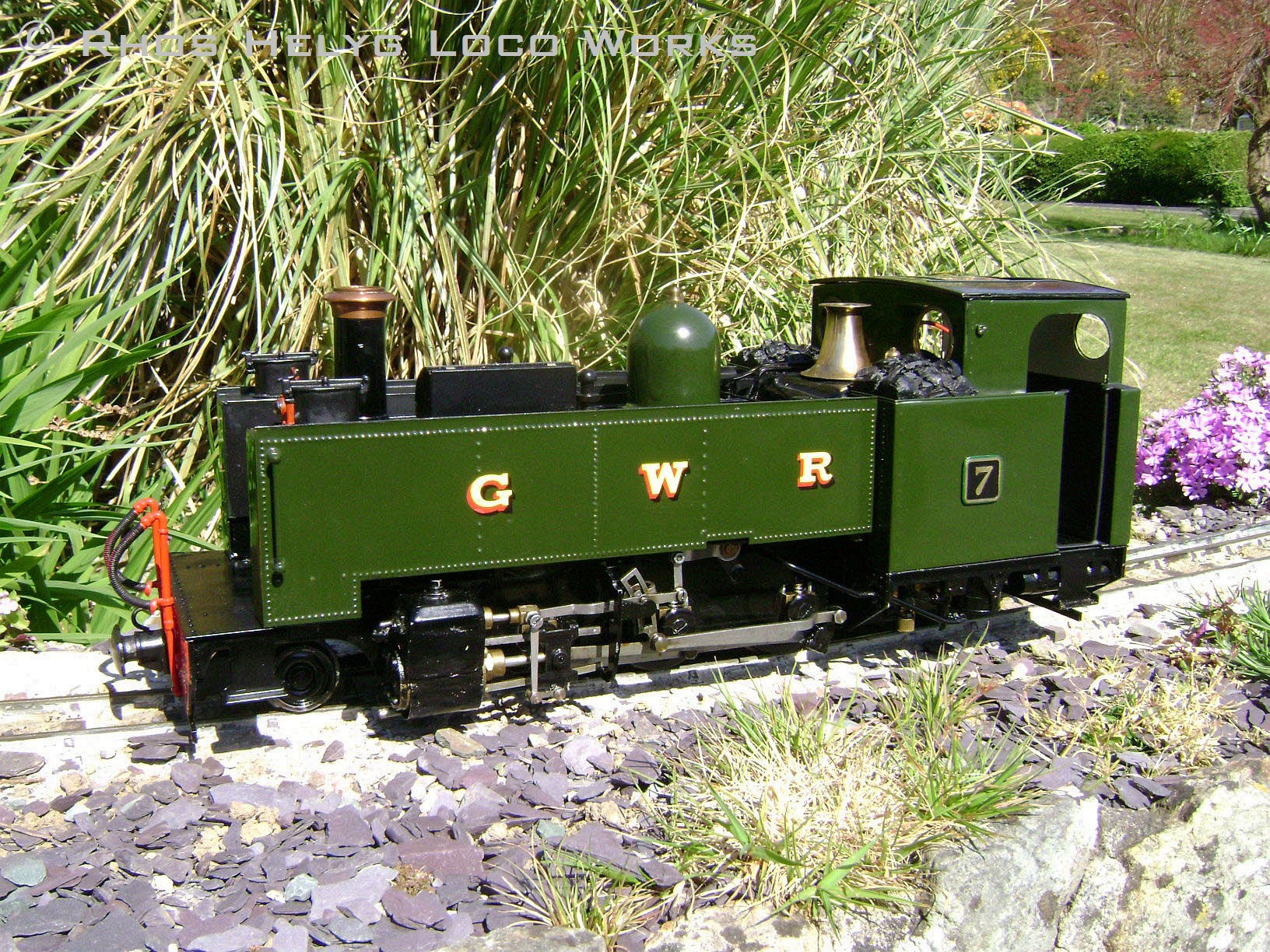
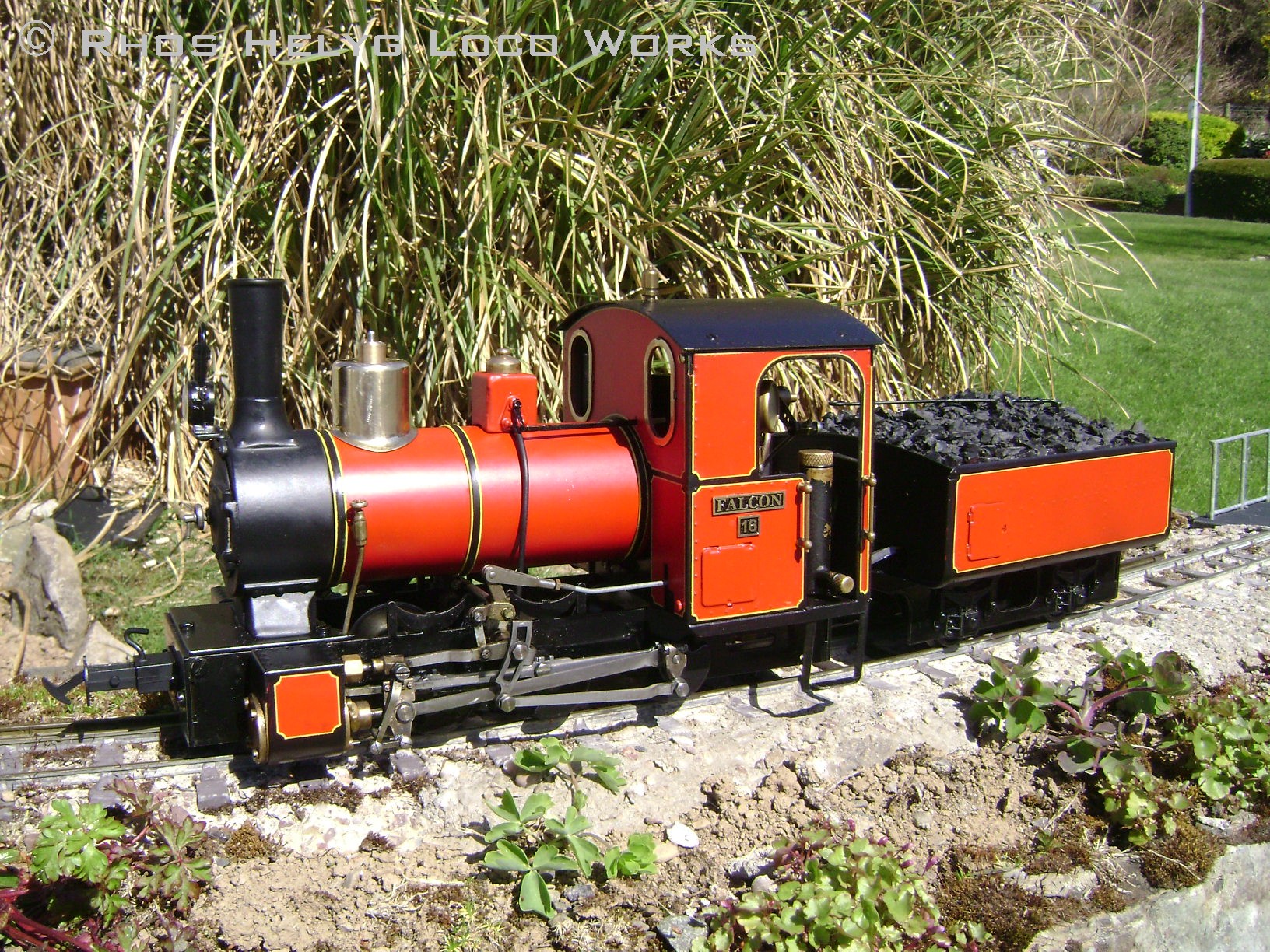
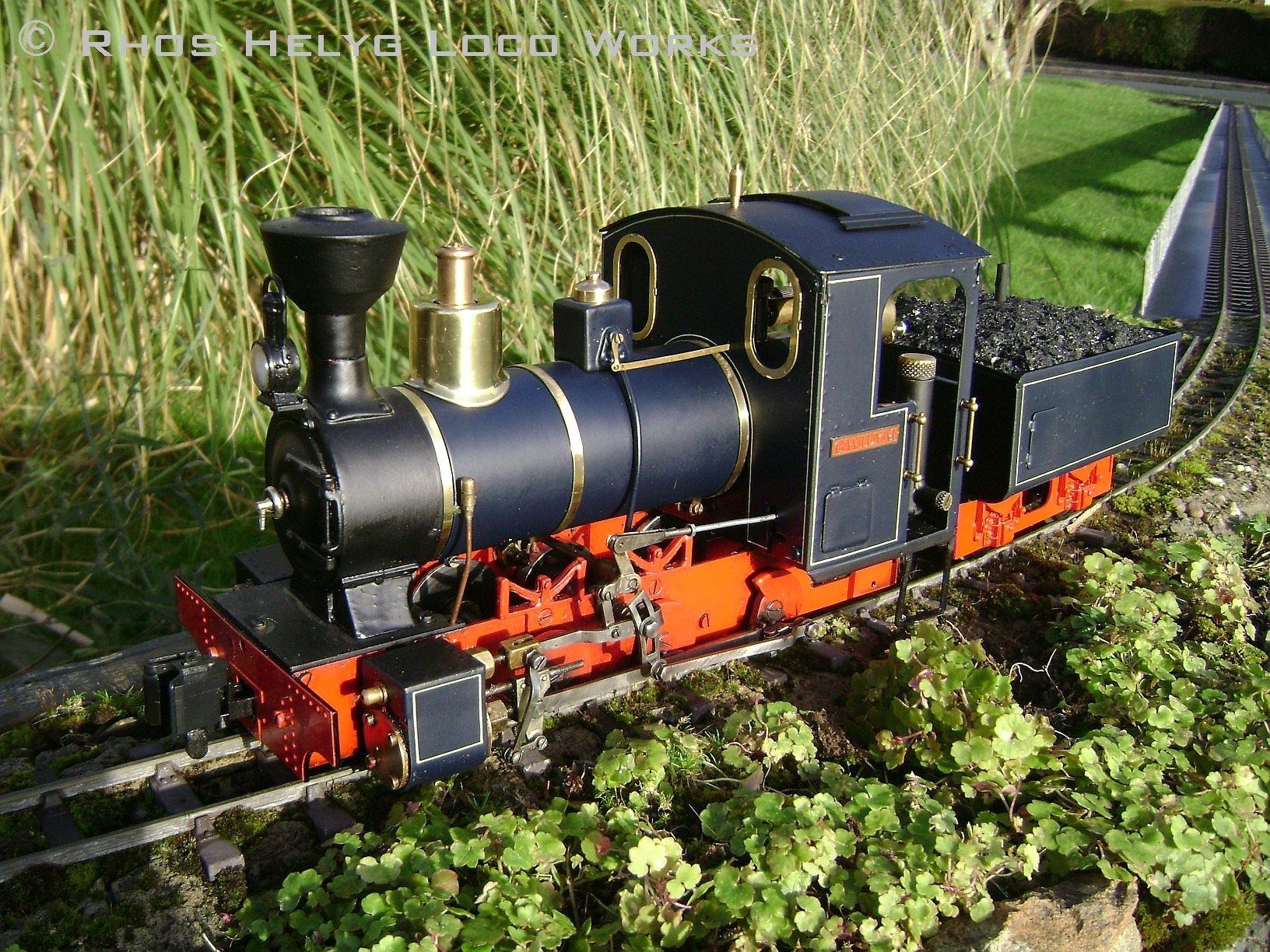
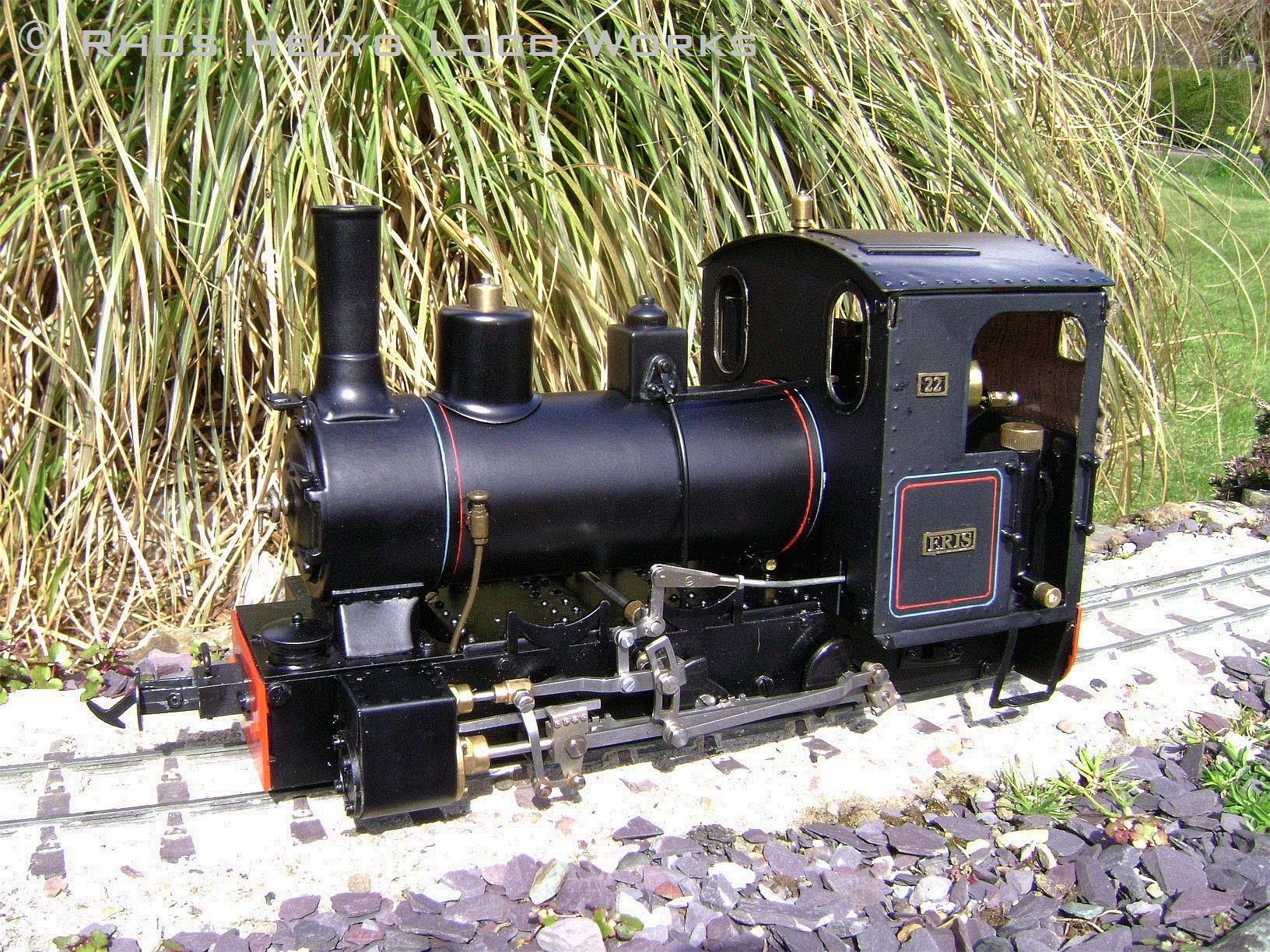
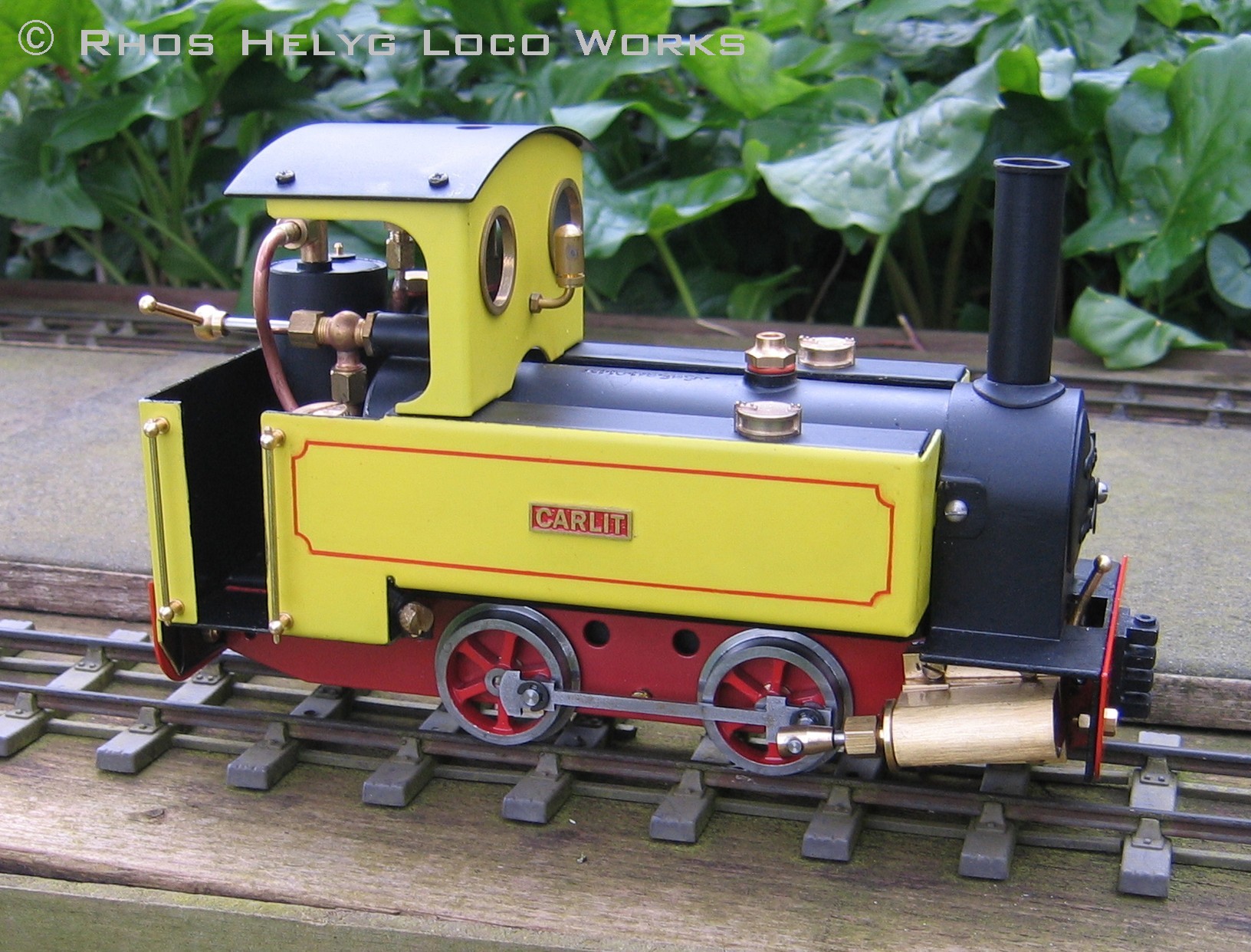
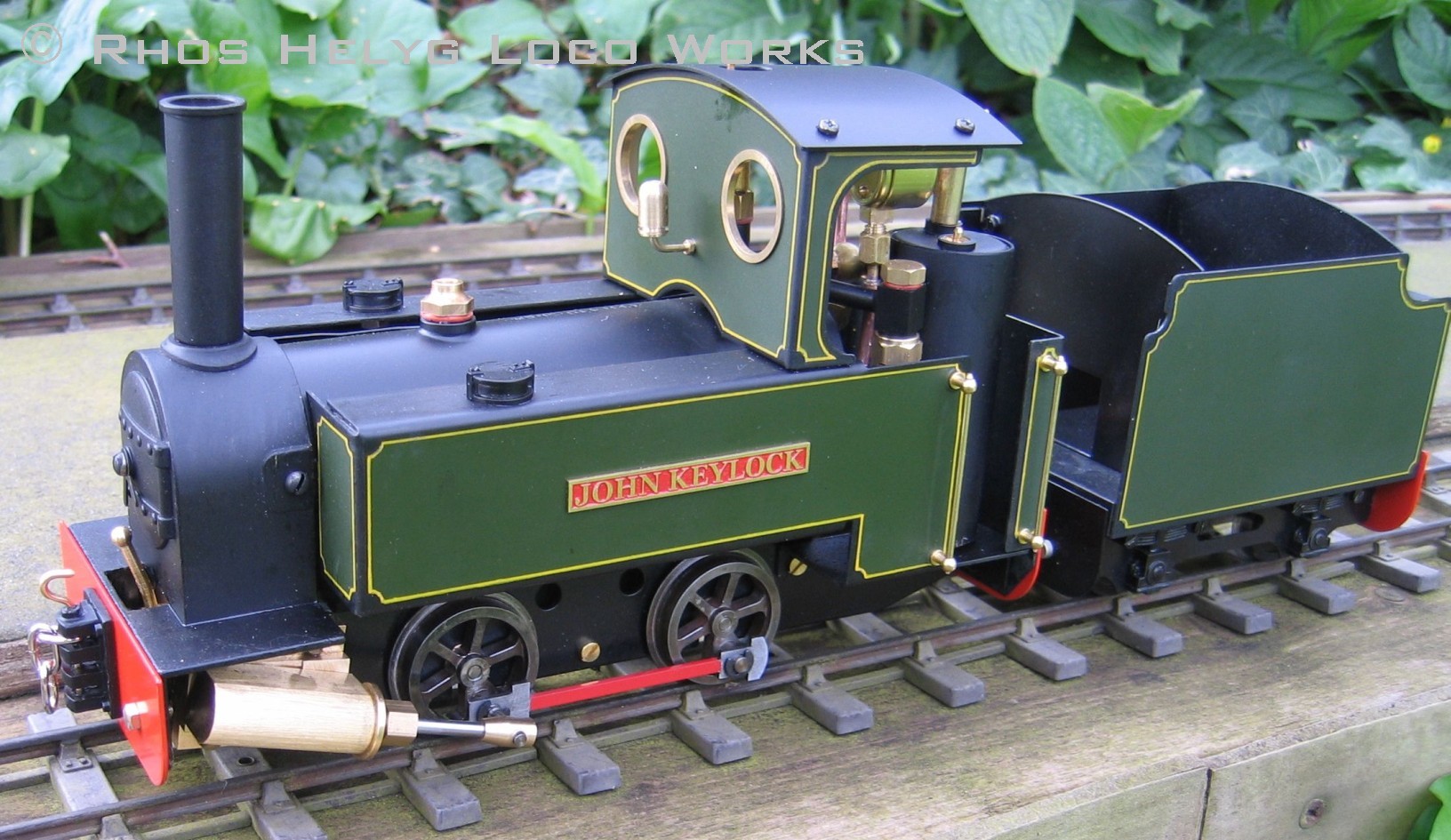
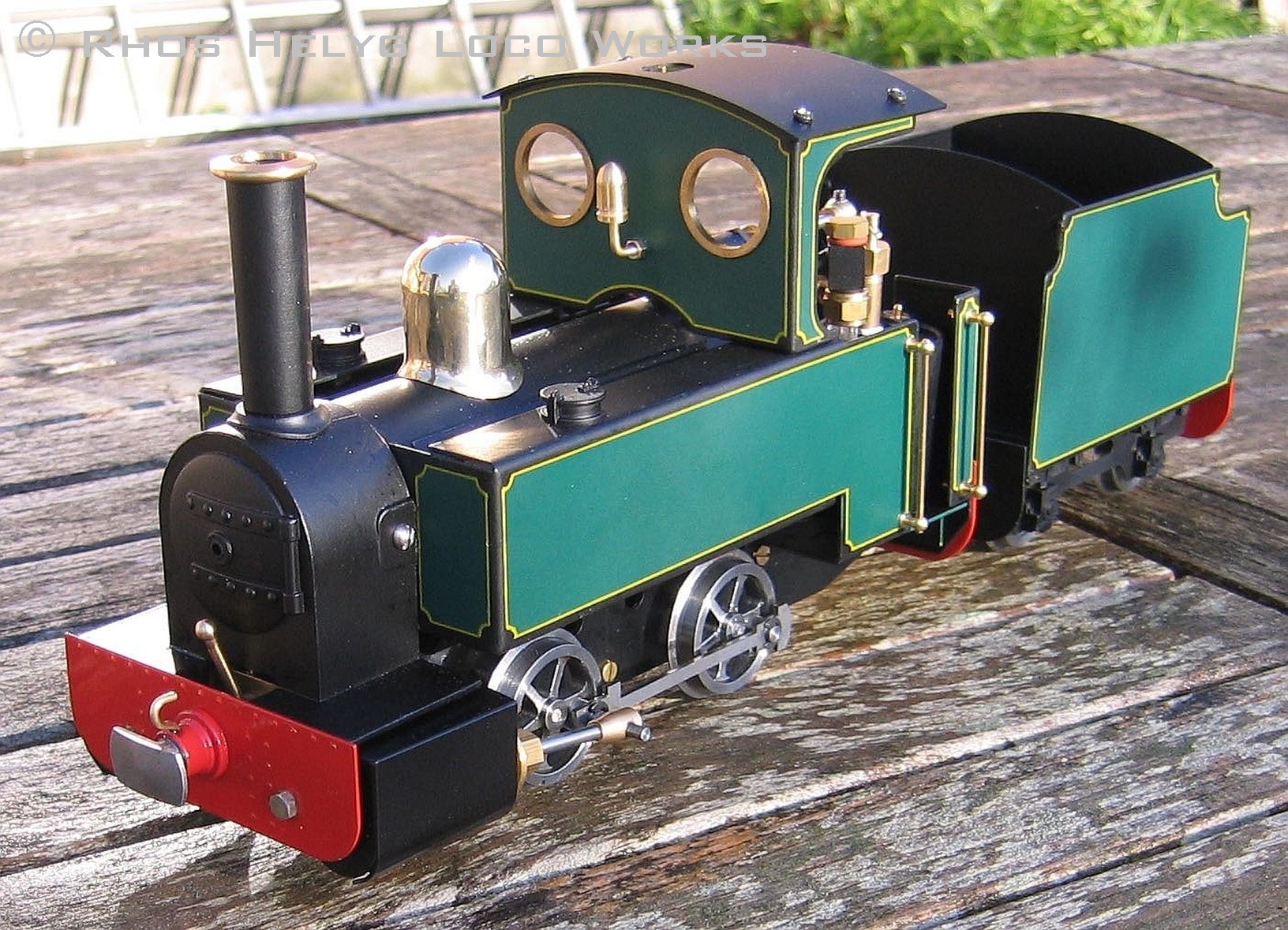
|
Sabre Steam coal-fired Annette 0-6-0T
This brand-new locomotive came to us direct from the builder for some paintwork modifications. Yellow lining was applied to the side tanks, the wheels, tank bases and cab steps were painted in satin black, the axle cranks were painted red and the smokebox was resprayed in matt black. Following this work, the locomotive was thorougly steam tested to check that its performance met the builder's specification and the owner's expectations, both of which it failed to do. This loco later returned to us for a rebuild, see Rhos Helyg Loco Works coal-fired 0-6-0TT BOWER GROVE. |
|
|
Sabre Steam coal-fired Annette 0-6-0T JAKE
This Sabre Steam Annette came here primarily for the replacement of the axle-driven water pump, which although axle-driven was failing to perform as any kind of pump. The pump was removed and replaced with a new one kindly supplied by DJB Engineering. While here it also had two new axles fitted, replacement of missing and damaged pipework and attention to the safety valve and clack valve, both of which were leaking. This was followed by a strip of the original paintwork and a repaint. |
|
|
The second photo shows another Sabre Steam Annette that came here for fitting of a replacement pump and a repaint. |
|
|
Salem River Class 0-4-0T BLACK BEAUTY
This meths-fired 0-4-0 came here for repairs to its mechanical parts. It was found to have a loose crank pin, a loose crank and two loose axle bearings, all of which were corrected. These faults combined caused the wheels to jam solid as the coupling rods struggled to do their job. It also received a burner service, including new wicks. |
|
|
Salem 0-4-0+0-4-0 Garratt LA BETTE NOIR
This Garratt came here for a number of mechanical repairs and attention to a multitude of leaks from the flexible steam pipes. Unfortunately, the extent of the repairs necessary proved to be so great that the owner decided to dispose of the loco instead. I was able to find a buyer for it and a successful sale soon followed. |
|
|
Hugh Saunders Talyllyn Railway 0-4-2ST EDWARD THOMAS
This locomotive was dismantled and had the bodywork stripped back to bare metal. A dent in the saddle tank was repaired and two holes in the cab sides were filled in. The bodywork was then repainted using etch primer and Talyllyn bronze green top-coat, followed by lining in yellow with black edging. The paintwork was protected and given a satin finish by spraying with lacquer. The smokebox received coats of etch-primer and High Temperature matt black paint, the bufferbeams were painted red and the cab interior was painted cream. Real coal was fixed into the bunkers following reassembly. |
|
|
Two years later another of these delightful locomotives came here for repairs and a repaint. The tank filler lid, spectacle rings and pump handle were missing from this loco, and I arranged manufacture and supply of replacements. The loco then had a complete strip and repaint in to Talyllyn bronze green lined in black and yellow, all with a gloss finish. The smokebox, cab roof and footplating was finished in satin black. Replacement of the missing works plates with new items from MDC completed the job. |
|
|
Another one visited a few months later for repairs and a repaint. This one differed from the others by having a full cab back and a different type of meths burner, amongst other detail differences. |
|
|
Shawe Steam Services
Since 2002 I have painted many coal-fired steam locomotives for Shawe Steam Services. Some of
these locos are shown in this selection. Click here to see more.
|
|
|
Shawe Steam Services Lynton & Barnstaple Railway 2-6-2T YEO
The return of an old friend... This loco first landed on my bench back in 2004 for painting and assembly. Between then and now it has gone through a couple of ownership changes but unfortunately developed a very unusual boiler fault. The loco came to me and the boiler was removed and sent to Shawe Steam Services for repair. After these were completed the boiler was stripped of its remaining paint and repainted to match the original green - made easier by having the same tin of paint in stock that I had used all those years before! As part of the reassembly process the loco had a full check of its mechanical parts, including resetting of the Joy valve gear that had gone "lumpy" in reverse, new piston rings and a number of other replacement O-rings to cure leaks and to give the best possible performance. The radio control system was also upgraded from 40MHz to a Planet T5 2.4GHz system, and it was also relocated back on-board the locomotive (and as originally built), rather than being built in to a coal wagon. |
|
|
Simply ⅞ths/Roundhouse Engineering Arthur 2-6-2T ARTHUR
The Simply 7/8ths "Arthur" body kit is designed to fit on a standard Roundhouse Lady Anne 0-6-0 chassis. However, having acquired said body kit my customer decided he wanted something a little different, as usual. The initial thinking was to convert a Lady Anne chassis in to a 2-6-2: certainly achievable but a lot of work. I countered his suggestion knowing that a perfectly acceptable 2-6-2 chassis already existed under the Roundhouse Russell. A Russell chassis kit was obtained and I set to work constructing it and then modifying the Arthur body kit to fit. There were a few head-scratching moments, but it was still easier than modifying a Lady Anne chassis to have two ponytrucks. The boiler came from a Roundhouse Fowler, and the (unusually fabricated, not cast) Roundhouse smokebox was modified to have a flat-sided "D" profile. Radio control was installed and the job was finished with the owner's standard stealthy paint scheme. |
|
|
Slater's Festiniog Railway 2-ton slate waggons
Slater's Plastikard etched brass Festiniog Railway 2-ton slate waggon featuring soldered
construction for extra strength and with correct pattern curly spoked or three-hole wheels
running in brass bearings. Total weight is about 132 grams (unbraked) or 144 grams (braked).
After completion they are painted with etch primer and then in a colour of the customer's
choice, followed by "rusting".
|
|
|
Slater's ⅞ths-scale Festiniog Railway 2-ton slate waggons
These waggons have soldered construction for extra strength. After completion they are painted with etch primer and then in a colour of the customer's choice, followed by weathering. |
|
|
Steamcraft 0-4-0TT LINDA
The axle end cranks on this Steamcraft Linda had an annoying habit of moving on the axle when the loco suffered even the smallest of derailments. The result of this was that the valve timing would then be lost and the loco would not run. The problem was solved by drilling each crank and axle and inserting a roll pin, so locking the crank on the axle end. |
|
|
Swanage Models Hunslet 0-4-0ST LILLA
Swanage Models produced a batch of 20 models of Hunslet locomotive LILLA as used on the Penrhyn Quarry Railway (PQR) and as now preserved at the Festiniog Railway in North Wales. I was asked to paint and line a number of bodies for these models in the PQR scheme, and the result is shown here. Lining is red and blue on a satin black base coat. (Photo by Roy Wood) |
|
|
In 1997 the owner of the full-size LILLA decided that he wished to sell the locomotive, and
the Lilla Locomotive Group was formed to purchase and
maintain it in full working order for use on the Festiniog Railway. I was elected as the
first Chairman of the group and remained in that role for ten years, so I got to know LILLA
very well. The opportunity to create a super-detailed model of LILLA was too much to resist,
and the result is shown in these pictures. The intention was to incorporate as many of the
features that the full-size LILLA has or had in to the model with the intention of showing the
locomotive as she appeared in the late 1990s/early 2000s before the vacuum brake pipework was
added. The modifications included:
|
|
|
Another one of these locos then came to me for detailing and radio control. At the owner's request I used a paler shade of blue for the Penrhyn Quarries lining scheme. It was some years ago that I had the opportunity to talk to one of the chaps who used to work in the Penrhyn Quarries locomotive workshops and I asked what shade of blue they used for the lining. His reply was "Anything we could get" and perhaps this combined with the exposure to North Wales weather explains the variations that we are now seeing on preserved PQR locos, from the darker shade formerly used on STANHOPE to the much paler shade used on MARCHLYN. |
|
|
Another LILLA, but without the extra detailing. |
|
|
Swift Sixteen tram locomotive
Destined for a life in the USA, the owner of this Swift Sixteen tram arranged for both the body kit and the Roundhouse Bertie chassis to be sent here for painting and assembly. |
|
|
On completion of the assembly some discussion took place with the owner as to how he would like his tram loco to be painted. A picture is always worth a thousand words and so he printed a photo from the Swift Sixteen web site showing a tram in primer and then painted it with water colours! The result is shown here, and this scheme was adopted after a few changes were agreed, principally increasing the amount of maroon used. (Picture by S Awtrey/Swift Sixteen) |
|
|
The finished model is shown here. |
|
|
Swift Sixteen tram locomotive BERTRAM
BERTRAM is another Swift Sixteen tram body mounted on a Roundhouse Bertie chassis. The body was built by its owner (who made a very fine job of it) and it came here for painting in dark satin blue with white detailing. |
|
|
Swift Sixteen tram locomotive
Another Swift Sixteen tram loco constructed, painted and lined. This one was finished in Bronze Green with yellow lining. The owner chose not to have the roof condensers fitted so instead an easily removable roof section was provided to allow servicing of the Roundhouse Bertie power unit. |
|
|
Swift Sixteen Owain 0-4-0Ts No. 6 LADY KATHLEEN and No. 16 LORD RODNEY A pair of Swift Sixteen Owain bodies mounted on Accucraft chassis which were assembled, painted and lined here. They both needed some additional work to fit over the pre-existing radio control gear, and both gained the dummy whistle from their original Accucraft bodies. |
|
|
Swift Sixteen Owain 0-6-0T No. 43 DEMETER
This one is the unusual combination of a Swift Sixteen Owain body, usually seen on an 0-4-0 Accucraft chassis, but mounted on an 0-6-0 Roundhouse Lady Anne chassis instead. It also has a Lady Anne boiler but the smokebox is from a Roundhouse Billy which allows the boiler to be mounted higher and so not causing it to be lost between the side tanks. Many modifications had to be made to the body to make it fit this chassis, particularly around the radio control equipment, and a few to the chassis too. It also had modifications made to the coal bunkers in front of the cab. |
|
|
Swift Sixteen gunpowder van
The Swift Sixteen gunpowder van is a beautifully moulded kit but I wanted to do something different with the running gear, including the fitting of metal wheels. The result is seen here. The moulded axle boxes were removed and these and the wheels supplied were replaced with parts from Slater's, as used on their Festiniog slate wagons. With the axle boxes mounted in-board of the frame to align with the wheels, these modifications give the van a quite different appearance. |
|
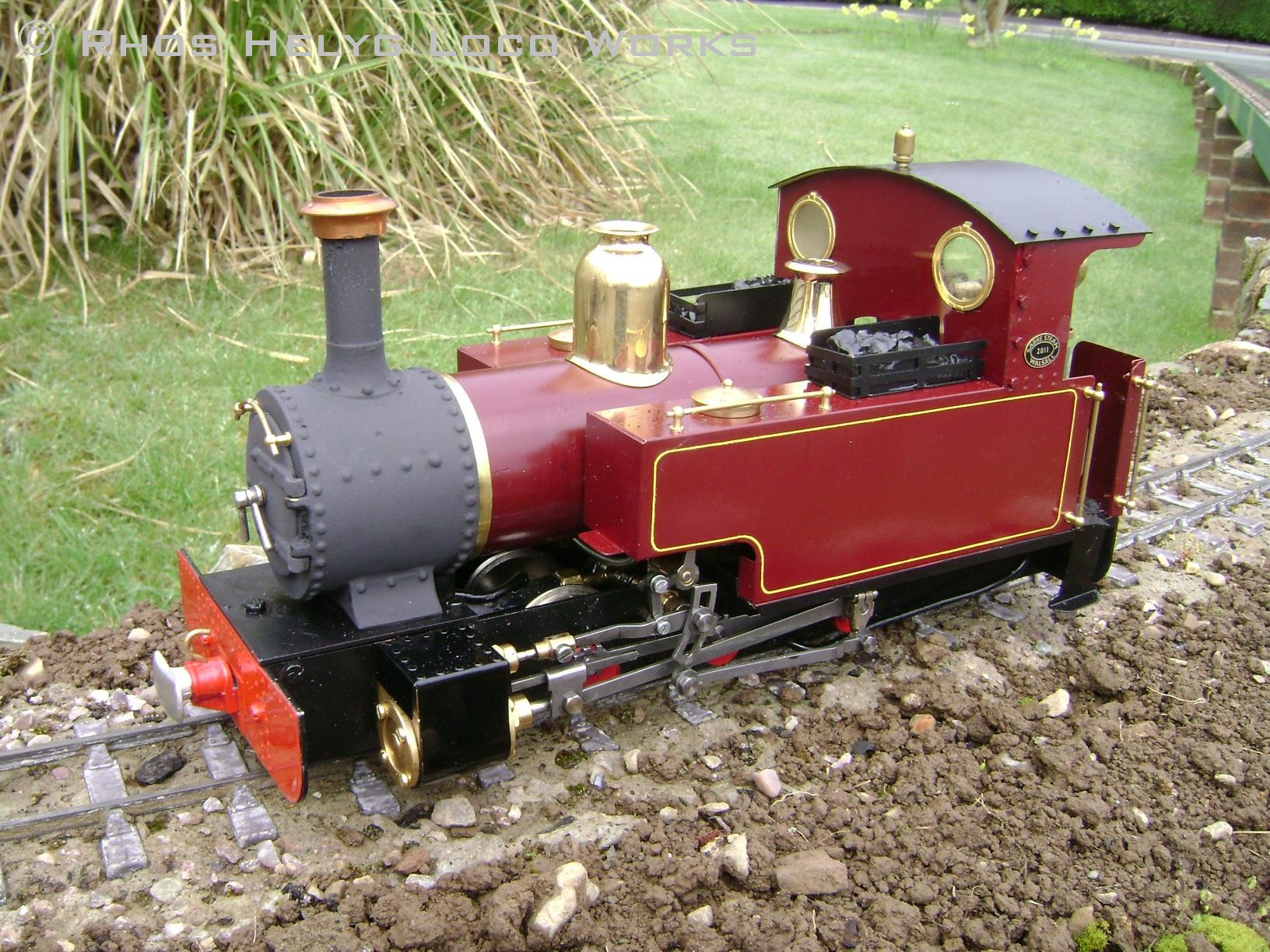
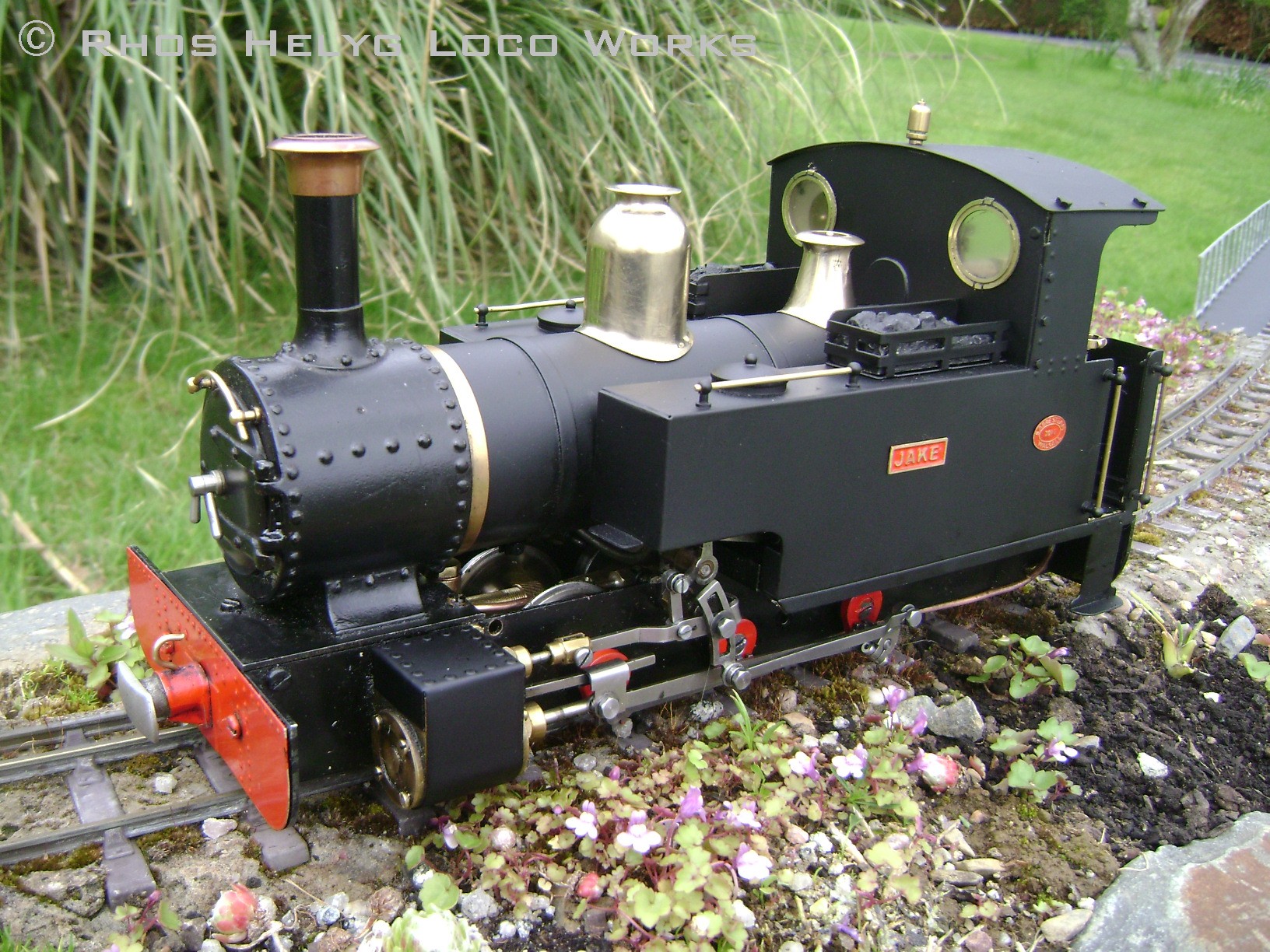
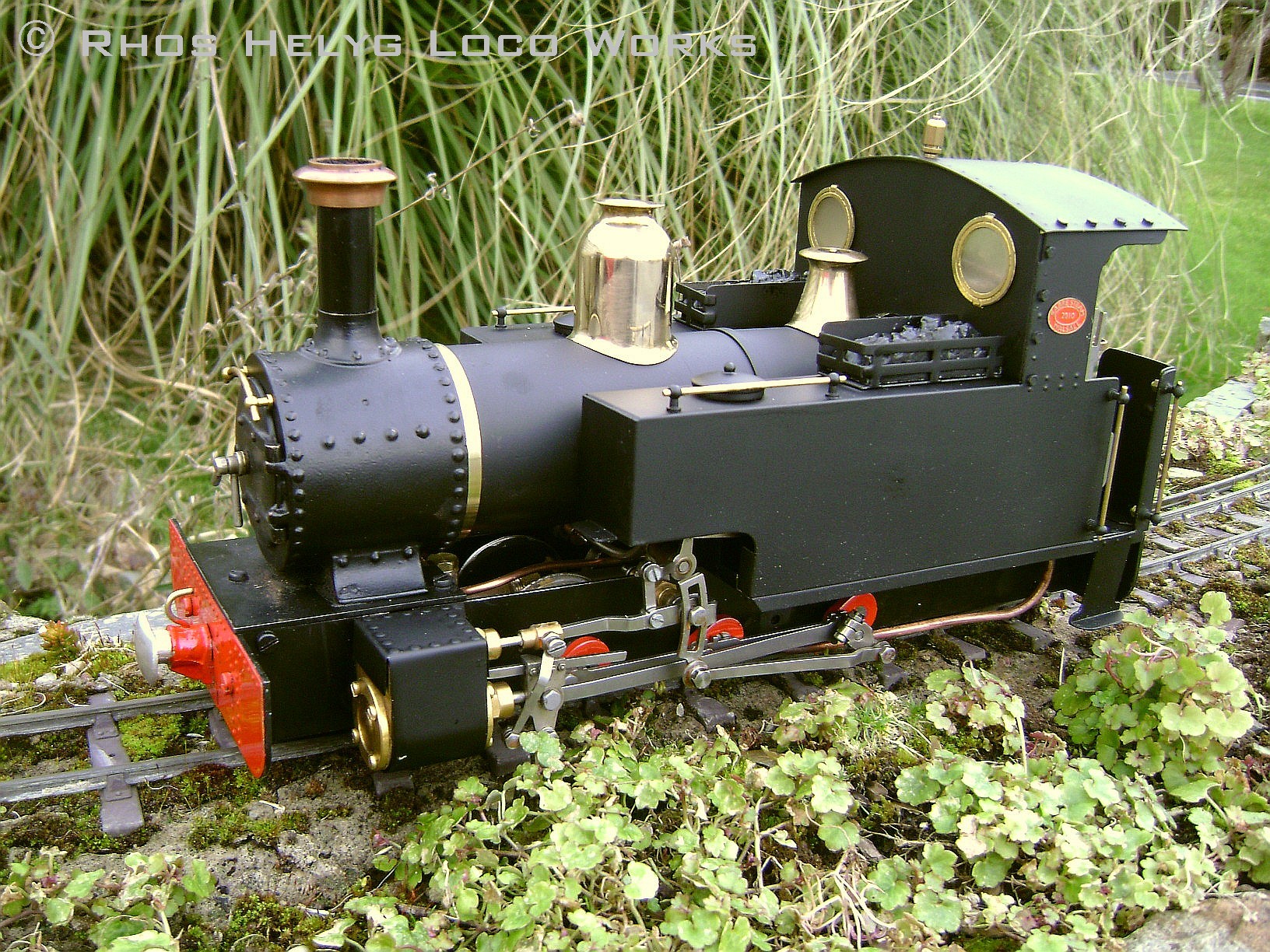
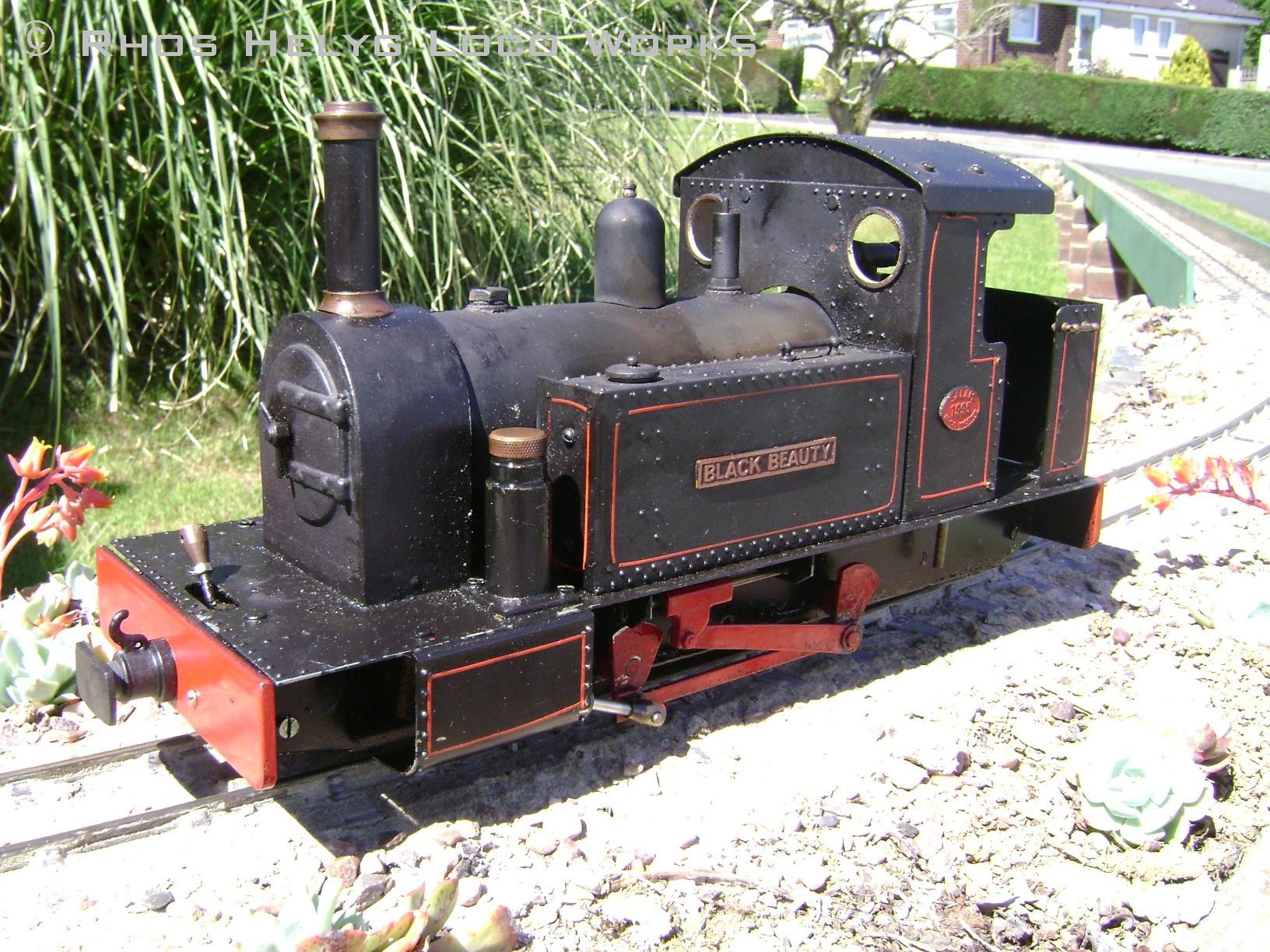
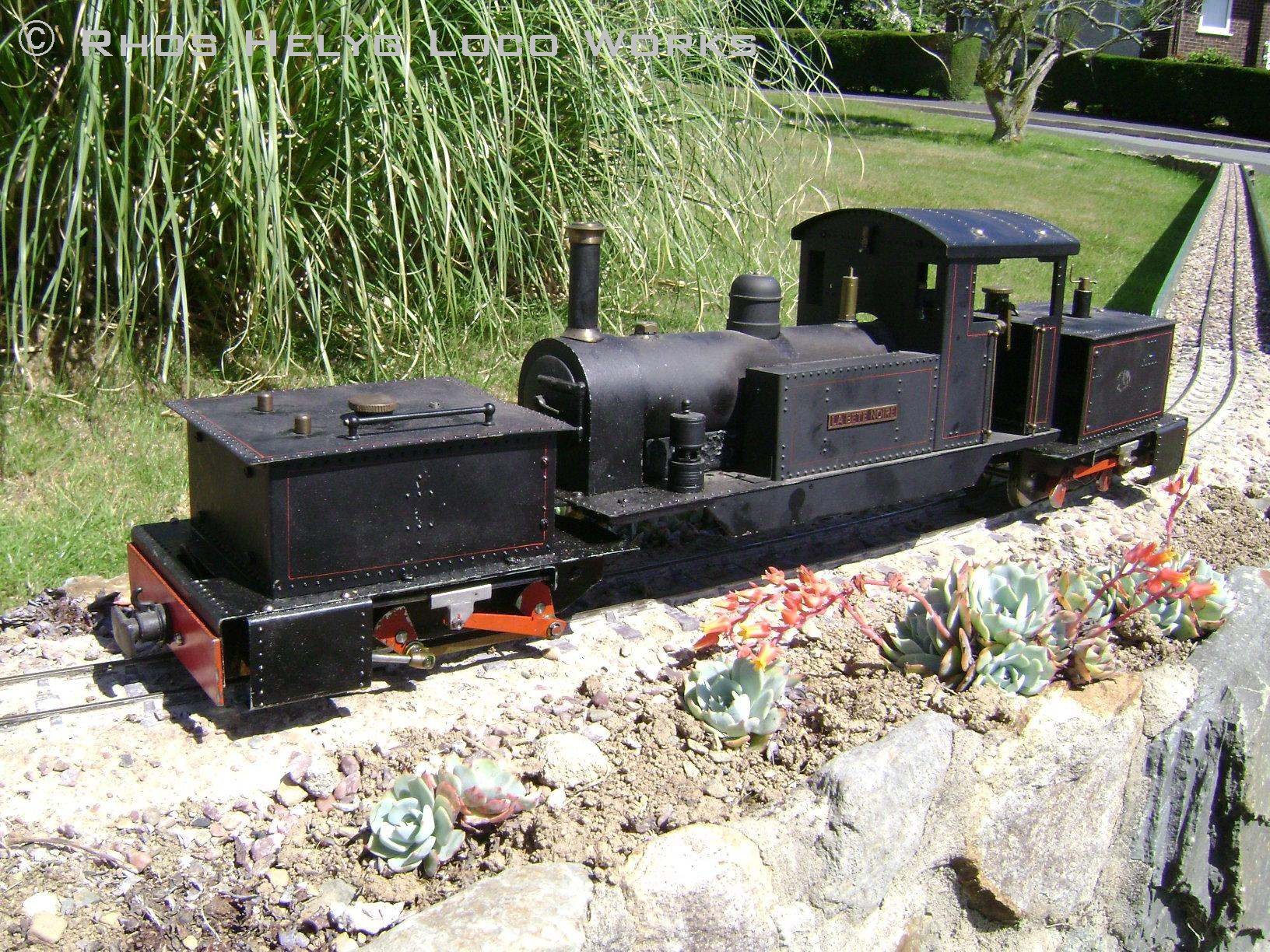
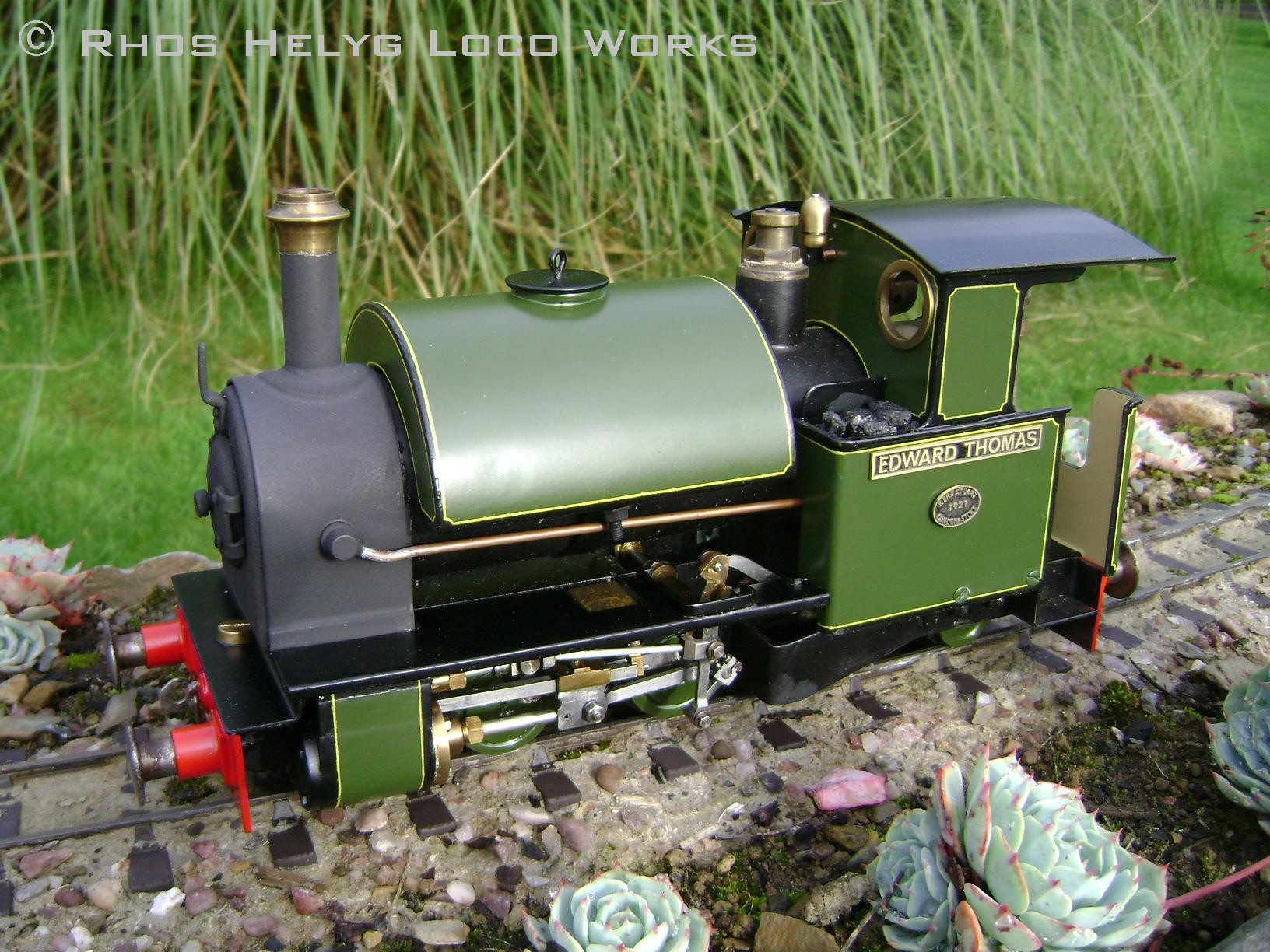
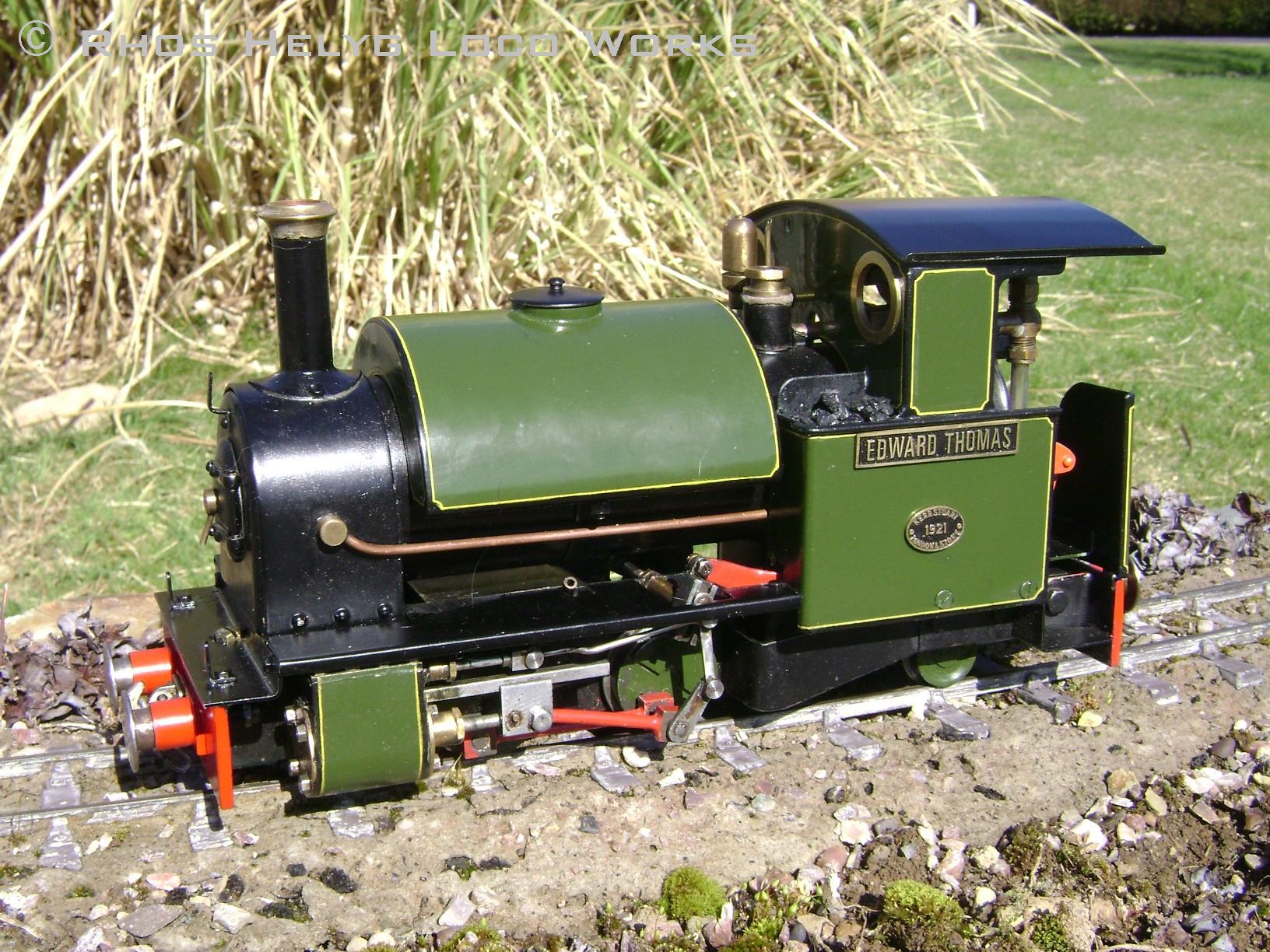
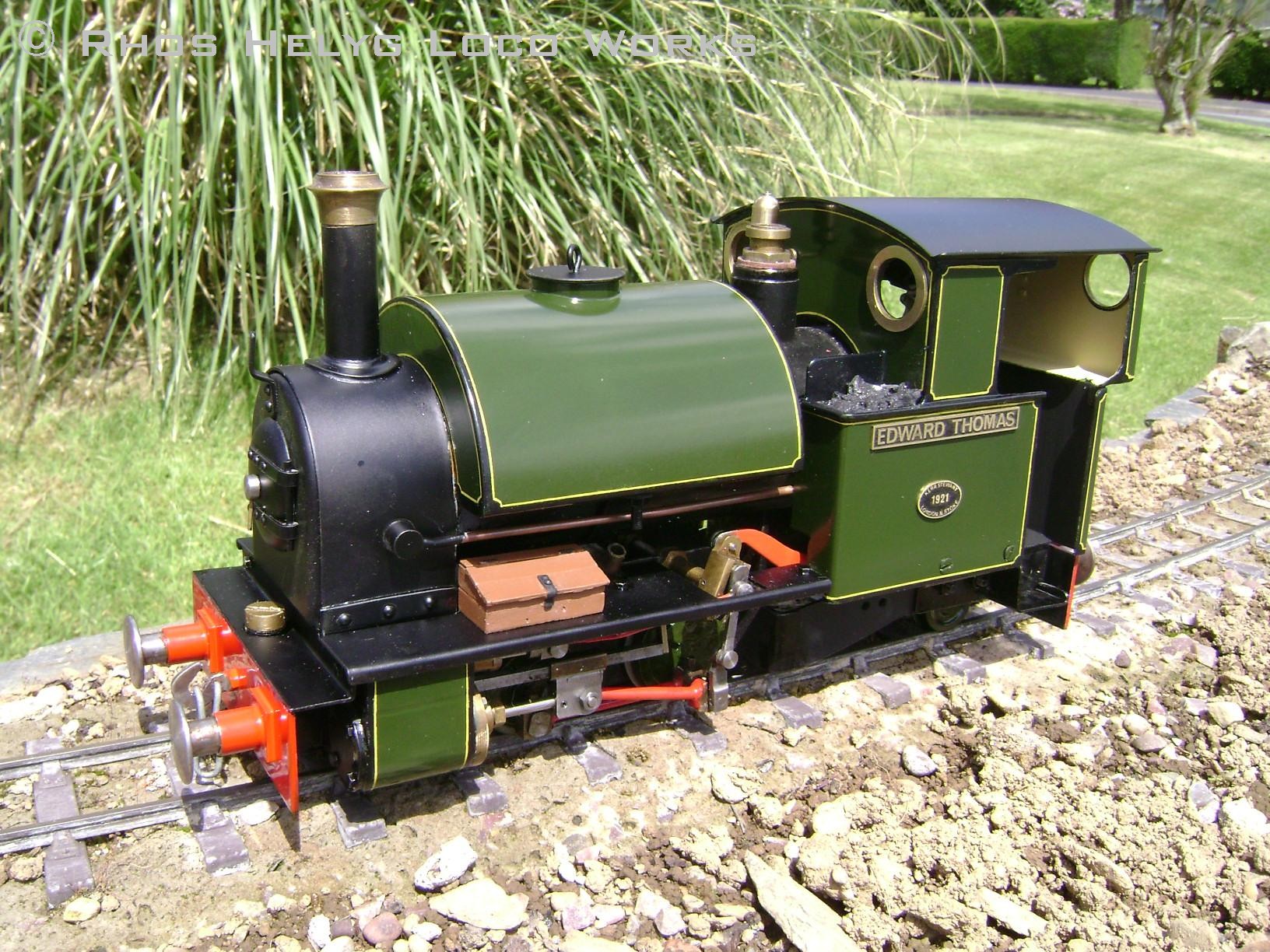
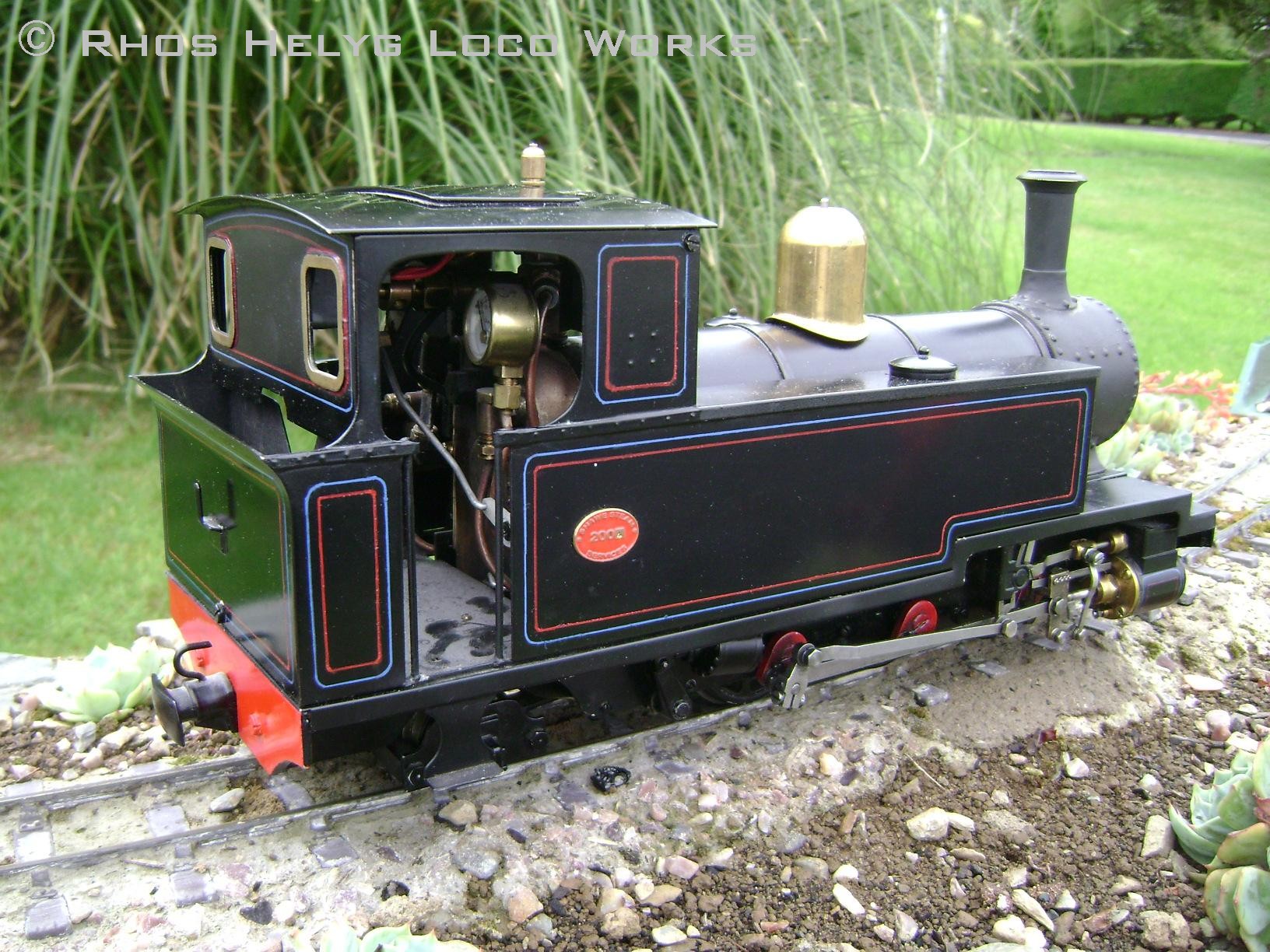
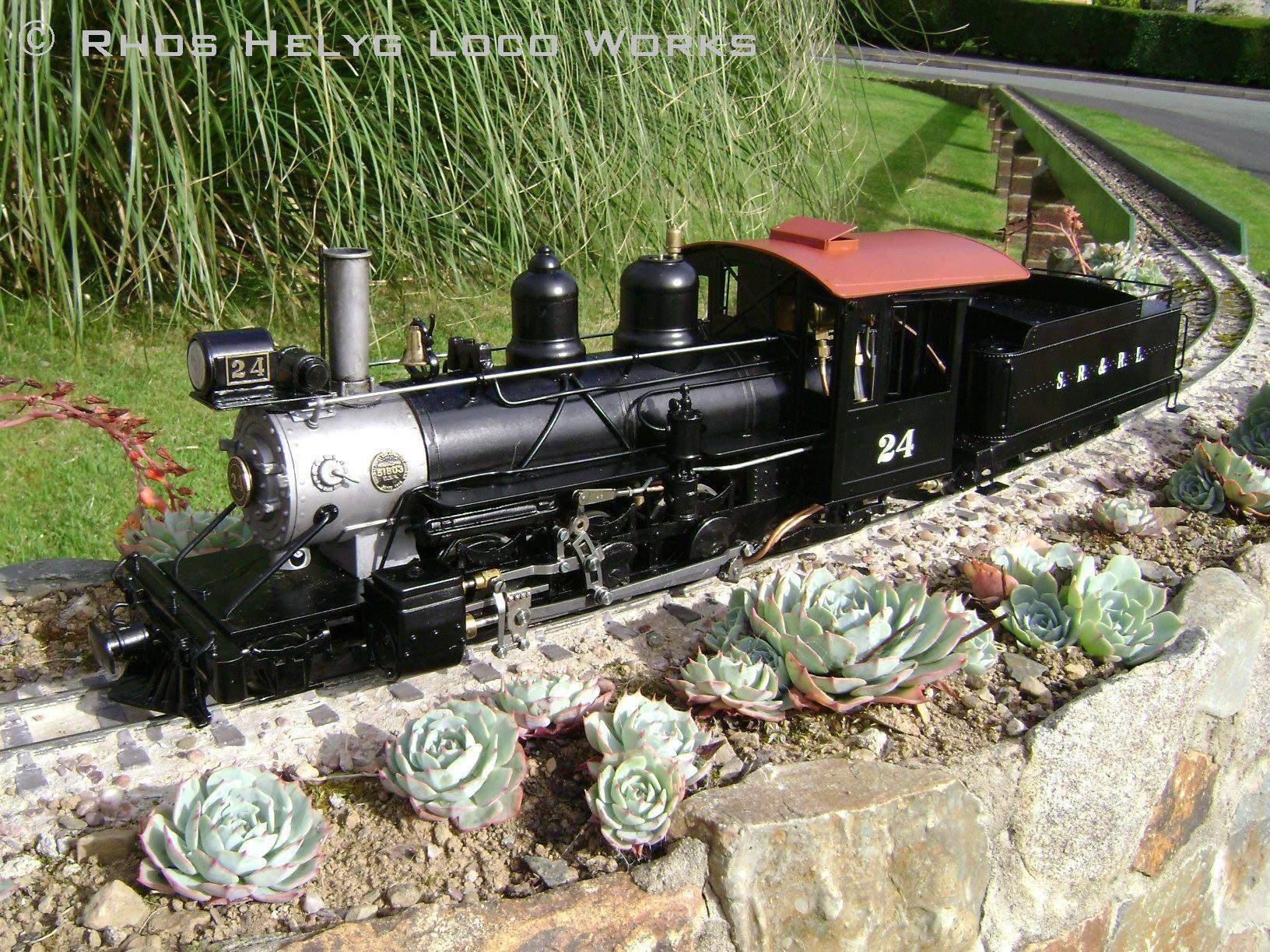
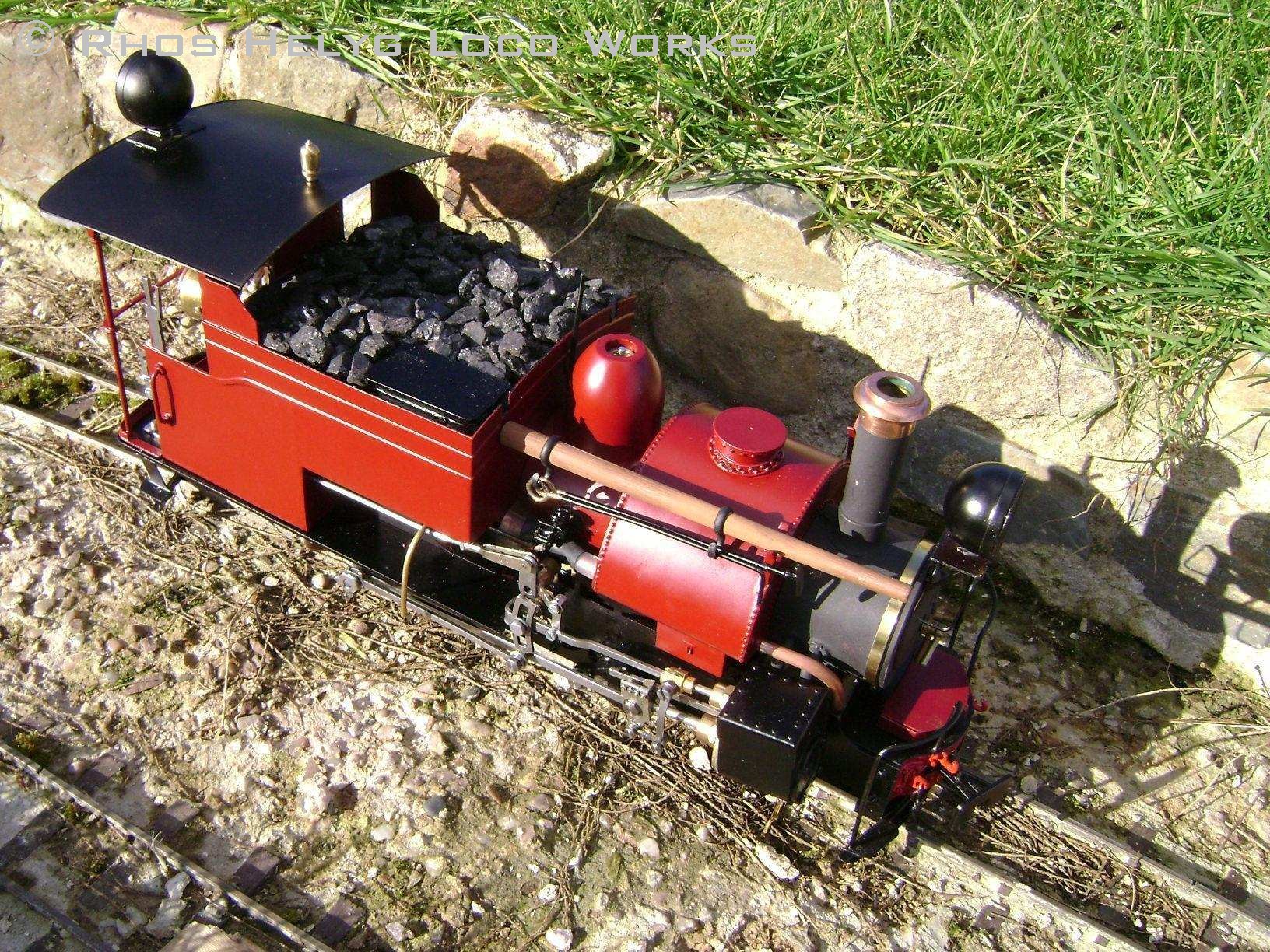
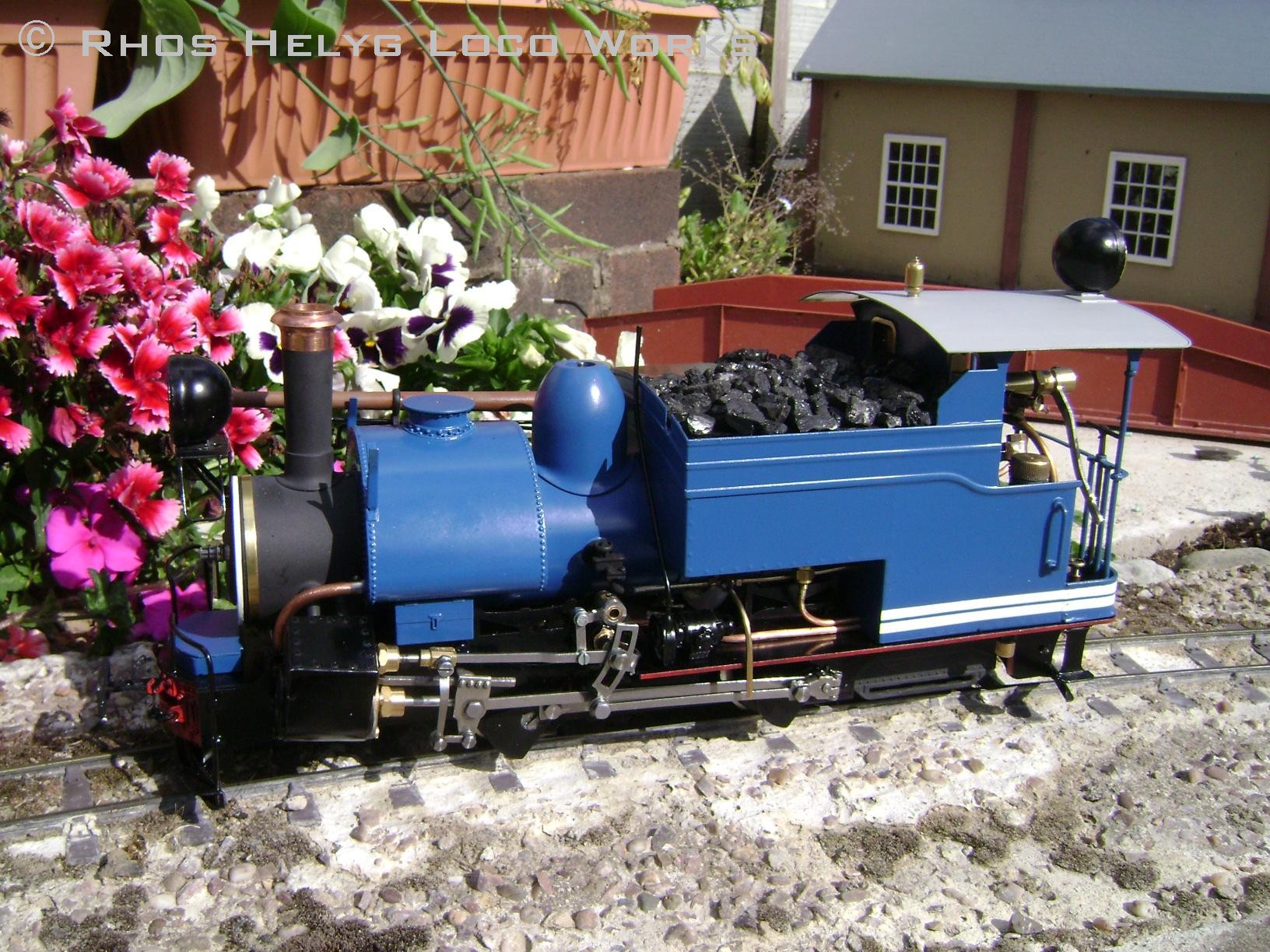
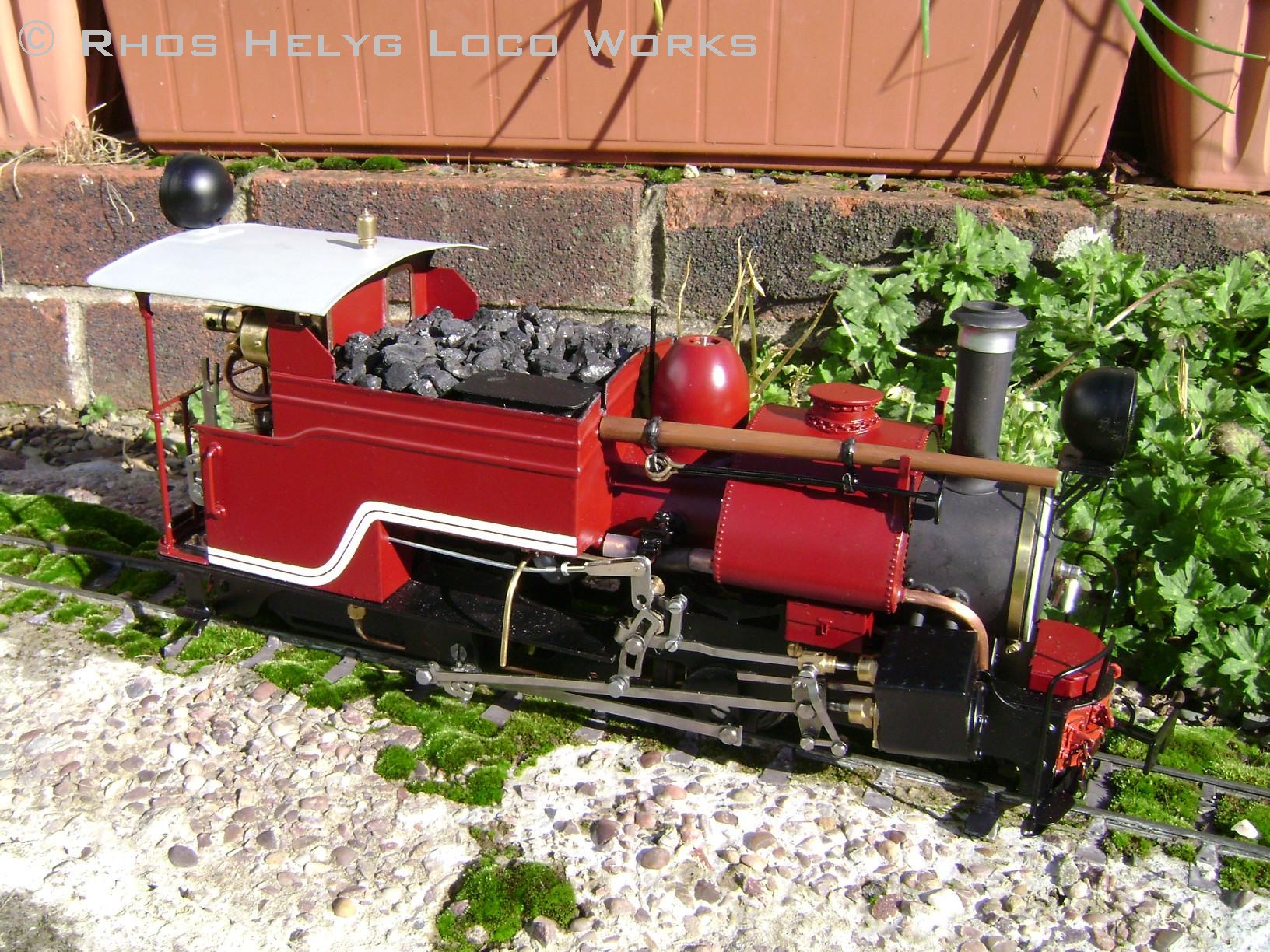
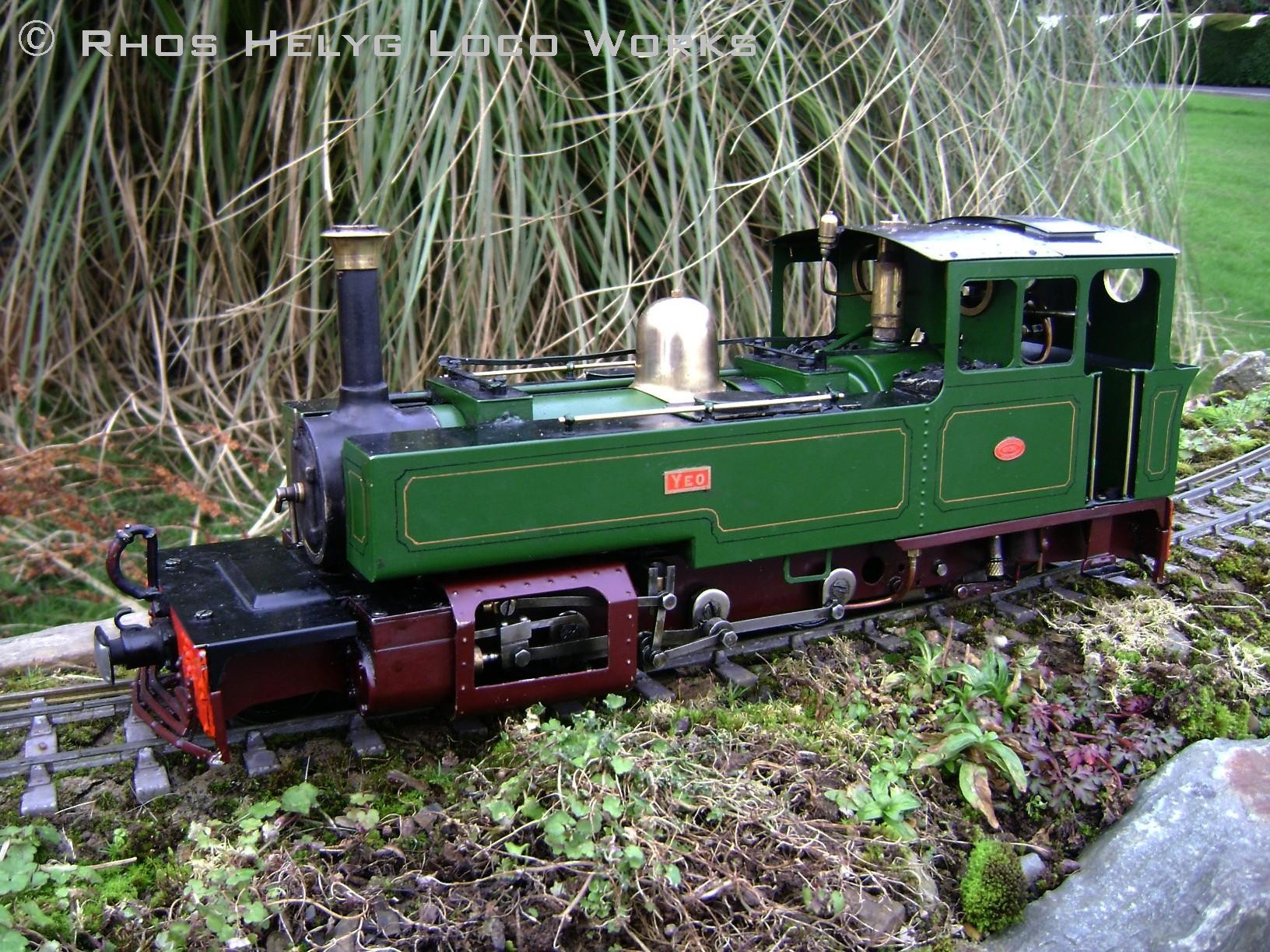
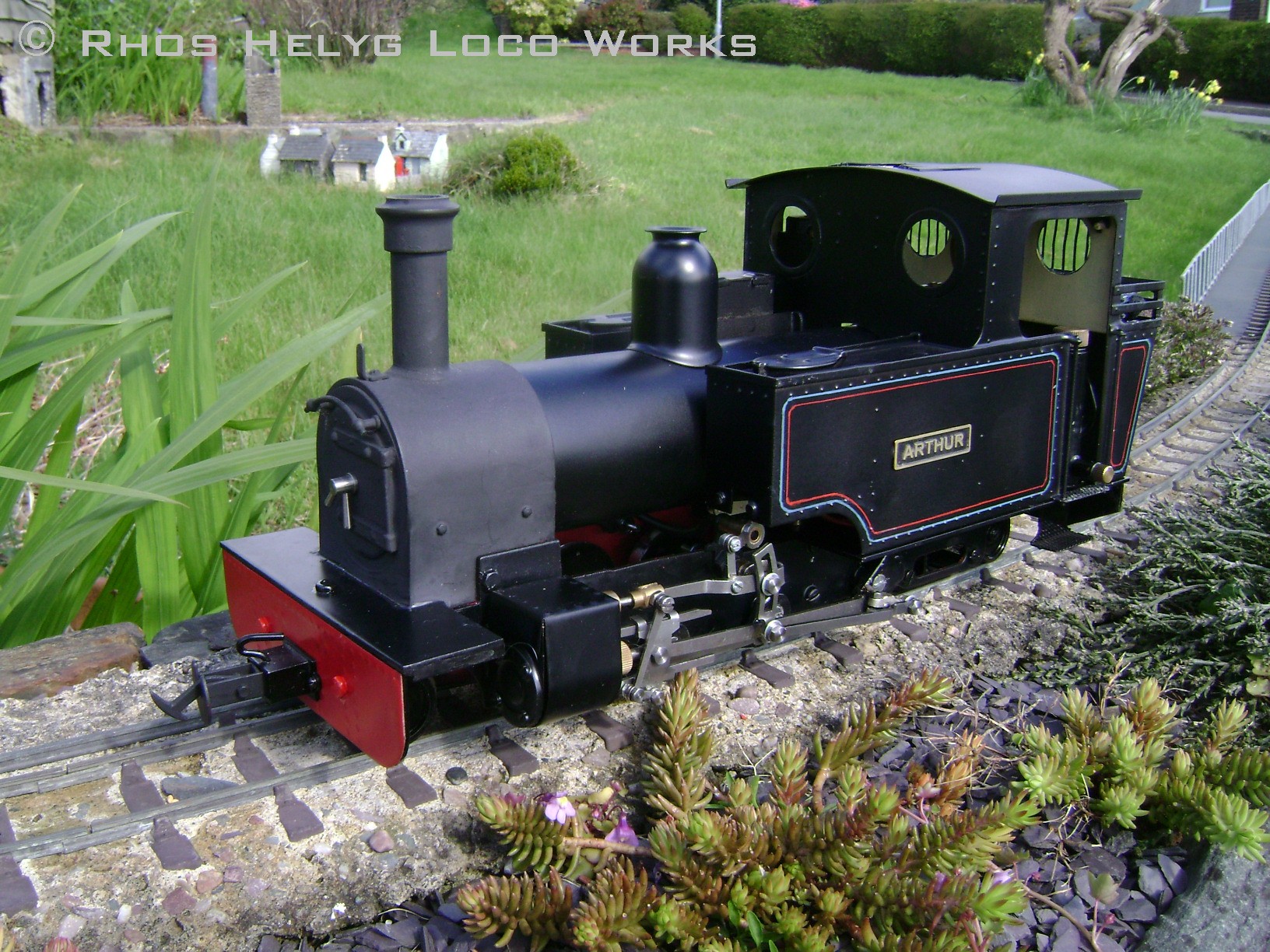
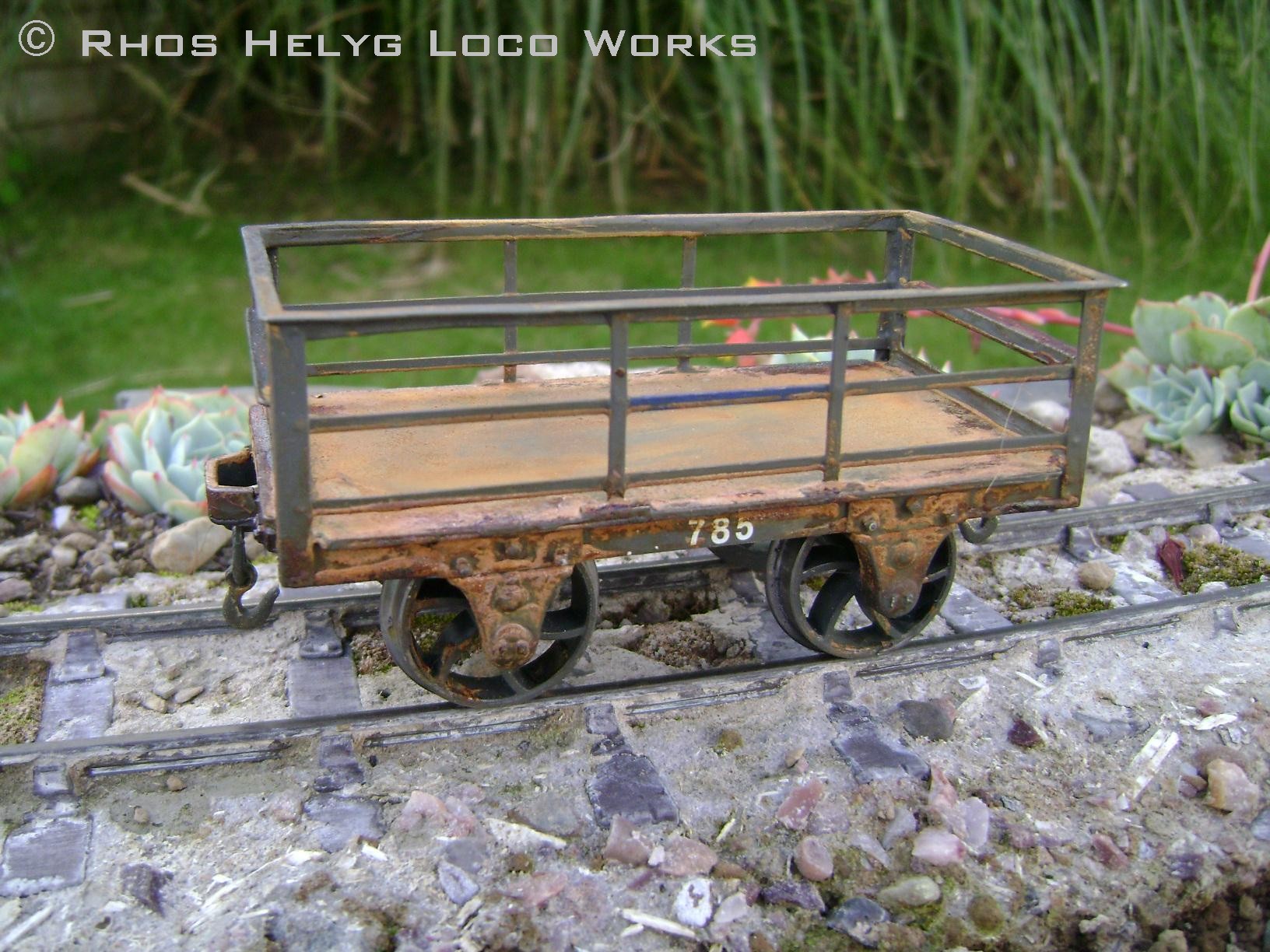
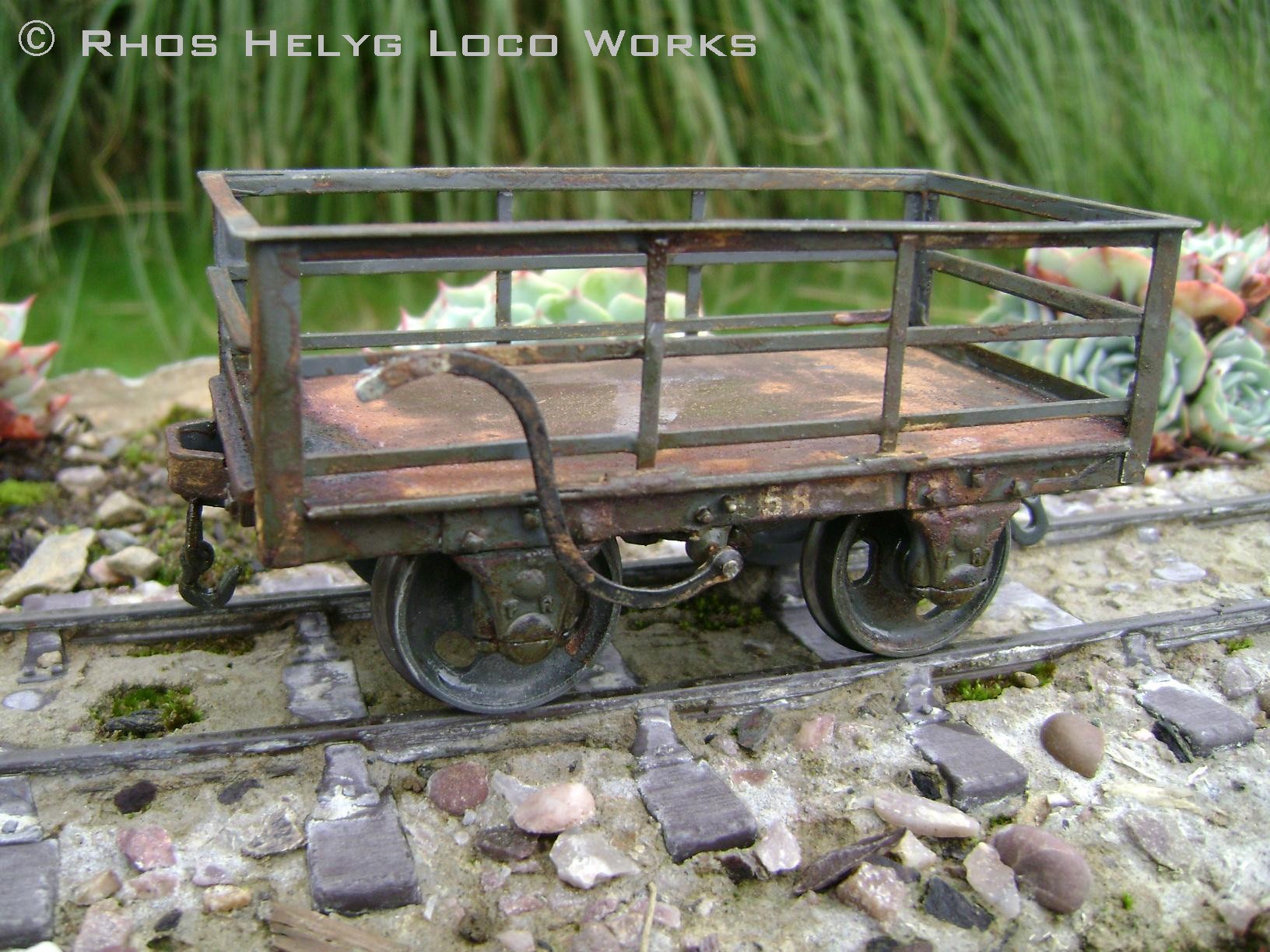
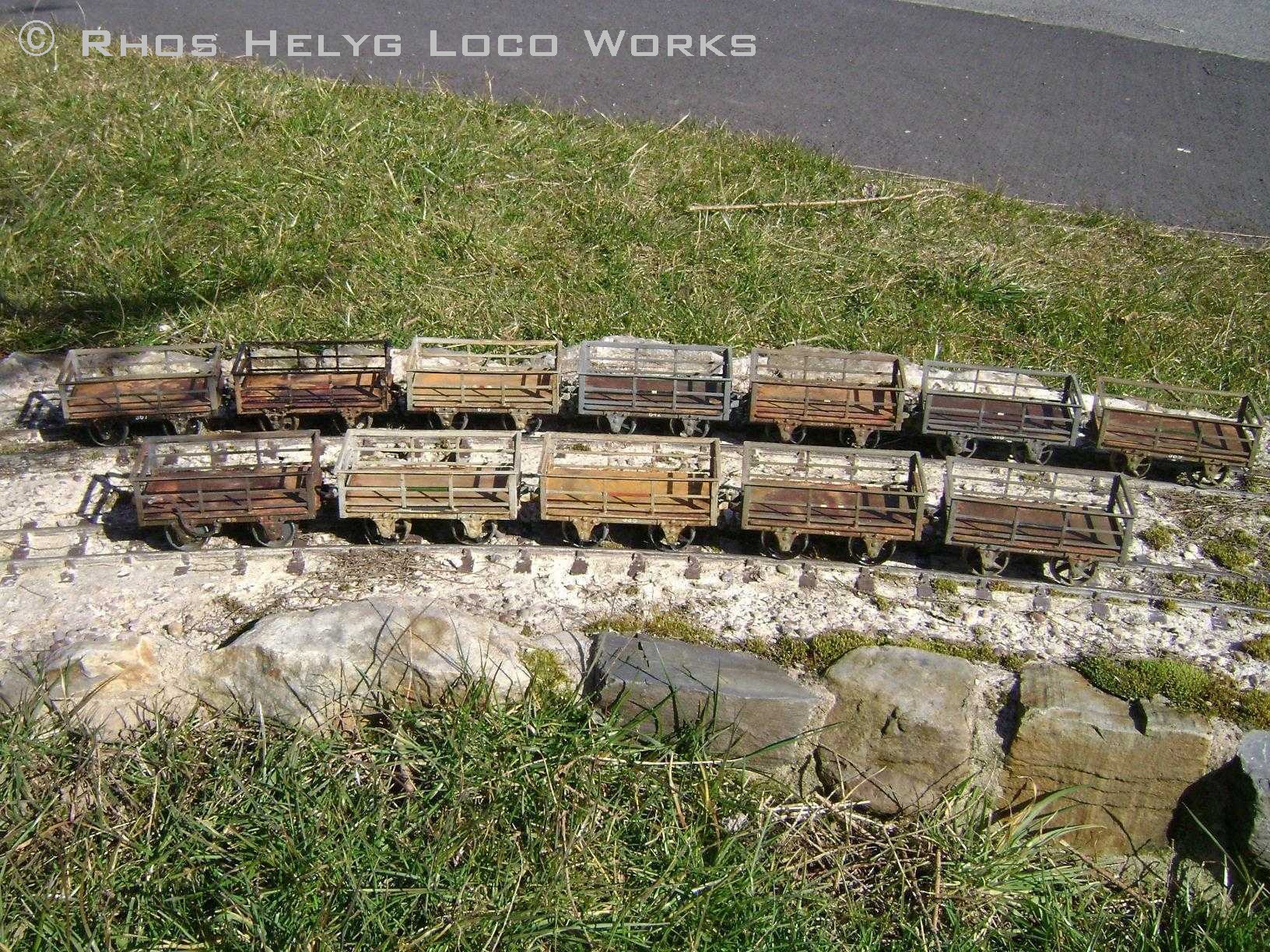
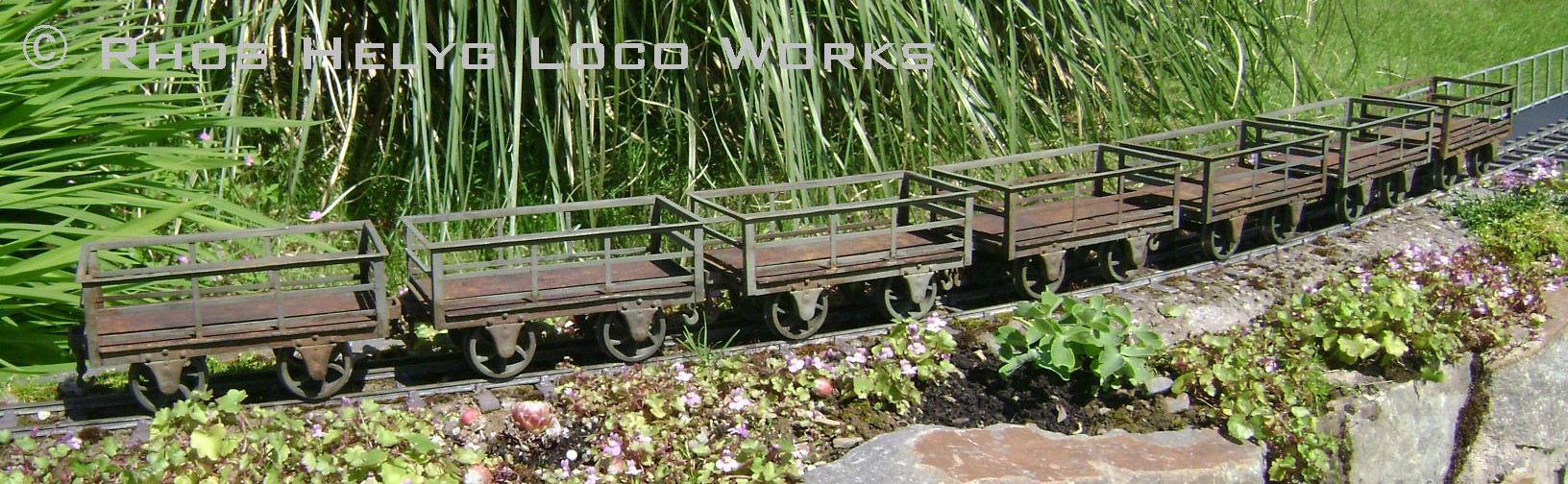
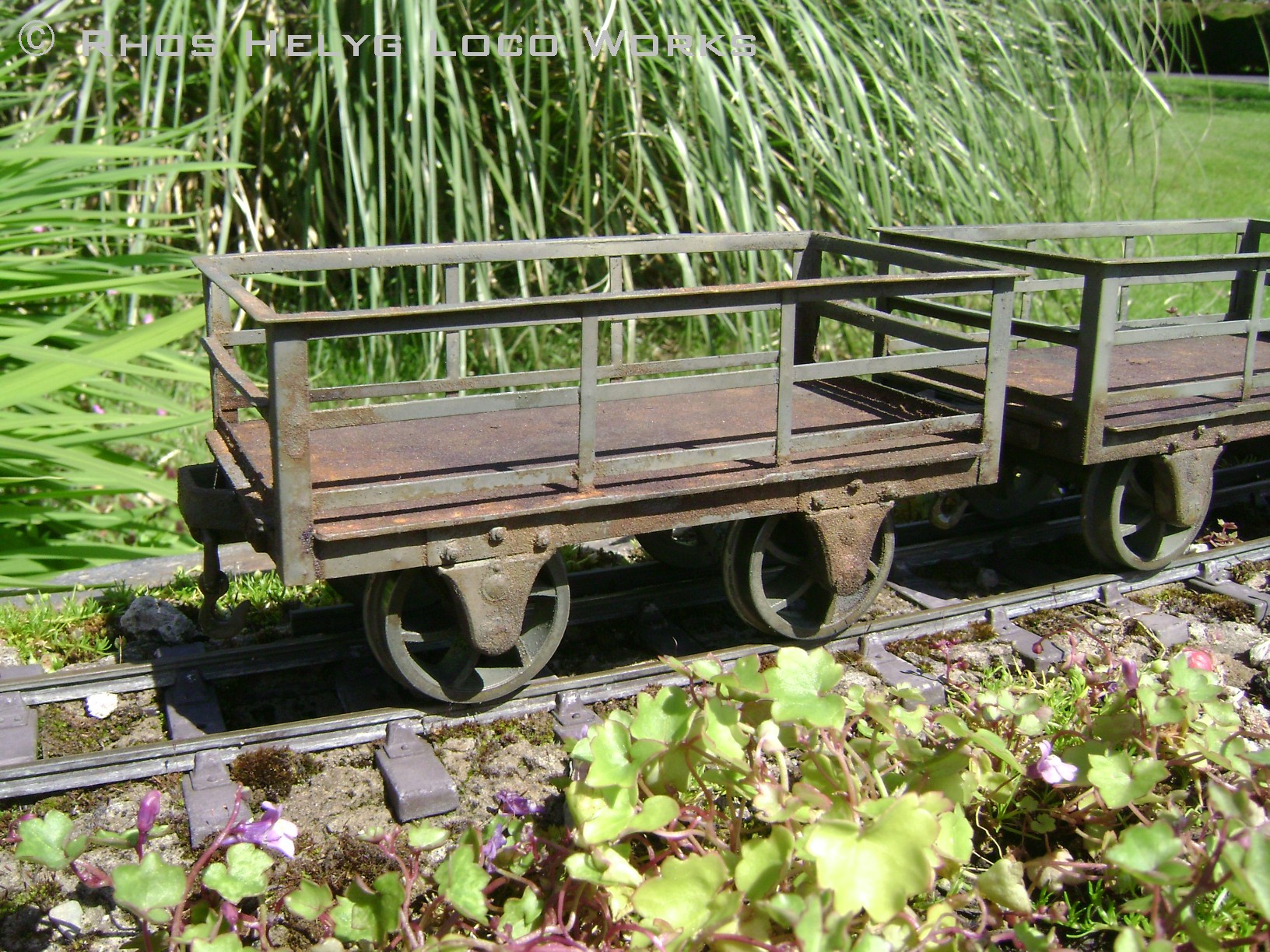
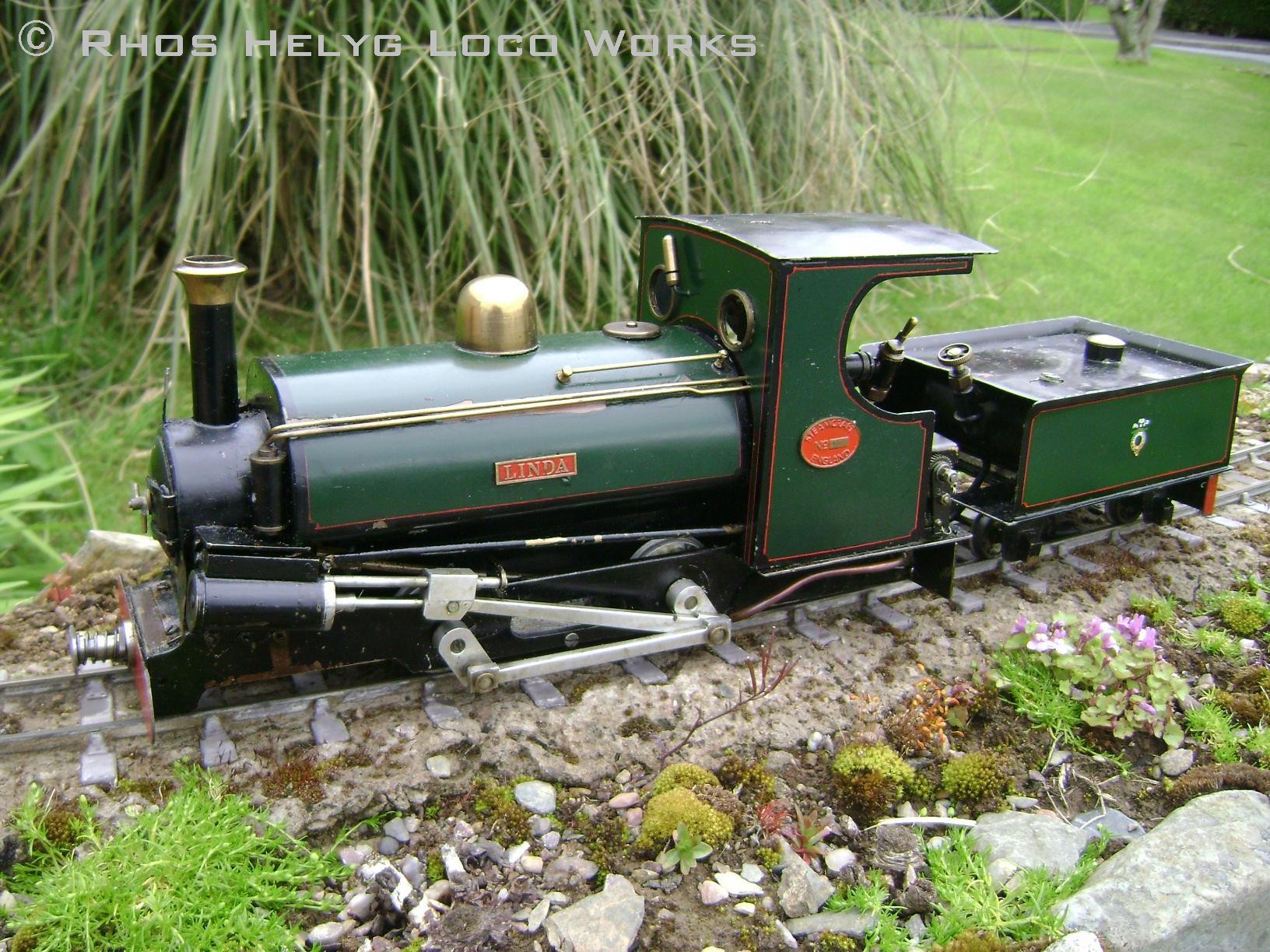
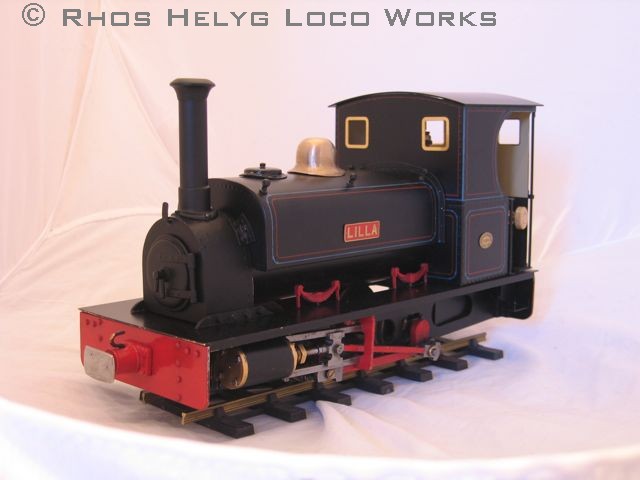
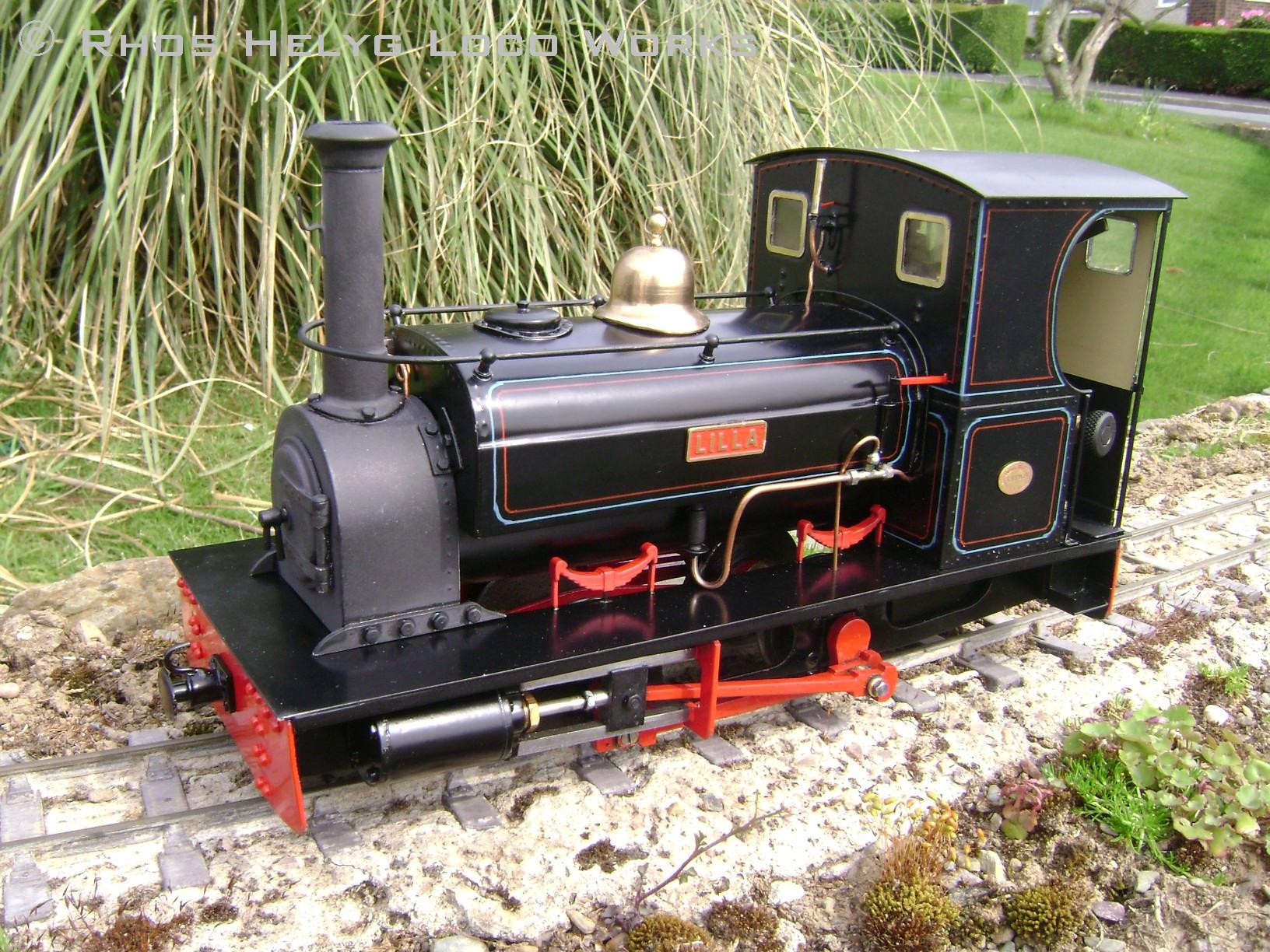
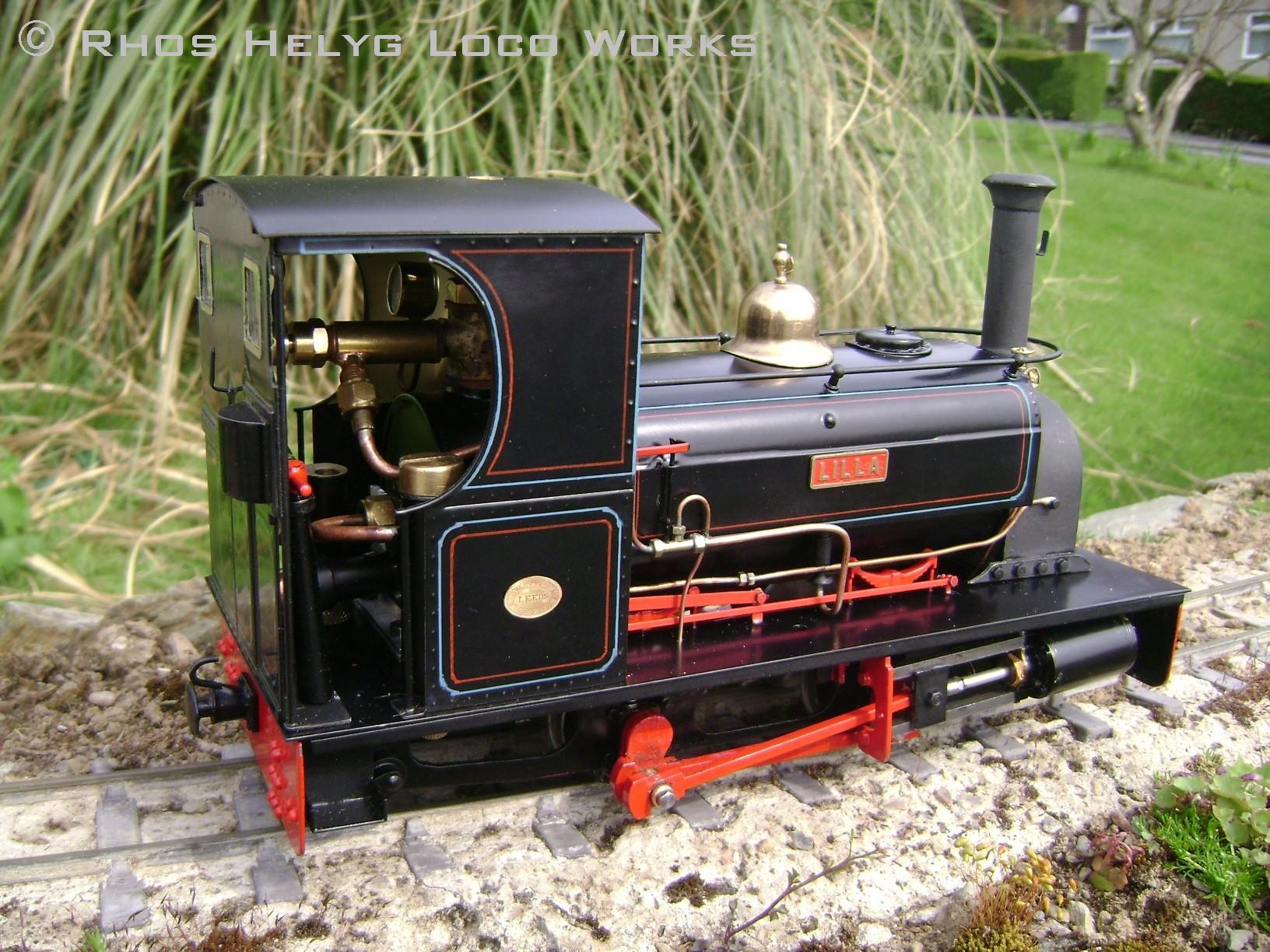
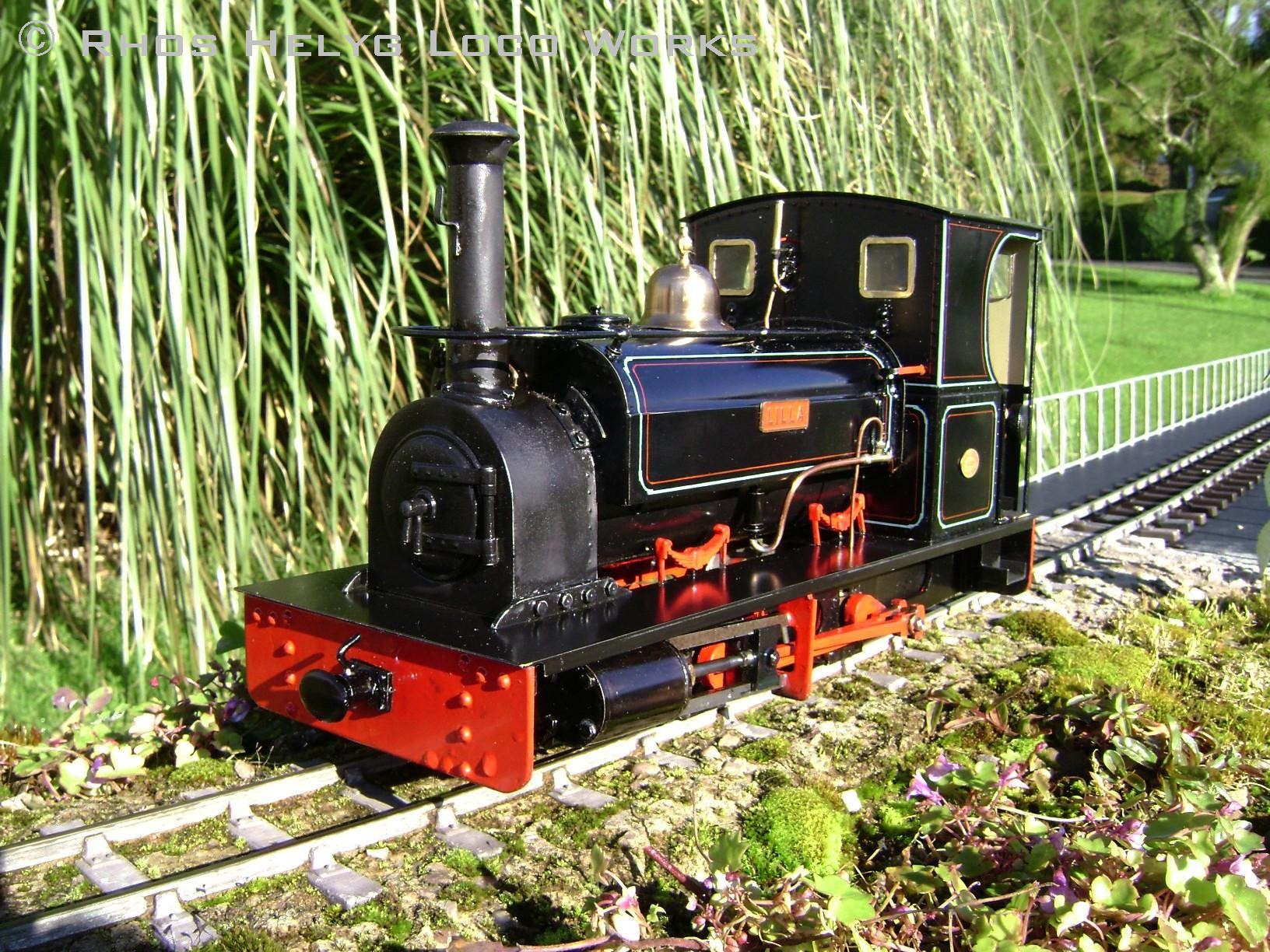
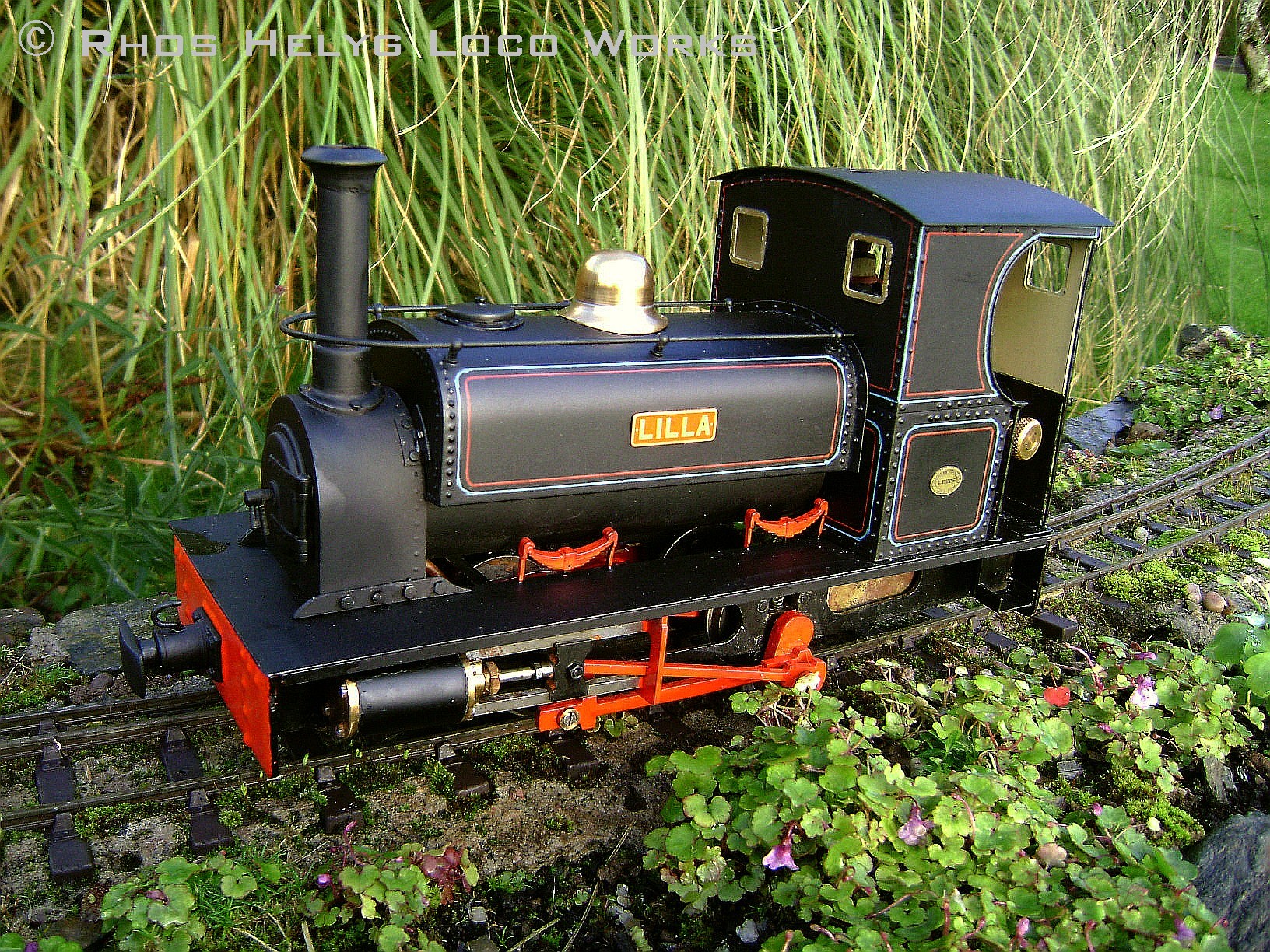
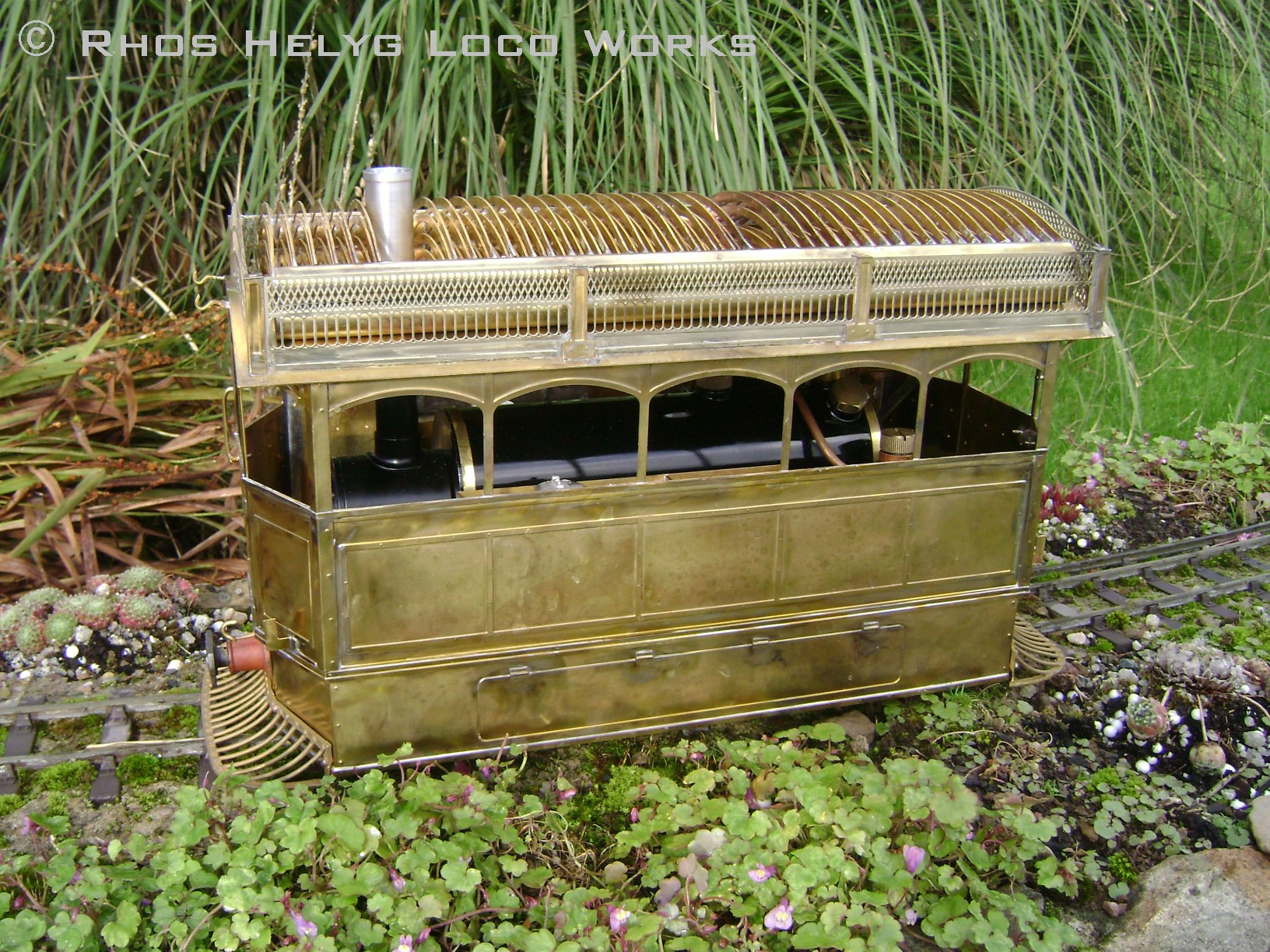
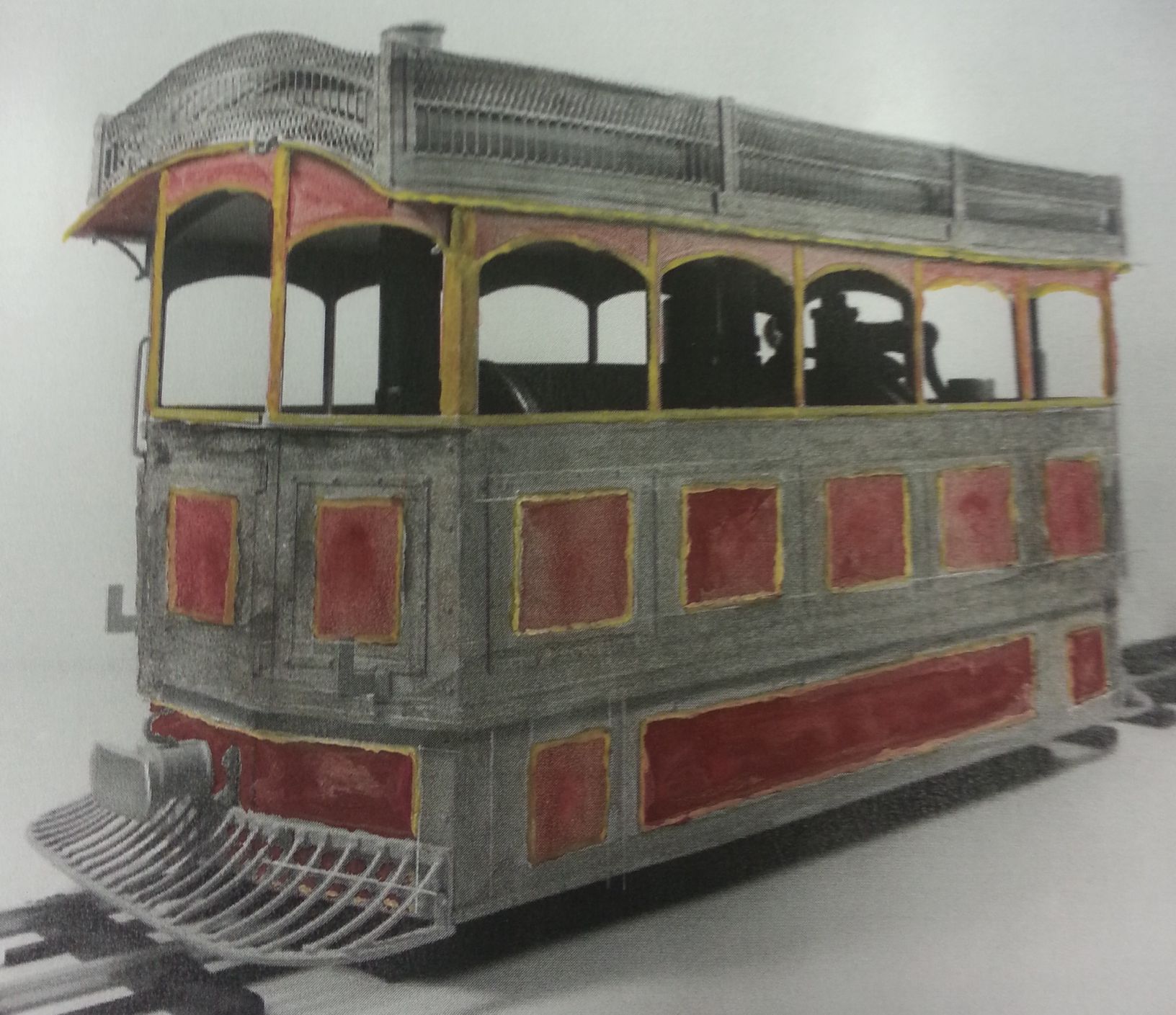
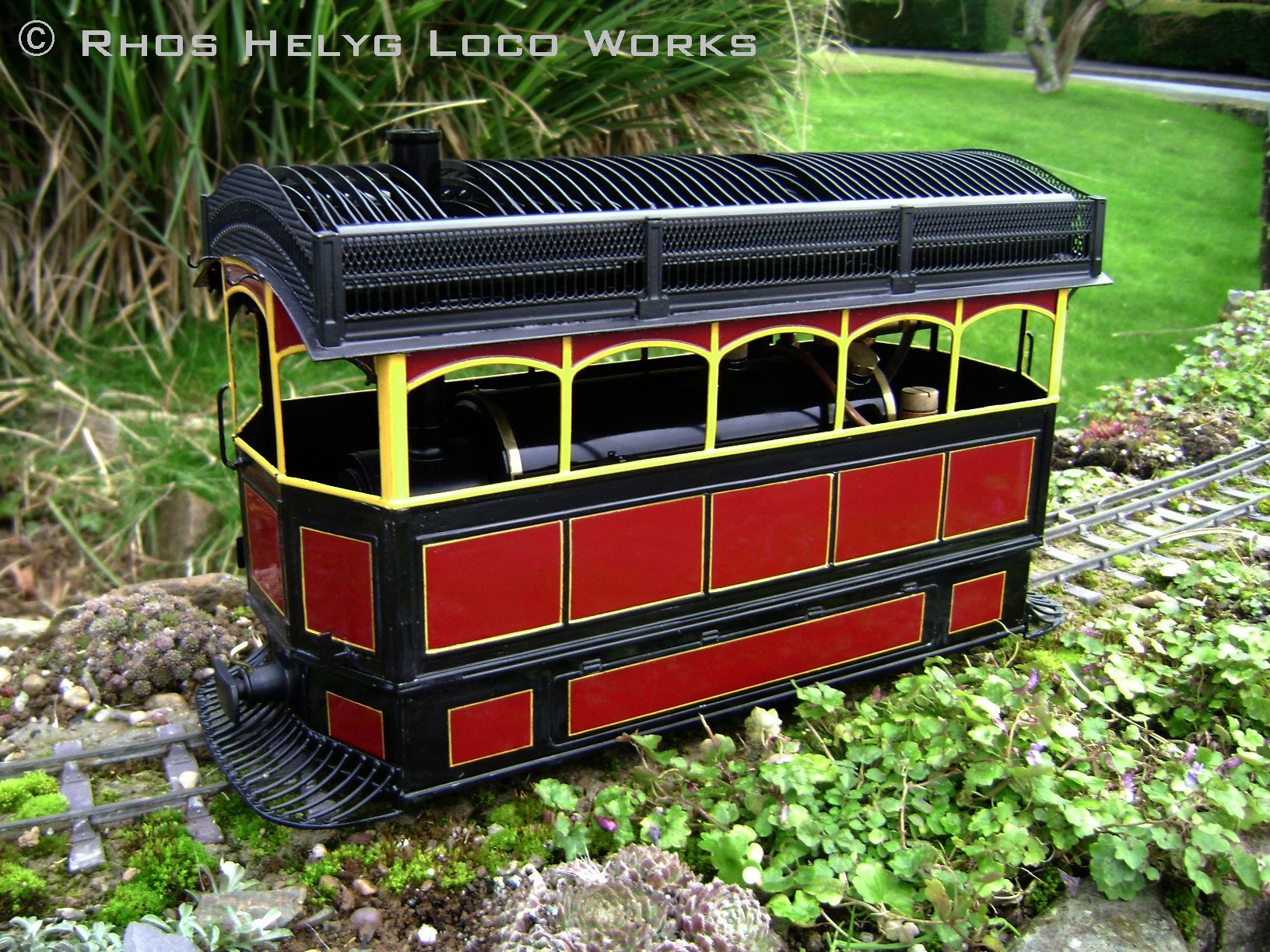
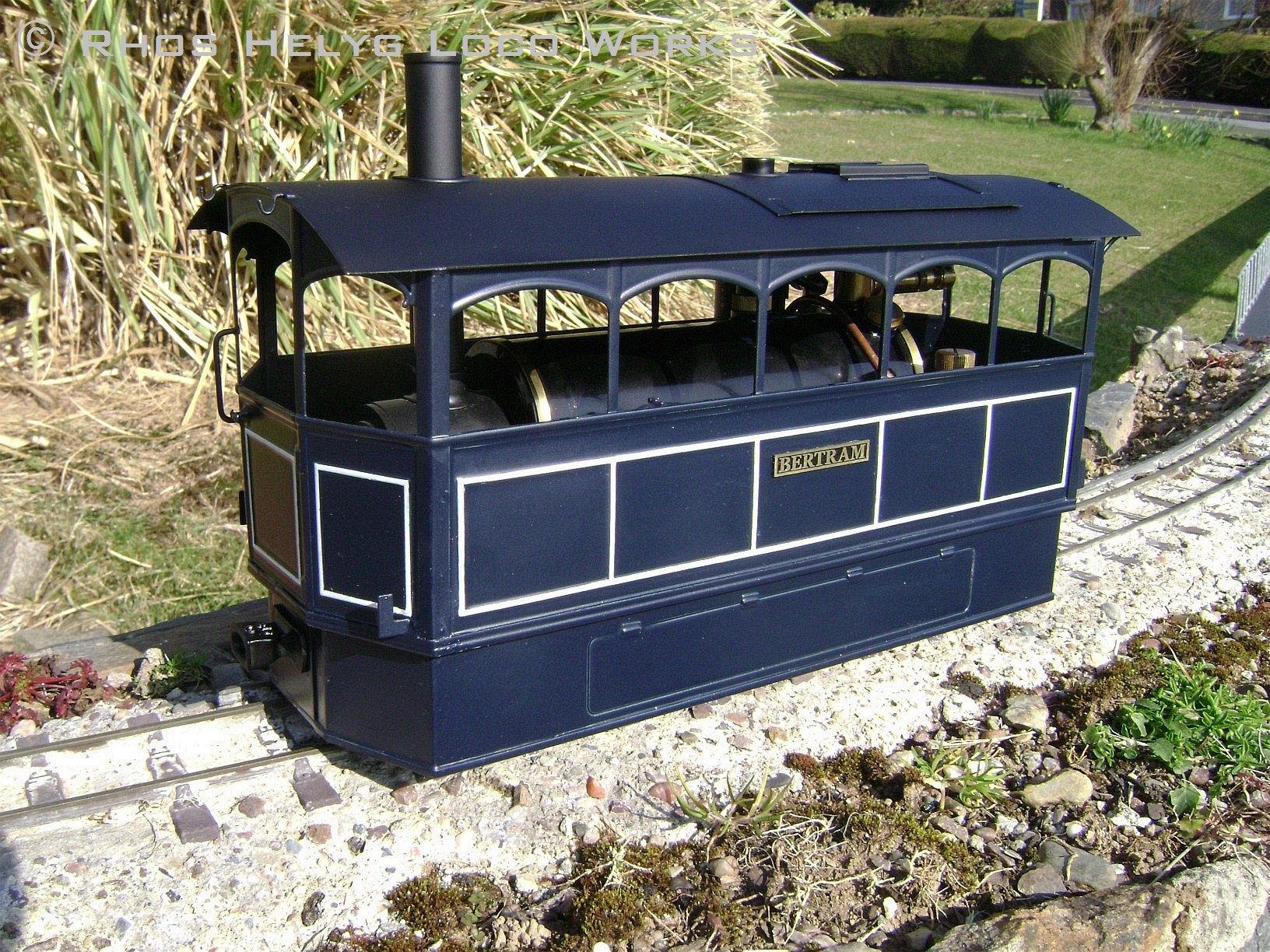
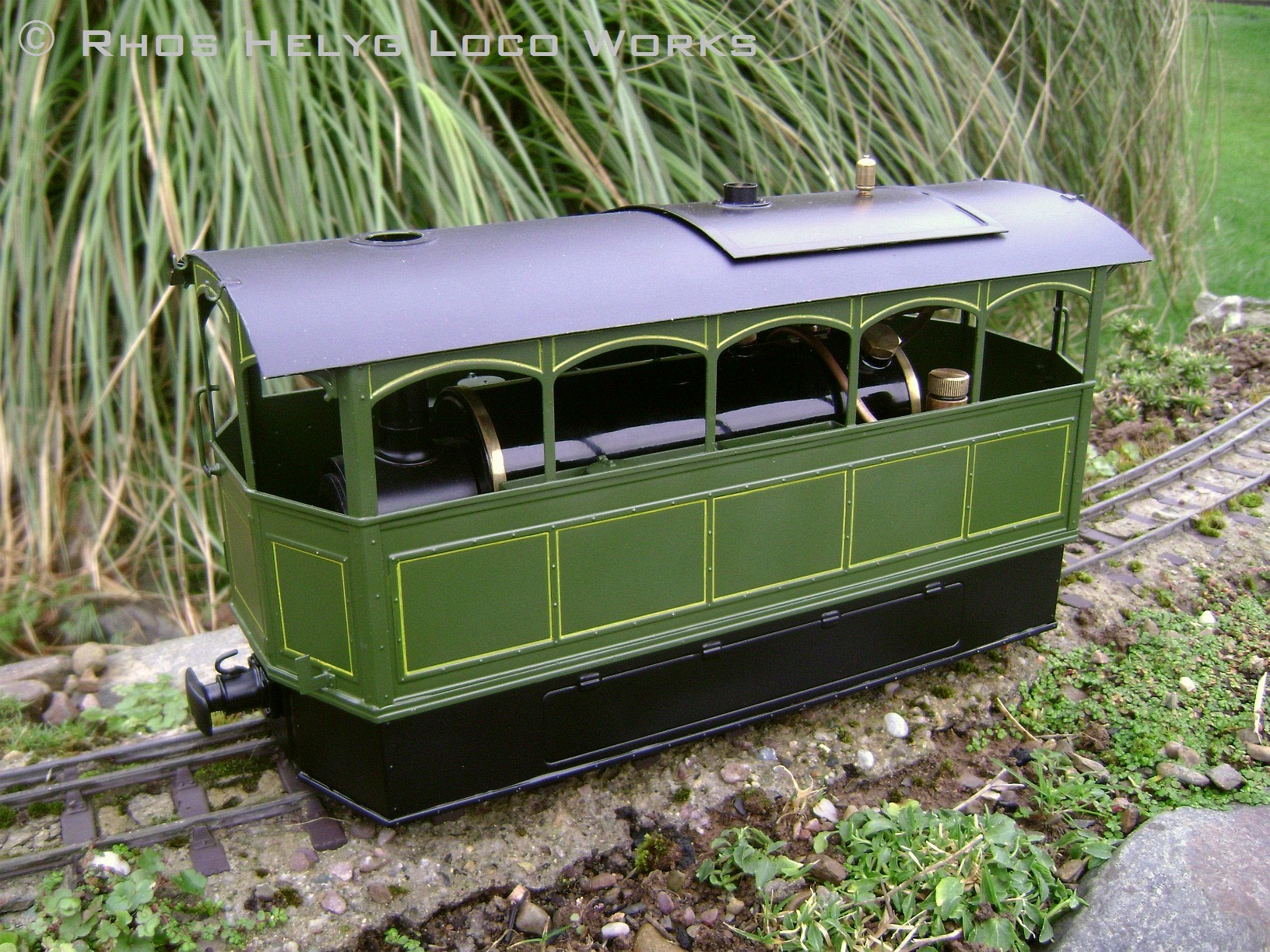
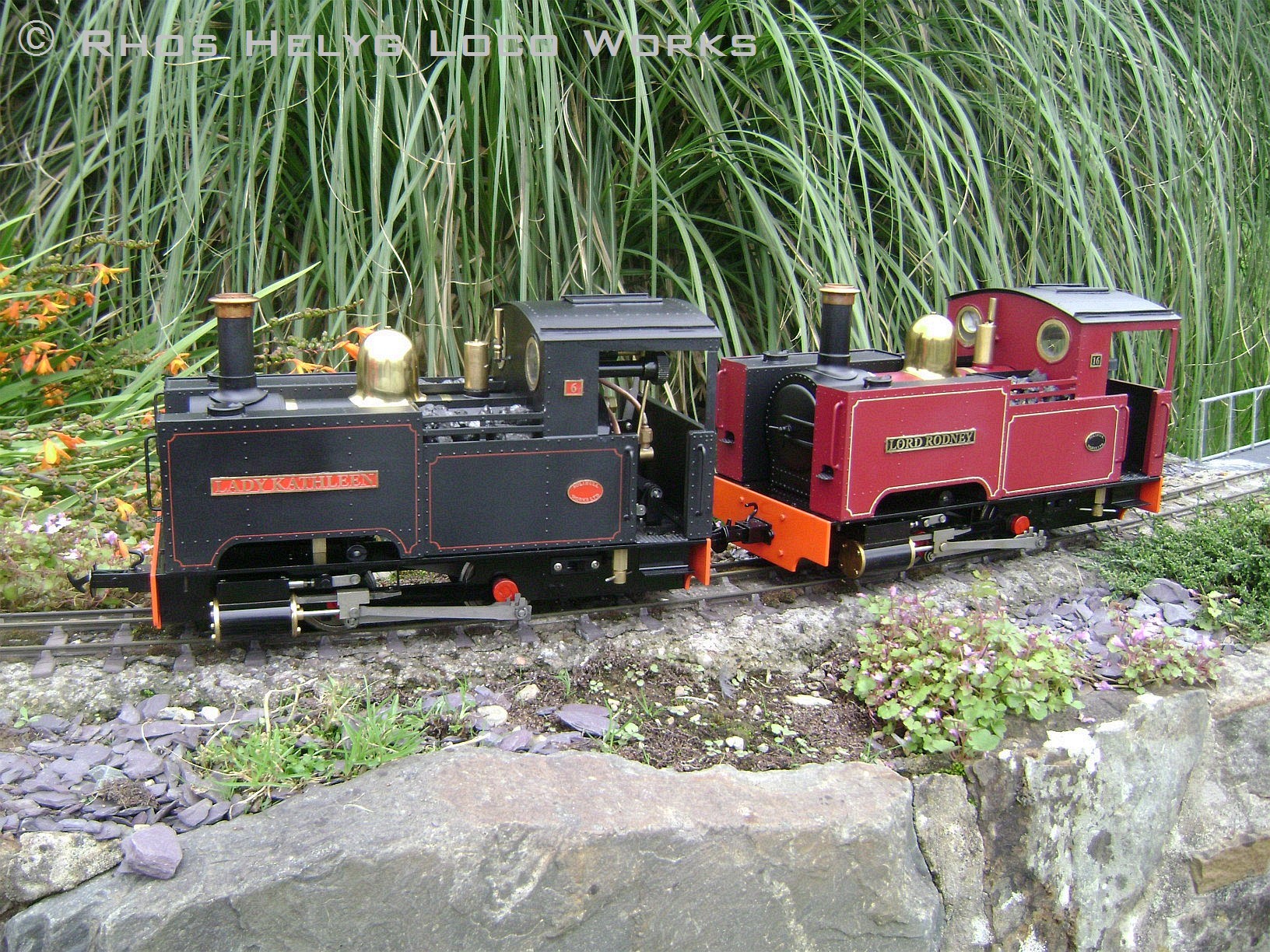
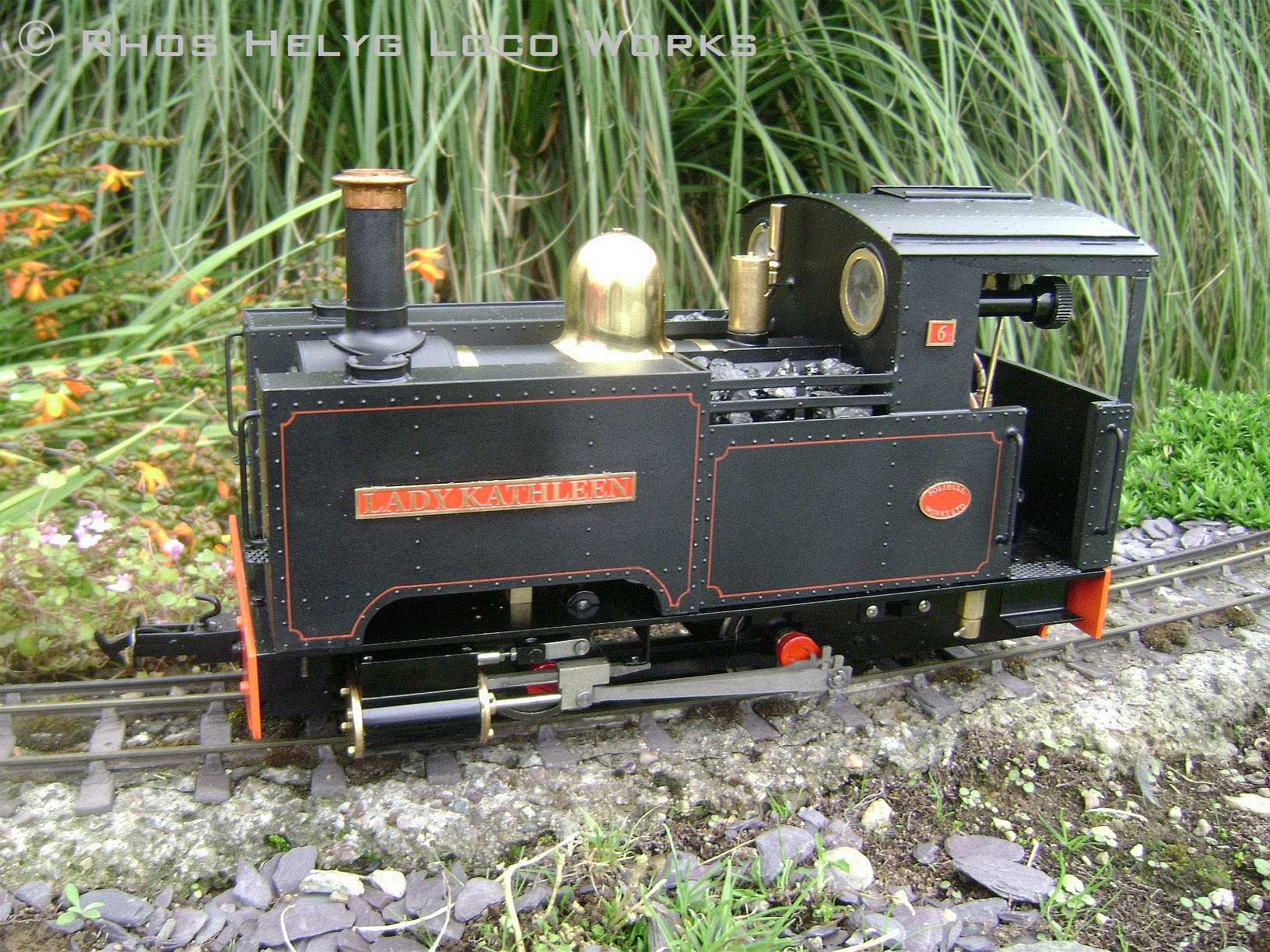
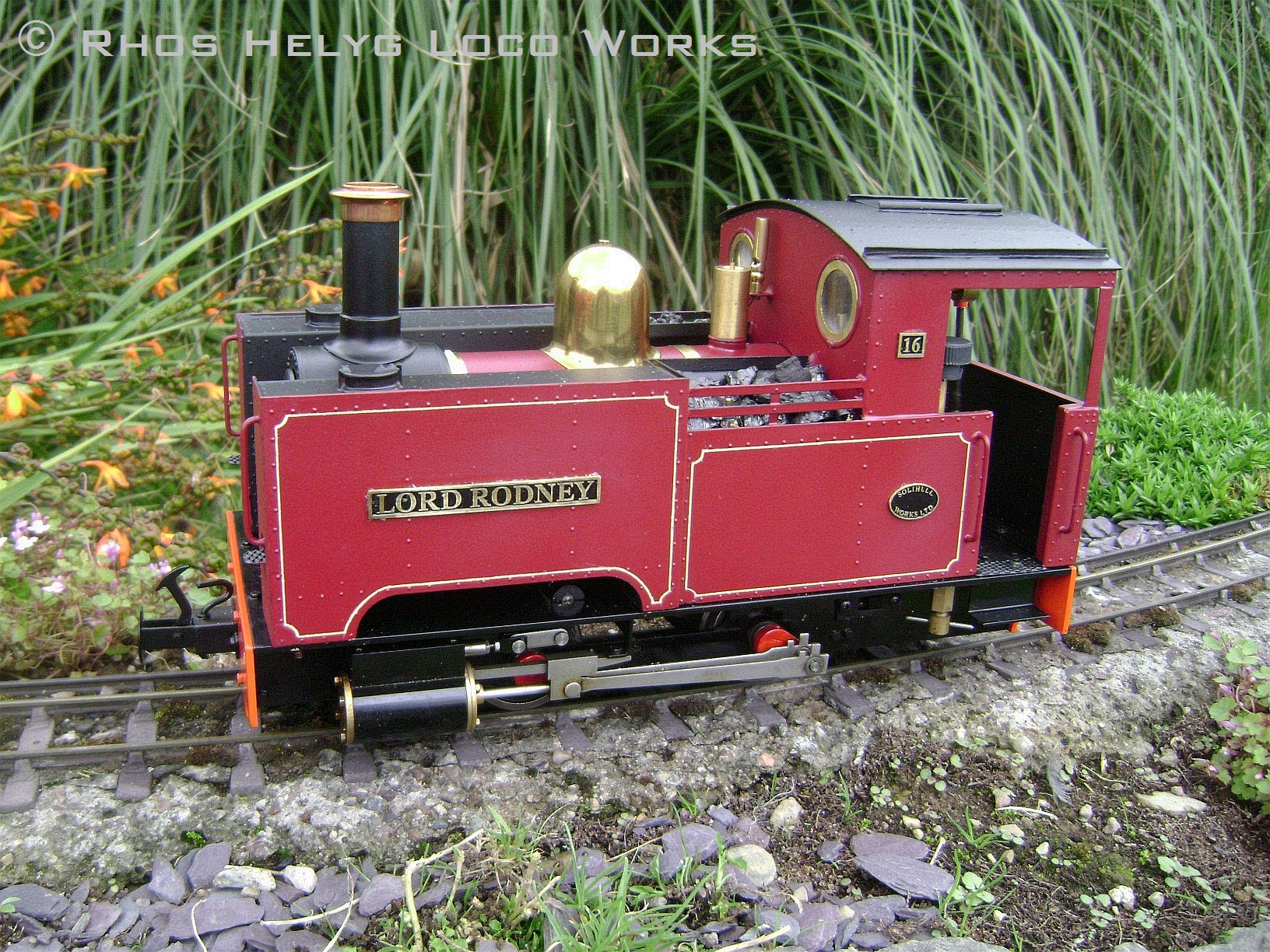
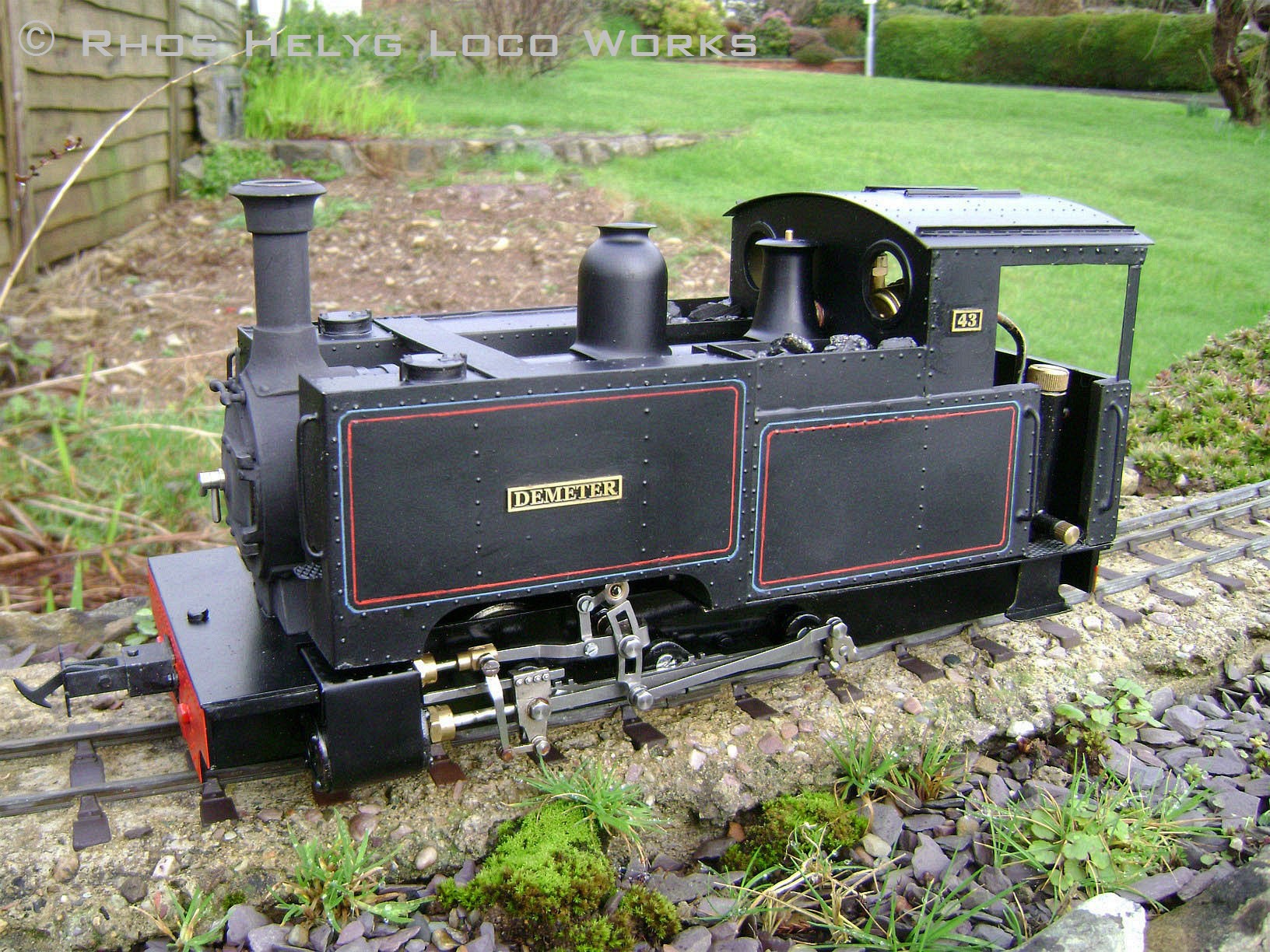
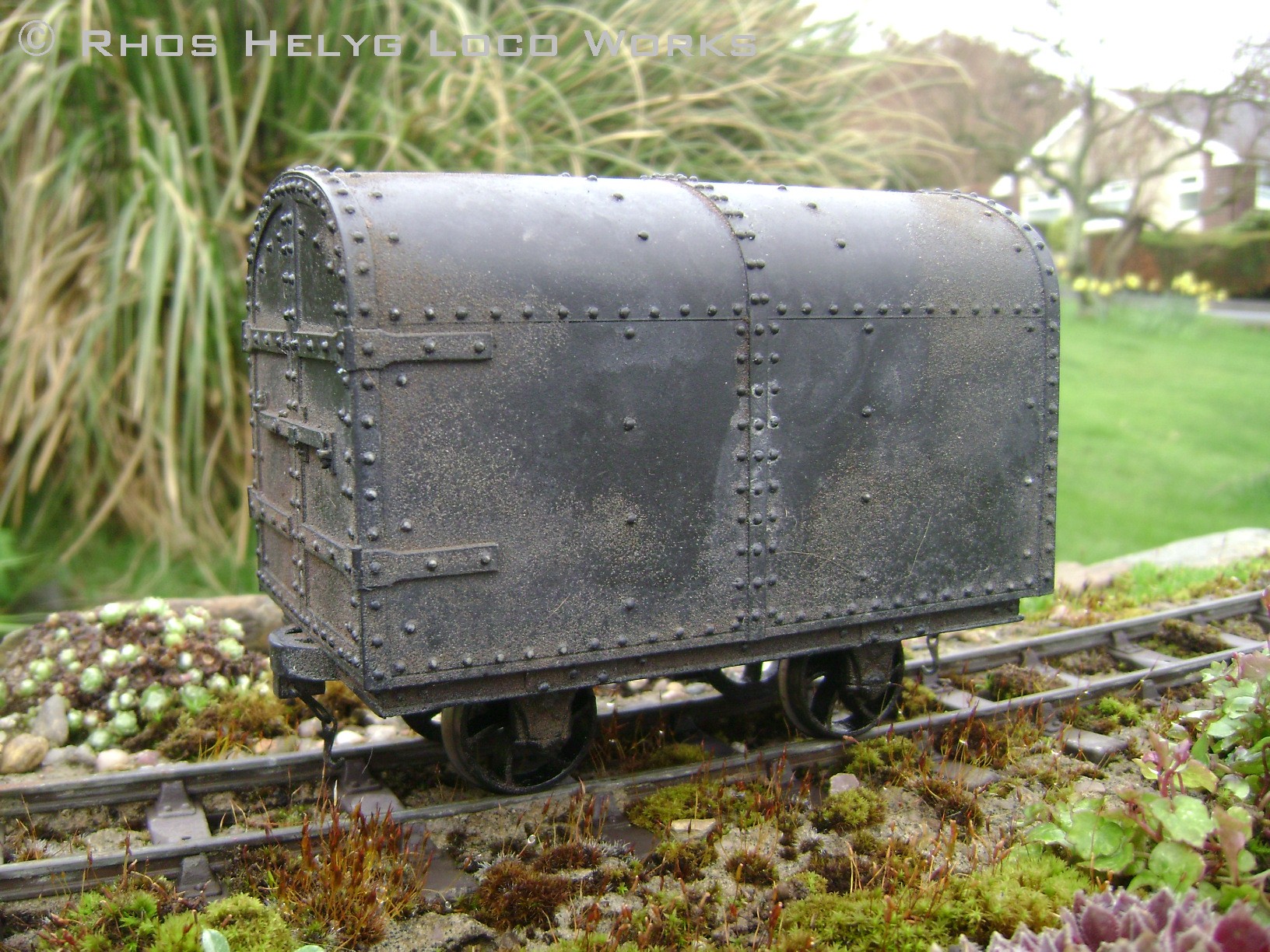
|
The Train Department ⅞ths-scale coal waggons
These coal waggons were built from TD52040 Waist Side Coal Wagon Kits supplied by The Train Department (USA). The owner decided he did not like the steel chassis and small wheels provided so these were replaced by the larger wheels shown. There are 206 individual components in each one of these wagons, of which 114 are the tiny black nails holding the strapping in place. Painting and weathering will be done by their owner. |
|
|
The Train Department ⅞ths-scale Welsh slate waggons
These slate waggons were built from TD5105 Welsh Steel Slate Wagon Kits supplied by The Train Department (USA). They are made of laser-cut steel with whitemetal castings and are held together by bolts and rivets. A couple of modifications made during assembly have increased the rigidity of the bodywork and improved their appearance. After assembly they were painted and received various degrees of rusting and weathering. |
|
|
Trenarren Models / Meadow Castings
MCPQR-02 Penrhyn Fullersite Wagon |
|
|
|
|
|
John Turner Caledonia 0-6-0T CHRISTOPHER
This is a John Turner Caledonia, unusually set for 32mm gauge track. Being a model of a 3 foot
gauge Isle of Man prototype others that I have seen have all been for 45mm gauge track and, of
course, are not regaugeable.
|
|
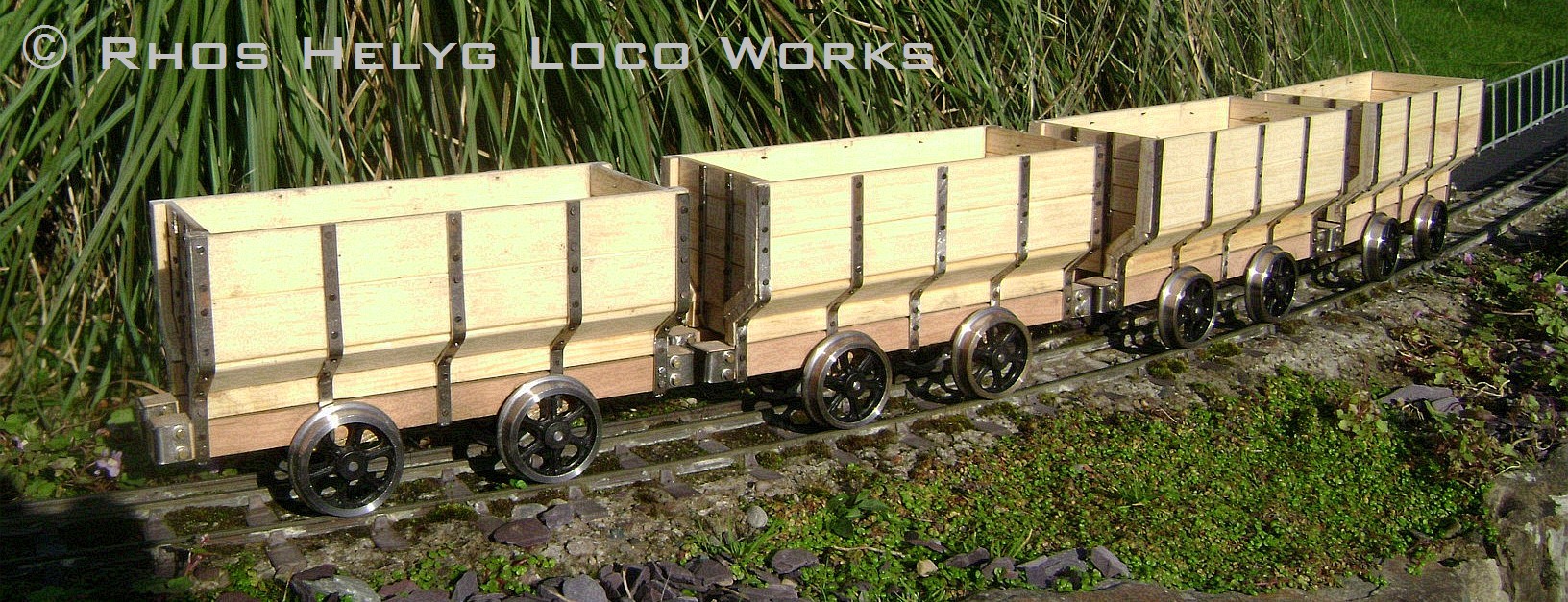
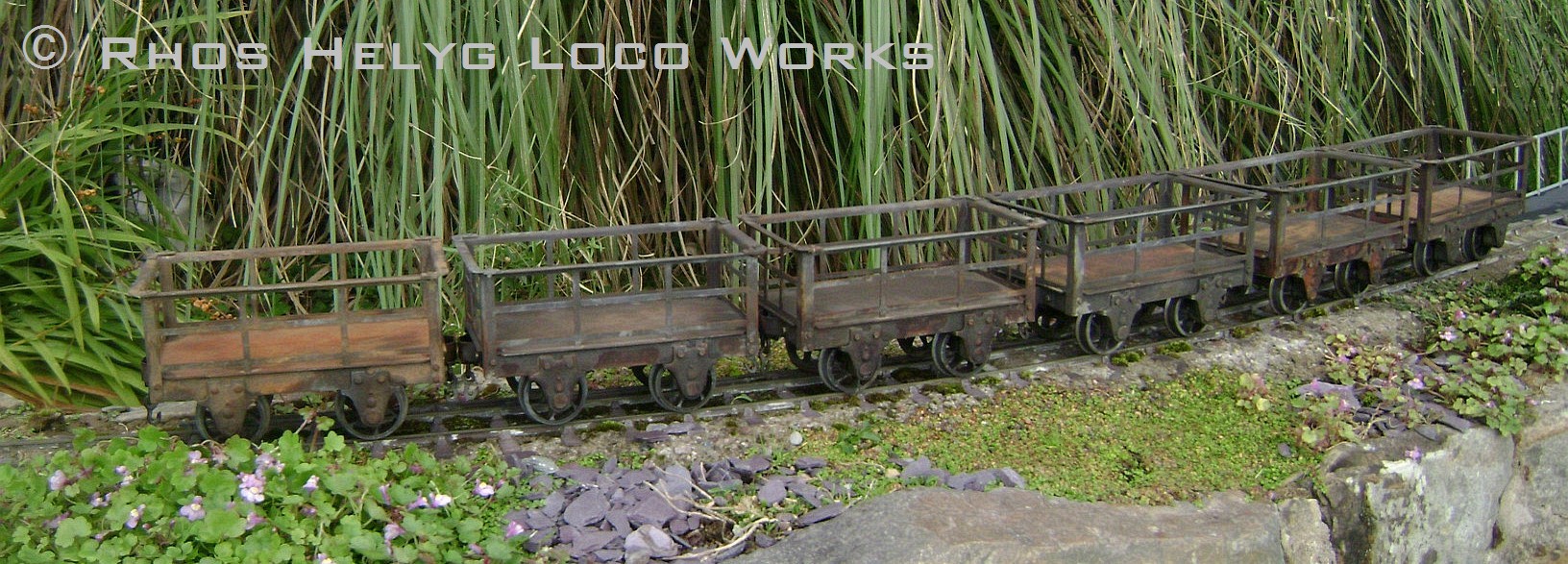
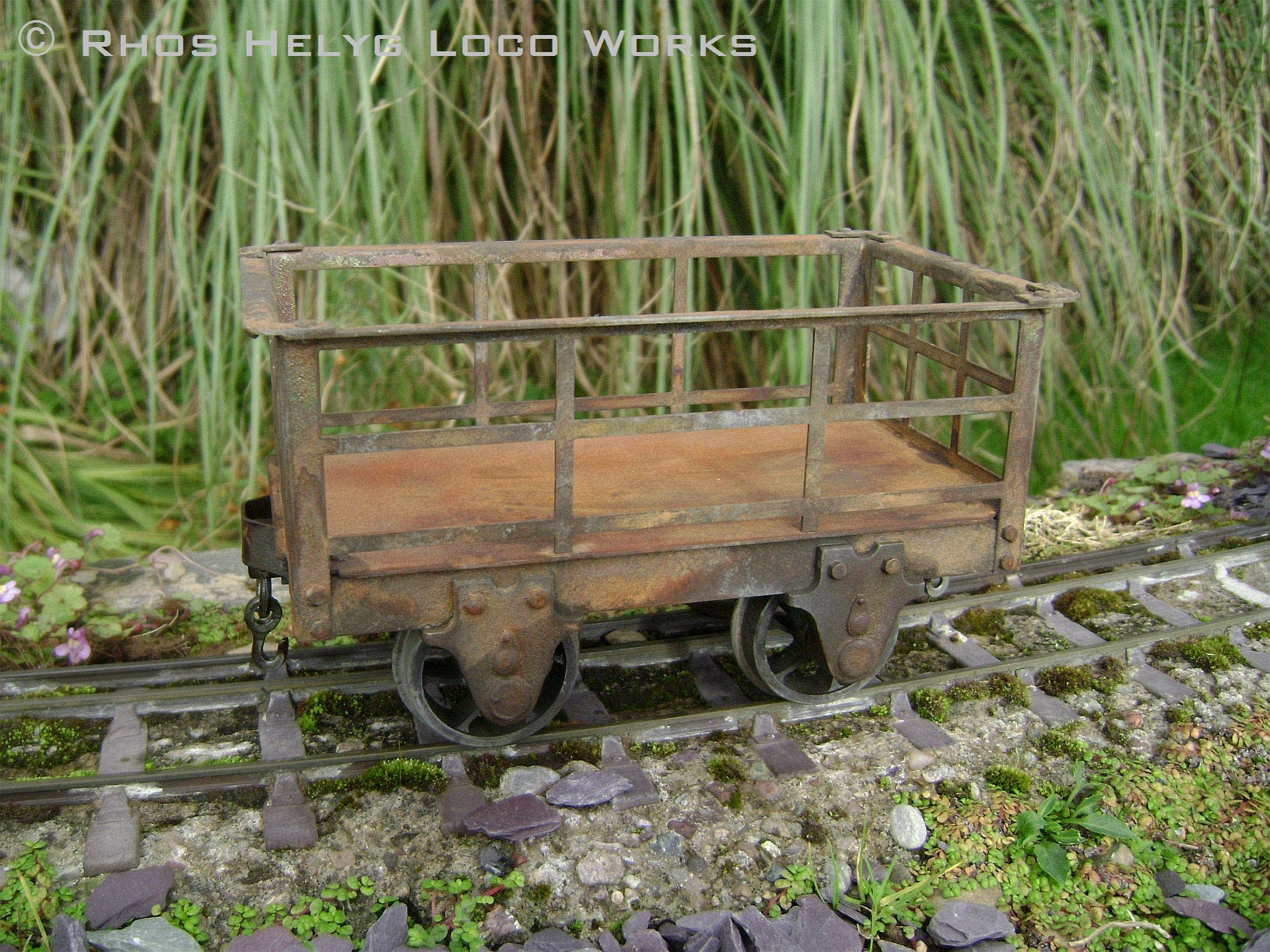
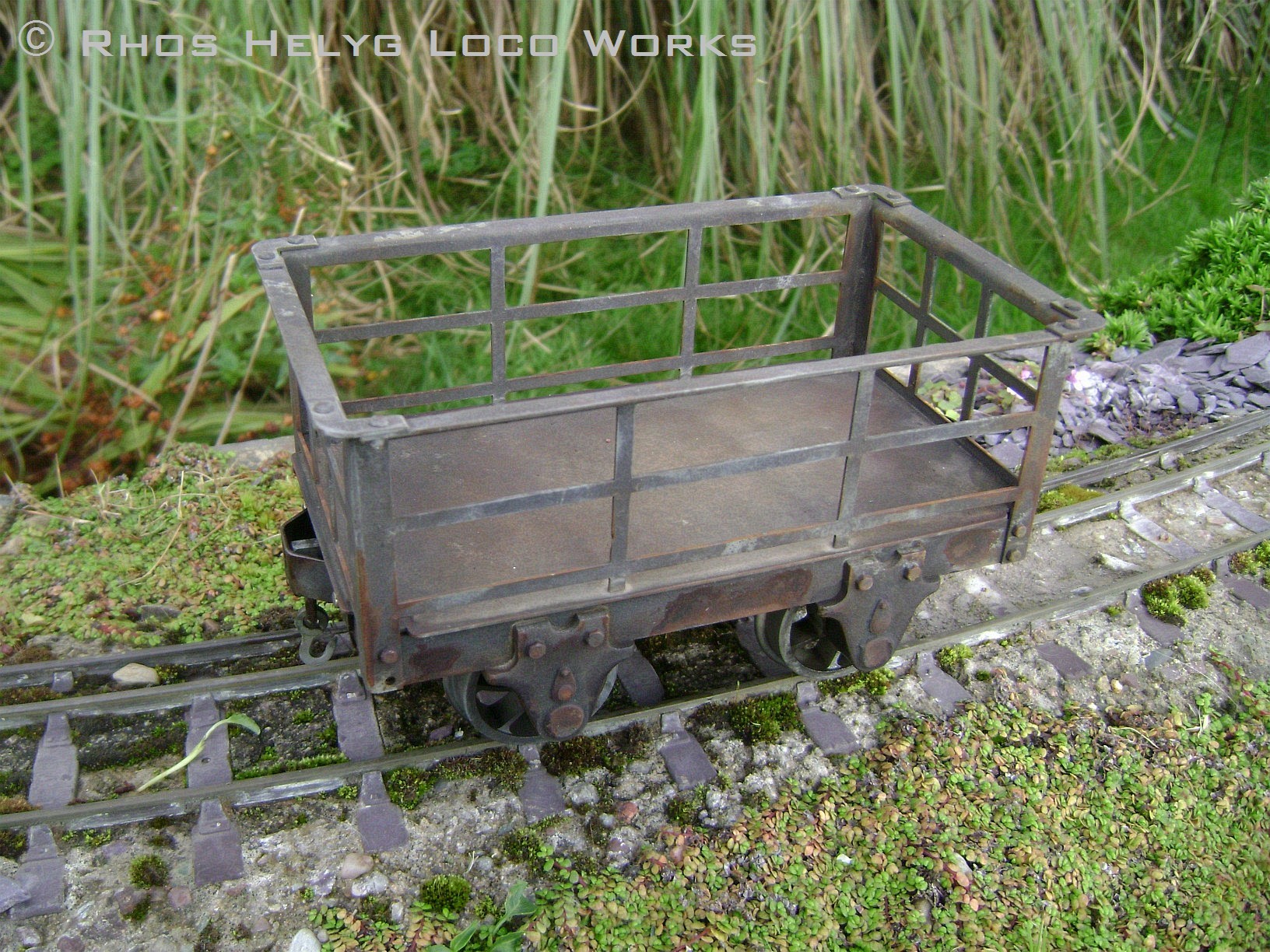
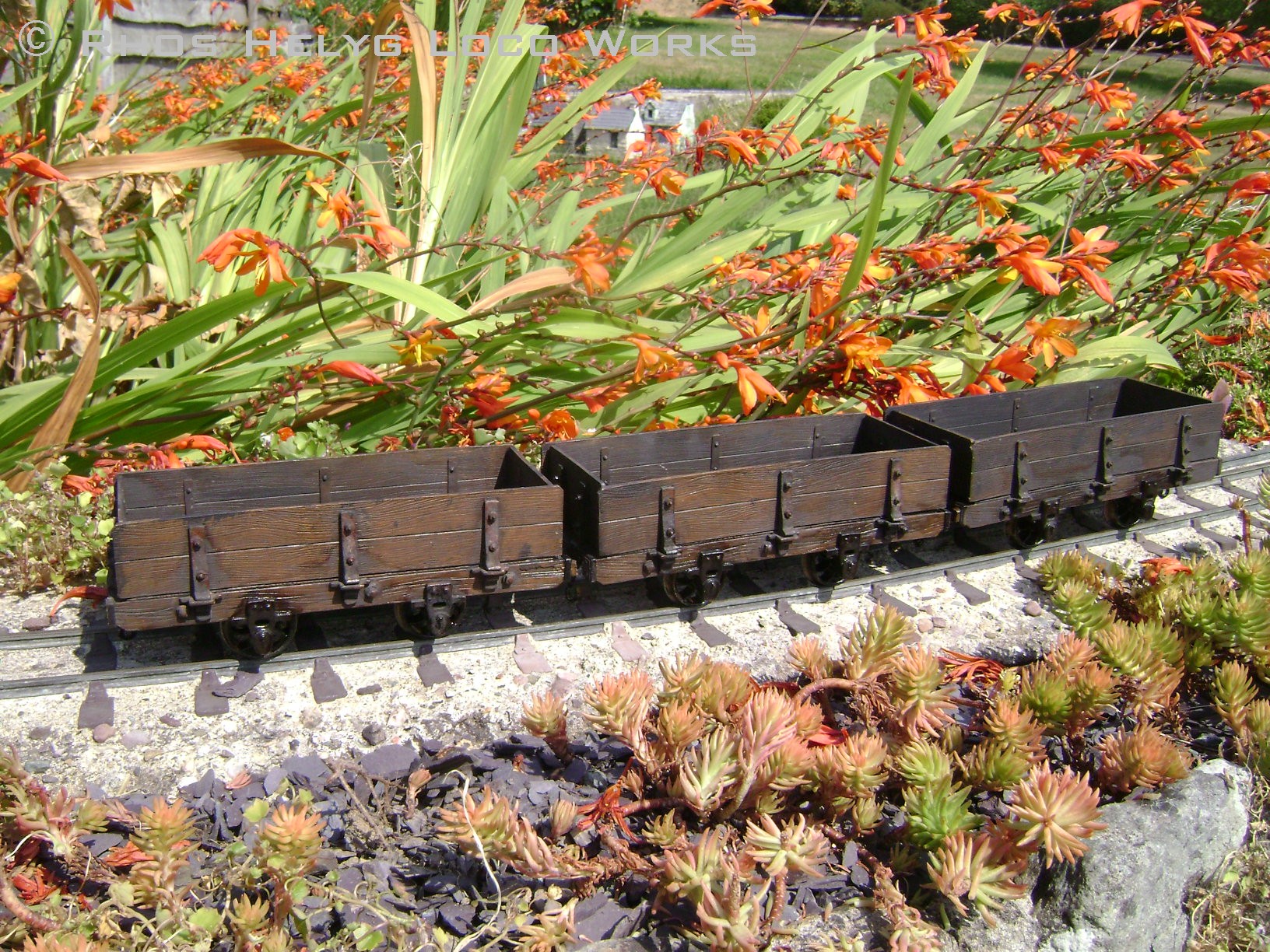
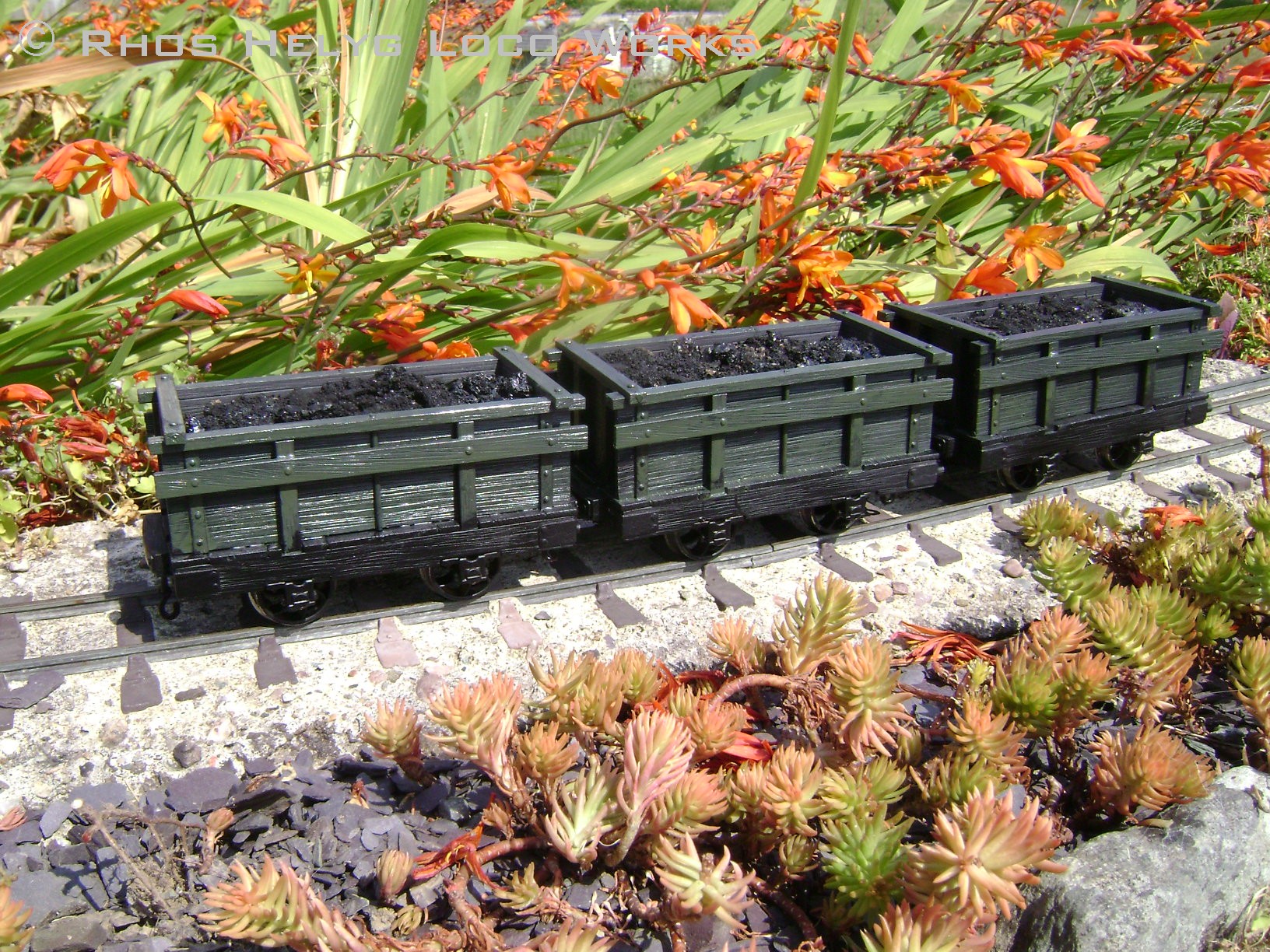
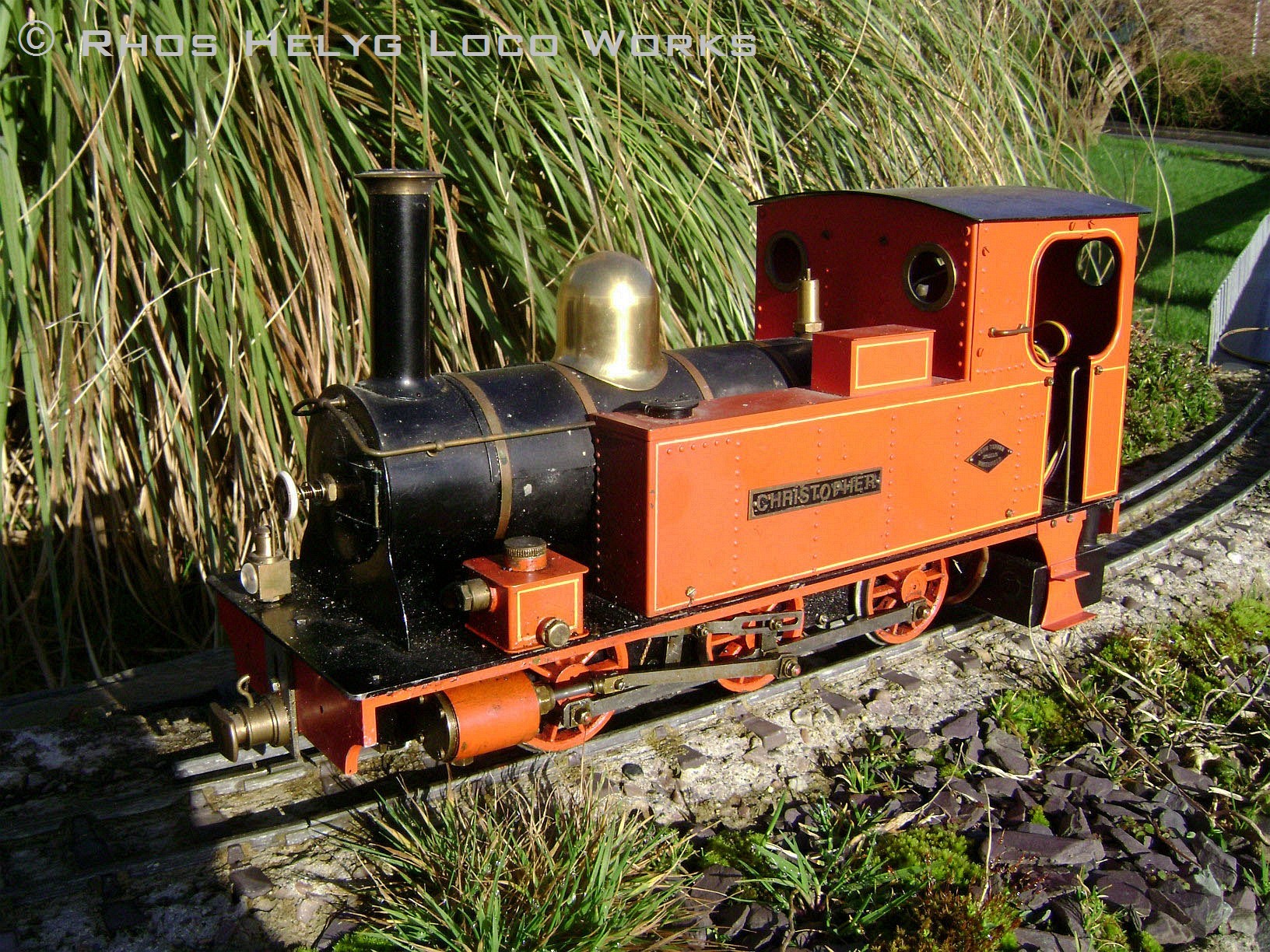
|
Harvey Watkins ⅞ths-scale 0-4-0ST PUCK
Based on Roundhouse Engineering mechanical components, this Harvey Watkins loco received attention to its valve timing, received some bodywork modifications and was repainted and lined in a scheme based on the full-size Bagnall loco PIXIE. |
|
|
Harvey Watkins ⅞ths-scale 0-4-0T MARY
Another Harvey Watkins loco that came here in a very unpleasant "rattle can" maroon that had a finish like sandpaper. It was stripped, repainted and lined (in cream), and also received some minor modifications and repairs. |
|
|
Western Engines Hunslet 0-4-0ST LINDA and BLANCHE
This rather nice Penrhyn condition LINDA came here only for some minor attention to its gas
burner. A bit of detective work revealed it was built by a chap called Steve Hodgson trading
as Western Engines here in North Wales, and about two miles from where I live. One of a batch
of twelve, some were built with radio control, some without. Beautifully made and finished,
if lacking in detail. At the time I had not seen one of these before but I was aware of their
existence.
|
|
|
Worsley Works Welsh Highland Railway Funkey diesel B-B
Something a little different: This model body of the Welsh Highland Railway's Funkey diesel locomotive was built from a Worsley Works Scratch Aid Kit set of etched nickel-silver sheets. The parts were cut out from the etches, formed to shape and soldered together - using a lot of solder! The body will be transformed in to a working model by its owner. Click here to see some pictures of a completed model. |
|
|
Worsley Works West Clare Railway Walker diesel 0-4-4-0
The bodywork from a Worsley Works Scratch Aid Kit representing one of the Walker Brothers
0-4-4-0 diesels used on the West Clare Railway in Ireland was assembled here. The completed
body then took a trip down the Welsh coast to Friog Railway Services who built a
superb chassis for it which incorporates radio control and sound. It then came back to RHLW for
finishing. The first thing to do was to strengthen the buffer beams so that they were capable
of taking a buffing load without deformation. Then came fitting of Swift Sixteen chopper
couplings, glazing the windows with glass, and fabrication and fitting of handrails, horns,
exhaust pipes, marker lights, radiator fillers, cab roof, vacuum brake pipes, end steps, cab
steps, fuel tanks, fuel tank fillers and the driver's desk - phew! The bonnet-top headlights
work and these (and the dummy horns) were kindly supplied by Essel Engineering, and I thank
them for their assistance. Paintwork was a shade of green chosen by the owner to match that
carried by the full-size locos, followed by a good dose of weathering. Walker Brothers
(Wigan) Ltd. works plates for the bonnet ends were specially made by MDC and completed the
job.
|
|
|
Wrightscale Baldwin 4-6-0T No. 15 PHAEDRA
PHAEDRA had seen some considerable use in the past and it came here for fitting of radio
control, a rear cab extension, lamp brackets and chopper couplings, removal of the chimney
cover and rear hose bracket, and a general service. The latter turned in to quite a task and
involved adjustments to the valve timing, rearranging the front bogie pivot, freeing of the
seized bogie axles, a boiler descale, unblocking of the water gauge and reminding the safety
valve of its task. Modifications were also made to the cab and rear bunker to allow for
easier removal and re-fitting. As part of the radio control installation the original manual
regulator was replaced by a new custom-made item kindly provided by Shawe Steam Services.
|
|
|
Wrightscale Quarry Hunslet 0-4-0ST
This Wrightscale Engineering Quarry Hunslet was brand new when it arrived here and received Penrhyn livery. Gorgeous... |
|
|
Wrightscale Tattoo 0-4-2ST
Another very desirable model, this Tattoo came here for a service and some minor repairs. |
|
|
Wrightscale Tattoo 0-4-2ST
This brand-new Tattoo came here for application of Penrhyn Quarries-style lining based on the full-size loco STANHOPE. |
|
|
Wrightscale Wren 0-4-0ST
Probably the smallest commercially-available live steamer in 16mm/foot scale is Wrightscale's
model of the Kerr, Stuart and Company's Wren 0-4-0ST, of which several full-size examples
survive in preservation. Having been after one for many years, this model was an "impulse
buy" purchase by the owner from an internet auction site. The auction listing was entirely
accurate, and showed an assembled chassis and a box of loose components, all of which soon
arrived here for assembly and painting. The paperwork included a boiler test certificate from
2000 and we can only guess what has happened to the model in the intervening years.
|
|
|
Wrightscale Wren 0-4-0ST
This brand-new Wrightscale Wren came here for repainting from plain green in to blue with red and black lining. |
|
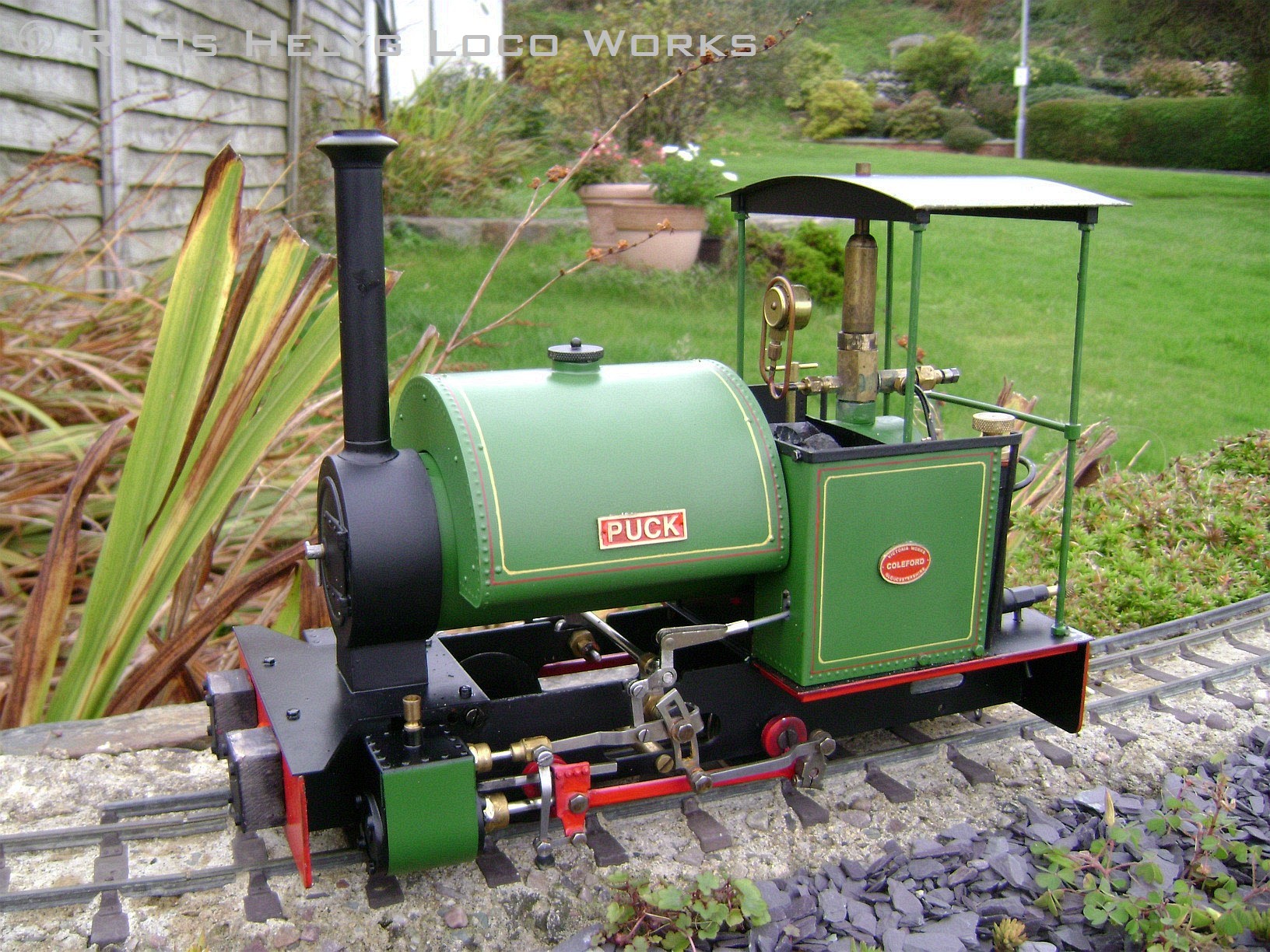
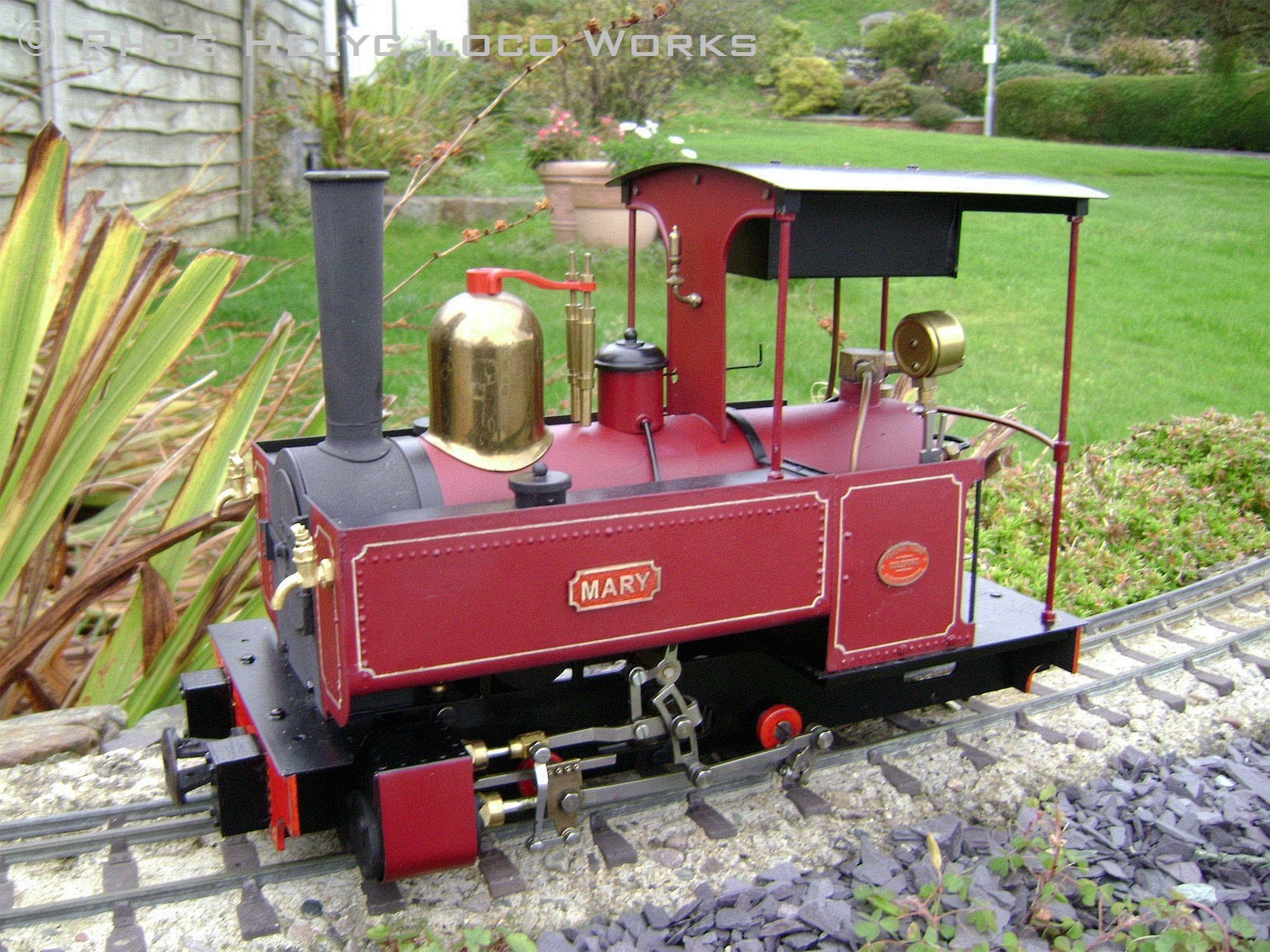
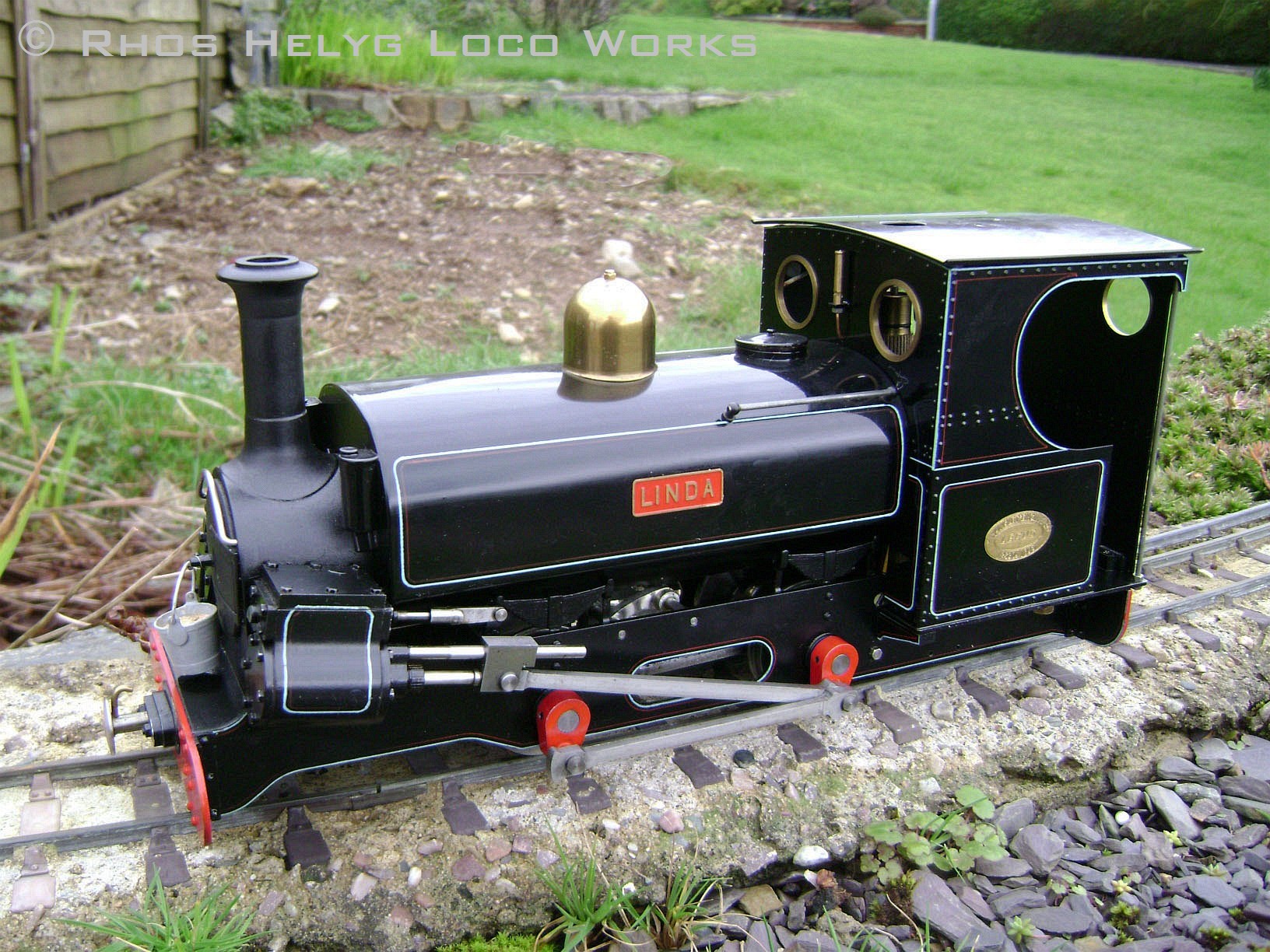
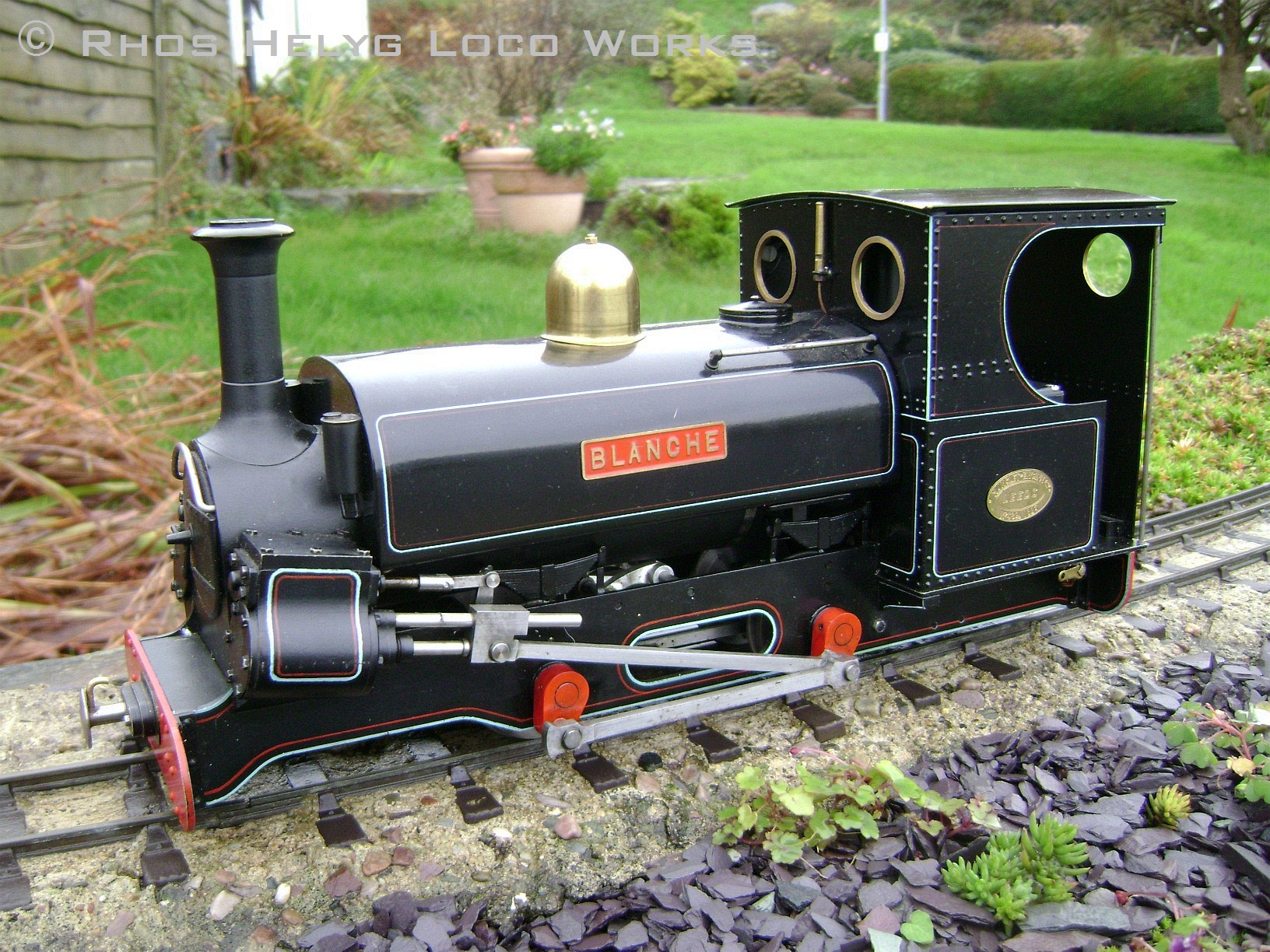
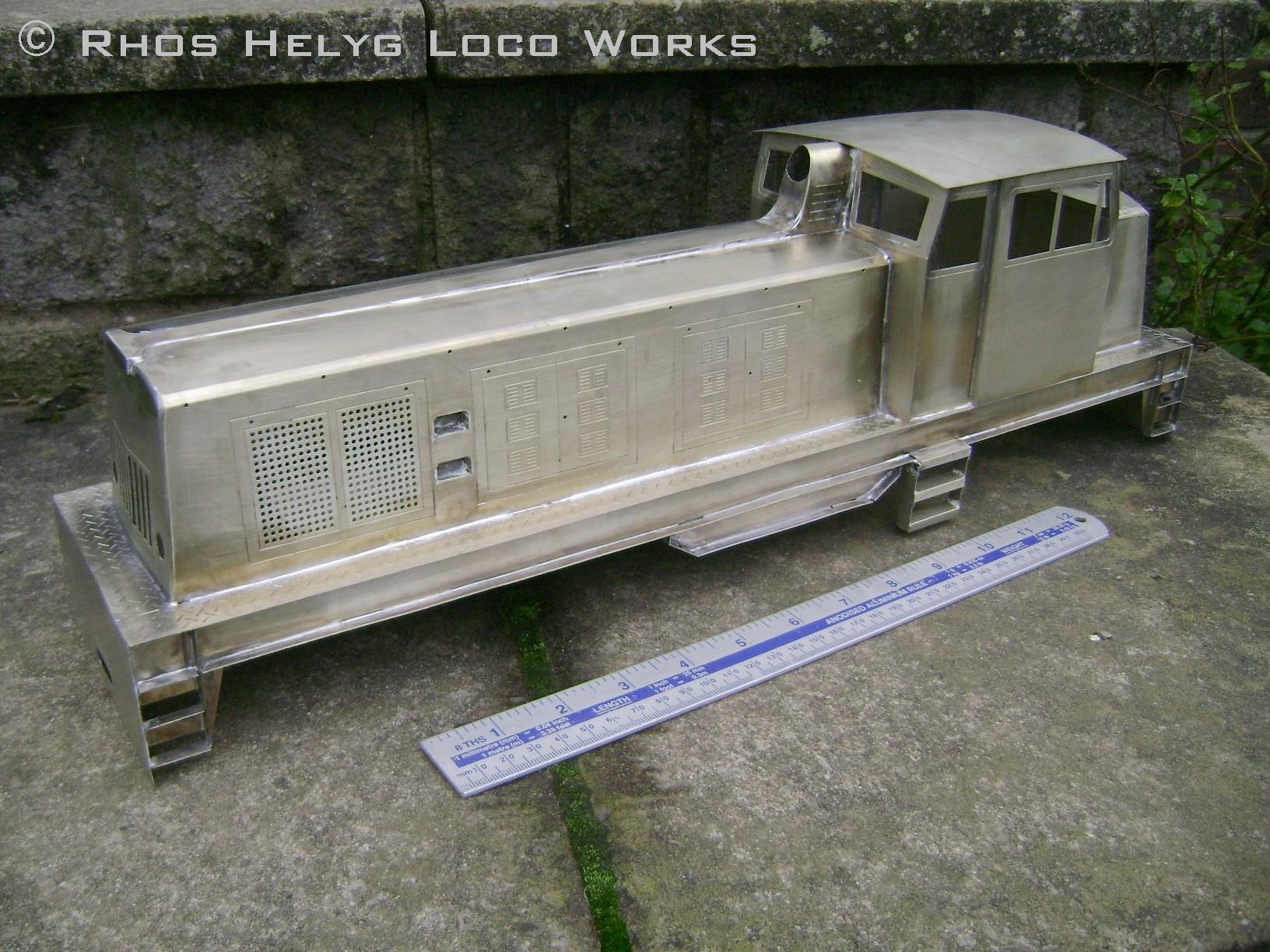
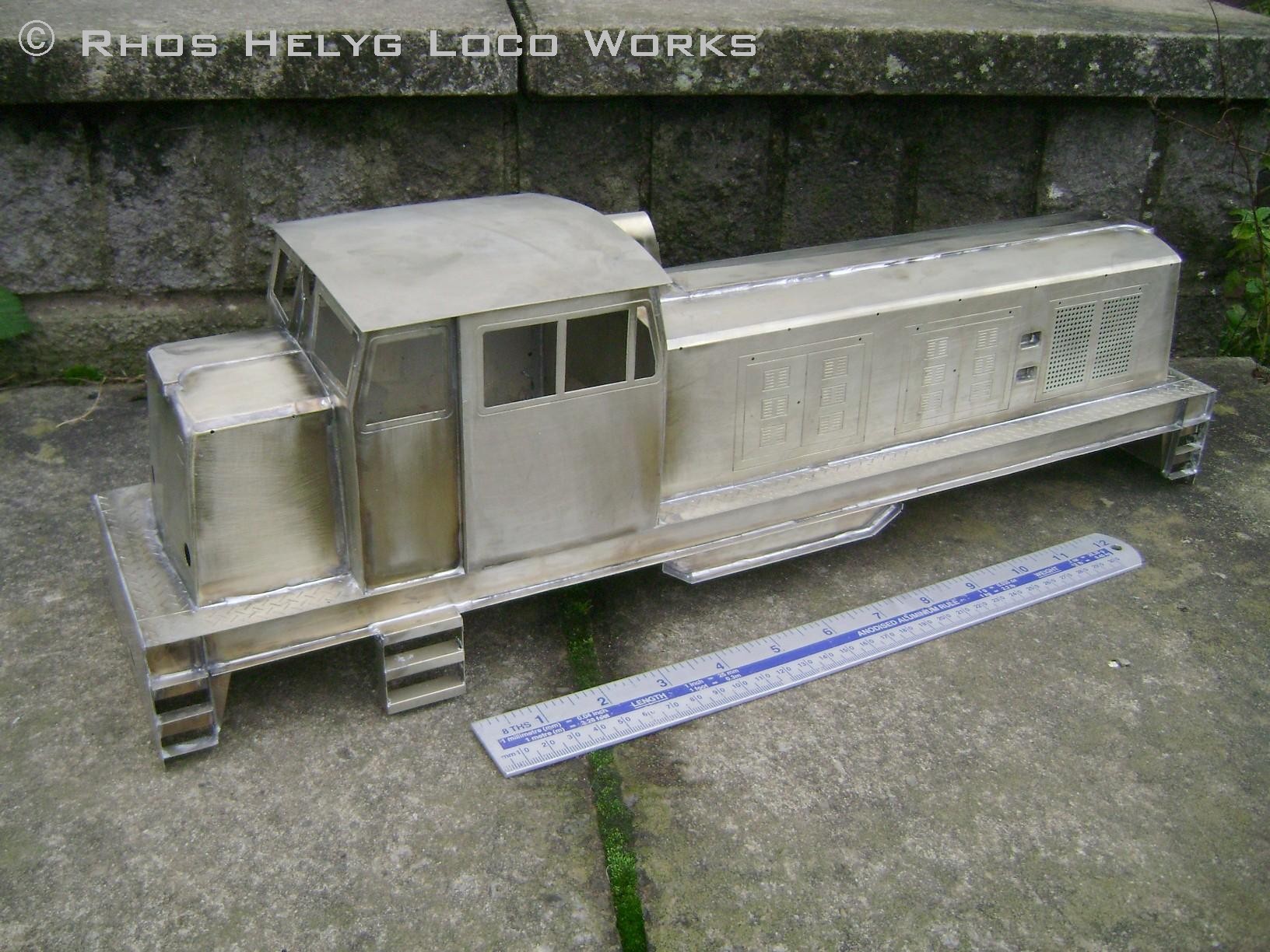
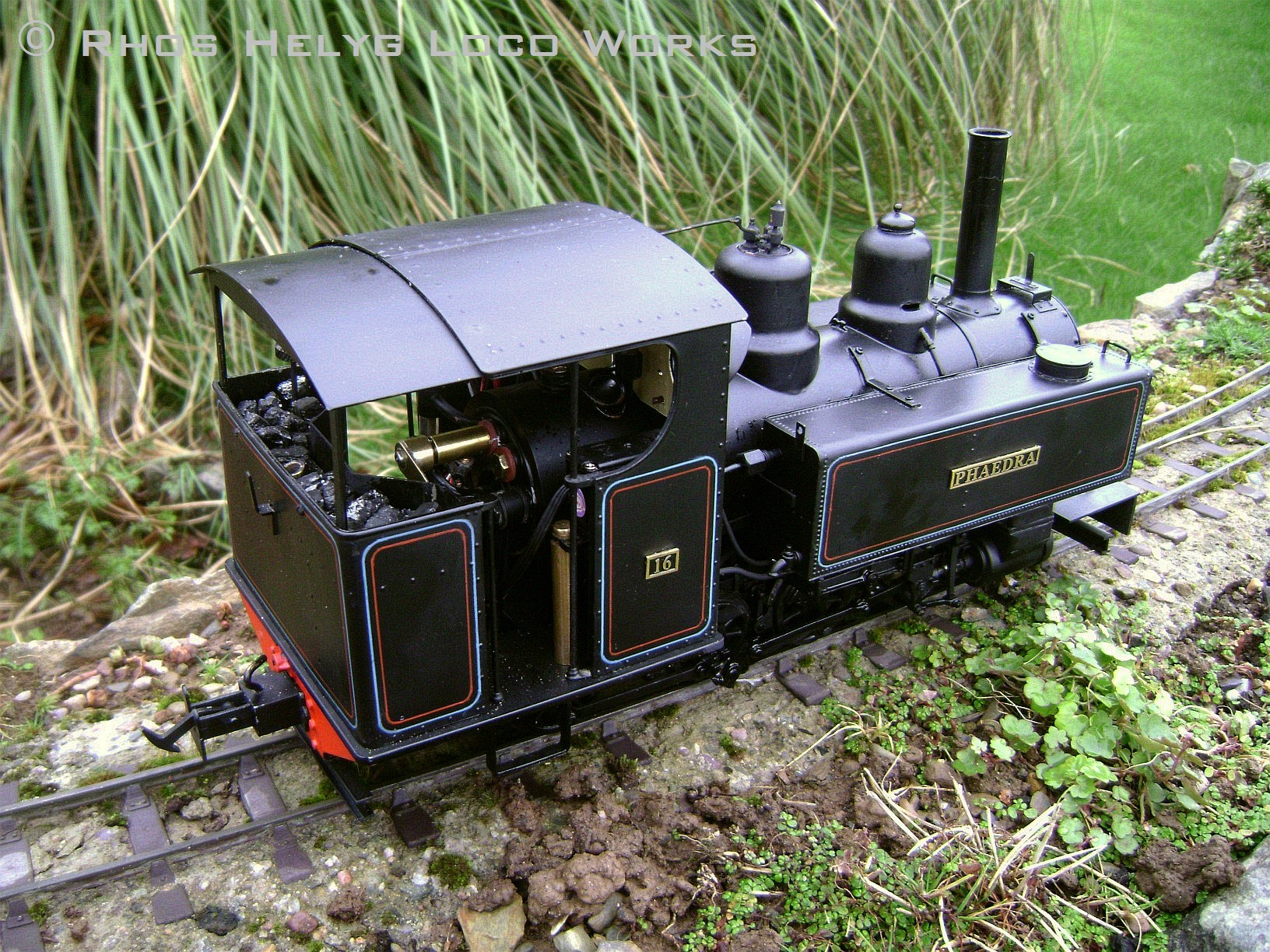
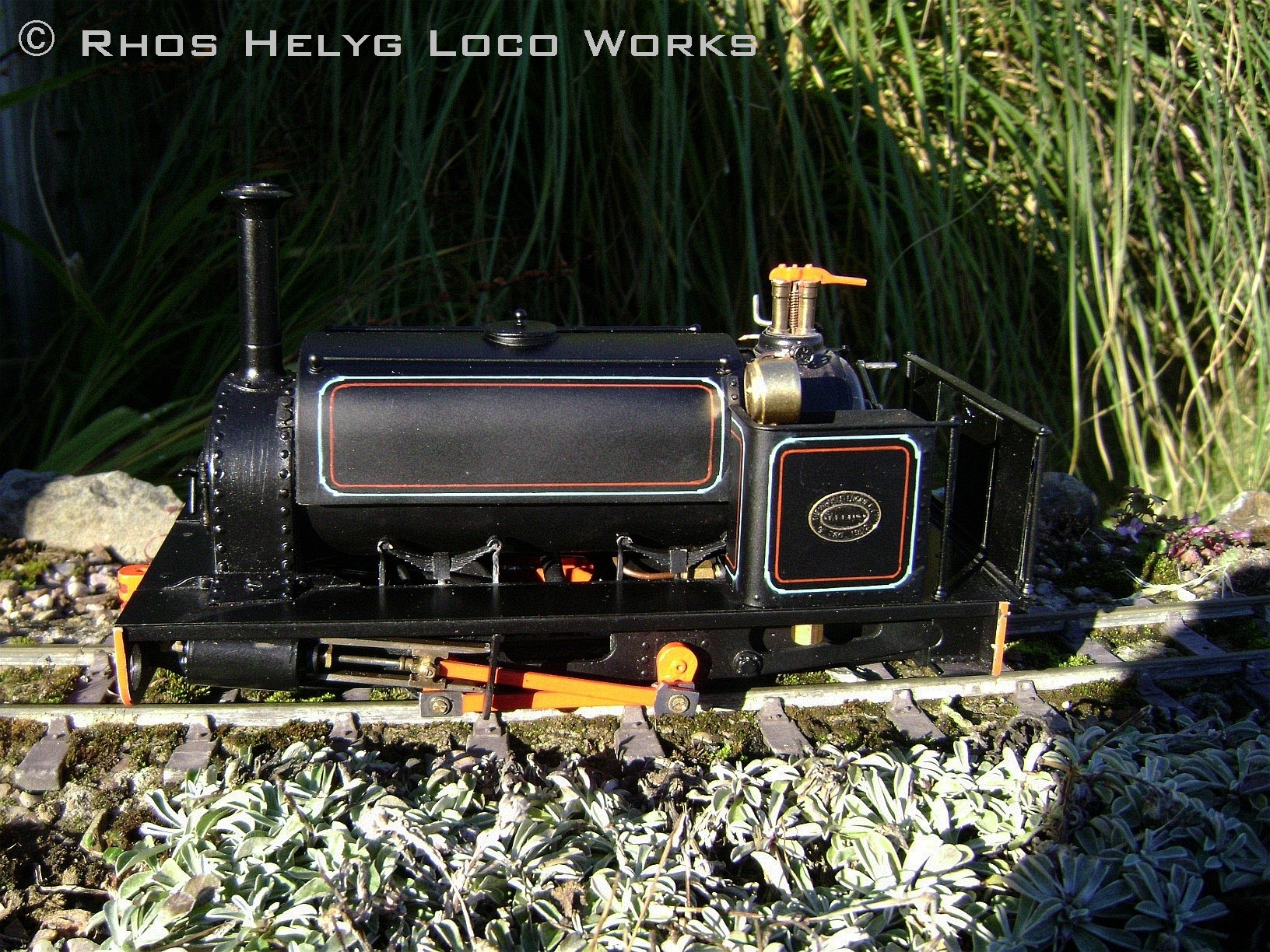
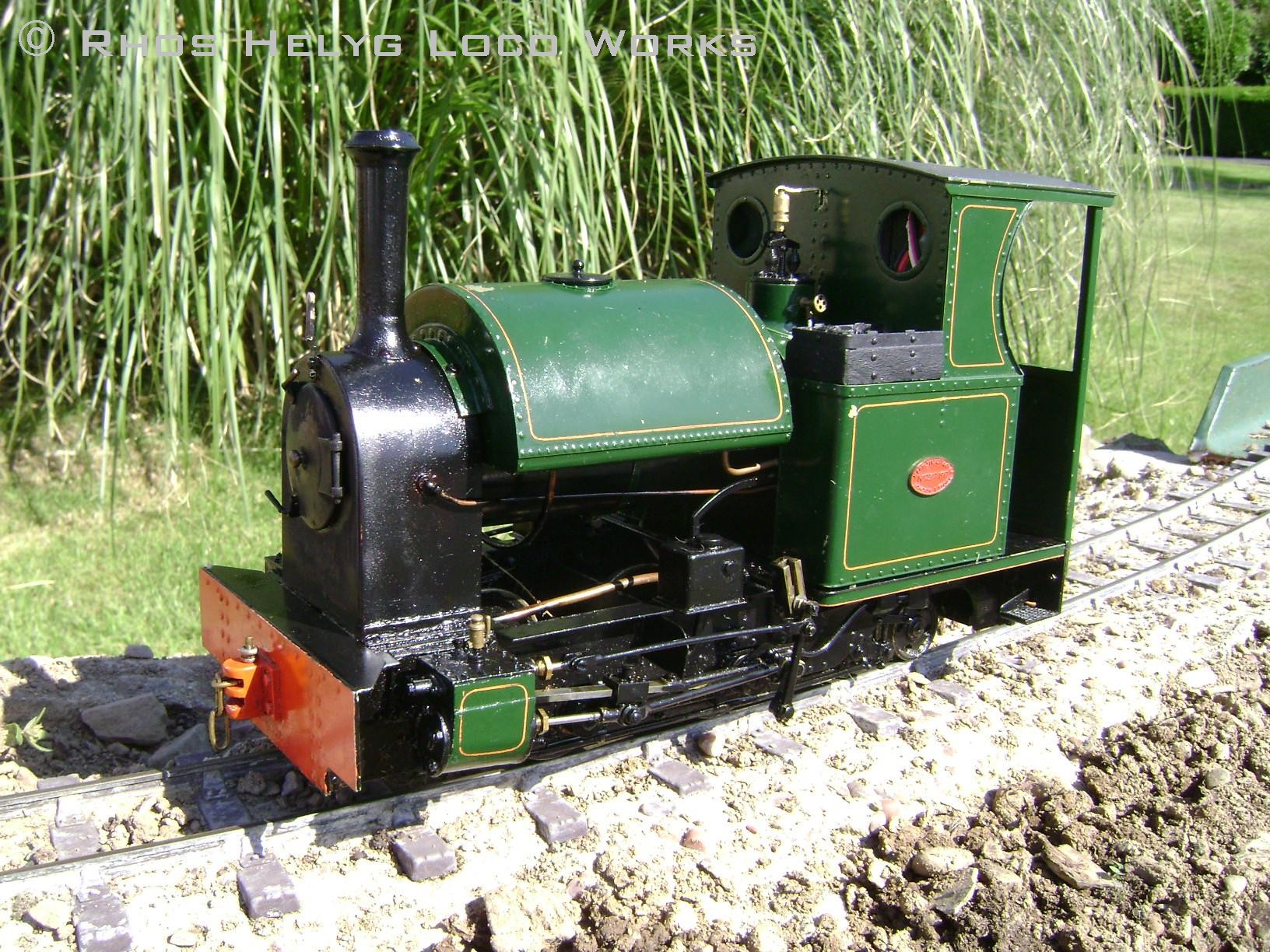
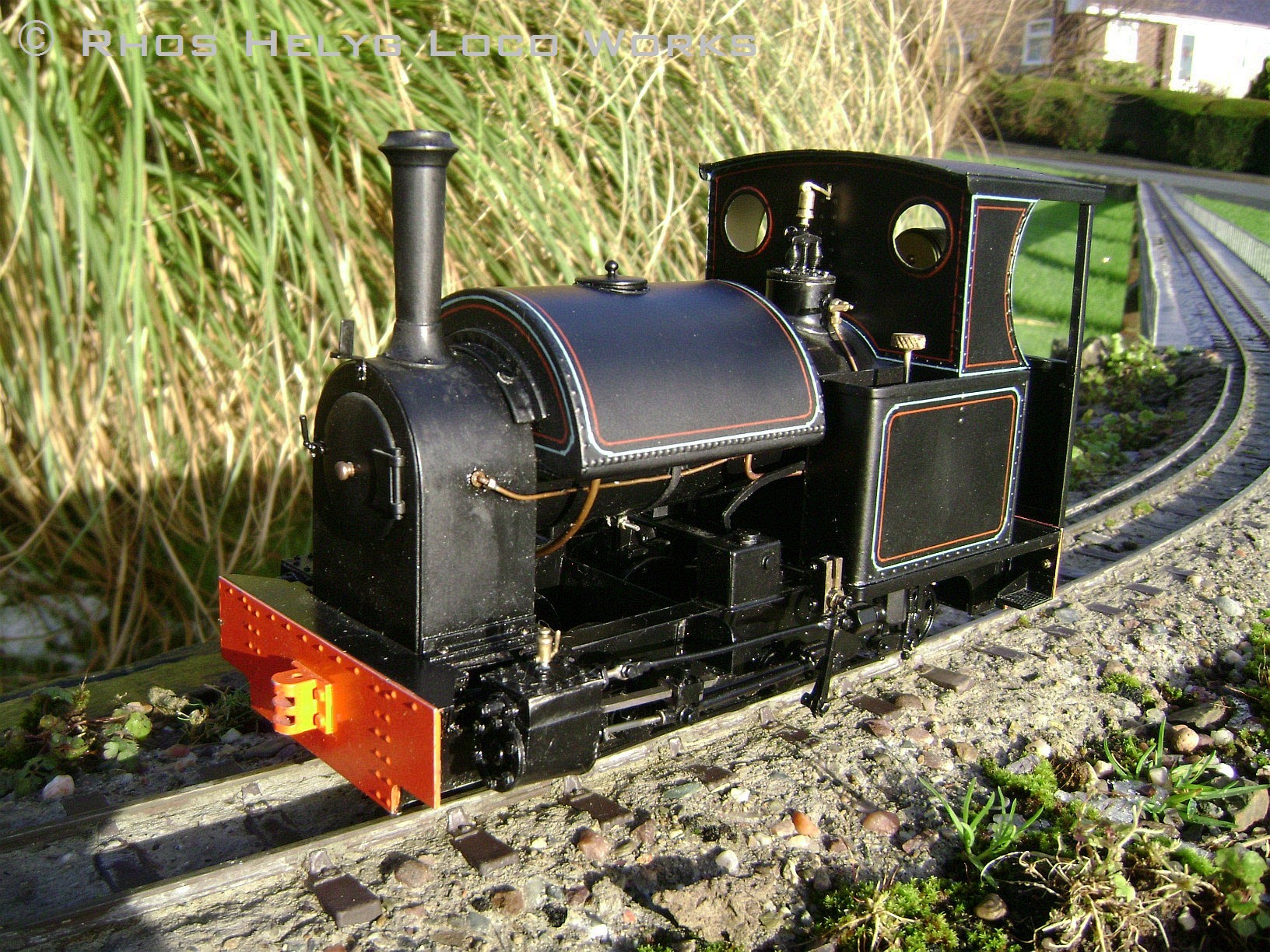
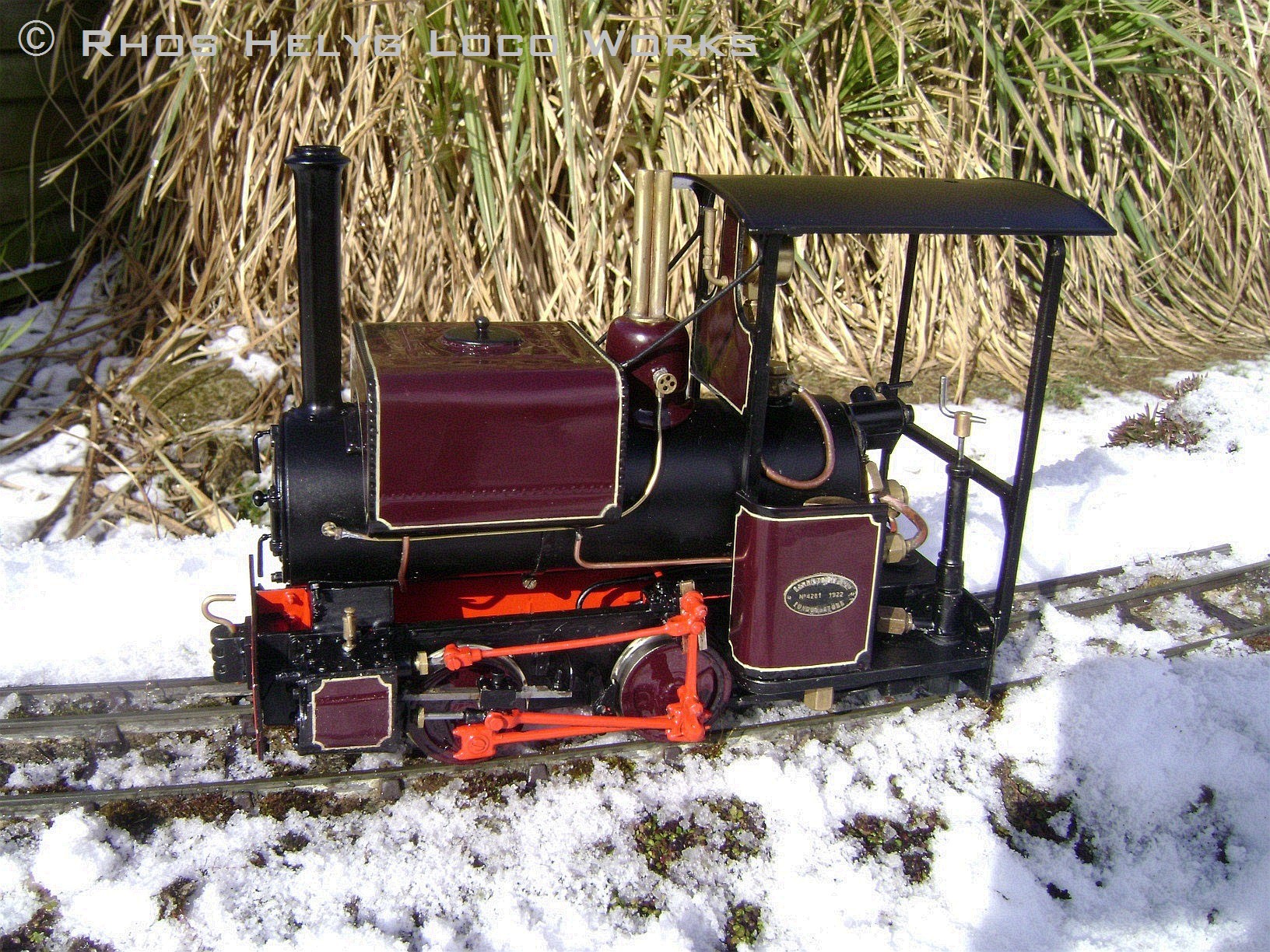
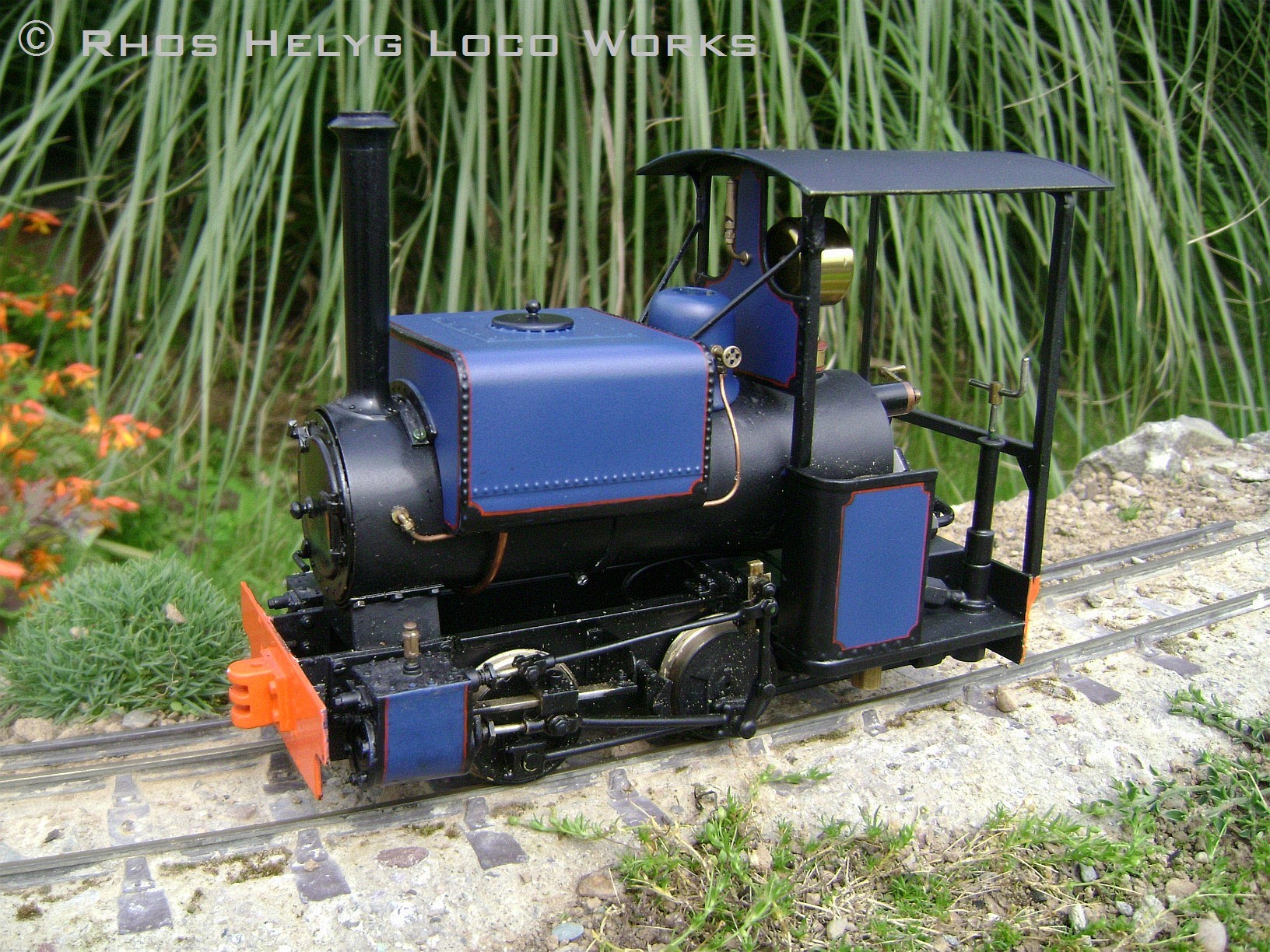
|
Unknown builder 0-4-2ST EDWARD THOMAS
It is often a privilege and a pleasure to work on some locos that come to me for attention.
|
|
|
Unknown builder 0-4-0T KATHLEEN
Absolutely delightful: This is KATHLEEN, a gas-fired 0-4-0T that came here for repainting and lining and for some mechanical attention. According to an article in GardenRail magazine, the full-size loco was built in 1876 by Vulcan Foundry and supplied to the Alexandra Slate Quarry. Unfortunately, the builder of this model remains unknown and despite many enquiries as to who it might have been. Any information on this would be welcomed. This model is definitely on my "I would love to keep this one" list... |
|
|
Tipong Colliery wagons
I converted a Roundhouse B-Class in to a representation of Tipong Colliery 789 a while ago. Unfortunately, it had been missing one thing: an authentic train to pull.
Pictures of the operations at Tipong show most trains there were made up of 4-wheel coal tubs,
and this was what the owner decided to recreate in miniature. His design could not follow the
full-size wagons accurately due to there being no easy source of the tiny 5-spoke wheels they
use, so instead he used what was available and scaled the models to look right, a
representation rather than a truly scale model. They use laser-cut plywood floor and side
frames, a steel body with wheels and axles from Binnie Engineering. The steel bodies were made
by a local engineering company from steel channel, suitably cut so that the floor of the
channel could be folded up to form the body's ends. He eventually managed to assemble a grand
total of one wagon! With the project stalled the whole lot came to me for final assembly. With
no less than 22 to build it was obvious that some kind of production line would be needed. The
second photo shows the stages.
|
|
|
Home-built 0-4-0T GLEN
GLEN was built by the owner's grandfather in 2004. It did not do much running but was rediscovered in a damp cupboard where it had been for 16 years, after thinking it had been sold years ago. I was asked to get it running again and re-jig the radio control so everything was onboard the loco, rather than having the batteries and receiver carried in a wagon. Most of it looks to be home-made but the chassis is based on Roundhouse components (cylinders, wheels, axles, etc.) except for the rods, which have bushed ends. An initial steaming showed that all was not well mechanically, with a myriad of steam leaks and the valve setting not right so preventing smooth operation. I managed to shoe-horn the radio gear in to it. With no cab back there were not many places to hide it! With that corrected it ran well until the plastic (!) linkage on the reverser servo failed. Rebuilt using metal components, all was then well. |
|
|
Snow plough
Snow plough built by the Rhos Helyg Locomotive Works, and weighing 1.6Kg so capable of actually ploughing snow, as shown in the second picture. |
|
|
Concrete mixer wagon
I made about ten of these concrete mixer wagons. They were based on a Binnie Engineering plastic tipper wagon chassis and used a die-cast model mixer. They were finished in red oxide (chassis) and yellow (mixer) suitably rusted and caked in sand. |
|
|
Battery diesel 0-4-0 WEASEL
I built this member of my home fleet in 1990 using mild steel for the frame and brass sheet for the bodywork. It is powered by a sealed lead-acid 12V battery driving a Como Drills motor with a worm drive to the rear axle. The wheels and axles came from Roundhouse Engineering. The two black buttons either side of the dummy horn provide On/Off and Forward/Reverse control, and speed is governed by turning the exhaust pipe. Control is provided by an I T Electronics (Ian Titford) speed controller which gives acceleration and deceleration effects. The latter often catches out unfamiliar operators as pressing the Off button while the loco is in motion causes it to run several feet before gently coasting to a stand, or colliding with anything in the way. The speed can be controlled right down to an almost imperceptible crawl. It weighs 2.8 Kg / 6.2 lbs and is more than capable of dragging dead steam locomotives. After 23 years of service I felt that the time had come for an overhaul and repaint, and the result is seen here. It has had some rewiring and a thorough clean of the mechanical parts, although nothing actually needed replacing. The bodywork was stripped back to bare metal and repainted from the plain green that it carried previously to the BR diesel shunter-inspired scheme shown. The black and yellow stripes are painted, not transfers. |
|
|
Fowler 0-6-0 diesel loco body
The bodywork for this model was scratchbuilt by its owner and came here for painting. It
represents a Fowler 0-6-0 diesel used on the Gondal State Railway in India.
|
|
|
Diesel loco body
The body from this battery diesel loco was sent here for painting and lining. |
|
|
Vale of Rheidol 2-6-2T PRINCE OF WALES
This fine model depicts one of the original Vale of Rheidol Railway locomotives as supplied by
Davies & Metcalfe in 1902.
|
|
|
Pooter 0-4-0T No. 4 BRADLEY
This loco appears to be a homemade copy of a Roundhouse Pooter, but the only Roundhouse components used are the cylinders. It came here in non-working condition caused by very worn valve gear. This was corrected and the loco was returned to working order. |
|
|
0-6-0ST No. 4 ST GEORGE and 0-4-0ST No. 5 GLAURUNG
These two locomotives were built by their owner using some Roundhouse components and
came here for painting. Both were delivered in bare metal.and received some bodywork finishing
work before being painted.
|
|
|
⅞ths-scale Hunslet 0-4-0ST LILLA
This ⅞ths-scale 45mm gauge (i.e. 2-foot gauge on 45mm track) model of LILLA is coal-fired
and came for a number of modifications to improve its appearance and ease of use,
including:
|
|
|
⅞ths-scale Hunslet 0-4-0WT JACK
This model of Jack visited for resetting of its valve gear after its running characteristics had lost their original smoothness. As part of this process, roll pins were inserted through the return cranks and rear pins to lock them in place. When it arrived the loco had plain black boiler bands, so these were lined in white as per the real locomotive on which this model is based. |
|
|
Scratchbuilt Quarry Hunslet UNA
I was asked by a customer in Australia to paint and line the bodywork he had made for a Quarry Hunslet. He was building a model of the National Slate Museum's loco UNA and so the parts were painted in dark maroon with cream lining and black detailing. The loco is now complete and looks stunning. I am so pleased to have played a small part in its creation. (Photos 2 and 3 by John Bell) |
|
|
Scratchbuilt 0-8-0 OVE ARUP
The bodywork for this rather unusual locomotive came here for application of primer, paint and stripes. The painted parts were then returned to the owner for final assembly. This model won the Roundhouse Trophy at the 2019 National Garden Railway Show. (Picture by Paul Humphries) |
|
|
5-inch gauge Polly Engineering Caroline O&K 0-4-0WT DOUGLAS
A deviation from the normal 16mm/foot scale work was the painting of this 5-inch gauge Polly Engineering "Caroline" locomotive in a style based on that carried by the Tallylyn Railway's DOUGLAS. (Photos by Kes Jones) |
|
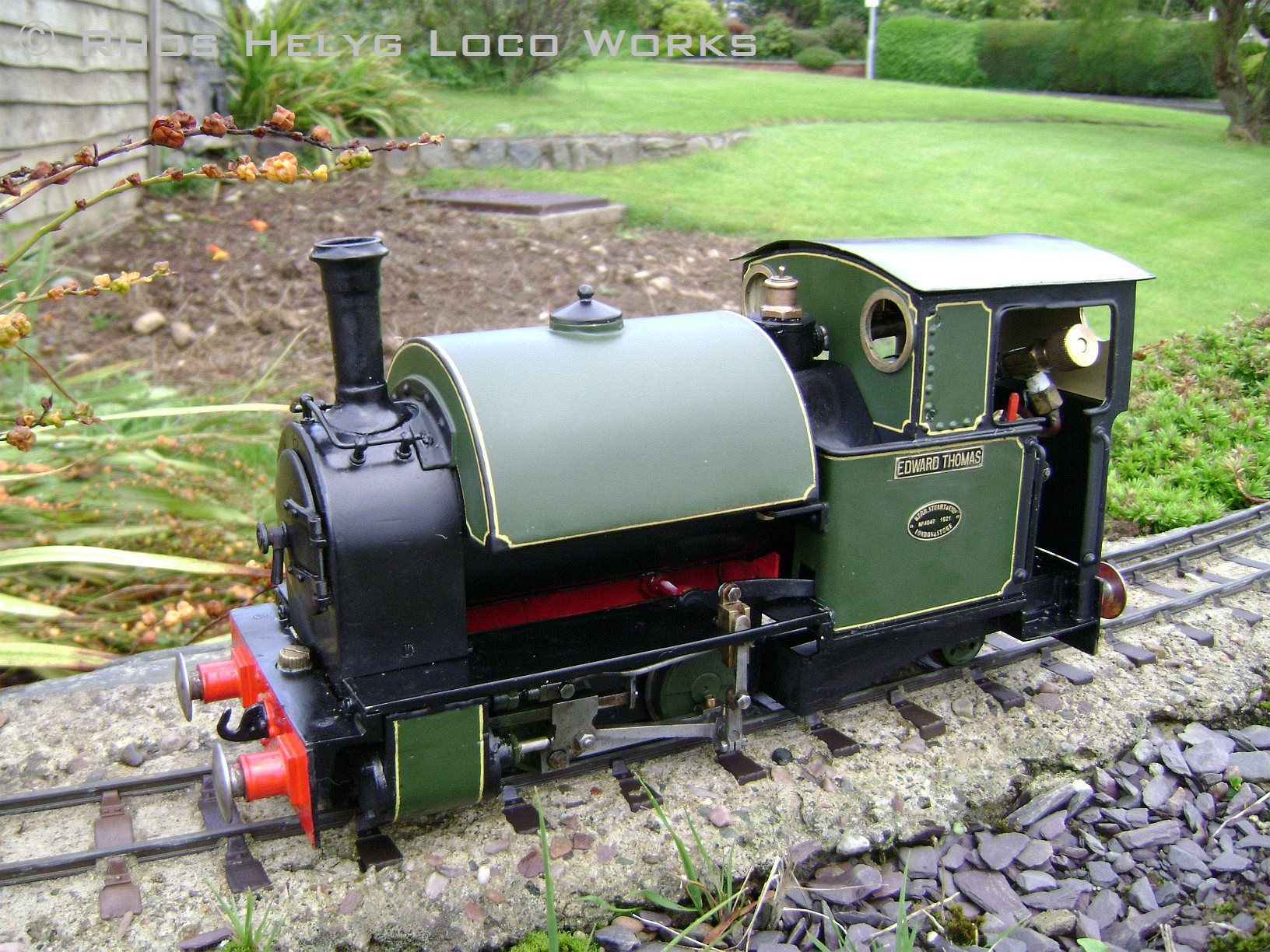
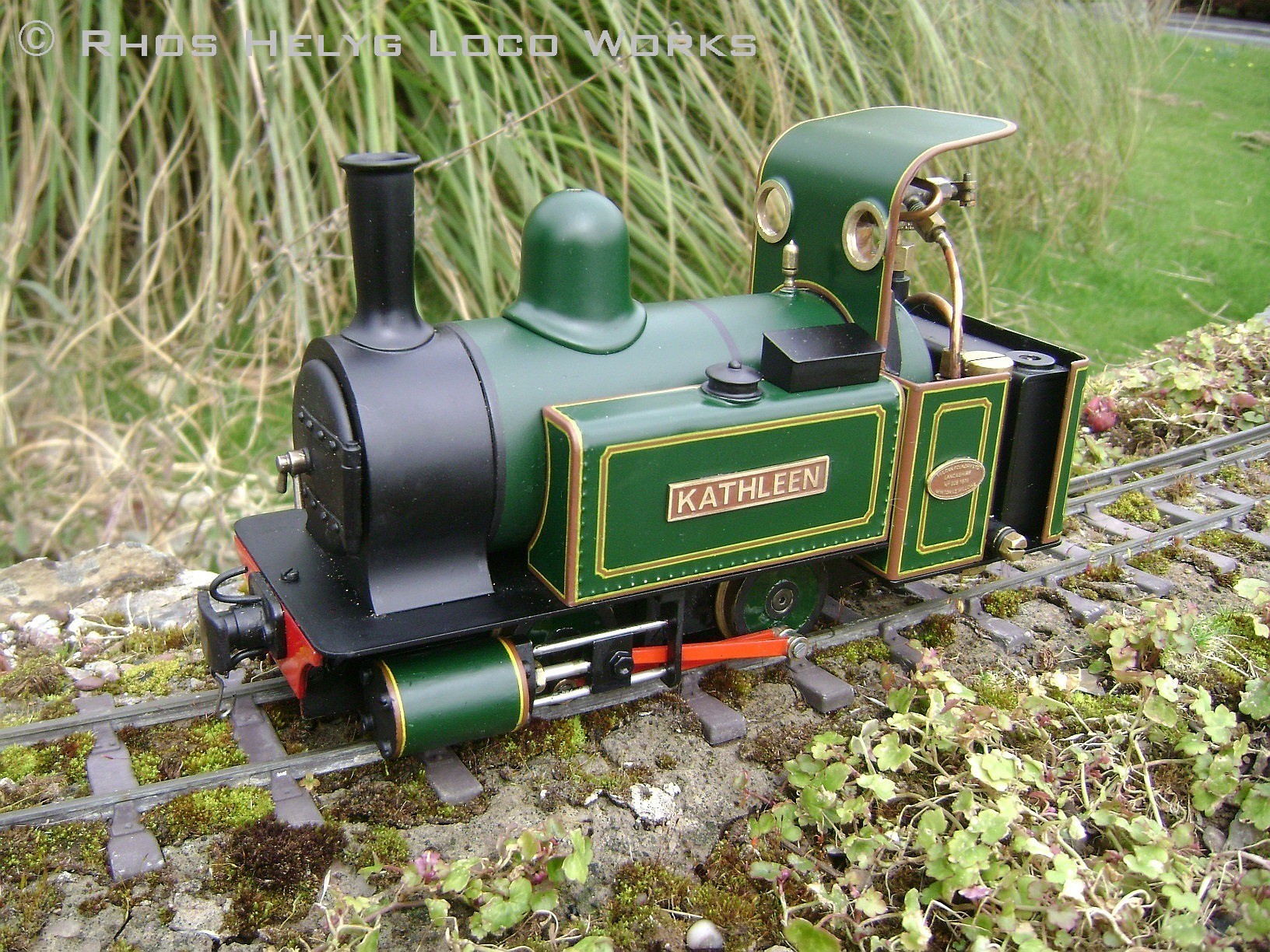
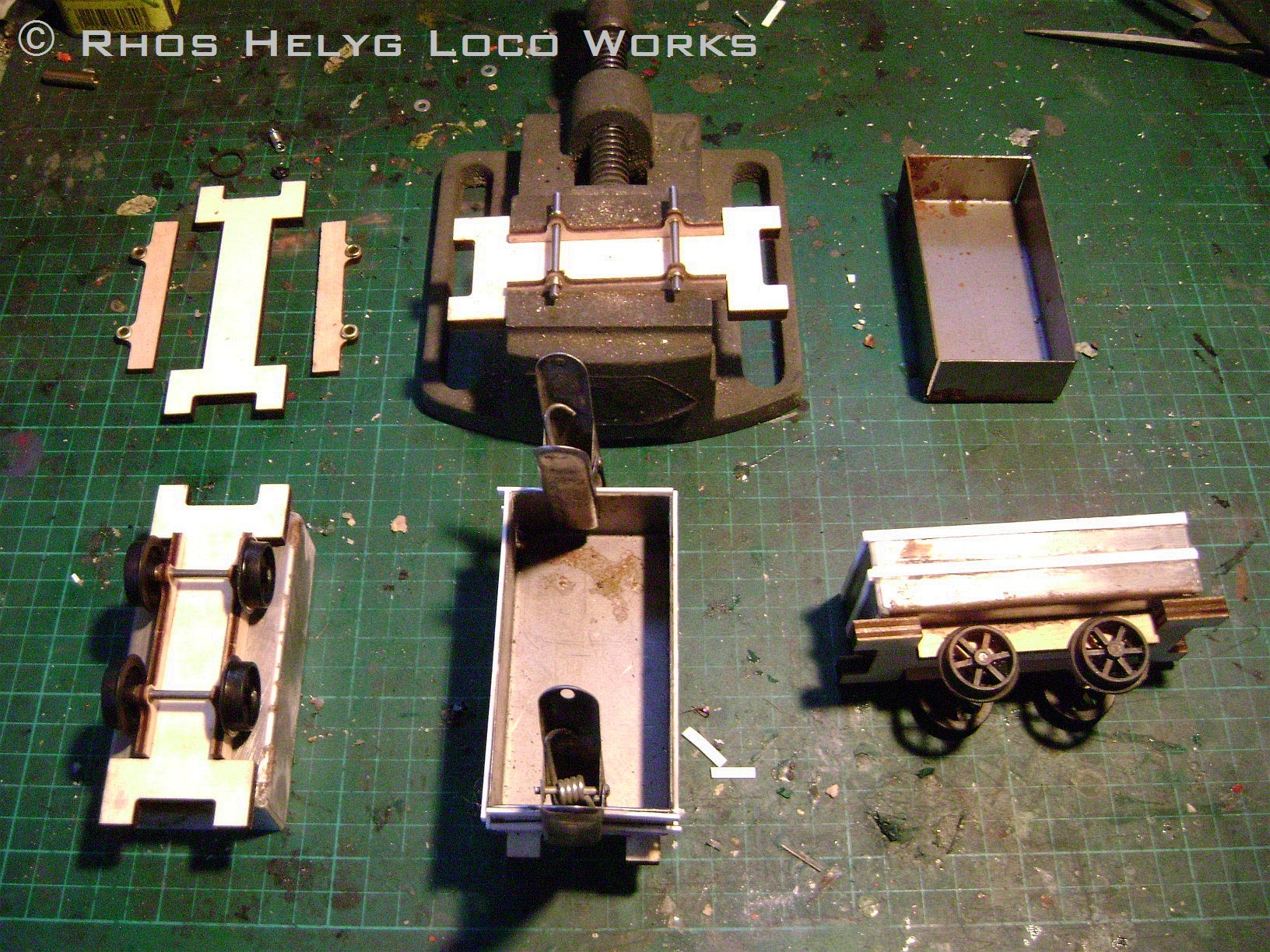
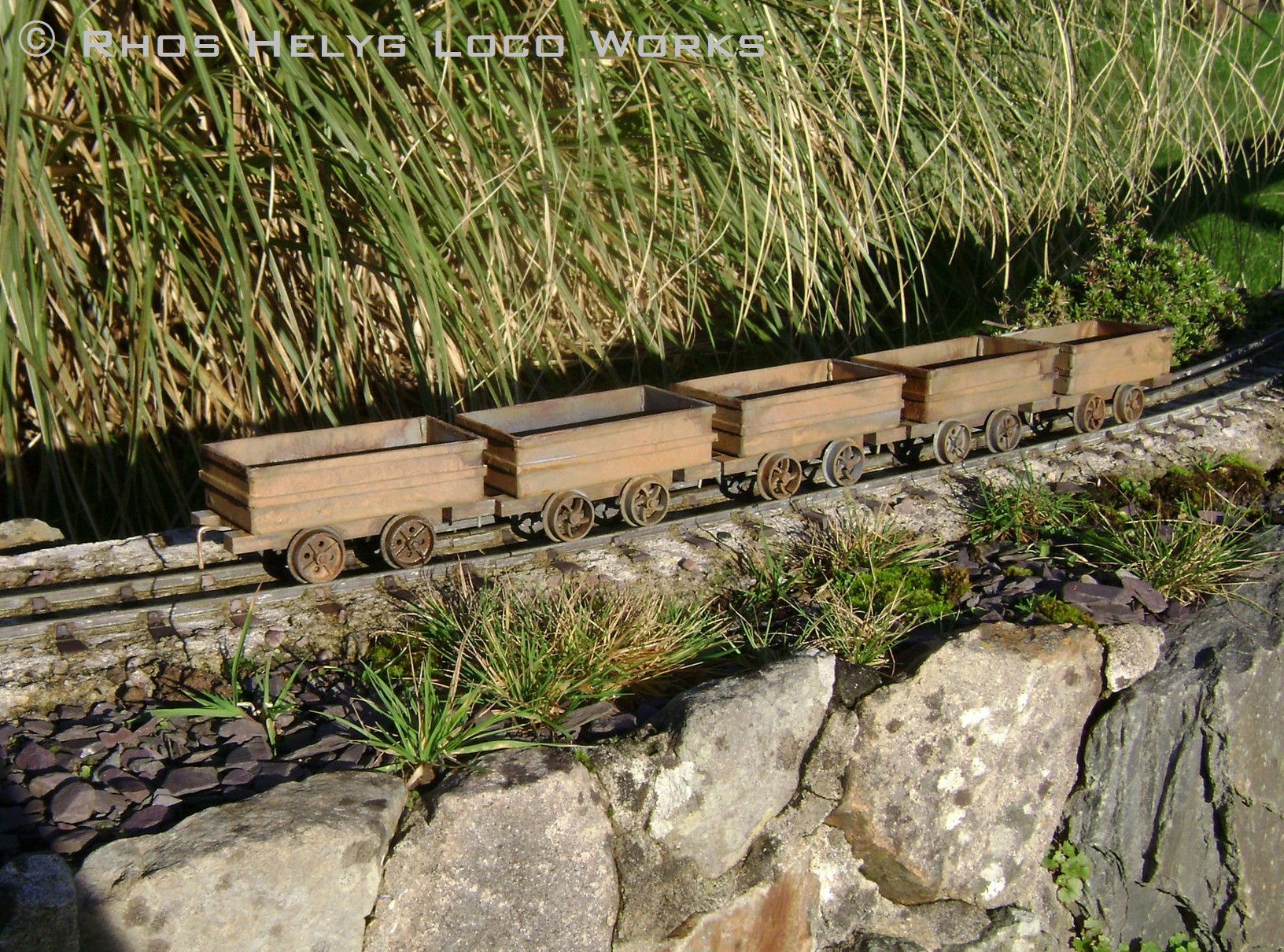
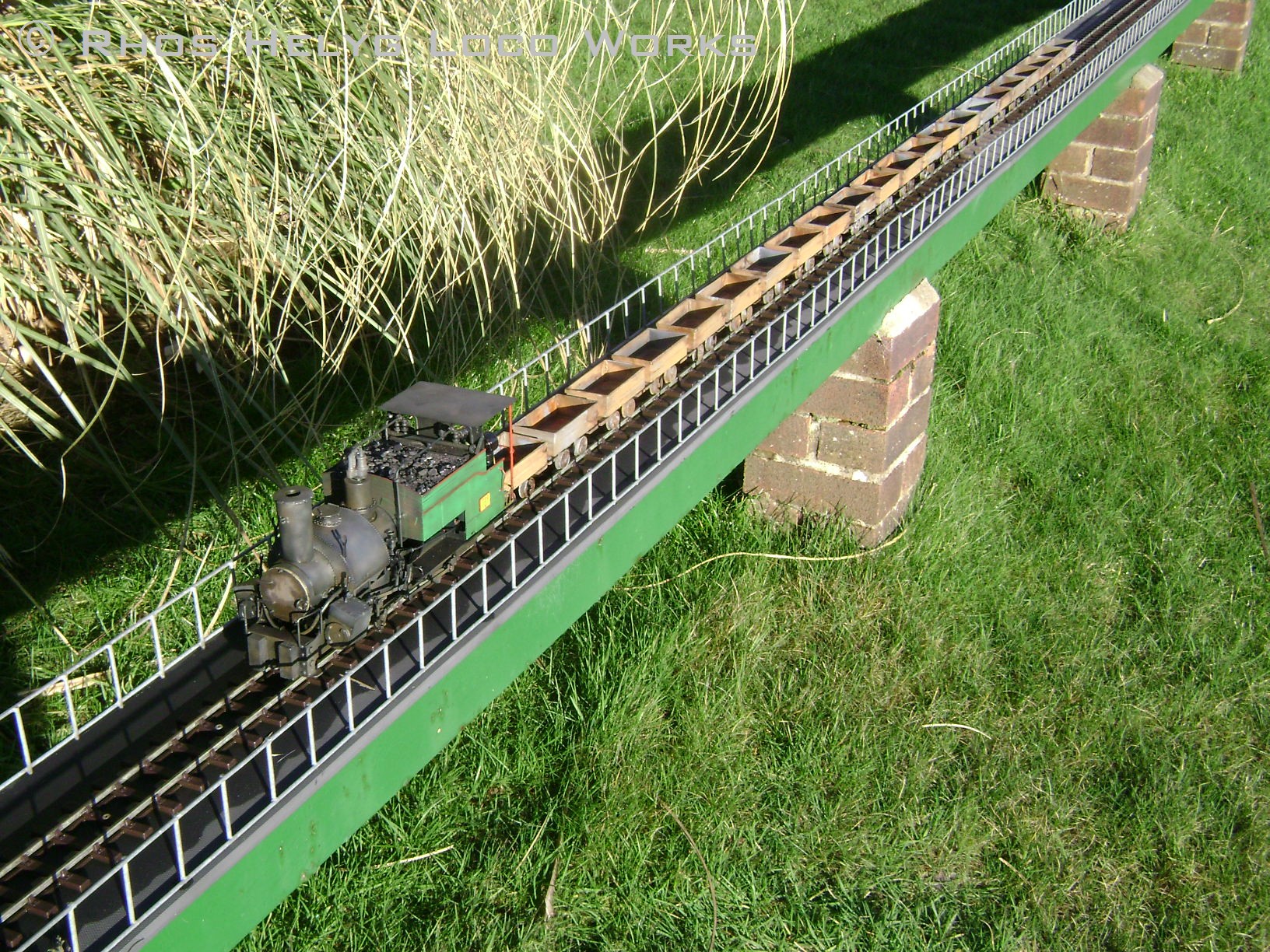
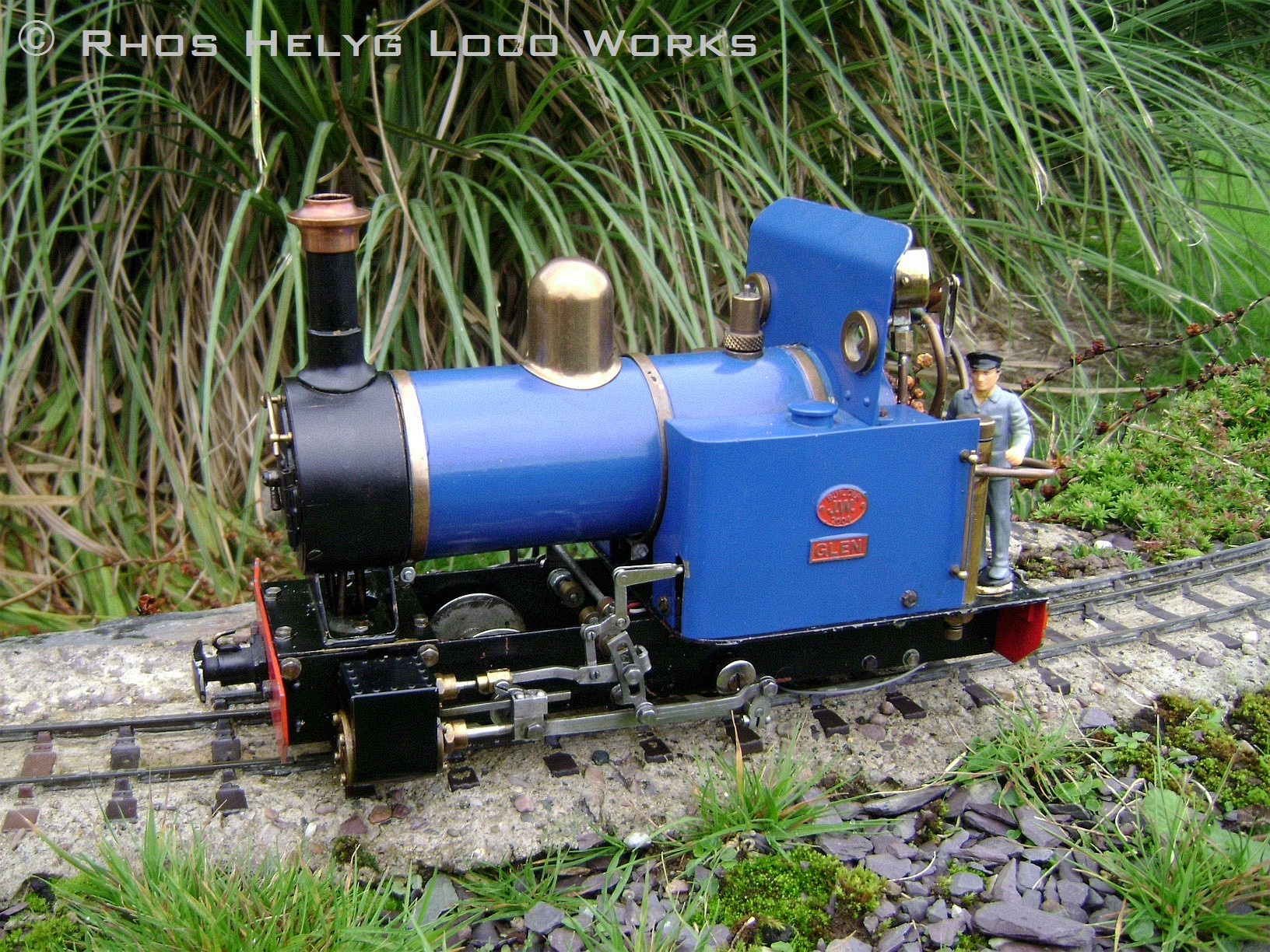
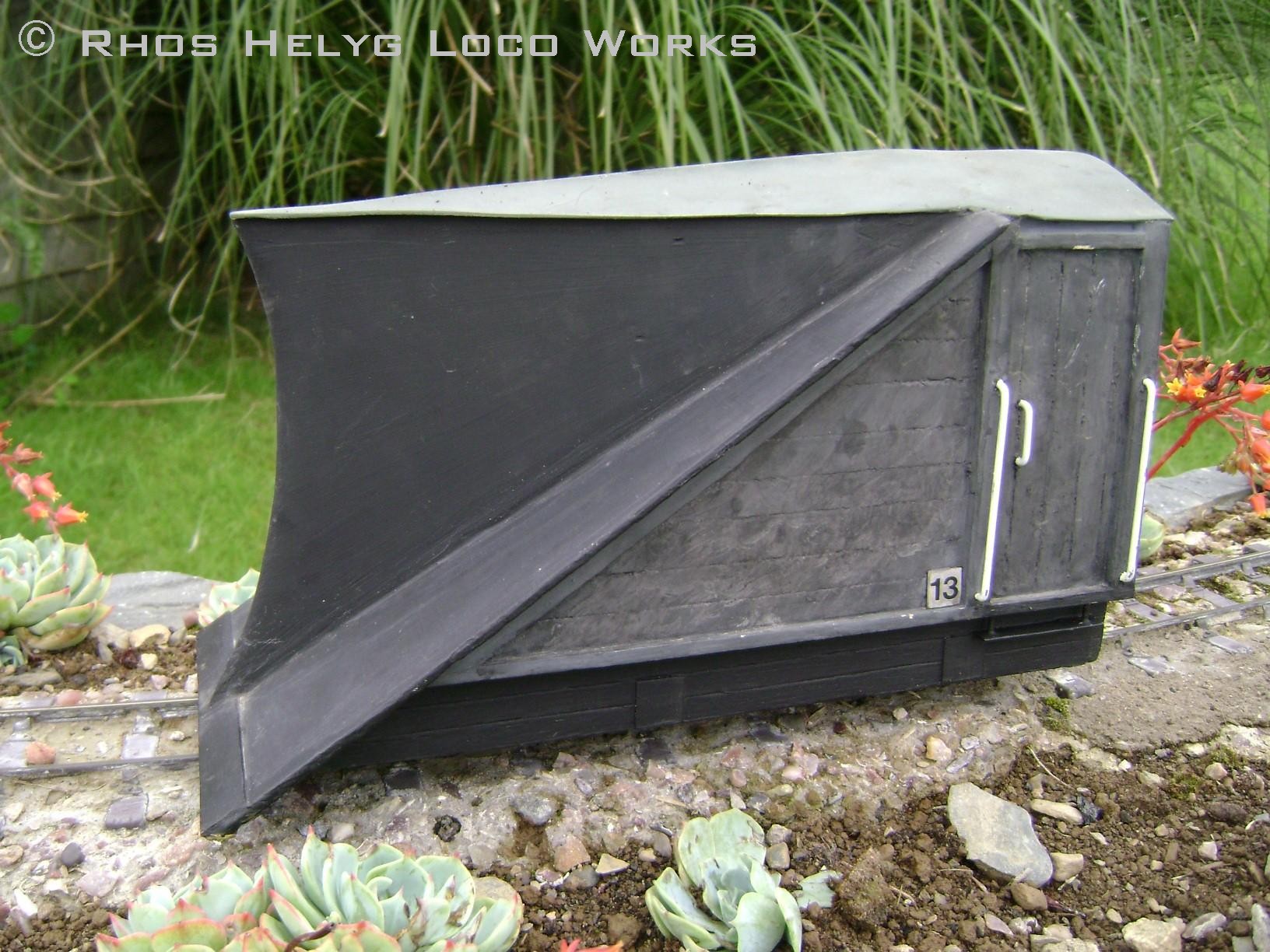
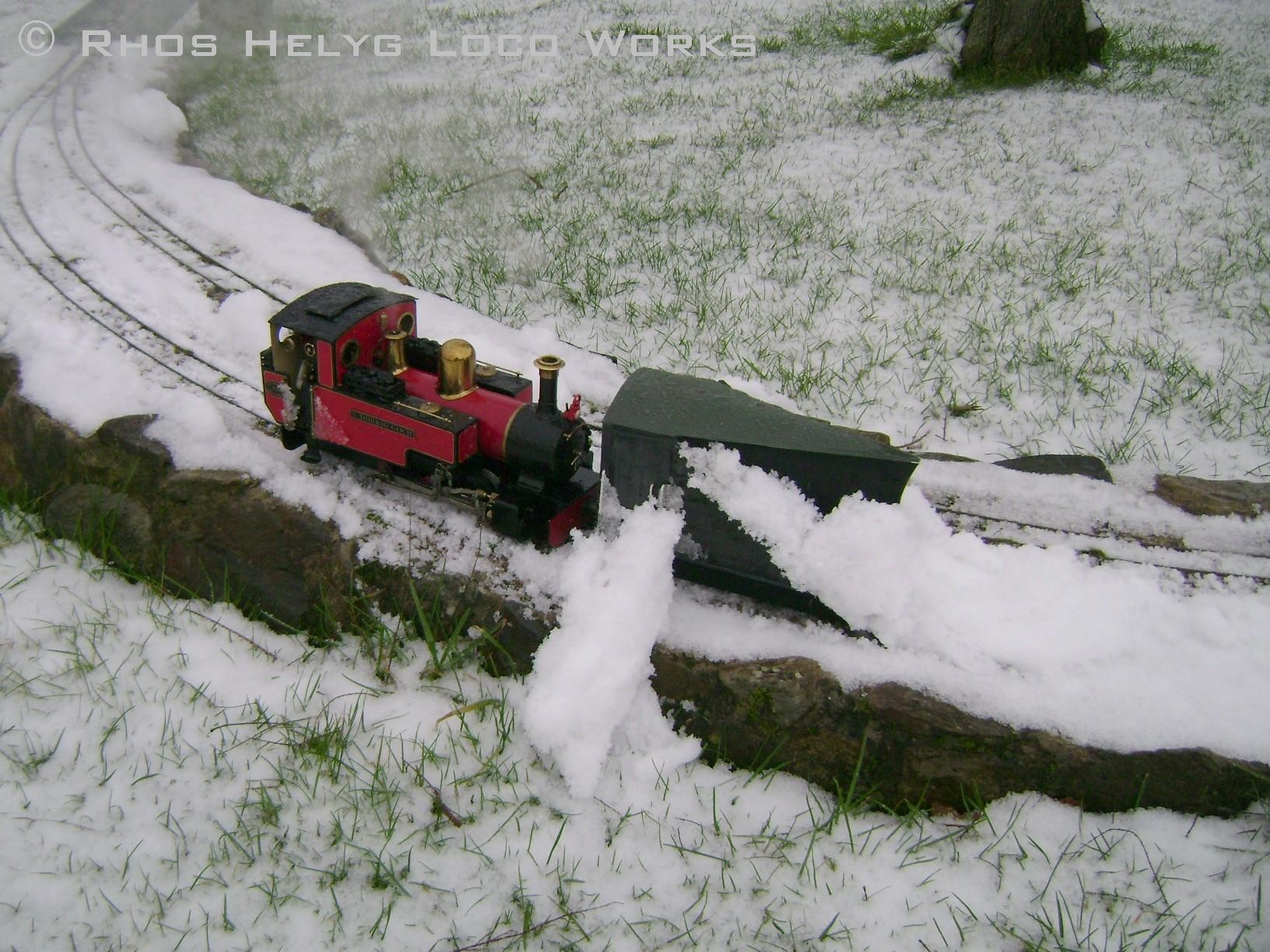
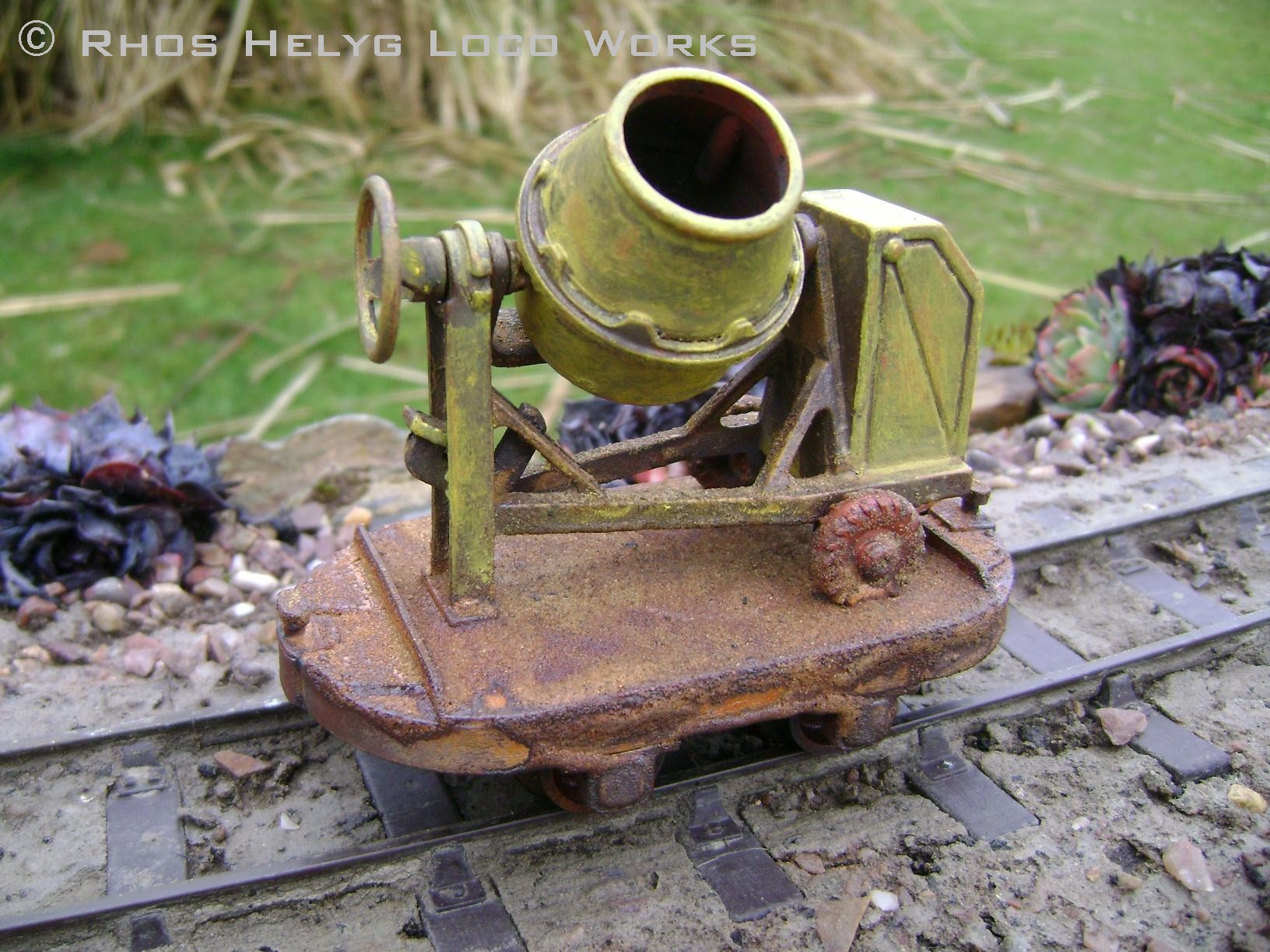
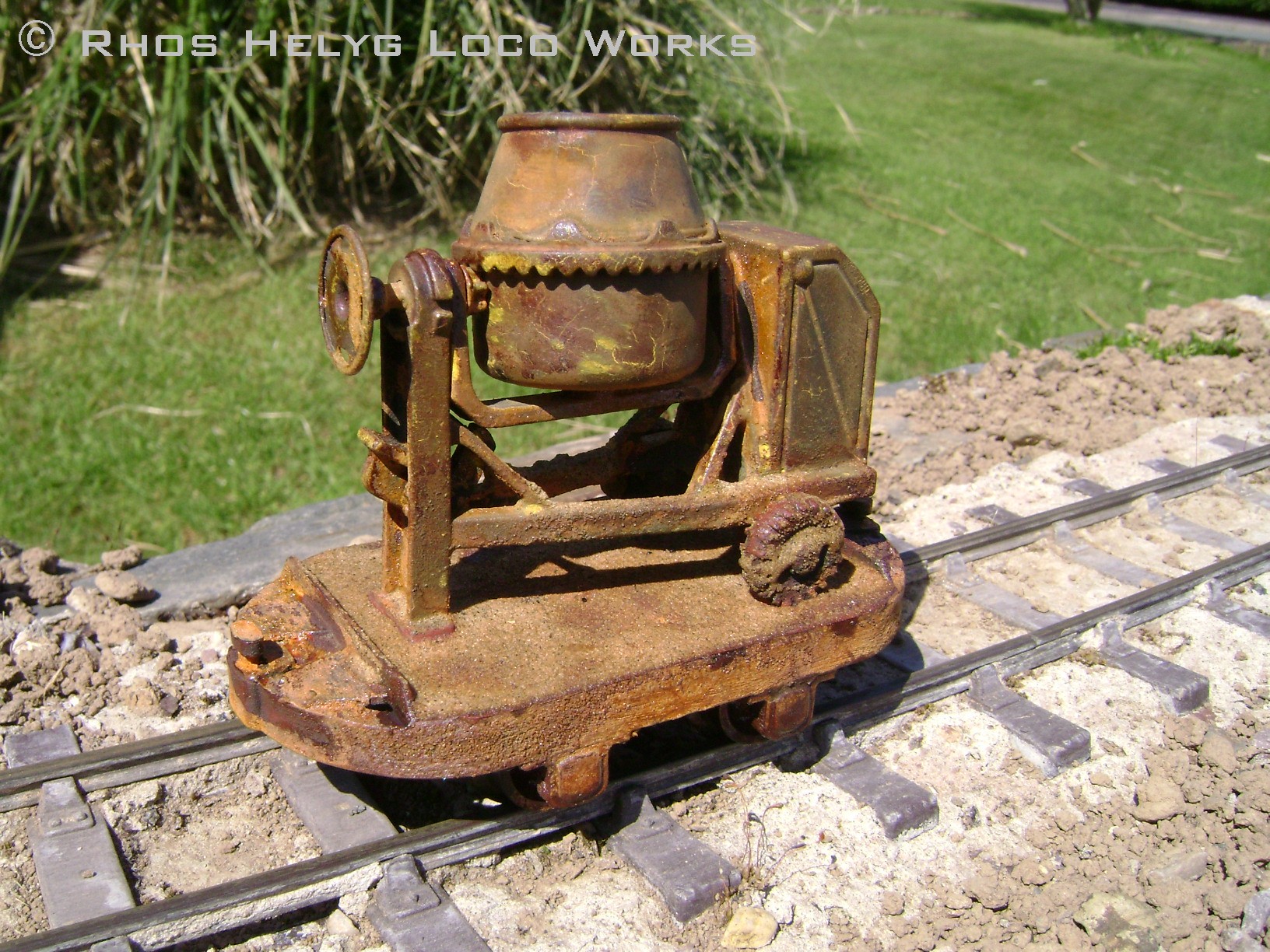
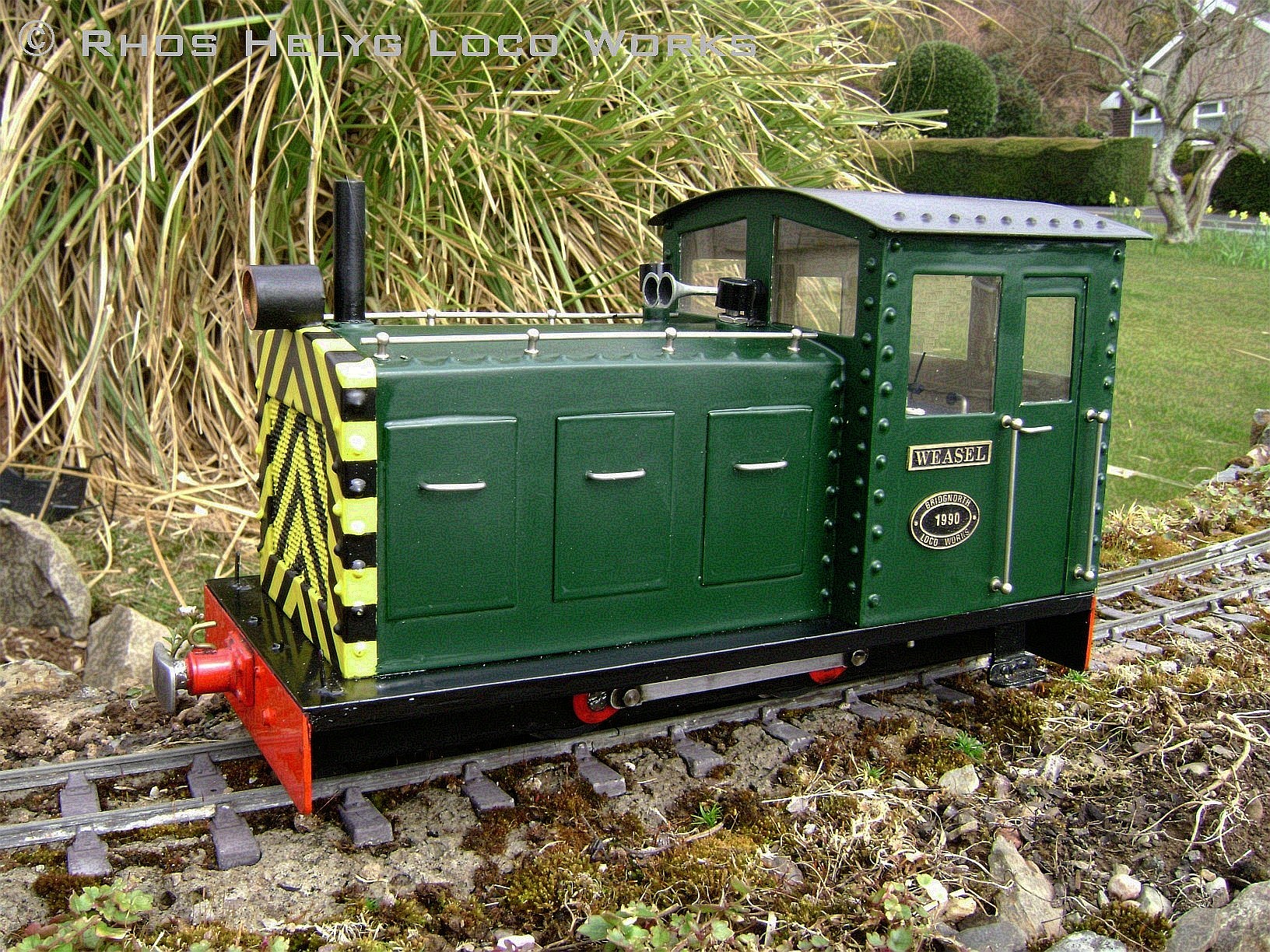
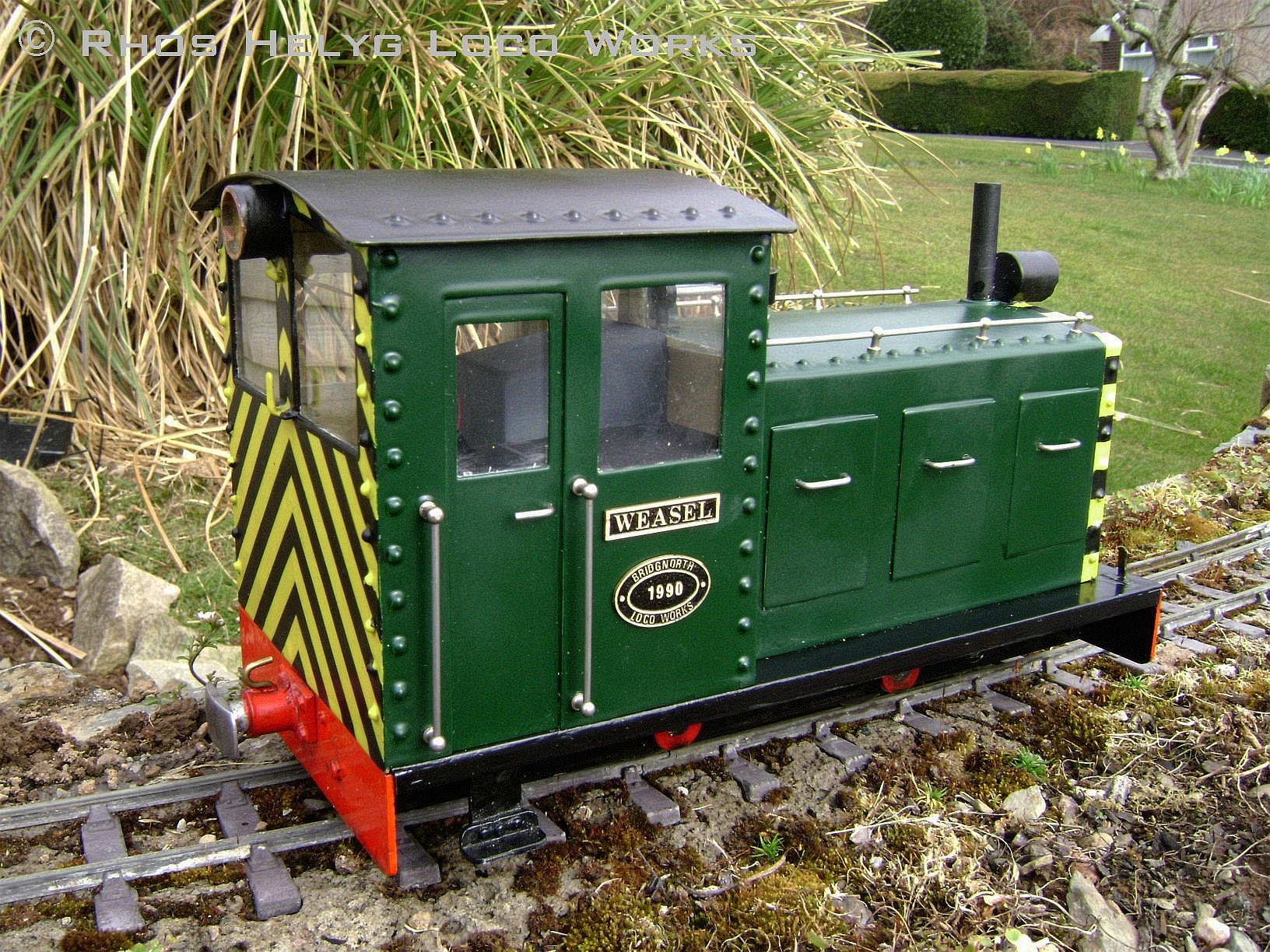
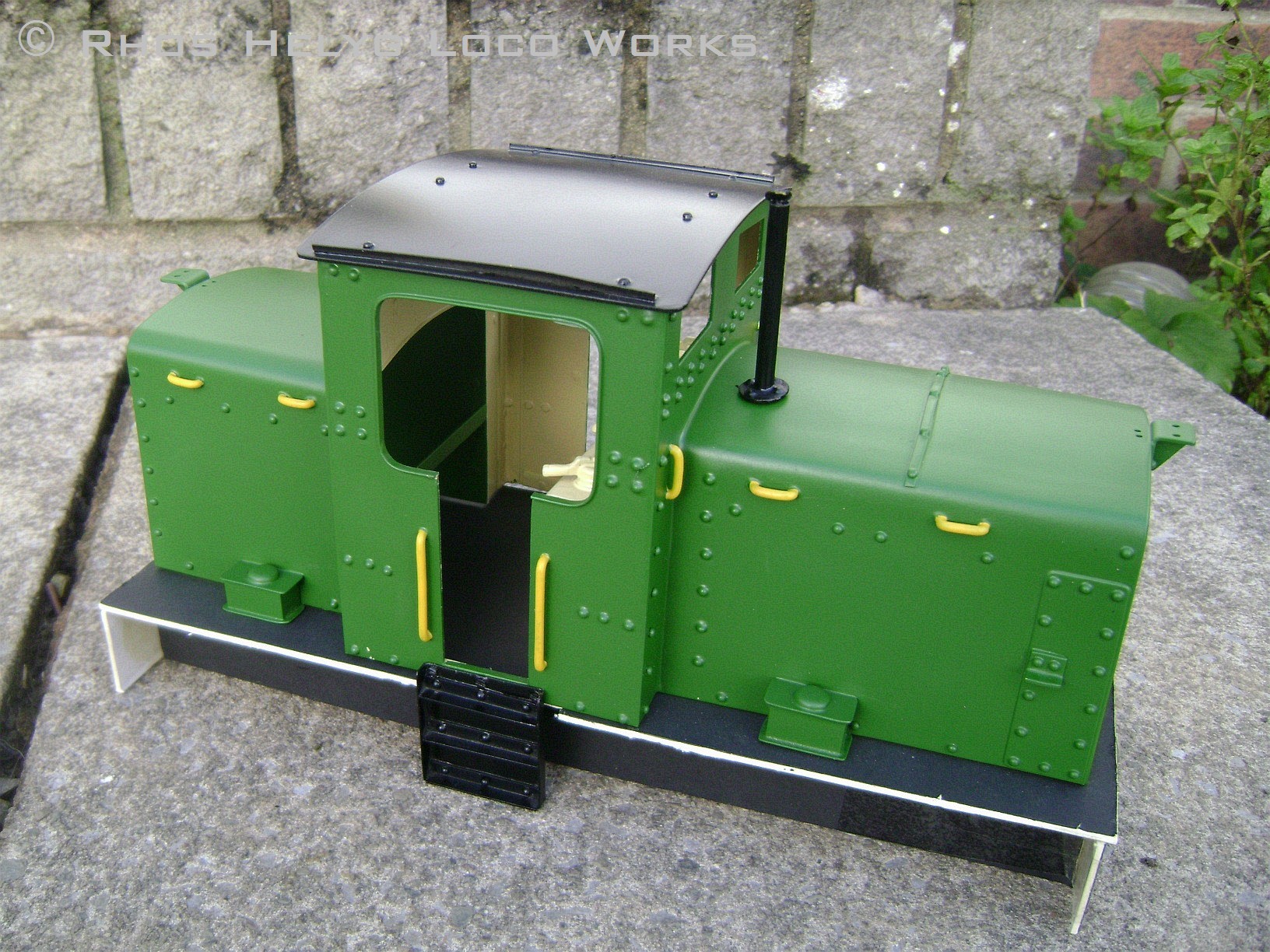
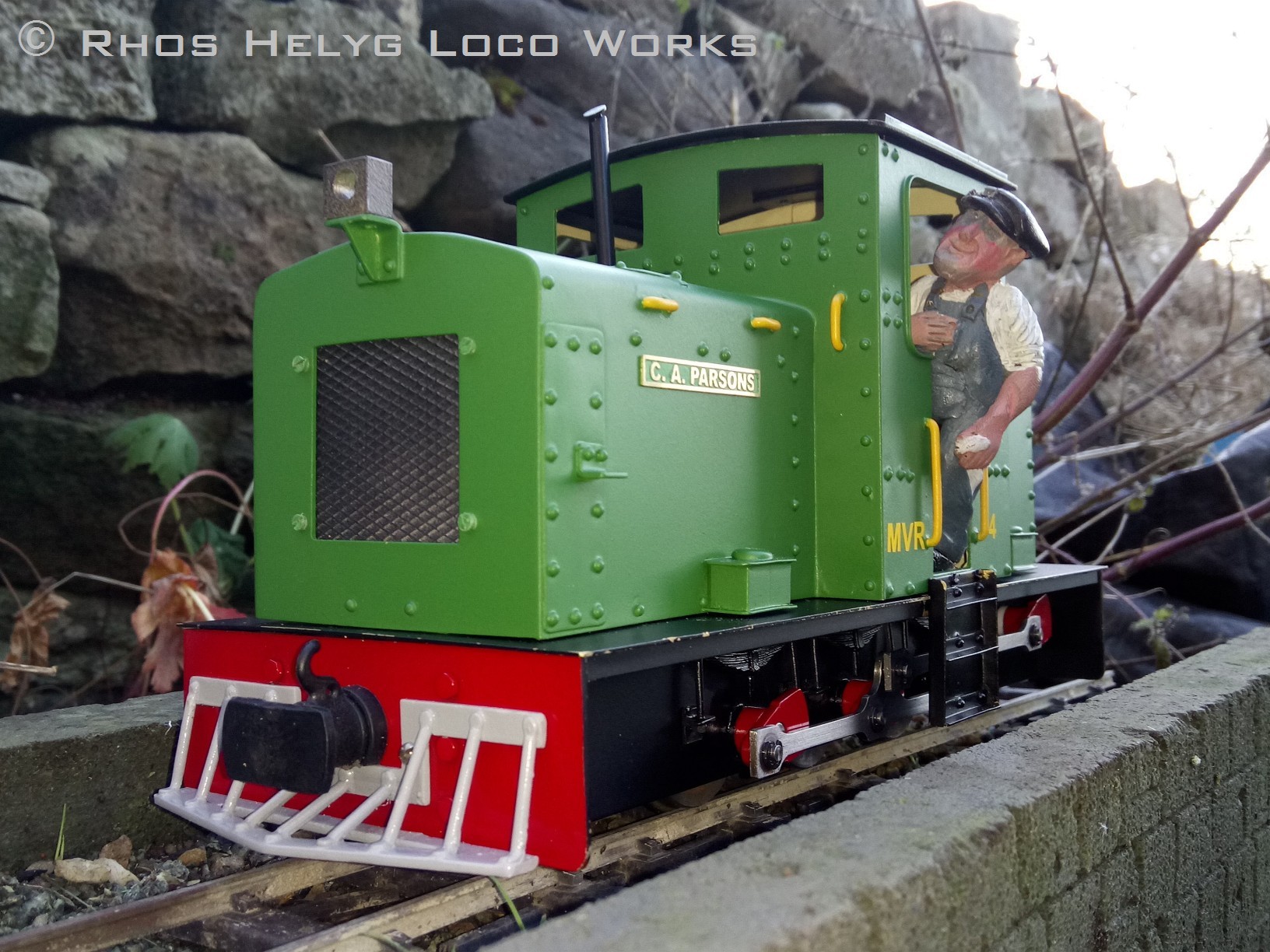
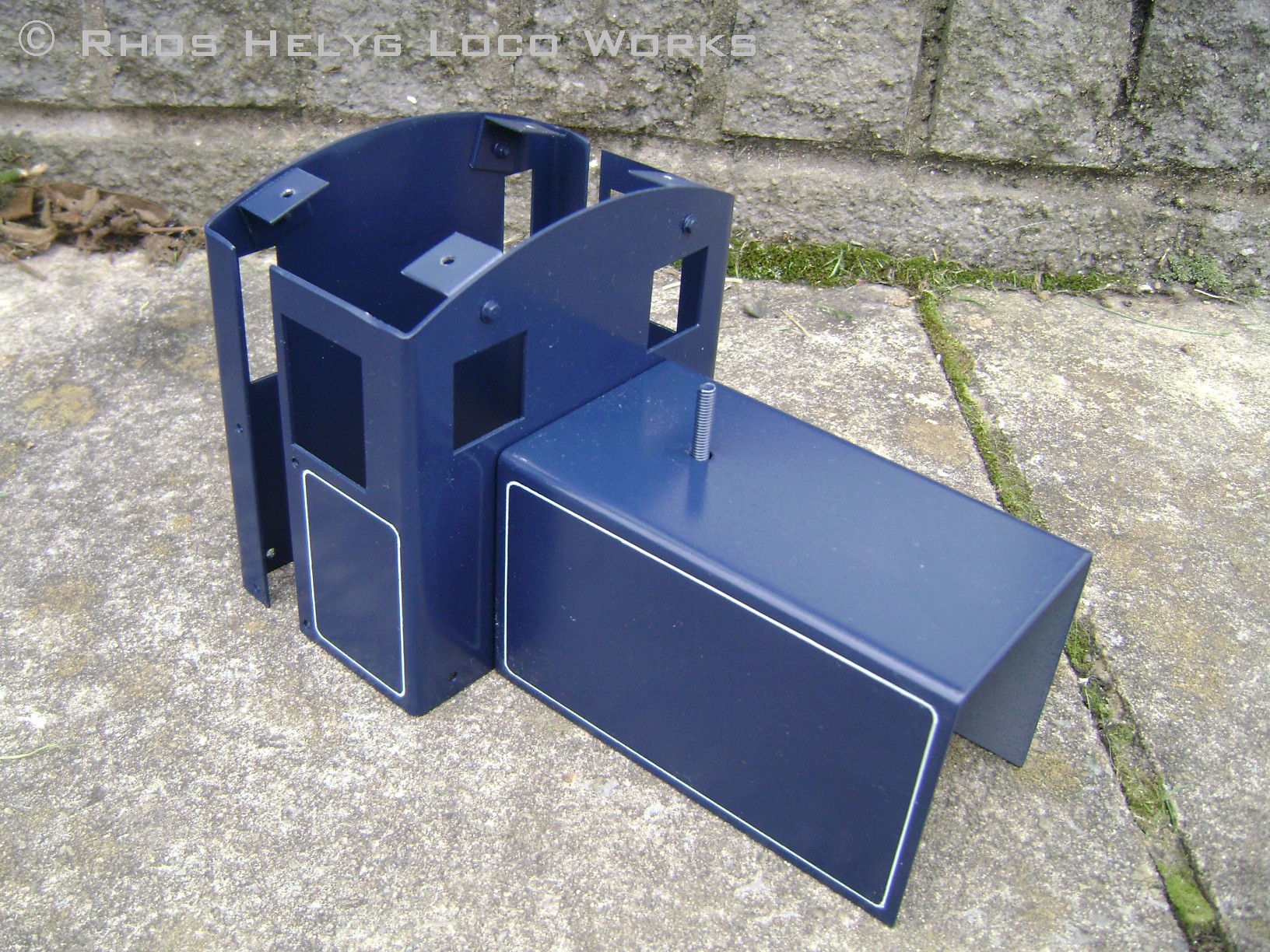
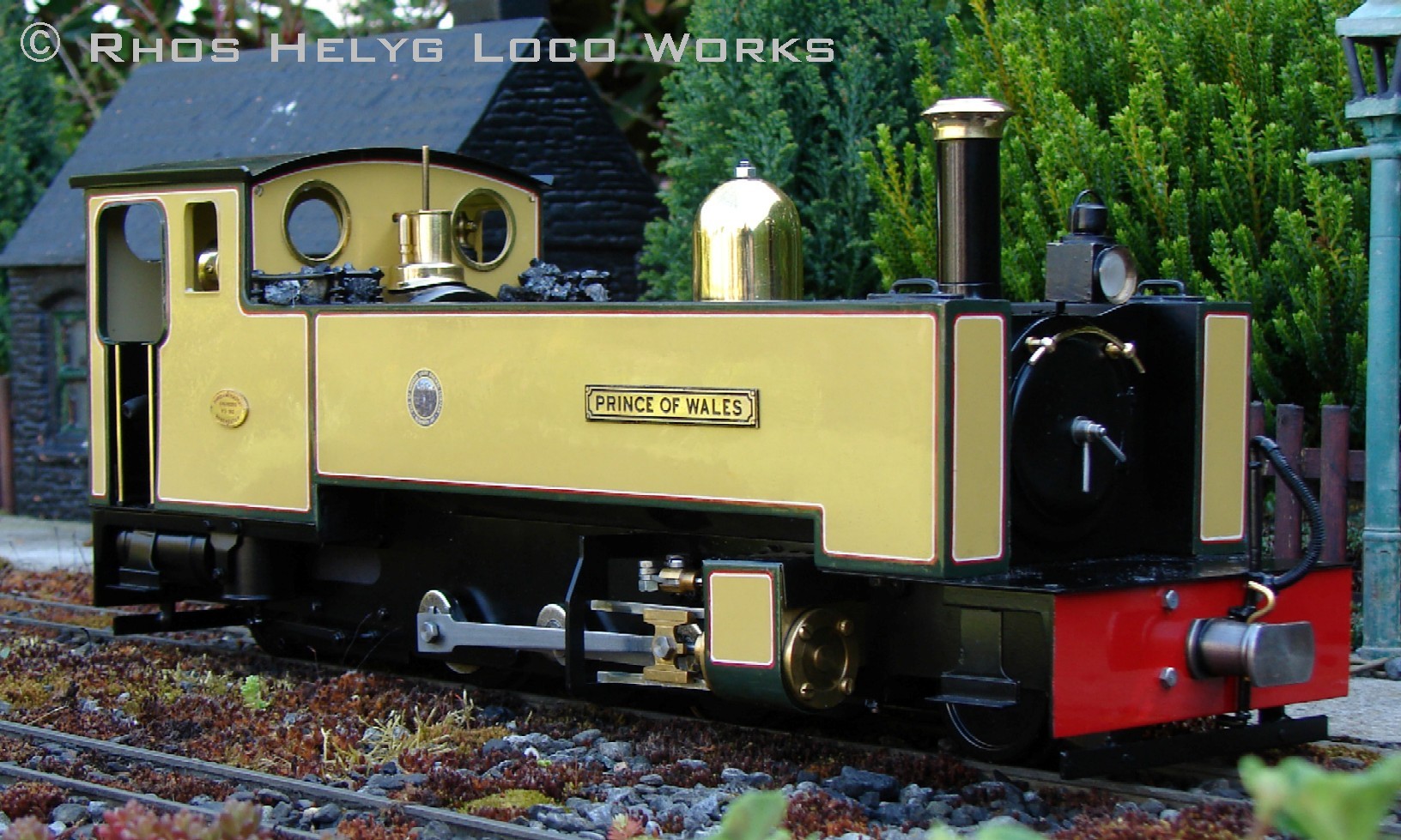
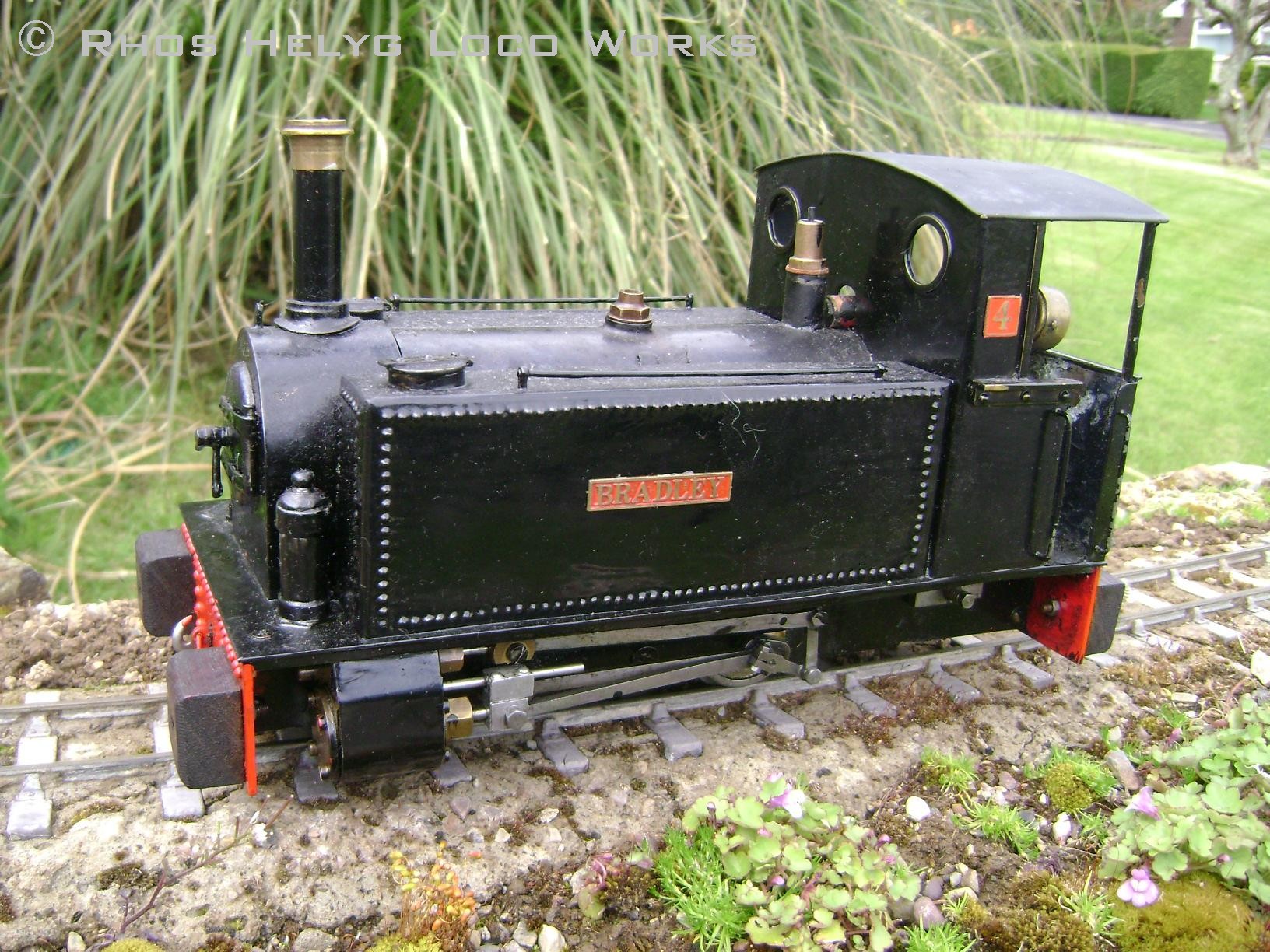
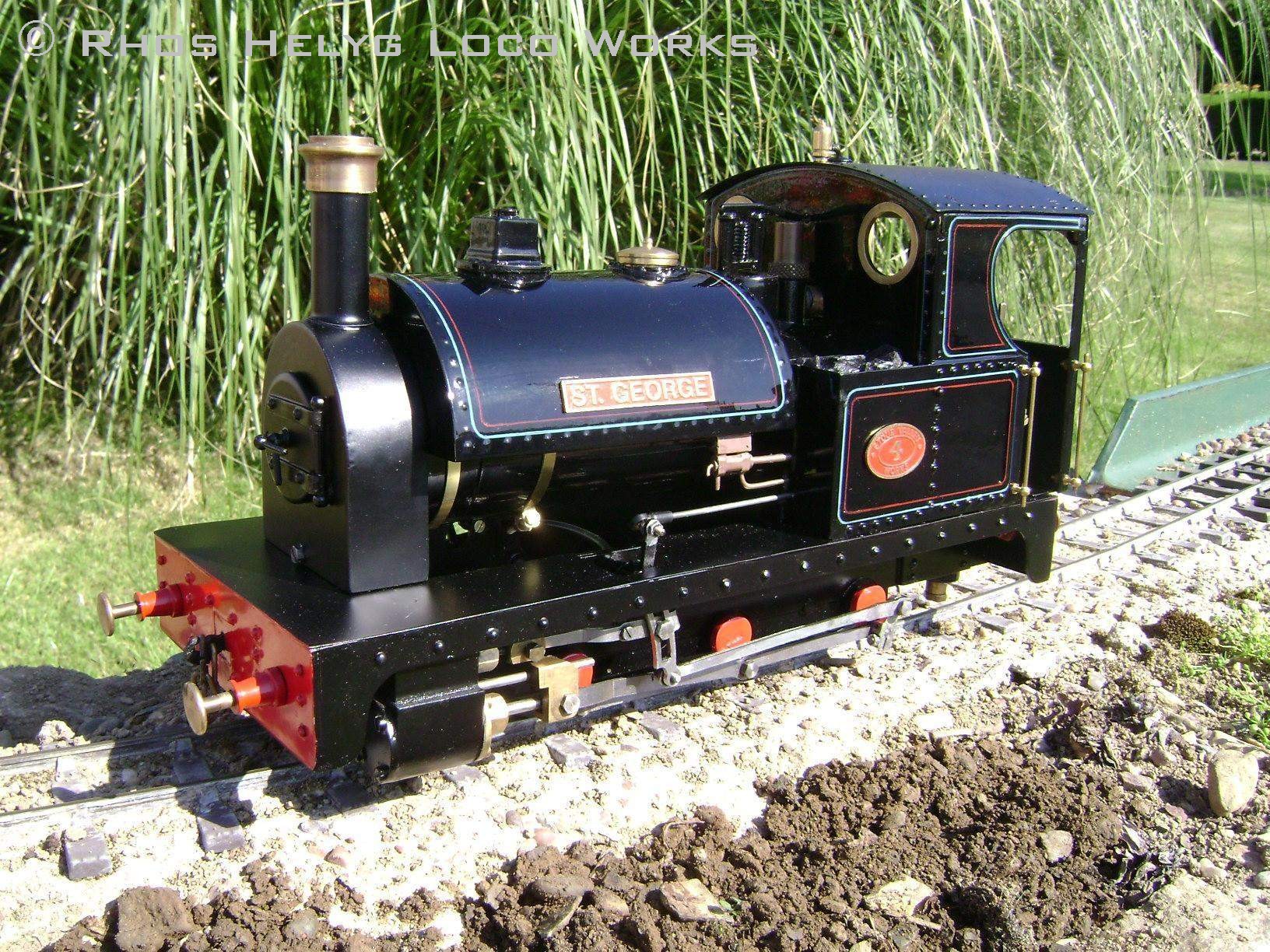
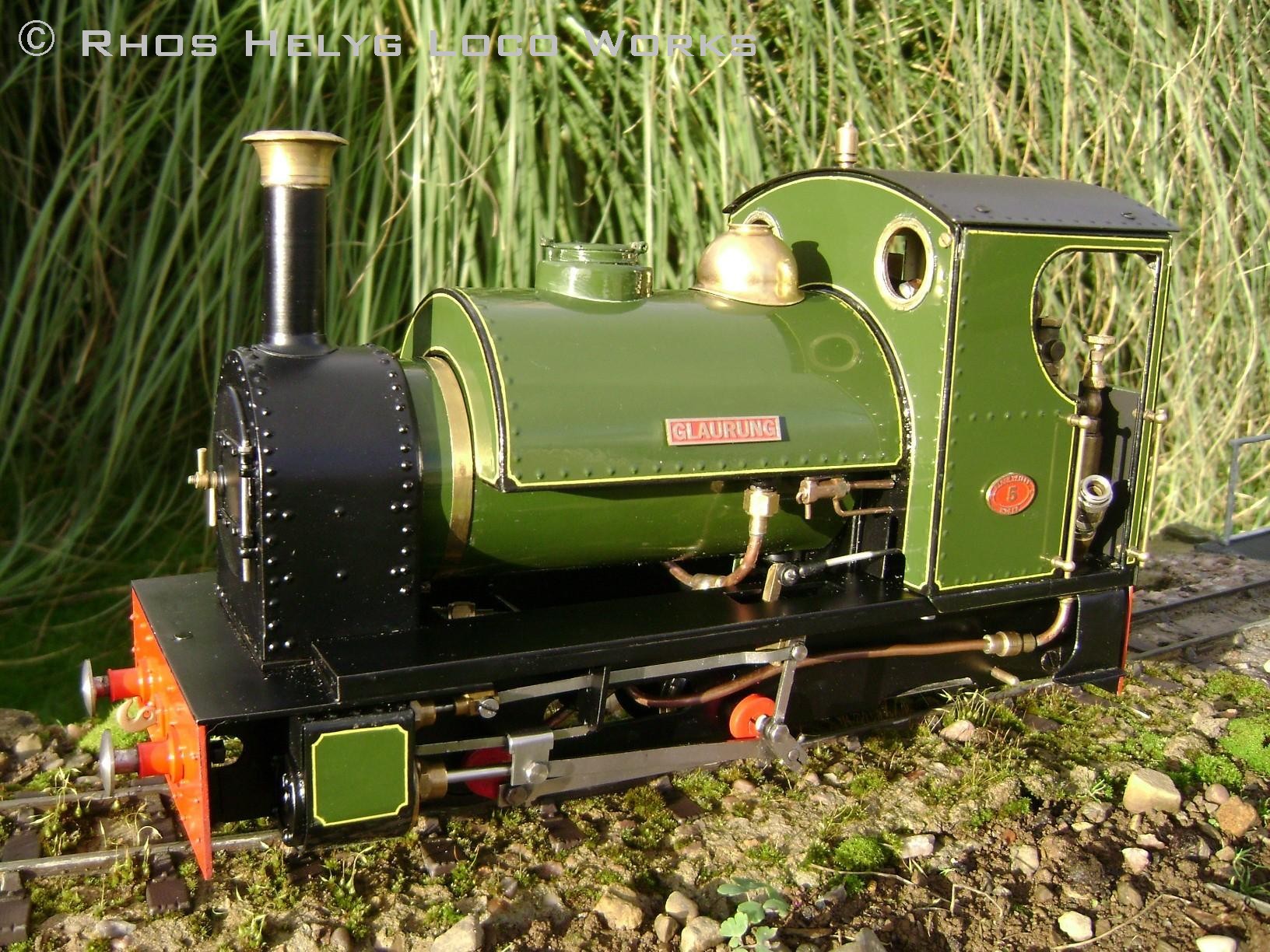
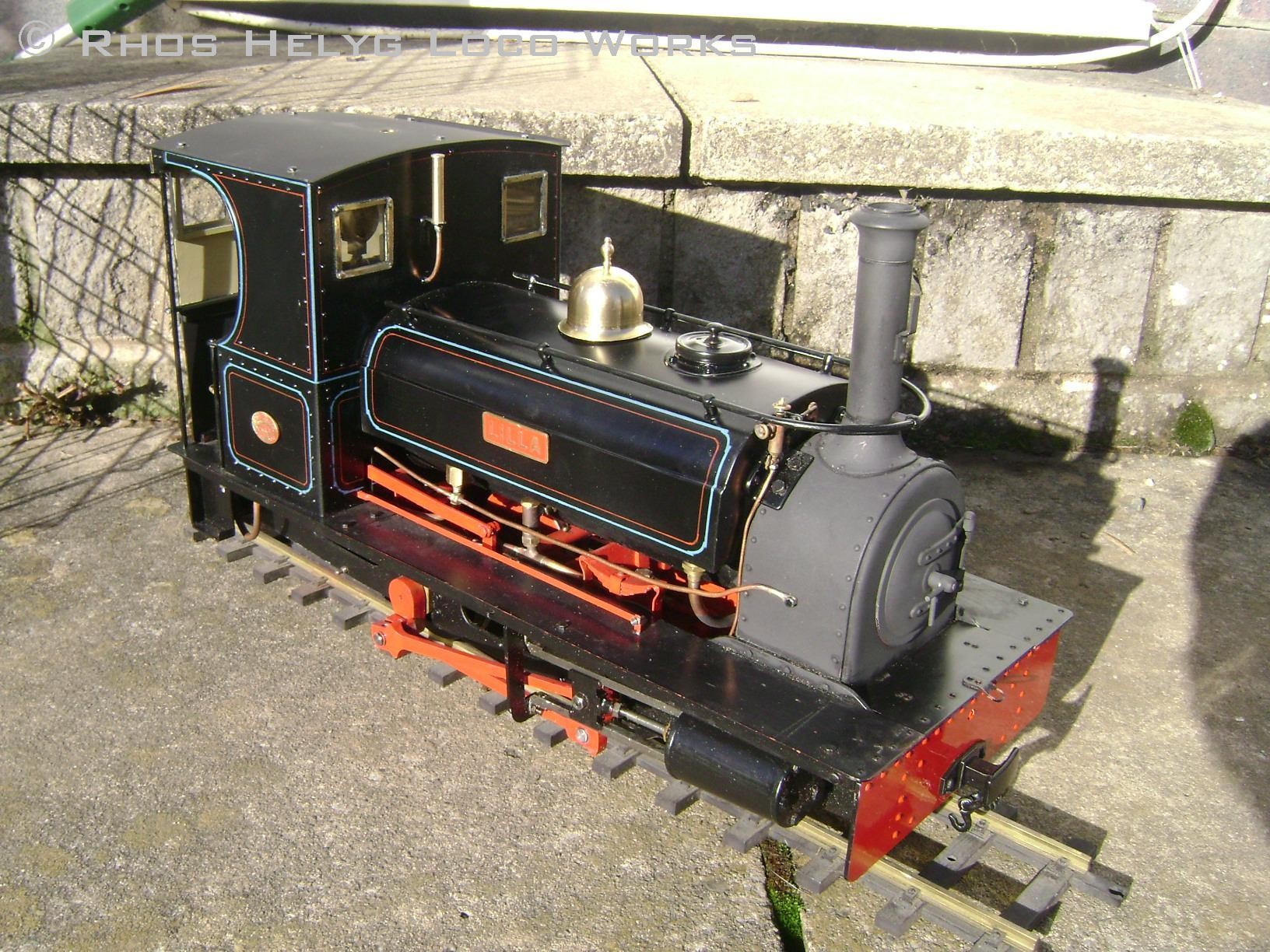
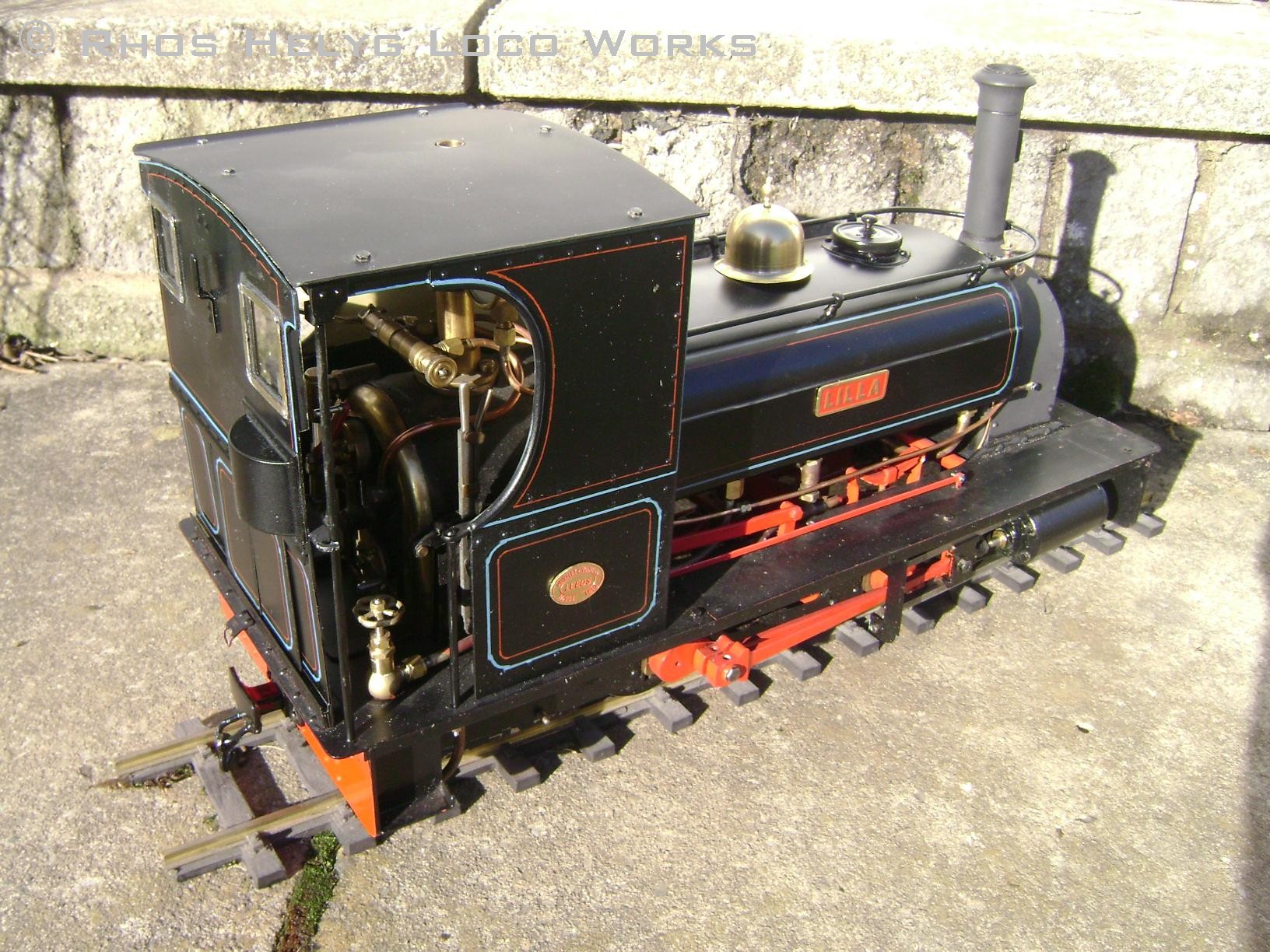
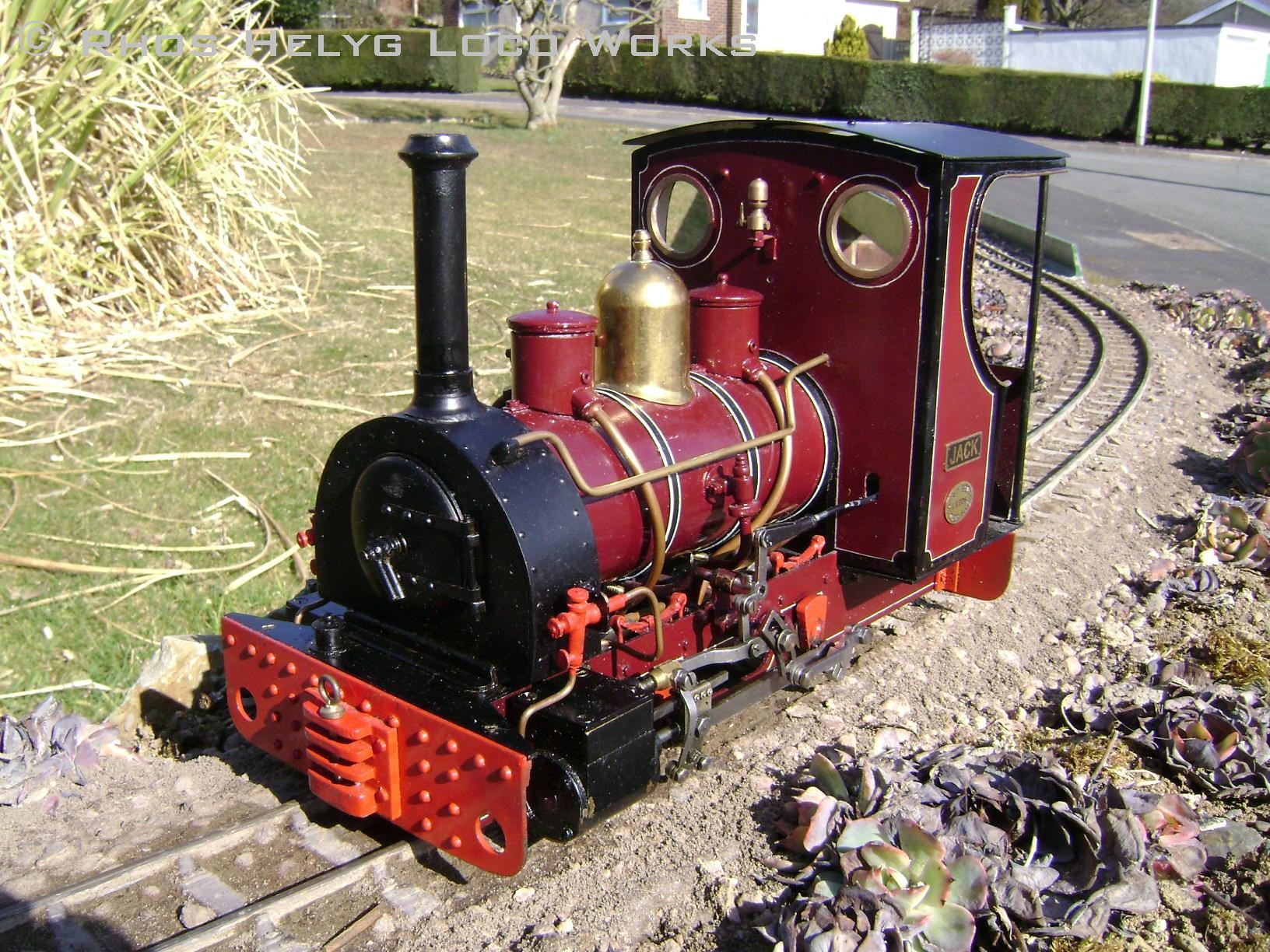
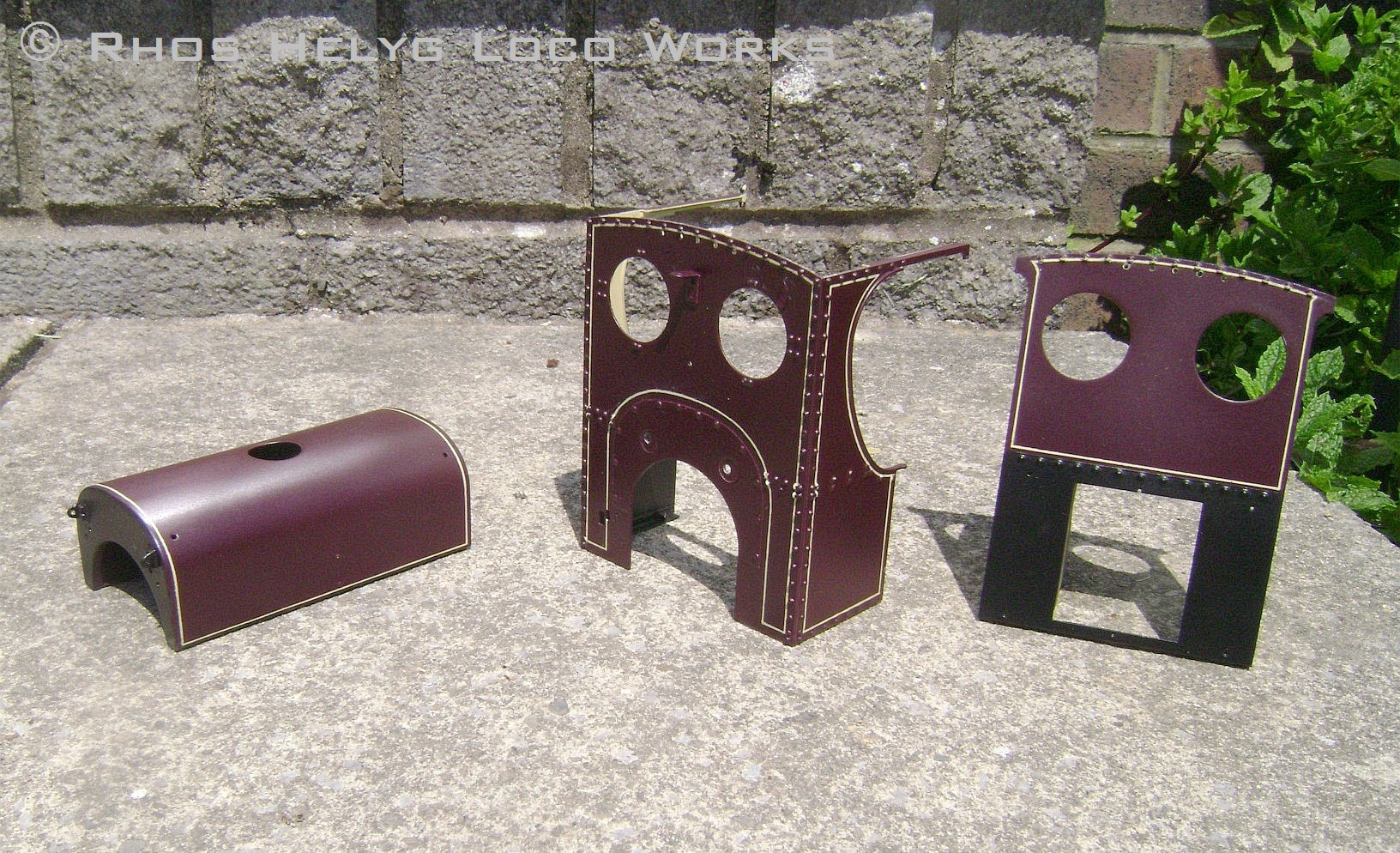
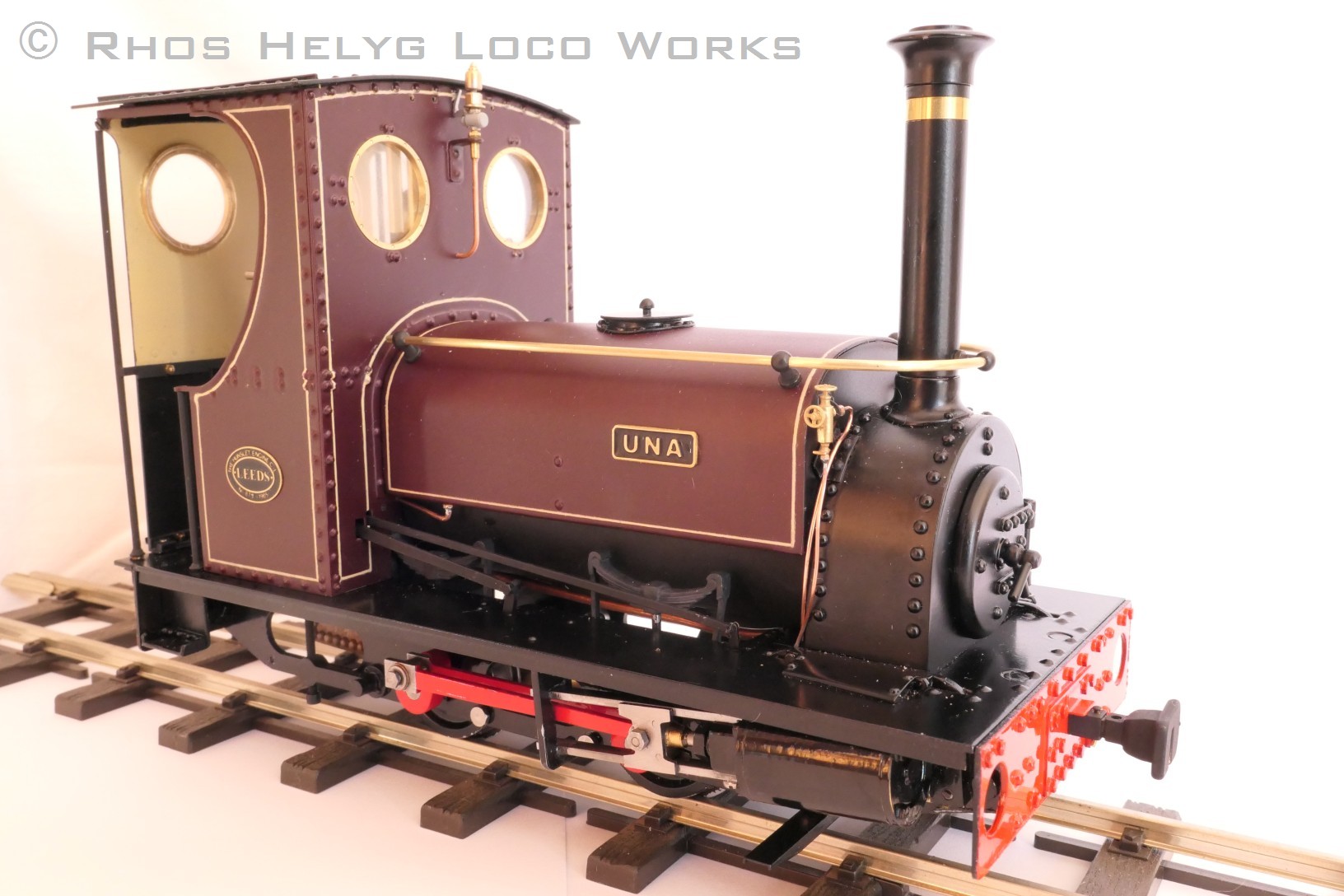
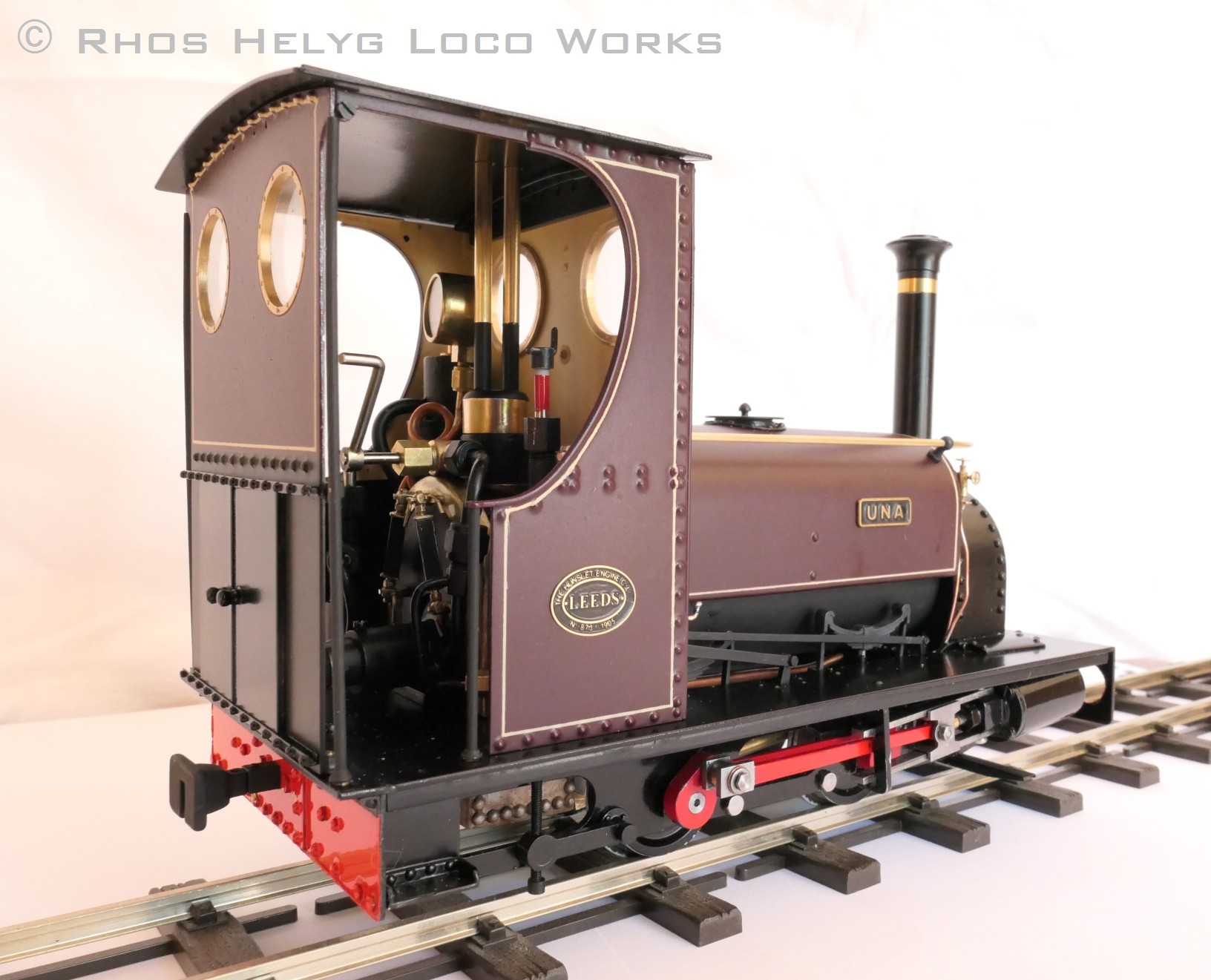
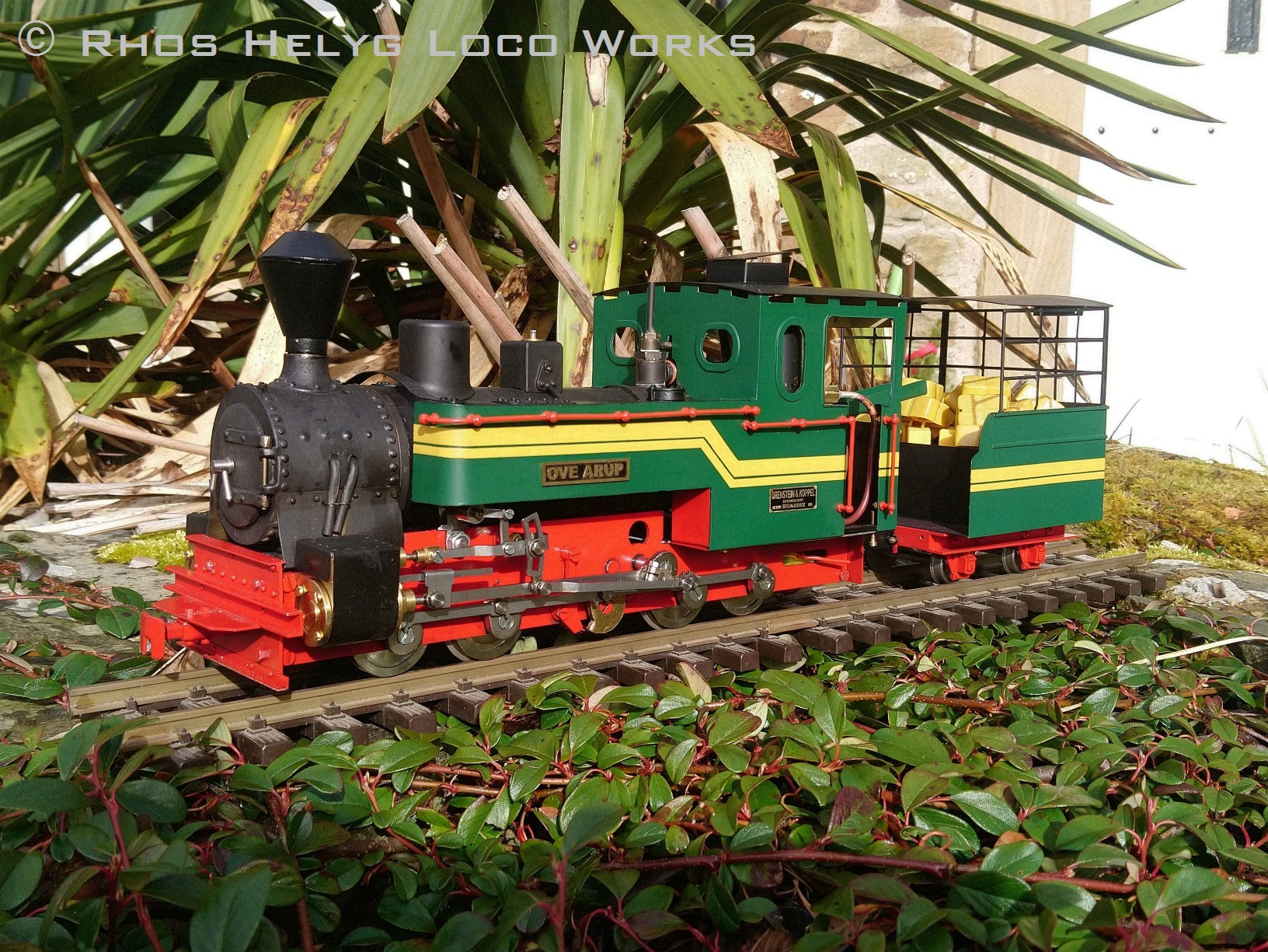
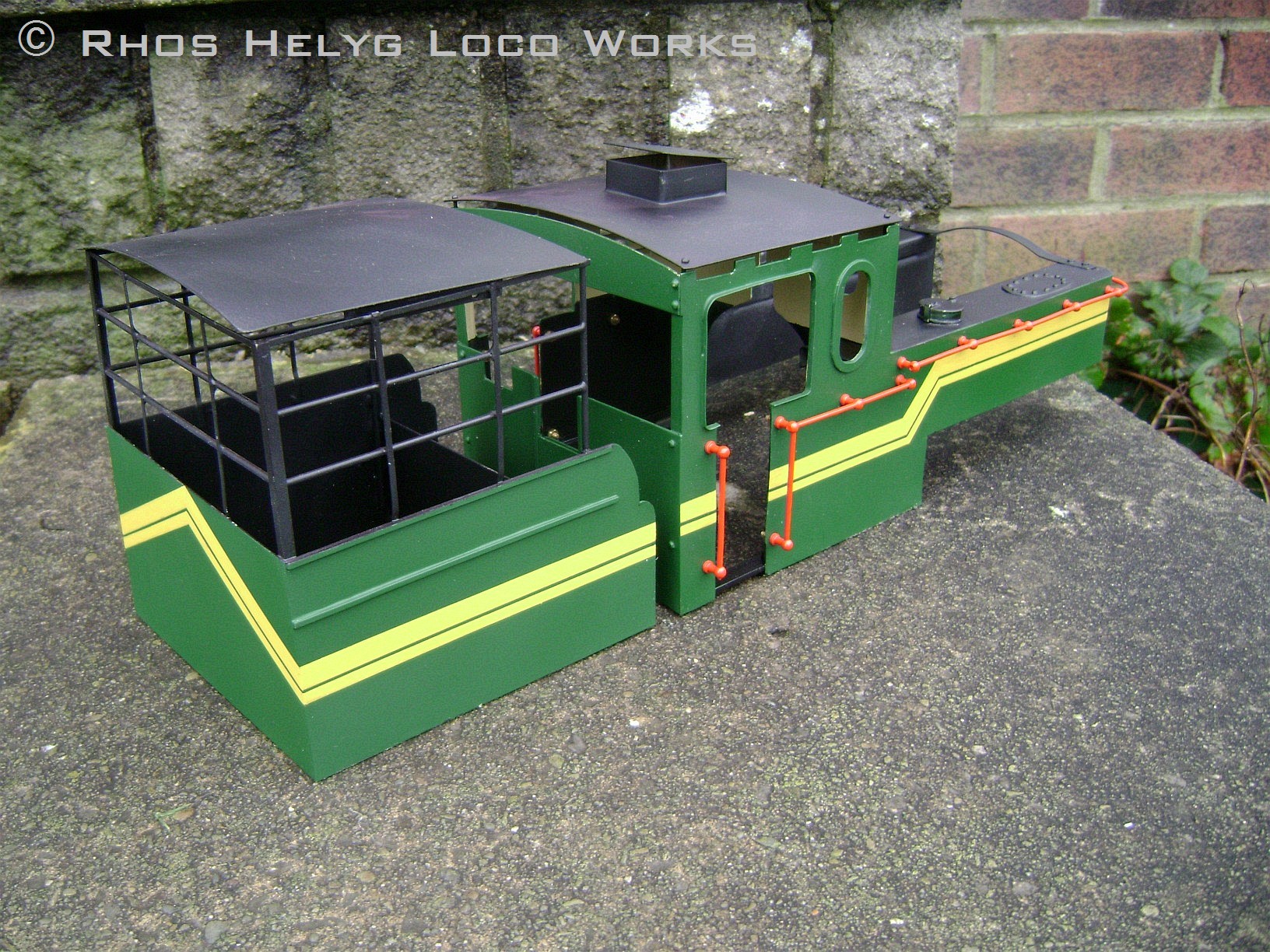
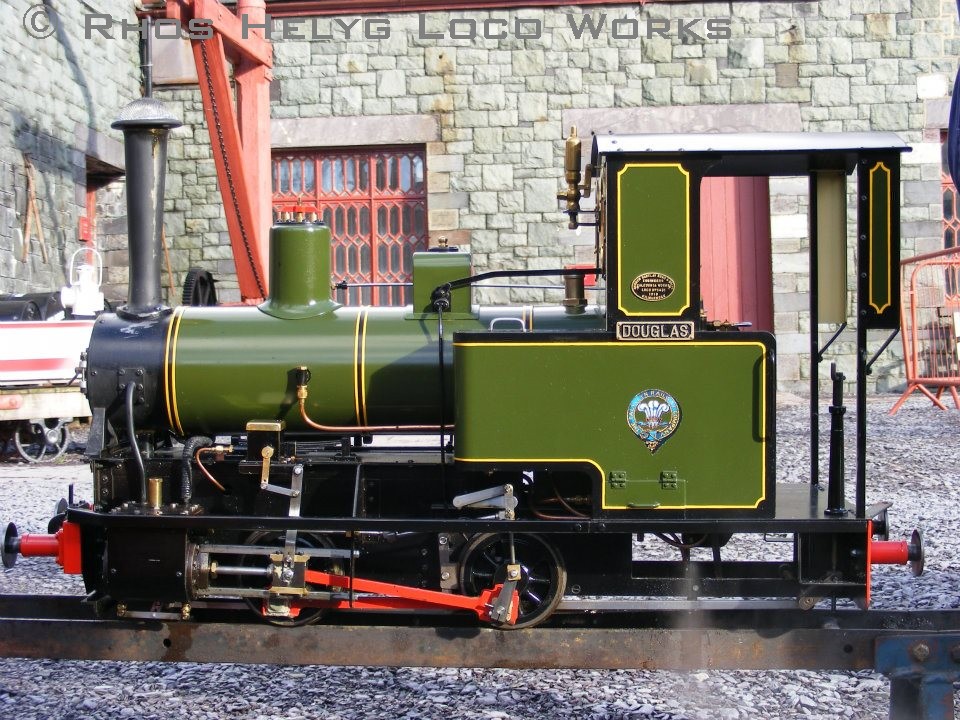
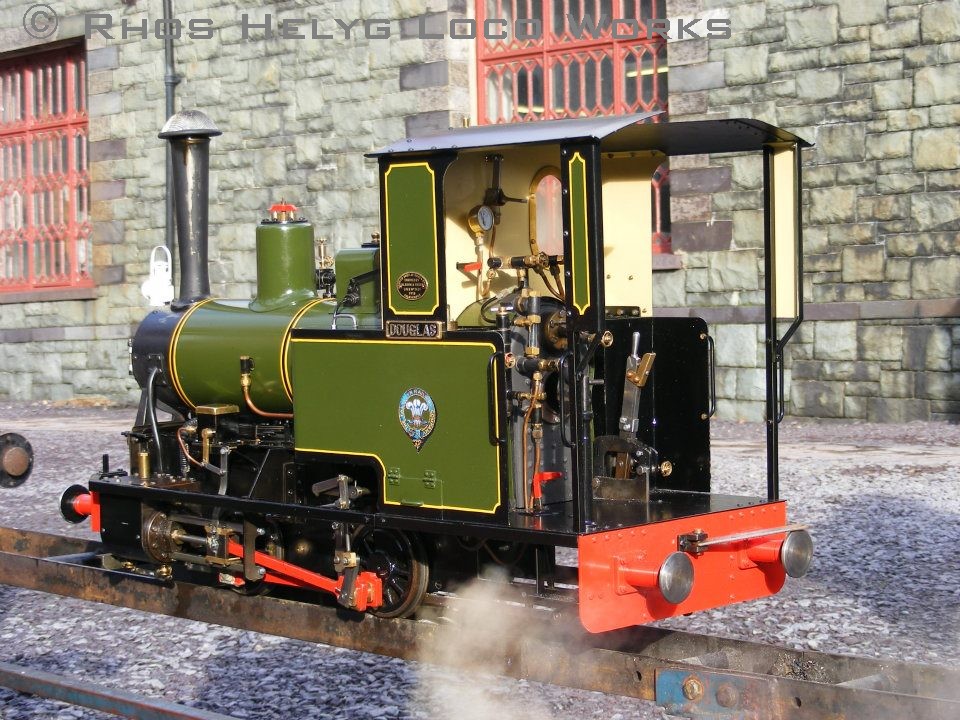
This page was last updated on 22nd July 2026