This page shows some of the models that have been through the Rhos Helyg Locomotive Works recently.
Latest additions appear at the top of the page.
Please see the Gallery page for more finished models.
You may click on the pictures to see enlarged views.
|
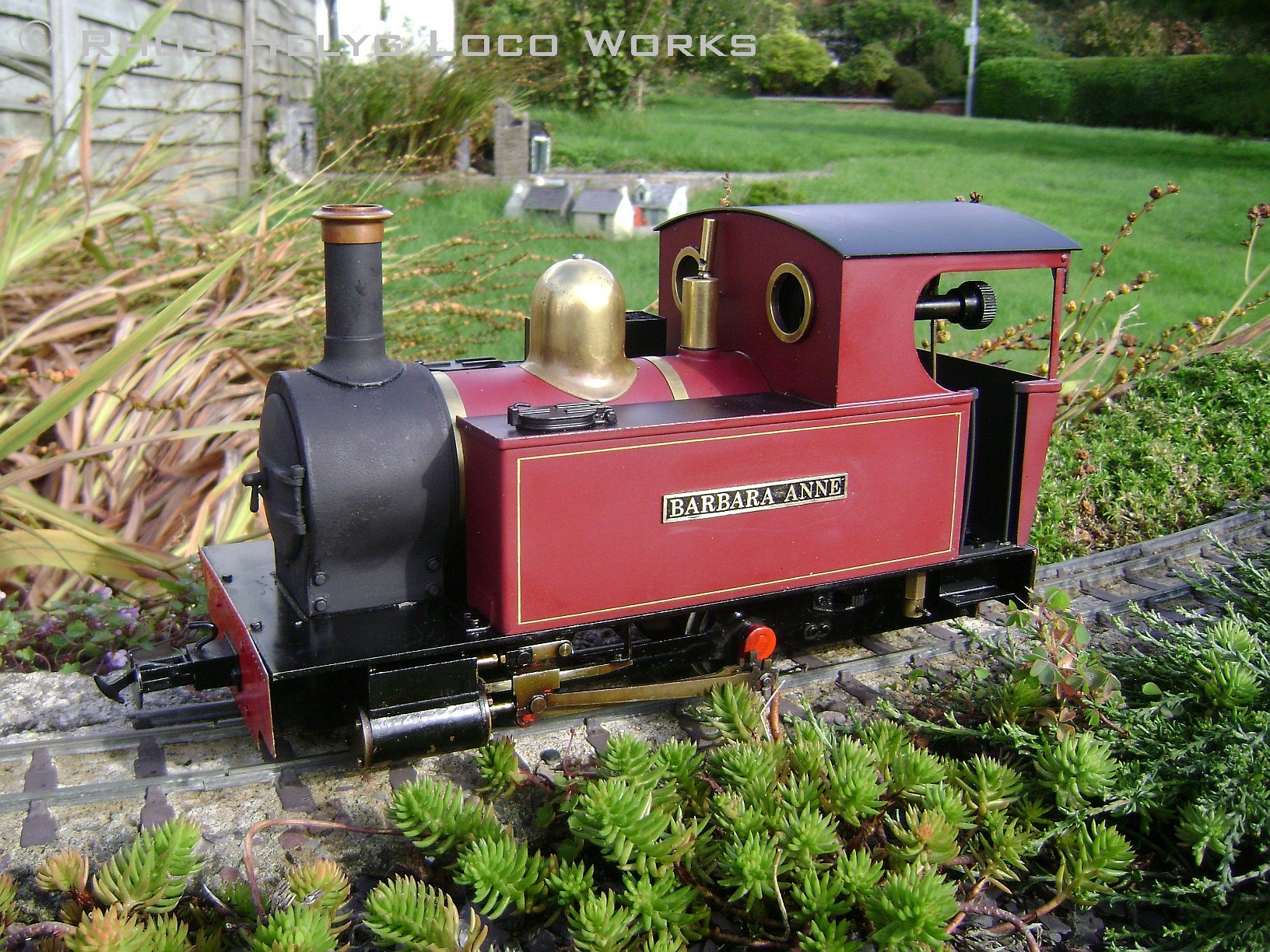
Accucraft Ragleth 0-4-0T BARBARA ANNE
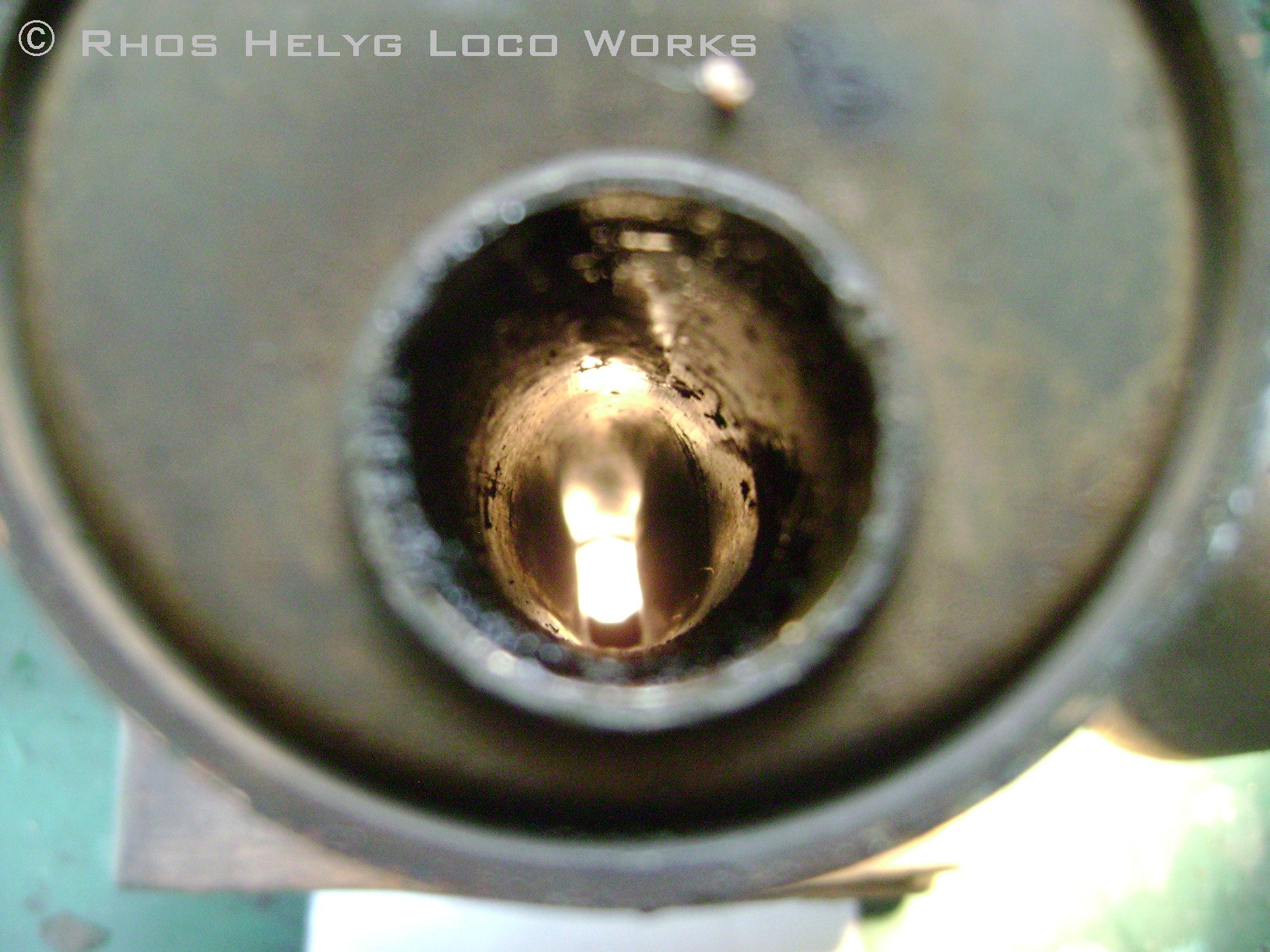
This Ragleth initially came for a repaint along with reports that it would only run in reverse,
and that the burner was noisy and tricky to light. A minor adjustment to the reversing piston
and use of the correct radio control settings cured its running issues. The burner issue was
more complicated...
|
|
|
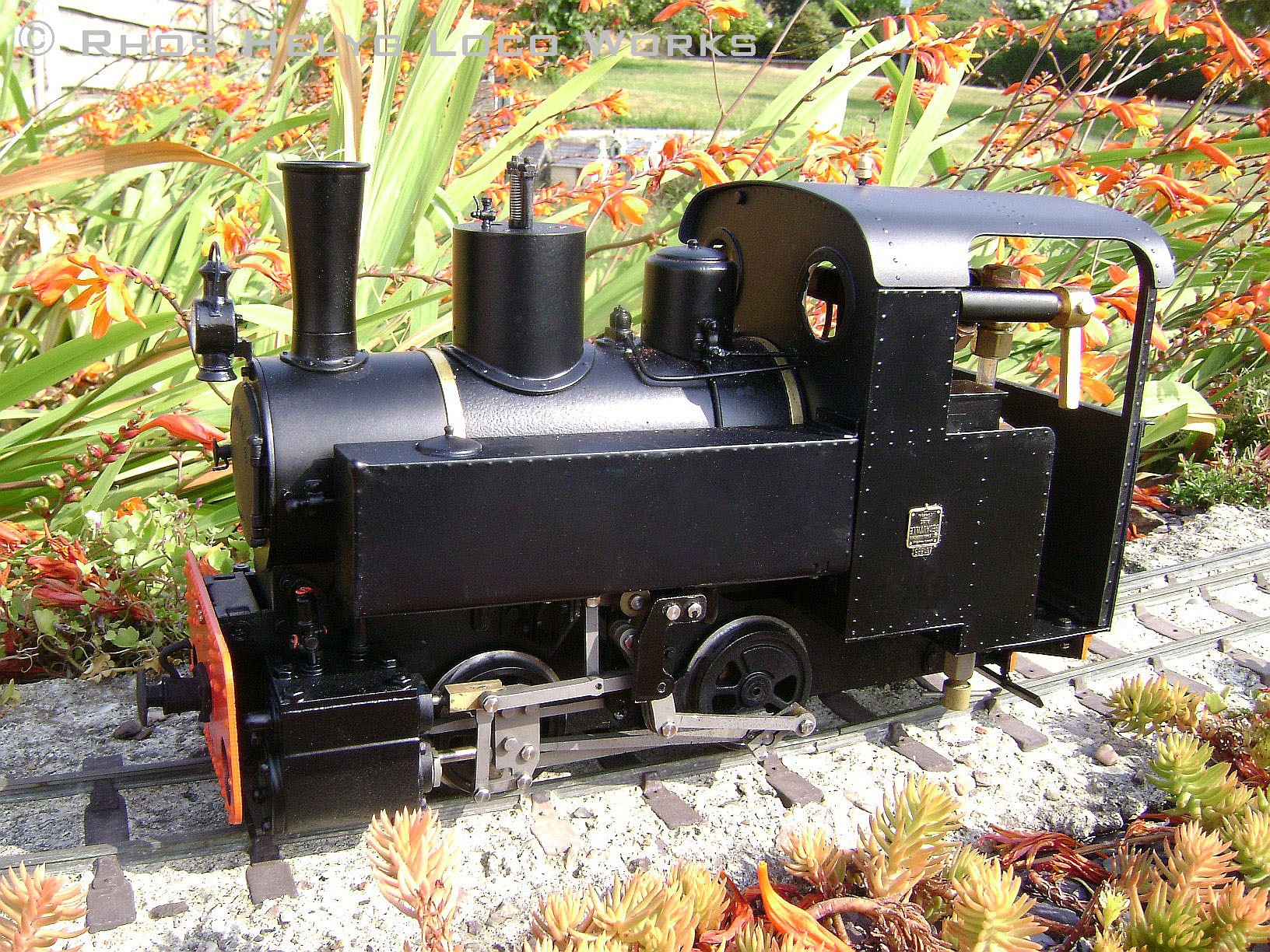
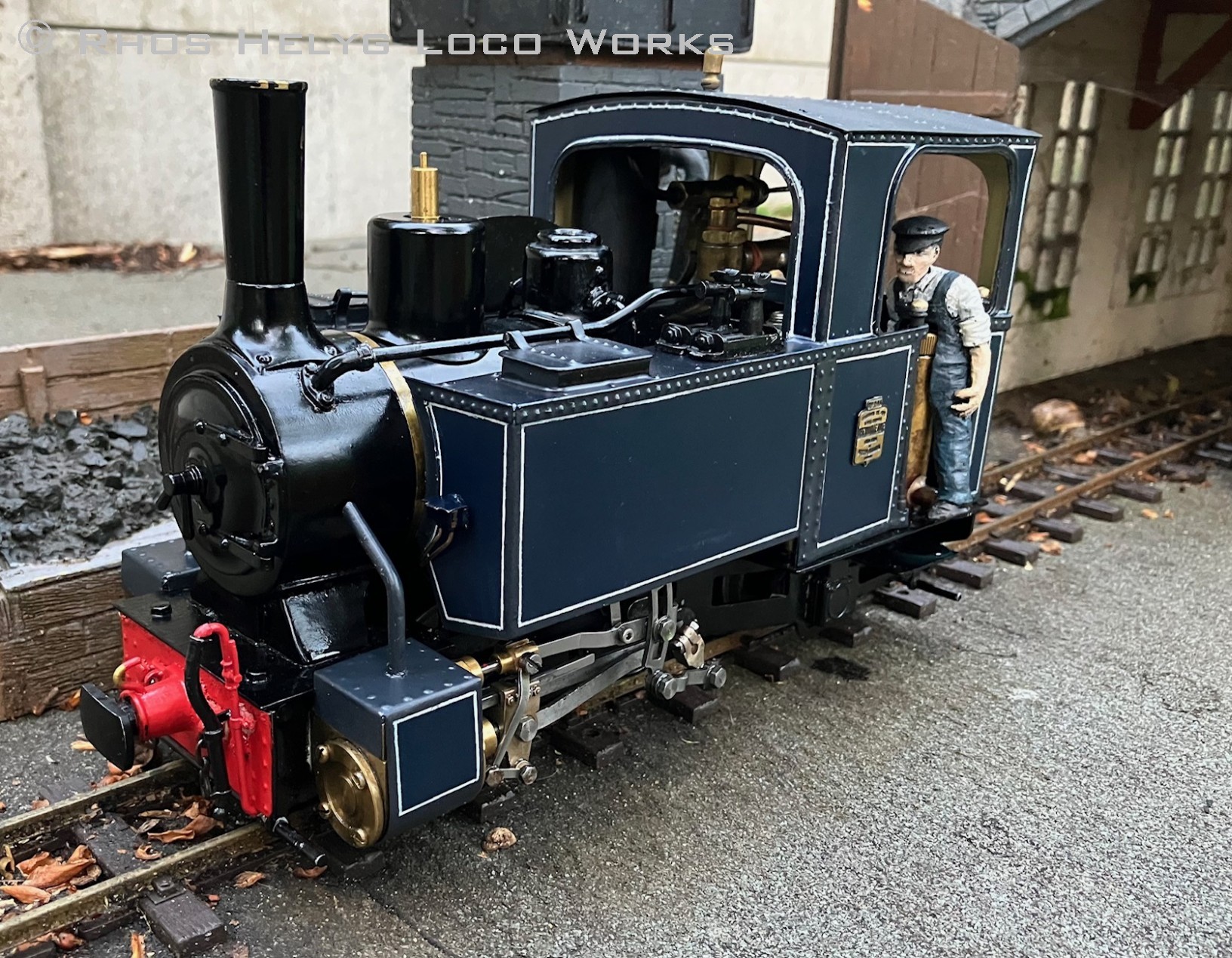
MBV Schug - Accucraft Europa Decauville 0-4-0T
The MBV Schug - Accucraft Europa Decauville 0-4-0T models were delivered with blue bodywork and wheels. The blue did not fit in with the owner of this one's railway, so it came to me for a repaint in to satin black, and received replacement and usable couplings while here. |
|
|
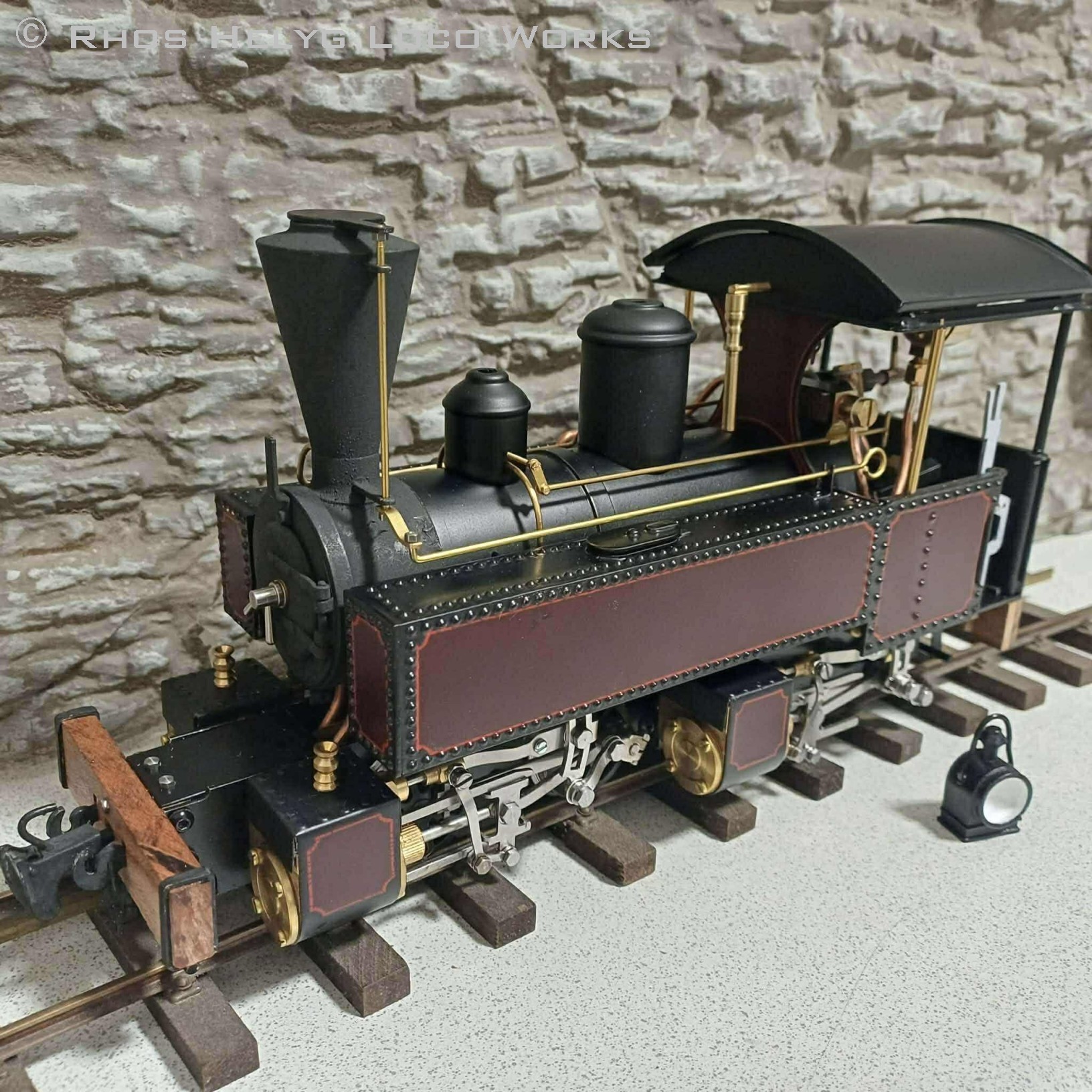
Graham Duncan-Smith Decauville Mallet 0-4-4-0T
The bodywork and boiler of this 0-4-4-0T Mallet were sent to me by builder Graham Duncan-Smith for painting and lining. The photo shows the loco after reassembly by Graham .... the first time I had seen it in one piece. There was some indecision on my part about the matt black ` smokebox, but I think I made the correct decision in the end.(Photo by Graham Duncan-Smith). |
|
|
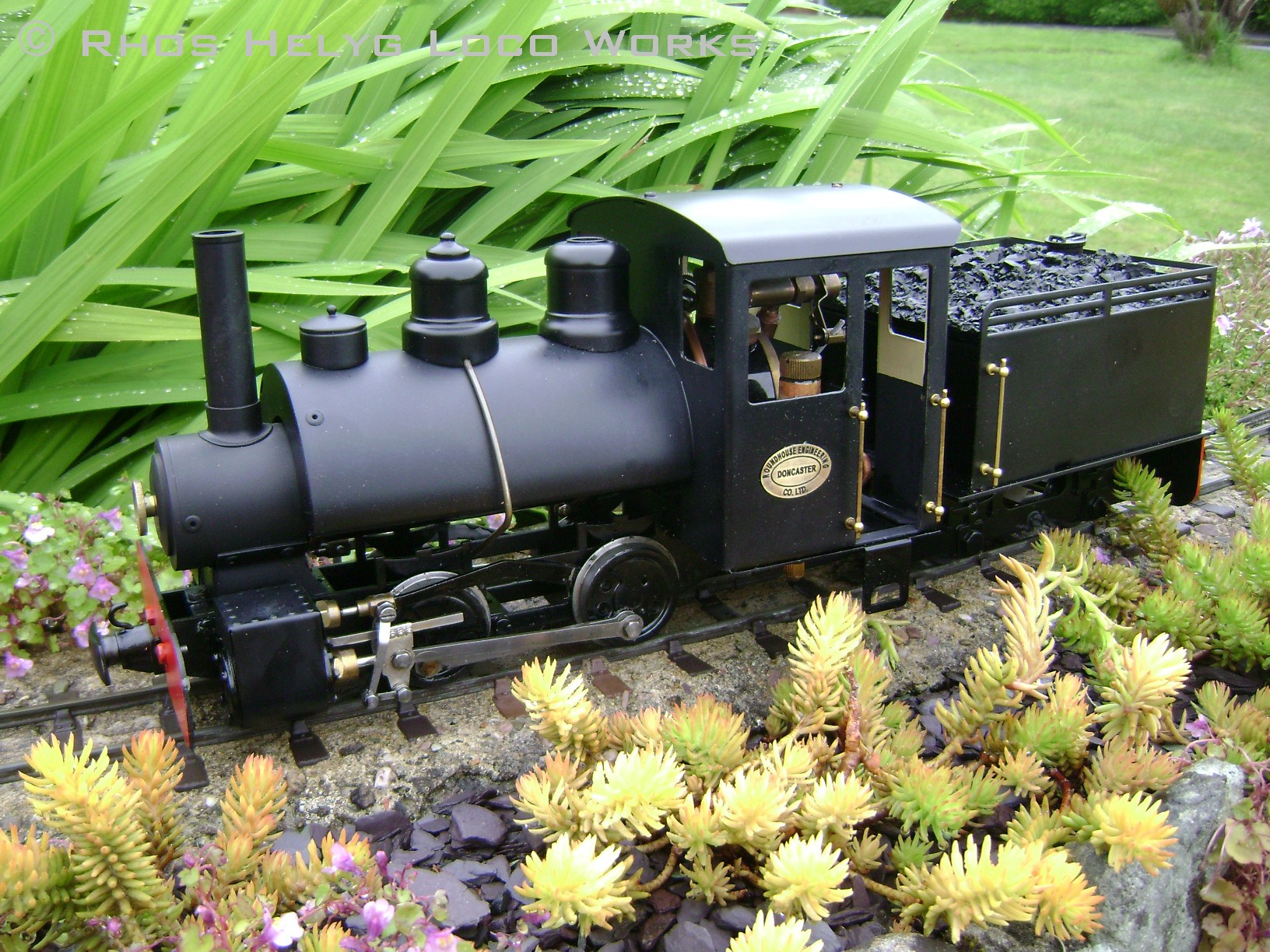
Roundhouse Engineering Sammy 0-4-0STT
Very much in "as new" condition when it arrived, the owner of this Sammy asked me to de-gloss the shiny black paintwork and make a few cosmetic changes, including painting of the wheels and the eccentric rods. While here it also gained a Roundhouse Jennie tender (holding the radio control equipment), cylinder covers and crossheads, and a more UK style of front buffer beam instead of the wooden "plank" it had before. |
|
|
Association of 16mm Modellers Victory 0-4-2T VICTORY
The owner of this Victory had built and painted the loco but was not happy with the paint finish he has achieved. The body and cylinder covers came to me for painting and lining. (Photo by Richard Hay) |
|
|
Graham Duncan-Smith Cape Town Waterworks 0-4-0T
The body for this loco came to me for painting and lining. Reassembled by its builder Graham Duncan-Smith, it is a delightful model of the Cape Town Table Mountain Waterworks 0-4-0T locomotive constructed by Andrew Barclay (Photo by Graham Duncan-Smith). |
|
|
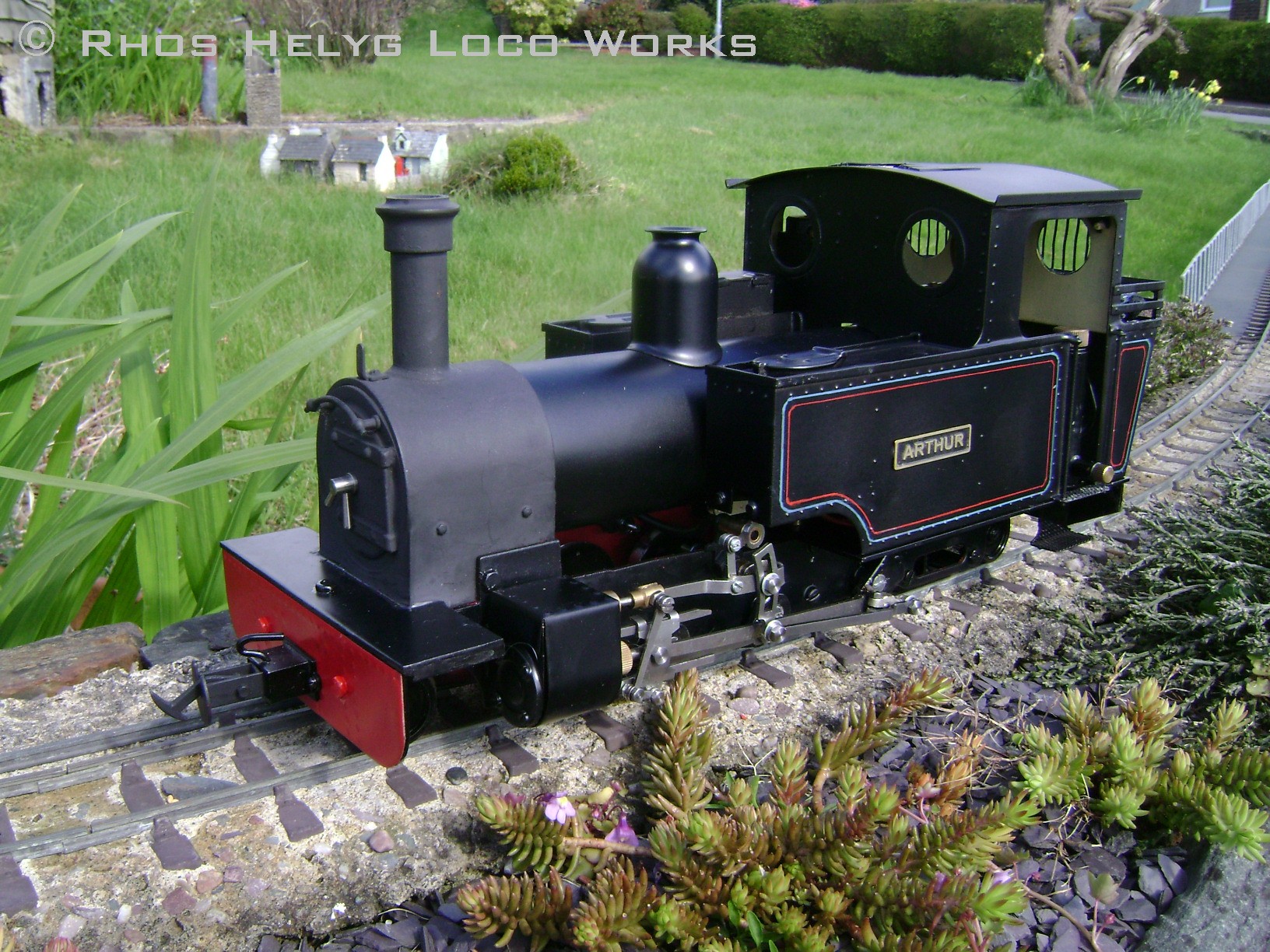
Simply ⅞ths/Roundhouse Engineering Arthur 2-6-2T ARTHUR
The Simply 7/8ths "Arthur" body kit is designed to fit on a standard Roundhouse Lady Anne 0-6-0 chassis. However, having acquired said body kit my customer decided he wanted something a little different, as usual. The initial thinking was to convert a Lady Anne chassis in to a 2-6-2: certainly achievable but a lot of work. I countered his suggestion knowing that a perfectly acceptable 2-6-2 chassis already existed under the Roundhouse Russell. A Russell chassis kit was obtained and I set to work constructing it and then modifying the Arthur body kit to fit. There were a few head-scratching moments, but it was still easier than modifying a Lady Anne chassis to have two ponytrucks. The boiler came from a Roundhouse Fowler, and the (unusually fabricated, not cast) Roundhouse smokebox was modified to have a flat-sided "D" profile. Radio control was installed and the job was finished with the owner's standard stealthy paint scheme. |
|
|
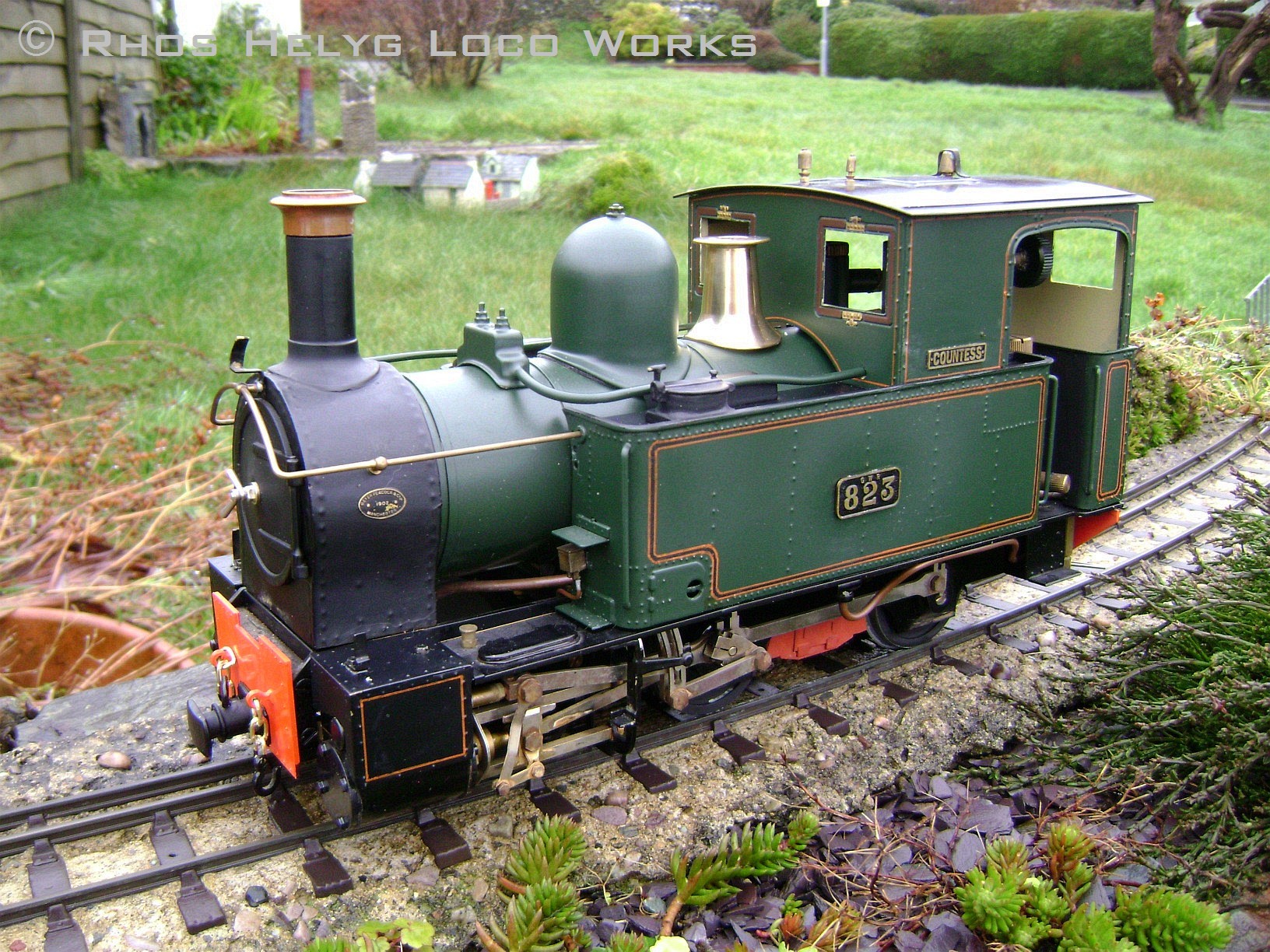
Pearse Locomotives Beyer-Peacock 0-6-0T Welshpool & Llanfair COUNTESS
This Pearse Countess was in plain scruffy green when purchased by its present owner. It came to me for lining and a general tidying of the paintwork. It had also suffered from a common model steam loco disease: crooked name and number plates held in place by copious amounts of glue oozing out from behind them. These were carefully removed and the consequential paint damage was repaired. It now carries a lining scheme carried by Earl in the late 1960s/early 1970s but never, my research suggests, by Countess. |
|
|
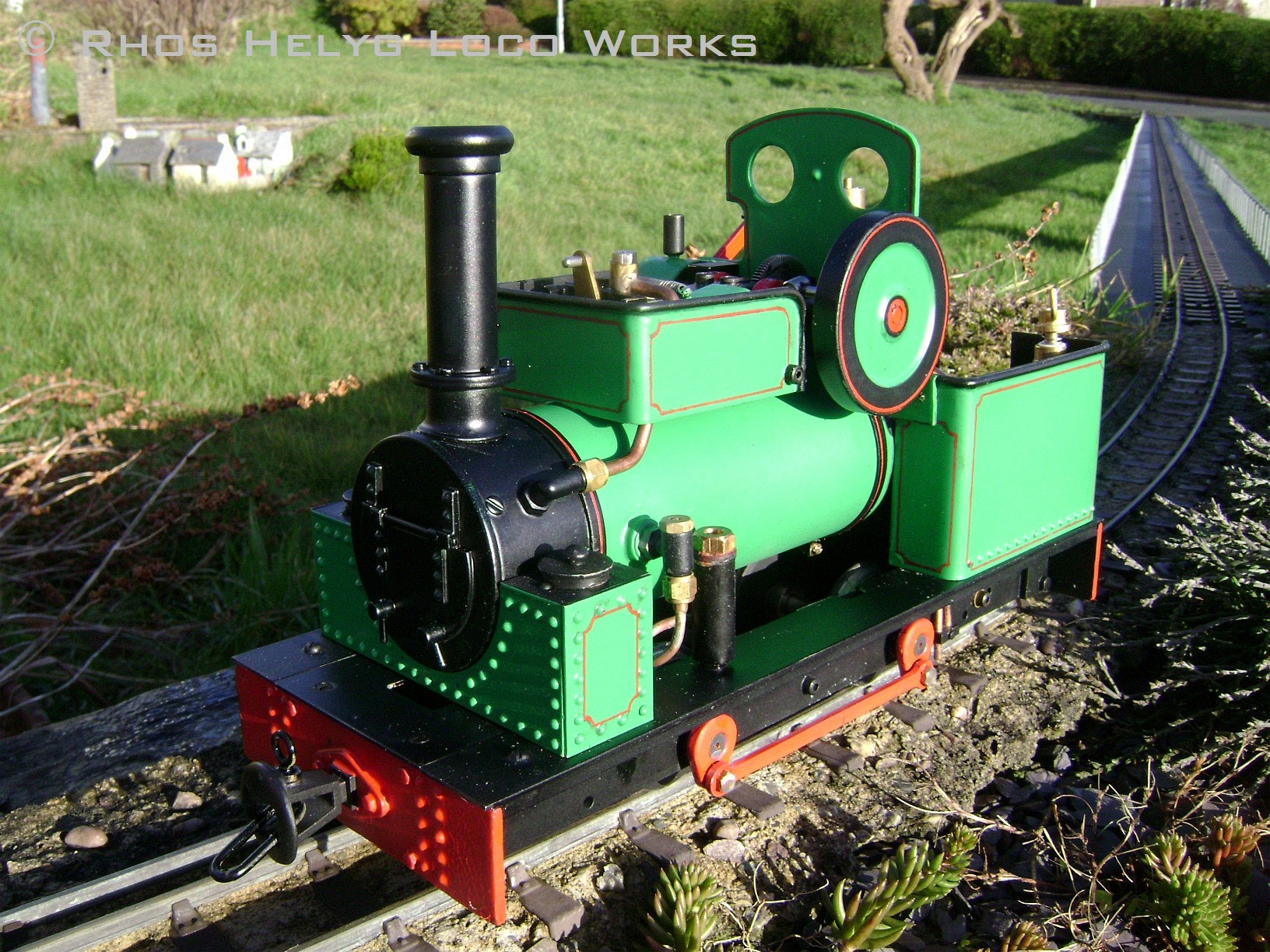
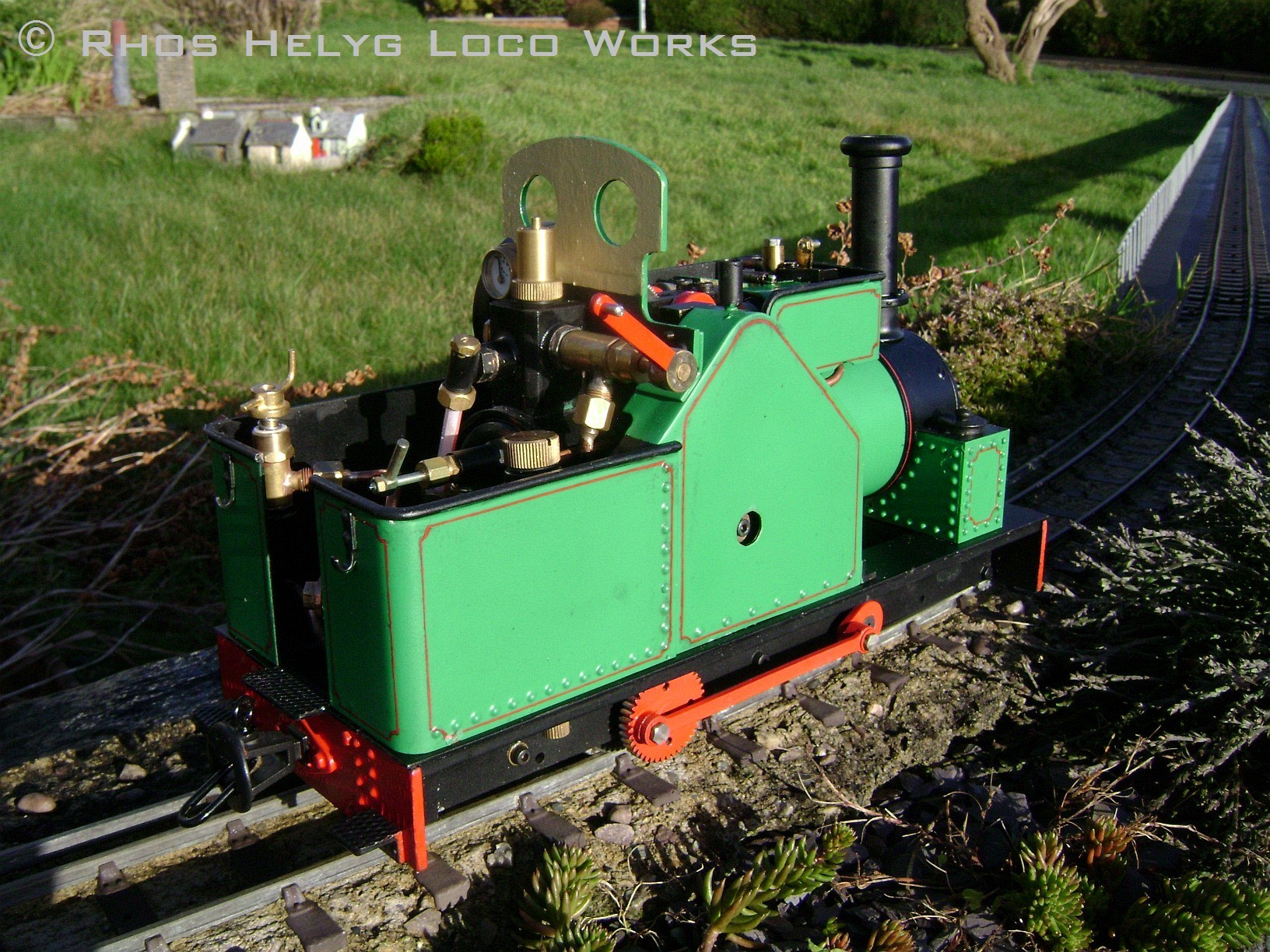
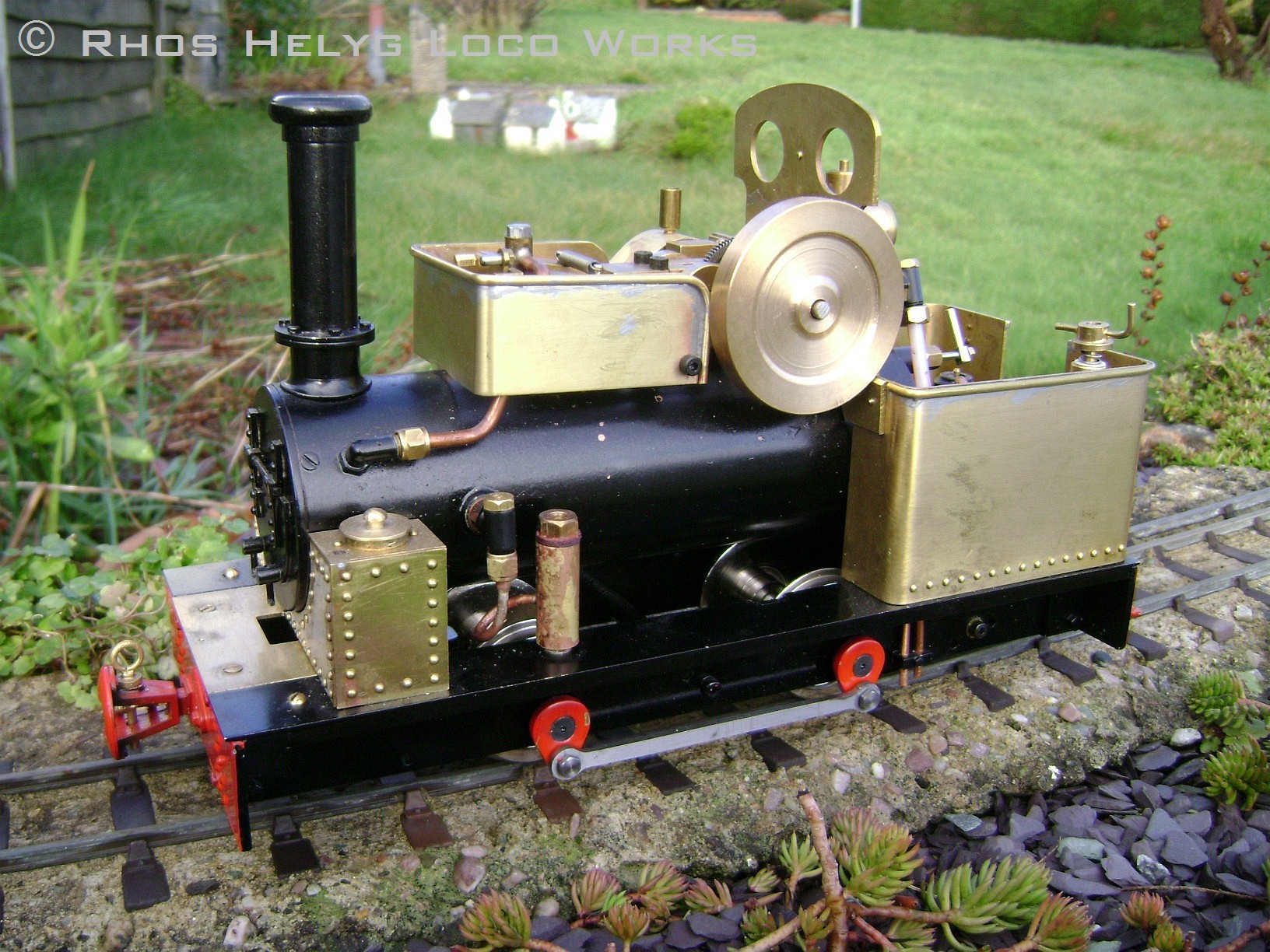
Peter Angus ⅞ths-scale Overtype 0-4-0WT
This unusual loco was built by Peter Angus and is powered by a 2-cylinder oscillator steam motor. Arriving in bare brass (third photo) my task was to paint it to its owner's detailed specification. |
|
|
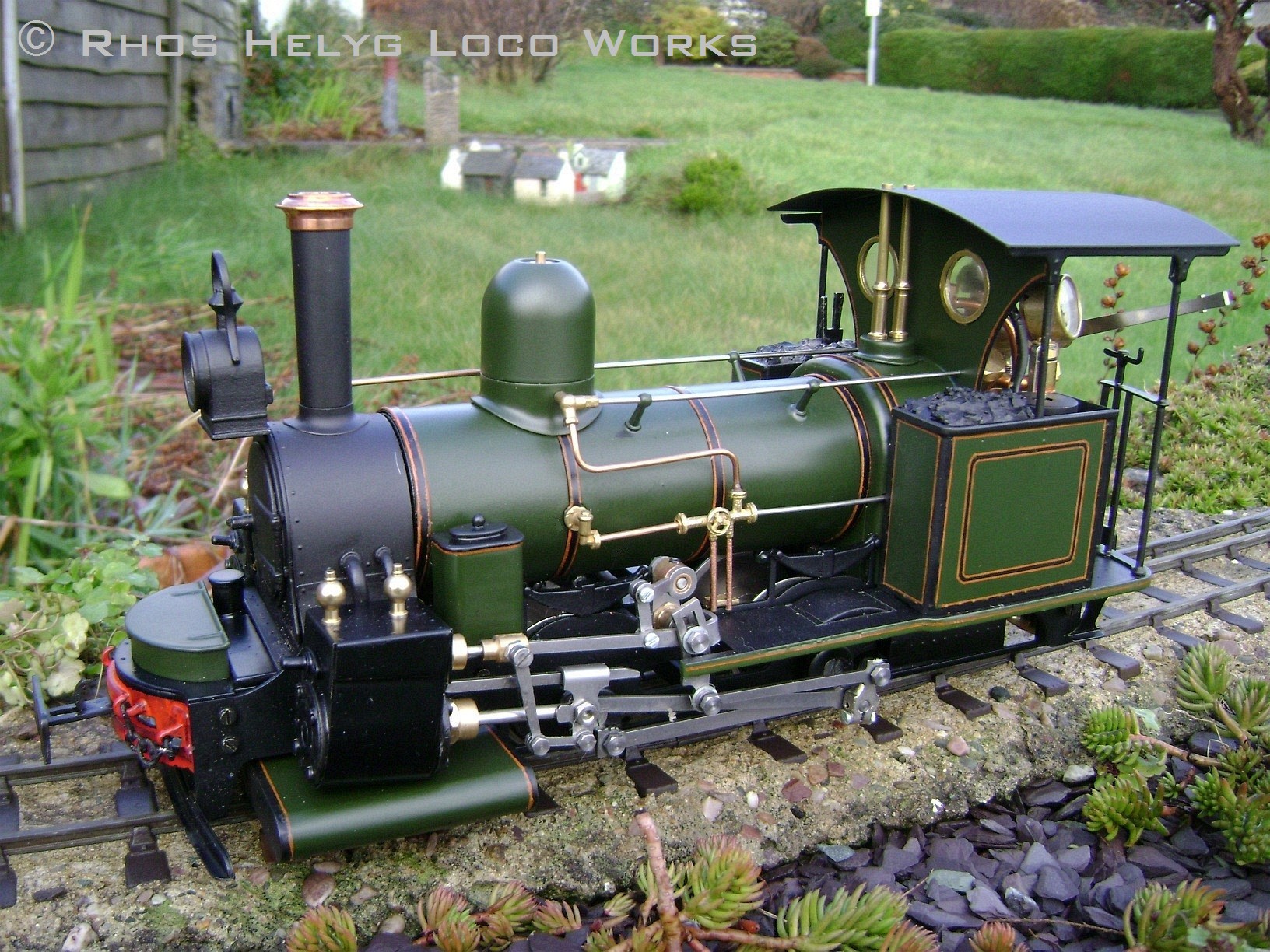
Roundhouse Engineering Darjeeling A-Class 0-4-0ST
This is the RHLW version of the Roundhouse Darjeeling A-Class. This one came here for conversion to manual control (an option not available from Roundhouse) and lining, of course. Determination of the lining style used on locos of this antiquity is always a challenge. There are few photos of the A-Class locos in use (the best set perhaps being in the superb The Incredible Darjeeling B-Class book) but even these are dark and muddy and show little detail. One thing is for sure though: they had black wheels and other than when new they did not have glossy paint. |
|
|
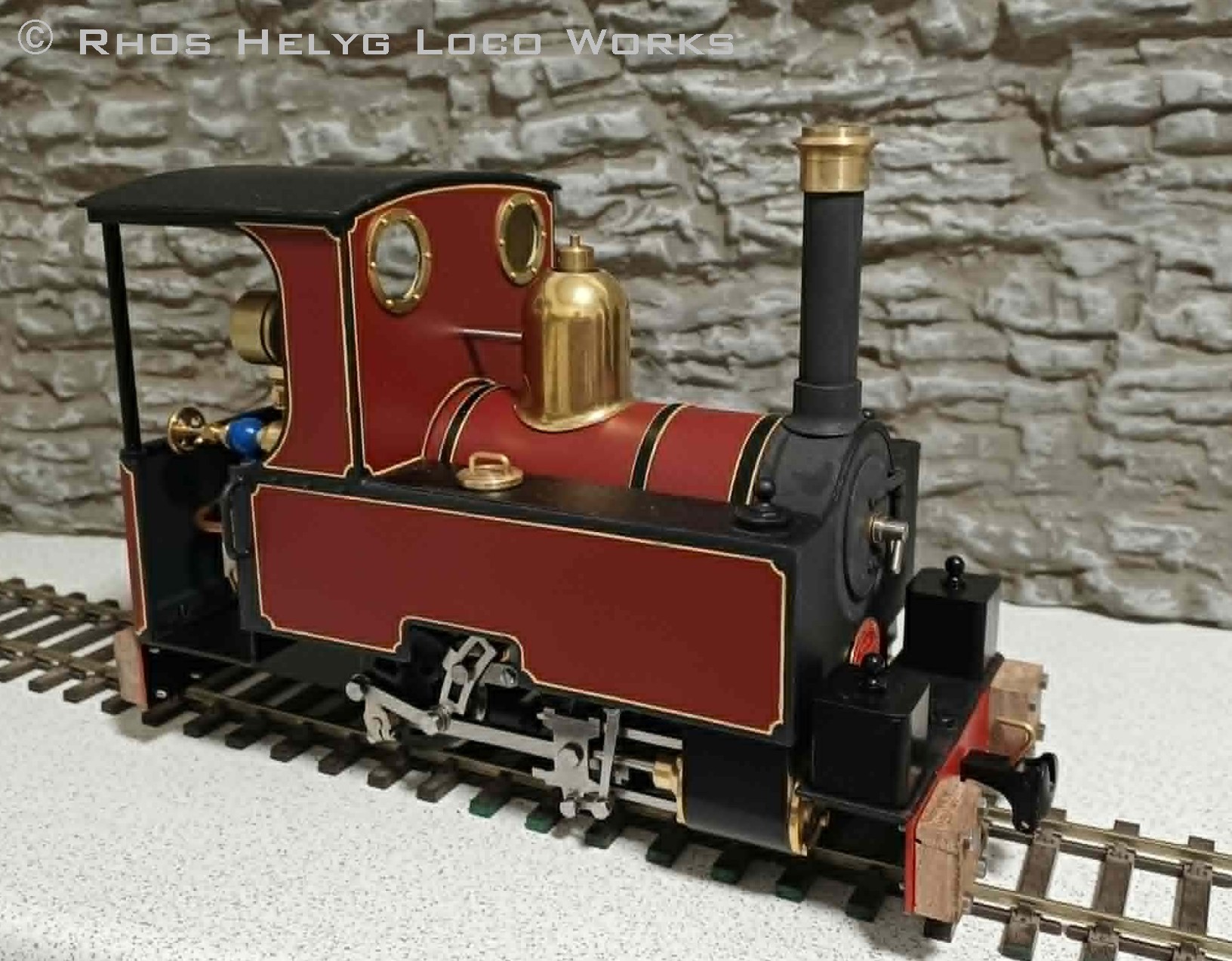
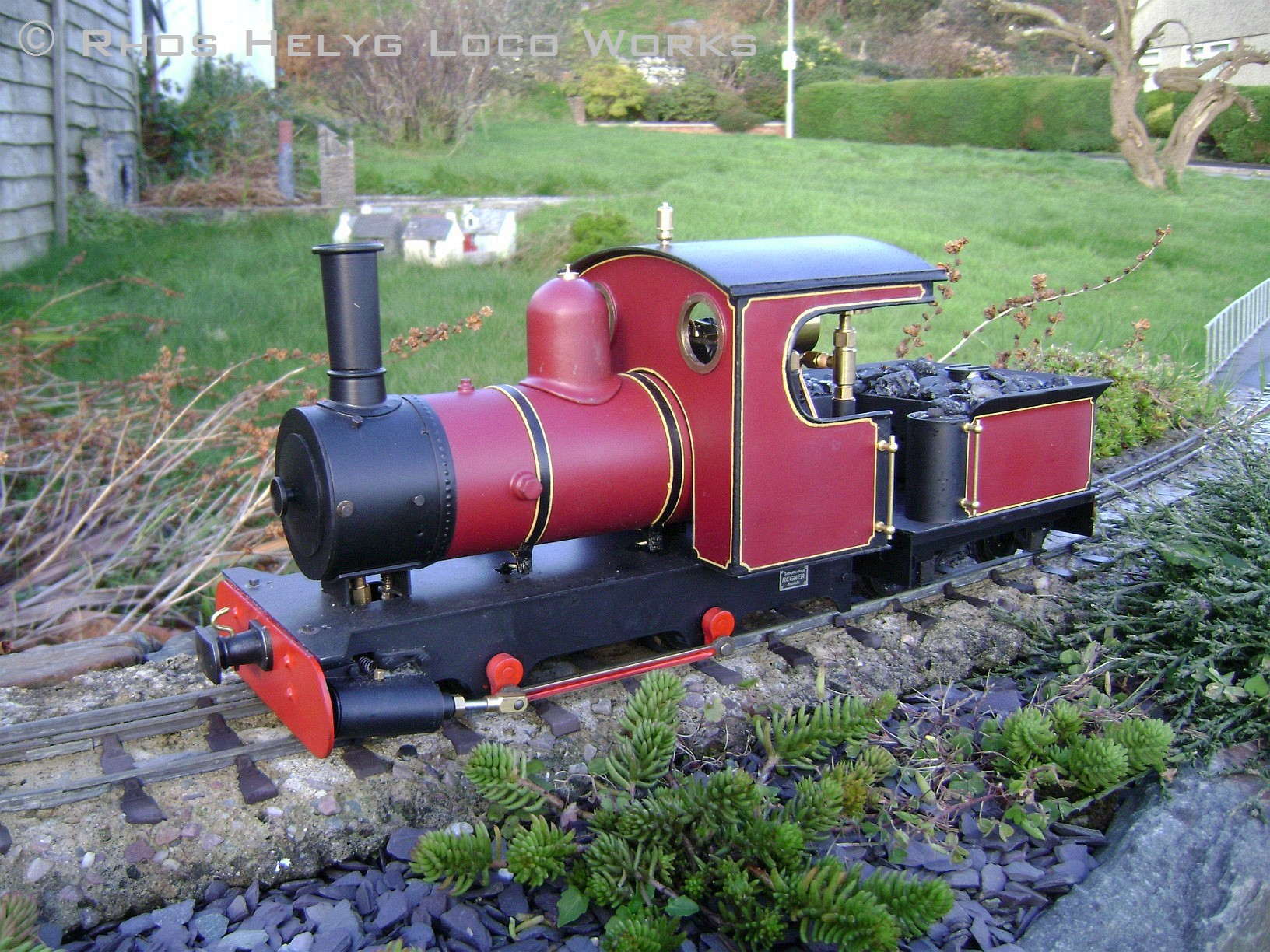
Regner Niklas 0-4-0
This Regner Niklas came to me with one simple instruction: Make it look more British. There is no doubt that, as supplied, it is based on American practice, with its balloon stack, headlight, bell and wooden buffer beams. They all came off, with the chimney being replaced before it arrived here and the front buffer beam replaced with something more Linda/Blanche Hunslet-like. Fortunately, removal of the other three wooden buffer beams revealed suitable alternatives, with no significant work needed. There was not much I could do with the cab structure, so that was replaced with new. The cab roof was re-used with some modification. The dome cover was also replaced with something more appropriate. To make it less of a black blob, my work was finished off with a repaint in to maroon with yellow lining and a coal load in the tender. |
|
This page was last updated on 8th September 2026